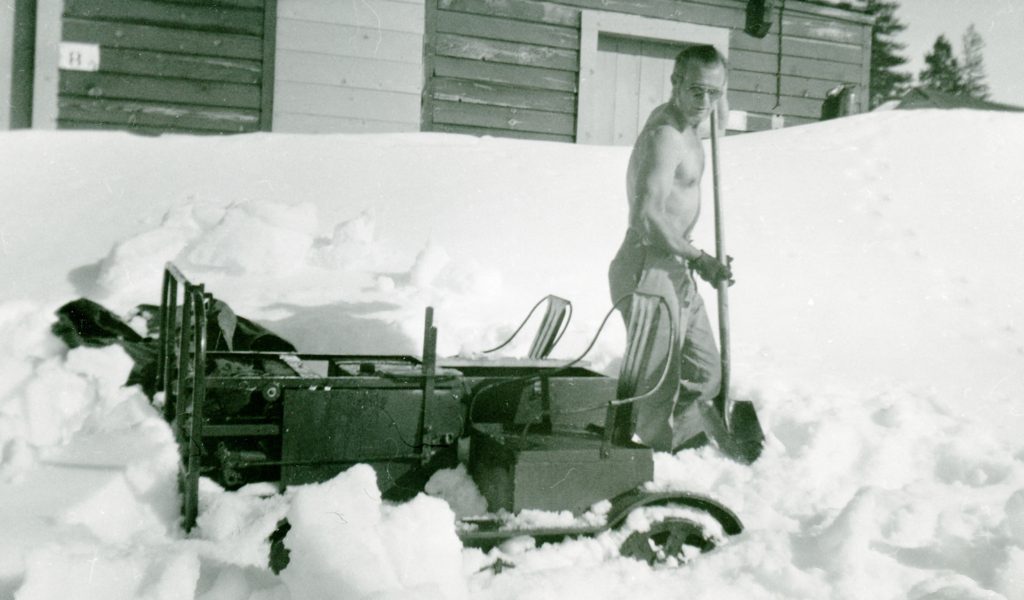
George Moore digging out a speeder at Camp 10, January 10, 1952.
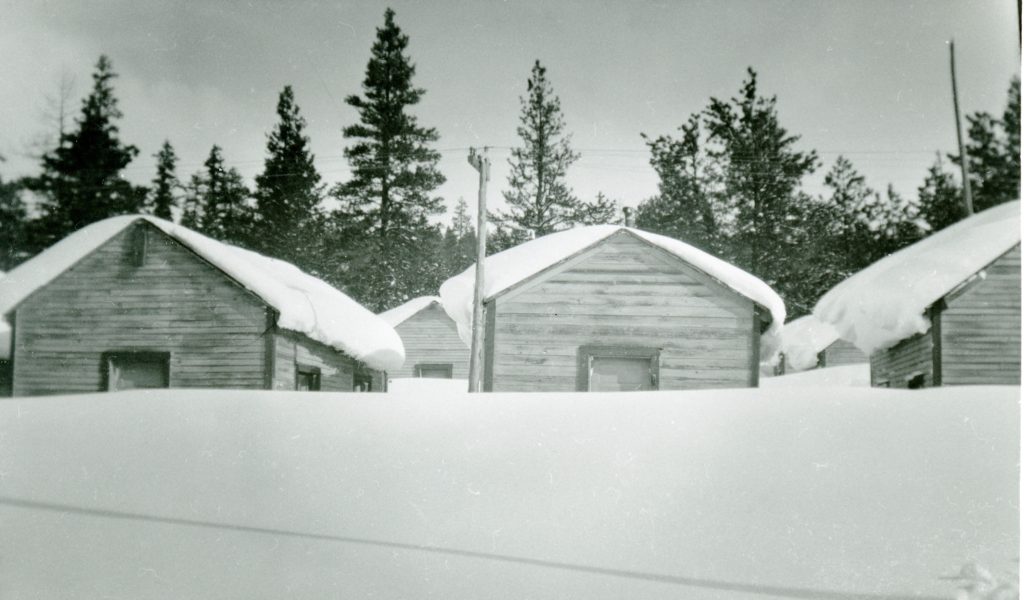
Fruit Growers Supply Company’s Camp 10, located in Pine Creek Valley, west of Eagle Lake was a lively outpost from spring through fall, where over 200 people called it home. For a time it could even boast its own voting precinct. Yet, when the logging season ended, Camp 10 was de-populated, except for one lone soul. A caretaker was hired to keep an eye on everything. In the winter of 1951-52, George Moore was Camp 10 sole resident. The position would soon be eliminated as at the end of the 1952 logging season Camp 10 closed for good.
Three years ago today, I started the daily postings. At that time the hot topic was the Roosevelt Pool that was in the final stages of demolition. Each subsequent March 1, I did a follow up on the status of the replacement pool. The Roosevelt has been reincarnated as the Honey Lake Valley Community Pool. It is a joint effort between the city and county and I will spare the dear reader of the gory details of meetings that finally led to its creation. More importantly the community now has a swimming pool, located adjacent to the site of the old one. When the temperatures starts rising this summer, stop by and check it out.
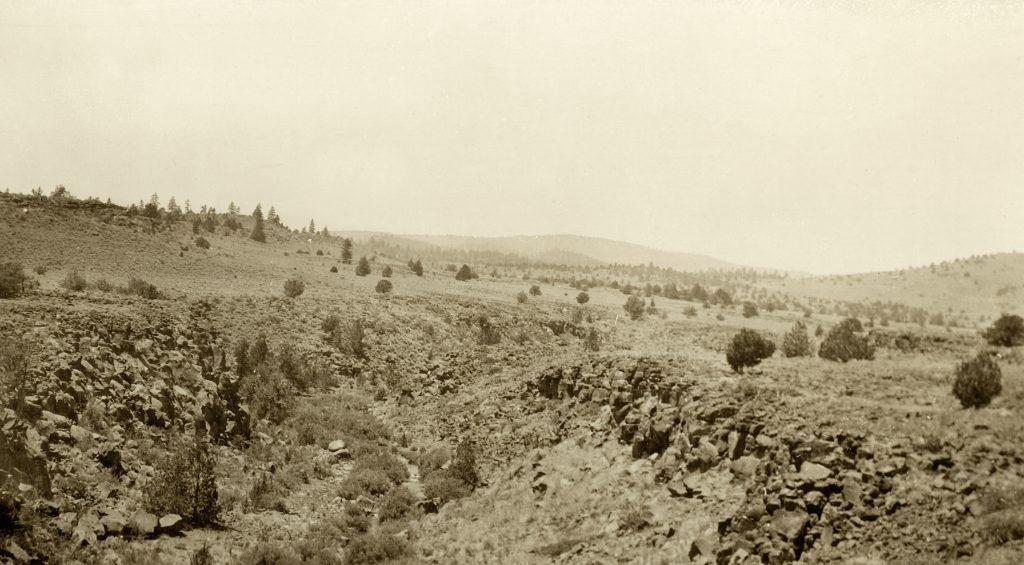
As usual there is an interesting line-up of topics for March. There is Eagle Lake Architecture, the Red River Lumber Company’s rumor mill, the proposed dumping ground in eastern Honey Lake Valley of the 1960s, the Amedee Lime Kilns to broaden one’s horizon about the area’s diverse and rich heritage.
However, fasten your seat belt, because it is going to be a bumpy ride. I am in a transition period between my old computer and a new one. There might be some interruptions or other items that go haywire, due not only to the upgraded software, which also effects the particular Word Press that is used for this site. The last few months have been a substantial learning curve and I still have a ways to go.
Thanks not only for patience, but your continued support.
While today, the east side of Honey Lake may look bleak and barren, it was not always the case and there were numerous attempts to develop it. In 1915, Rosendal Minster envisioned a Scandinavian settlement south of Amedee. Minster had a lease/option to purchase the lands and the pumping plant of the Standish Water Company. He then formed the Farmer’s Land Company to operate the holdings.. The properties were split into 40-acre tracts with a price range of $45 to $65 per acre. The new settlement was named Rosendale. While Minster vigorously promoted the project, but due to debts he quickly accrued, he abandoned it the following year.
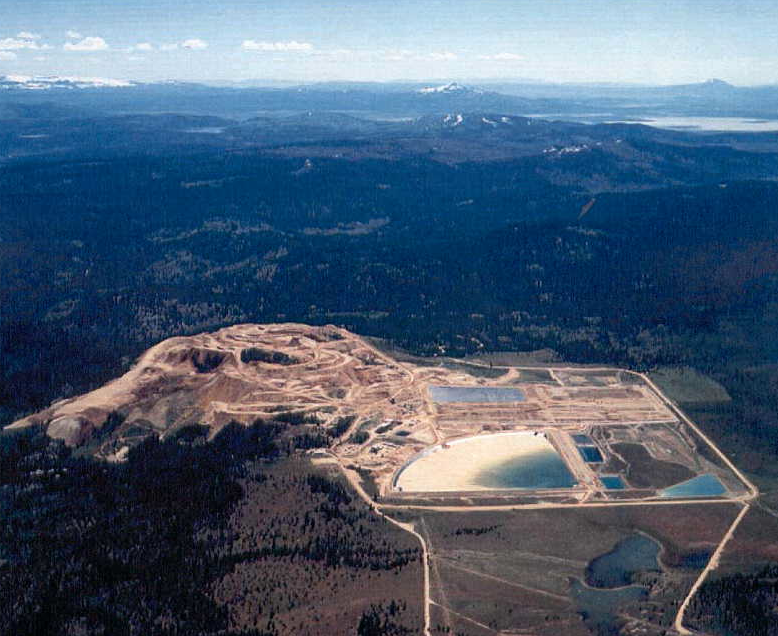
In 1991, Amax Gold Inc. proposed to Lassen County officials their intention to again start up the mining activity at Hayden Hill. It was their intention to literally remove the hill and to extract gold and silver with a cyanide leach ponds. Amax formed a subsidiary company, Lassen Gold Mining, to undertake the enterprise. Lassen Gold carried out the mining operations on the Hill from 1992 to 1997. According to Company figures, approximately 510,000 ounces of gold and 1.4 million ounces were extracted.
In 1864, Joseph I. Steward had a large hotel constructed at the corner of Main and Gay Streets, the location known today as the former Bank of America parking lot. It was the most pretentious in Susanville at that time and it was a signal to the end of the log cabin era. Steward sold the hotel the following year to Miller & Kingsley for $12,911.80. The property changed hands numerous times over the years, but it always retained the Steward House name.
Whatever the case may be, the Steward House was Susanville’s social hub during its existence. On July 18, 1893, the Steward House, as well as the majority of Susanville’s business district, was destroyed by fire.
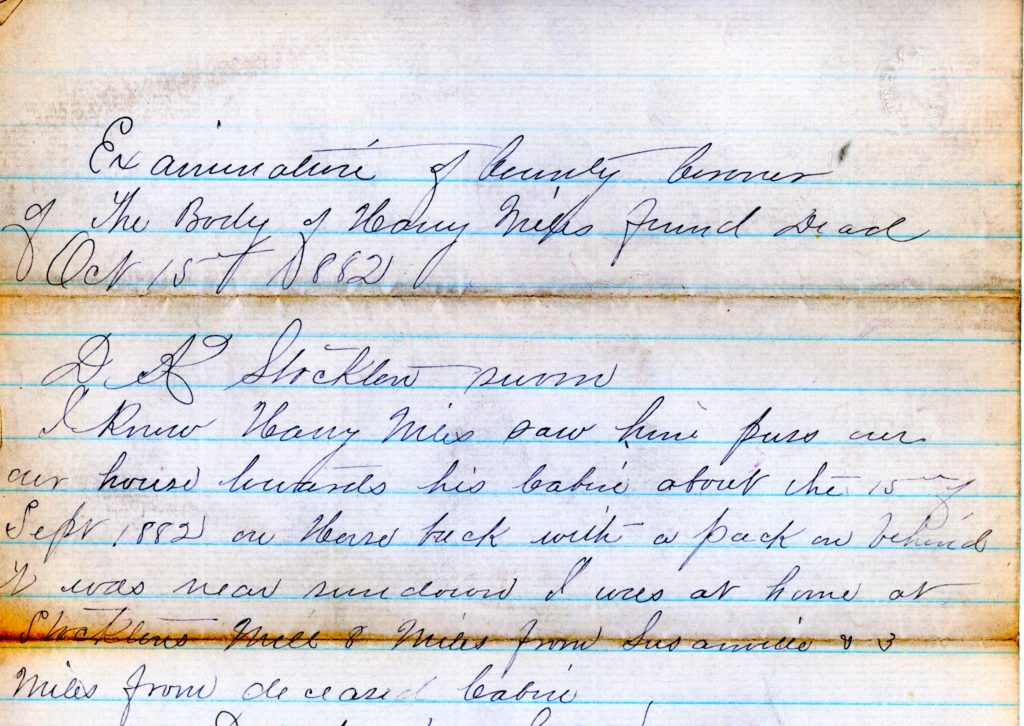
The opening statement of Crazy Harry’s inquest.Crazy Harry Gulch is a three-mile drainage that feeds into the Susan River below Hogs Flat. According to the late Philip Hall, the cabin was located near the mouth of gulch near the Susan River. Phil stated that by 1930 there was hardly anything left of the cabin site. By chance, I did examine the GLO original survey map, as sometimes they indicate structures, but it was to no avail, since the survey was done in 1866, way before Harry Miles, aka Crazy Harry arrived on the scene.
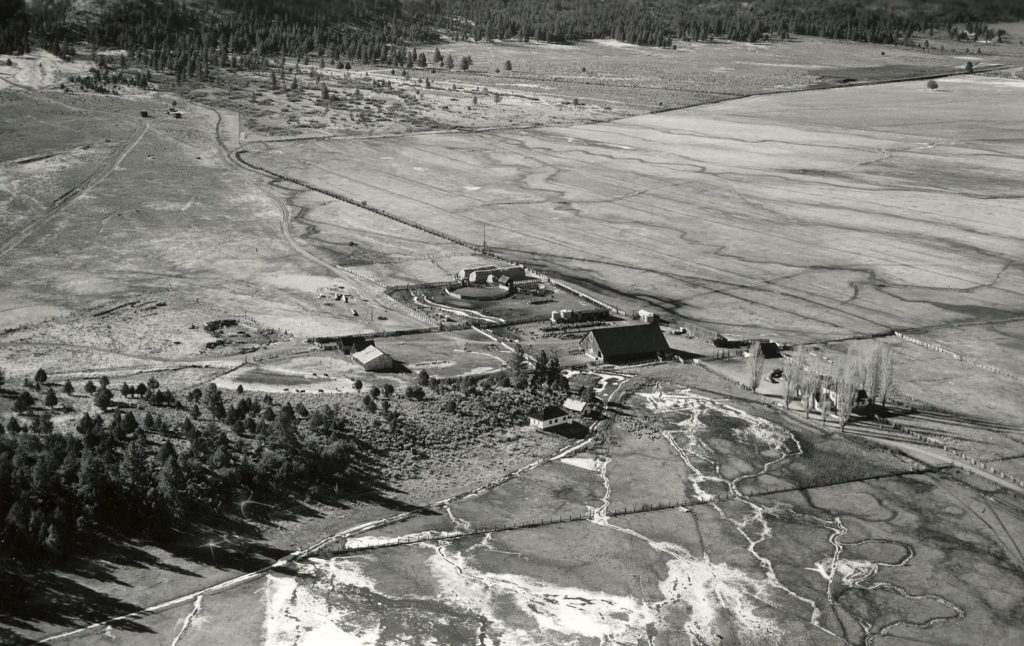
Five Dot Ranch, Willow Creek Valley, 1958. Courtesy of Wendell LougheadFor whatever reasons, Erich was not satisfied with the ranch, and the place was once again on the market. In the spring of 1949, two cousins, Ben Dyer and Arlyn Hughes from Gridley, California purchased what was commonly known as the Lonkey Ranch in Willow Creek Valley from W.J. Erich. The two men needed financial assistance and brought in three partners: Marvin Kirk, Jack Hughes, and B.B. Hughes. They named their new enterprise the Five Dot Land & Cattle Company, with Arlyn Hughes operating the ranch. The partnership was brief and the ranch was placed on the market in 1958. In 1959, the Swickard Brothers, Jack and Tom, from San Jose purchased Five Dot.
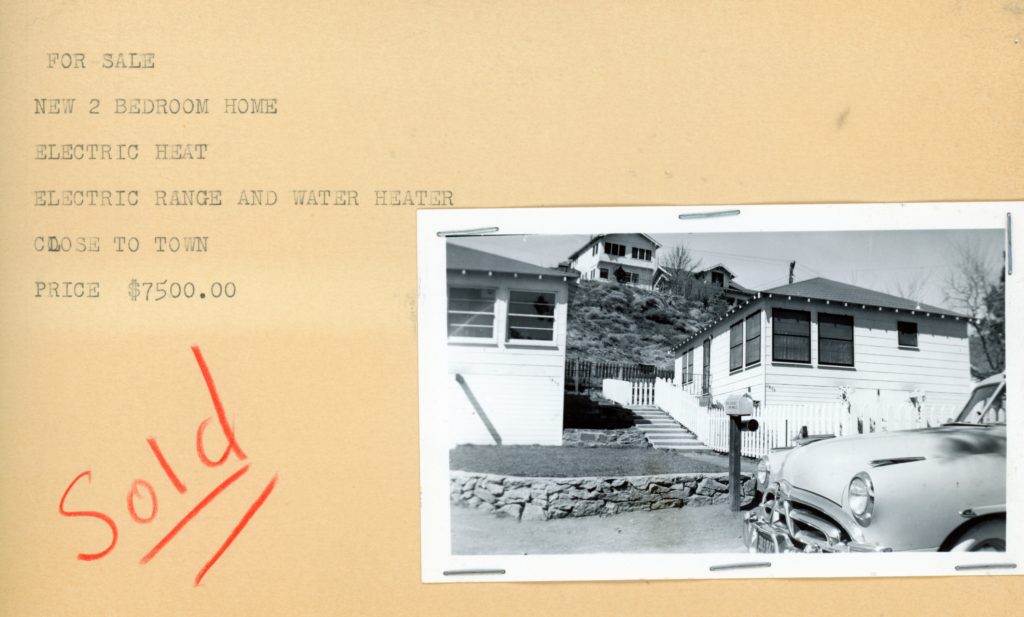
Real estate listing for 320 Carroll Street in 1957, asking price $7,500.
This short street along the Susan River was originally known as River Street. For a time it was referred as Slippery Gulch. When the railroad arrived in Susanville in 1913, not only did bring prosperity, but attracted “camp followers,” which was not welcomed with open arms by city officials. These followers established a small encampment at the Richmond Road Bridge with gambling dens and houses of prostitution. Something had to be done and fast. After all first time visitors to Susanville traveling by train would have to pass through this seedy area, before they got to Susanville proper. A solution was found, they moved the encampment further up River Street towards Lassen Street, with the philosophy “out of sight, out of mind.” When prohibition came along, new element was added to the “gulch” bootleg joints.
When the Lassen Townsite was subdivided in 1912, it too, had a River Street. When it was annexed to Susanville, something had to be done to correct the issue of two River Streets. This was purportedly, i.e., not verified, that it was named for Frank Carroll, an Indian agent who lived there in the 1930s.
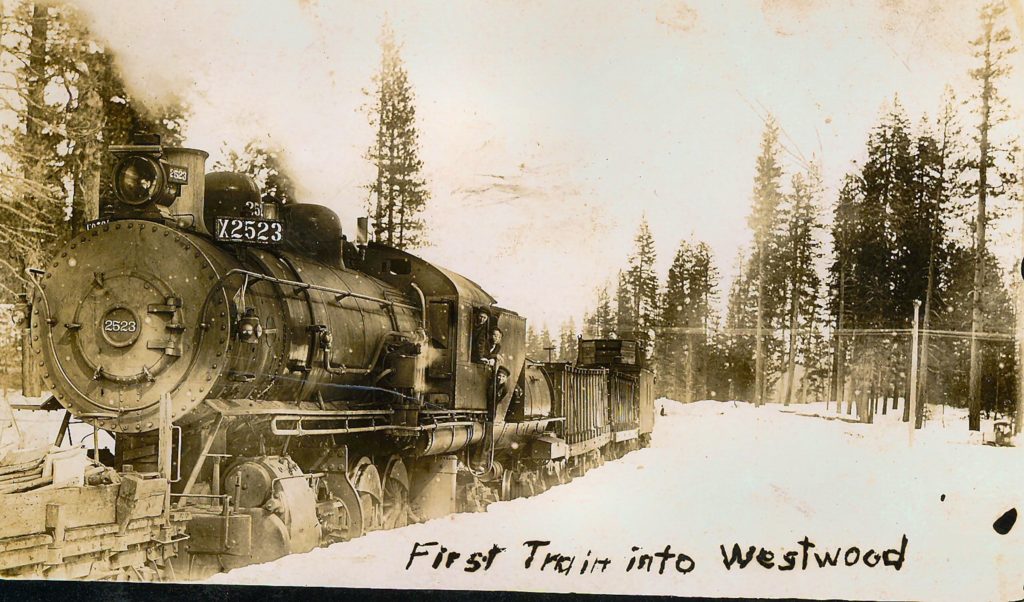
February 21, 1914In January 1912, the Red River Lumber Company entered into an agreement with the Southern Pacific to construct the 120-mile Fernley & Lassen Railroad. Time was of the essence as Red River had entered into an agreement with the Great Western Power Company to log Big Meadows by 1914 as it was to be transformed into a reservoir known as Lake Almanor. On February 21, 1914 the first train reached Westwood. It would not be until summer that the railroad was officially completed, as ballast work needed to be done. The abandoned railroad line is known today as the Bizz Johnson Trail.