Lassen College’s Gunsmithing Program

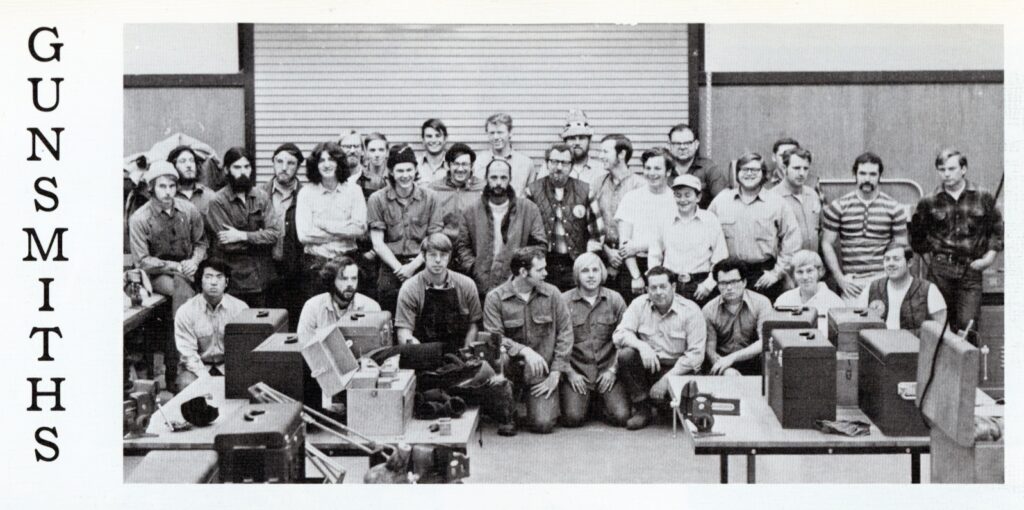
Lassen College Yearbook, 1973-Courtesy of Jim Chapman

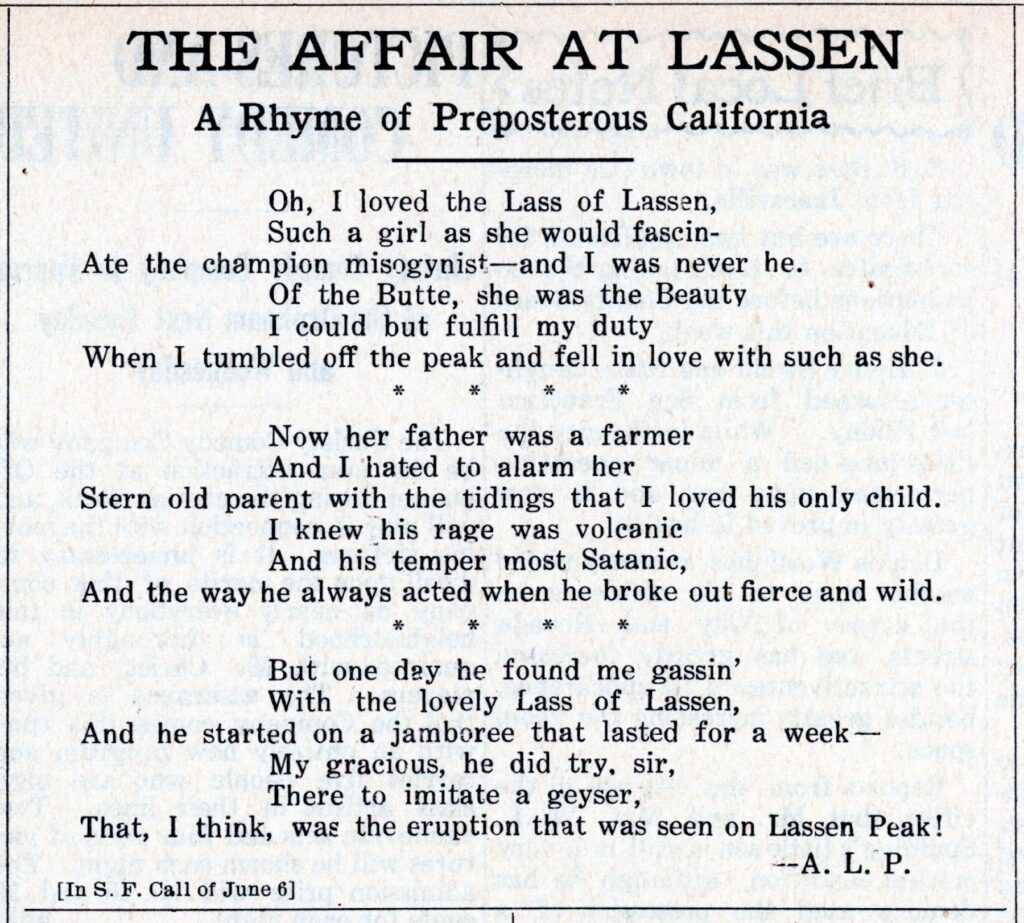
Lassen Community College’s Gunsmithing Program is the oldest program of its kind in the nation.

The following is from the Lassen Advocate of 5 September 1946 providing a glimpse of the humble origins of the program.

“The only gunsmithing course being offered in a college or trade school in the United States is being given this year at Lassen Junior College.

“While the market for fine guns has multiplied in this country, old time master gunsmiths have declined in numbers, Charles W. Frost, gunsmithing instructor, explained. Improved roads into wilderness areas, shortened work weeks, longer vacations and wider familiarity with firearms from service in the armed forces were reasons given by Frost for increasing opportunities for skilled gunsmiths.

“The genial middle aged German, Swiss or Belgian gunsmiths so familiar to sportsmen of almost every fair-sized town a generation ago have, for the most part, passed on,” Frost pointed out. These old gunsmiths, who had become master crafstmen through a seven-year apprenticeship n Europe guarded the secrets of their craft so closely that not more than a handful of young men of their day learned it from them.

“Frost was one of these fortunate few learning to be a master craftsman under Fred Muhl, an old-school gunsmith in Bloomington, Ill. For 15 years before coming to Susanville a year ago, he operated his own gunsmithing shop in Arcadia and Eureka on the coast. He also taught musketry at Humboldt State Teachers College.

“This is not a tinker’s course,” Frost said, “It’s not just to teach repair of second hand guns.” The two-year course, with a third year optional, will prepare graduates to build fine rifles.

“For example, Model 6 Winchester rifles, selling for about $45, will bring from $200 to $400 when thoroughly rebuilt by a master gunsmith, according to Frost. He said such fine guns don’t attempt to compete with production-line factory models, which is another reason for only students with serious craftsmen ambitions to sign up for the course.

“Today there are probably less than a score of master gunsmiths west of Salt Lake City. “All of this seems to indicate,” he said, “that there is an assured future for any young man with the intelligence and determination to complete the course outlined.”

“Harland Fritts of Susanville is beginning his second year of gunsmithing at Lassen Junior College. He admitted it was a tough course. “It’s a wide open field,” he said. “And I like the work.”

Three other students have signed up to start the course this year.

“The two-year college course covers all phases of gunsmithing but barrel making and custom stock making, with correlated academic background courses about half time in mathematics, science and English. The additional year of graduate work includes barrel making, stock making, engraving and metallurgy.

“Trade courses in gunsmithing curriculum are mechanical drawing, precision woodwork, including pattern making; machine shop; soldering, brazing and welding; firearms’ history, design and construction; ammunition, including catrridge-case and bullet design, ballistics; sights, iron and optical fitting, chambering, turning, straightening and finishing of barrels.

“Academic background courses include geometry, physics, chemistry, English, accounting, typing and free-hand drawing.”
Support

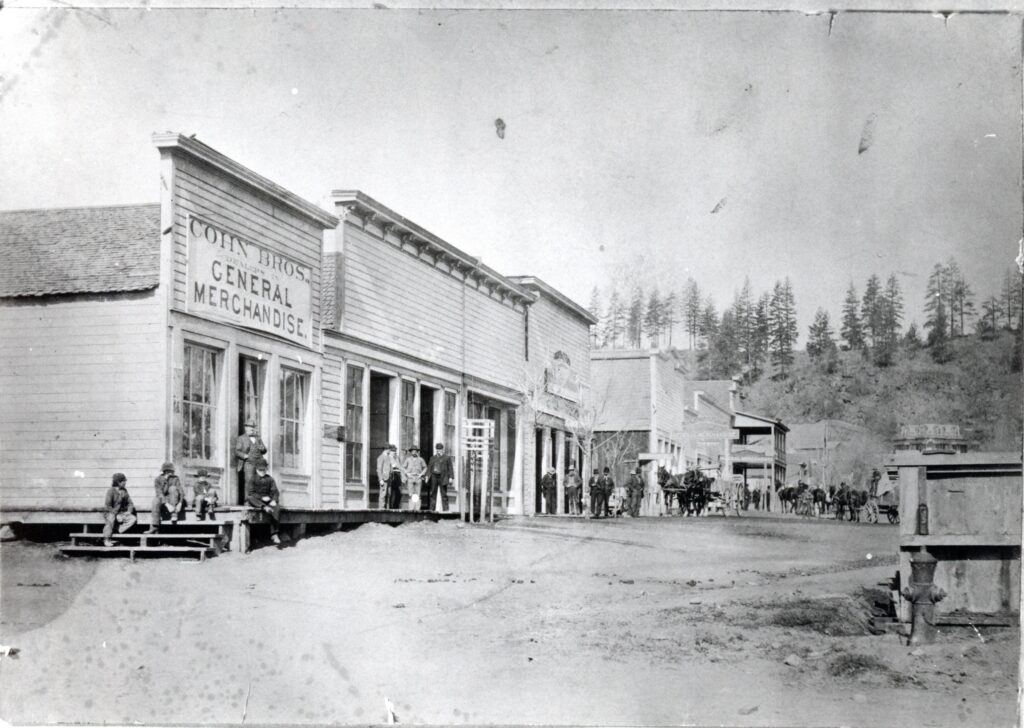
Susanville, 1895

South Side of Main Street, Susanville, 1895-Harmon Anderson Family

In July of 1893, a fire wiped out Susanville’s entire business district.  An 1898 fire would destroy records pertaining to 1893-1896 era. This makes this photograph rare, but intriguing. As the saying a picture is worth a 1,000 words. In this case, the picture asks a multitude of questions.  After all, these buildings would be destroyed by a 1900 fire. It was that fire, the residents of the Susanville Township rallied for incorporation as a municipality for fire protection.  A special election was held in August and City of Susanville became a reality.

Tim

A Complicated Relationship

Fire trail V-drag plow, 1929. Courtesy of Fruit Growers Supply Company

Fruit Growers Supply Company’s Lassen Operation, on the surface seemed ideal–abundant timber supply supply, two billion board feet worth. In 1922, Fruit Growers purchased one-half of that billion board feet from the Lassen National Forest, a story in itself. It should be that timber was intermingled on Fruit Growers and Lassen National Forest property, primarily to the west of Eagle Lake. Early on the two had divergent opinions on fire prevention methods. The forest service  preferred the slash.burning method wherein tree limbs etc would be piled and burned. Fruit Growers said that method was costly, i.e. $13 per-acre. Fruit Growers adopted fire lnes, that other progressive timber companies had adopted. Fruit Growers created fire lanes that were 100 feet wide and completely void of vegetation, each encircling 100-acre sections of timber. They were formed by a specialV-drag hooked to a 60-Caterpillar tractor which could clear up to six miles of fire lines a day. The lanes not only served as firebreaks, but provided quick access in an emergency.

During the fire season, two crews of eight to ten men worked as fire prevention team. It was their job to build fire lines, oversee brush and slash piling, remove dead snags and maintain the company’s private telephone lines. Telephone “boxes” were attached throughout the forest, allowing for daily monitoring between the logging camps and the mill. The telephone system was also used to report fire or an accident when medical aid was needed.

By the end of 1932, the 178 miles of fire lanes constructed over 26,000 acres had proved very effective. Even though three of the. seven years it took to build them were critical fire years, only 53 acres burned. From 1925 to1940, prevention cost $40,373.54, fire fighting only $7,546.65. During World War II the construction of fire lanes was abandoned.

Support


A Spaulding Tract Revival

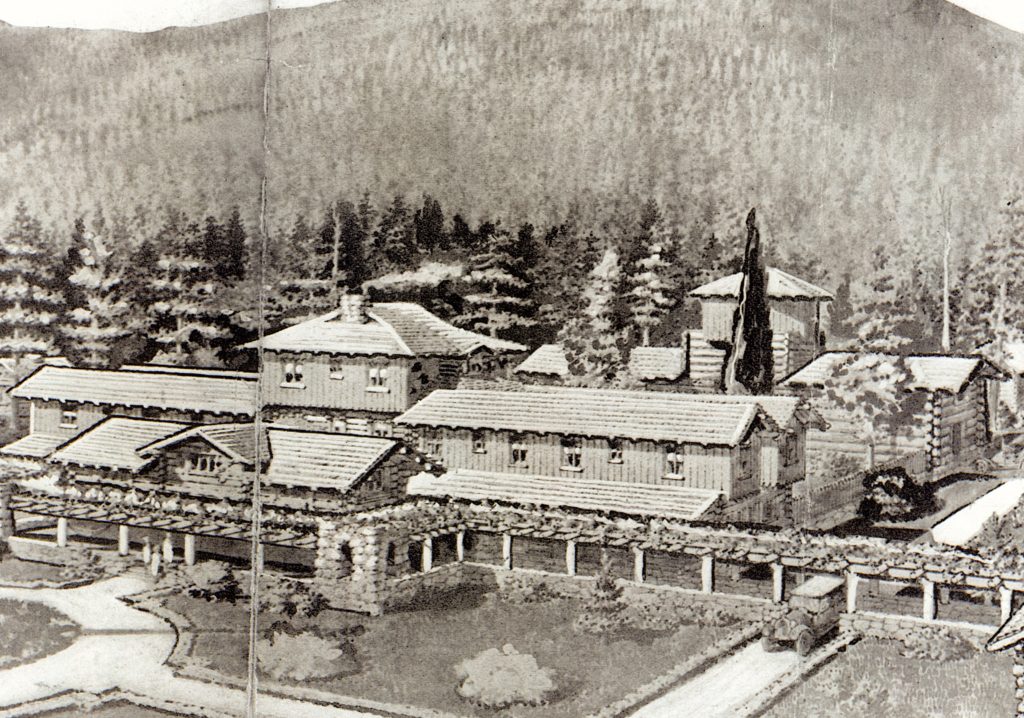
An artist’s rendering of the proposed hotel at Spaulding Tract

In 1914, John Spalding subdivided his brother-in-law’s Jules Hurlbut homestead for summer homes. While many took notice, the sales were dismal. Ten years later, W.J. Spalding, John’s son, revamped the subdivision to what is today.

Spalding enlisted the aid some real estate promoters from Southern California and formed the Eagle Lake Cabin Site Company. They had grandiose plans, at least on paper. There was a  proposed $100,000 resort complex, that the Eagle Lake Lodge was to resemble the Grand Canyon’s El Tovar Inn. In June 1925 the Company informed Spalding that sales were a doing great. Some 2,800 lots had been sold at $50 each “to a very desirable class of people.”. The sales remained brisk for the year.

1926, was a different story, as in buyers remorse. Some of last year’s buyers came to inspect Spaulding Tract. First they had to deal with poor road conditions and upon arrival there was no grand lodge or even a cabin. Needless, to say the lot owners were angry had invested in non-existent resort community. Over the ensuing decades lots at Spaulding could be had at bargain prices via delinquent tax sales. In 1950, Lassen County sold 524 lots during a delinquent tax sale that saw prices range from twenty cents to twenty dollars a lot.

Support


The Johnstone Letters

I.W. “Doc” Smith’s, Hot Springs Hotel, circa 1907, north of Wendel

Earlier this year, a friend sent me a copy of a 1890 letter between the NCO Railway and Cedarville merchant, T.H. Johnstone about a business proposal at Liegan. That triggered a memory. In 1982, a paper dealer from Redding contacted me about a collection of  letters dating from the 1890s to the early 1900s between T.H. Johnstone, and his brother Samuel A. Johnstone. Sam Johnstone came to Amedee  in 1893, and would later the become owner the Amedee Hotel from 1901 to 1907. The letters opened a proverbial pandora box, with topics such as the tragic death of Maud Bentel and the death Cora Johnstone, the first person interred in the Amedee Cemetery. Below, a is a 1899 letter about the NCO and  extending its line northward.

April 25, 1899 – T.H. Johnstone, Cedarville,

Dear Tom:  Are you having any maple sugar this spring, if so can I have some of it, 2 or 3 bricks for my own use. Well Railroad business is somewhat a standstill. Mr. Fulton has resigned his position taking effect May 1st. Do not know who will be his successor, think Ed Smith will. Smith is the head engineer on the. road is a fine man, has got charge of all trains. None think Amedee will be moved to Doc Smith’s place, that is at the foot of the hill where those warm springs are. They have built a side track there and level it up nice. Also built  water tank that hold 42,000 gallons of water. Mr. Gest calls the place Smith. They expect to move the shipping corrals up there for fall shipping of stock and think that the depot for Honey Lake merchandise will be there, but do not know yet as people are guessing at most of it. Smith told me if he had anything to do with it after Fulton. left, he would give me all the information he could. Are not doing much now as they are out of steel and will be summer time before they can get any.  Yours Respectfully Sam.

Never miss a story, click here.


Tuesday Tidbit-Calendars

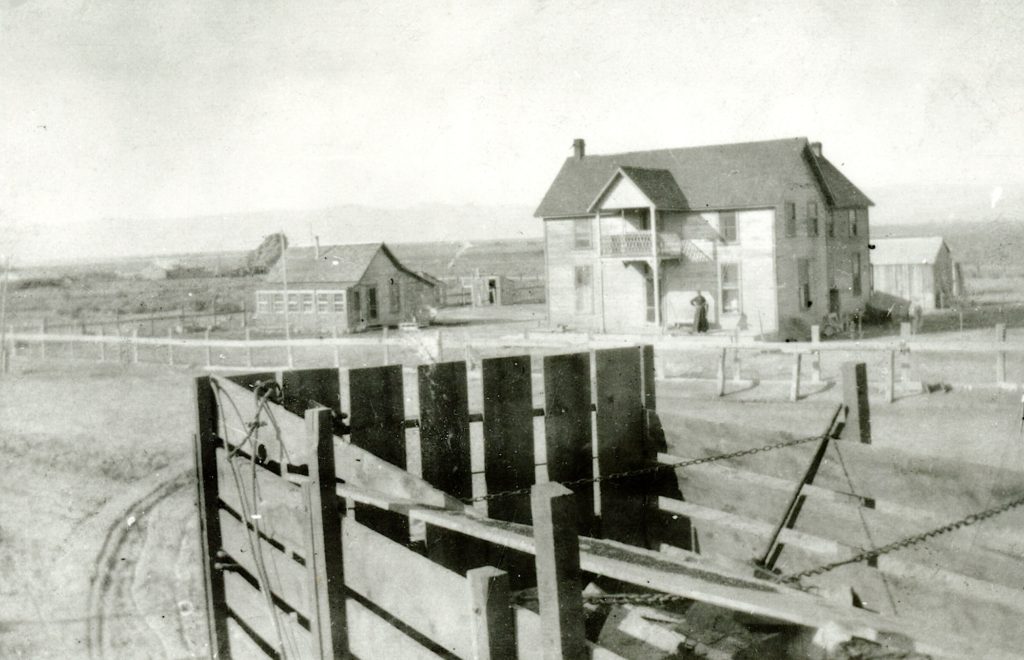
Franch Ranch, Secret Valley, 1936 – C.H. Bennett Collection

There will be a 2026 calendar. It is one of those projects that is always on the back of my mind. This is when it gets serious as to photograph selection. There are some photographs, I particularly like, but will be rejected, due number of a factors. Actual production does not begin until the fall with a release goal of late October.

Tim

A Sawdust Pile Tale & More

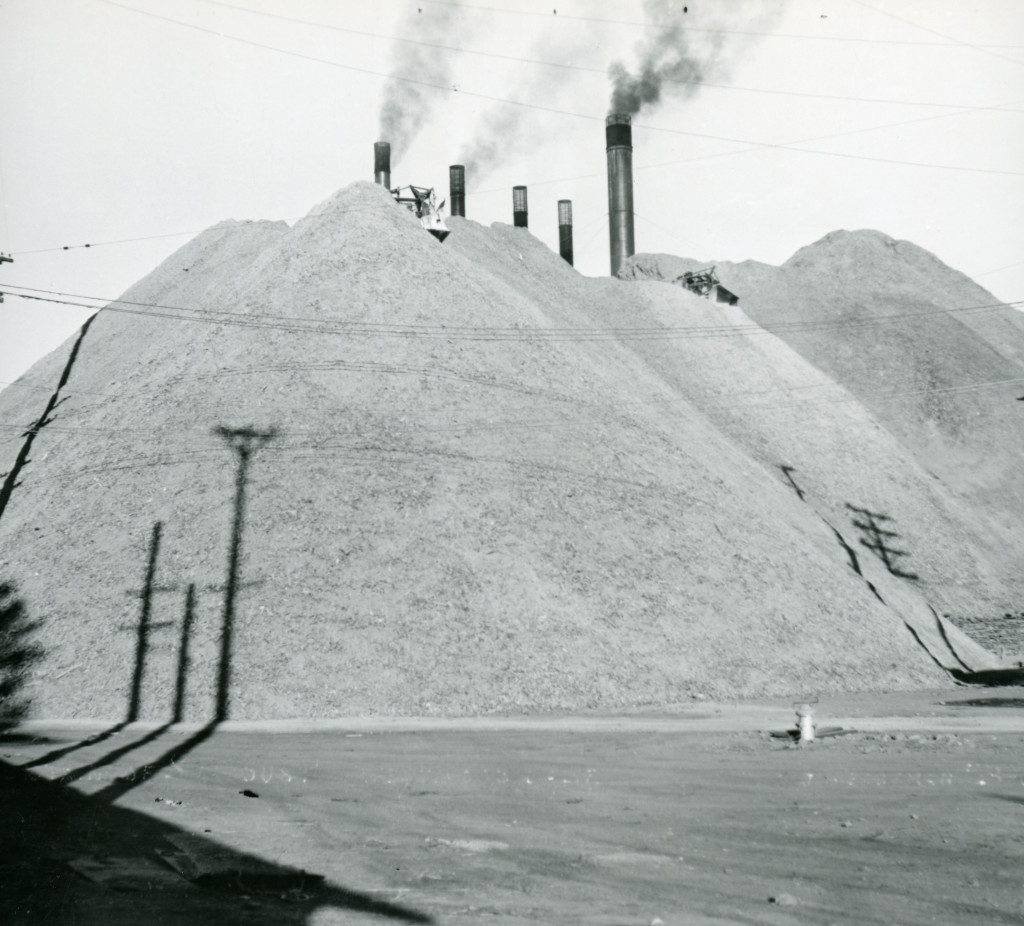
Awhile back Kay Ole Leary wrote: “I am making a book out of my mother’s memories of growing up in lumber mill towns. One of her vivid memories was of being warned to NEVER play in the sawdust piles, no matter how much fun it looked like it would be to do so. The spontaneous combustion inside the piles would create pockets of fire, leading to, in her words, “a horrible death.”
“I am illustrating her stories with the many photographs my grandfather took of his family and the places they lived. Unfortunately, the only photos of the Pine Ridge Forest Lumber Company Lumber Mill we have are of the log yard and log pond (each with their own stories), but none of the sawdust piles.
I have searched (online) historical archives and have contacted several PNW historical societies, all to no avail.
“May I, please, giving credit as you direct, use one of your sawdust photos in my book? I like the lower one, without the telephone pole, better. I would very much appreciate your permission, and would not use it without your permission. Thank you for considering my request.”
Of course, I was able to assist. From to time people start writing memoirs, usually at the urging of a family member. They happen on my site, and a popular request is the Westwood Hospital. This is why there is a no paywall. However, there are some people that blatantly abuse the privilege, and there is one person that copies the photographs and profits by doing so. As the saying goes, it takes all kinds.
Tim

Something to Ponder

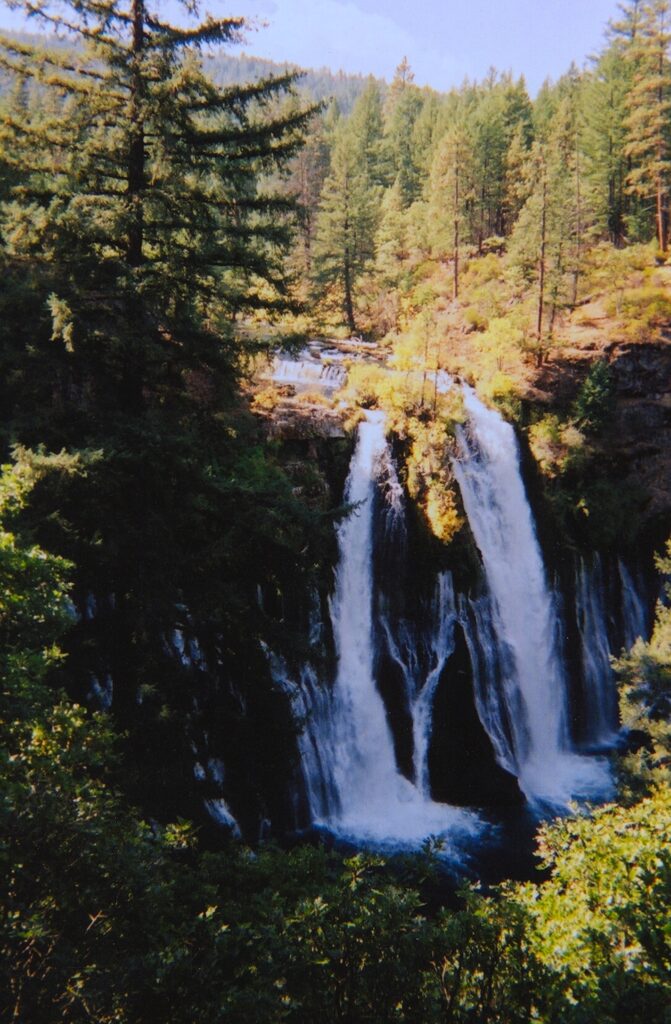
Burney Falls, September 2002

Today marks the beginning of meteorological summer.  In advertising circles,  Memorial Day Weekend is in the unofficial start of summer. Yet, it the Summer Solstice does not occur on June 20, this year.

Whatever the case may be, with longer daylight hours, warmer temperatures and the school year coming to an end, a lot of people have the tendency to travel. California is a large and geographical diverse state. It has 58 counties and 280 state parks. Yet, five counties do not have  a state park–Inyo, Lassen, Modoc, Sierra and Siskiyou. The other common trait of these counties that they  are border counties.

Tim


Paul Bunyan Days

Log rolling contest at Willards. Couresy of D.B. Martin

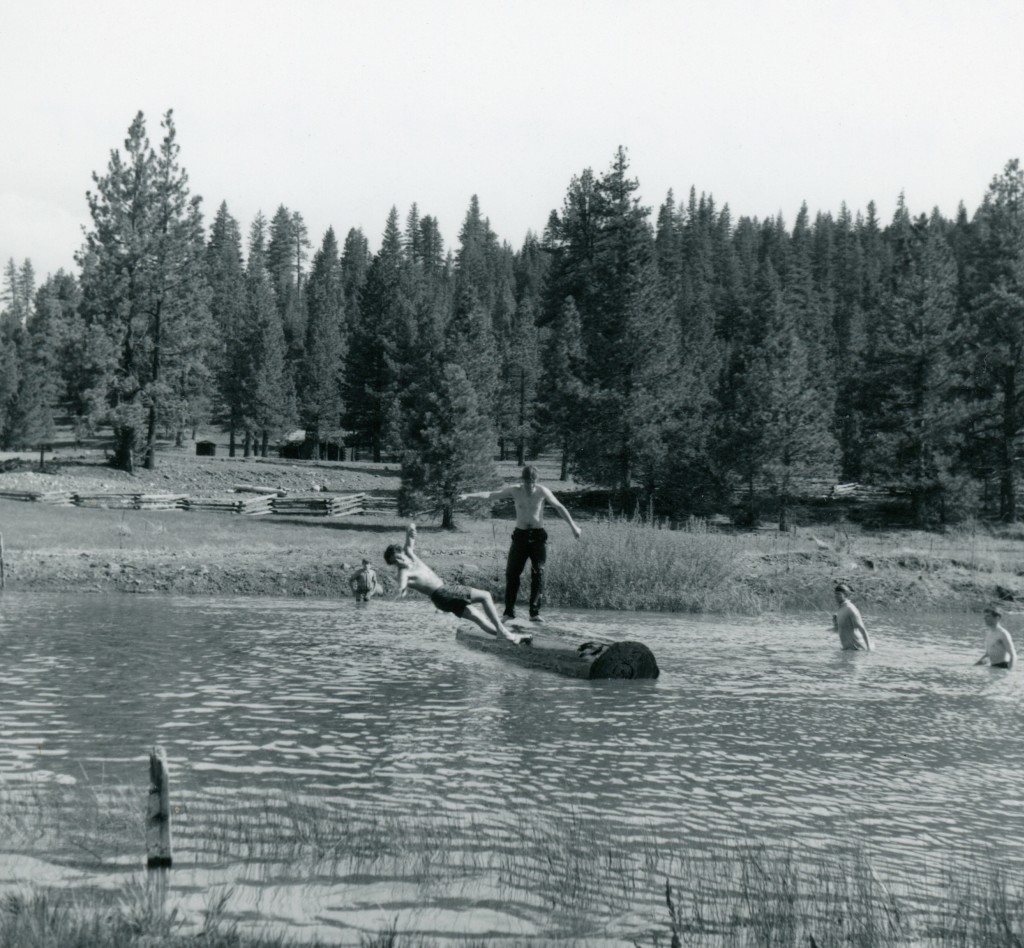
In the late 1940s, Paul Bunyan Days  was a logging competition held not only at Lassen College, but other community colleges that had forestry programs.  Tom Gilfoy who graduated from Lassen in 1951, said it was Ralph Throop who was instrumental in starting Paul Bunyan Days at Lassen. At that time it was held behind the high school, since the college was located on the same property. Tom stated they made an impromptu dam on the Susan River for log pond events that included log rolling. Other contests involved burling, pole climbing and two-man bucking saw.,  In 1950, Rex Coalson was the overall winner, followed by Ted Pankey in 1951.

Some time in the late 1960s, no doubt due in part that Lassen College separated from Lassen High School, the Paul Bunyan Days was moved to Willard Creek. It was rather fitting since in 1938, it was the forestry students who developed the Willard Hill ski area, later converted into a sled hill.  Mike Moyers who later taught at Lassen stated that around 1981 or 1982 was when the last Paul Bunyan Days was held. In 1984, the forestry program at the college was terminated due to lack of students.

Subscribe

Exploring Lassen County's Past