Standish Townsite Selected

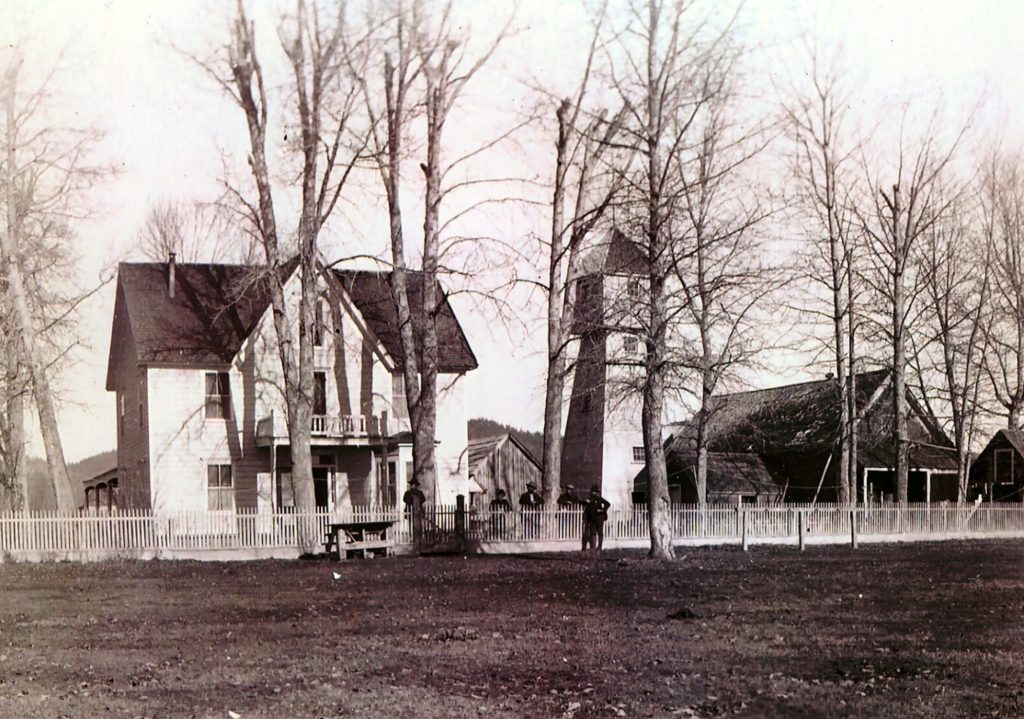
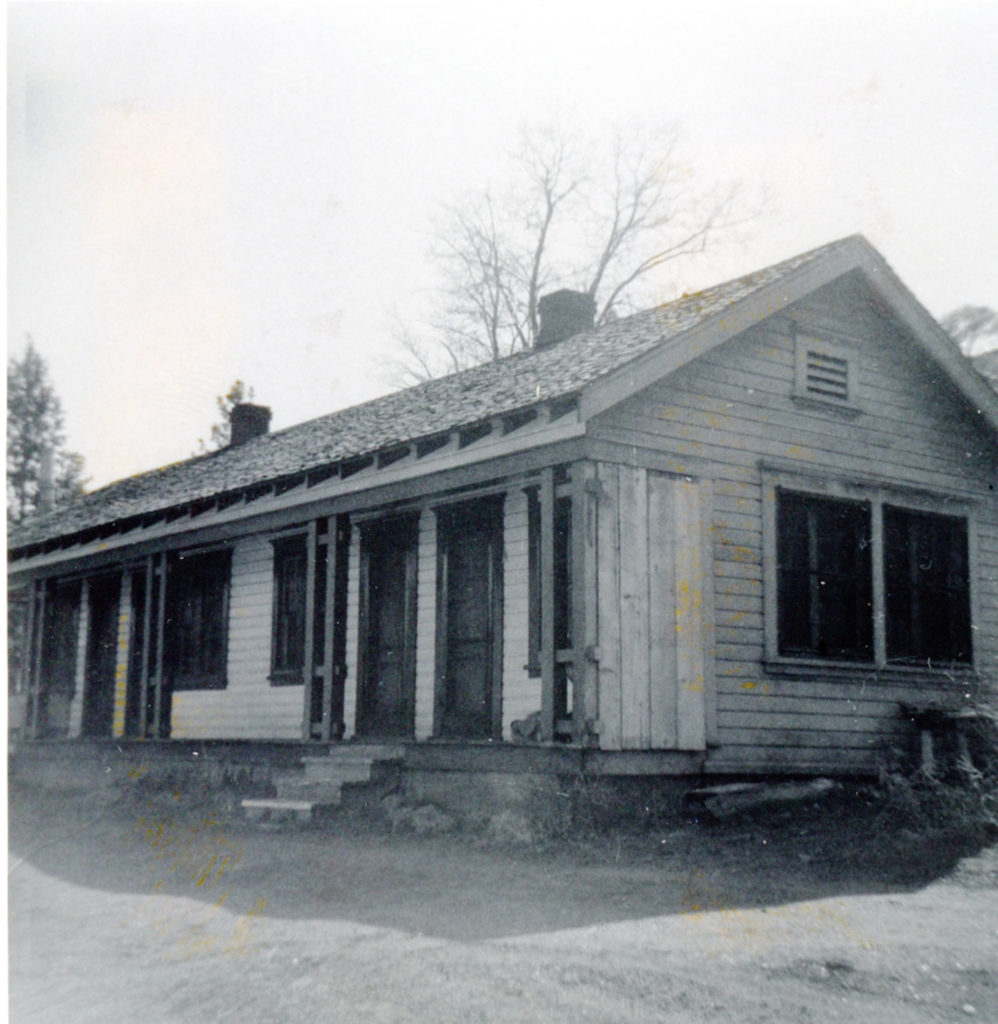
Standish, 1910. Courtesy of Esther McClelland

In February 1898, it was revealed that a site for the utopian community of Standish had been selected. It consisted of 240 acres and one of the main features was the main road from Susanville to Amedee would run through the center of the town. That road we know today as Highway 395. After the announcement everything was relatively quiet. One would think the promoters would be anxious to develop the new town. That was not the case, as it was just the opposite. The Associated Colonies who was behind the project took a slow and methodical approach. In July they stated their mission was to “To build, not to boom.”

Subscribe

Engels Copper Mine

Engels Copper Mine, 1922. Courtesy of Lola L. Tanner

The shortest way from Susanville to Engels Copper Mine is via Gold Run, though not advisable if your are not familiar with the territory. In 1880 Henry Engels discovered copper at Lights Creek near Taylorsville, it being a part of the Plumas Copper Belt.

Major development of the mine occurred in the 1910s. For a time it was the largest producer of copper in California. At its peak in the early 1920s, the townsite of Engelmine boasted a population of 1,200. While the mine closed in 1930s, the remnants that still remain are worth a visit.

Never miss a story, click here to subscribe.

Golden Spike Ceremony

Arthur Curtiss James of the Western Pacific Railroad driving in the golden spike—Courtesy of the Big Valley Museum

On November 10, 1931, a historic day was held in Bieber with the Golden Spike Ceremony connecting the Western Pacific and Great Northern Railroads. While intensive planning was done, one thing never considered, it turned out to be an extremely cold blustery day. Some attendees pondered which was worse the long winded speeches by dignitaries or the cold northerly winds. After Western Pacific Chairman Arthur C. James had driven in the golden spike, the crowds quickly dismantled the temporary wooden grandstand of make a huge bon fire.

It should be duly that on the twentieth anniversary Lucius Clegg and Charles Beebe of the Virginia & Truckee fame, did a re-enactment ceremony of the driving of a golden spike at Bieber.

Support

The Good Old Days

Lassen Mail, May 24, 1935

That was good news In 1935, but the city officials of 2019 are dealing with their day of reckoning with a financial meltdown.

During an audit of the city’s finances in 1935, it found that city officials showed fiscal restraint. The city in fiscal year 1933-34 had an income of $47,640.36. At the end of the fiscal year, the city’s total expenditures were $40,359.17. Thus, the city had in reserves a balance of $7,281.19! They city had only three full time employees: W.O. “Lannie” Long, Chief of Police with a monthly salary of $200 per month; Perle Long, Nightwatchman at $150 per month and H.S.Riddell who wore multiple hats as City Clerk, Engineer, Fire Chief and so forth at $150 per month.

Never miss a story, click here to subscribe.

Last Call for 2020 Calendars

It is that time to slowly focus on a new year that is quickly approaching. As usual I have put together a 2020 calendar with a wide variety of historic scenes that include Camp Harvey Cookhouse, the Volcano Room of the Hotel Mt. Lassen, the Lassen Monuments, Paul Bunyan Lumber Company, Bly Tunnel, the Sierra Theater to name a few. One has three options to purchase calendars:

1) Locally, you can purchase them at Margie’s Book Nook.

2) You can purchase direct online by clicking here

3) You can also email me to place your order, and it will be sent with an invoice.

Thanks.

Herlong Junction–Then & Now

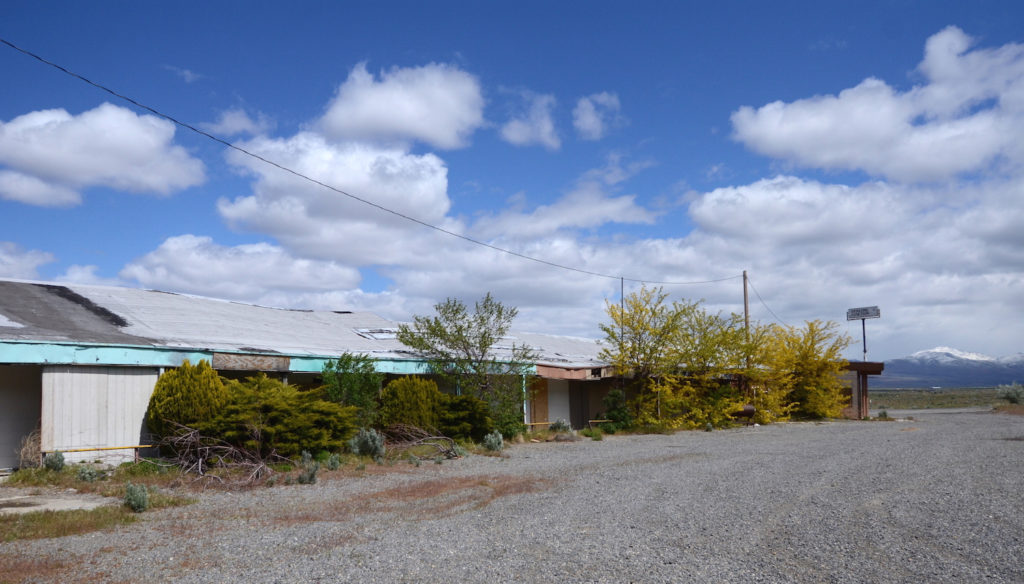
Herlong Junction, April 2016. Courtesy of Oliver Grosz

One of the lessons, I learned from my ‘fall from grace,” is that I do need to get out more, than my familiar customary outings in the back country of this region. Prior to the accident, I had not been to Reno since June 2017, when I boarded Amtrak with a destination to the Bay area to attend a special 95th birthday luncheon for Art Mathews. To my surprise on my return to Susanville from Reno last month, that in the preceding two years the abandoned building known as Herlong Junction had been demolished.

Herlong Junction,, November 16, 2019

Hayden Hill Mining District

Hayden Hill, 1909. Courtesy of Dallas & Joyce Snider

On December 5, 1870 the Hayden Hill Mining District formed.* Gold was accidentally discovered there in the fall of 1869 when a group of prospectors camped on the mountain, after an expedition in search of the fabled Lost Cabin Mine. They returned the following spring and named their discovery, “The Providence.” Once word spread of the new gold strike over 500 miners had flocked there. It was necessary to form a mining district to keep track of the claims. It was decided to name it Hayden Hill, instead of Providence, since Joseph W. Hayden, a veteran miner aged 56, was the oldest miner there, and they honored him with the bestowment. Hayden died there on Christmas Day 1884 and was buried in the town’s cemetery.

*For those not familiar, Hayden Hill is located approximately twenty miles north of Eagle Lake and eleven miles south of Adin.

Support

Susanville’s State Cafe

The State Cafe was located on South Gay Street, Susanville.

Seasoned residents of the region may recall this restaurant on South Gay Street. What many may not realize when it opened its doors on July 3, 1936 it was on the corner of Main and Gay. Its first proprietors consisted of E.L. Elskamp, Paul Dedick and Jack Tilton, best known for their bootleg joints during prohibition. In the course of time, the restaurant moved from its prime Main Street location to the rear of the building to be replaced with the State Bar. In the center of the building between the two establishments was a laundromat—all interconnected. One could easily eat, drink and do laundry all at the same time, never leaving the premises.

Excavation of the State Building, next to the Grand Cafe., May 1935. Courtesy of Helen Sargent

Never miss a story, click here to subscribe.

City Pharmacy aka Spalding Drug

Interior of Spalding Drug, circa 1910. Courtesy of George McDow Jr.

Seasoned residents of the area will have fond memories of a one time inconic local instutition, Spalding Drug. It was established in 1865, by Zetus N. Spalding. In the 1890s, his son, John B. Splading took over the business. To give it a more cosmopolitan flair, he renamed it the City Pharmacy. The basic operation remained the same. Members of the Spalding were avid sportsmen and it was reflected in the merchandise they stocked. Not only was there a wide selection of fishing tackle, but guns and ammunition as well. By the time, City Pharmacy moved into its new stone building on the 700 block of Main Street, the name reverted back to Spalding Drug.

Subscribe

15,000 Christmas Trees

An interesting silver tip near McCoy Flat Reservoir, June 15, 2019

In December 1936, the Lassen National Forest issued a statement that 15,000 Christmas trees had been cut. The majority of the harvest were shipped to metropolitan areas for sell to “city dwellers.” The forest service stated, “The cutting serves to thin crowded stands and to stimulate growth of the remaining trees.” The most popular tree cut were “silver tip” fir.

Never miss a story, click here to subscribe.

Exploring Lassen County's Past