Sierra Shangri-La

This was a unique 1953 publication put together by Harold Gilliam, and most of material originally appeared in This World segment of the San Francisco Chronicle. Gilliam later became one of the earliest environmental journalist and had a lengthy career with the San Francisco Chronicle.

Gilliam’s prose and unique perpspective differs from a lot of promotional material. From time to time excerpts will be featured. The following are the opening paragraphs:

“Susanville comes as a surprise. You drive for hours through the Northern Sierra—up deep gorges, along roaring streams, through high mountain forests, beneath jagged peaks sheathed in ice this time of year—and suddenly there below you at the head of a wide valley is an attractive city, with homes, businesses, railroads and factories.

“This mountain city is the capital of the region that is legally part of California but in most ways is as different from the rest of the State as was James Hilton’s mythical Valley of the Blue Moon from the region which surrounded it.

“Here in this isolated valley men once fought a frontier war to maintain their independence from California. Here in 1952, serenely indifferent to threats of civilization’s atomic destruction, men work confidently on a project which will have no practical results for 150 years.”

Subscribe

A transformative time

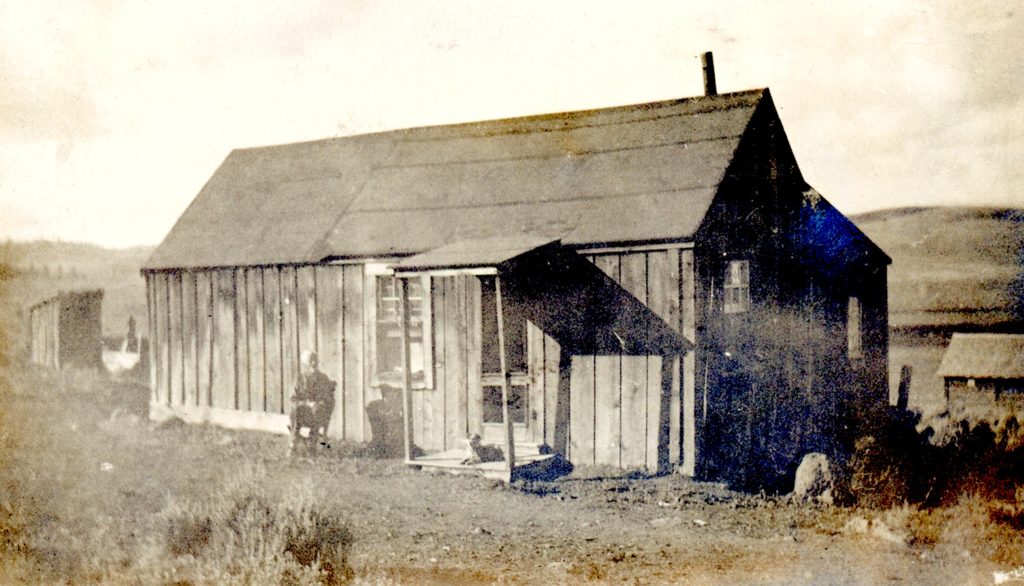
Bill & Franceska Nehuas, Willow Creek Valley, circa 1912–Phyllis Beard

In November 1929, Henry Neunaber of the accounting department had some extra time on his hands. On June 30, 1929, the California Division of Motor Vehicles released its annual car registration figures for each county. In 1914, there were 123,516 registered vehicles in California. In 1929, that figure increased by a whopping 1,859,523.

In Lassen County in 1914 there were 181 vehicles. In 1929 there 3,942 an increase of 22 times. Only three other California counties exceeded that growth rate—Contra Costa, Mariposa and Monterey. Of course, local boosters were proud as just another indicator of the region’s prosperity.

Subscribe

The flood of 1952

500 South Lassen Street, Susanville, April 5, 1952–Courtesy of the Uptegrove Family

Seasoned residents refer to a January snowstorm in 1952 as the “big snow.” In three days, Susanville was covered with five feet of snow and on the other side of the mountain in Westwood eight feet of snow blanketed the town. With all that precipitation from a single storm, it was far from the wettest year on record.

By late March officials were concerned with the spring run-off. A snow survey taken late that indicated there was eleven feet of snow at Silver Lake with over a fifty percent water content. By the first of April stream flows were quickly rising, especially on Piute Creek. By April 4, that creek was transformed in a raging torrent—Memorial Park now a lake and homes further down on Foss and Cornell Streets received substantial flood damage.

Flooding near Standish, 1952. Courtesy of Betty Barry Deal

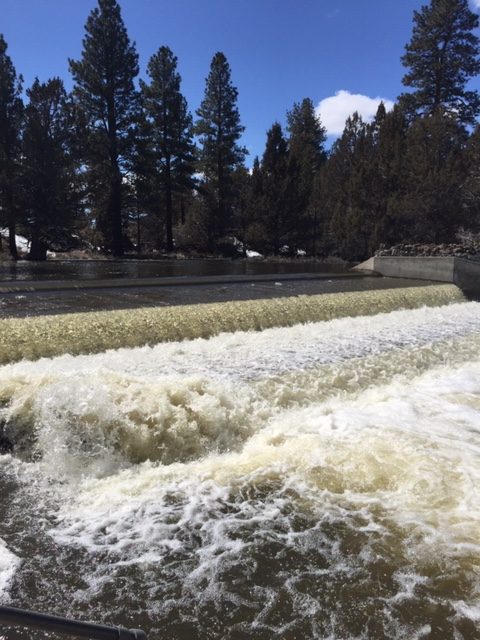
Susan River through Susanville caused minor damage, with the exception at the railroad trestle that spanned the river at South Lassen Street, trapped debris backing up flood waters. Downstream was another matter with tributaries to the river increasing water flows causing widespread flooding in the Standish district.

Donate

Riverside Hospital Sold

Construction of Riverside Hospital, 1920. Courtesy of Ed Standard

On July 27, 1944 Dr. George S. Martin made the stunning announcement that he sold the Riverside Hospital located at 2005 River Street, Susanville. He sold it to two Susanville physicians Dr. Clair Burnett and Dr. J.W. Crever for a whopping sum of $825,000. It had been a profitable venture for Martin who came to Susanville in 1920 to establish the hospital. He had a lucrative contract with the Fruit Growers Supply Company to provide its employees with all their medical needs. At the time of the sale, Martin noted that over 12,000 patients had been admitted to the hospital in a twenty-three year span.

Riverside Hospital, courtesy of Betty Barry Deal

Subscribe

Our Version of Punxsutawney Phil

A rock chuck also known as a Yellow-bellied marmot

While back east they may have their ground hogs, we have our rock chucks that can easily be spotted around many parts of the region. They do have a special affinity for the Lassen Community College campus. First time students who see them on campus are intrigued. It has been mentioned to me a time or two, that the college should replace its mascot, a cougar, with a rock chuck.

In 1898, one local weather observer gave his opinion of that particular ground hogs day. “There were several gleams of sunshine in which the festive rodent might have disported if so disposed. As a weather indicator the ‘ground hog’ is not a howling success in this strip of the country. He is a fraud.”

Never miss a story, click here to subscribe.

The Grant Smith Problem

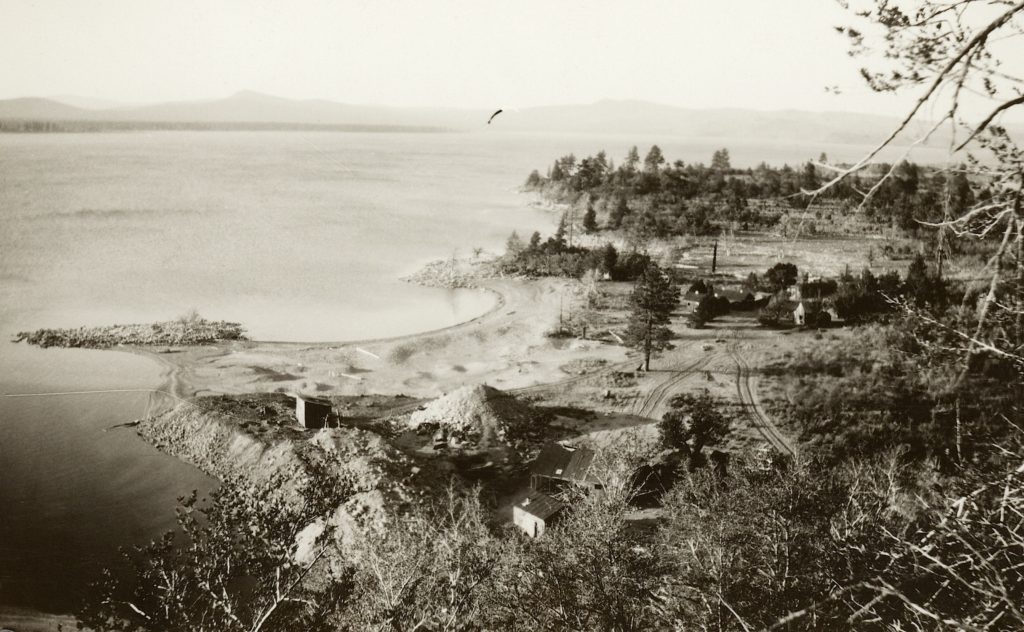
Bly Tunnel, Eagle Lake

Okay, some people did not take kindly that they felt I left them hanging about Grant Smith Company and the bondholders of the Bly Tunnel. I should have mentioned at the conclusion that I would do a follow up. Here it is, enjoy!

What Grant Smith did not initially disclose to the bondholders was that the original plans called for the intake to tap the lake forty feet below the current surface. They only told the bondholders they did eight feet, citing the volcanic rock bottom too difficult. In addition, Leon Bly and Grant Smith agreed to the change, but it was not revealed to anyone else. Because of these problems, the irrigation districts could not use the water until they agreed to sign off its completion. Stymied, on September 8, 1923 the districts and Leon Bly agreed to accept a final settlement, and $25,000 would be withheld to correct the defects. Lo and behold in the beginning of the 1924 irrigation system, during one of the worst droughts ever experienced locally and throughout California, it was discovered Grant Smith only did three feet below the surface at the intake! The districts would need a lot more money than stipulated.

Grant Smith’s tunnel works, Eagle Lake, 1922–Courtesy of Lola L. Tanner

Subscribe

Large Ranches Sold

The Fruit Growers ranch as it appeared in 1922.

That was the front page headline of the Lassen Mail of January 31, 1936. the newspaper reported that L.E. “Gene” DeForest purchased the Ramsey Ranch south of Susanville (Many people know this day as Les Allen’s Ranch on Richmond Road. Also included in the sale was the 1,400 acre Swain Ranch on the Madeline Plains.

The other big transaction was Fruit Growers Supply Company sold the ranch north of town along Piute Creek to the Republic Electric Power Company for $35,000. (The property today known as Susanville Ranch Park). Fruit Growers had acquired it in 1919, for Bagwell Springs that they intended use for the mill operation. The company spent several thousand dollars to build a pipeline from their to their mill adjacent to Riverside Drive (that later became Sierra Pacific). Not a drop of water flowed the pipeline. The downstream water users object and through the court obtained an injunction. After that Fruit Growers leased the ranch. Republic Power wanted to water rights to the spring since they also owned the existing Susanville Water Company and local electric company.

Subscribe

Susanville, 1923

MaIn Street, Susanville, 1922

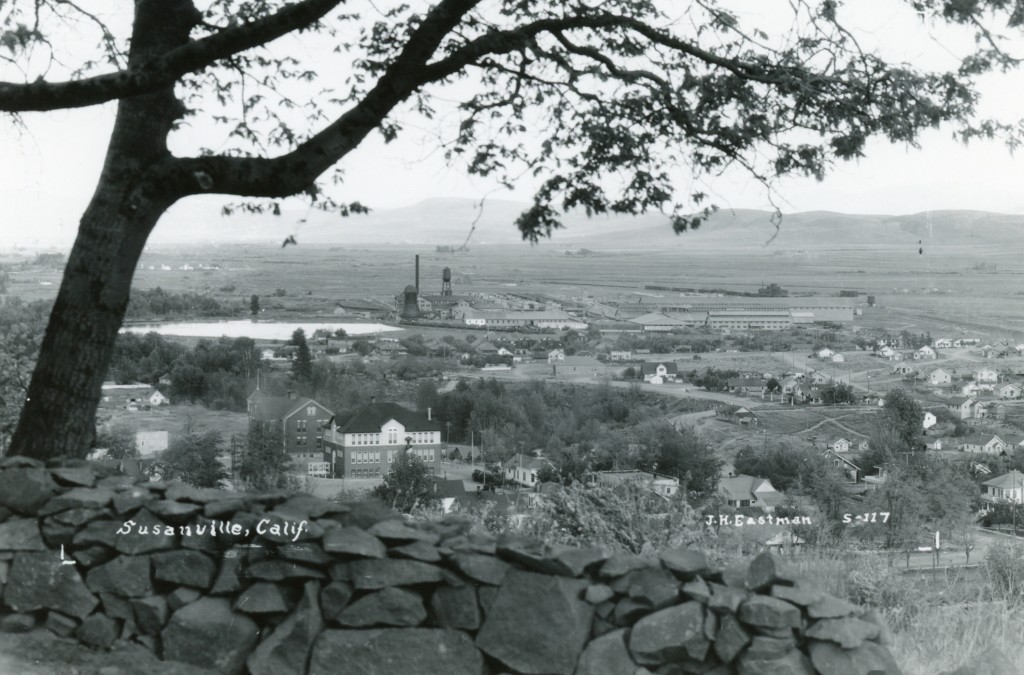
Susanville, the Lassen County seat, is beautifully located at the base of a mountain range where the timber line meets the great expanse of Honey Lake Valley. The Susan River flows down its canyon from the west and through Susanville. Highways enter from four directions and the Southern Pacific railway runs east and west through the town and up the Susan River canyon. The population is 5,000.

The big lumber mills of the Lassen Lumber & Box Company and Fruit Growers Supply Company are located in Susanville employing 2,000 men between them and giving the community a big payroll. Several other smaller industries flourish. The farmers of the Honey Lake Valley and surrounding valleys bring their products to Susanville for sale or shipment and buy their merchandise.

The town has two miles of paved streets and other improvements that would be a credit to communities three times the size. There is an electric light system furnishing cheap power and the water system takes it water from a large spring several miles from Susanville in the mountains. A modern sewage disposal plant as just been built by the city to replace the old method of draining into the river.

Susanville has an excellent high school, three grammar schools, county library, five churches and several active fraternal groups and societies.

The above material was from a Lassen County Chamber of Commerce brochure.

Never miss a story, click here to subscribe.

Where the antelope roam

A herd of antelope near Secret Valley, 1938.

In 1938, Mirl Simmons, of Susanville’s Eastmans Studios was one busy guy. He was busy filming and photographing the eight counties then that made up the Shasta-Cascade Wonderland Association. That association was preparing to display all the wonders the region possessed at the upcoming Golden Gate International Exposition to be held in San Francisco during 1939.

Early one morning in May 1938, Simmons made a journey to Secret Valley in hopes of capturing on film sage hens. What he found instead was a herd of co-operative antelope that he made a motion picture of instead.

Never miss a story, click here to subscribe.

Exploring Lassen County's Past