The Tanner Slough Initiative

Colony Dam and the Baxter Creek Siphon, Susan River, 1938

In the never ending quest for search for water in the Honey Lake Valley for irrigation a multitude of avenues were explored. A late entry was that of the Tanner Slough Irrigation Association that was formed in the late 1930s. This association was composed of the ranchers of the Tule District, the lower end of the Susan River and the various sloughs before they empty into Honey Lake. Those ranches included—Theodore, Mapes, DeWitt, Bailey, Fleming, McClelland, Gibson, Tanner and Dill.

They were able to impound 2,600 acre feet of water in Willow Creek Valley, and also flood waters of Horse Lake. The spring floods of 1938 caused considerable damage throughout the region. The Colony Dam on the Susan River near Standish was a casualty. The Colony Dam did not impound a great deal of water. One of its key components was a point of diversion of water to downstream users.

On April 20, 1938 the Tanner Slough Irrigation Association sent a letter to the California Governor Merriam seeking funds to repair and reconstruction of the Colony Dam. The flood damaged some 10,000 acres of land belonging to members of the Association. Not only delayed getting crops planted, but when summer arrives they might not be able to divert irrigation due to the damage of the dam, and the sloughs. They sought $3,500. In their plea, they wrote, ”We know of no other place to make an appeal for aid and assistance. You are about our last hope.” Their request was denied.

Never miss a story, click here to subscribe.

The Weather Report, October 1899

Construction of the Fernley & Lassen Railroad, west of Susanville, January 1914. Courtesy of B.R. Zimmerman Collection

While fall in this country can experience some nicest weather of the year, there are instances, well it is not so pleasant. The first snow of the 1899-1900 season occurred on the night of October 10. The amounts varied, Susanville had two inches, while Willow Creek Valley, just a trace and Milford with four inches of snow. On Friday, October 13, it snowed all day and into the night and in its aftermath Susanville was blanketed with fifteen inches of very heavy, wet snow. On a bright note, at least for the wood cutters, the cold snowy weather kept them busy filling orders.

Never miss a story, click here to subscribe.

An Eagle Lake CCC Camp?

The outlet construction camp of the Bly Tunnel, 1922. Courtesy of Lola L. Tanner

In 1935, Lassen County officials requested a third Civilian Conservation Corp Camp (CCC). This would function a bit differently.  What they sought was a CCC Camp at Eagle Lake to assist with the beleaguered Bly Tunnel and the Tule and Baxter Creek Irrigation Districts. It was their contention after all that a CCC camp could provide work on the tunnel that was necessary to prevent further bankruptcies of the farmers and ranchers involved with the districts. The camp could also provide much needed labor for the canal and siphon system in the Honey Lake Valley that distributed the water. The county’s request was denied, but government officials were somewhat sympathetic and stated some limited manpower might be available from time to time from the Secret Valley CCC camp.

Never miss a story, click here to subscribe.
P.S. – For Lassen County residents, today, one can receive a free flu shot at a drive through clinic at the Lassen County Fairgrounds.

Pike’s Point Revisited

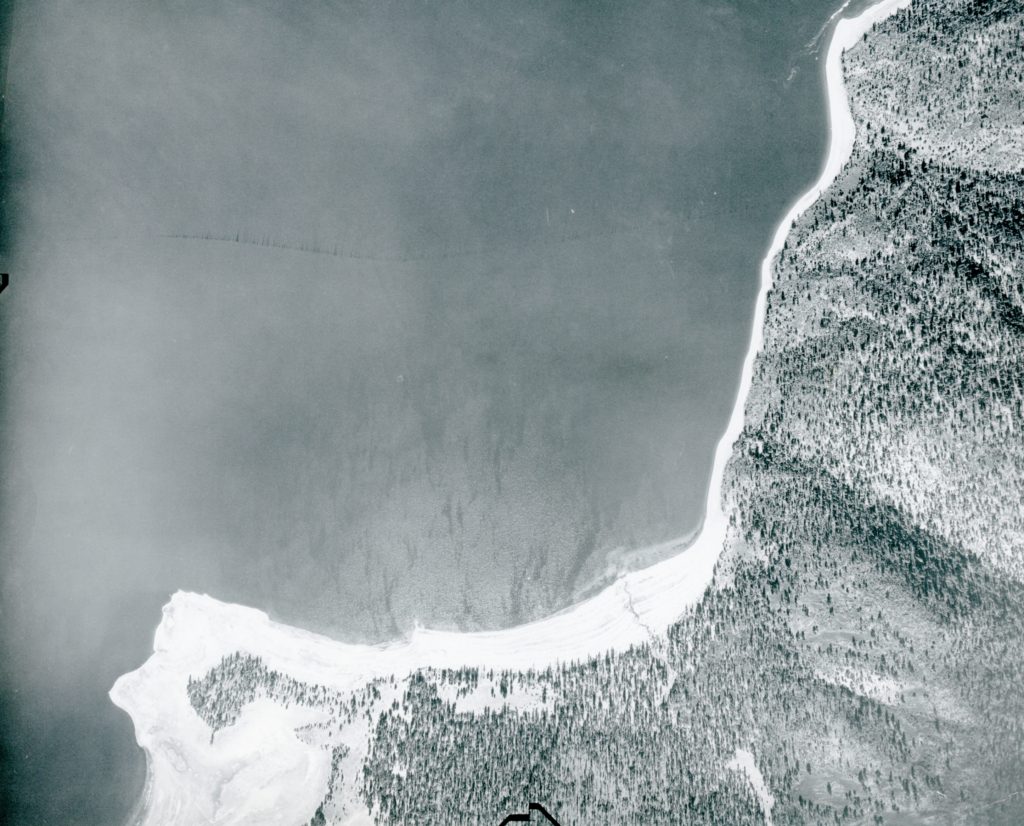
South shore of Eagle Lake, October 8, 1941 – Hank Martinez

Some may recall awhile back about this topic. A little update, since I have since received a better photograph showing the point during the low water era, which as you can tell provides a better understanding. For those you may have just tuned in Pikes Point is located at the south shore of Eagle Lake and most people know the location as the Eagle Lake Marina. The photograph shows all of Gallatin Beach to Eagle’s Next, prior that developments existence.

Donate

A Four County Community College?

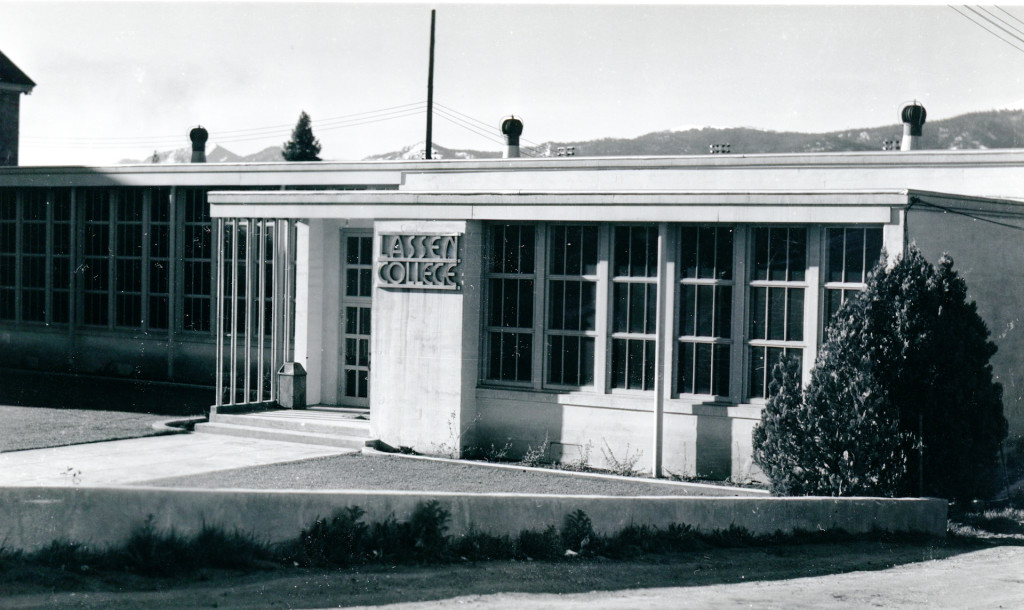
Lassen College
Lassen College on the Lassen Union High School campus.

In 1965, Lassen Community College severed its ties with Lassen Union High School. The college then began the process to locate and build a campus of their own.

During that process college officials decided to expand its territory with neighboring counties of Modoc, Plumas and eastern Sierra. After all, for nearly forty-three years residents of those counties took advantage of the opportunities made available to them at Lassen College.

On June 4, 1968 the voters of those counties, as well as Lassen, would decide if it was to be a four county community college. A college spokesman stated, “We want quality education in this mountain area at a reasonable cost.” The ballot measure ran into trouble with Plumas County, whose residents planned to annex to Peralta College in Alameda County. The major hurdle was the tax issue to fund the costs to build a new campus. While the Lassen voters approved the measure, the neighbors did not.

Never miss a story, click here to subscribe.
Susanville’s Population Problem

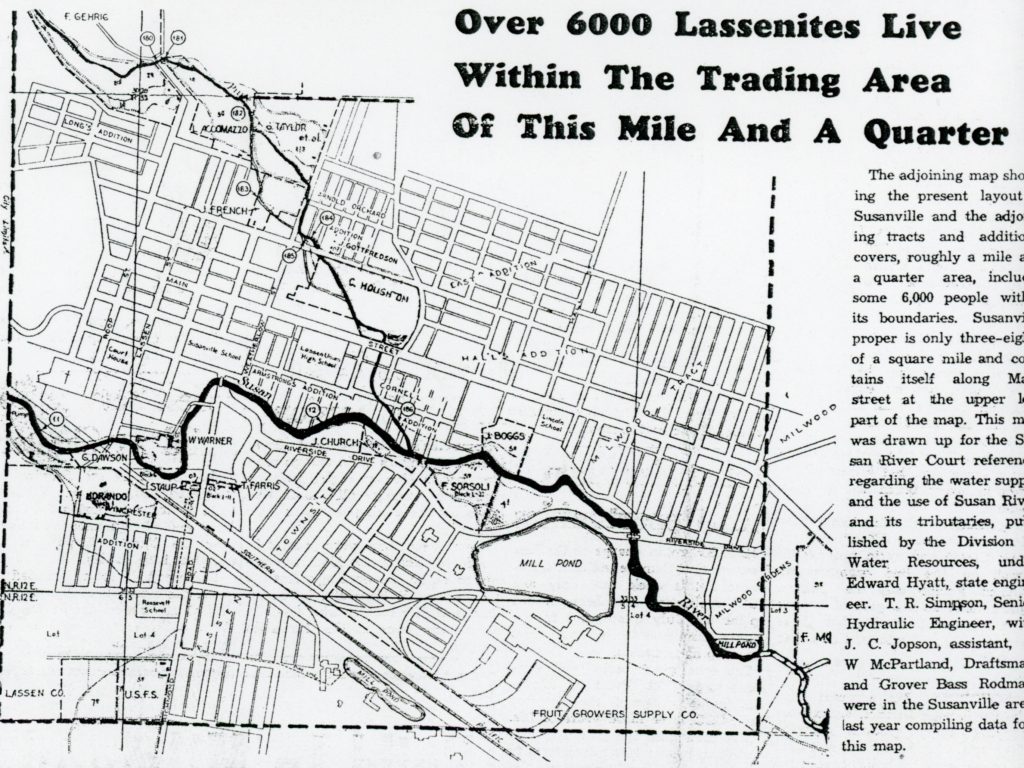
A 1937 promotional feature of the Lassen Mail newspaper.

Nearly since time immemorial Susanville boosters grappled with the town’s population figures. This became quite problematic when the town incorporated in 1900, due to its small boundaries. At that time the western boundary was Inspiration Point, Piute Creek to the north, Susan River to the south and Weatherlow Street was the town’s eastern boundary. 

One of the issues the City of Susanville grappled since it was incorporated was its population.  To lure business and families, the larger number of inhabitants was an enticing inducement, and still is to this day. After the lumber mills arrived by the early 1920s, there were numerous subdivisions to the east of the City. The City tried its darndest to annex, but large property owners like the Red River Lumber Company which owned the Milwood Tract was a force to be reckoned with and defeated many annexation measures. All the Susanville boosters could do, is at least advertise a Greater Susanville. It should be duly it would take nearly a half of a century before City was able to annex adjoining properties.


However, this concept was not limited to any certain era. For instance in the 1990s, when the City annexed the State Prisons, those incarcerated became city residents. Those 8,000 inmates were reflected on the City Limit signs noting it now had a population of 17,000. As one city official informed me at the time to include the inmate population in the sign, was for marketing purposes hoping to influence more businesses and perspective residents to take a second a look. 

Subscribe

The Little Truckee River Project

Scotts
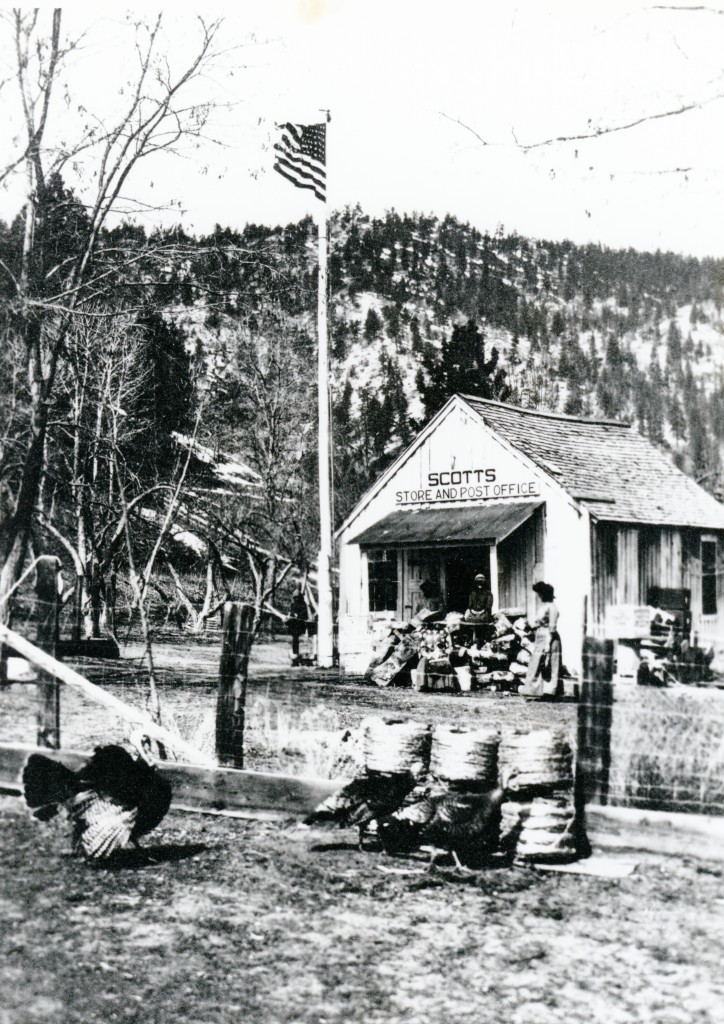
Scotts, a Western Pacific station in Long Valley. Courtesy of the Nevada Historical Society

The Southern Lassen Irrigation District was one of my entities organized to reclaim the sagebrush lands of the southern and eastern portions of Honey Lake Valley. This would be done by damming the waters of Long Valley Creek, capturing especially the winter run-off to hold for the spring and summer irrigation season when it is needed the most.

Enter C.E. Grunsky, consulting engineer for the irrigation district. It was his contention that if the district’s goal was to reclaim 26,000 acres, they would need more water than just Long Valley Creek. In July 1918 he unveiled his plan. Grunsky wanted to divert the flood/surplus water of the Little Truckee River via Dog Valley into Long Valley Creek. At Scotts, along Long Valley Creek, about six miles south of Doyle a dam would be construct to impound those waters. It was his contention this would alleviate the flooding problems of the Truckee Meadows (Reno/Sparks). In addition it was his opinion those flood waters were wasted in Pyramid Lake which he remarked, “did no good to anybody.”

In August 1918, Grunsky organized a meeting of California and Nevada officials to discuss the merits of the project. Most of the attendees were receptive. The project never proceeded any further, especially since everyone’s focus at the time was World War I, rations, etc.

Never miss a story, click here to subscribe.
Landon Lookout, Lassen County

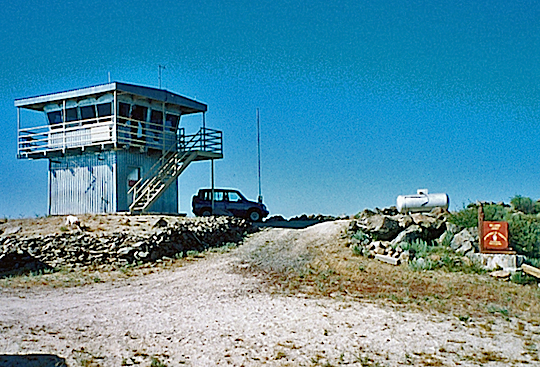
Landon Lookout, photograph by Fred Johnson, 2002

Fire lookouts are slowly becoming a fixture of the past. Landon Lookout is located on Greens Park at an elevation of 7145’ and is southeast of Eagle Lake. This lookout replaced the State Forestry’s lookout on Shaffer Mountain, near Litchfield. It was opened on September 4, 1949 and named in honor of Don Landon, a California State Forester who was killed in World War II. The lookout when opened was considered “ultra modern,” though in reality it was actually a remodeled naval tower.

Never miss a story, click here to subscribe.

Standish Well Drilling, 1929

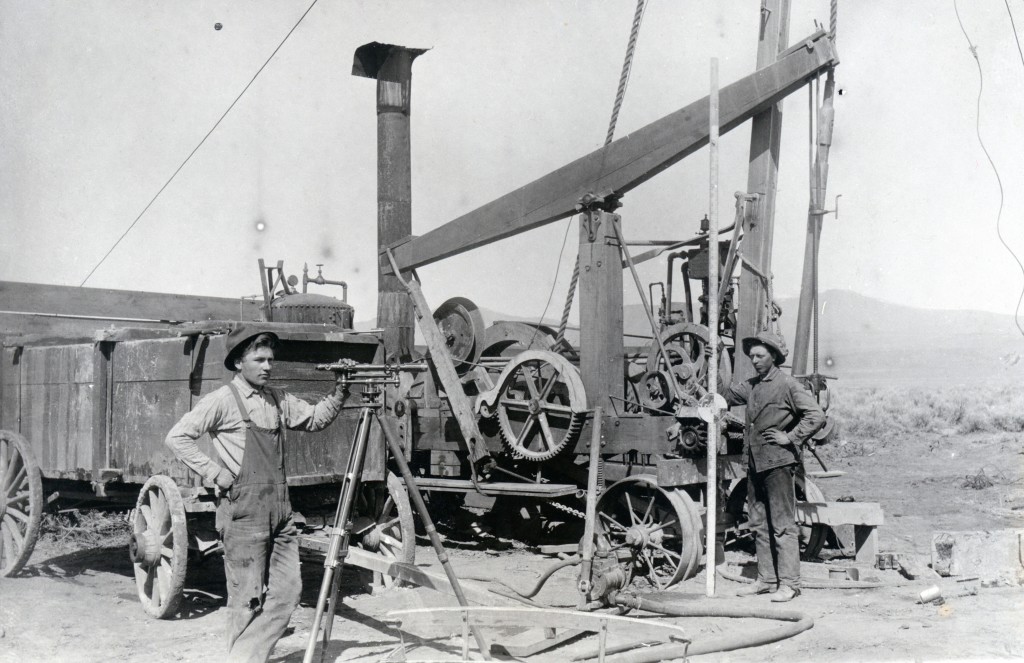
Caudle Brothers well drilling outfit, eastern Honey Lake Valley, 1910. On the left is Fred “Fritz” Zarbock and on the right his brother, Ferdinand Zarbock who had a homestead next to Caudle’s at Stacy.

During the late 1920s, the farmers in the Standish district were frustrated with water woes. Those who hoped to be beneficiary of Bly’s Eagle Lake project were dismayed with an inadequate flow from that body of water. Even those who had water shares with Lassen Irrigation District suffered the same fate due extremely dry conditions. The winter of 1928-29 the area only received 8.38 inches precipitation. In May 1929 the weather was exceedingly warm with temperatures in the 80s and 90s. Irrigation wells were common on the desert east side of the Honey Lake Valley, but not so like Standish that in the past received its water from the Susan River. In June 1929, Standish resident, J.D. Andrews had a well drilled with success. At a depth 210 feet it could provide 300 gallons a minute being pumped for seven hours with a four inch centrifugal pump. Soon others followed suit. On a final note the cost of the Andrews well was $757.

Subscribe

Johnston House Hotel

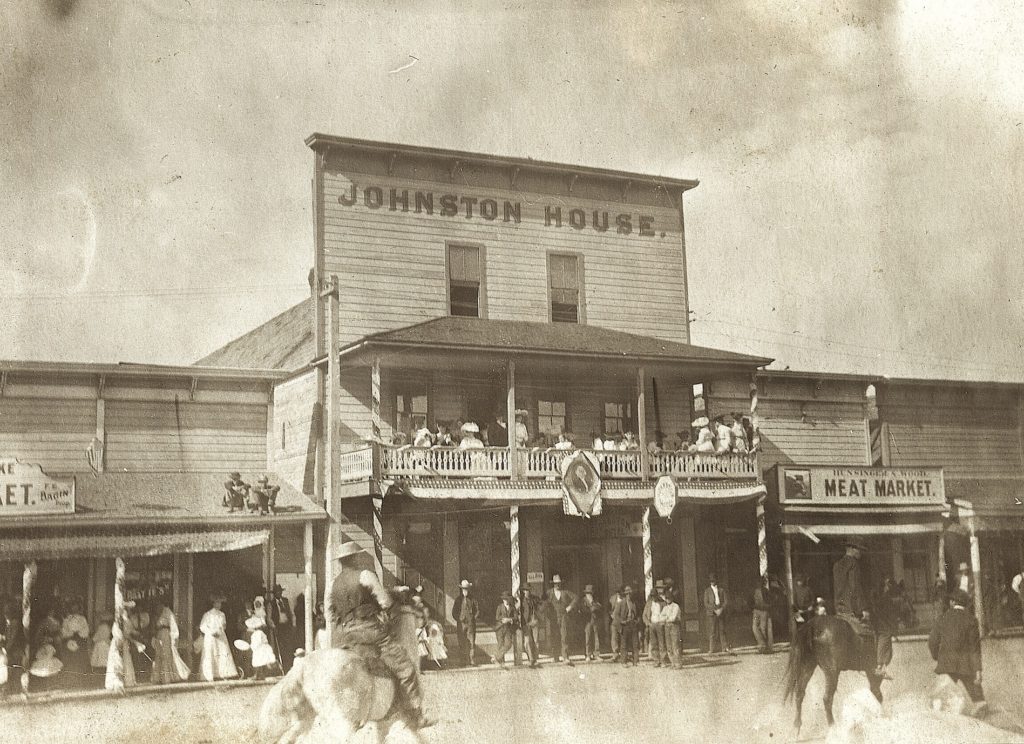
The Johnston House, circa 1909. Courtesy of Betty Barry Deal

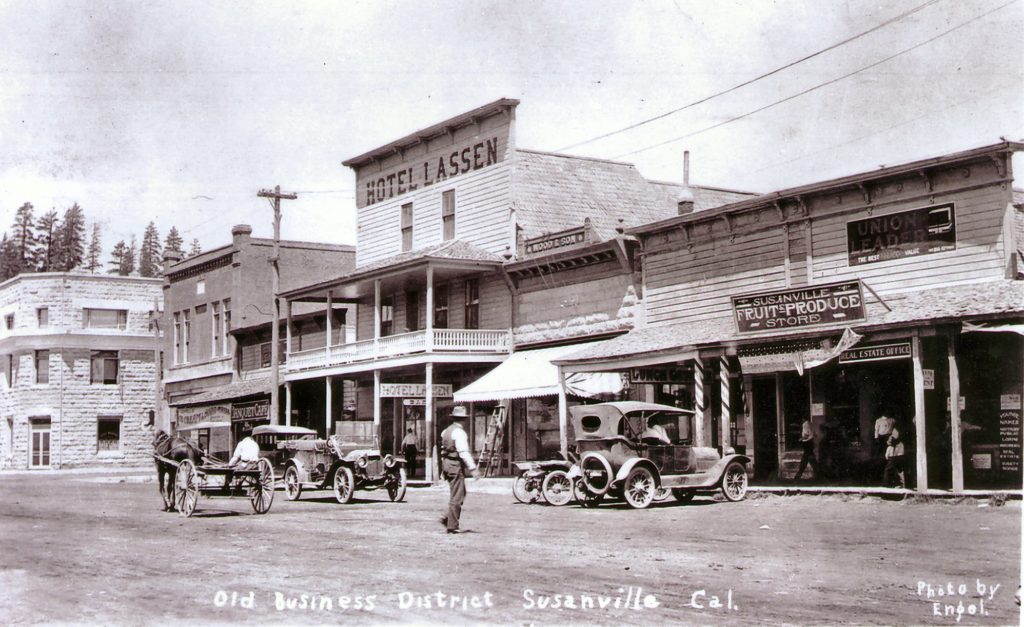
The Johnston House was built in 1893 after a devastating fire that destroyed the north side of Susanville’s Main Street business district. It was so named for its original owner/proprietor Robert Johnston. Until the Emerson Hotel opened in 1901, it was the town’s major hotel. There was the smaller Cottage Street Hotel, which was more like a boarding house. In 1897 Johnston sold the hotel and it changed owners on a frequent basis. In 1916, Henry C. Dobyns purchased and renamed it the Hotel Lassen. It was destroyed by fire in 1919.

Main Street, Susanville, 1918.

Support

Exploring Lassen County's Past