Sierra Shangri-La —Sponsors

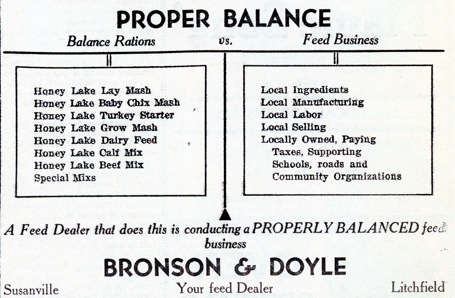
It should be noted that the free publication was financed by advertisements of local businesses. I thought some might enjoy seeing some of the advertisements that appeared. Of the fifty-four businesses that are featured, only one is still in operation—that being the Fruit Growers Supply Company. While Fruit Growers no longer maintains a business presence, i.e., a sawmill, it still owns timberland in Lassen County.

On a somewhat related note, from time to time, I have been approached to place advertisements on this site. My preference is to have a clean appearance, without distractions, as so many websites are cluttered with annoying ads. Some may think I crazy for turning down extra revenue, but if making money was my sole purpose in life I would have found a different line of work.

Support

Fifth Anniversary

Roosevelt Pool
Remnants of Roosevelt Pool, February 21, 2015

My, how time just marches on, and it was five years ago today since I inaugurated the daily post. With some 1800 plus stories, a tremendous amount of material has been covered and more to come. They are all archived on the site under Tim’s Blog. With that in mind, I am going to slow down a wee bit, and instead of seven days a week, I am going to scale back to six, since this will be my sixth year. So beginning this Tuesday, March 3, and subsequent Tuesdays you will not receive a daily notification. Tuesday it turns out is a very slow day for readership. However, Tuesdays cane be busy me— the first Tuesday I have Lassen County Planning Commission and the second Tuesday I have a Lassen College Board of Trustees meeting, but that could change by the end of the year.

Subscribe

Leap Year Day, 1924

Amedee Hotel, 1946. Courtesy of Hank Martinez

The railroad giveth, and the railroad taketh away. That in one sense is a perfect epitaph for Amedee. After all, it was the NCO Railroad that created the town, and was pivotal in its demise. The first spike in the coffin, so to speak, came in 1917, when the NCO sold 64 miles of its line from Rayl (Herlong) to Reno to the Western Pacific Railroad. In 1922, the NCO abandoned sixteen miles of its track between Wendel and Rayl. On October 31, 1922 the last NCO train passed through Amedee. The town was slowly fading into existence, the only thing keeping it partially going were the hot springs. So it was on Leap Year Day, 1924 that the Amedee Post Office closed.

Subscribe

The Story Club Fire

Story Club fire, August 14, 1944

Fruit Growers Supply Company’s famed Story Club was quickly destroyed by fire in the early morning hours of August 14, 1944. By the time the fire alarm went off and the fire crews arrived on the scene the three-story structure was entirely engulfed in flames. The only thing that could be done was to prevent the fire from spreading. By sunrise the building was reduced to rubble. Fruit Growers valued the loss at $40,000. For Stanley Arnold who had leased the club since 1930 now found himself without a job.

Story Club, 1924. Courtesy of Lola L. Tanner

The Story Club built in 1922 was a recreational facility for the employees of Fruit Growers. It was, however, open to all and many local organizations held functions there. Today, the site is now Riverside Park.

Subscribe

Pine Creek Estuary

November 9, 1941 — Hank Martinez

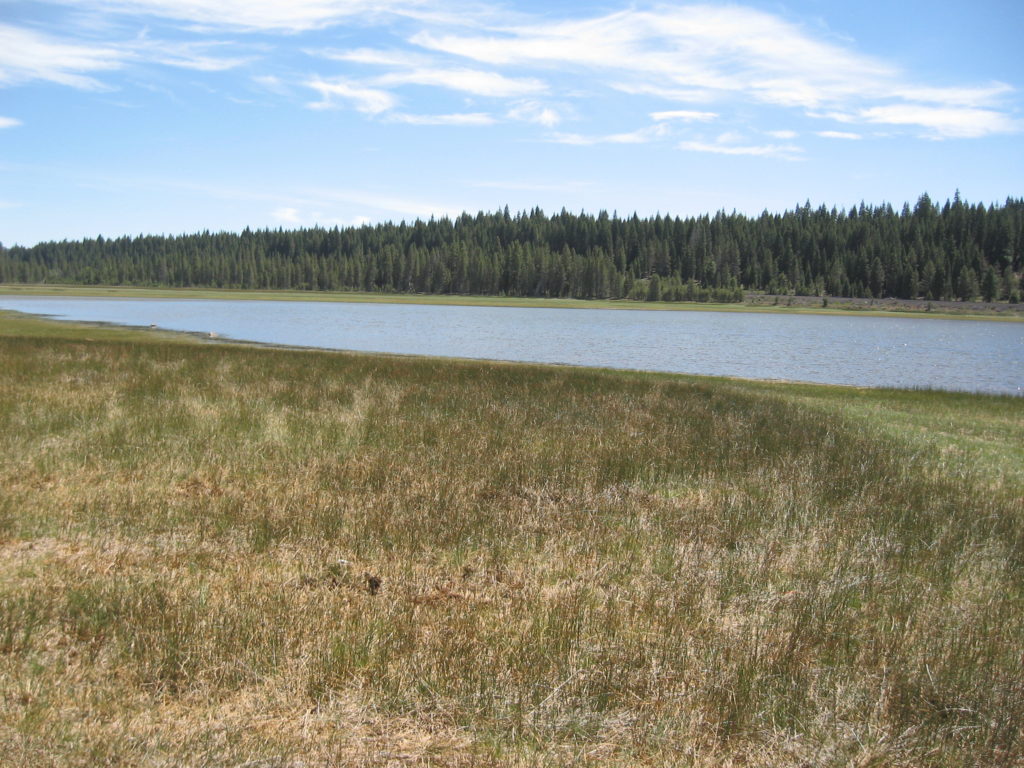
It is that time of year when Pine Creek usually starts flowing again into Eagle Lake, but with this dry winter, it may not be the case. While many people see the creek at the bridge before entering Spaulding Tract or at the nearby fish trap, it still has a way to go before it reaches the lake. Thus, today’s featured photograph provides a good illustration of that fact.

Pine Creek
Pine Creek Estuary, July, 1973

Subscribe

Sierra Shangri-La – Noted Courses

Blacks Mountain Experimental Forest, 1958

This is the final installment of Harold Gilliam’s publication Sierra Shangri-La concerning Lassen County.

“Susanville is justly proud of its Lassen Junior College. It has earned a national reputation for gunsmithing and forestry courses. The Lassen J.C. Gunsmithing course of four years is one of only three in the entire nation.

“The forestry department offers both a vocational course, preparing students for entering the lumber industry directly. Or it gives two years of accredited study, after which students may transfer to major universities to earn their bachelor degrees in two more years. The forestry course has the advantage of practical observation of the varied lumber industry of the area; the college has its own experimental forest of 160 acres and a small sawmill of its own.

“Blacks Mountain Experimental Forest in the Lassen National Forest draws students as well as industry leaders to inspect new methods being developed in both logging and forestry techniques.”

Never miss a story, click here to subscribe.

“Haight in ‘38”

Bank of America, Main & Gay Streets, Susanville

California, has moved its entire primary election to March (there are some out-of-state subscribers who may not be aware of this fact) so with a week to go, and being bombarded with political ads, check out this campaign propaganda from 1938. Does it sound familiar?

In 1938, Raymond Haight made his second attempt to run for governor of California. He ran as a Progressive, being a centrist between the Republicans and Democrats. On the evening of August 3, 1938, about 250 people assembled outside the Susanville Bank of America to listen to Haight. Haight informed the prospective voters he “would run graft out of the state house in Sacramento, lower taxes, provide security for bona fide citizens of the state, provide security for the aged and above all balance the budget, not by addition of taxes, but cutting the cost of government.”

Support

Westwood, 1941

Westwood, October 13, 1941 —Courtesy of Hank Martinez

This was an exciting era for the residents of Westwood. While the United States had not entered into the global conflicts, the nations economy was in high production to meet the nation’s allies. Lumber was a high priority commodity, and Red River Lumber Company’s operation at Westwood was put into high gear.

The installation of the Hammerhead Crane at Westwood, was one of many improvements to entice buyers.

Red River not only went into a full production mode, the first time since World War I, it went on a major modernization campaign. Not only where there substantial upgrades in all the mill equipment, but its logging department saw major changes as well—among other things its own fleet of logging trucks.

While the casual observer or Westwood resident thought all these improvements was just a sign of prosperity from the recovery of the nation’s Great Depression of the 1930s. Behind the scenes, Red River was busy putting its Westwood operation on the market, to sell, nothing different what a current homeowner does prior to listing their house on the market.

Never miss a story, click here to subscribe.

U.S. French Laundry

U.S. French Laundry—Courtesy of Harry Boulade

This is a work in progress, since it is something that I am still researching. The U.S. French Laundry was located on the northwest corner of Main and Mesa Streets or 2319 Main Street. It was established some time in the mid-1920s and was still in operation in 1935. It is interesting to note that Susanville was able to support three laundry/dry cleaning establishments. For a brief time it was owned by Jean Boulade, who prior to his move to Susanville was a resident of the Madeline Plains and at one time was the postmaster at Termo.

Never miss a story, click here to subscribe.

Chester’s Stover Hotel

The Stover Hotel

In 1860 Reuben Stover located at Big Meadows, known today as Lake Almanor. He established a dairy operation near the present site of the town of Chester. Stover died in 1897 and his son, Charley, would eventually take over the family business.

Charley Stover looked at every situation through a variety of angles. The dairy business fluctuated with good and bad times. With Great Western Power busy buying properties at Big Meadows for its Lake Almanor project, it reduced places for summer visitors to stay. Charley saw an opportunity to diversify. The ranch house became an impromptu hotel. During busy times, family members slept in the nearby bunkhouse. Stover next ventured into cattle ranching, and it turned out to be a profitable move. By the mid-1920s with developments at Chester with more accommodations available, the Stover Hotel reverted back to a ranch house.

Never miss a story, click here to subscribe.

Exploring Lassen County's Past