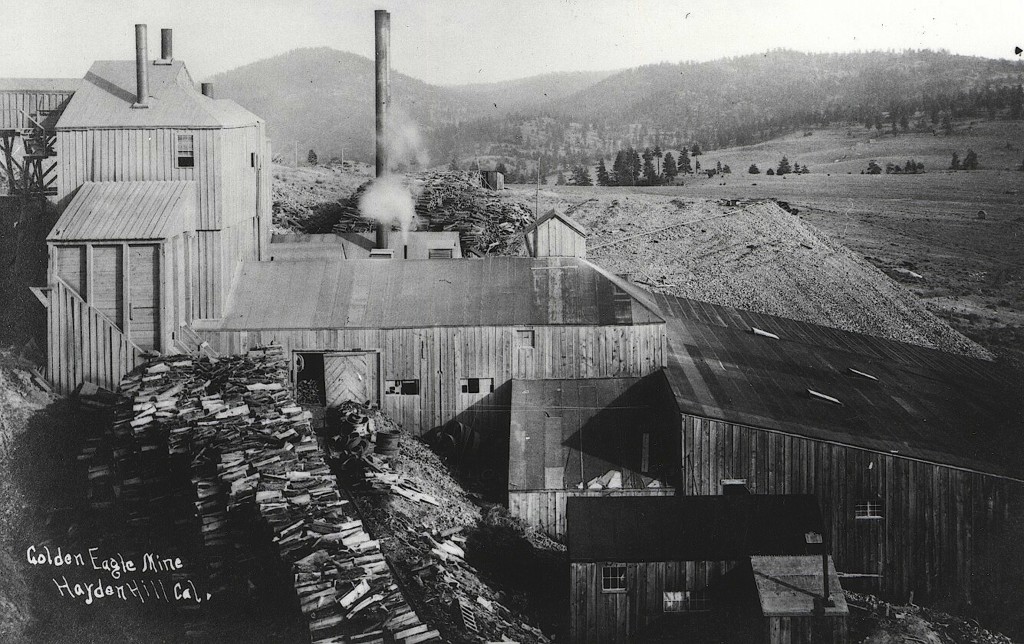
Golden Eagle Mine, 1909. Courtesy of Dallas & Joyce Snider
The Golden Eagle Mine was Hayden Hill’s largest gold producer. It was discovered in 1877 by William and Leonidas Hopkins and C.N. Nash. During its lifespan of operation in produced over $1,000,000 in gold, about one-third of all the gold extracted from Hayden Hill.
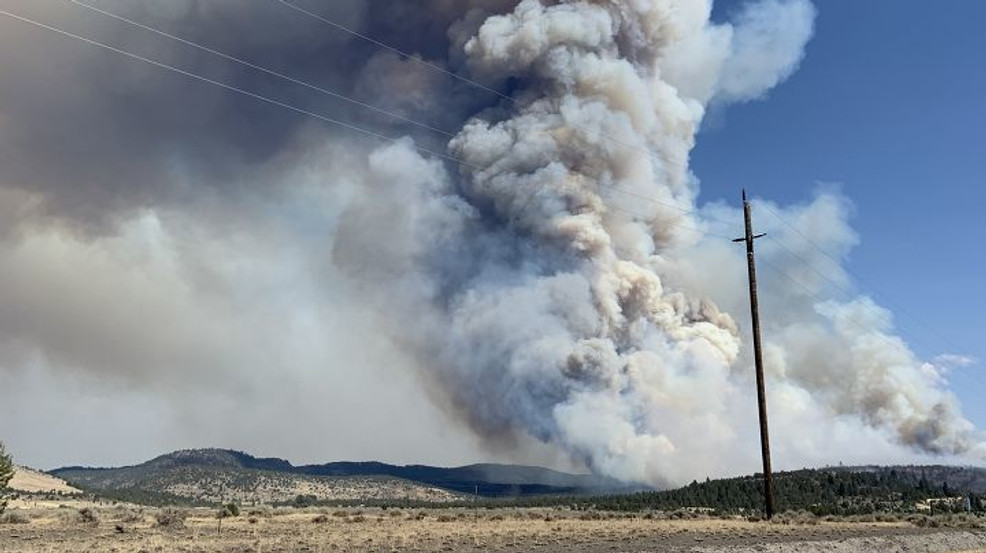
When conducting research, one can easily get sidetracked, while searching for a particular item, your eye catches something of interest. This happen to me recently while working on the post about Hobo Wells Hydroponics. On the same page the Sacramento Bee of August 16, 1977 had an article about that topic, there was a report about a forest fire on the Salmon River in Siskiyou County. The Bee Correspondent Marjie Lambert interviewed some of the residents there, which they chimed in the forest service was not doing well in handling fires. Sound familiar? Herewith is an excerpt on that topic.
”Les and Johnny Bennett and their friend, Vince Elliott, agree that fires are handled wrong these days. ‘All the Indians and miners and cattlemen used to do regular burns every year,” said Vince. ‘That kept everything nice and green. That way there wouldn’t be big forest fires.
”Then the U.S. Forest Service put a stop to the controlled burns. The three men nodded their heads, saying they had it coming.
”’Now when one of these things starts it wont stop until it burns itself out or maybe in September the rains will come,’ said Les.”
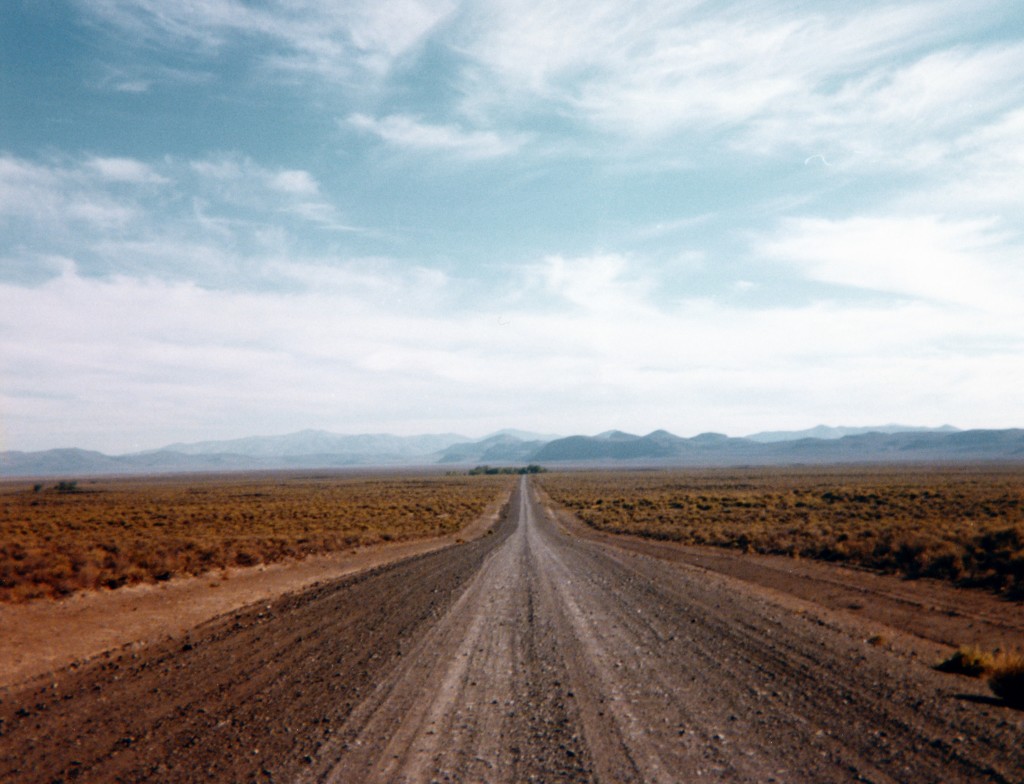
Smoke Creek Desert looking towards Sheepshead, fall, 1977
In the spring of 1952, another Nevada annexation movement sprung to life. In this particular instant it involved annexing Lassen, Modoc and Plumas counties to the Battle Born state.
An intrepid reporter of Susanville’s Lassen Advocate did an informal survey of talking to people one day to get a feeling. Interesting the responses were divided. Here is a sampling of a few:
Opal Proffitt, “I don’t I’d like be in Nevada. I don’t like the idea of gambling. Mrs. James Hodges stated that it feels like we are a part of Nevada and had no objections. George Lovell “I’d like to belong to Nevada myself. They have no debt and think we’d all be benefitted.”. Norman Vornado “I would be against it. I am a teacher and the pay in that field is far below California’s rate.” William Blackmer “I think we’re a part of California and we’d better stay there. Finally, J.F. McGrath “We need to protect Lassen’s virtue, with annexation there would be wide open gambling.”
So it goes, just another failed annexation movement.
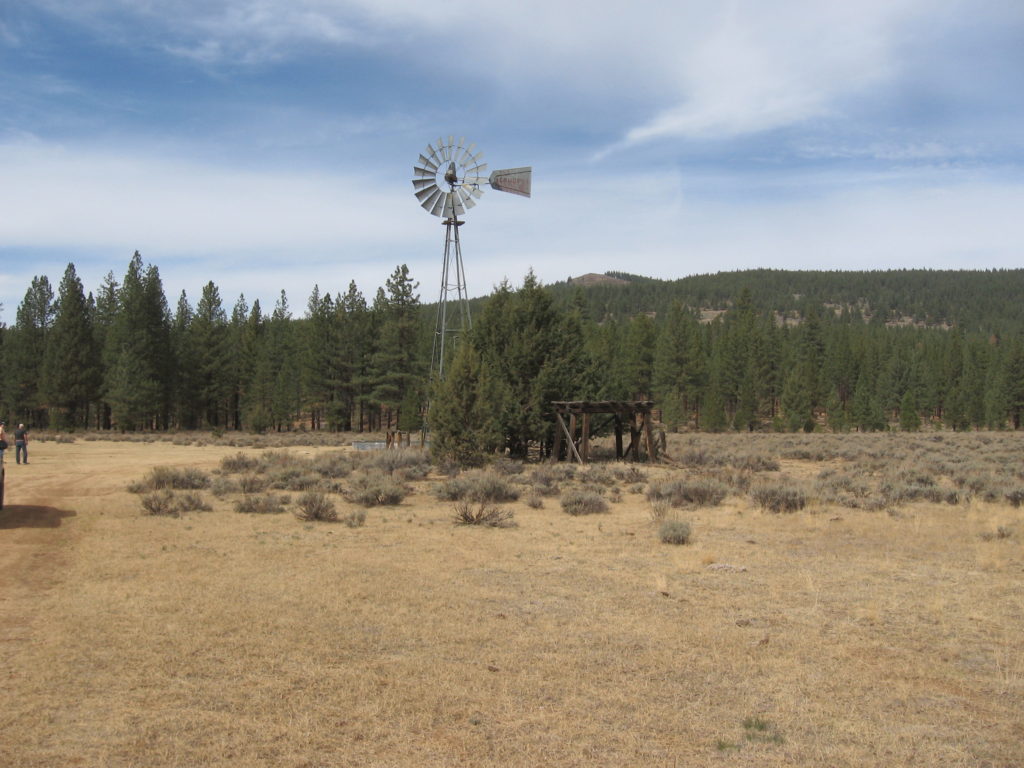
In 1875, William Dow located on the northwest side of Eagle Lake. He remained there until 1886 and the following year he sold 465 acres in that region to Albert Gallatin.
Dow Flat and Wells is located a short distance north of Spalding Tract. In the distance is Dow Butte. In 1994, the Dow Butte Lookout was removed and relocated next to the Eagle Lake Marina.
Spread the word, and encourage a friend to subscribe
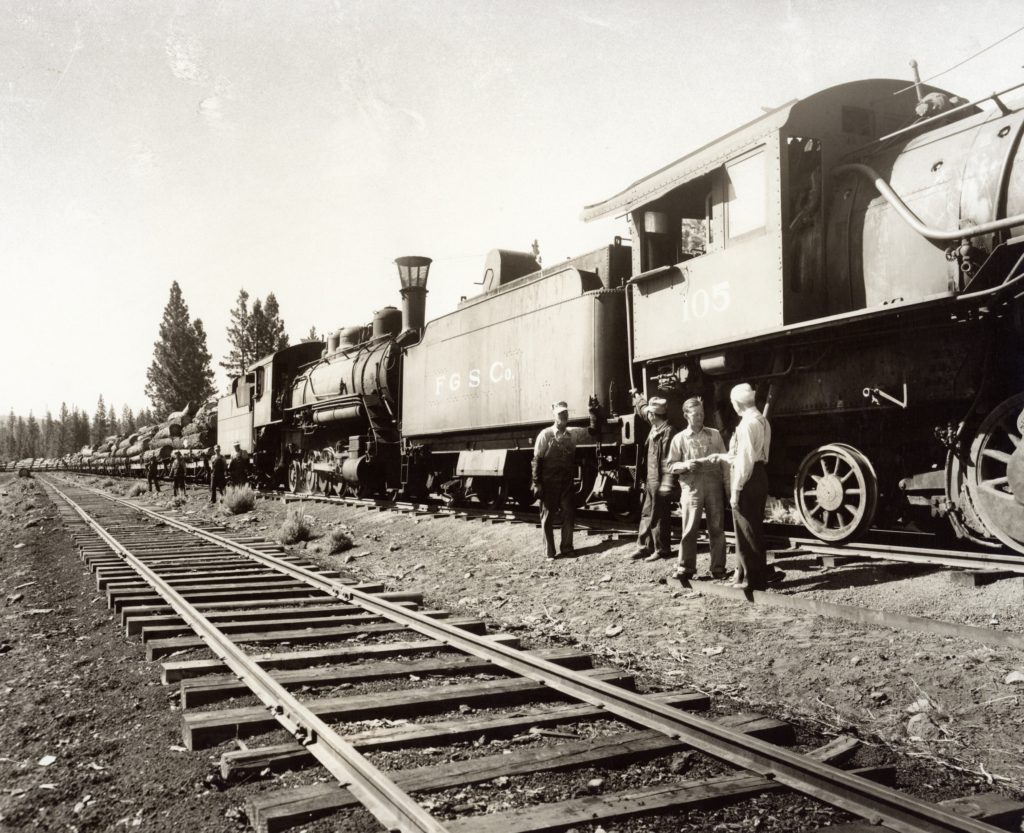
Fruit Growers Locomotive No. 105 at Halls Flat, 1946.
In 1940, with the Red River Lumber Company making plans to log north of Westwood in the Poison Lake and Blacks Mountain region further discussions were held as to construct a railroad line to Burney to harvest their extensive Burney Tract that contained two billion board feet of merchantable timber. An initial railroad survey was conducted with a starting point at Poison Lake. The major barrier was that of Hat Creek Rim. It was determined to follow the rim and slowly make a descent at Cassel and then onward to Burney. It was estimated it would cost one million dollars to construct the line. Fletcher Walker, the resident manager of Westwood was eager to build and wrote, “We would increase the Veneer Plant output and get good logs to operate it and this alone would more than pay for the cost to build the railroad.” However, no one else in the Red River family shared Fletcher’s railroad proposal. In 1941, Red River made the decision to sale Westwood and the Burney Tract.
In 1944, after intense negotiations, Fruit Growers Supply Company purchased Westwood and the Burney Tract. They, too, contemplated to build a railroad line similar to the one proposed by Red River. As late as 1951, Fruit Growers still considered the option of a railroad to Burney. Yet, changes were occurring rapidly with the conversion to cardboard boxes, that forced Fruit Growers to reconsider its future plans, as the needed for wooden boxes to ship citrus would eventually be eliminated.
Devil’s Corral Bridge, 1918. Courtesy of Margaret A. Purdy
In 1863, the Tehama County Board of Supervisors decided to construct operate and maintain a toll road from Red Bluff to Susanville. A convenient location for the toll gate was placed along the Susan River, five miles west of Susanville at Devil’s Corral. In August 1864, Aaron Seaman and Jerry Tyler acting as agents for Tehama County as toll collectors, sued John Packard and Archibald Boyd for a total of $41.25 in toll charges. The toll fees were three cents a head for cattle, twenty-five cents per horseman and fifty cents per wagon. However, the resourceful Honey Lake defendants were able to have the case dismissed. The date of their toll fees for use of the road was in August 1864. They cited that Tehama County could not collect toll fees outside their jurisdiction, since Devil’s Corral was in Lassen County, and this toll road soon folded.
There are three landmarks named for this individual, a native of New Jersey, but in 1857 became a resident of the Honey Lake Valley, before moving elsewhere in Lassen County. He was also one of the first to move to Honey Lake Heaven aka Pacific Grove, California.
Spread the word, and encourage a friend to subscribe
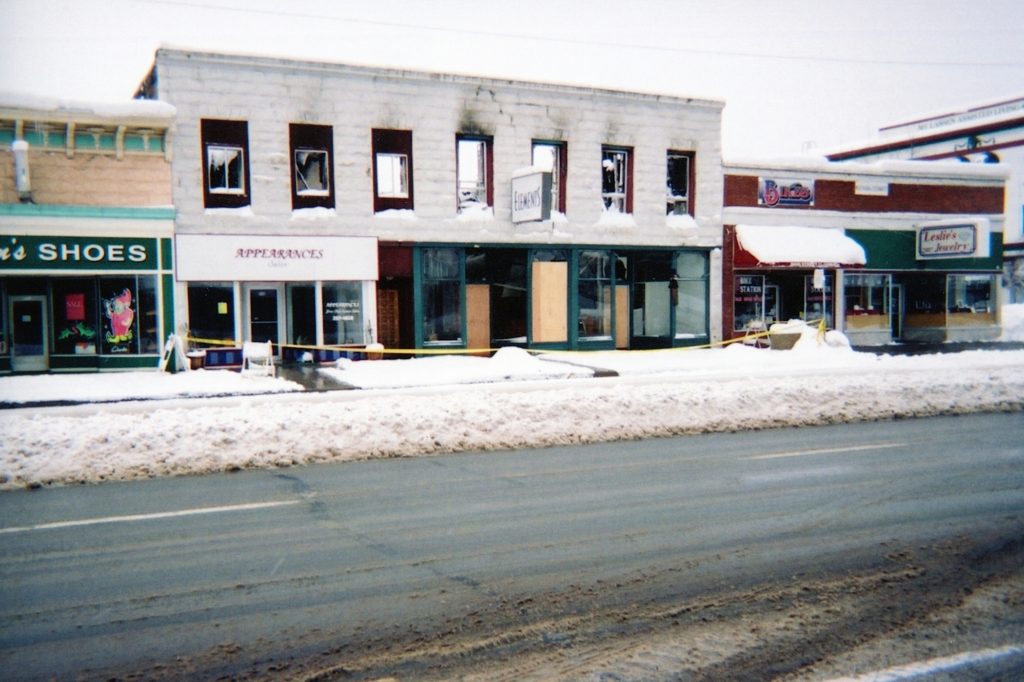
710, 712 Main Street, Susanville, January 7, 2005.
For a short time I resided on the second floor of 712 Main Street. Real seasoned residents will remember the building as Spalding Drug Store. In later years it was occupied by the Bootery and the Smart Shop. It was a transitory time for yours truly. Fortunately, I moved out in the summer of 2004, and the building was destroyed by fire on January 5, 2005.
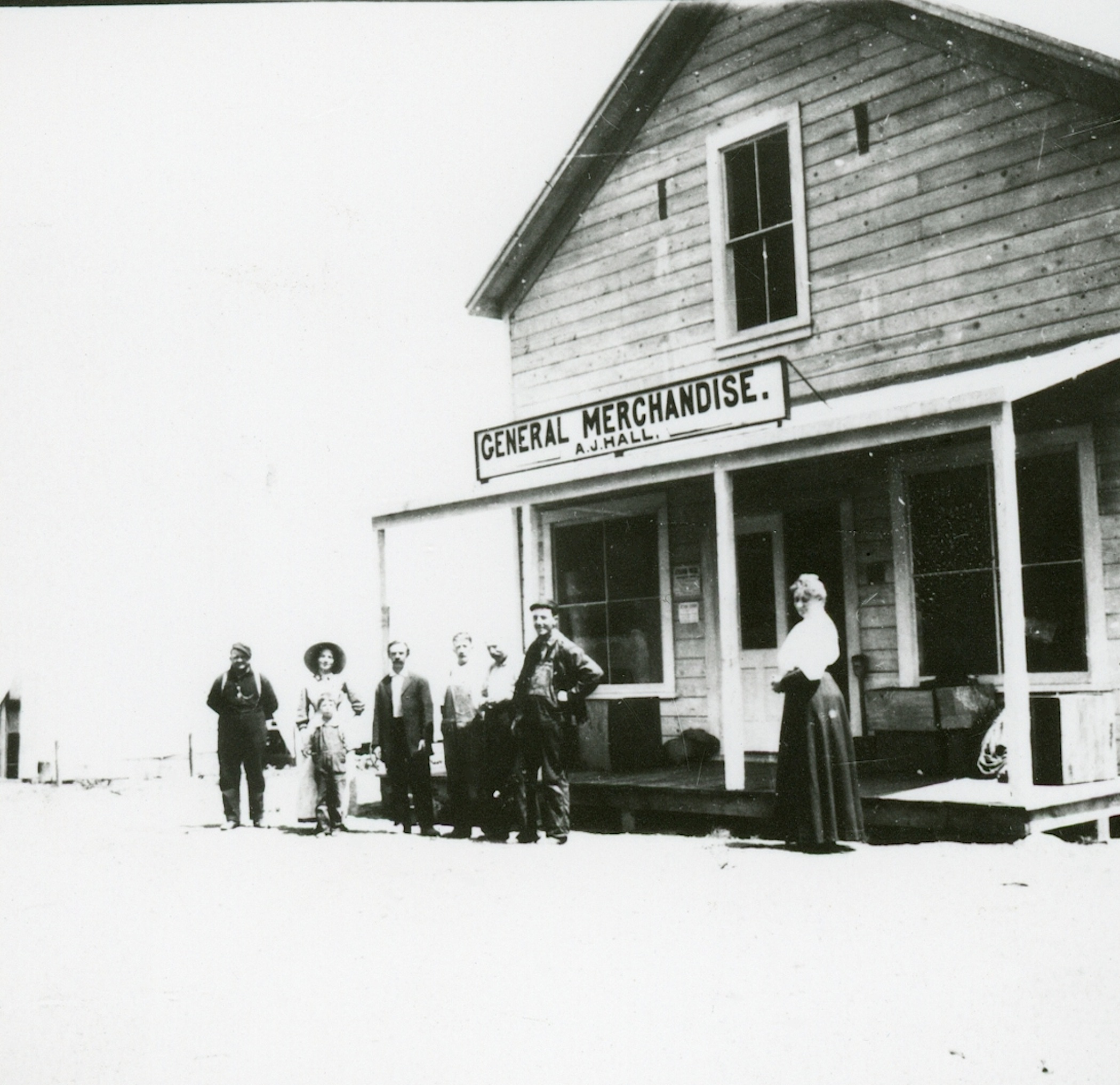
Omira was located two miles or so south of Doyle and came into being as a station on the newly constructed Western Pacific Railway. On April 12, 1909, the townsite was recorded on land owned by R.E. Rhodes, property later known as Rowlands.. The railroad named the town after a woman who promised to build a church there. Originally, the plan was to make this a division point for the railroad. Grading for the yards and turntable was done and that was the extent of the development as the Western Pacific decided to change the division point to Portola. The town consisted of section houses, water and fuel tanks, and a two-story store with a restaurant—rooms were rented on the second floor. In addition, that building housed the post office that operated from 1910-1918 with Stella Stiles as first postmaster. In 1926, the Western Pacific consolidated many of its smaller stations, Omira Station was closed and operations moved to Doyle.
Subscribe and support this site for as little as $4.17 a month.