Whitely’s Furniture Store, circa 1956—W.V. Laughead
This is one of those instances, that I am relying on seasoned residents to provide the information. Whitely’s Furniture Store was located on the 1400 block of Main Street. While the building is still there, it has been through many tenants over the years. If anyone knows when it was built or anything else, I hope you share it with the rest of us.
Spread the word, and encourage a friend to subscribe
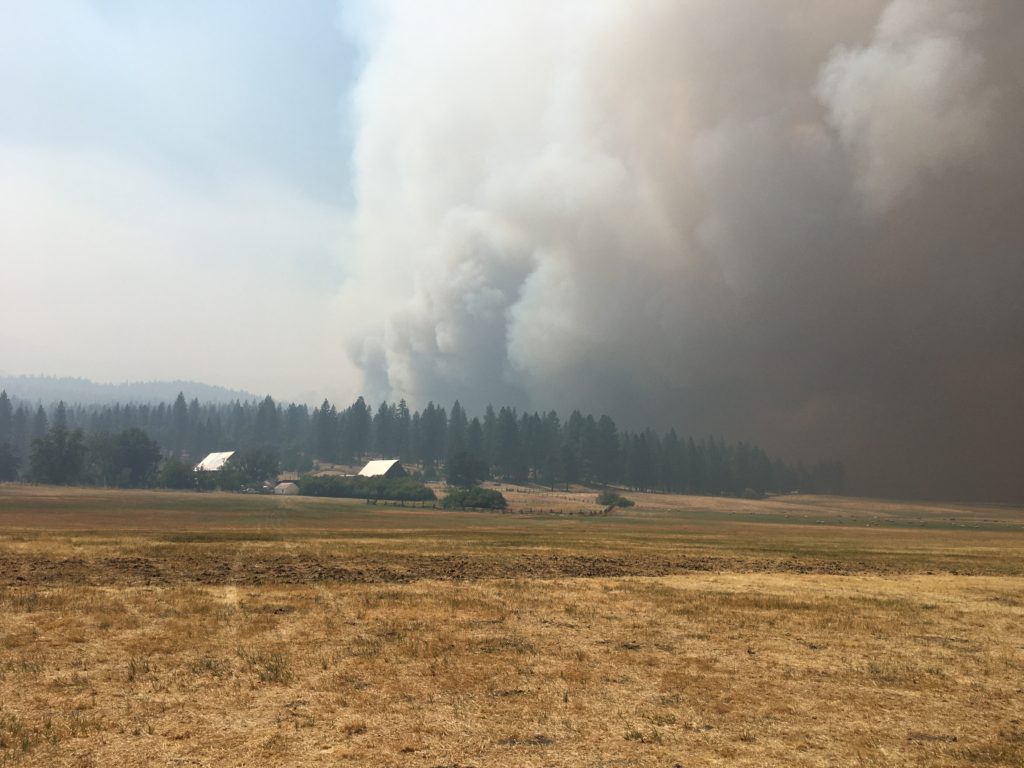
The Sheep Fire as it approaches the ranch, courtesy of Hulsman Ranch.
The historic Hulsman Ranch has been in the family since 1862, and suffered major losses from the recent Sheep Fire that devastated Diamond Mountain. While some may not know the property by its name, they know the property in the pretext as it surrounds Peter Lassen’s Monuments. It should be noted that in 1952, the Hulsman family donated the property of Peter Lassen’s final resting place to Native Daughters, who in turn gave it to the Masonic Lodge, and has been for over century a popular picnic spot.
Among the losses the Hulsman Ranch sustained was the original hay barn built in 1878, by founder, John F. Hulsman. You can read more on the Go Fund Me account, which there is a link below.
There are two ways to contribute:
Send a check direct to Hulsman Ranch,, P.O. Box ,850 Susanville, CA 96130
In the fall of 1916, E.W. Hayden, editor and publisher of the Lassen Advocate went on a rant when he discovered that in the Susanville stores there were 12 different brands of flour, but no Honey Lake flour. There were the obvious nearby producers of Adin, Alturas, Fall River Mills and Reno. Hayden was not pleased with flour from as far away as Stockton and Idaho.
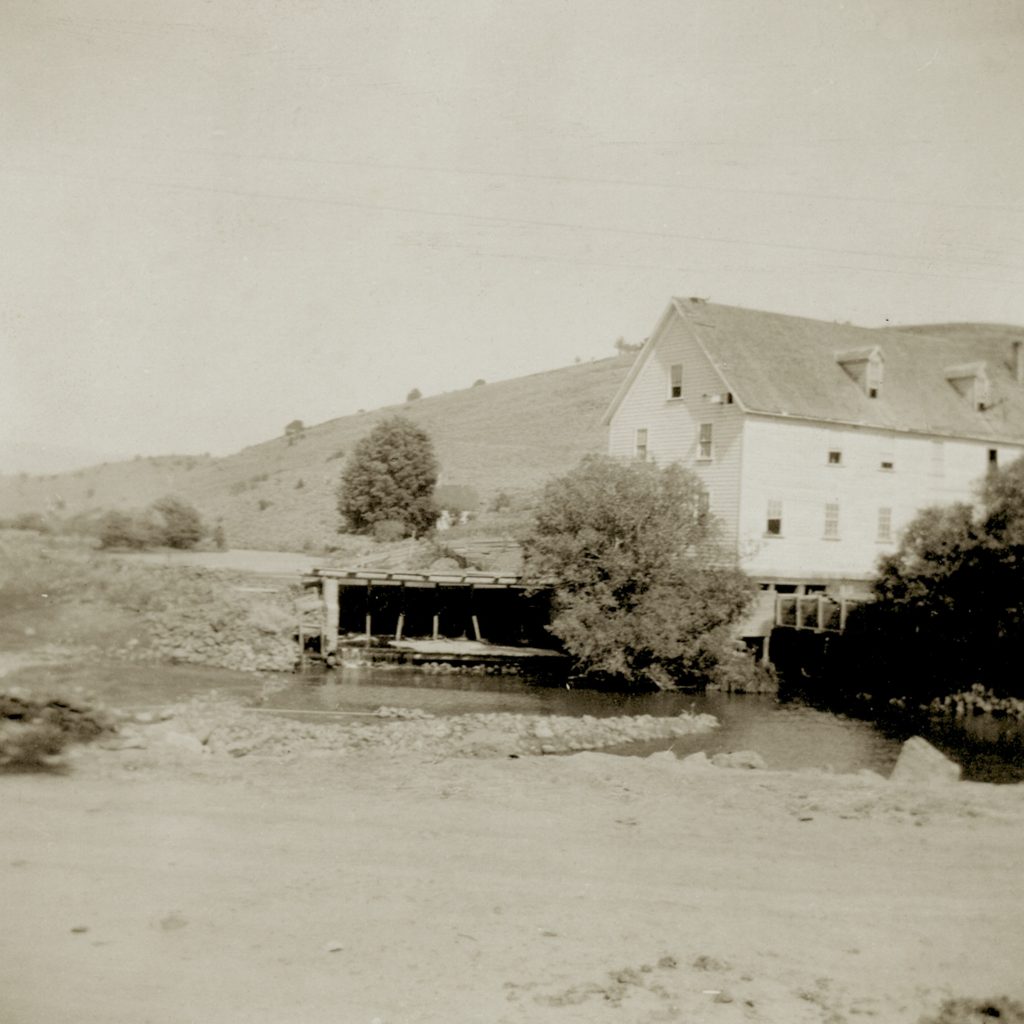
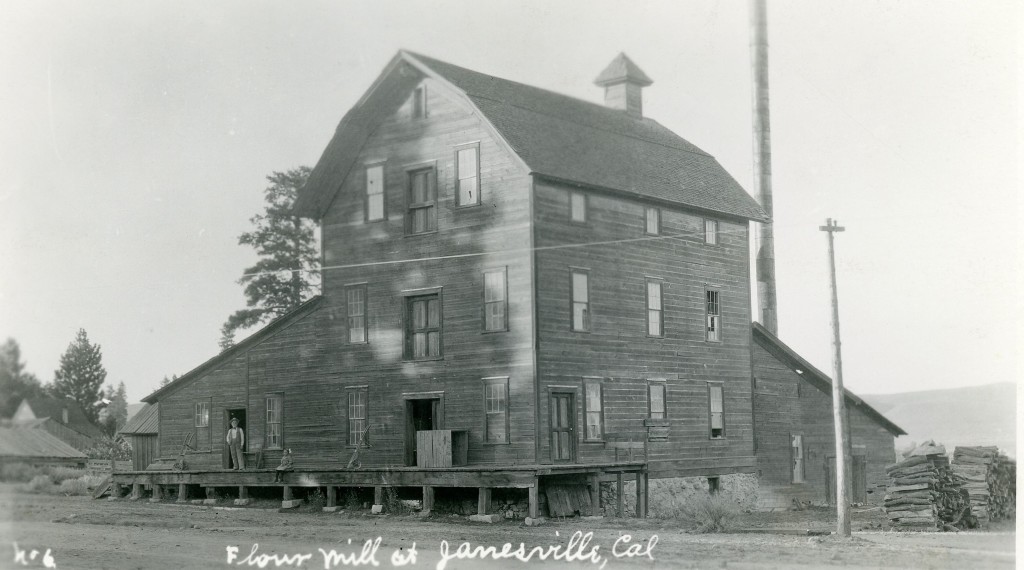
There was one flour mill at Janesville that operated for a brief periods, but the aged owner, J.K.Gehring was not up to the task. In 1917, Fred Bagin established the Lassen Grain and Milling Company and once again there was home grown flour available.
Janesville Flour Mill, 1913.
Spread the word, and encourage a friend to subscribe
For some odd reason, I have never ventured to write about eastern Shasta County. It is in a sense, familiar territory for me as my great-grandmother, Mary Knoch Murrer (1877-1964) was a native of that region. While she married my great-grandfather Edward Murrer in1898, she was always a frequent visitor in the Fall River Mills region to visit family.
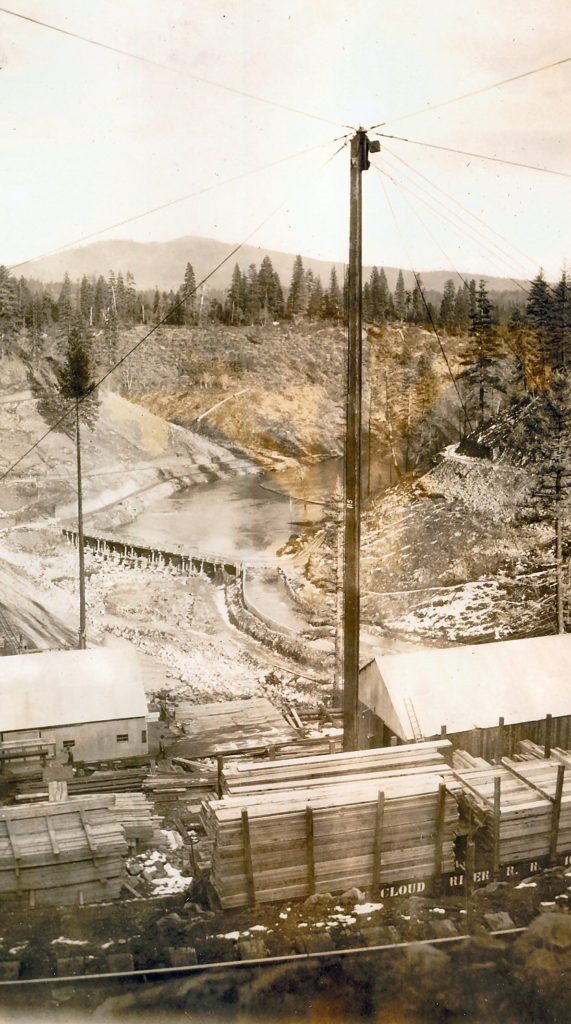
To accompany Mary, on those trips, was her only daughter Lola. For about an nine-year period, 1916-1925, Lola had a camera with her at all times. She photographed on visits the construction of Pacific Gas & Electric’s Pit River powerhouses. The above dam construction would create Lake Britton, named for John A. Britton, Vice President and General Manager of PG&E.
Spread the word, and encourage a friend to subscribe
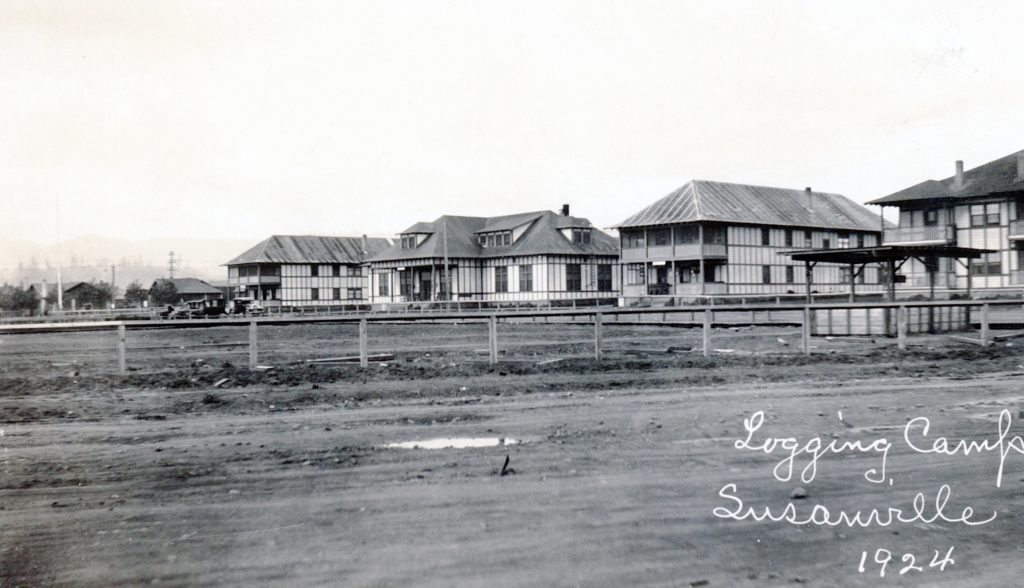
Fruit Growers Supply Company housing, Susanville, 1924—Boyd Benham/Connie Boomer
This was a major labeling blunder by the photographer. The scene depicted is Fruit Growers housing for mill employees in Susanville, located along Alexander Avenue. When Fruit Growers proposed to locate in Susanville, they had wanted to avoid to provide housing, whereas their operation at Hilt was a complete company town. They had hoped some enterprising individuals would step up to the plate to provide housing. That was asking a lot, since Fruit Growers would need housing for over 1,000 employees and their families. Fruit Growers would eventually build 80 houses, in addition to dormitories at a cost of $245,000.
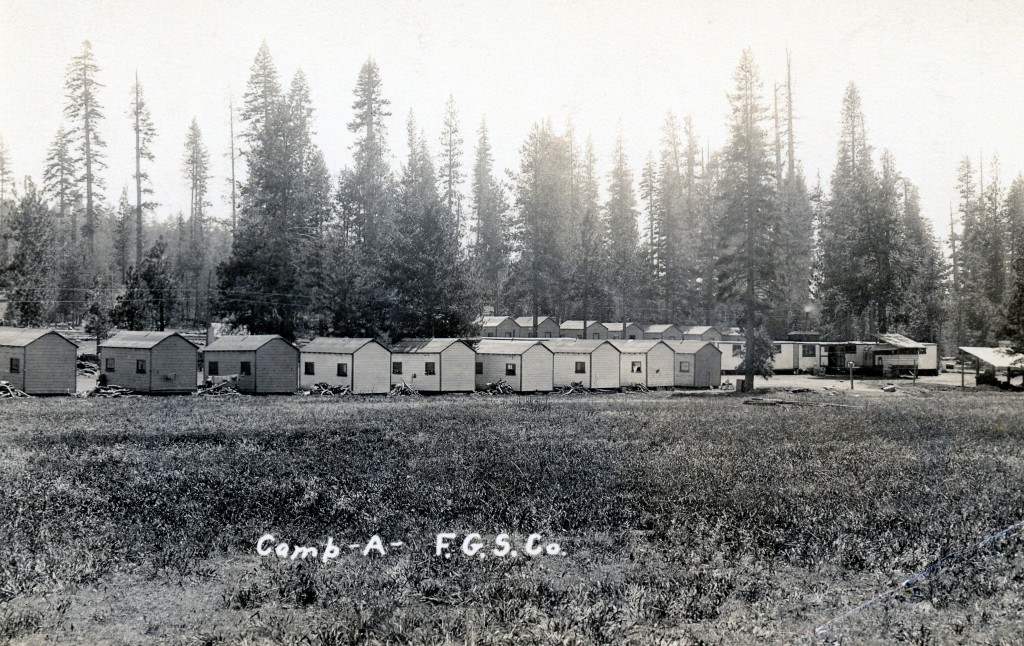
Camp A, Fruit Growers Supply Company, located just north of McCoy Flat Reservoir, 1921
The above was a typical Fruit Growers logging camp, that consisted of portable cabins that could be easily moved by rail from one location to another.
Awhile ago, Nena McKinzie of Sacramento wrote to inform me as a native of Westwood she was glad to find this website, which I share what she wrote below. It is because of circumstances like this, I do not block access to any portion of the site. When I asked if I could share what she wrote, she replied: “ How nice to hear from you Tim. Of course you can share what I wrote. Thank you so much for your research. I would not have been able to fill in the blanks for my granddaughters without your information. Be well, Nena ”I just found your website and information about Westwood which I am happy to have. I just wanted to thank you for your research. I was born in Westwood in 1934 when my dad went to work there at the Lumbermill during the depression. So at 86 I am trying to gather my life history to write it for my identical twin granddaughters who are 13. I’ve had some health scares in the last few years so it is time for me to finish my life history. At any rate I just wanted to thank you it was nice to find such accurate information. I was born in the little hospital there in Westwood and I always thought it must be a huge place from the photo that my mother put in my baby book. I stopped in Westwood perhaps 30 years ago when I was working in Humboldt and met a few people. They told me the hospital was very small. Thanks for your well written articles and information.”
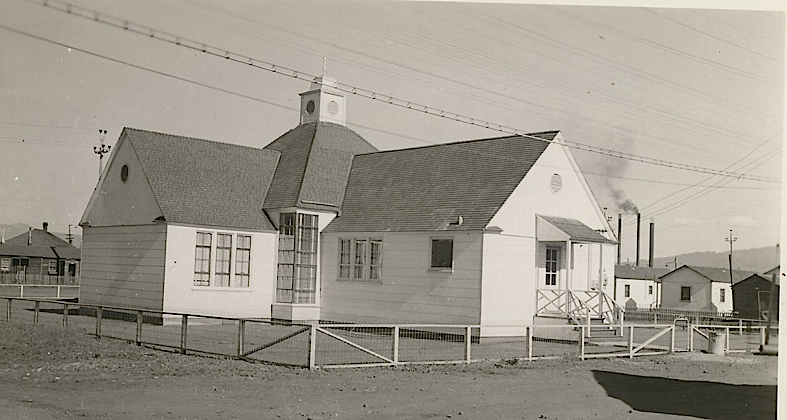
Church of the Latter Day Saints, Westwood, June 14, 1943
Then another reader wrote : My name is Craig Olson. My family lived in Westwood, California in 1953-54. My father was the music teacher at the combined Junior High School/High School and my mother taught first grade at the Fletcher Walker Elementary School. I was six-seven years old.
I am now 73 years old and have terminal cancer. At the request of my children, I am writing a personal history of my life. I noticed some images on the internet that are attributed to your website. I am looking for a way to get permission in to use the two attached images in my personal history. I downloaded them as screenshots. One is of the hospital. The other is the chapel of the Church of Jesus Christ of Latter-day Saints where we worshipped.
Hunters, and fishermen, too, can be prone to have tall tales about their adventures. Then there are times when truth is stranger than fiction.
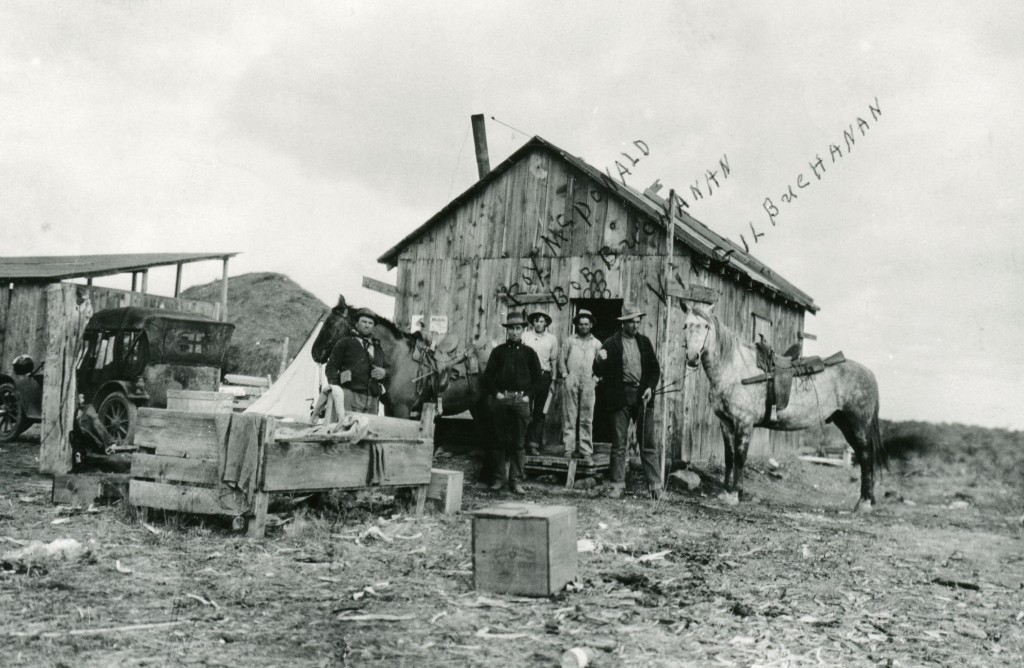
In this particular instant, involved two sage hen hunters at Painters Flat in 1929. For those not familiar with the location, it is a remote area in the northeastern part of Lassen County, not far from the Nevada border. The two men had not seen a bird all morning long. They decided to take a lunch break at the deserted cabin at Painters Flat. It was not long when they detected the odor of fermenting mash. After some sleuthing, the men found a complete still with a fifty gallon capacity. They also found four barrels full of mash and four empty barrels lying the creek being soaked. The two men contacted the Lassen County Sheriff’s office of their discovery., which the sheriff’s office seized the still.
Crazy Harry Gulch is a small Susan River tributary located between Devil’s Corral and Goumaz, on the north side of Fredonyer. The place’s unique name is derived from Harry Miles, (1832-1882), a Scotchman, who was referred to by the local inhabitants as Crazy Harry for his drinking habits. Miles first appeared in the territory in the mid-1870s. During the winter and spring he worked as a sheepherder in the foothills of Tehama County. In the summer months he spent his time prospecting. Eventually, he located a gold bearing quartz ledge near the gulch and built a cabin there as his home. In the fall of 1882, Miles indulged in a three day drinking spree in Susanville. Upon his departure he purchased some provisions. Peg leg Johnson, the Mountain Meadows mountain man, stopped by to check on Crazy Harry. However, Crazy Harry’s dog would not let him inside the cabin, though the door was partially ajar. Johnson saw Crazy Harry’s body, but no sign life. Johnson rode to Susanville and summoned the Coroner and a jury to examine the situation. Again, the dog refused anyone entry into the cabin. One of the men in the group climbed onto the roof and broke through the ceiling. The distraction enabled him to lasso the dog and then they were able to examine Crazy Harry’s dead body. Since there had been no disturbance of his recently purchased provisions or any other evidence of malice, the jury concluded that Crazy Harry returned home, passed out and died of natural causes. He had no known relatives and was buried adjacent to the cabin.
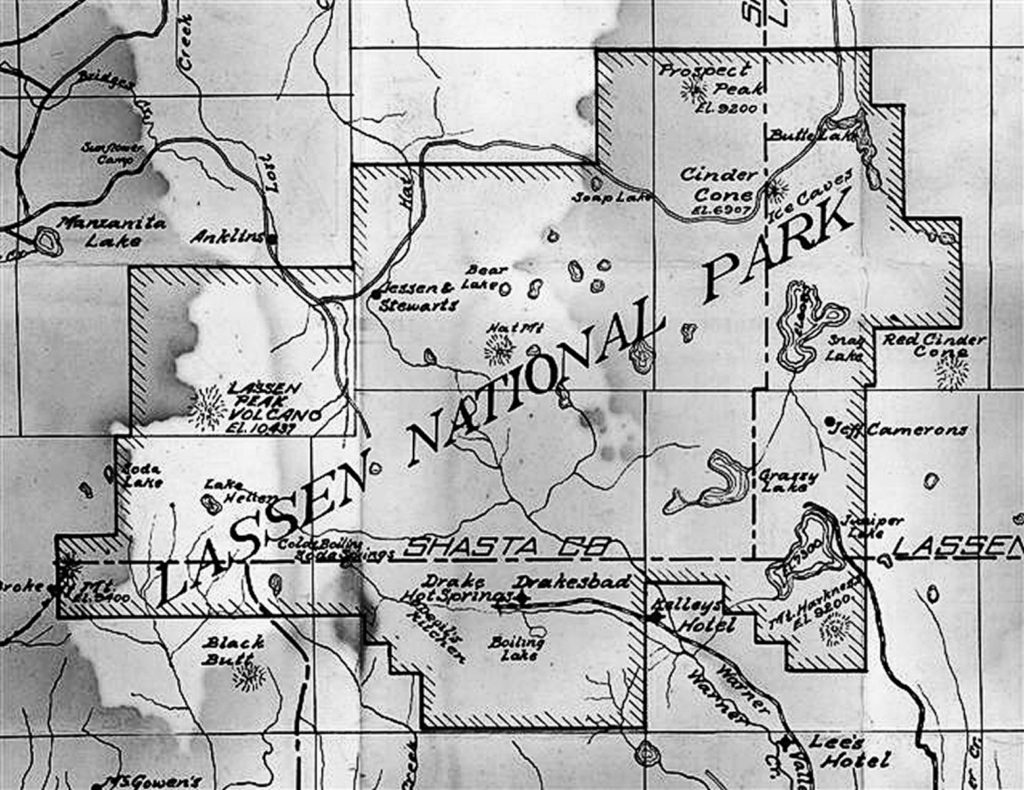
When the park was created in 1916 it would go through numerous changes over the years. The park’s original territory was some 80,505 acres and today the park now covers 106,452 acres. It should be duly noted there were initially there 5,680 acres of private lands inside the park. Those included Drakesbad, Juniper Lake, Sulphur Works among others. In addition, one of the most photographed spots in the park is Manzanita Lake, with Lassen Peak in the background. It was not even in the park, as the above map indicates. It was not until 1931 when the park service purchased the 280-acre parcel the contains the lake from Pacific Gas & Electric Company for $15,000.
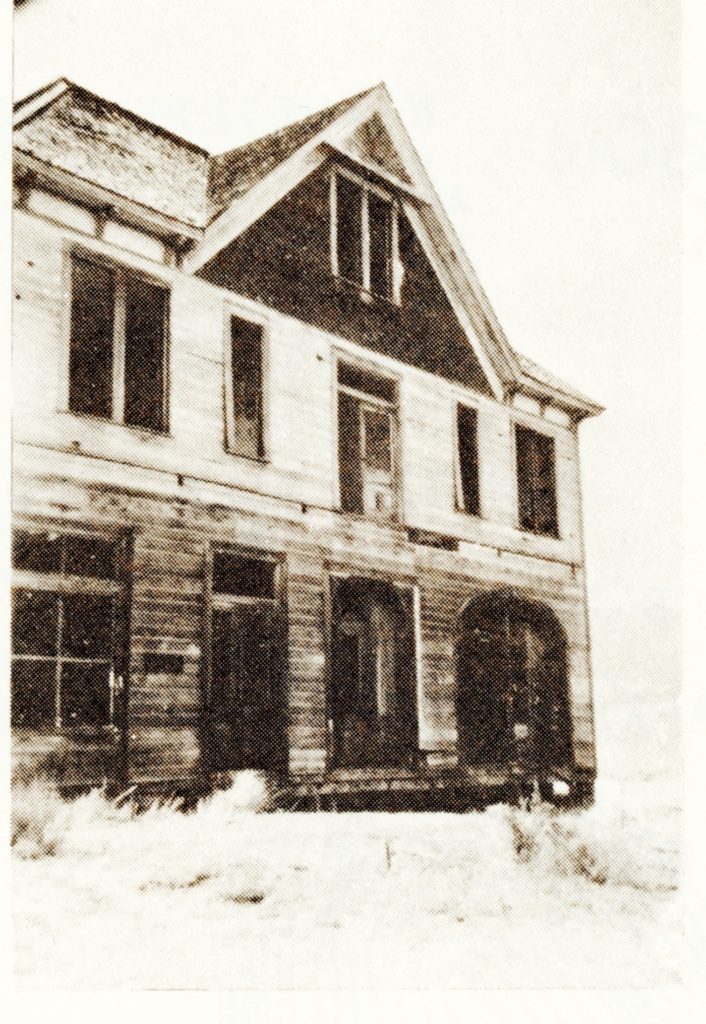
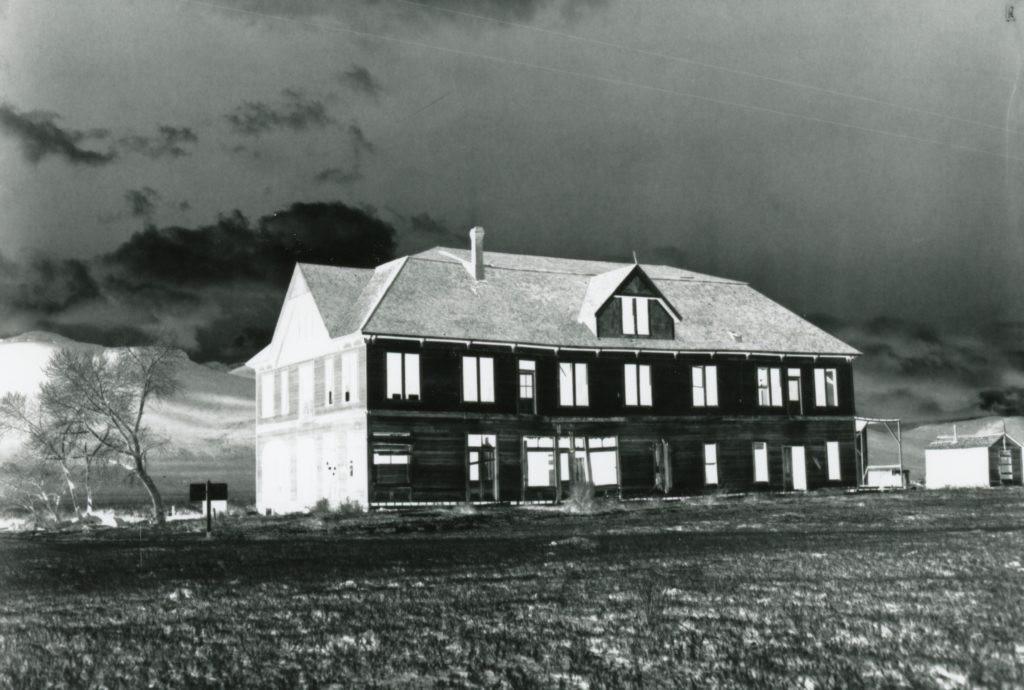
By the time of the outbreak of World War I the glory days of Amedee were relegated to the past. A major turning point happened in 1916 when the hotel was acquired by the McKissick Cattle Company, which was more interested with acreage of surrounding Amedee, than the hotel.
Unlike previous owners, the McKissick Cattle Company, leased the hotel. Visitors to Amedee dwindled due to many circumstances from the depopulation of the east side of Honey Lake Valley from World War I to the NCO Railroad that abandoned its line that gave Amedee its original lifeblood. In 1925, a major event occurred with the McKissick Cattle Company and James Humphrey became the sole proprietor of the Amedee Hotel. Humphrey hired caretakers, and on occasion still provided accommodations. By the mid-1930s, the building was abandoned. In the spring of 1950, Jim Humphrey’s son, Jack, dismantled the hotel. He hauled the lumber across a dry Honey Lake bed to his home at Milford. It was his intention to use it in the construction of a new home. However, that summer, the lumber which was stored in a barn, was destroyed when a forest fire ravaged the area behind Milford.