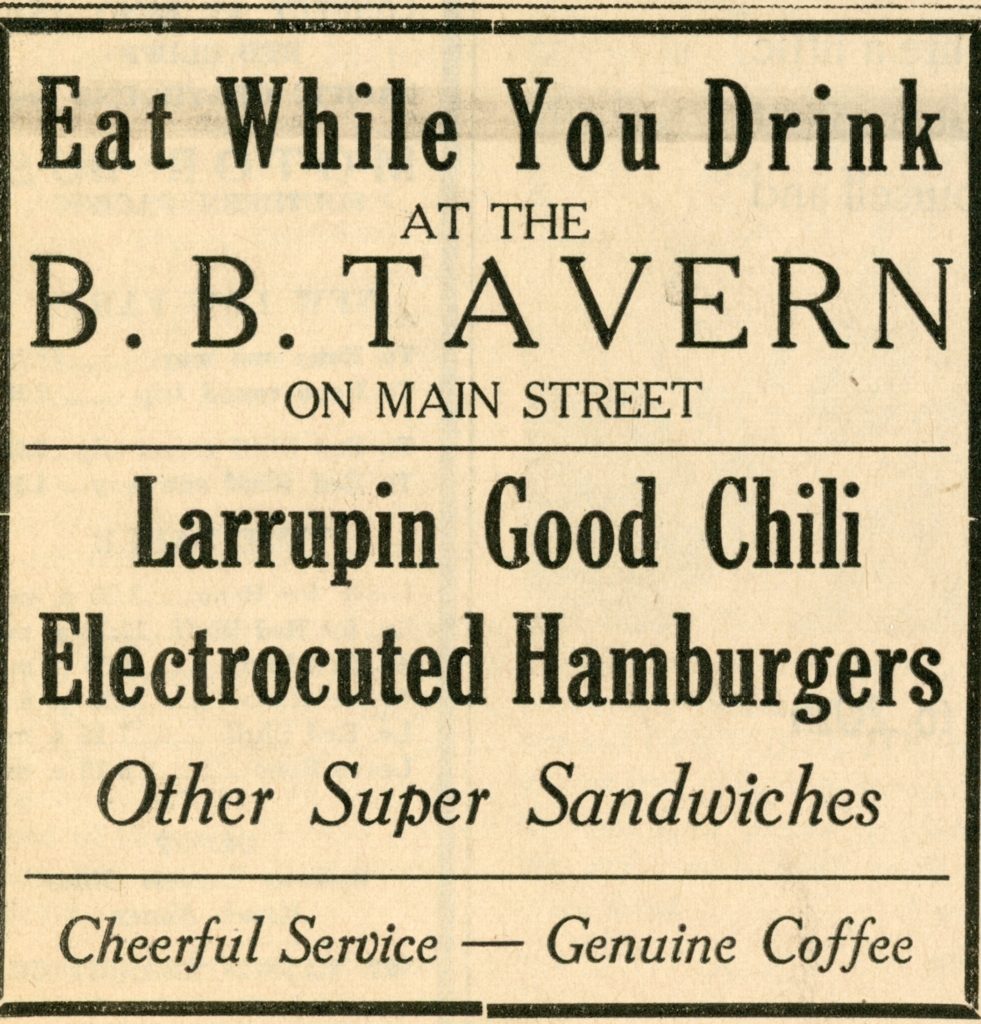
Food is usually safe a topic for a light hearted discussion. The above advertisement caught my attention. Seasoned residents may remember the B&B located in the Knoch Building. The Larrapin Good Chili I understood. The term larrapin was common in the 1930s vocabulary as description for dandy or over the top. Now, can someone explain to me what is a Electrocuted Hamburger?
Spread the word, and encourage a friend to subscribe
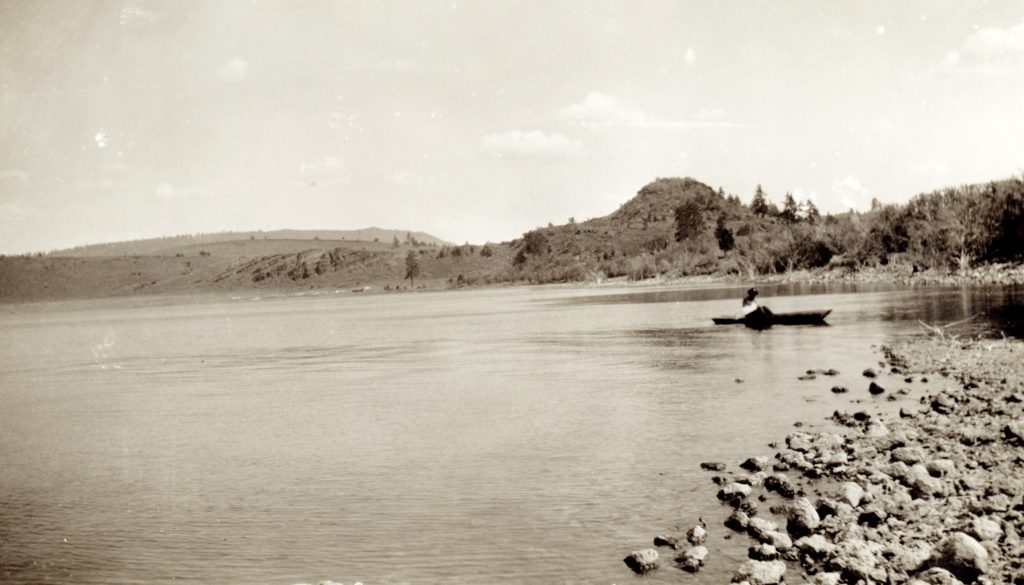
An east side Eagle Lake view above the narrows i.e. Pelican Point, when the water was high in 1921–Lola Murrer Tanner
In 1971, Susanville dentist, Robert “Bob” Amesbury had a book published about Eagle Lake. In the book’s dedication is to the pioneers there, which he includes Alfred Murrer. On page six Amesbury wrote about the lake level. He includes this sentence, “The narrows was shallow enough during the 1940’s to permit Alfred Murrer to swim his horse across.”
There is a slight problem. The east side of the lake that Amesbury refers is quite rocky, one would have problem with that condition with a horse. Even if you and the horse could overcome that, once you reached the other side, the horse would sink in a muck of. mud/water combination.
I do have some inside scoop about this. Amesbury never approached Alfred Murrer, or any Murrer family about his research of Eagle Lake. While the Murrers resided and still do in Willow Creek Valley, events at the lake were front center. After all, the two tunnel outlets are adjacent to Murrer property, among other things. The reason I happen to have first hand knowledge about this Amesbury tale about Alfred Murrer, stems from the fact I knew Alfred well—he being my grandmother Lola Murrer Tanner’s youngest brother.
Fast forward to 1988, when my book on Eagle Lake was published. That summer, by chance, I encountered Bob at The Galley, a bar and restaurant at the north shore of Eagle Lake. Bob congratulated me on my book and then stated, “You have all the facts, I had all the bullshit.”
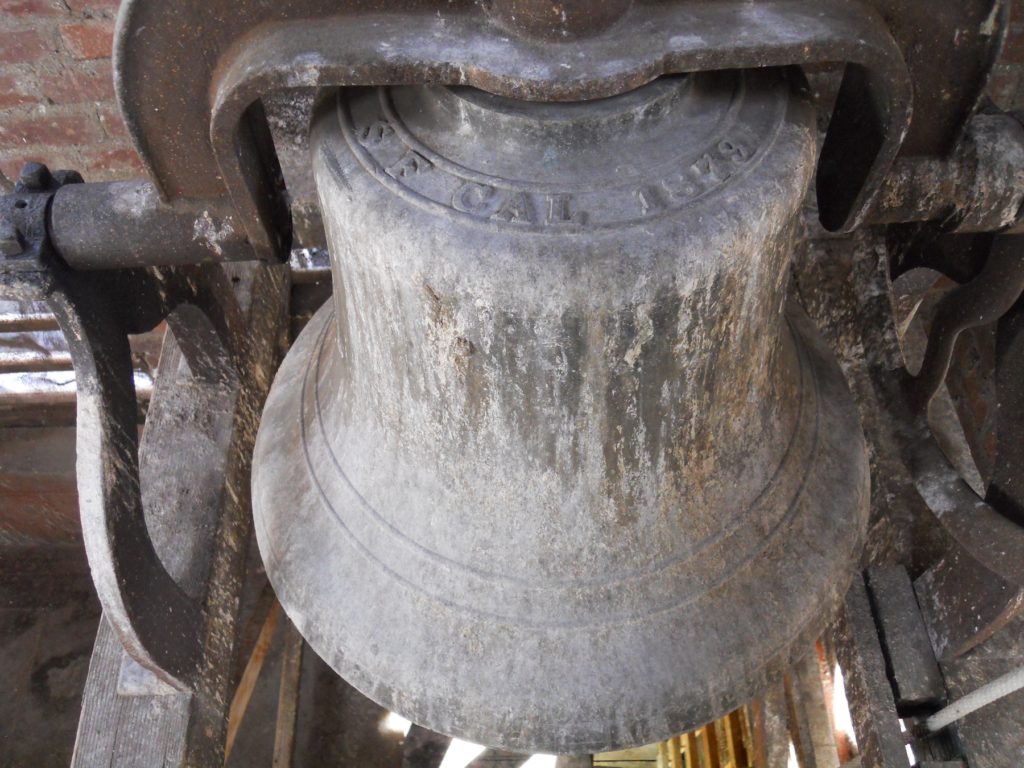
The Methodist Church bell. Courtesy of Martin Balding
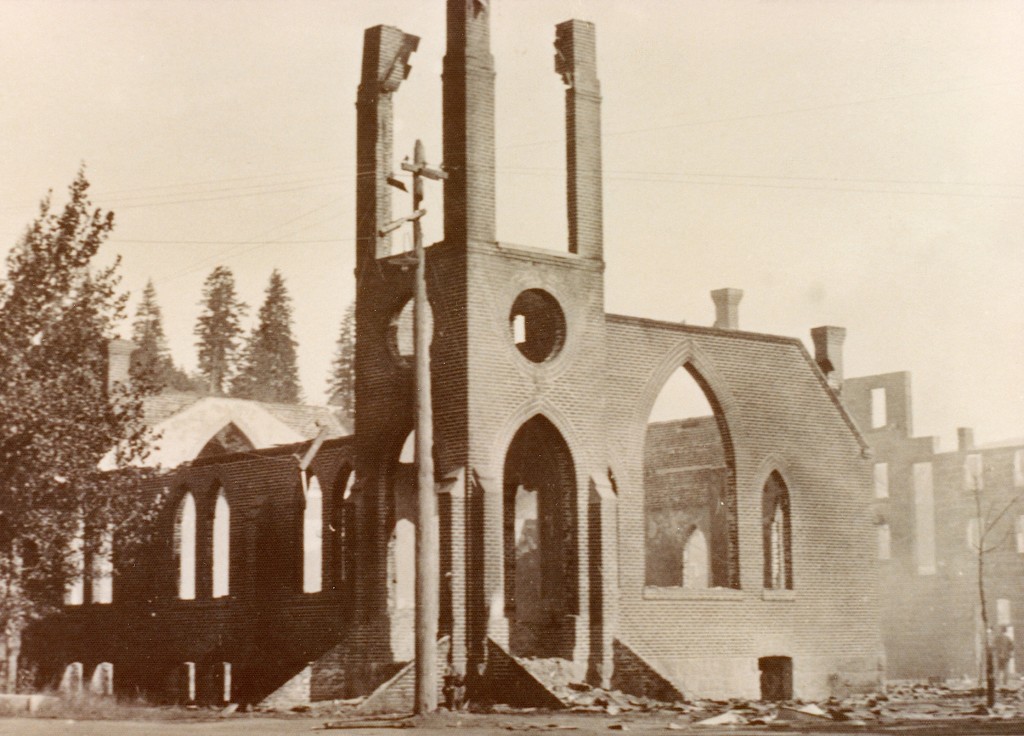
This is a follow up on a story I published on December 17, 2017 about the history of the Methodist Church bell. It should be noted the church was destroyed by fire in 1915, and work started the following to rebuild. The church had limited funds and it initially seemed as though the church would have to go without a bell.
The following was an editorial in the Lassen Advocate of December 22, 1916: “The question of a bell for the Methodist Church has again pressed itself and there seems to be some difference of opinion in regard to the desirability of placing one in the church. It is hoped, however, that a full-toned bell of comparatively low pitch will be decided upon, for a village church without its bell seems almost like a ship without a rudder. But there are bells and bells, and while present financial conditions of the church a question of cost must be considered, a judicious use of money set aside for the purpose can just as well procure a pleasant deep-toned bell as to the mistake of placing in the church a ell every sound of which startles one with the thought of fire.”
The aftermath of the 1915 fire.
By the time church was dedicated in 1917, it did have a bell. It came from the old Lassen County Courthouse, as the new courthouse design did not include a bell.
Spread the word, and encourage a friend to subscribe
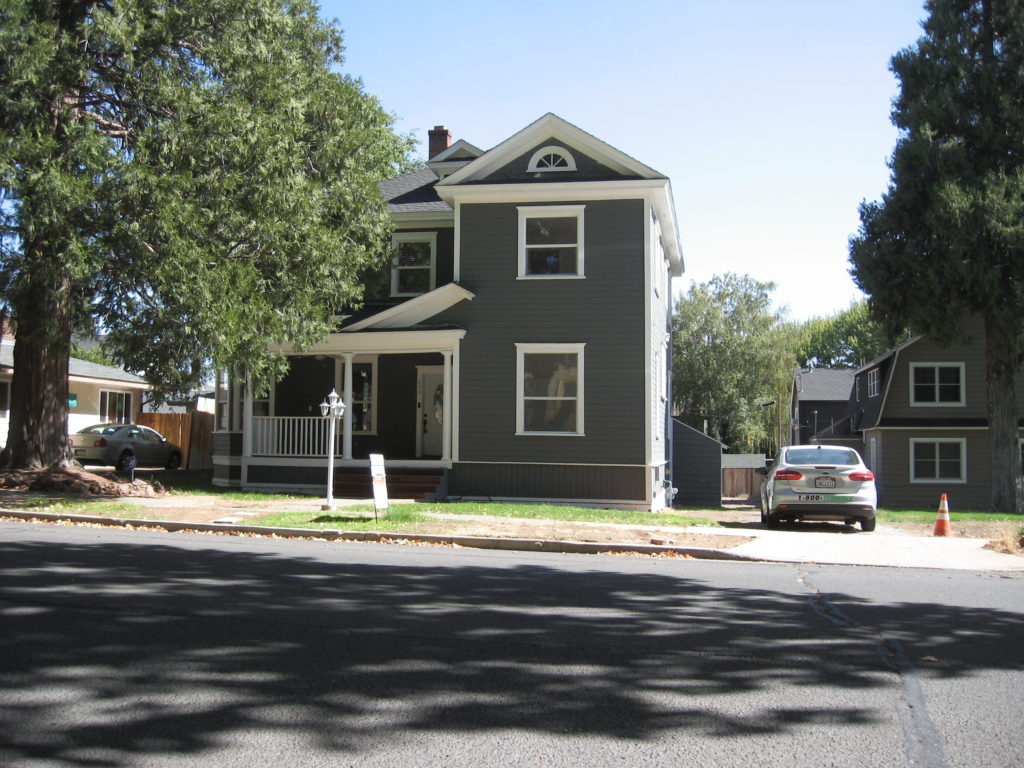
It is always nice to see an old home restored to its old glory. That is what happened this summer with 235 South Lassen Street, across from the Lassen County Courthouse, Many older residents may remember it as the law office of Gary F. Woolverton. However, prior to that is was the home of J.A. “Gus” and Blanche Pardee. It was built in the spring of 1907 as a single story residence. In 1924, a second story was added and the home remained in the Pardee family until 1976 when it was converted into law office. It has gone full circle now, and is now a private residence.
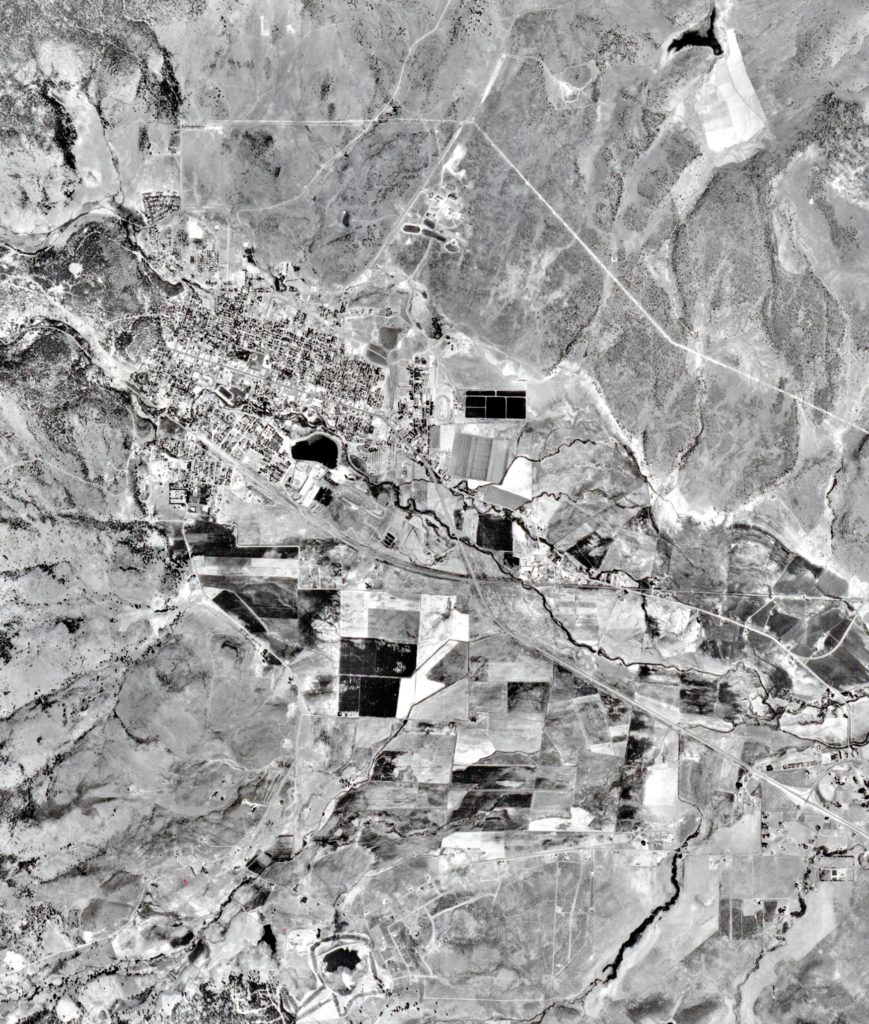
A lot has changed over the years. The one spot that has not changed is the area west of Susanville. Due to a number of factors, it is one area where development is limited.
Now a look to the north. As to residential Cherry Terrace was the only subdivision, and it is small compared to the neighboring ones that sprouted up to its east and north. The only activity north of the town, was the construction of the Lassen Community College campus.
The east end of Susanville more or less ended at Mesa Street. Notice the millpond is still in use at the Sierra Pacific Mill. To the south it was primarily agricultural and open space with very limited residential development.
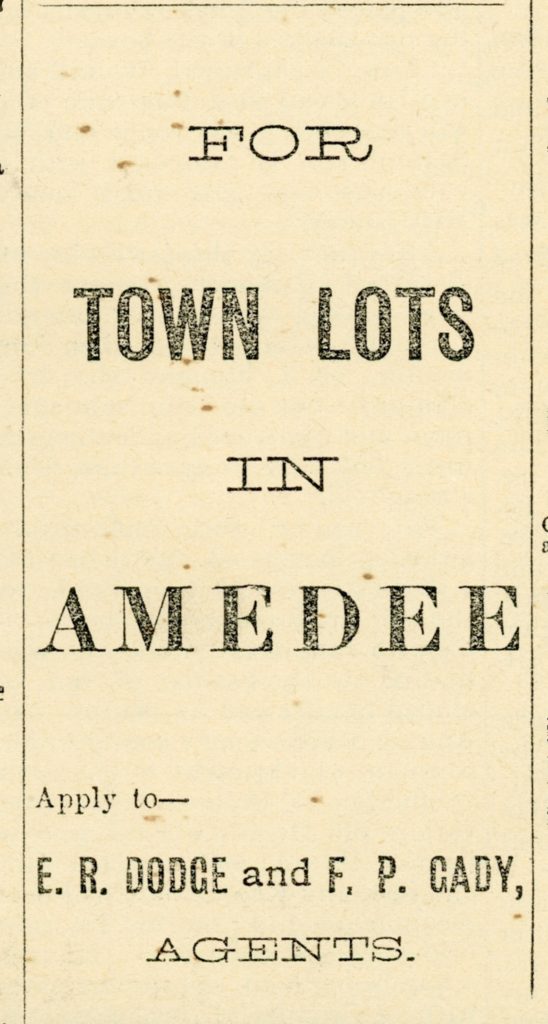
In 1891-92 during Amedee’s initial boomtown period, there were promotions of the town galore. One campaign to attract families to the town was for the first baby born there. The sponsors agreed the first child born in Amedee would receive a choice town lot. If the baby was a boy, the family would receive a month’s free board at the Hotel Amedee; for a girl a one-year subscription to the town’s newspaper the Amedee Geyser. Amedee’s first native son was born on August 19, 1892, a son to Marion and Hattie Bringham. They named the new addition to the family—-Robert Amedee Bringham. The family never received a town lot or free lodging at the hotel. The following year, Marion Bringham, who operated a saloon at Amedee, moved his family to Reno, Nevada. Robert A. Bringham served in World War I and would eventually have a career with the Veterans Administration. He died on November 19, 1973.
Spread the word, and encourage a friend to subscribe
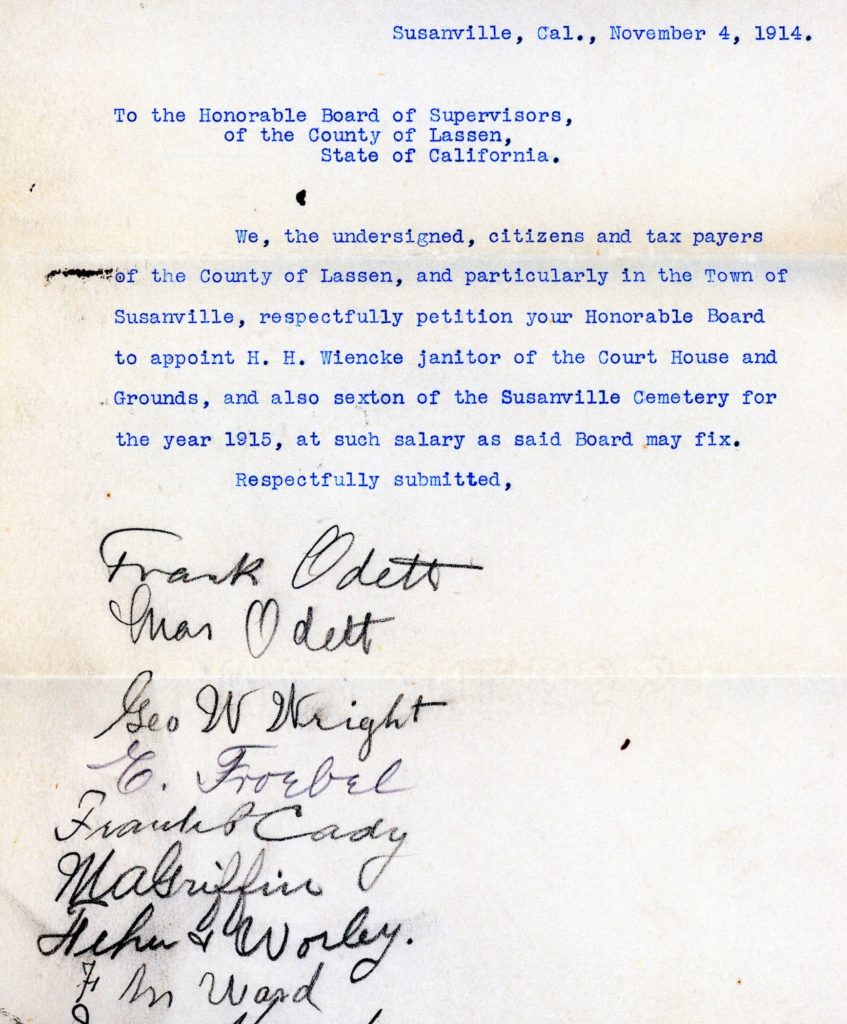
Wiencke’s petition for the courthouse janitors job.
There was a time, albeit, a long time ago, when many county jobs were appointed by the Lassen County Board of Supervisors.* One of the “plum” county appointed jobs was that of the courthouse janitor and with it sexton of the nearby Susanville Cemetery..
*One of the more interesting political appointment positions on a national scale that effected the local level was that of postmaster. Postmasters changed whenever there was change of United States Presidents party affiliation. Not much for job security if you were local postmaster appointed by a Democratic President, you were out of a job when a Republican was elected, or vice versa not implying a specific political preference.
Spread the word, and encourage a friend to subscribe
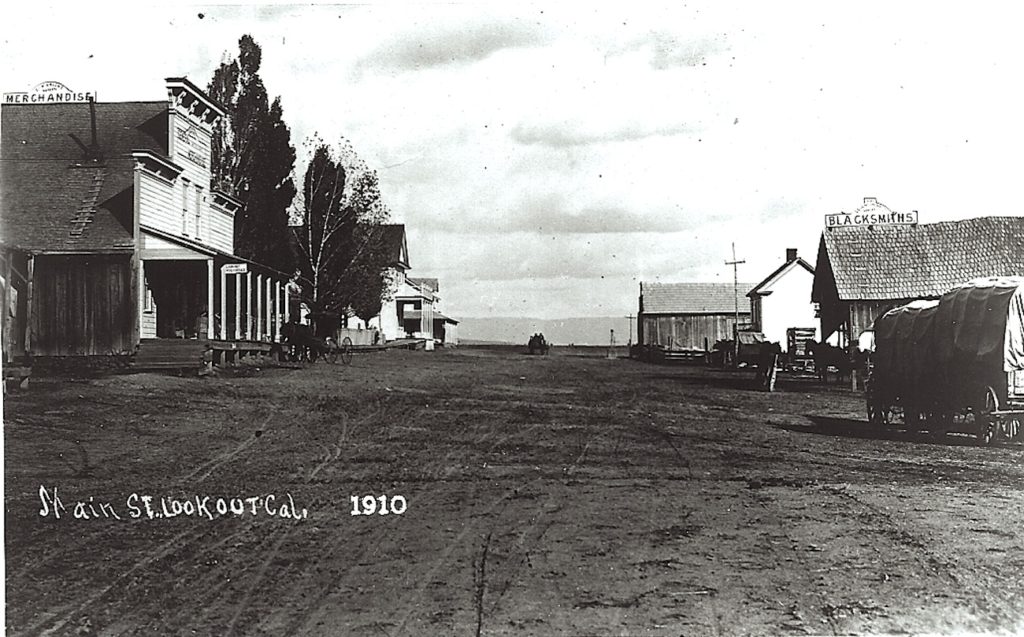
Located approximately eight miles north of Bieber, in the northwest portion of Big Valley, Lookout is best known for the Leventon Blacksmith Shop and the Lookout Lynchings. However, unbeknownst, to the community back in 1916-1917, there were some major plans to transform it into a major lumber manufacturing center.
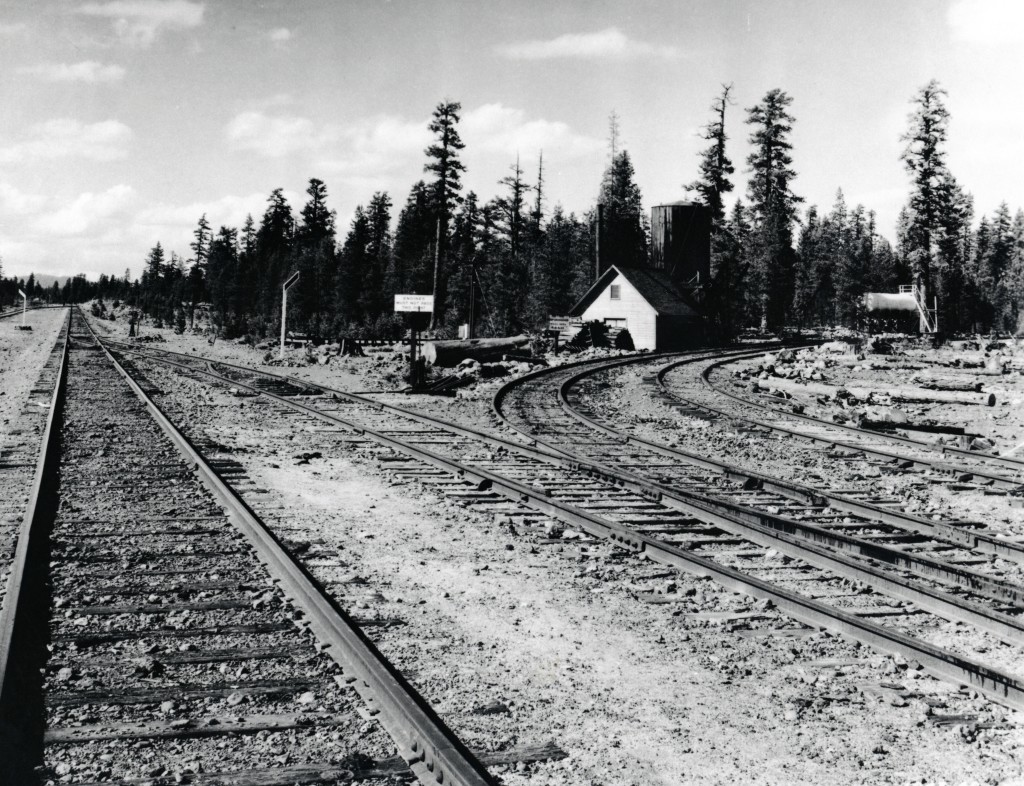
It all began back in 1912 when the Red River Lumber Company and the Southern Pacific Railroad entered into an agreement to the build the Fernley & Lassen Railroad. At Westwood Junction, the Southern Pacific built a spur line south to Red River’s newly constructed company town of Westwood.
Westwood Junction
It was Southern Pacific’s intent to extend the line north to Klamath Falls, Oregon. In 1916, Southern Pacific was eager to begin construction of the line to the north. Southern Pacific prodded Red River about its future plans to establish a second mill north to log its Whitehorse Tract in Siskiyou County. Red River somewhat obliged and in the summer of 1917 company officials traveled north to inspect future mill sites.
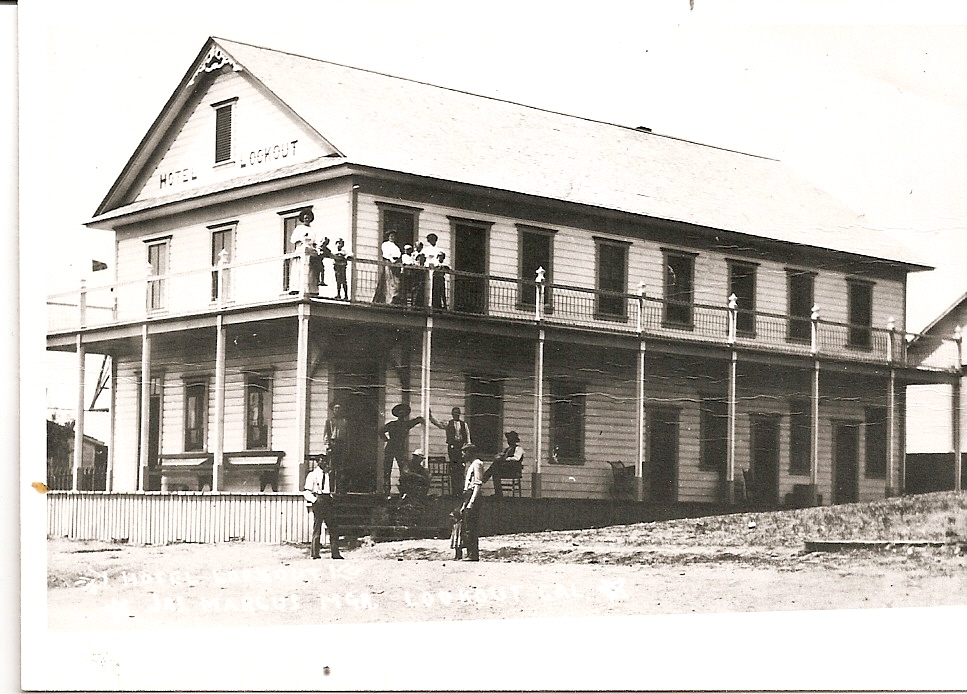
Hotel Lookout—-Beth Coppedge Walls
They found Lookout to be favorable. They were pleased with the cheap land prices, but also more important the weather. Lookout was much drier than Westwood. However, with the world conflicts Red River was not prepared to make any commitment to build a second mill. At the conclusion of World War I the economy was not conducive to proceed with such an endeavor and the plans for Lookout were tabled.
Spread the word, and encourage a friend to subscribe
Actually, this is slightly different take on things. In the 1970s, Philip Gutman’s Hobo Wells Hydroponic operation at Wendel seemed to have a bright future. By 1975, Lassen College incorporated into its curriculum an offered an Associated Arts Degree in Hydroponics. By the late 1970s, Geoproducts, Inc. became involved to expand the enterprise. By the early 1980s the operation was abandoned. Does anyone know why it shuttered?
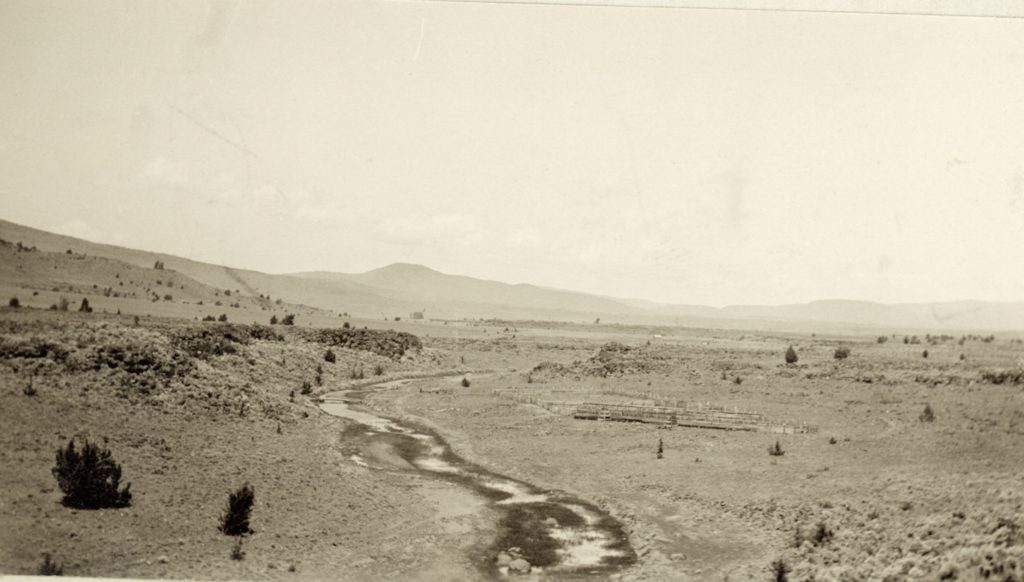
Over the years there have been many proposals to build a dam at “The Crossing” which is where Pete’s Creek flows into Willow Creek. While during the summer and fall, Pete’s Creek water flow in minimal. The idea was to capture winter and spring flows, which depending on precipitation, can be substantial enough to warrant a dam. Otherwise, the general opinion was that water was wasted where it would eventually flow into Honey Lake.
In 1916, the Honey Lake Valley Irrigation District did the most comprehensive study for this particular dam/reservoir. It was opinion of their engineer William Wales that the reservoir was capable of impounding 51,000 acre feet of water in an average year. This district like so many before it and after it was plagued with other problems, that their plans remained on paper.