This is an interesting postcard I came across. Unfortunately, the postal cancel stamp was uneven, so most of the date does not show. The author, Carolyn, who sent the card to Miss Sophie Schoenheit of San Jose wrote: “I took this scene in Susanville when the snow was five feet deep.”
The snow obliterates most of the building depicted, so I cannot figure out which residence it is/was. However, I wonder if it might be the Taylor/Compton house on North Weatherlow Street. Whatever the case may be, we could use a lot of snowstorms depicted in the photograph, because this area, as well a wide swath of the West really needs this kind of moisture.
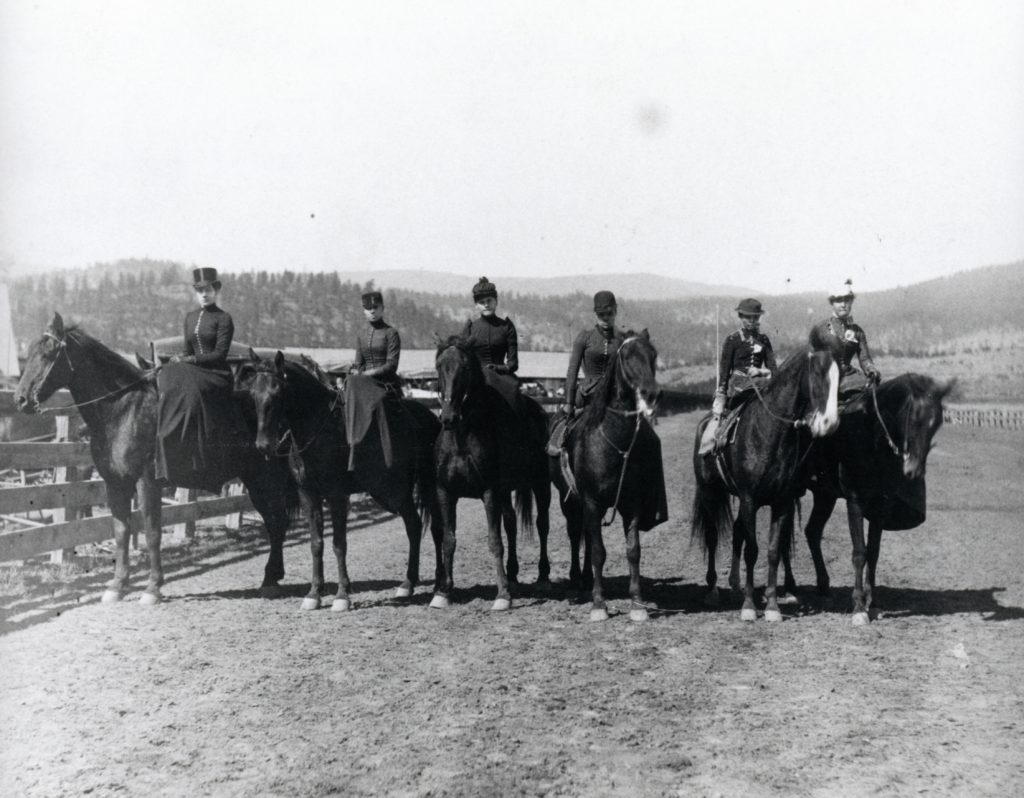
Susanville resident, Med Arnold (1885-1967) recalled the fairs of past, which we explore today. Med wrote: “Every fall we had two-week fair consisting of races, a livestock show and exhibits of all kinds. Many of our local people owned race horses, both runners and harness horses. Other horses were brought in from all parts of the country. There was usually six running races and a couple of harness races each day.
”The mile-track was situated just east of our ranch, and not far from our orchards. The large grandstand, betting ring, restaurant, paddock and stables were on the south side of the track, and the judges stand was on the north side. All of these buildings were situated somewhere in the neighborhood of what is now North Street, but some distance below Memorial Park. I have seen hundreds of dollars in the betting ring, all in gold coins. The present day crop of gamblers are pikers compared to the old-time bettors.”
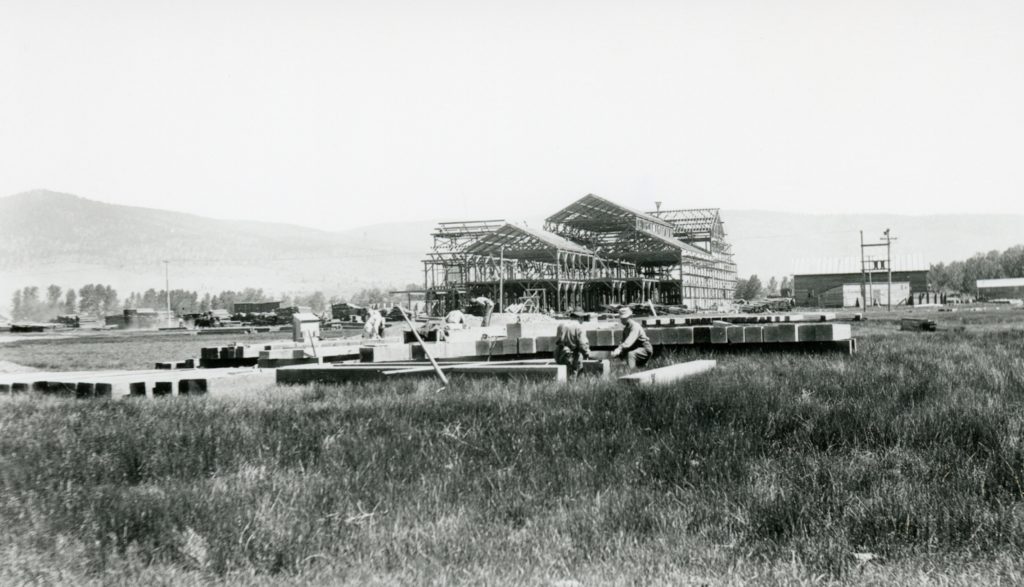
Construction of the FGSBox Factory, Susanville, 1920—Ed Standard
When Fruit Growers Supply Company decided to build a sawmill and box factory in Lassen County, they initially wanted to locate either in or adjacent to their timberlands. Fruit Growers Manager Frank Hutchens consulted with the Lassen National Forest which suggested two sites—Pine Creek, near Bogard Buttes and the Pine Creek estuary at Eagle Lake. There was a third alternative—Susanville.
Susanville’s business community was eager to have Fruit Growers build their mill there. So much so, they offered a cash bonus. A total of $41,130 was pledged by 243 residents if the mill was located At Susanville. Hutchens was impressed. On August 13, 1919 Fruit Growers agreed to the location of the mill at Susanville. In October, a check was for $40,070 was presented to Fruit Growers (a handful of individuals reneged on their pledges.
In 1920 construction began on the mill which with cost over runs exceeded over two million dollars. An additional $245,000 was spent to construct employee housing. When the mill opened on April 16, 1921 they initially employed 1,500 people. The initial monthly payroll exceeded $100,000. That $40,000 investment by the community far exceeded expectations!
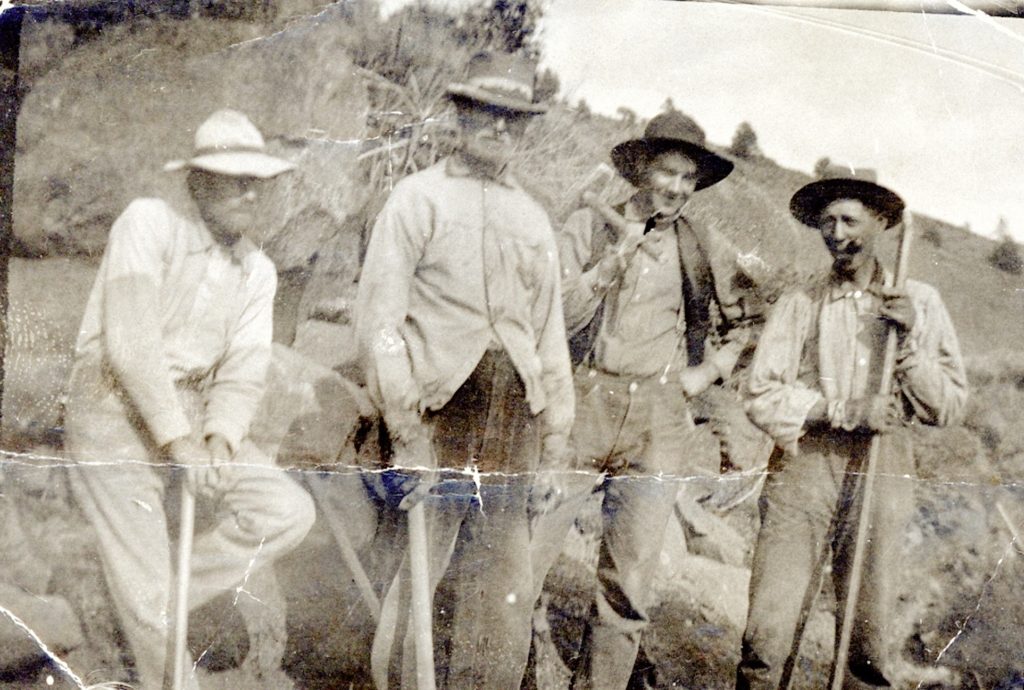
Janesville Road Crew, 1910. Courtesy of Verna Tanner Haley*
Way before gasoline taxes were introduced as a funding mechanism to maintain roads, there was a $2 a year road tax applied to all males over the age of 21. Sometimes, it was confused with the Poll tax, for often one would pay the tax when one voted.
Janesville Road Crew, 1910. Courtesy of Verna Tanner Haley
However, one could opt of the road tax and provide labor in an exchange. Each county supervisor would appoint a road district overseer, who in turn would perform the work on in their respective districts, usually with the volunteer labor of those who did not pay the tax. Not the best system, especially in a large rural county like Lassen, but nevertheless it got the job done.
*To the far left is Satch Whitten, road overseer. The long time Janesville resident was married to Carrie DeWitt.
Left to Right: Barney Fillingam, Levi Conklin, Elmer Gerking and Shep Thomas—Gladys Scott
Some times the way my mind works is a marvel. The daily posts than really evolve, some quickly and other over months. Initially, I was going to focus on the Blunck homestead, which was yesterday’s featured photograph. Today, just indicates how twisted my mind can function.
Over the years, I have corresponded with a lot of people. One of which was Gladys Goodfellow Scott (1905-2003) who grew up in Willow Creek Valley. In one of those letters, she wrote about various homesteads, and one known as the Shep place. It was so named for Shep Thomas who took over from Blunck circa 1918. Gladys went on to send the picture featured today.
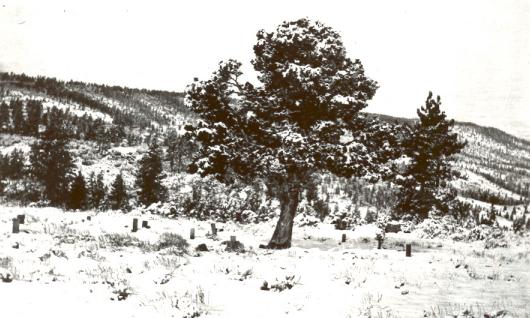
Examining the photograph it appears they are part of a road crew. Back then one could pay a road tax, or volunteer several days of labor. I will go into that tomorrow. I do want to point out, Levi Conklin, featured in the photograph was a long time resident of Dry Valley, between Grasshopper Valley and the Madeline Plains. He is one of the few named known individuals to be buried in the Dry Valley Cemetery.
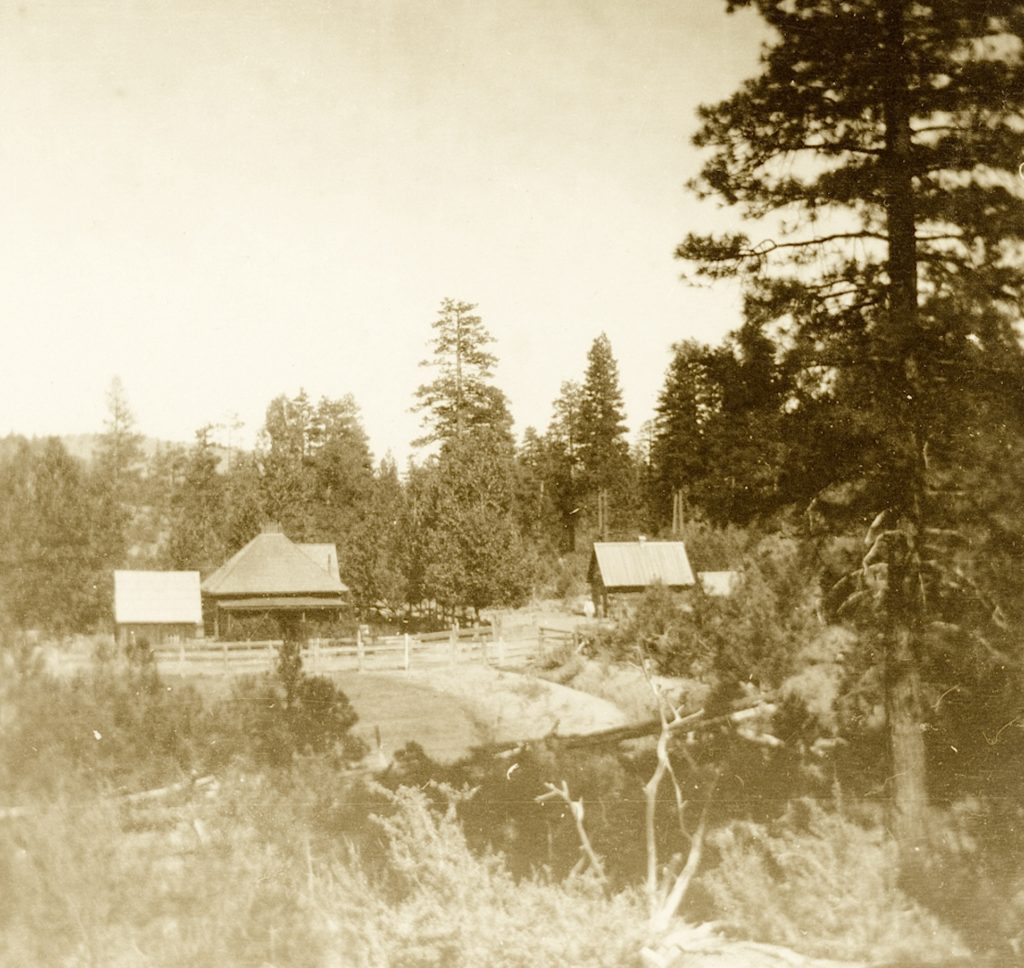
Blunck Ranch, Willow Creek Valley, 1911–C.R. Caudle Collection
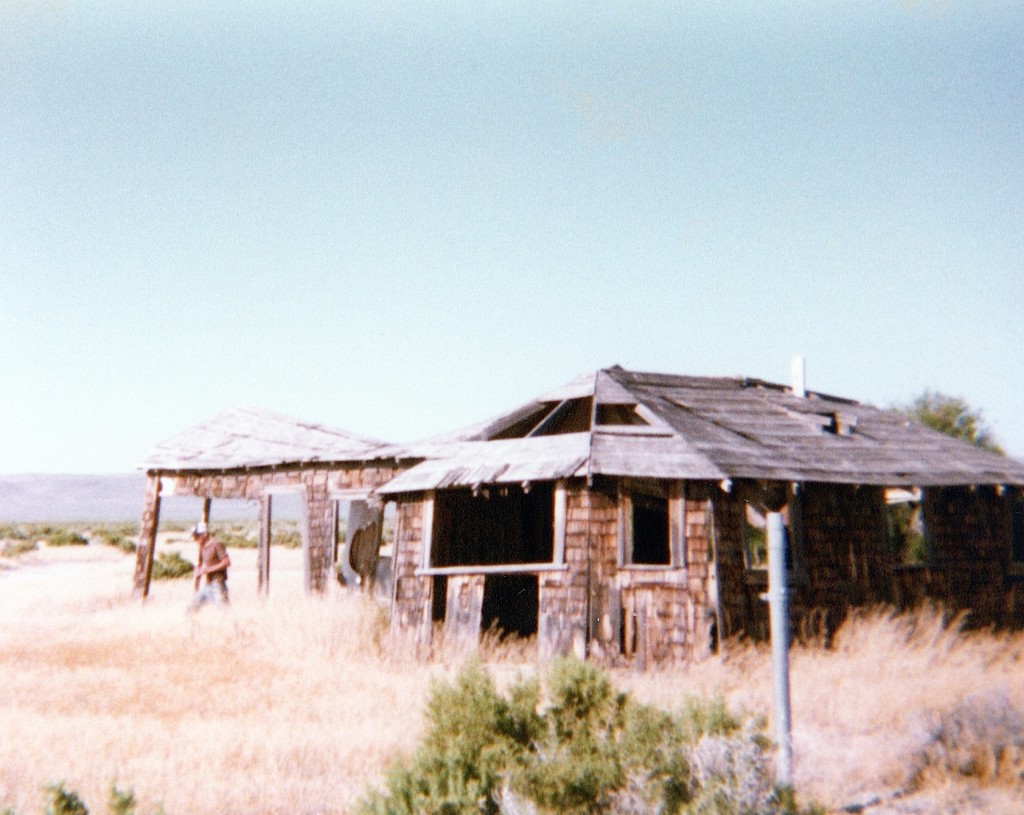
One of the many side-effects of World WarI witnessed the depopulation of certain rural areas. For some who served, they did want to return to the farm, since many had a hardscrabble existence. This especially true like places the eastern Honey Lake Valley and the Madeline Plains. Some were fortunate to find buyer for their homestead. There are still family ranches here, that started small but during the 1920s and 1930s were able to purchase adjoining 160-acre homestead. My own family ranch, Tanner, is a perfect example since it now includes Hartson, Stampfli and Whitehead homesteads. However, the ones who were not so fortunate to find a buyer, simply abandoned their property and later sold for delinquent taxes.
The abandoned Montgomery homestead, eastern Honey Lake Valley, 1983
One has to be cautious about items found on the internet. Even sources that are reputable have their flaws. For some odd reason, I checked out Wikipedia’s entry for Hayden Hill. It states that Hayden Hill, Lassen County’s largest mining community was named for geologist Ferdinand V. Hayden (1829-1887). While most of his work was done in the Rocky Mountains, it is doubtful he ever set foot in California.
In 1870, when news of gold discovery south of Adin, some 500 prospectors descended upon the scene, initially known as Providence. On December 5, 1870 the mining district was named after veteran miner Joseph Warren Hayden, who at the age of 56, was the oldest miner there. Hayden died there on Christmas Day 1884 and was buried in the Hayden Hill Cemetery.
Now, I am prone to err, also. However, I do my utmost to correct my mistakes. One in particular, that I need to update is Hill’s Market, wherein I omitted Mildred (Long) Hill. One item, that I am still working on is problematic, was the management/ownership after Mildred’s passing in 1967.
Many may not be aware that truck and railroad logging worked in tandem. Just like transition from horse logging to motorized tractors would take time, it was the same with trucks to be incorporated into logging operations. One of the benefits was trucks could access terrain to difficult for railroad operations. To get the most mileage for buck was the reload station. Trucks were used to log difficult terrain and then instead of driving all the way to mill, the destination was to the railroad’s reload station. The trucks were unloaded, then the logs reloaded onto railroad flat cars, thus an economical way to move volume of logs from the woods to the mill.
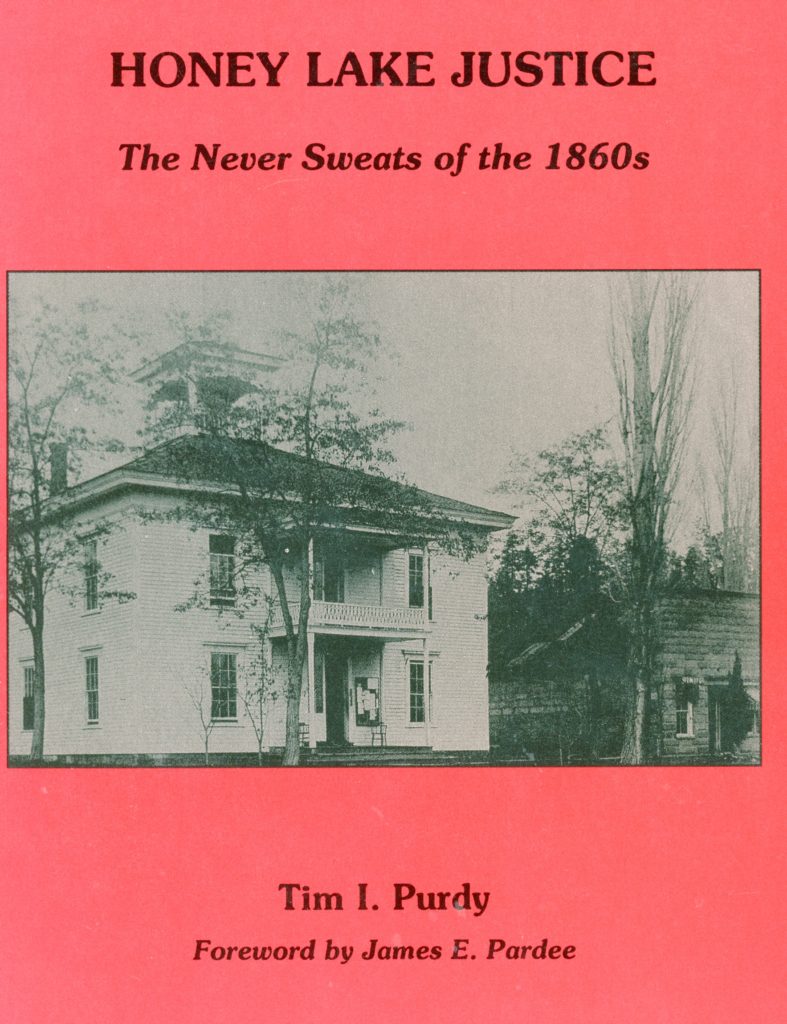
This was the third book I wrote, published in 1993. It was something, I had forgotten about, until this summer when I met Vicki Pardee who was on an adventure in this area back in June. She is not directly related to the Susanville Pardee’s she is still intrigued to say the least. While I would go on to write some twenty books, this is the only with a foreword. I asked Jim Pardee, not only a local attorney, a friend, but also the senior member of the bar. In addition, his grandfather Julien Pardee and father James “Gus” Pardee were also attorneys.
This is what Jim wrote: “We live in age of excess—and on occasion it is good to have these pointed out, directly or indirectly, so that we can endeavor to do better the next time around. I am sure that Mr. Purdy didn’t intend to preach or point the finger. However, when you read his book and are brought to realize that people brought suit to recover $63.65 for a month’s lodging, $51.50 for back wages, and finally a ar bill for 23 drinks at 25 cents a drink for a total of $5.75; we can’t help but reason that inflation in today’s market has gone mad.
”The foregoing preliminary observation is not the main theme of Mr. Purdy’s book. With a broad sweep of his brush, he chronicles the working of the Lassen Justice Court from its inception. He reminds us that the Justice Court was the people’s court; the judges were laymen, and many of the early practitioners had questionable legal backgrounds. However, by and large, justice was done.
”As senior member of the Lassen County Bar and a practitioner in Lassen County for forty-four years, I have observed the court and the personnel change from a laymen Justice of the Peace to a lawyer Justice Court Judge.
”Mr. Purdy’s endeavors cover only a limited space in time. It leaves the reader asking for more. Hopefully, there will be a sequel reaching well into the Twentieth Century.”
Note: I do have some copies of this slim volume available. It is not enough to warrant a listing on the book feature page. If anyone wants one it is $10 includes shipping. One way to pay is go to the subscribe page and go to donate. Or for those who have an aversion of buying online, just email me your address, and I will send it to you on the honor system.
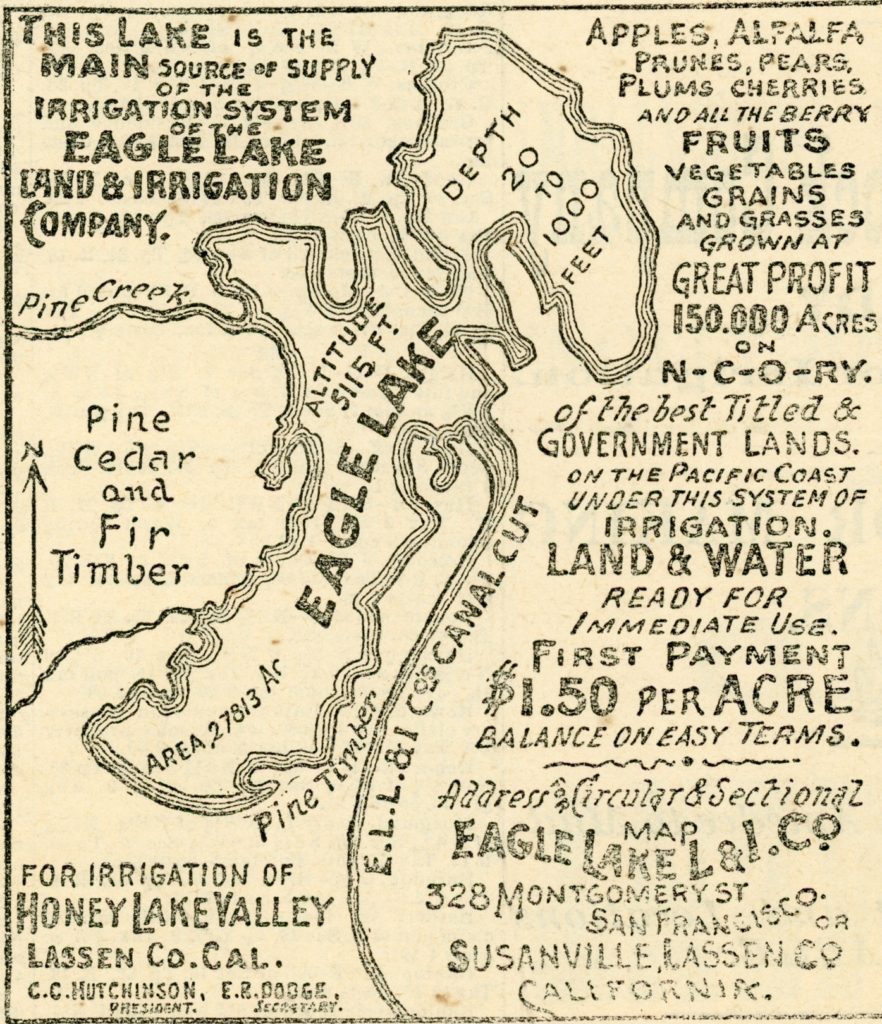
A portion of an 1892 advertisement for the Eagle Lake Land & Irrigation Company
In 1891, the Eagle Lake Land & Irrigation Company was organized to resurrect Merrill’s Eagle Lake enterprise. They had a two-prong approach. The first was to install a pumping plant at the lake, along with the needed canal system stretching all the way to Amedee in eastern Honey Lake Valley. Once put in place, they would receive revenue from the sale of water that in turn could be used to complete the tunnel construction. Oddly enough, the company would start work on the tunnel from the lake side, whereas Merrill’s tunnel was on the Willow Creek side, but that work did not begin until the fall of 1892, after the pumping plant was installed and in working order.
Eagle Lake Land & Irrigation Company’s inlet channel at Eagle Lake, 1916.
By the spring of 1892, work was well under way. While waiting for their order the machinery of the pumping, there was another essential element ditches needed to distribute the water. Like Merrill’s plan, Willow Creek would provide the main conduit to deliver the water to the Honey Lake Valley. From the pumping plant to Merrill’s tunnel and the headwaters of Willow Creek would require two miles of ditches—there remains some interesting rock work. From Belfast to the other side of Amedee a twenty-one mile ditch was constructed.
In early June 1892, some twenty-one tons of equipment for the pumping plant arrived by rail at Amedee. The company had purchased a Hooker Hydraulic pump. The 80-horsepower boiler had the capacity to move 60,000 gallons of water per-minute.
On September 15, 1892, the moment of truth had arrived when the pump first tested. By October water from Eagle Lake was flowing all the way to Amedee. This was a tremendous achievement and proving to the naysayers it could be done.
Eagle Lake Ditch, near Amedee, February 2018.
Four months later in February, everything would come to a crashing halt with the Financial Panic of 1893. There are some historians who believe that this far worse than the Great Depression of the 1930s. Whatever the case may be, it was the beginning of the end of the Eagle Lake Land & Irrigation Company, who would never see if their was project would be successful. Heavily in debt, numerous lawsuits filed by creditors left the company bankrupt. The pumping plant remained idle, and portions were slowly hauled away. The last was a six-ton boiler brought to the Wilson sawmill in Susanville in 1904. However, today the crumbling cement foundations still remain.