Susanville’s Union Street

Deforest Freight team, Union Street circa 1912

During the Civil War of the 1860s, communities in support of the North, applied Union to street names, squares, etc. Susanville was a perfect textbook example.

Typical of the era, map makers were one dimensional. Susanville’s original plat, shows Union Street extending beyond Cottage and connecting Weatherlow Street at the Richmond Road bridge.  There were two problems. First the proposed street would dissect the block that was home to the Susanville School District. The other was the physical restraint of the hillside for Union to connect with Weatherlow. During the messy title problems of the 1870s, caused by  the town’s founder, to rectify this particular situation, that segment of Union to Weatherlow was abandoned.

Support

How Certain Hospitals Evolved

Westwood Hospital-Courtesy of D.B. Martin

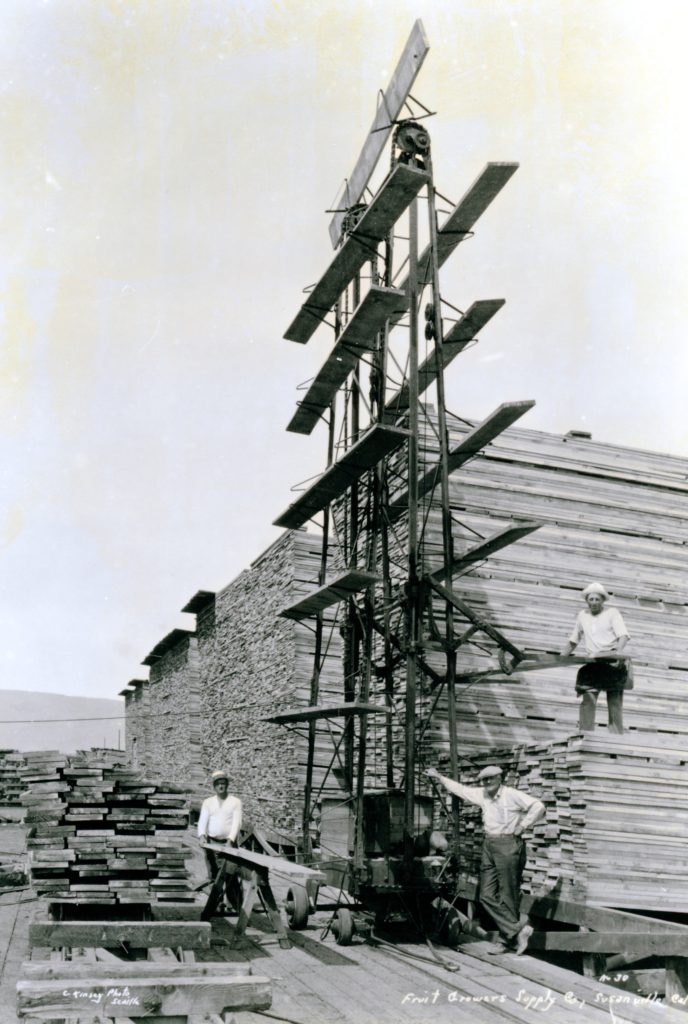
This is a tale of how many hospitals were established in the 1910s. In 1914 California adopted the Workmen’s Compensation Act. This affected large industrial employers such as lumber mills in our region. Companies had two options for medical insurance to their employees. They could self insured or buy a policy through the State. Fruit Growers and Red River adopted the self-insured approach the employees were charged one dollar a month for health and medical care. This insurance covered every member of an employee’s family. This was how the Riverside Hospital was built in Susanville and the Westwood Hospital.  The Act was amended in 1944 and both Red River and Fruit Growers opted out of the self insured plan, and paid into the State Workmen’s Compensation Fund.

Construction of Riverside Hospital, 1920. Courtesy of Ed Standard

A little bit of trivia is this how Kaiser Permanente was formed. Kaiser initially were ship builders and they too originally opted for the self-insured policy.. They also dropped the self-insured policy, and in 1945 Kaiser Permanente was established.

Tim

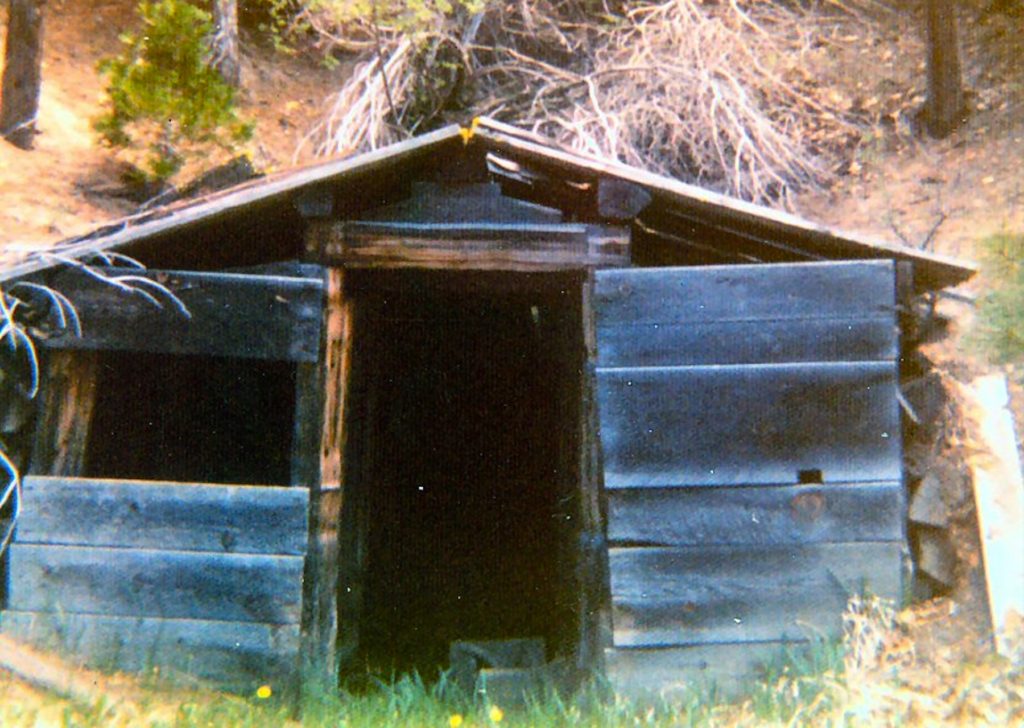
Plinco Mine, Plumas County

The mine appear as a late as 1950 on this Plumas National Forest map.
Note: This post appeared on November 6, 2020. This post is in memory of Chuck James, a one-time archaeologist on the Plumas National Forest, who passed away on September 8, 2025. He was responsible for me to research this mine. The Plinco Mine was located in the Last Chance area of northeastern Plumas County. Doyle in Lassen County was in part beneficiary of the mining operations due to the access with the Western Pacific Railroad. From the mine to Doyle was approximately thirteen miles. The initial mine was discovered in 1905 by Joseph Novak of Utah and Orlando McNabb of nearby Milford, an avid prospector. Attempts to develop the mine languished. In the fall of 1915, J.F. Cutler, a Midwest capitalist began an ambitious project to develop the Novak Mine. On November 2, 1915 Articles of Incorporation for Plinco Copper Mine were filed in the State of Nebraska. Cutler stated at that time he had ten men working on shafts and buildings investing some $16,000 in the venture. There does not appear to be much documentation about the Plinco mine. In late August 1919 a massive forest fire, to be named the Ferris Fire ravaged the Last Chance country and destroyed the Plinco Mine buildings. The operation then ceased to exist.

Support

Westwood’s Pine Tree Newspaper

A portion of the front page, and only known copy that was found in the T.B. Walker papers at the Minnesota Historical Society

On March 21, 1916, Westwood’s first newspaper The Pine Tree made its debut.  It was a weekly paper that was distributed for free. Leon R. Stanley who was in charge of production, had a background with newspapers in Modoc County. Very little is known about the paper and when it ceased publication.

On August 17, 1917, The Westwood Independent succeeded The Pine Tree. This paper under the helm of G.B. Morrow, who also served as the justice of the peace remained in operation for three years. Stanley again was in the forefront when The Westwood Sugar Pine which eventually became known was Sugar Pine Press succeeded The Westwood Independent.

Support

The Tragic Tale of Maud Bentel

The Amedee Hotel in its prime.

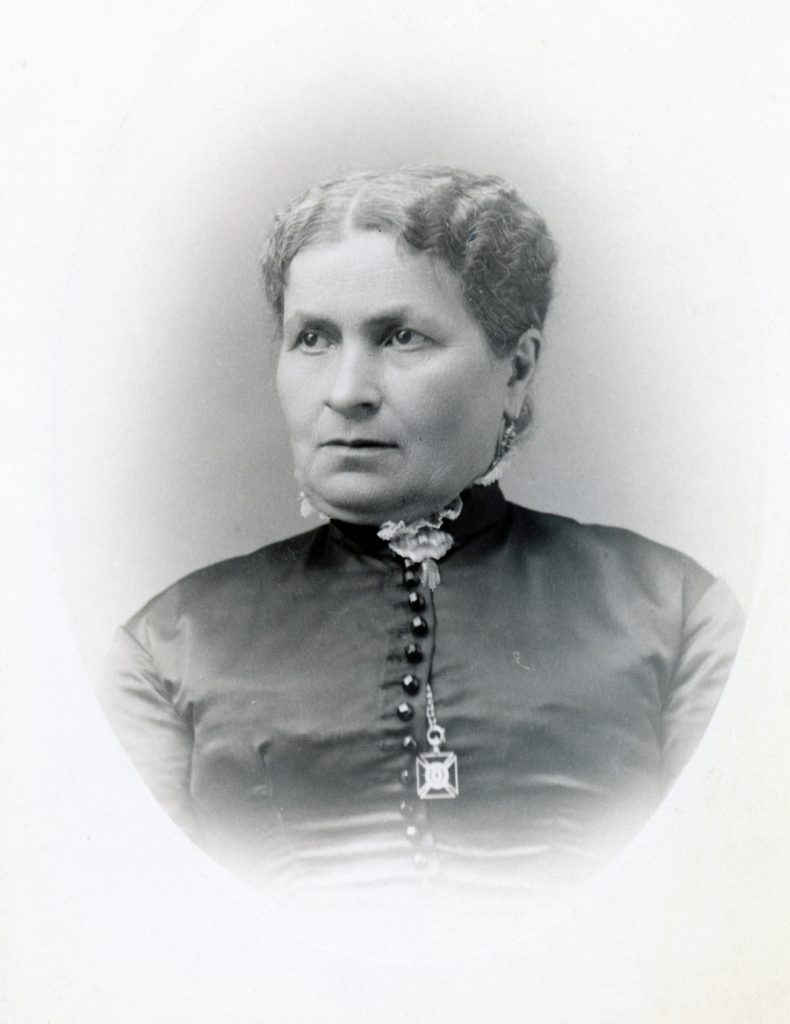
Unfortunately, life is full of tragedies, and that was in the case of Miss Maud Bentel. At the age of seventeen, she was a telegraph operator at the Hotel Amedee when she committed suicide on June 8, 1894, Charles Ball who was drunk at the hotel had became a big nuisance towards her. He called Maud a various assortment of obscenities with some vile threats. This upset her terribly and she left the hotel and went to the drug store of Mrs. B.A. Keser.

Mrs. Keser talked with Maud, attempting to console her. Maud remarked “you don’t know what you are talking about. I can never look at a man in the face in this town. I’d rather be dead than do it.”

When Frank Fischer, came into the front room to the store, Mrs. Keser left Maud alone, so she could attend to her customer. When she returned she found Maud in a spasm and Maud told her she had taken strychnine. Maud had second thoughts now and pleaded to be saved. Mrs. Keser gave her some  syrup of ipecac to induce vomiting but it was too late and Maud died shortly thereafter.

It was believed the actions of Charles Ball at the hotel provoked the whole incident. Ball could only be charged with a misdemeanor and was fined the maximum of $200 for his actions. District Attorney N.J. Barry implemented criminal actions against Lewis Brubeck in the matter for keeping an inn in a disorderly manner. It was thought if Brubeck had stopped Ball from harassing Maud, she would not have killed herself. Brubeck was found guilty of a misdemeanor and he too was fined $200.

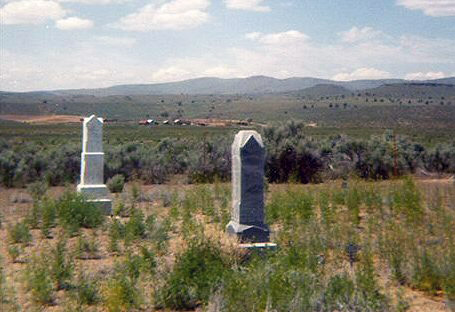
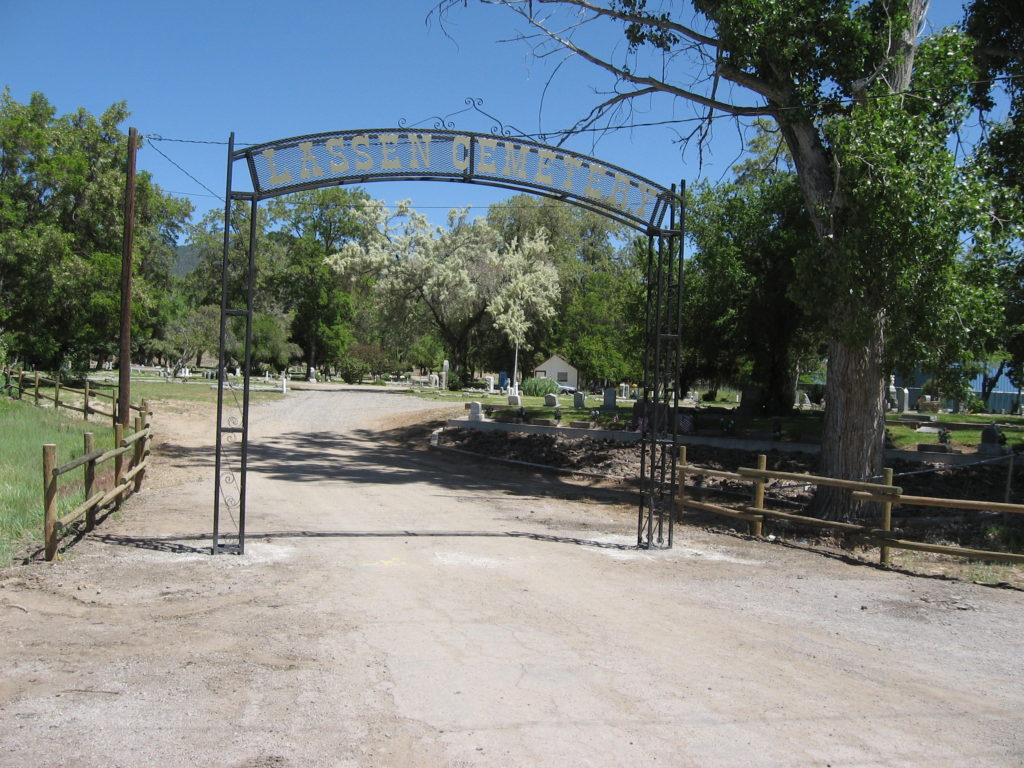
Maud was buried in the Susanville Cemetery, and there is a small marker for her grave. It was my intention to photograph her grave,. Alas, the cemetery is still closed due to the damage of the horrendous windstorm in November.

Support

Who Was Litch in Litchfield?

Andrew Litch Family. Left to Right: Clara, Andrew, Thomas, George, Fred, Mary (Grass) and Minnie–Courtesy of Erma Gibson Haley

In 1850, Andrew Litch (1883-1906), a native of Germany, arrived in California. During the 1860s, he operated a trading post, the  Granite Creek  Station. In 1866, he abandoned the station and moved to the Honey Lake Valley. In 1868, he entered into a partnership with Thomas J. French. That year, they  purchased the Shaffer Brothers Ranch (known today as Mapes) for $2,500.. In 1874, the two men dissolved the partnership and Litch received the western part of the ranch. In 1883, Litch moved to Reno, Nevada, though retained ownership of the ranch and leased it.

Litchfield
A town is born, Litchfield. Courtesy of John M. Gibson

In 1895, B.F. Gibson married Andrew’s daughter,Clara Litch, and he took over his father-in-law’s ranch. In 1912, construction began on the Fernley & Lassen Railroad that went through the Litch property, now owned by Gibson. On January 8, 1913, Gibson had subdivision created for a new town, served by the railroad. He named it Litchfield, in honor of his father-in-law.

Support

Bonham School, Washoe County

Bonham Ranch, Smoke Creek Desert, 1978

Established in 1887, it was originally located at the Bonham Ranch in the Smoke Creek Desert. The school closed in 1919 for lack of students.

Flanigan, 1976
Flanigan, 1976, courtesy of Christopher Moody

In 1929, it was resurrected at Flanigan in the Honey Lake Valley. It closed on June 20, 1969 and at that time it was the only remaining one-room school in Washoe County. Standish resident Ed Bass purchased the school and moved it to his property.

Tim

Wild Horse Gatherers

Wild Gatheres
In 1978, the Sierra Club published The Wild Horse Gatherers. It is an illustrated story of BLM’s wild horse round-up locally.

In 1977, Alden Robertson spent a lot of time with the Bureau Land of Management’s wranglers of the Susanville District, as part of the Adopt Horse Program.  He photographed the wild horse round ups of Twin Peaks, northeast of Susanville. In 1978, the Sierra Club published Robertson’s work titled Wild Horse Gatherers. It is remarkable account of those round ups. While it has been out of print for a long time, I was able to locate copies at Bookfinder.com as low as nine dollars.

Tim

.

Exploring Lassen County's Past