In 1866 by Andrew Litch settled in the Honey Lake Valley having abandoned the Granite Creek Station. In 1868, Litch and Thomas J. French purchased the Shaffer Brothers Ranch (known today as Mapes). In 1874, the two men dissolved the partnership and split the ranch. In 1883, Litch moved to Reno, but kept the ranch, renting it out.
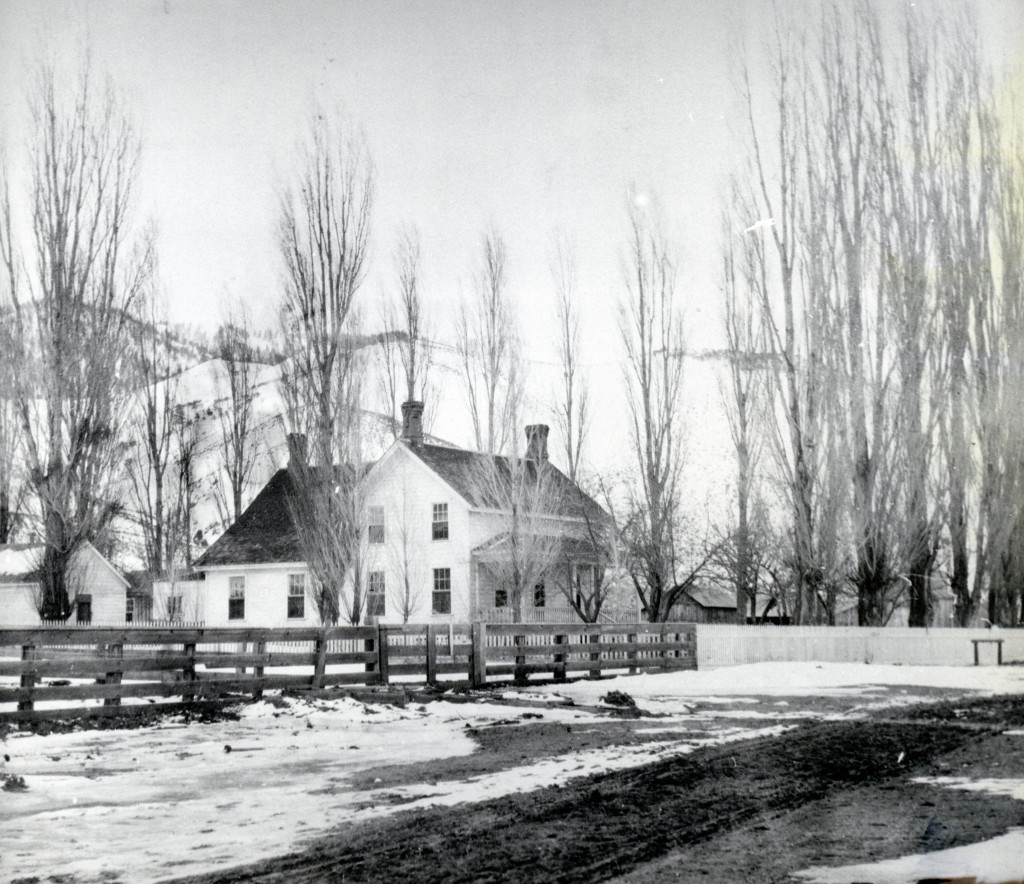
The Gibson/Haley Ranch, near Litchfield—John Gibson
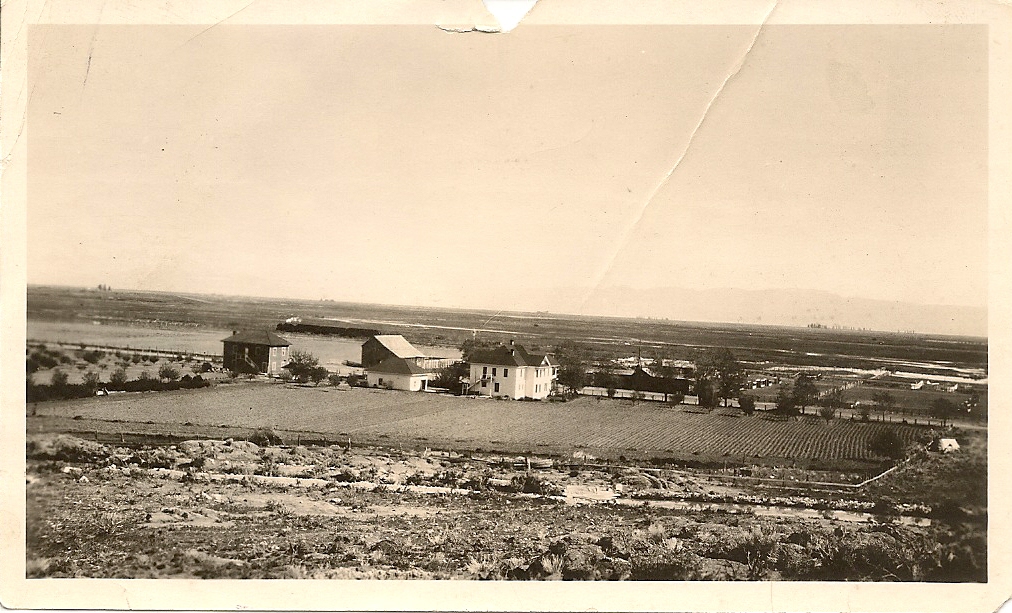
In 1895, B.F. Gibson married Clara Litch, where he took over his father-in-law’s ranch. Gibson continued to make improvement and acquired additional property near Wendel known as the Purser Ranch. Gibson was also the main beneficiary of Ward Lake for a water supply. Descendants of the family continued to operate the ranch until 1975, when it was sold.
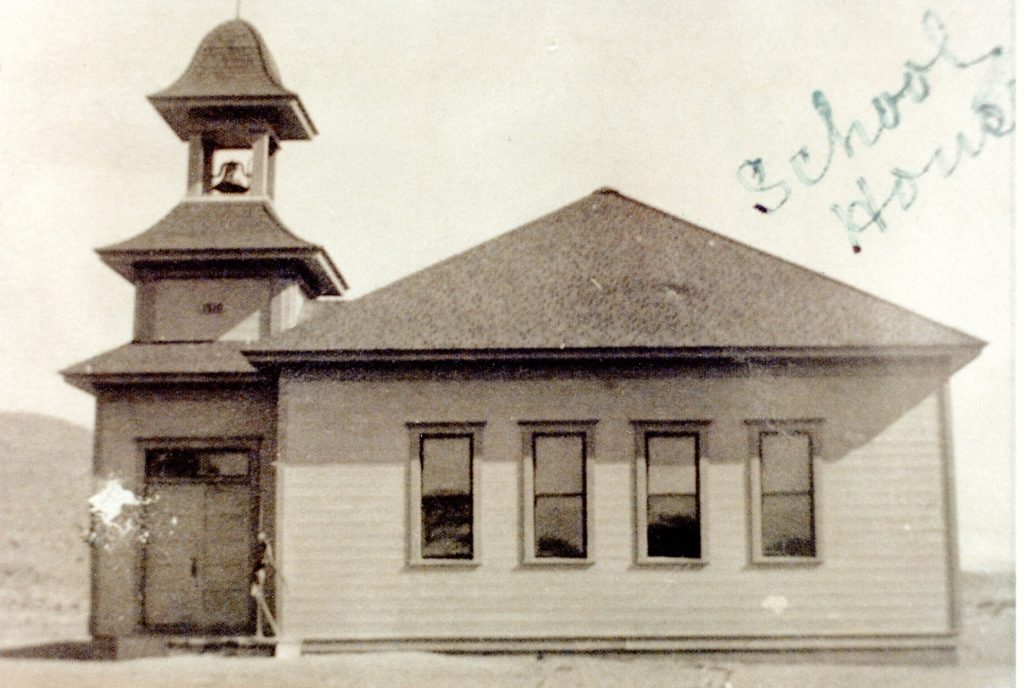
An acquaintenance of mine was surprised to learn that famed modern art painter, Jackson Pollock attended school at Janesville. The other day, I was thinking about a well known archaeologist who attended school at Missouri Bend, some three miles from Janesville. There the similarities stop.
In 1926, Harry S. Riddell moved his family to a small farm north and east of Janesville. Riddell, an engineer, was hired by the Baxter Creek & Tule Irrigation Districts to see if he could come up with a solution with the problems surrounding the Bly Tunnel at Eagle Lake. His two sons, only barely a year apart, Harry and Francis attended the Missouri Bend School. The two boys started noticing arrowheads on the school grounds. They were fascinated by this other finds of Native American artifacts. In 1936, the family moved to Sacramento. Both Harry and Francis studied and became archeologists. Harry was the low-key of the two. Before I go any farther, Francis was best to known to his colleagues and friends as Fritz. However, he was always Francis to me.
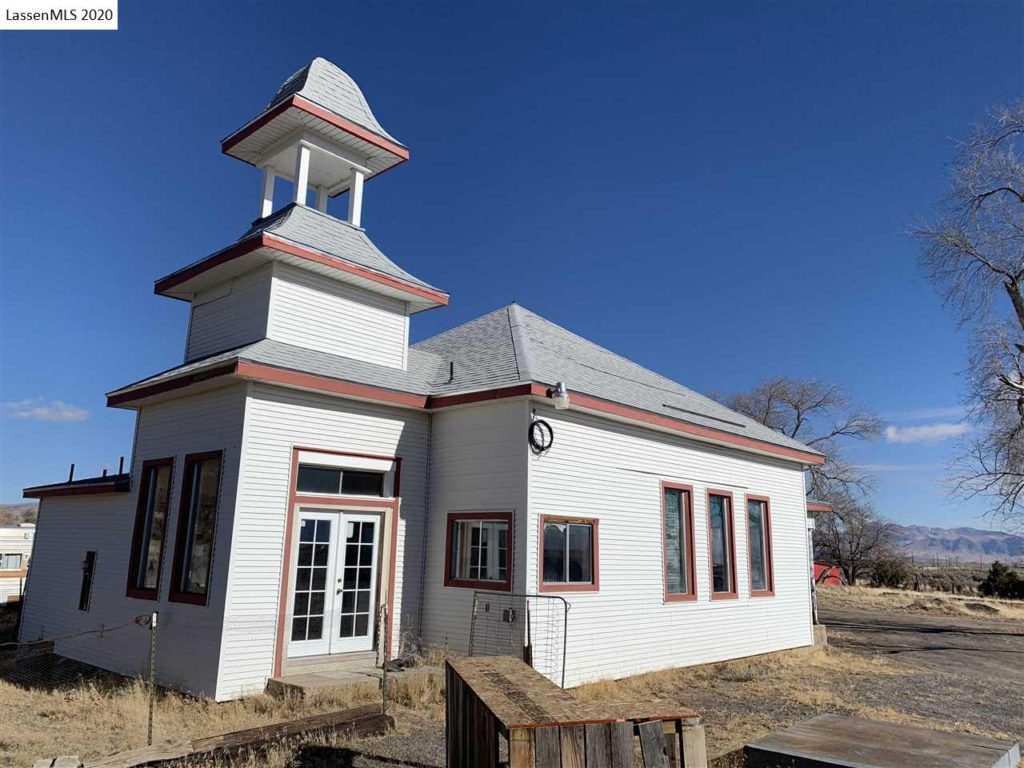
The old Missouri Bend School, December 2020–Smith Properties
Francis became the first archeologist to be hired by the State of California, first as a curator of the California State Indian Museum. Later, he went to work in the Department of Parks & Recreation. In 1948, he began to participate in archaeological surveys throughout the state, using a standardize form, something unheard at the time.
Francis had a special fondness for the Honey Lake Valley and the Indians there. He was involved with the archaeological excavations of Karlo and Tommy Tucker Cave. Francis did not stop there. He had a passion for Indian Ethnography to better understand his work. As Francis commented, “I could not separate the past from the present.” During the late 1940s and 1950s, Riddell, along with colleague Bill Evans would compile the Ethnographic History of the Honey Lake Maidu and the Honey Lake Paiute. A very valuable document, indeed.
Not only was Riddell was highly regarded in California archaeology, but for his work in Peru. Riddell even invited me to partake in one of his Peruvian expeditions. Alas, I had to decline due to a lack of funds.
John Edward Raker was born in Illinois in 1863, at the age of 10, came to Lassen County with his parents. In 1885, he passed the bar examine, and moved to Alturas to practice law. He eventually went into partnership with his father-in-law, E.V. Spencer. Raker went on to being elected Modoc County District Attorney and then Modoc County Superior Court Judge. In 1910 he decided to run for the California’s First Congressional District seat and won by a slim margin of 141 votes. Raker continued to serve as Congressman until his death in 1926.
Raker was buried in the Spencer family plot in Susanville. The services were held on Sunday, January 31, 1926–an impressive. affair. The body arrived by train at noon at Susanville, which also consisted of a number of Congressmen, along with a contingent of forty-seven people from Alturas.
As the Lassen Mail noted: “The procession was an imposing one, as it slowly and solemnly wended its way along the slush covered streets. When the first automobile reached the Methodist Church, the line was still moving at the depot. The line of march was along Richmond Road to Weatherlow, north on Weatherlow to Main, up Main to Lassen and thence to the church.”
The night before the region was hit with a heavy snowstorm, making the roads a big slushy mess. Twenty-five members of McKea Post, American Legion, attended but it took them two and half hours to make the trip from Westwood. Had the weather been more favorable there would have been an even larger turnout.
This is a good time as any, in the middle of winter, to label those old print photographs that you may have. It is sad and some what tragic to come across a box of old photographs given to me, only to find that so many are not identified.
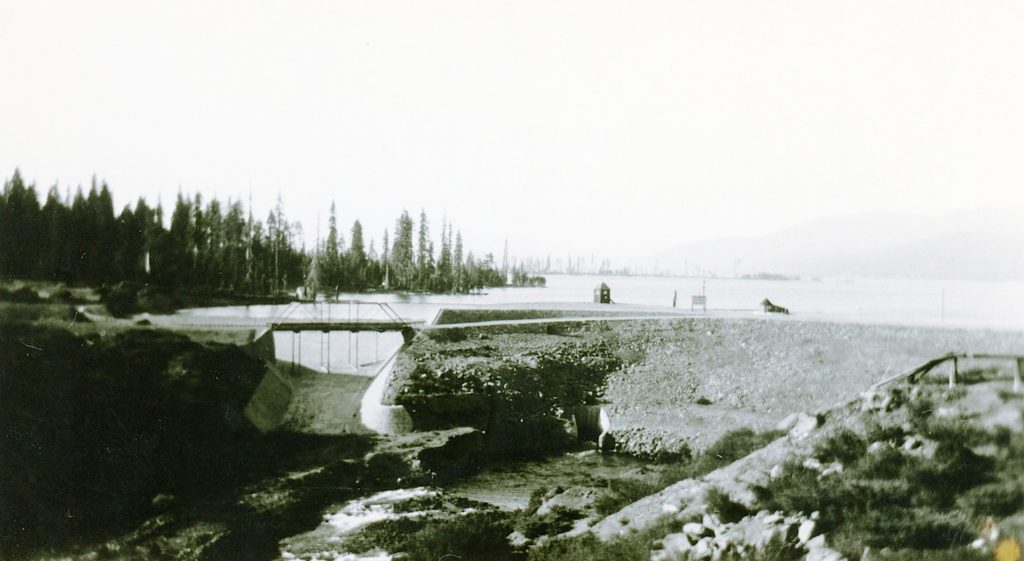
Then, of course, there is the other extreme. When I received the C.R. Caudle Collection I was quite fortunate, since so many were labeled. Maybe because he was a civil engineer, might have something to do with it. Some of his photographs he wrote in great detail on the back of photographs. Today’s featured photograph is a perfect example. Caudle wrote: ”Overflow spillway for Lake Almanor, Plumas County, Calif. One of the water storage reservoirs of the Great Western Power Company, taken Aug. 1923 by R.A. Warden, when C.R. Caudle and Warden were on their way to visit V.S. Barber at the Sunnyside Gold Placer Mine.”
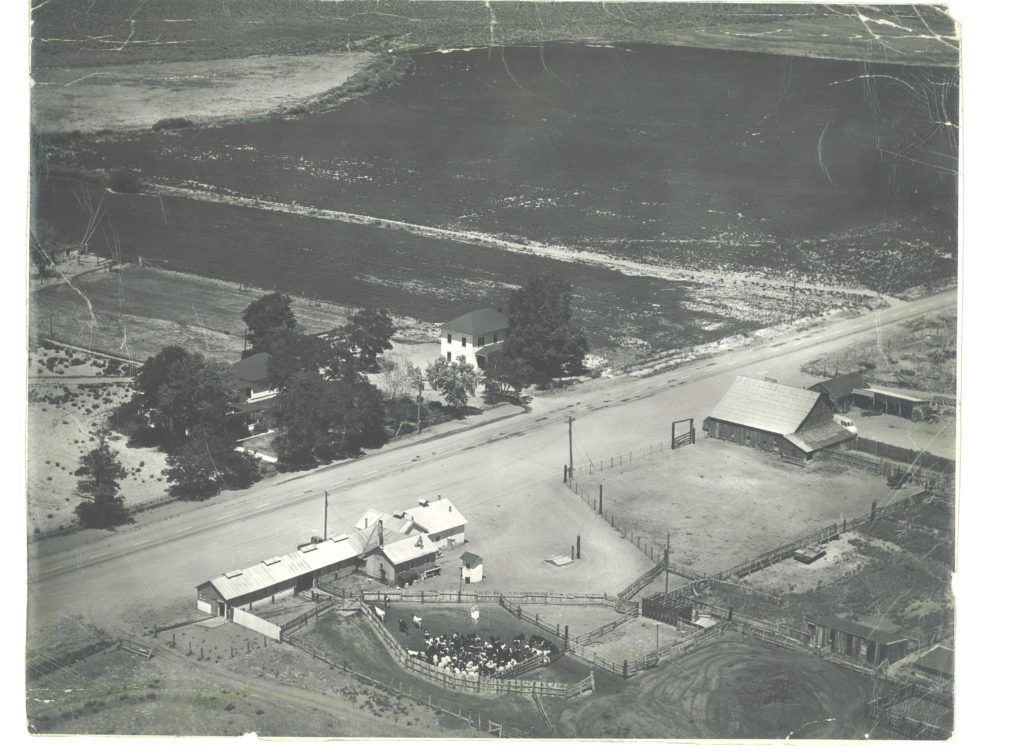
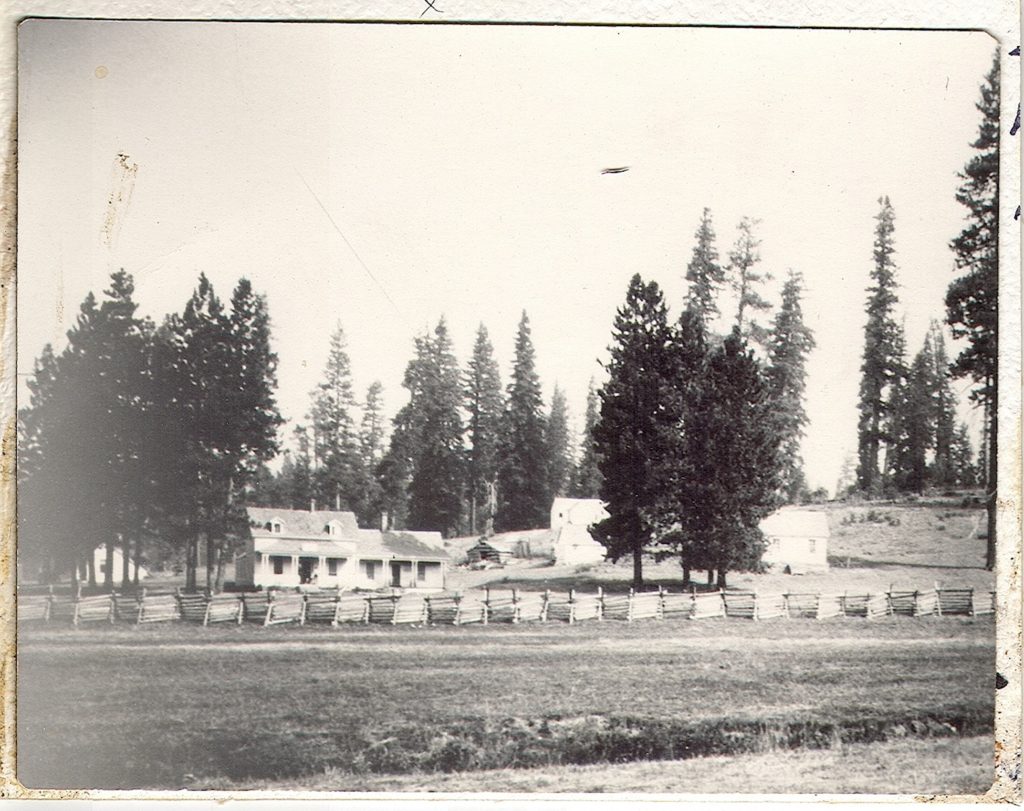
Some readers may recall in October, I used an aerial of the Susan River Ranch. At that time, I mentioned the Lassen Advocate ran a weekly contest using aerial images of ranches. The above photograph was not part of that series. The ranch remained in the family for over a century. Very seasoned residents have fond memories of one its crops—watermelons. Most all of the buildings are still there with the exception of the barn.
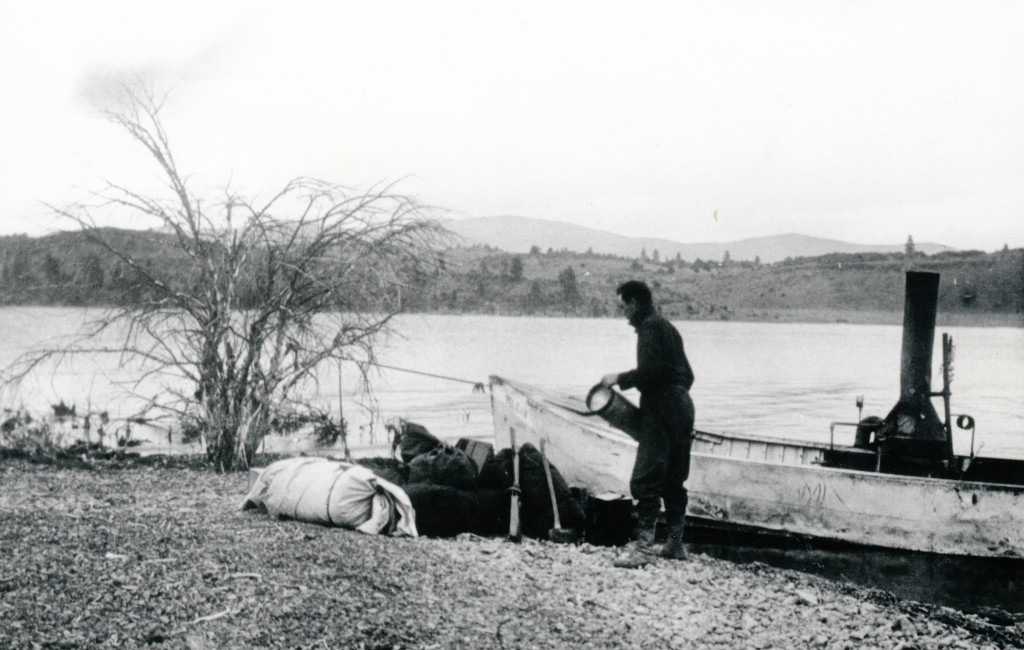
Leon Bly sounding Eagle Lake. Courtesy of Wyn Wachhorst
There were all kinds of social groups of days gone by, prior the advent to television and later the internet. The Lakeside Literary Club was a group of women comprised of the Tule District a region that encompassed the lower Susan River before it enters Honey Lake.
At the May 1922 meeting of the Lakeside Literary Club, Mrs. J.T. Barnes and Mrs. Erma Haley presented a lengthy report on the Eagle Lake Irrigation Project that was currently under construction. According, to the two women, Bly’s original plans were rather dramatic. Below is an excerpt:
”While spending a vacation at the summer home of the Gallatins at Eagle Lake, Mr. Leon Bly, an engineer from San Francisco, became interested in the possibilities of making some use of this large body of water. Thirsty land might be found and the ever increasing demand for electric power could be partially applied. He planned to take the water to the Sacramento Valley by means of tunnels connecting with the natural channel of the Feather River.”
The women noted that there were too many obstacles to overcome and Bly turned his sights on the Honey Lake Valley. While Bly’s initial proposal sounds farfetched, as late as the 1960s there were plans to divert Susan River into the Feather River drainage. That would be very simple to do.
January has been an interesting month, especially research wise. While working on a story about noted archaeologist Francis Riddell, I came across something he compiled that escaped my attention. It was account of the Papoose Massacre of 1866 that was relayed to him by Kitty Joaquin. There are three versions, which will be explored in the future.
While doing some research on Marion May Hapgood, born 1902 at Likely (her parents owned the South Fork Hotel), I came across an article about how Stover Mountain was in eruption at the same time as Lassen Peak. Then I was re-reading Marion’s grandfather Eber Bangham’s 1906 biography. This has the earliest history of Granite Creek Station. Then, in turn, I remembered that Thomas Bare who owned the nearby Deep Hole Station, also owned the meadow at Granite Creek. More about that in the future.
In the course of all of this, the Milford Cemetery pops up. According to Asa Fairfield, Mrs. Mary Harris was the first person buried there in 1867. However, in that cemetery is a marker for Philip Wales who died on June 6, 1864. Both Wales and Jacob Boody were found dead in proximity of each other, and case was never solved., Again more on that in the future.
One topic, has a way of mushrooming into several, and its an interesting journey.
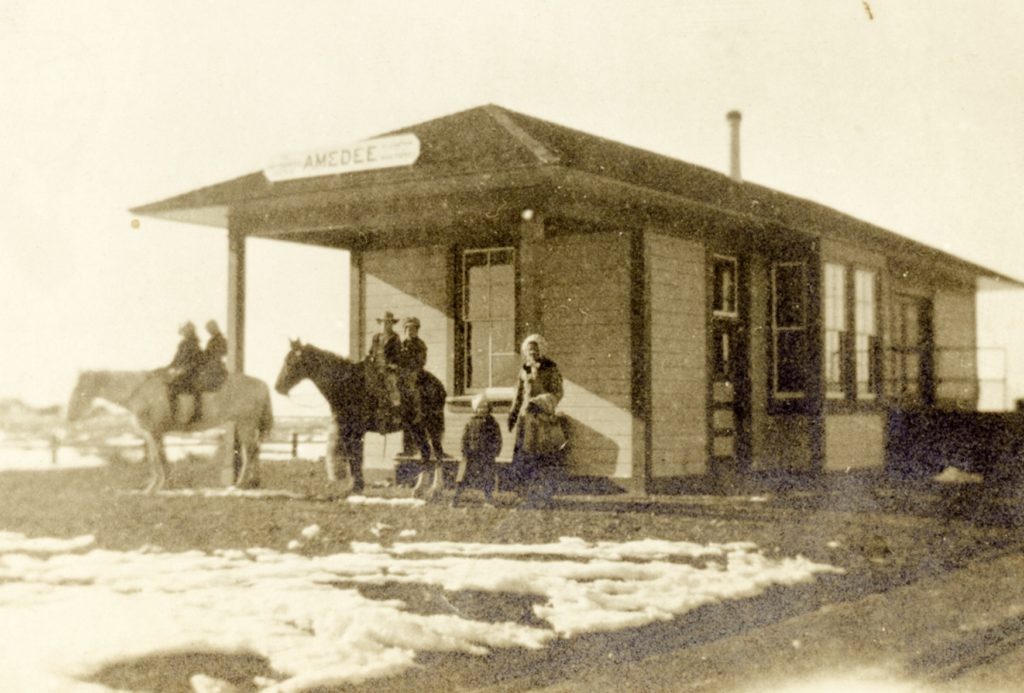
In 1912, when the Southern Pacific Railroad began construction of its Fernley & Lassen branch line from Fernley to Westwood Junction, if graced the north side of Amedee. The Southern Pacific built a very small depot at Amedee, it measured 64 by 80 feet, which included the loading platform. Southern Pacific would build a much larger facility at Wendel, only five miles away, so there was no need for a large depot at Amedee. How long the depot operated, is not clear, though it does show on a 1919 timetable. What became of it, I am not sure. There are some unsubstantiated claims that it was moved to Wendel and was incorporated with the depot there.
On a quarterly basis, I ask you the reader, if there is something you would like to learn more about or maybe its something you heard, but question its validity. So here is an opportunity to participate. I will do my best to answer any questions. It should be noted, it may take awhile for the answer to appear as a post. The primary reason, many of the daily posts are done nearly a month in advance. So by the time you read this I am already working on posts for the middle of February, or at least I should be. Whatever the case may be, I look forward to hearing from you. Of course, it should be noted that paid subscribers requests receive priority. In addition, you can always send a request at any time.
A long time ago I had a research request from the Huntington Library. It had to do with wealth, and they wanted to know everyone in Lassen County who had assessed value of assets of over $20,000 in 1880. So off to the Assessor’s Office I go to examine the Assessment Roll for Lassen County for 1880.
There were six individuals. At the top of the list was Susanville merchant David Knoch at $30, 167. Knoch who came there in 1864, was not only a successful at his store, he found another lucrative venture—loaning money. It should be noted, there were no banks in the area, so it did not take long for people to learn who had money to lend. Knoch made sure there was collateral involved, usually in the form of a mortgage to real property. Another Susanville merchant on the list was William Greehn, who operated in the same manner as Knoch.
The other big players were the ranching community. These consisted of James Byers of the Honey Lake Valley, Andrew Reavis of Big/Dixie Valleys and Jacob McKissick of Long Valley.
McKissick Ranch, Long Valley,1903. Courtesy of PhilipS. Hall
McKissick’s wealth was much larger than reported for Lassen County. McKissick had extensive land holdings not only throughout Lassen County, but Washoe County. McKissick’s owned such places in the latter as an obscure place in far northern Washoe such as Hole in the Ground, to well known Reno landmark known today as Rancho San Rafael Park.