Longville, Plumas County

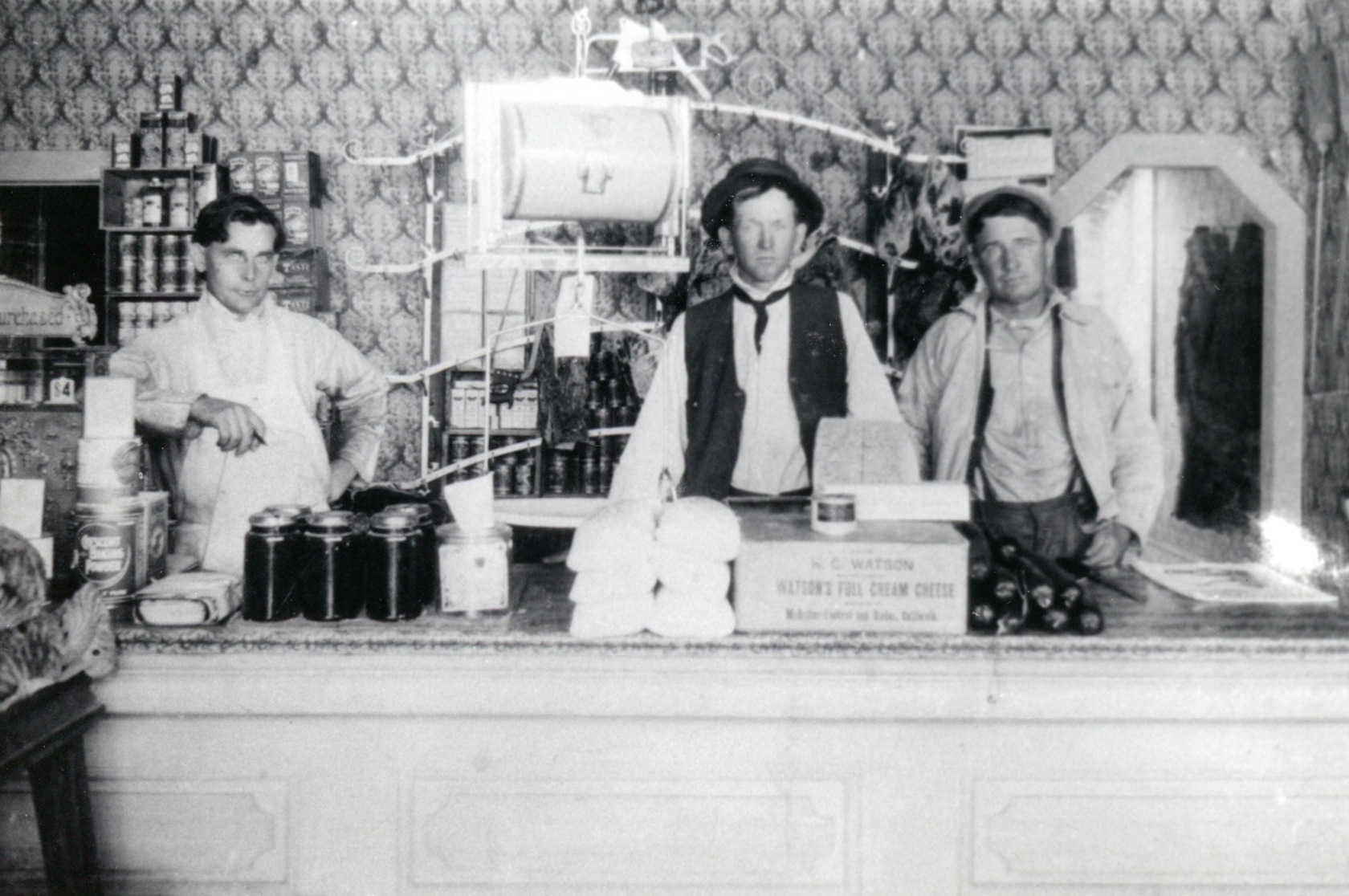
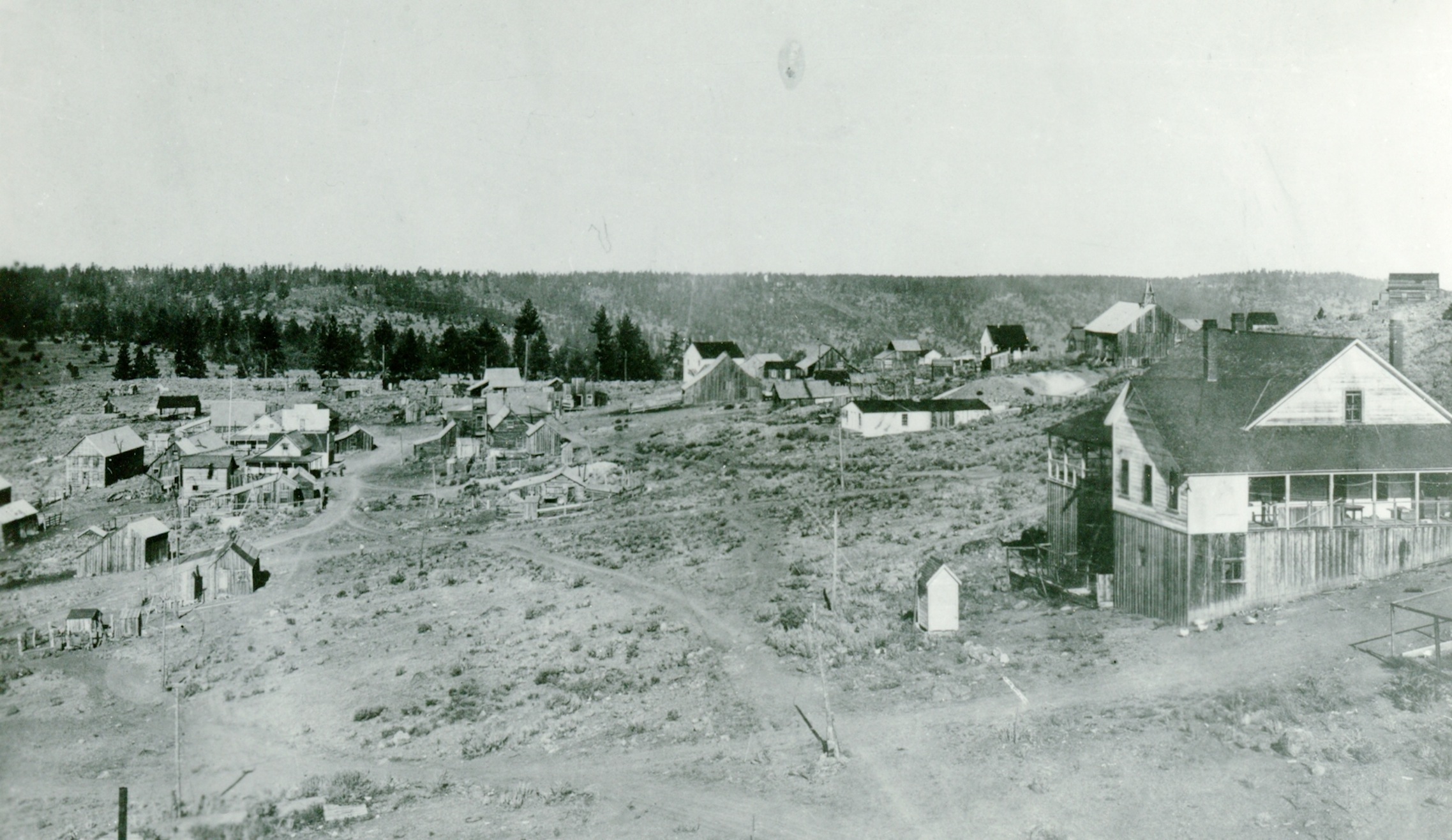
Longville Hotel, circa 1915. Courtesy of Plumas County Museum

Longville was one of many Plumas County mining communities, some of which have connections over the mountain in Lassen County.  One of those forgotten places was Longville located in Humbug Valley. This valley is located a bit south and west of Lake Almanor. It is  a picturesque meadow surrounding by pine trees.

The settlement began there in 1855, when B.K. Ervine and William B. Long used the valley for stock-range. Two years later, gold was discovered and set off a flurry of mining operations. Long and his father-in-law,  Allen Wood, built a hotel, and a sawmill mill, too, and thus the town of Longville came into existence.  In 1862, Long came to Susanville and purchased William Weatherlow’s ranch, known today as Susanville Ranch Park.

Longville—Plumas County Museum

In 1856, Andrew Miller made a permanent home at Humbug Valley,  He did stray on occasions.  In 1863, he ventured over to Susanville for awhile and with Rufus Kingsley constructed the first native-stone building, the site being the current location of Margie’s Book Nook. After his brief stay in Susanville he returned back to Humbug. However, in 1874, he was appointed Receiver of the Government Land Office in Susanville, and remained in that position until 1886. The Government Land Office was the only federal office in Lassen County, and today is known as the Bureau of Land Management. Miller once again returned to Humbug where he remained until his passing in 1903 and is buried in Susanville.

Longville, like so many rural communities, suffered from the effects of  World War I, and it quickly depopulated. Its post office, which Andrew Miller established in 1861, closed in 1918.

It should be noted that Long and Miller descendants still reside in the Susanville. It was Miller’s grandson, Claude Heard, who established Heard’s Market, a focal point for decades in Litchfield, but now closed.

Never miss a story click here to subscribe.

Honey Lake Oranges

McKay Residence
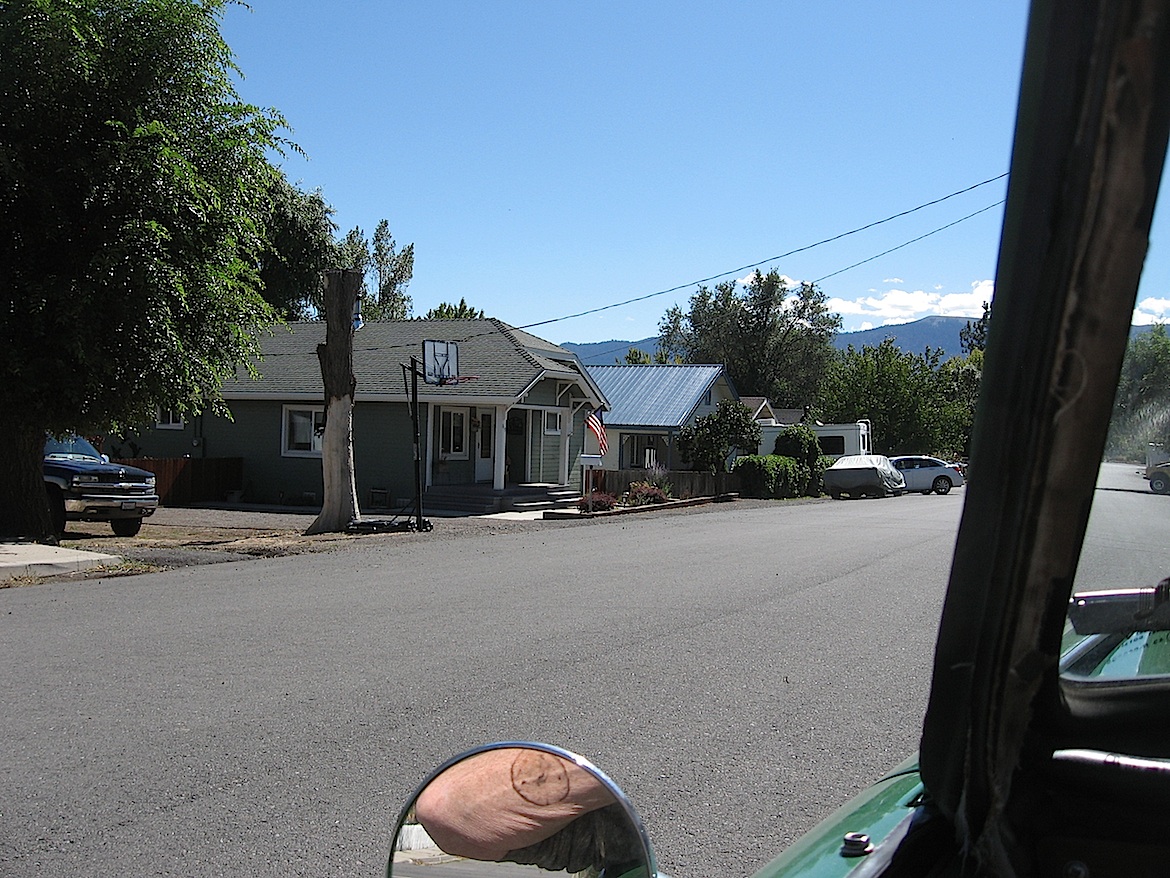
McKay Residence on Alexander Lane, Standish circa 1915. It is still there in a modified state. Photograph courtesy of Jessie Lowe

Back in the 1970s, when I first doing my research, I came across real estate promoters literature of the 1890s about the balmy climate around Amedee and it being ideal for citrus production. Of course, we know that is not true, but there was a lot of deceptive literature just waiting to fleece some strangers hard earned money.

While doing research on the Standish book, that I will never do, for lack of interest, one of the area’s residents came up with a unique marketing plan to sell his crops. Frank B. McKay needed to come up with a ploy to make his produce stand out from the others. Word spread that he had a new specialty of oranges, when it fact that large orange orbs he offered for sale, were known to many as the standard pumpkin.

Support this site and subscribe for as little as $5.00 a month.


Bassett Hot Springs, Lassen County

Bassett Hot Springs, circa 1908.

In the late 1870s, Isaac Wilson Bassett developed the hot springs near Bieber, first by excavating a swimming hole where water was diverted because the springs were too hot. Later a bathhouse was constructed that contained wooden tubs. If the water became too cool, a wooden spigot could be turned into the tubs to add additional hot water so that optimum temperature was maintained in the pool. As Frances A. Gassaway recalled, “For twenty-five cents, one could go into the plunge and bathe. For a dime more one could be furnished a swimsuit. It was quite a treat to go to the springs.” In 1928, under Barney Fillingim’s management, the wooden pool was replaced with a concrete swimming pool. The Bassett family continued to operate the springs until 1945 when it was sold to Gerald and Birdie Packwood for $17,500. The Packwoods continued operations for a short period of time. Due to health regulations, maintenance, and insurance the Packwood’s deemed it too costly to operate and the facility was closed.

It is never too late, subscribe today and enjoy tomorrow with daily notifications.

Flumes

Milford Flour Mill
The abandoned Milford Flour Mill as it appeared in 1901. Courtesy of the A.J. Mathews family

During the late 1800s with all the proposed irrigation/reclamation enterprises in the Honey Lake Valley, flumes to convey water was not considered. On the west slope of the Sierra, flumes were numerous used primarily for logging and mining.

The first flume in the region was built in 1861 to furnish water power for the Milford Flour Mill. One of Captain C.A. Merrill’s grandiose plans for Eagle Lake called a for flume to transport logs to his proposed town of Belfast.

Susan River, 1899 below Hobo Camp showing a portion of the Branham Flume—Mary D. Folsom

In 1895, James Branham built a flume on the north side of the Susan River just below Hobo Company to convey water to power his small electric plant. It was a short-lived operation that shut down in 1910.

Lassen Mining Company’s flume, near Hayden Hill, 1927.

Up north to the mining community of Hayden Hill, saw the use of flumes. The town had problems with the lack of water, though on the other hand some of the mines had problem with water in their diggings. The Lassen Mining Company built a flume to divert water from Willow Creek to Hayden Hill.

Donate

Chappuis Lane, Lassen County

Ed & Nancy (Johnston) Chappuis, 1906–Betty B. Deal

Someone recently wanted to know who Chappuis Lane was so named. The Chappuis family operated a ranch along the Susan River, where the lane passes through.

In 1890, Frank Johnston filed a 160-acre homestead at that location and in 1893, moved his family there. In 1906, his daughter Nancy married Ed Chappuis. For many years it was known as the Johnston & Chappuis Ranch. After the passing of Frank Johnston in 1909, his Fred Johnston, along with Ed & Nancy Chappuis carried on. In 1951 the ranch was divided, with Nancy Chappuis retaining her father’s original ranch. Nancy and her sons—Evan, Ray and Leo—carried on for many more decades. (It should be noted that Ed Chappuis passed away in 1943).

Tim

Susanville’s First Marijuana Bust

Susanville Depot, 1970.

Since the topic of cannabis is on the ballot in Lassen County, I thought some historical perspective might be of interest.

The headlines news on the front page of the Lassen Mail of November 23,1928 “Dope Plant Grown In Susanville.” The discovery was made by Sheriff Jim Leavitt, when investigating a dance at the Brunswick Pool Hall across from the Susanville Depot. Leavitt confiscated ten kegs of whiskey and ten pounds of marijuana. In addition, the owners of the Brunswick, Emma and Pete Ovalle were arrested on a narcotics charge for the possession of marijuana, besides the alcohol charges.

Marijuana was something new to the residents. The local press described it as a Mexican tobacco that is smoked like a cigarette, and said it has an exhilarating and soothing effect for the smoker and can also make on feel “goofy.”

The next day, officials conducted another search of the premises surrounding the Brunswick Pool Hall. They found marijuana being grown along the Susan River. It was determined that the marijuana grown there did not contain the elements of other varieties found in tropical climates. In addition, it was asserted that even if one smoke a ton of marijuana grown locally, it would not produce any kind of “kick.” Due to those circumstances, the narcotics charge against the Ovalles was dropped. As to the illegal alcohol possession they pled guilty and paid the $300 fine.

Donate

An Indian Allottment Story

Big Meadows Maidu Camp, 1887. Courtesy of the National Park Service

In 1887, Congress passed the General Allotment Act also known as the Dawes Act. It is a complicated story., however, for Indians not on tribal reservations they were entitled land allotments up to 160 acres.

In the early 1900s, when the Great Western Power Company began its aggressive campaign to purchase the lands of Big Meadows, Plumas County into a reservoir site to be known as Lake Almanor. Some of the purchases were not friendly and Great Western Power sued to obtain ownership. The company sued six Maidu Indians—Jennie Meadows, Ellen Jenkins, John Jenkins, Hester Jenkins, Robert Shafer and Jim Lincoln—to seek condemnation of their government allotted lands. On November 22, 1902, a court trial was held and the Maidu were awarded a judgment, giving them the assessed value along with an additional $1,600 in compensation. At the conclusion of the trial, Great Western paid cash to the Maidu, who according to one report the Maidu “went home rejoicing.”  There was a good reason, too. In 1908, it was disclosed that those six Maidu had never owned the lands Great Western sought condemnation!

Subscribe

Lassen National Forest vs. Lassen Volcanic National Park

Butte Lake, circa 1920. Roy Sifford, of Drakesbad fame wrote: “The sign of the Manitou which means the sign of God. The shadows in the water made a long arrows which the Indians thought that was a sign of the Great Spirit (Manitou) or God gave them. Courtesy of the Sifford Collection.

When Lassen Volcanic National Park was created in 1916, its boundaries were much smaller than they are today. In the mid-1920s when the park wanted to extend its boundaries, taking in adjoining national forest land, the Lassen National Forest objected. It was their opinion, they could do a superior job of handling the natural resources that could be best utilized in the public’s interest, than the park.

Snag Lake
Snag Lake, 1911. B.R. Zimmerman Collection

One proposal in 1913 could have had a significant impact to Butte and Snag Lakes.. Jonathan Stark of the forest service viewed the two lakes as reservoir possibilities. It was his belief, though some scientific work would need to substantiate it, that Butte and Snag Lakes were connected by an underground stream. It was his idea to place a ten-foot dam at the outlet of Butte Lake. The ten-foot rise of the levels of Butte and Snag Lakes could impound a million gallons of water that could be utilized for irrigation downstream.

Subscribe

Shasta Forest aka Shafco

Red River forest, Lake Almanor, 1926–Roy Rea

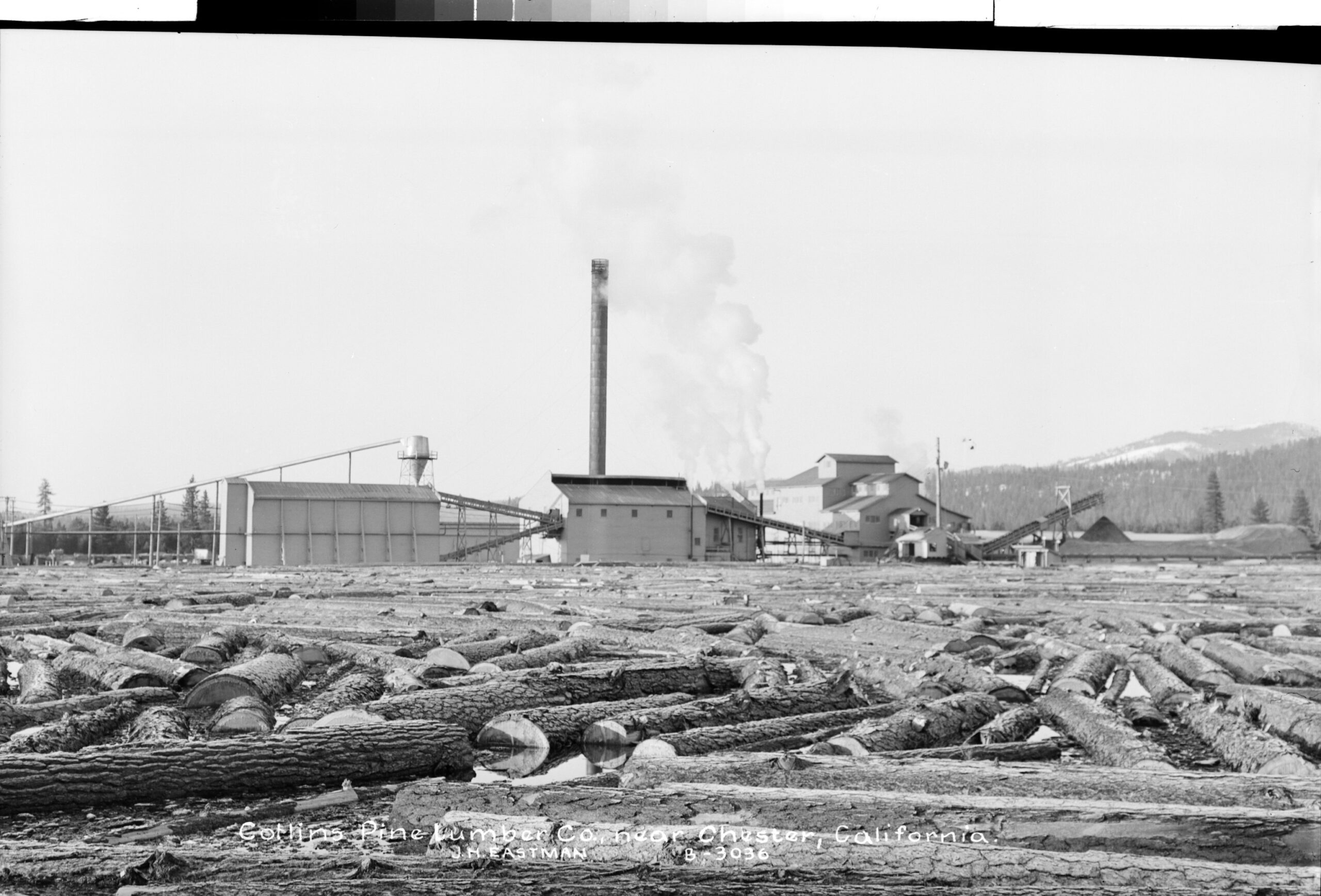
In 1944, when the Red River Lumber Company sold Westwood and its Burney Tract, the company still owned a large quantity of timberland in Northern California, besides other properties across the nation. The dissolution process would take years, and like many family affairs some members of the Walker family went their separate ways.

In January 1948, the Walker heirs announced they formed a co-operative company, Shasta Forests to manage their timber holdings. Seasoned residents referred to it as Shafco. In 1969, it went through a reorganization process and a new entity evolved as Red River Forest, which continues to this day. It should be noted that the property is managed by W.M. Beatty & Associates, who have had a long affiliation with the Red River heirs.

Tim

Exploring Lassen County's Past