Manzanita Lake Lodge

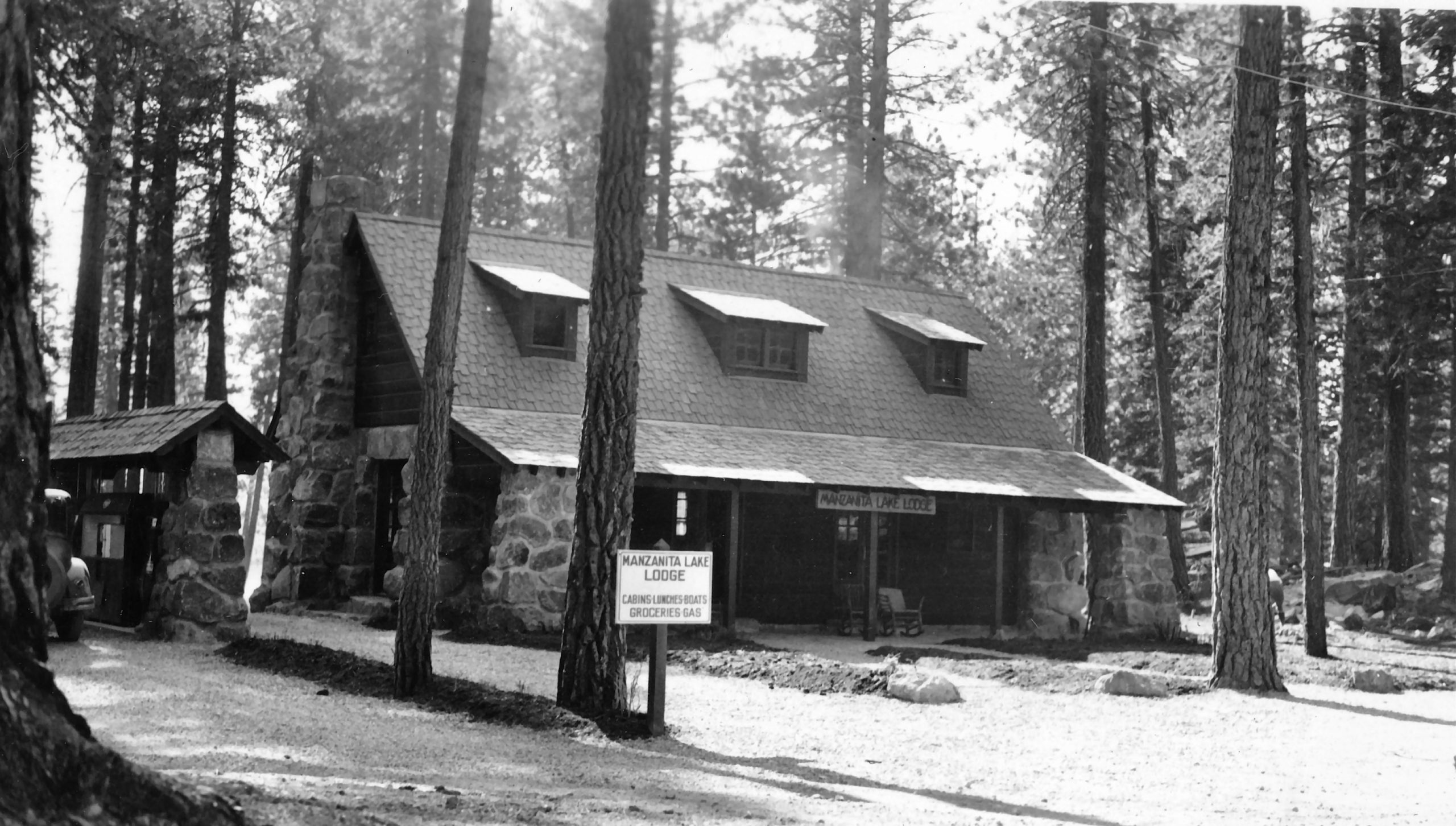
Manzanita Lake Lodge

The late 1920s and early1930s were exciting times at Lassen Volcanic National Park. After years of wrangling with Congress to appropriate funds to provide the basic essentials to develop the park finally came to fruition. Thus, the park highway finally became a reality and completed in 1931.

Unlike other national parks, Lassen had no grand lodge, nor did it even have a hotel. There was Drakesbad, Juniper Lake and Sulphur Works, but these were owned privately, which the park had no control over.

For a brief time the park courted the Western Pacific Railroad as a possible concessionaire to provide a hotel and transportation. However, within the park there were two camps—one wanted a grandiose lodge, the other a more minimalist approach to compliment the park’s wildnerness.

Enter two park rangers Don Hummel and Charles Keathley. In October 1932 they had a plan to build accommodations at Manzanita Lake and requested from the park to become concessionaires. The park service wary, first they wanted a singular concessionaire for the entire park and one with the financial means. The two men brought in a third partner, Dallas W. Dort, who could front them $10,000 in capital. With this new development, the park gave it a second consideration and gave the three men a three year lease. In 1933, they invested $12,000 to build Manzanita Lake Lodge, along with nine cabins. Their establishment became a popular    destination for the next four decades.
Support

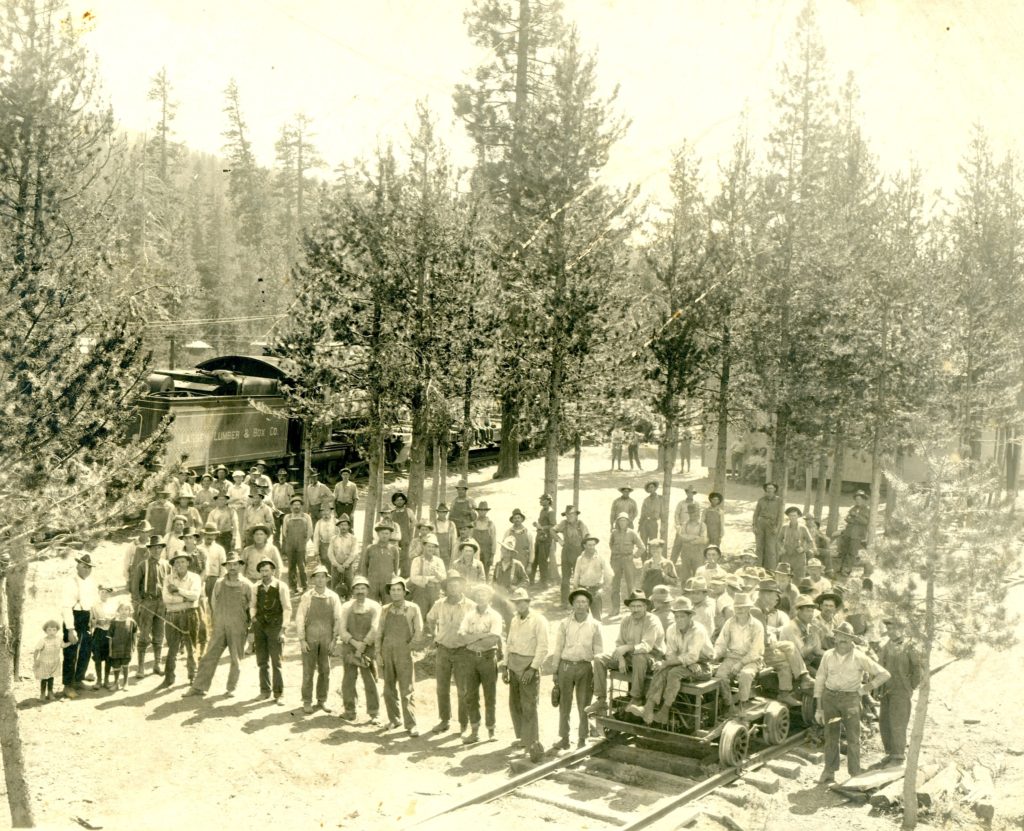
Lasco Lumberjacks

Camp Lasco—Jean Kern

The loggers of Lasco, the logging camp of the Lassen Lumber & Box Company were an energetic bunch during what limited off time they had. Many worked twelve or more hours a day, six days a week*

However, whenever an opportunity arose for that hardy bunch to recreate, they did so with gusto. Their annual Logger’s Ball in July was legendary.  These men, also, enjoyed in partaking in a part of America’s pastime—baseball. They named their team the “Lasco Lumberjacks.” These guys just enjoyed playing ball and they hosted a lot of ball games. One that caught my interest was an interesting and an unusual adversary—Lassen Union High School. It did not matter who won or lost, the bottom line was everyone who played or was a spectator just a had a good time.

*In 1918, Lassen Lumber & Box Company established its sawmill/box factory in Susanville. It differed from its two competitors—Fruit Growers Supply Company and Red River Lumber Company—as its initial sole supply of timber came from the  Lassen National Forest.

Tim

The Prattville Burn, 1926

1925
Prattville burn, 1926.

It was not until the 1920s that the Red River Lumber Company experienced problems with forest fires. Some time back I wrote about that company’s fire train. On July 27, 1926, a fire started at Butt Valley where Red River was logging. This was one instant that while the fire train was dispatched it was no match for the inferno.

The fire started from sparks of a steam donkey engine which spread rapidly over the recently logged over lands toward the west shore of Lake Almanor. For a time the fire threatened the Lake Almanor Inn at Prattville and the various cottages adjacent to it, requiring the evacuation of seventy-five campers. The fire burned over 16,000 acres, and destroyed three abandoned logging camps and several miles of railroad ties. Red River estimated its loss at $23,000.

Support this site, and Subscribe

Some Lassen County Figures

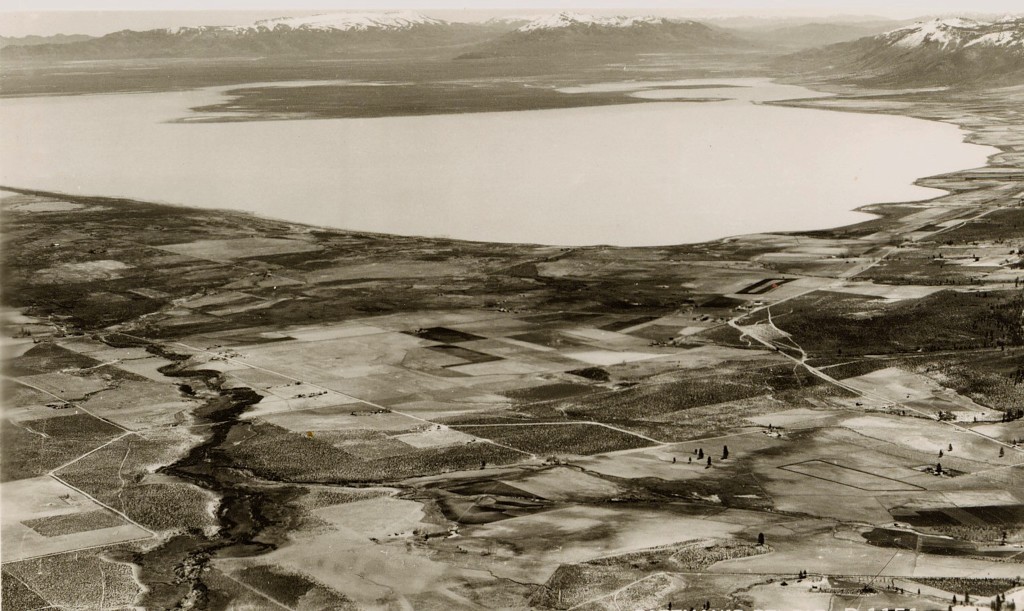
Honey Lake Valley, 1952

Who the compiled these figures I do not know. The information was released in 1965. The one item that really caught my attention was the amount of total combined water surface there is/was.

The County of Lassen contains an area of 4,548 square miles or 2,910,296 acres of which 115,840 are covered with inland water. The U.S. Bureau of Land Management controls 1,015,216 acres, the U.S. Forest Service 608,406 acres and ranches cover 744,358 acres.

Tim

Papoose Meadows Massacre – Version One

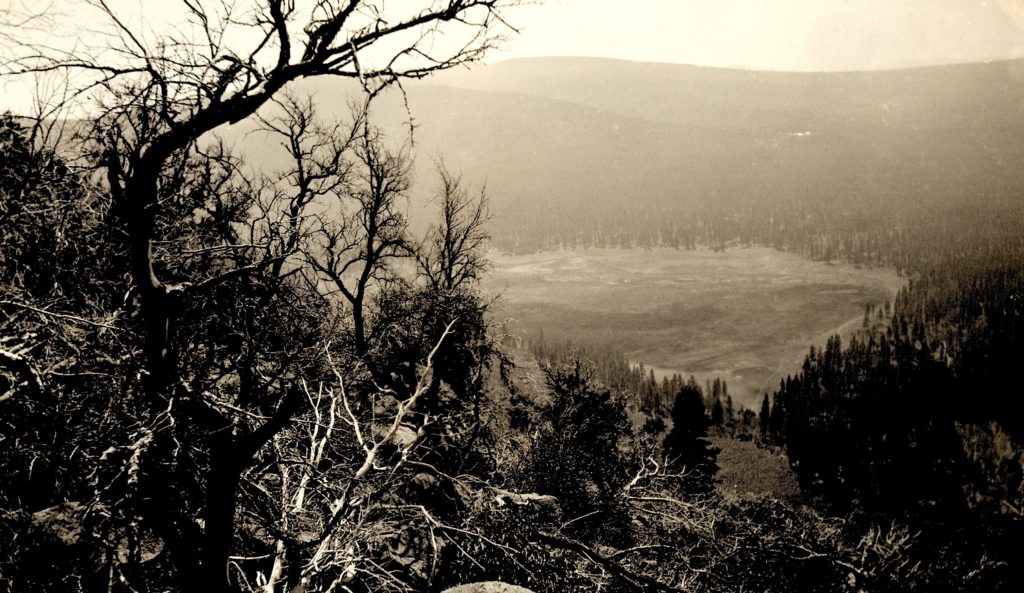
A 1923 view of Papoose Meadows. Courtesy of Lola Murrer Tanner

This is the first of three versions of the Papoose Meadows Massacre that occurred at Eagle Lake in 1866. During the late 1940s and 1950s Francis Riddell spent considerable time compiling the Ethnohistory of the Honey Lake Paiute. There were still older living Paiutes then, whose parents lived in the area prior to Anglo settlement. Francis spent a lot time with Kitty Joaquin Williams (1864-1954), who provided him with a wealth information, that he was able to preserve. The following is what she relayed to Francis concerning the Papoose Meadows Massacre.

According to Kittie, a band of Paiute, including her father Joaquin, went on a hunting trip to Eagle Lake. Though there is some confusion she also stated they went there to escape the soldiers, who were accompanied by members of the Maidu. Hog-die Jim, Joaquin’s uncle was afraid the soldiers and Maidu would attack them. He advised Joaquin and others to move their camp, but Joaquin felt there was no real danger. Hog-die Jim then took some provisions, and all the horses and left.

The soldiers and Maidu attacked Joaquin’s camp and killed everyone one except a baby in a cradle board, two women who jumped into the lake and swam to safety and Joaquin, too, did the same. However, when Joaquin was in the water he was shot by. soldier, John Mulroney. Joaquin was cared by the others and recovered. He was later known as Old Man Joaquin and spent the rest of this life in the Susanville area and died in 1935 at the age of 99.

Note: It is well documented that there was no military involvement. The soldiers at Camp Smoke Creek, the nearest military outpost were kept very busy with conflicts in Northern Washoe County. I also examined their daily reports, the military kept great records. Also puzzling, is the naming of Mulroney (1856-1930). Mulroney would not have been old enough to participate. He lived most his entire life in the Honey Lake Valley working on various ranches.

Support


Lake Almanor Carp

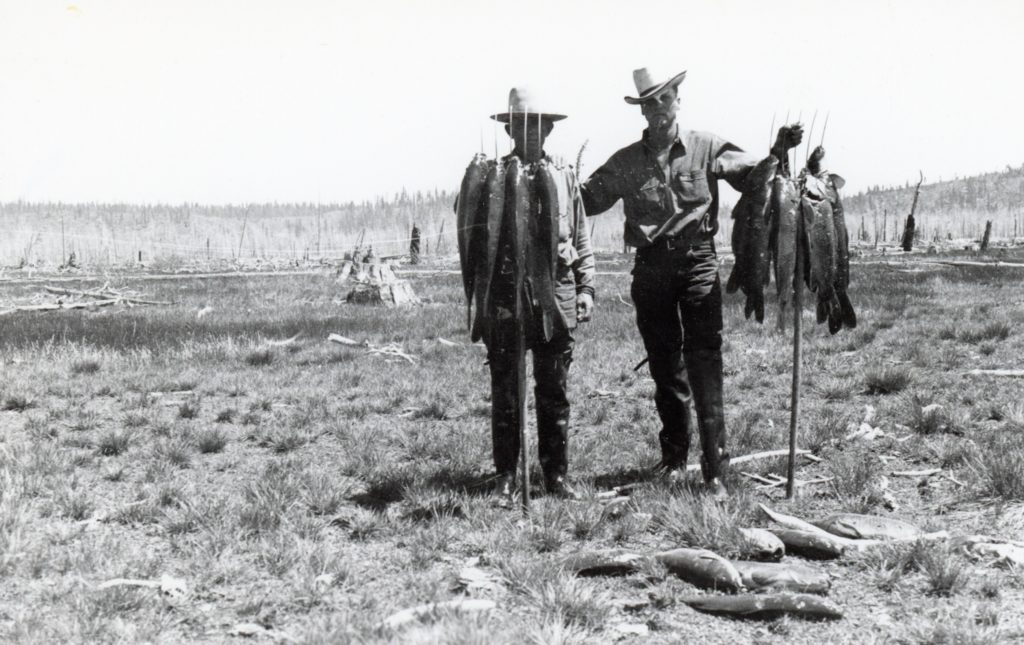
John Tanner and Bud Driver with their Lake Almanor Carp catch of May 8, 1940.

Sometime in the late 1920s or early 1930s an unknown individual(s) planted a non-native species of fish in Lake Almanor—carp. In the 1930s and 1940s efforts were underway to eradicate the fish. During the mid-1930s and early 1940s spearing carp became a popular pastime. In 1935 Vern Hart owner of the Lake Almanor Inn, said it was pretty simple when it came to spearing carp. He said the only thing necessary was a three-pronged spear or a pitchfork.

In 1939, the California  Department of Fish & Game came up with a new plan to remove the carp—commercial operators. Carp did have one beneficial use, they could be converted into fish meal and. a ready market for poultry feed. In July 1940 alone over 30,000 carp were harvested weighing in at over 35,000 pounds. The carp were shipped to Los Angeles for processing. In 1943 it was even proposed to build a carp processing plant at Lake Almanor, but it failed to receive approval from the federal War Priorities Board. After that efforts were suspended on the eradication of the carp.

Support

Echo Lake-Then & Now

July, 15, 2021

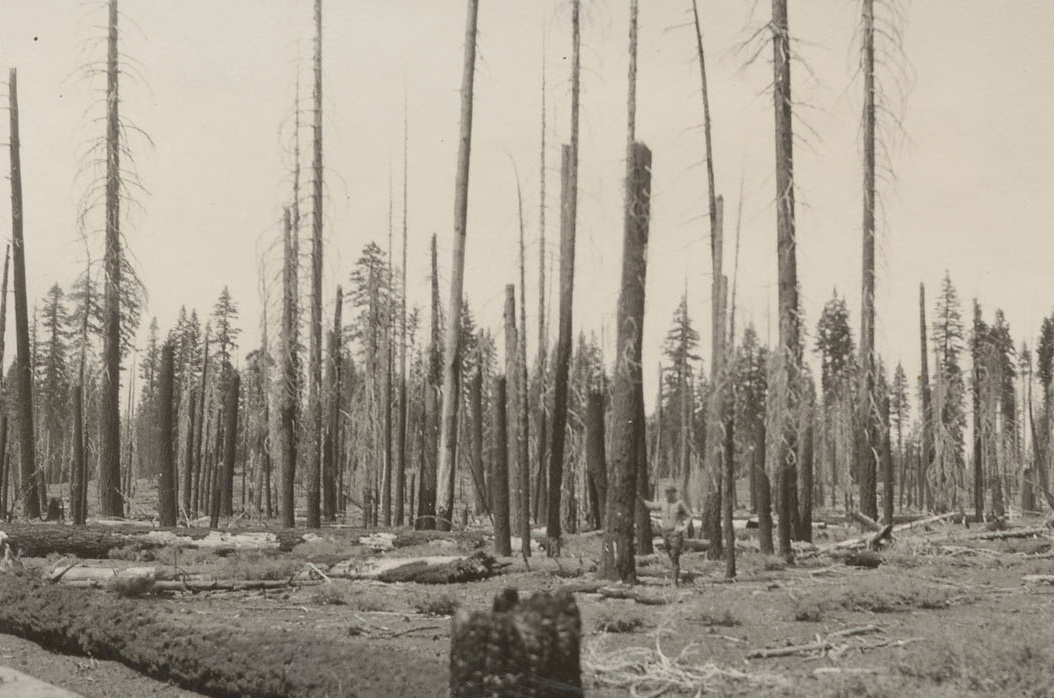
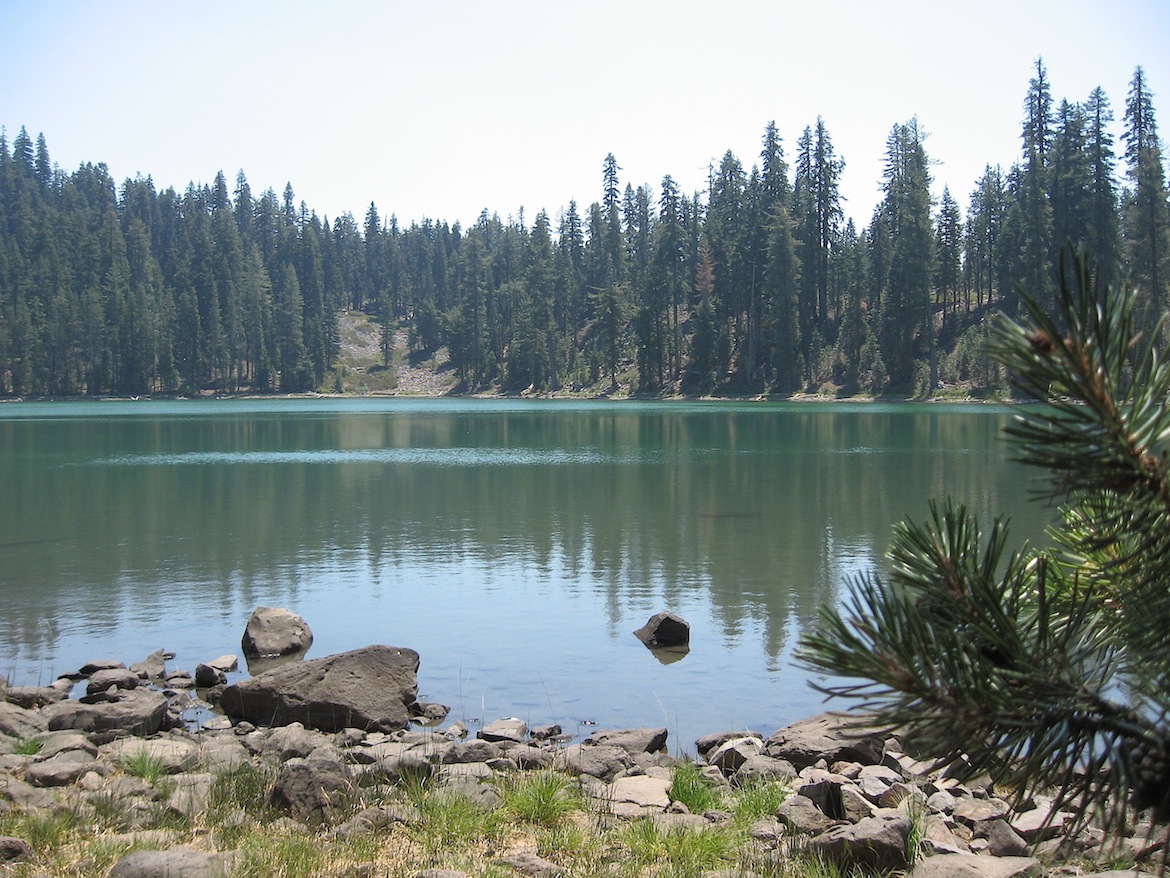
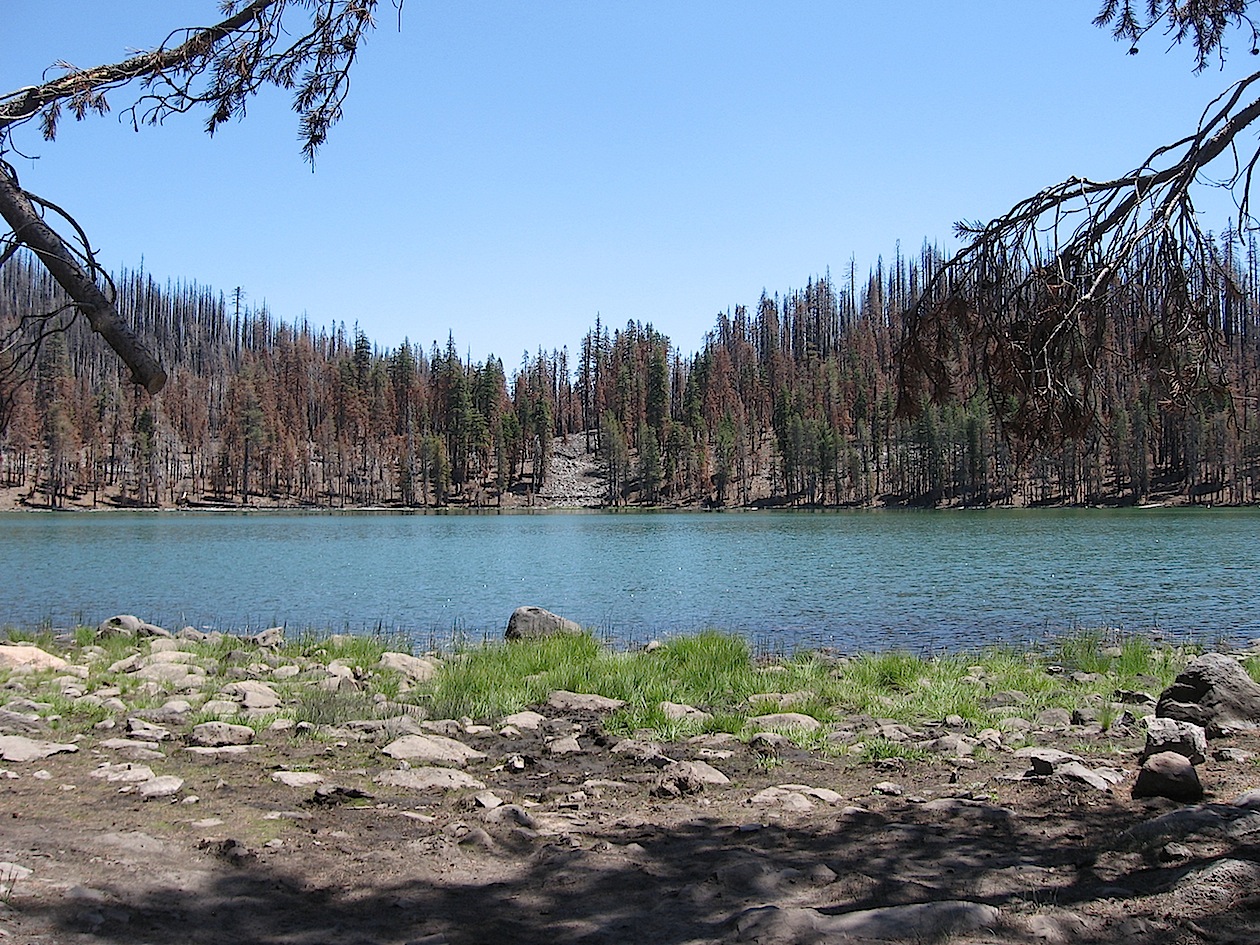
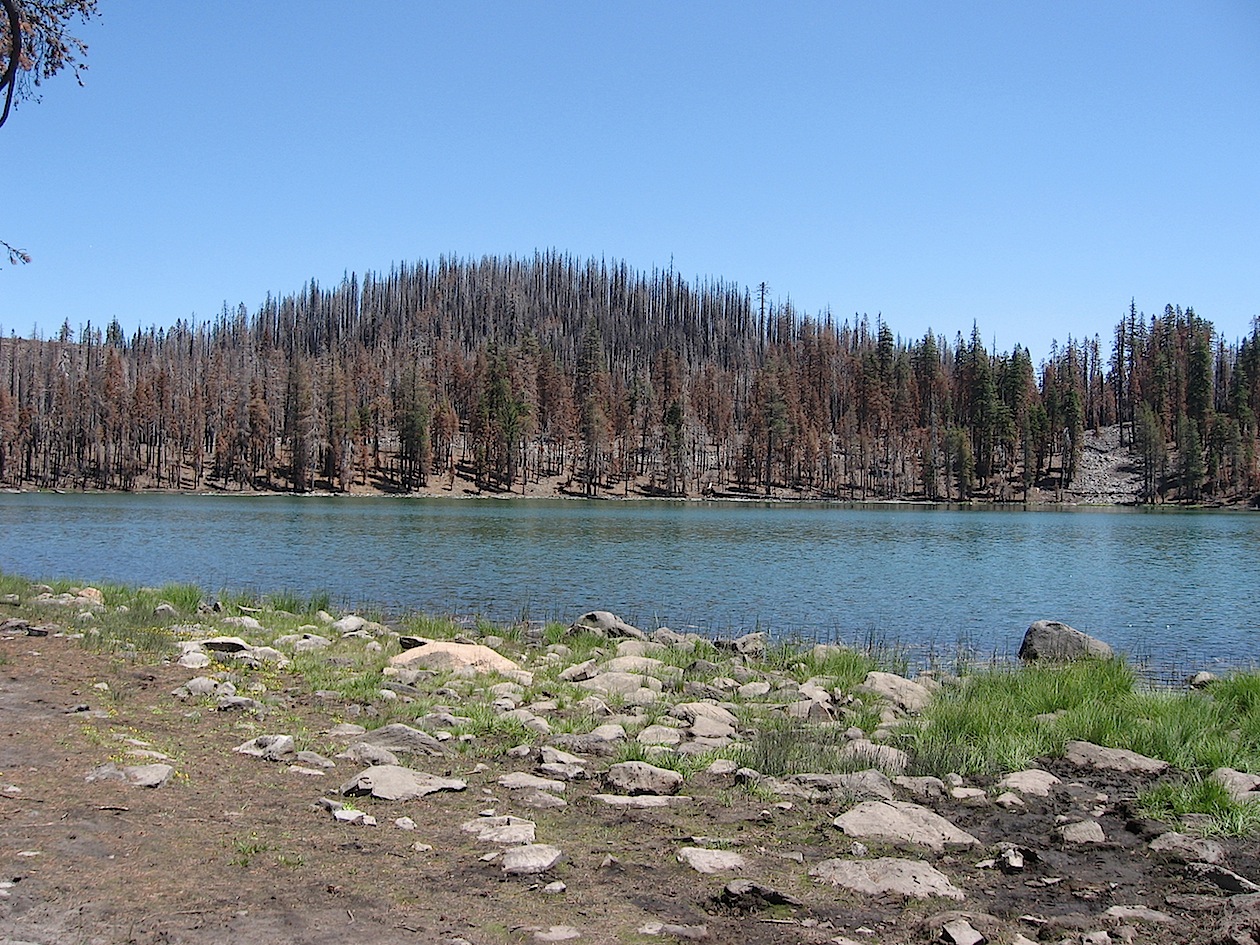
Last week we made an expedition to the Echo Lake region in northern Plumas and western Lassen Counties. We did the same a year prior on July 15, two days after the Dixie Fire started. Who knew that fire would devastate so much territory. I had heard reports that the area surrounding Echo Lake had burnt. Thus, we wanted to see first hand. I know some folks will be interested to see what a difference a year makes.

Echo Lake, Plumas County, July 11, 2022

Another View

Echo Lake, July 11, 2022

Tim

Lassen County Fair Association

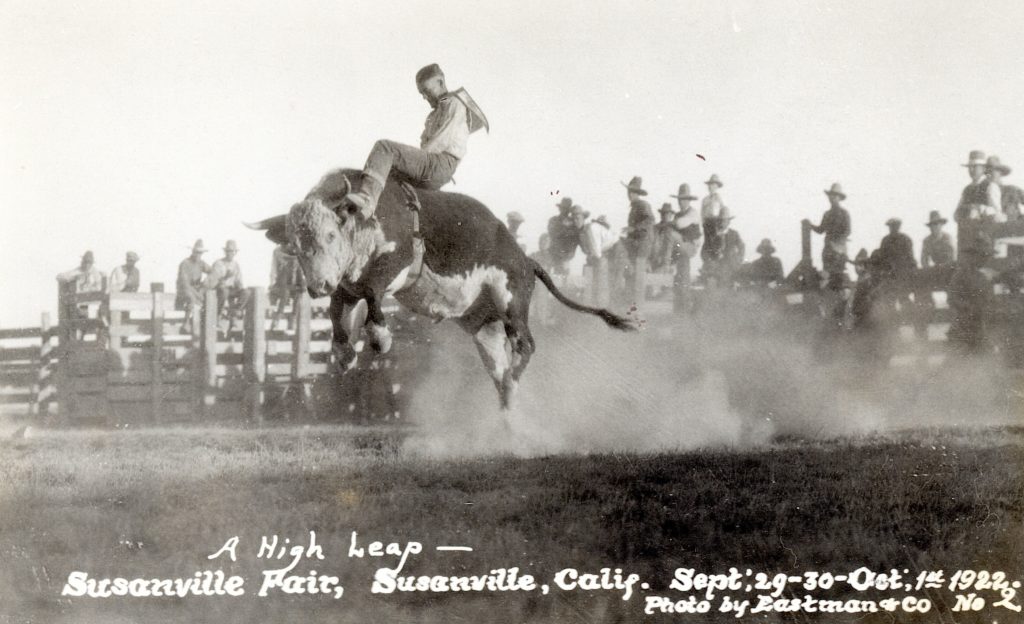
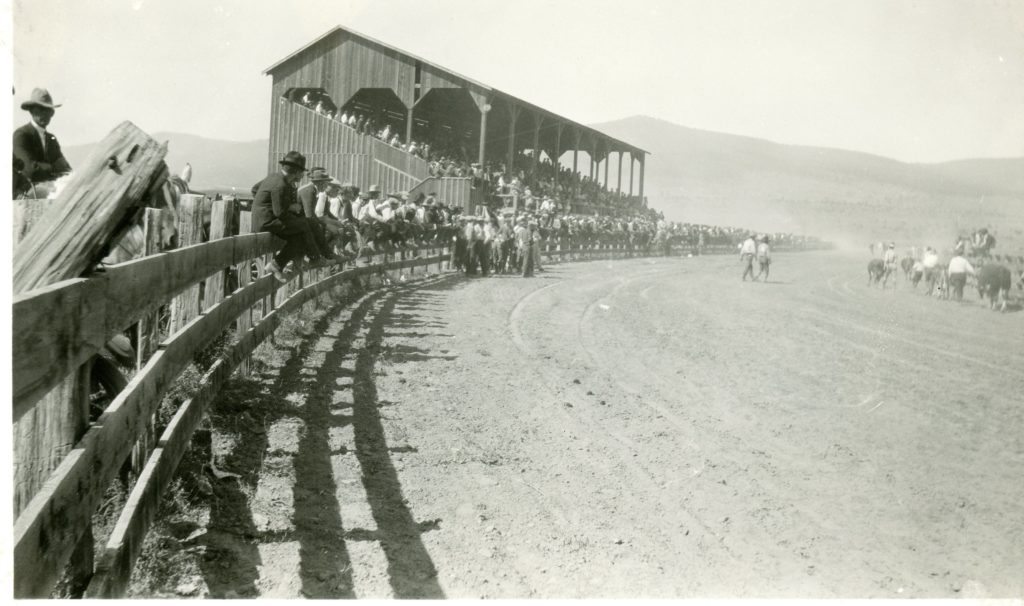
Bull riding Lassen County Fair, 1922

This is not only Lassen  County Fair Week, but it is the fair’s centennial. In the summer of 1922, Bert Jensen, Russell Brownell, C.E. Lawson, L.E. DeForest and H.H. Riddels formed the Lassen County Fair Association. It had been sixteen years since the last fair, and these ambitious men were not only going to correct that, but make the county fair an annual event.

They wasted no time to put together a fair, but a permanent fairgrounds as well.. Twenty acres of land were acquired which is still the present Lassen County Fairgrounds. In July the Association announced its plans to construct a substantial grandstand, along with a race track. There was plenty community support for a fair as merchants and the agricultural community raised $4,000. In early August Susanville contractor, J.J. Woodward was hired to build the grandstand for $3,256.44.

Lassen County Fair, 1922. Courtesy of Lola L. Tanner

On Friday, September 29, 1922, large crowd assembled for the opening day of the fair. A lively time was had by all. However, it was not a financial success. The entire cost was $12,500. Receipts from all sources was $8,700. While there was a $4,000 deficit, it was duly noted that the Association made substantial permanent improvements that would not be incurred in the future.

Support

Looks Can Be Deceiving

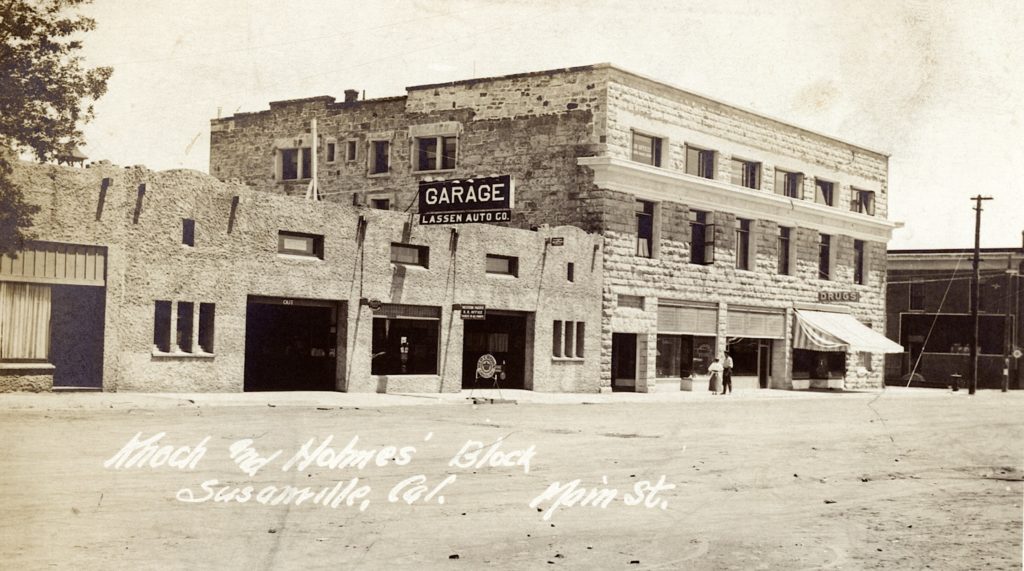
Doyle & Hunsinger and Lassen Auto Building, Susanville, circa 1927

On January 23, 1926, Doyle & Hunsinger Motor Company held a grand opening celebration in their new building on the 600 block of Main Street.  Their Ford dealership occupied the west side of the building. The eastern side of the building was the home of B.R. Holmes Lassen Auto Company. Holmes had acquired the property that for many years was the location of Hi Skadan’s Livery Stable. Over the course of several years, Doyle would acquire Hunsinger’s interest and then eventually buying out Holmes to own the entire building.

Support

The Loomis Museum Spared from Demolition

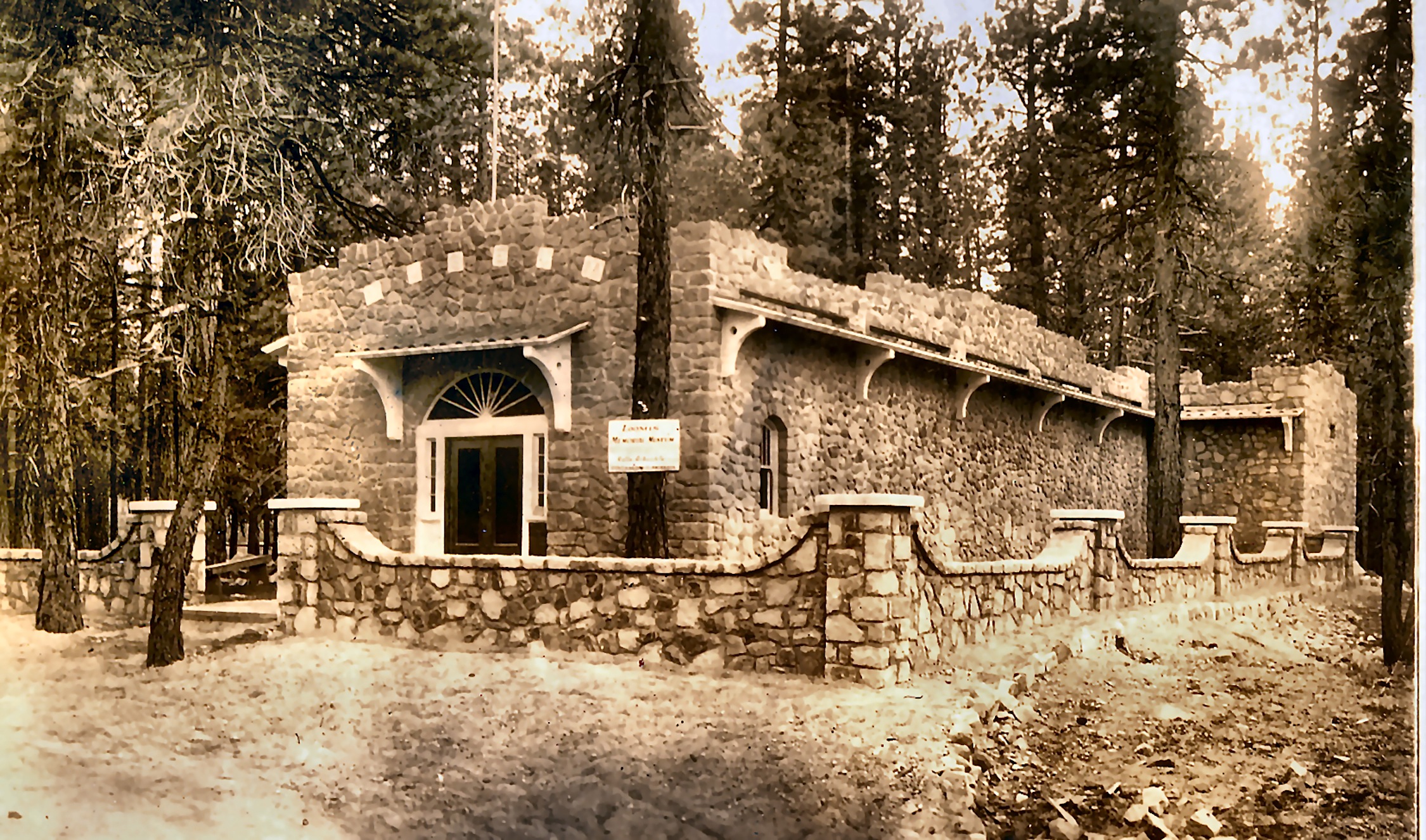
Loomis Museum

In 1914-15, B.F. Loomis became a widely known  photographer for his stunning photographs of the Lassen Peak volcanic eruptions.  Loomis was fortunate since he operated a hotel at nearby Viola, a short distance from the peak. Loomis would become an ardent supporter of Lassen Volcanic National Park. In 1926, Loomis purchased 40-acres near Reflection Lake, which at that time was not inside the park. In 1927, he built a museum of native stone and reinforced concrete. The museum served two purposes.  One, it allowed him to showcase his famed photographic collection of the Lassen Peak eruptions, previously on display at his hotel at Viola. The second it served as a memorial to his only child Louise Mae, who died in 1920. In 1929, he donated the property to the park, which in turn the park gave him a life estate to the museum property. Loomis, by the way, passed away in 1935.

Fast forward to the 1970s and the Manzanita Lake Controversy. On April 26, 1974, park officials announced the abrupt closure of the Manzanita Lake facilities due to geological hazards. This did not go over well—and is a story in itself. The park had to decide what to do with the various buildings such as Manzanita Lake Lodge. After numerous debates spanning a decade it was decided to demolish all the buildings., including the Loomis Museum, which received a last minute reprieve. Day use slowly resumed, and in time a portion of the Manzanita Lake campground reopened.

In August 1991, the park celebrated its 75th anniversary with a special reopening of the Loomis Museum. The park had been slowly renovating the historic structure, which in 1975 was placed on National Register of Historic Places. In 1993, the museum was fully rehabilitated, and once again opened on a permanent seasonal basis, as it had done since 1927.

Subscribe


Exploring Lassen County's Past