A Fernley & Lassen Railroad Question

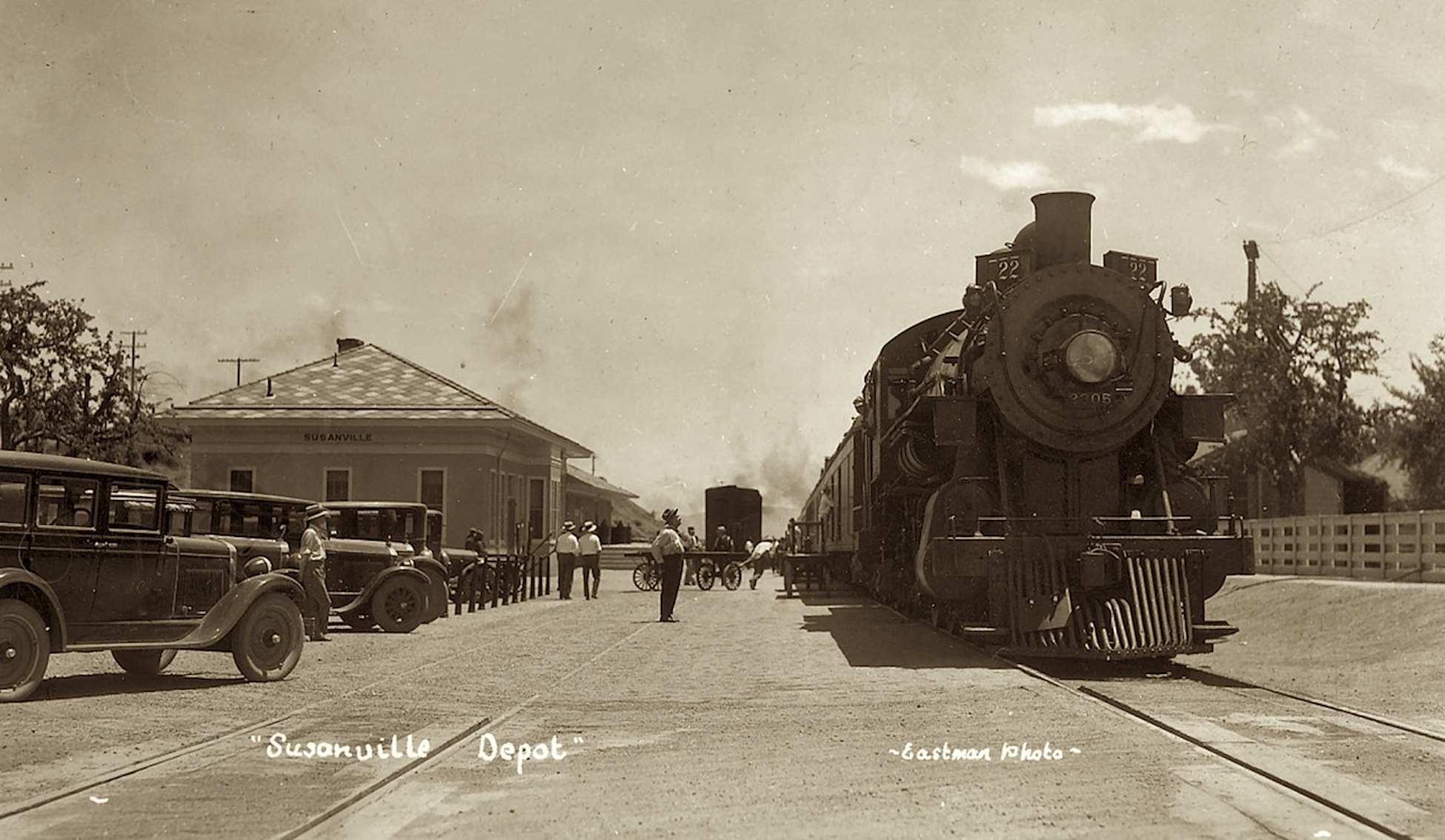
Susanville Depot, 1929—Hank Martinez

Some one wanted to know whether the Fernley & Lassen Railroad had a logo or specialized letterhead.  As far as I am aware the answer is no. It is fairly simple. The Fernley & Lassen was a branch line of the Southern Pacific, so all communications appear on Southern Pacific letterhead. If the Fernley & Lassen had been an independent railroad, things would have been different. It also should be noted that some time by the early 1930s, the Southern Pacific dropped the Fernley & Lassen name and the line then became known as the Westwood Branch.

Speaking of logos. Lassen County did not have a logo until the early 1950s, which happened by accident. State law required government vehicles, whether city, county or state display a logo for public identification purposes.

One odd thing about the county logo, at least to me, is that it features Lassen Peak, which happens to be in Shasta County.

Tim
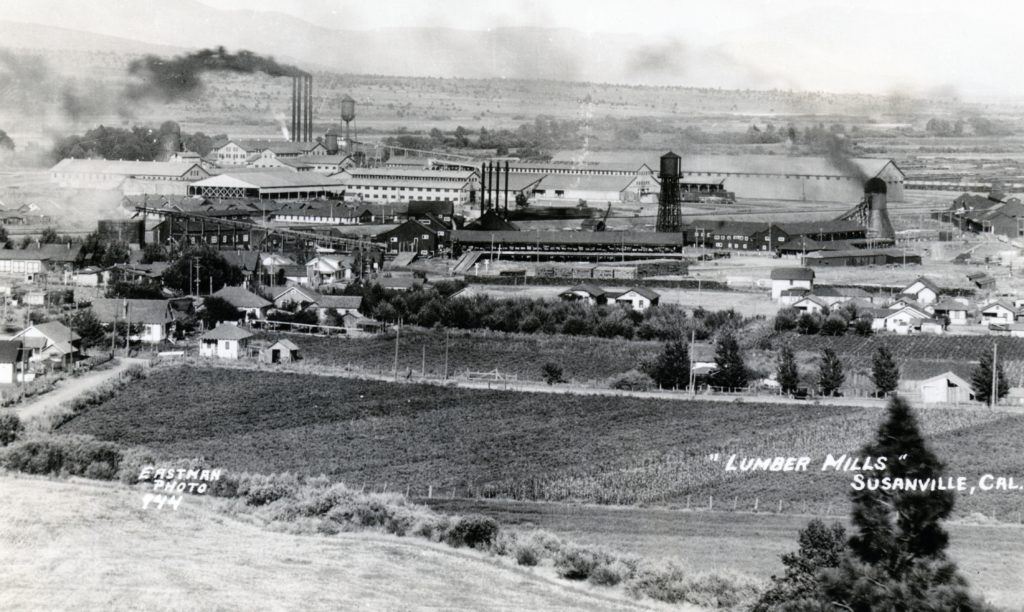
When Lumber Was King

The Susanville mills of Fruit Growers and Lassen Lumber & Box.

For newer residents of the region they might have difficulty understanding just the enomority of the size and scope of the lumber industry in Lassen County’ history. Even residents a century ago, knew it was big, but how big.

In 1926, Charles Mitchell of the Westwood Auto Club compiled some interesting data that he presented at a Lassen County Chamber of Commerce meeting.

””At the present time the standing timber in California amounts to 253 billion board feet. There are 105 billion feet of white pine, 32 billion feet of sugar pine, 33 billion feet of white fir, 50 billion feet of Douglas fir, 9 billion feet of incense cedar and 24 billion of other species.

”Natural growth and reproduction are adding 250 million feet annually. Conservative estimates show supply of these woods. will last at present rate of production for fully two centuries*

”The annual production in Lassen County is one and one-half billion board feet. White and sugar pine slightly more than one billion feet. Footage used as follows: 33 million for sash and door frames; 70 million for interior trim and exterior finish; 50 million for industrial uses; 200 million for boards—dimension for construction, sheathing and forms; 350 million for box and crating materials.

“Lassen County is the biggest lumber producing county in California. The Lassen County cut is 350,000,000 feet or one-fourth of the entire state.

”There are five mills in Lassen County with a capital of $15,000,000. The men employed total 6,000. The monthly payroll is $600,000.”

*There were skeptics about the comment that the timber supply would last for two centuries.

Support

An Unusual Fish Kill at Lake Almanor

Camp 38
Camp 38, Red River Lumber Company at Lake Almanor circa 1925—Hank Martinez

One of California Department Fish & Game’s concerns with the creation of Lake Almanor was the lack of a fish ladder at the dam. While the issue was being debated in the summer of 1916 occurred a massive fish kill at Lake Almanor. Deputy Fish & Game Warden Frank Cady went to the lake to collect some samples to be analyzed. The fish, it was discovered, did not possess any disease. The problem was with the. lake itself and water quality. There was a tremendous amount of vegetative matter decomposing in the lake from logs, brush and such from the initial flooding. It had all the characteristics of millpond, and coupled with warm summer temperatures was the problem of the fish kill. Once fall arrived with cooler temperatures, along with the rains, the water quality improved, and so did the health of the fish.

Donate

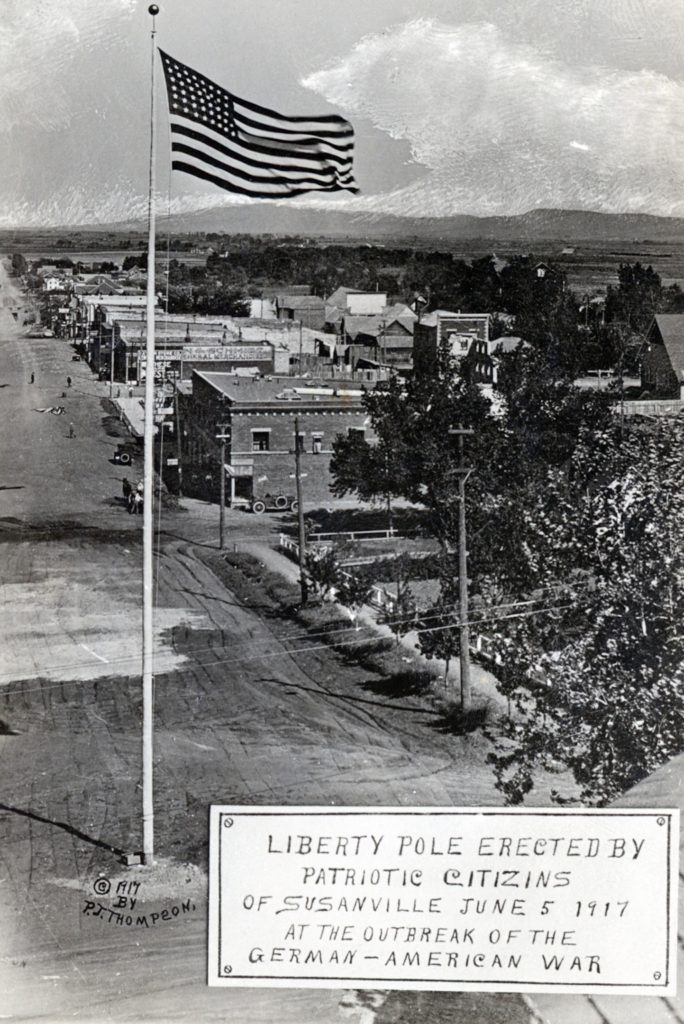
Susanville’s Liberty Pole

Susanville’s Liberty Pole, 1917

On Sunday, May 6, 1917 a Loyalty Day at Westwood was held. One of the features was a large American Flag was hoisted on top of the box factory. It was a prelude of the United States entry into World War I.  As a number of Susanville residents were attendance at the Westwood event, they decided to move forward with their own “Liberty Pole.”

On Tuesday, June 5, 1917, a sixty-foot tall flag poll had already been placed at the west end of Susanville’s Main Street.  It was time for a flag raising. It was  low key affair—with the blare of a bugle and some lusty cheers when Old Glory was raised.

It should be noted, since that time, there has always been a flag pole at that location.

Tim


Antelope Station, California

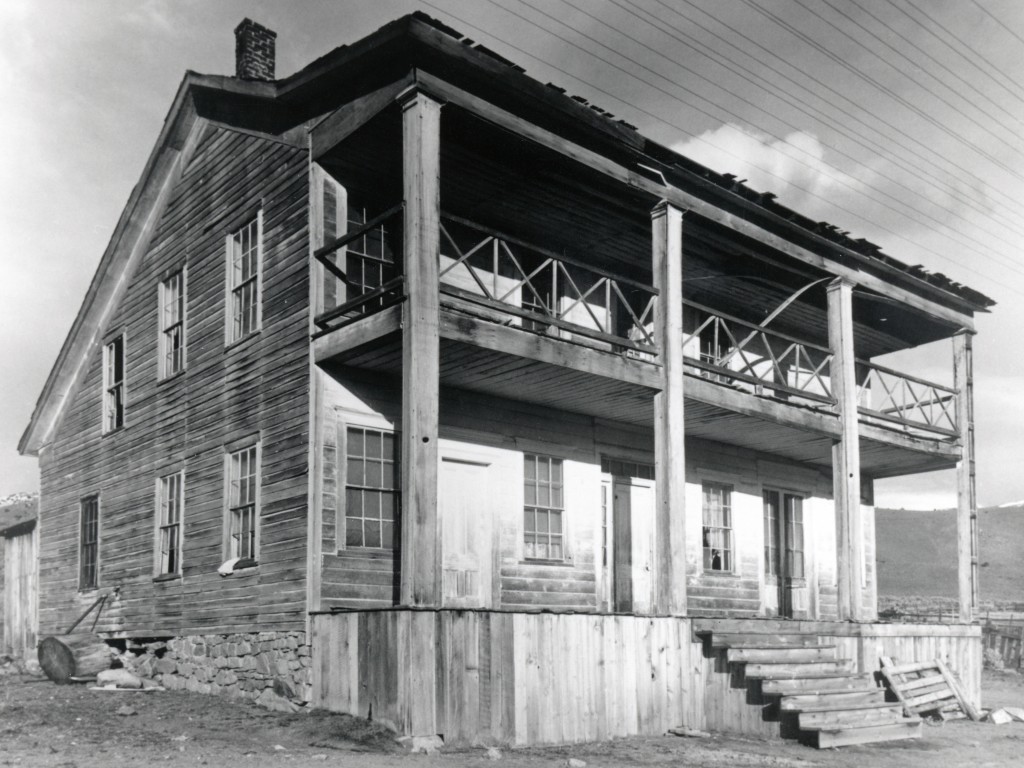
The Antelope Station, date unknown. Courtesy of Nevada Historical Society

It was a popular stage station in the upper end of Long Valley on the Susanville–Reno Road.  It was established in the mid-1860s by Jonathon  C. Roberts. In 1873, Roberts sold to David F. Evans and for many years it was known as the Evans Ranch. In 1882, when the Nevada-California-Oregon (NCO) constructed its railroad there, they established a station named Oneida, for the Sierra County Township of Oneida. On June 6, 1889, a post office was established there named Purdy—for Solomon Purdy who came to Sierra County in 1852, from Oneida, New York and eventually sold to David F. Evans. In 1891, the Purdy Post Office was moved to a site known today as Bordertown. Travelers of U.S. Highway 395 between 1931 and 1976 will know the location of the old Antelope Station as the first site of the California Agricultural Inspection “Bug” Station.

Never miss a story, click here.

Ask Tim

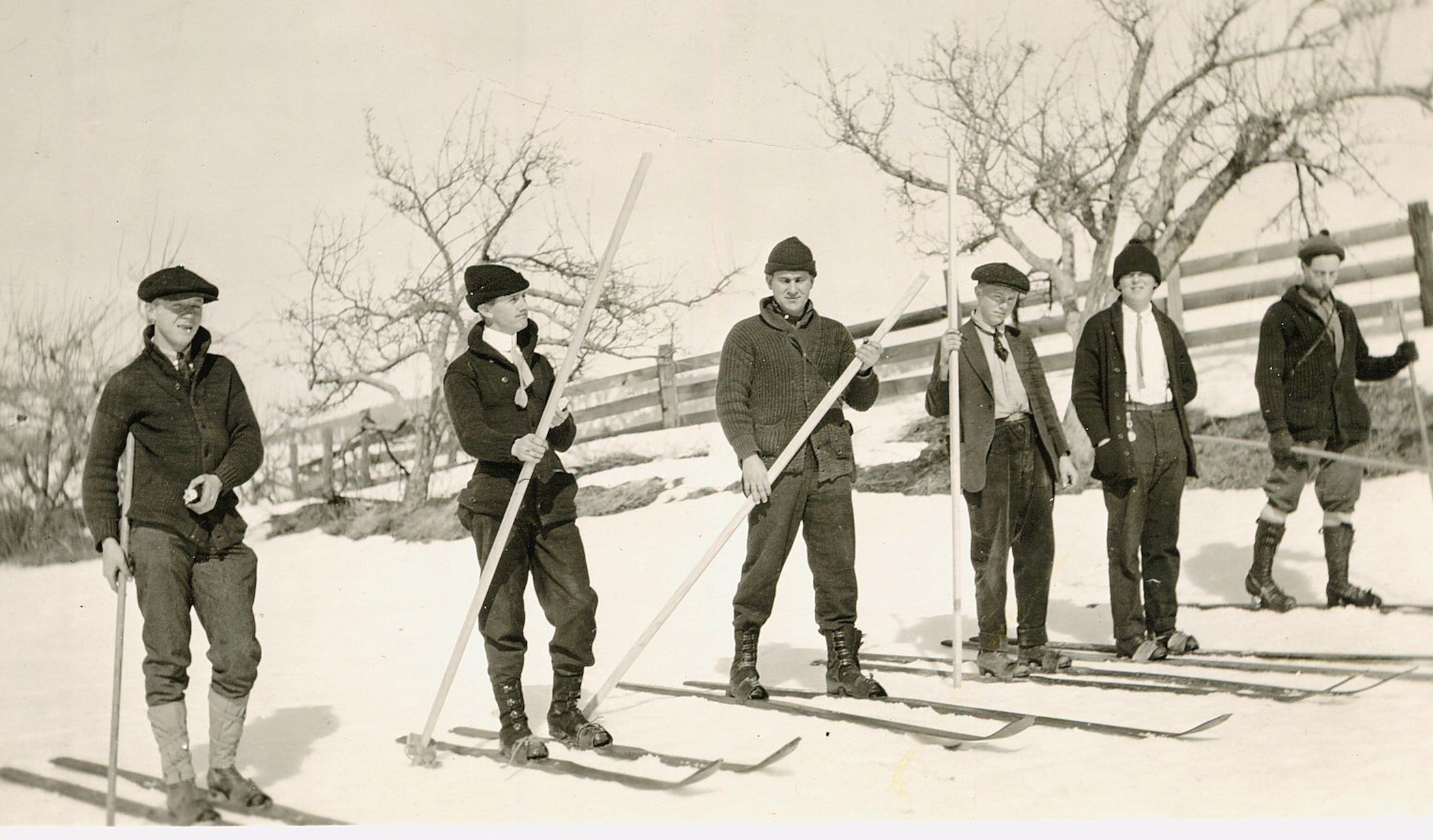
Lassen High School Faculty and Students, 1917—D.M. Durst

On a quarterly basis, I ask you the reader, if there is something you would like to learn more about or maybe its something you heard, but question its validity. So here is an opportunity to participate. I will do my best to answer any questions. It should be noted, it may take awhile for the answer to appear as a post. The primary reason, many of the daily posts are done nearly a month in advance. So by the time you read this I am already working on posts for the middle of February, or at least I should be. Whatever the case may be, I look forward to hearing from you. Of course, it should be noted that paid subscribers requests receive priority. In addition, you can always send a request at any time.

Tim

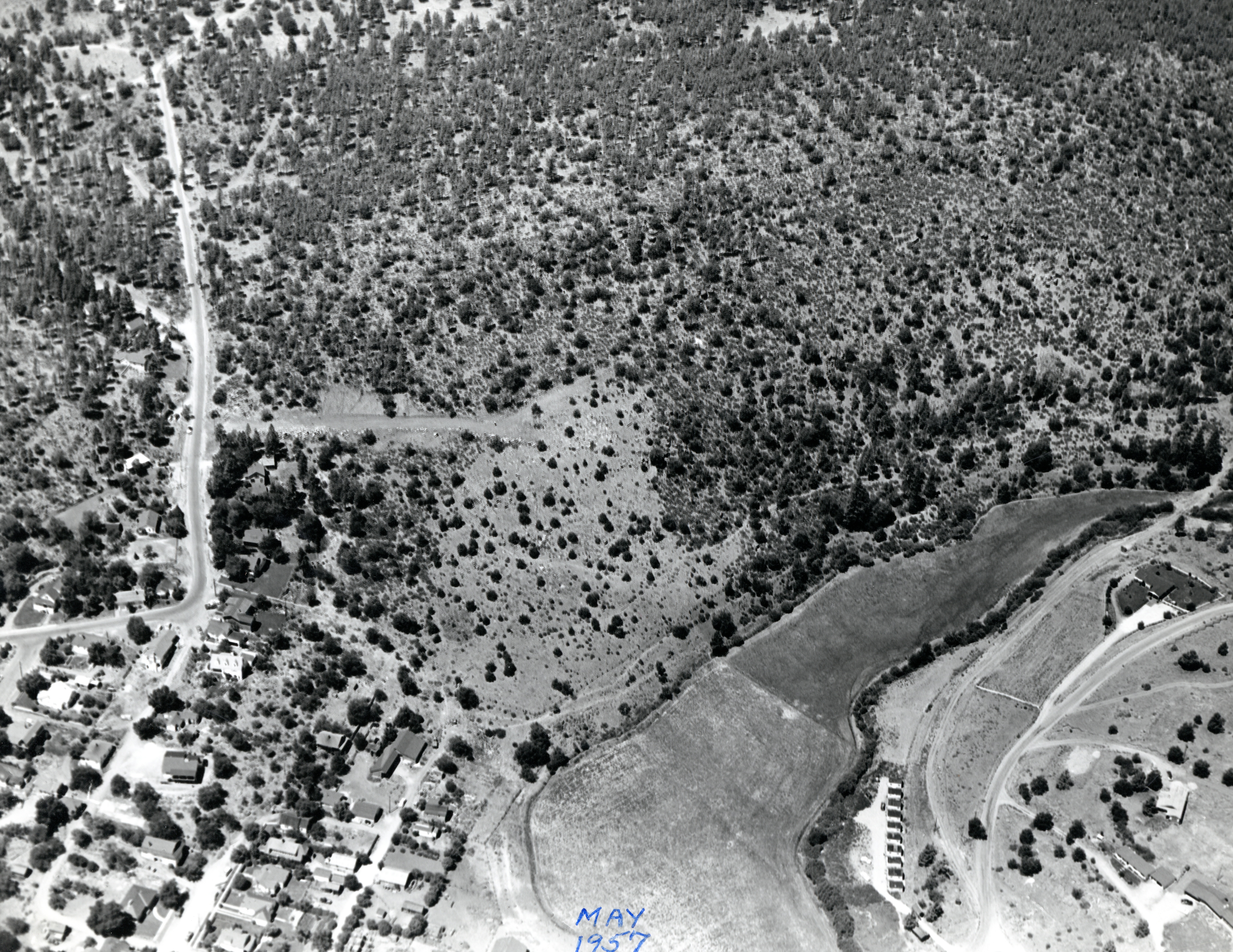
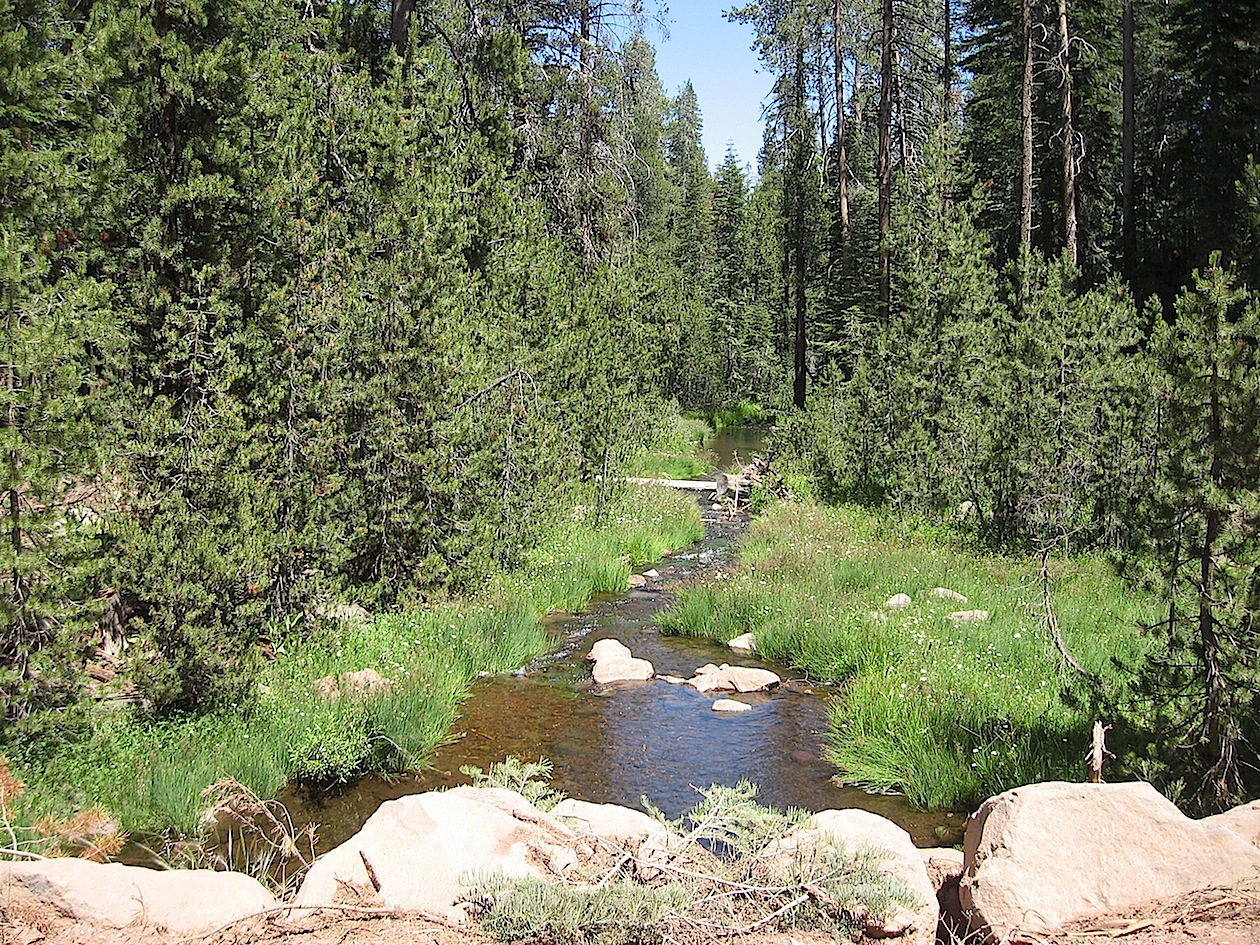
Where Are We—Susan River

July 11, 2022

This view of the Susan River was taken near the headwaters at Silver Lake.  In 1934, in the case best known as Fleming vs. Bennett, would more or less once and for all settled not only the water right issues to the Susan River, but all of its tributaries. The State Department of Water Resources, per court order, intervened and put together a complete adjudication, which is still used today.

Tim

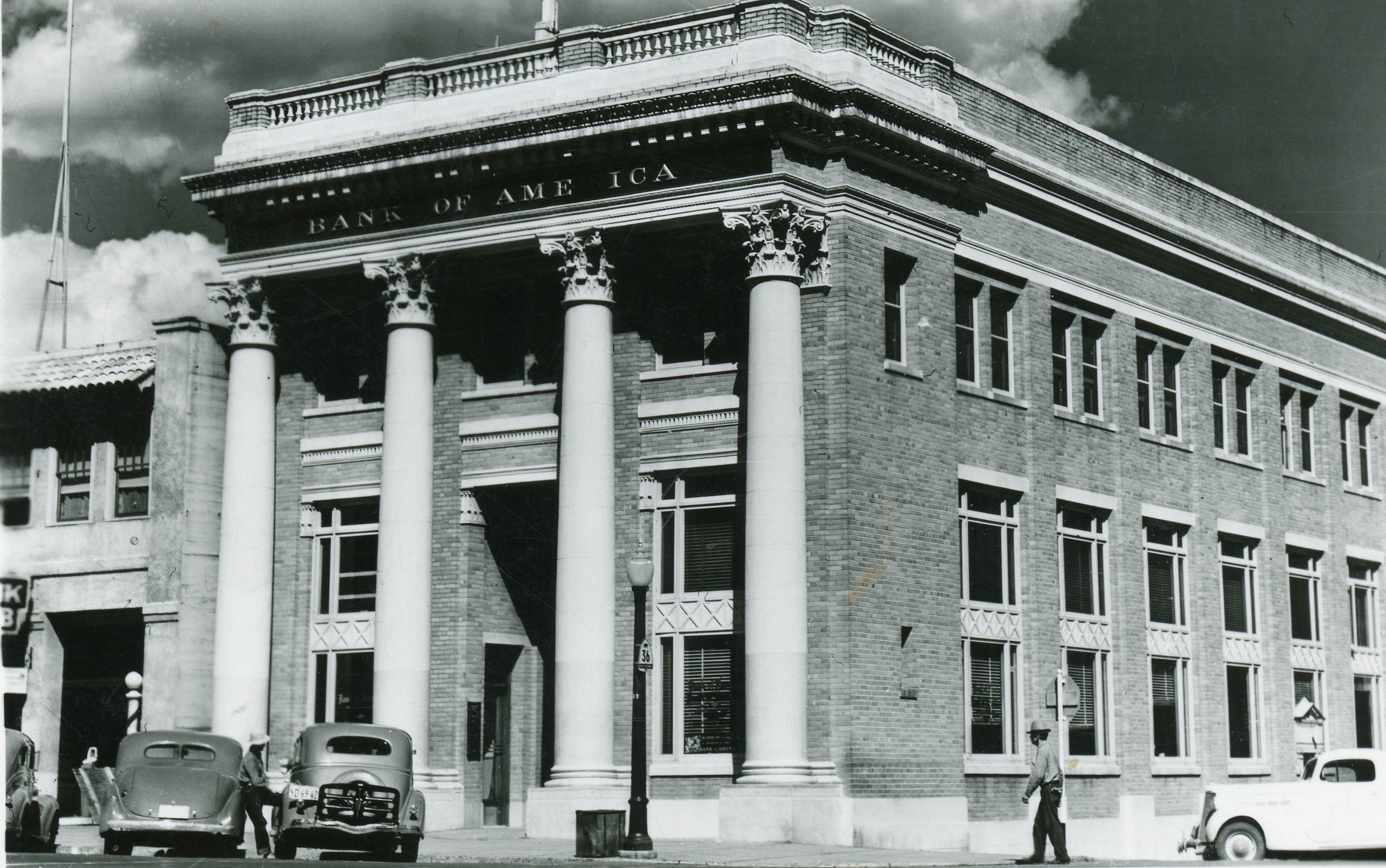
Lassen Industrial Bank Sold

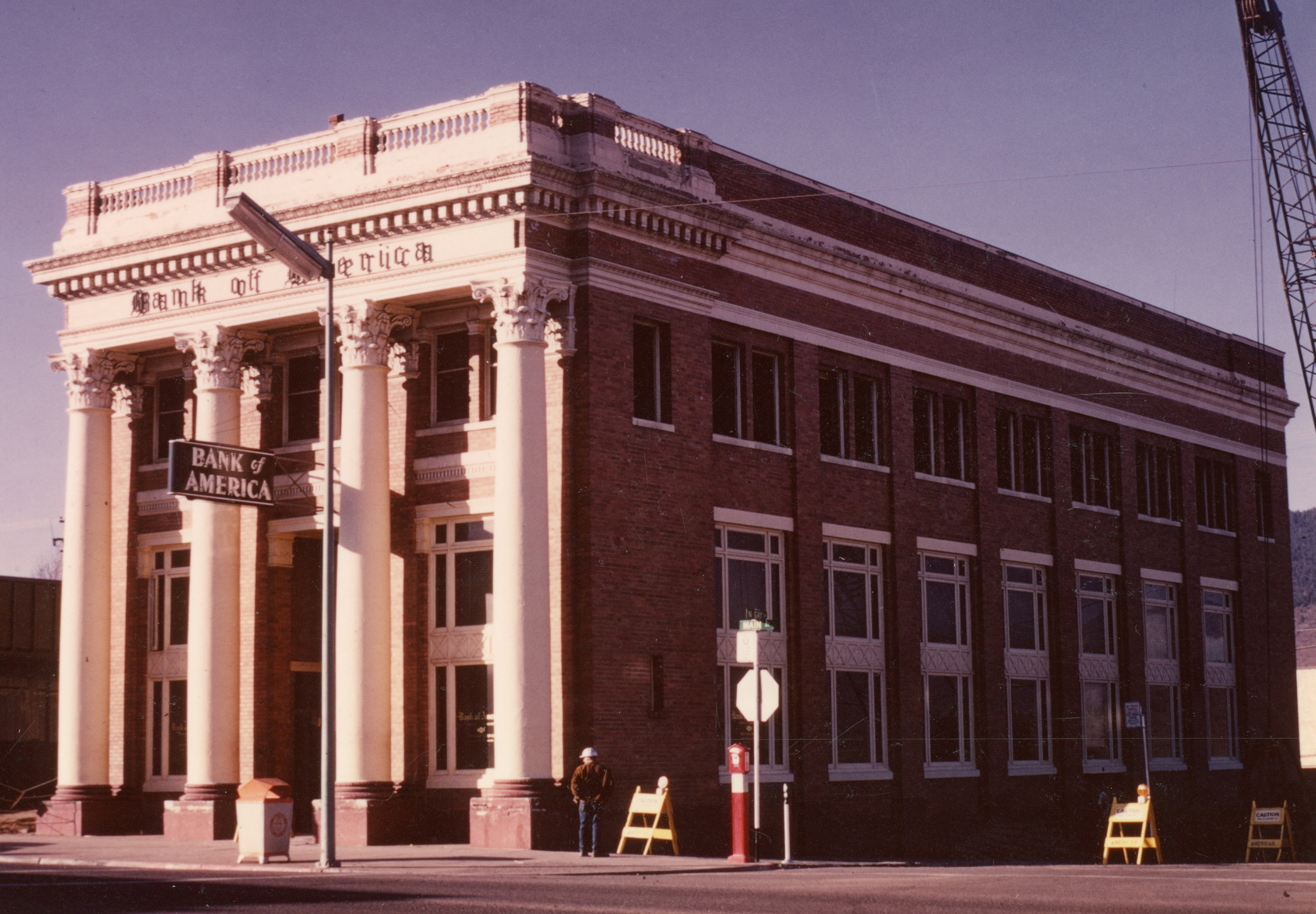
Lassen Industrial Bank built this Susanville landmark in 1922. Some fifty years later Bank of America tore it down.

In August 1928, in a somewhat surprising move to the local populace was the announcement that the Lassen Industrial Bank had intentions to sell the bank to Bank of America, formerly known as the Bank of Italy. Jules Alexander, president of Lassen Industrial Bank highlighted some of the positive aspects being part of larger bank, due to its access of larger amount of capital. Bank of America stated there were be almost no change in operations or that of the personnel employed locally.

Bank of America, 1971.

But there was more to the story, that the public was not aware. Lassen Industrial Bank was a in a financial crisis due to the delinquency on loans to the farmers and ranchers of the Baxter Creek & Tule Irrigation Districts due to the problems associated with Bly Tunnel at Eagle Lake. On December 1, 1928, Bank of America took over the beleaguered bank and with it and infusion of $100,000 to stabilize it.

Donate

Exploring Lassen County's Past