Tag Archives: Westwood

The Westwood Airports

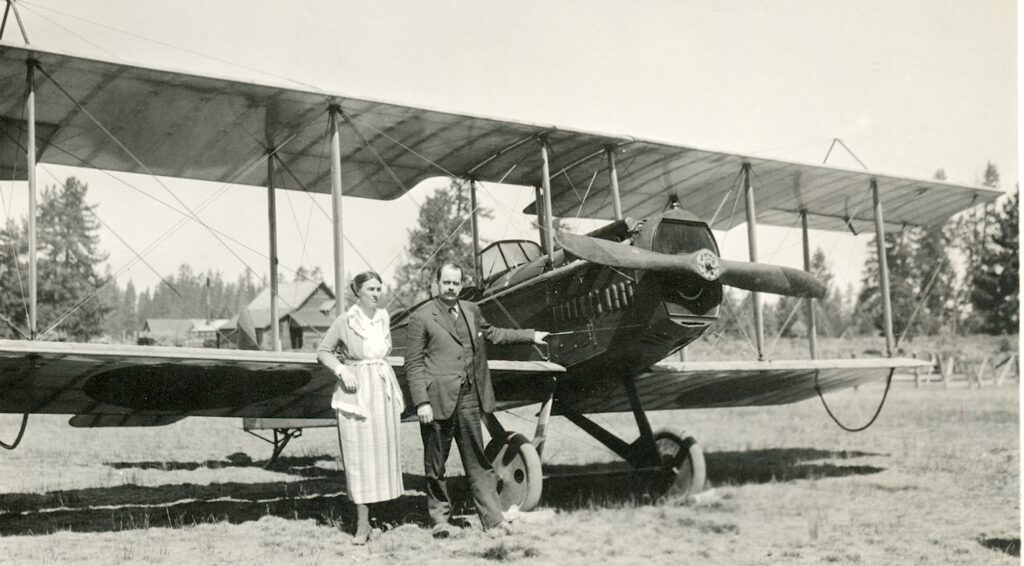
Mr. & Mrs. H. Frodsham in front of Bud Coffee’s airplane at Westwood, August 5, 1920–H. Frodsham photograph

Today, Westwood has no airport. It did, however, at one time had two different airports. The first one which really consisted of a crude landing strip. By the late 1910s, the first landing field was located about a mile south of the Goodrich Ranch, or the current bridge that crosses Goodrich Creek. Interest in flying slowly gained momentum.  In June 1928 the Westwood Auto Club spent $100 to clear the landing field of brush and fill in holes to make two 2,200 foot runways. Thus, the Westwood Airport was created—a first in Lassen County. By the late 1930s the landing field slowly declined in use, since the Red River Lumber Company was in a transitory period. In 1944, Red River sold its Westwood operation, thus more changes on the horizon.  In 1946, Lassen County bought forty-two acres at $2.50 acre from Red River to provide a landing strip to the west of Westwood. It was subsequently closed. In July 1982, the Lassen County Board of Supervisors discussed re-opening the airstrip, but it never got off the ground.

Tim

Frodsham Photographs

Fifth Street, Westwood, 1923

Recently, I have been in receipt of some photographs taken Harold Frodsham (1879-1958). Frodsham came to Westwood in the spring of 1920, while working for General Electric. Red River Lumber Company was retrofitting its powerhouse and building its Hamilton Branch hydro plant. Red River hired Frodsham originally as its efficiency expert, and was later transferred to various management positions,  Frodsham did among other things was a lot of photography work for Red River at Westwood.

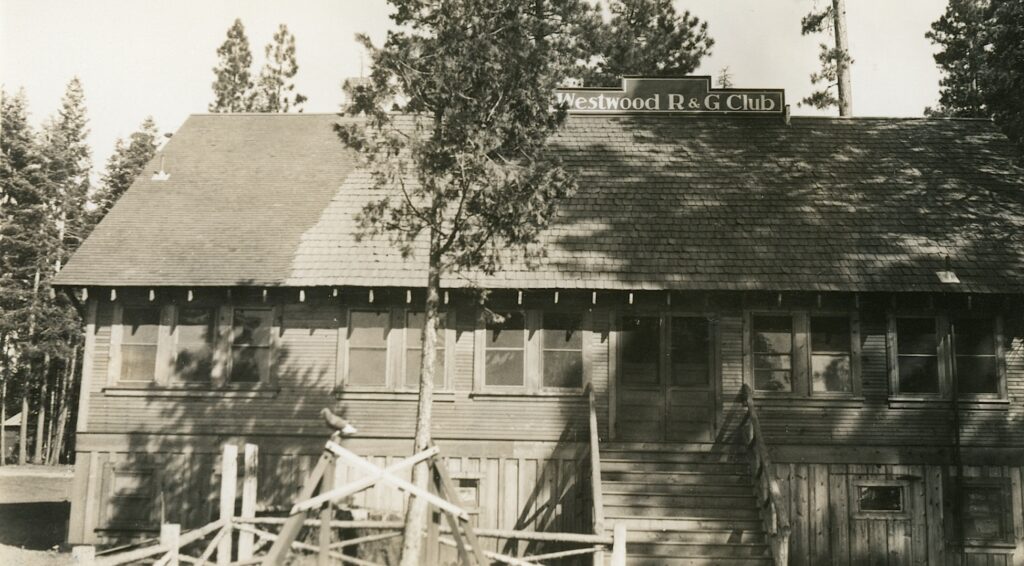
In the near future, these will be featured along with stories about the scenes in particular such as the Westwood Rod & Gun Club.

Tim

A Westwood Independent Business

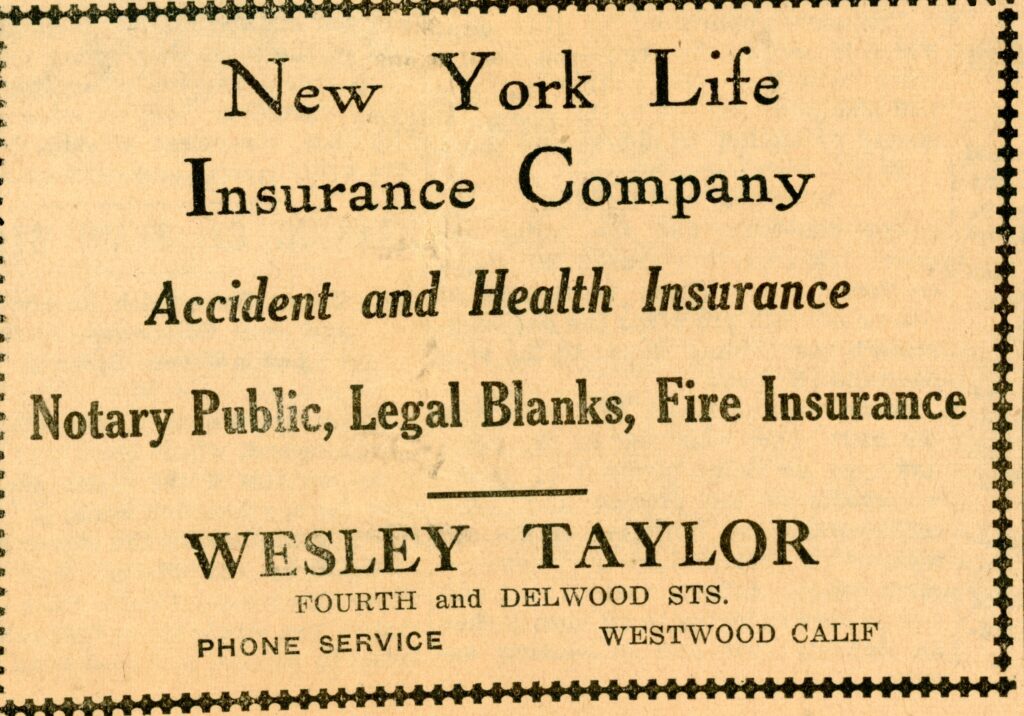
Taylor’s Advertisement, Westwood Independent, 1918

While many are aware of when Red River Lumber Company’s mill town of Westwood first came into operation in 1913, it was a true company town. All the housing was owned by company, and about 99 percent of businesses were too. There are exceptions to the rule.  There were some tasks the company did not want to undertake, such as the mortuary. Of course, that business needed Red River’s approval to operate. The featured illustration provides another example.

In. 1918, WesleyTaylor advertised in the Westwood Independent his services as insurance agent and notary public. How long he remained in business there is not clear. However, in 1920 with the formation of the Westwood National Bank, that institution provided notary services. It should be noted since Westwood was initially a company town, there is little public documentation of the coming and goings of the town’s residents.

Tim

Ad from Westwood Independent April 2, 1918

Westwood’s Golf Course

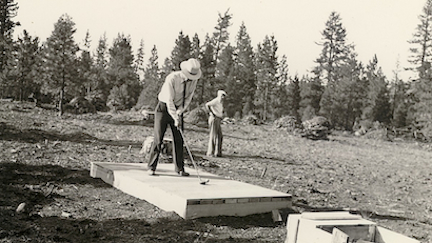
Tee time at Westwood, July 13, 1935.

One would not normally associate the sport of golf in a community composed mainly of lumberjacks and sawmill workers like Westwood back in its hey day. However by 1920, the golfing phenomenon swept through Northern California and this lumber town was no exception.

The “divot diggers” as they were affectionaly known then took a little longer to take hold at Westwood. By the early 1920s, Susanville could boast three golf courses, albeit crude by modern day standards. Even Chester, then just a mere hamlet, had a golf course.

As early as 1921, Westwood’s golfing enthusiasts began the debate to establish a golf course. Yet, they just could not generate enough momentum to pull it off. This all changed in 1929 when Westwood’s golfing community organized a club. Those original duffers consisted of Ross Morehouse, Gene Huggins, Bob Pullman, F.W. Koerner, F.M. Jayne, Bill Corbett, Dan Taylor and C.C. Baptie. Continue reading Westwood’s Golf Course

Red River’s Logging Camp 33

Camp 33
Camp 33

Red River Lumber Company operated numerous logging camps from 1913 through 1944 when it sold to Fruit Growers. The camps were assigned numbers, though in no particular order. The majority of the camps were short lived and only had a span of one to maybe three years. One of the more interesting camps was Camp 33, but referred to as Town Camp, as it was located less than a mile west of Westwood. What made it unique was that Red River’s company town of Westwood would experience from time to time a housing shortage for its employees. On occasion, this camp was used to house mill workers instead of loggers.

Tim


It Was Cold in 1949

Dynamiting the Westwood millpond, January 27, 1949. Courtesy of Fruit Growers Supply Company

In January 1949, the temperatures plummeted to nearly thirty degrees below zero at Westwood. The millpond there froze. When Red River designed the facility, they placed piping from the powerhouse that forced steam air directly into the millpond near the sawmill. This system was no match for Mother Nature. To keep the mill operating it was necessary to use dynamite to blast loose the logs in the millpond. Continue reading It Was Cold in 1949

Westwood’s Deportation Continued

Westwood, 1931

Lassen  County wanted to oblige, but it had no funds. They deferred to take any action and turned the matter over to the federal immigration officials. J.C. Borden of the Immigration Bureau was brought in to investigate the situation. What he found on his arrival was that of the forty-five applicants only a handful were eligible to receive aid to pay for their return to Mexico. Yet, the issue was also moot, as Borden noted, because all the Mexicans had gone back to work. He informed the Board, should the issue arise again, that under a federal ruling any alien who had been in the United States for three years and becomes indigent can be returned to his native land with the cost borne by the federal government. Continue reading Westwood’s Deportation Continued

Westwood’s Deportation of Immmigrants

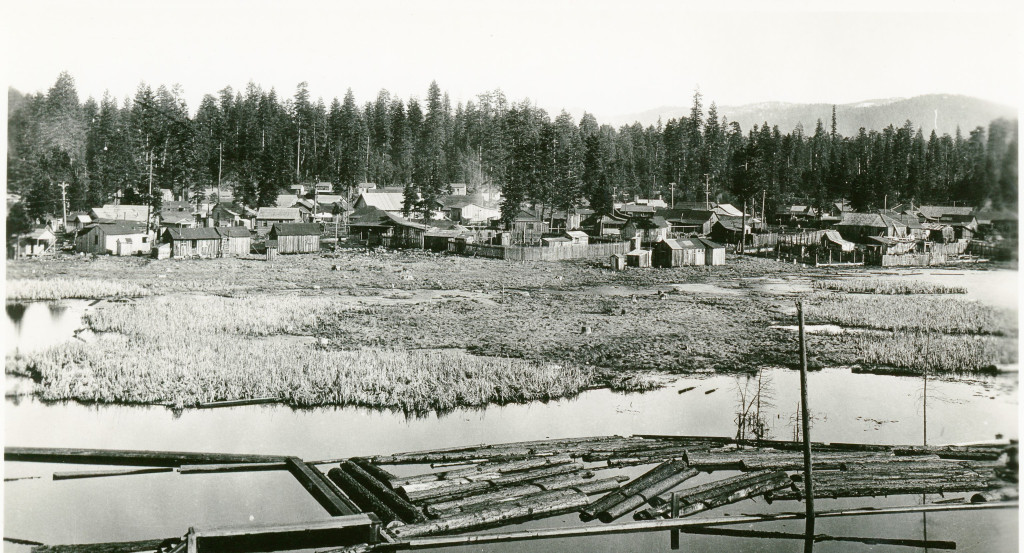
Westwood’s Old Town, home of many of its immigrant workforce. Courtesy of Hank Martinez

One of the more unusual annals in Red River’s history was deportation. Red River hired a large percentage of foreigners whether it be Scandinavians, Italians or Mexicans. By 1929, with the downturn in the lumber market, the company was forced to layoff some of its workers. If they thought that the layoff was temporary, they allowed the affected worker to remain. By 1930, however, Red River sought alternatives, as they could no longer bear the financial burden. Continue reading Westwood’s Deportation of Immmigrants

Westwood Saw Dust Pile

sawdust 1 purdy

In the mid-1920s, Red River had two hydro-plants in operation to generate power. This abundant power supply created an unusual man-made landmark. Red River was able to conserve its sawdust/wood waste pile, which took on a life of its own as it started looking like a small mountain. This created a nice reserve of free fuel that was readily available at any time should there by interruptions from the hydro-plants. To comprehend just how large it was, a Ripley’s “Believe it or Not” column once designated it as the world’s largest waste pile. In 1941 it lost its status to Portland General Electric Company who reported having a 130-foot high pile of sawdust.

Anything of this magnitude created its own hazards. One of the first lessons learned was how to prevent it from spontaneous combustion. A conveyer belt, along with a steam shovel and caterpillar tractor were employed to constantly work on the sawdust pile—whether adding to it or feeding the conveyer belt to the power house. It was not unusual for a worker to get trapped in a sawdust pocket where one could easily die from suffocation. While no fatalities of this nature occurred, there was one death attributed to the sawdust pile. On the morning of January 20, 1925 Alexander Kollinkoff was killed when he was struck by a large piece of frozen sawdust while operating a steam shovel.

Red River also explored other ways to utilize this enormous wood waste pile. When the mill operated at full capacity it produced 400 hundred tons of sawdust and wood chips in a twenty-four period, over half of which was used to fuel the boilers in the powerhouse. In February 1927 Red River installed an interesting piece of machinery, one that manufactured the modern day version of briquettes. This impressive device was capable of compressing a ton of wood waste into briquettes every hour. About a third of the wood waste which it compressed into briquettes could be used for home use, camping or even at the plant itself.

Felion Sawdust

The Paul Bunyan Trademark

Packaging tape with the Paul Bunyan trademark.
Packaging tape with the Paul Bunyan trademark.Courtesy of John Webb

In the logging camps in Canada and Northeastern United States as folklore would have it, tales of the mythical Paul Bunyan was born. Stories were passed around in the camps, no written account.

In 1900, W. B. “Bill” Laughead, a cousin to T.B. Walker, went to work in Red River Lumber Company’s logging camps at Akeley, Minnesota.  There he undertook many jobs starting as a camp chore-cook and ending as a construction engineer. After eight years of working in the woods, he decided to move to Minneapolis working odd jobs and experimented with free-lance advertising work. It was at this time, Laughead drew the first known character drawing of Paul Bunyan, in part of an advertising campaign for Red River’s new California operation.   Laughead created the company logo, of a circular design, with his Paul Bunyan’s face, accompanied on the outside with the words Paul Bunyan’s Pine and it became Red River’s registered trademark. The logo was placed on many products and even on its logging trucks. For a short time, Red River even bottled their own soda beverage, with the embossed bottles displaying the trademark. When the company expanded into other operations, they changed it to a Paul Bunyan Product.

In the 1940s, during the dissolution process of Red River, Kenneth Walker continued in the lumber business. In doing so, the trademark was transferred to him, since his own enterprise was the Paul Bunyan Lumber Company.

Never miss a story, click here.