Tag Archives: Westwood

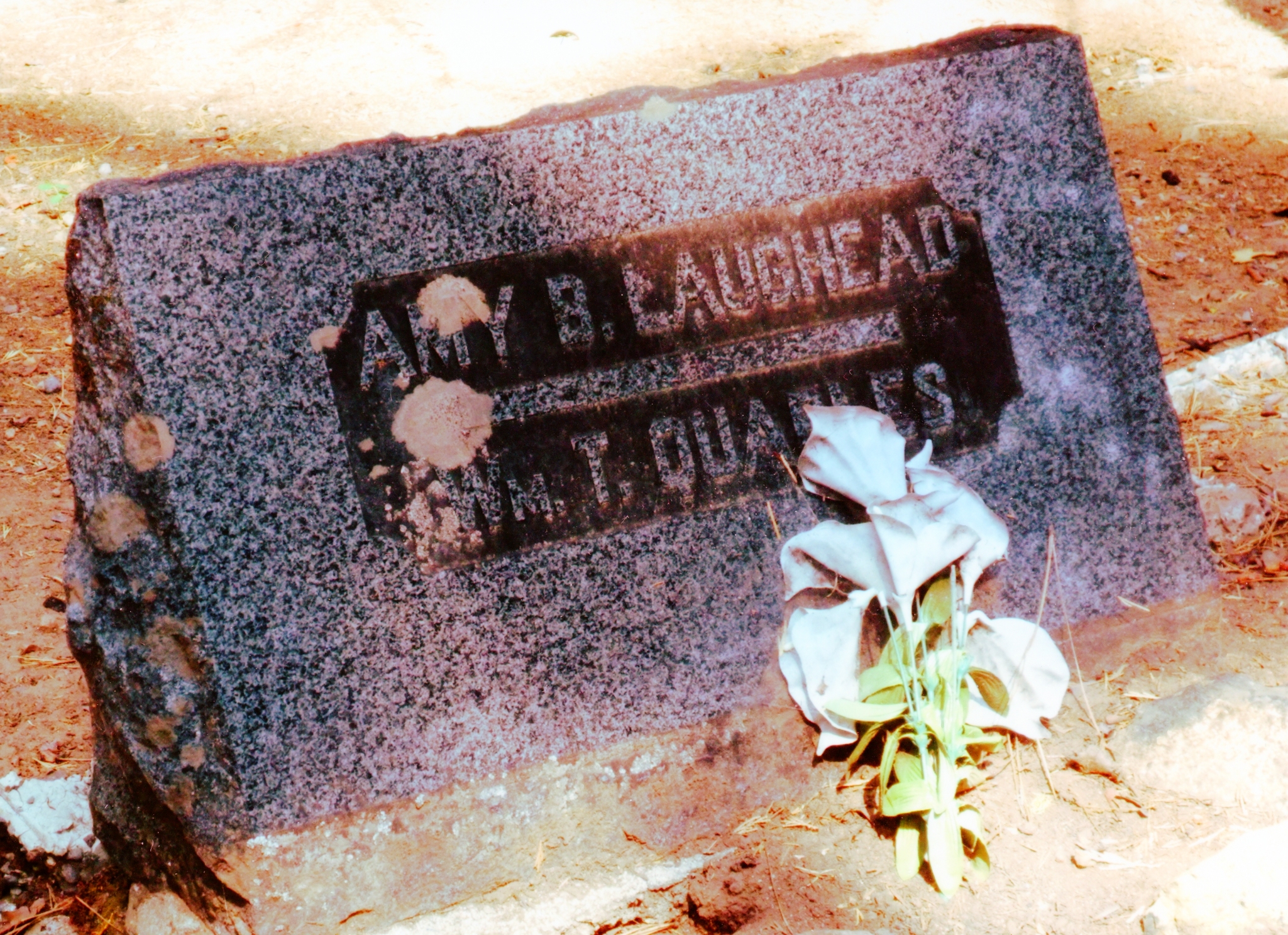
Amy Laughead

Laughead117

One never knows for sure where your final resting place may be. In one instant, there was a dis-internment of a grave of a person who died in 1924 from the Susanville Cemetery and reburied nearly 70 years later to a cemetery in Oroville.

Then there is the case of Amy Laughead.  She was a first cousin to Red River’s founder, Thomas Barlow Walker. Her claim to fame, is that of her son, William B. Laughead, who developed the famous Paul Bunyan caricature that later became the trademark for Red River. Amy is a perfect example of you just never know where your final resting place might be. She died in February 1939 at Westwood and was buried in Sacramento. Seven months later, her son had her remains disinterred and brought to the Westwood Cemetery. When he died in 1958 he was buried in the plot in Sacramento where his mother was originally interred.

Support this site and Subscribe today!

Westwood’s Fire Train

Westwood's Fire Train courtesy of Doug Luff
Westwood’s Fire Train courtesy of Doug Luff

The winter of 1923-24,  was one of the driest on record in California. That summer another record would be broken–forest fires. It was June, 1924, when the Red River Lumber Company having been in operation for over a decade experienced its first major forest fire. The fire broke out at Chester Flats between Camps 34 and 38 and burned a narrow strip of land, eight miles in length. Red River’s loss was minimal as the fire burned recently logged over land and the only significant damage was 500 cords of wood burned along 1,000 feet of railroad track. Red River considered its biggest loss was to the men fighting the fire which cost the company a $1,000 a day in wages, and it took a week to contain the fire. Continue reading Westwood’s Fire Train

The Drought

Fire Antelope
Antelope Mountain Fire, 1926

As we enter our fourth year of drought, let us hope it does not last as long the 1917-1937 drought. The most severe was the winter of 1923-24. Susanville received less than five inches of precipitation this year. It was so dry that winter that in the middle of March, a one-inch snow fall at Susanville caused great excitement. There was even a greater commotion when eighteen inches of snow fell. It disappeared in a matter of hours. That was the extent of precipitation for the winter. Continue reading The Drought

Robert Stinson

Robert Stinson
Robert Stinson’s grave at the Westwood Cemetery.

In August 2013, I led a Westwood Cemetery tour as part of that community’s centennial celebration. The graves that were highlighted, provided a different aspect to Westwood and the Red River Lumber Company.

Robert Stinson was born in Quincy in 1882, and followed in his father’s footsteps as a commercial photographer. It was a tough trade to operate a business in a rural region. So like many others it became necessary to be itinerate traveling from community to community for business. In 1913, Red River hired Stinson as their company photographer, who at the time was located in Red Bluff. Stinson’s main job was to make a complete photographic inventory of all the buildings being constructed in the town, as well as the sawmill plant. A portion of this collection exists in the T.B. Walker papers housed with the Minnesota Historical Society. Stinson just happened to be at the right place at the right time, when Lassen Peak set off a series of volcanic eruptions beginning in 1914. Unfortunately, for Stinson and other photographers such as P.J. Thompson, are overshadowed by that B.F. Loomis, but that is another story, for another time. Stinson stay at Westwood was brief and left Red River in 1915 to be replaced Otto Kratzer. On a final note, Red River always had an in-house photographer, though they also hired others for commercial work.

Westwood’s First Train

First Train
First train to Westwood, February 21, 1914

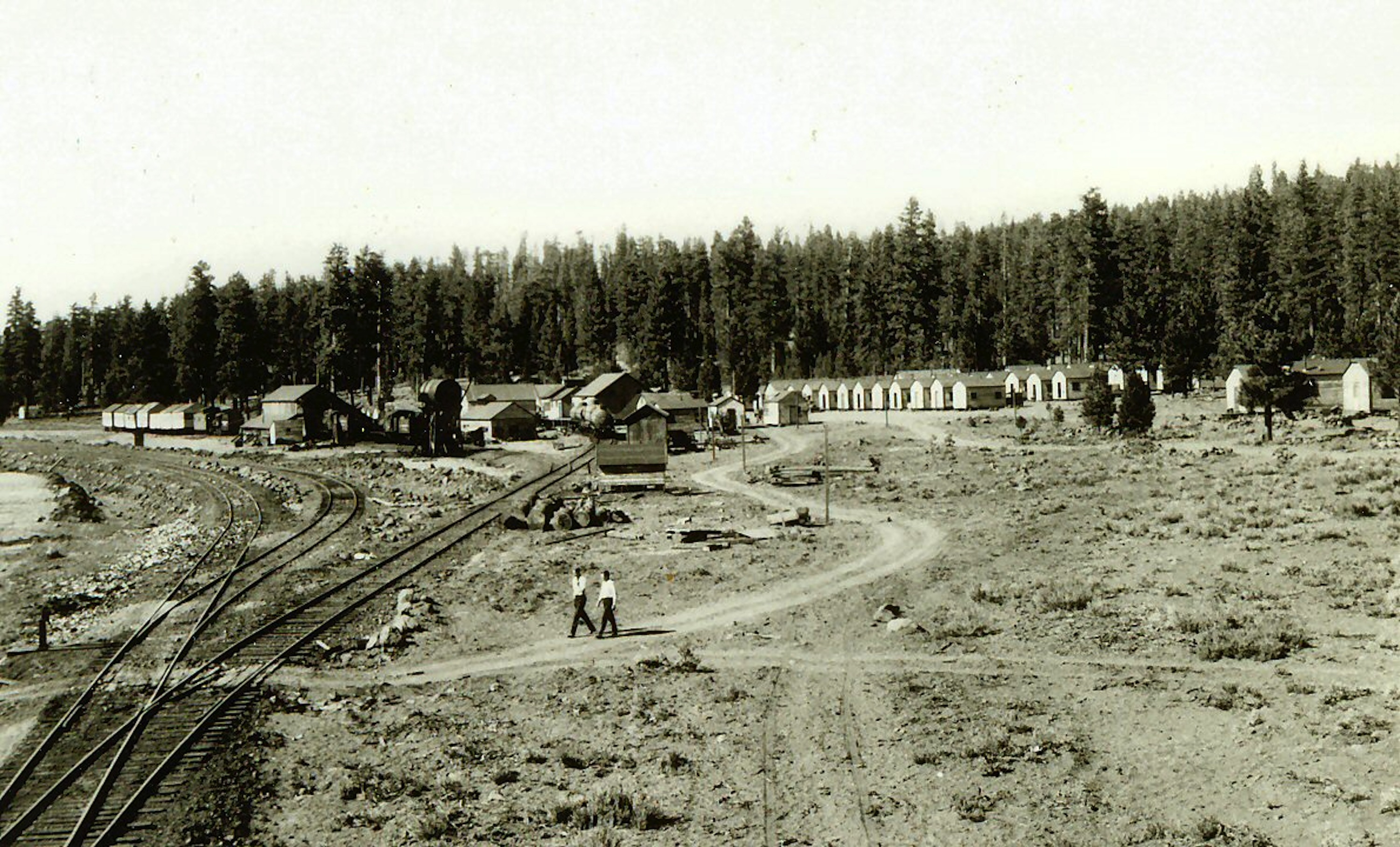
When the decision was finally made by the Red River Lumber Company to locate a mill at Mountain Meadows, there was still the obstacle of a railroad. Actually, the selection process was a volatile one, which one can read in Red River: The Early Years. On January 29, 1912, Red River entered into a contract with the Southern Pacific Railroad to construct a 125 mile railroad from Fernley, Nevada to Mountain Meadows, to the town that would be named Westwood. As an incentive, Red River guaranteed the Southern Pacific that all their freight would be handled by this line for a period of five years. In addition, it was understood that once Red River was ready to expand north, the Southern Pacific would extend its line to Klamath Falls, Oregon. However, that is another story, though Red River gave serious consideration to build a second mill near Lookout. Continue reading Westwood’s First Train

Camp 33 – Red River

Camp 33
Camp 33

Red River operated numerous logging camps from 1913 through 1944 when it sold to Fruit Growers. The camps were assigned numbers, though in no particular order. The majority of the camps were short lived and only had a span of one to maybe three years. One of the more interesting camps was Camp 33, but referred to as Town Camp, as it was located less than a mile west of Westwood. What made it unique was that Red River’s company town of Westwood would experience from time to time a housing shortage for its employees. On occasion, this camp was used to house mill workers instead of loggers.


Westwood Club

When the Red River Lumber Company established its company town of Westwood in 1913, it had to provide numerous amenities due to its remote location at the time. It was necessary to not only attract employees, but to retain them, as the lumber industry experienced a high turn over rate in labor. The Westwood Club was one of several facilities designed to meet the recreational needs of its employees. It included a restaurant, lunch counter, soda fountain, cigar and newsstand, barbershop, reading room and a billiard room.

Westwood Club
Westwood Club, 1920

 On early Friday morning, March 31, 1944 a fire broke out in the Westwood Club though the cause, was never determined. Within twenty minutes the whole building was engulfed in flames. The heat so intense, that Nick Kannier’s automobile which was parked in front of building, burst into flames. Even neighboring buildings from across the street were smoking, on the verge of spontaneous combustion, which with quick action by the fire department prevented the same.

The J.R. Bartlett Company were the concessionaire of the Westwood Club, which included the clubhouse, cafe, pool hall, bar and lounge. There were four other tenants in the building—Ehorn’s Pharmacy, Quitman’s Apparel, Westwood Market and Kilpatric’s Used Furniture department. Estimated loss for all parties was placed at $125,000.

Logging

Red River Lumber Company tree fallers
Red River Lumber Company, 1915

Having spent a good portion of my youth working in the woods with my father, Leroy W. Purdy, this topic comes naturally to me. In addition, I have authored several books on the topic, such as the Fruit Growers Supply Company and the Red River Lumber Company. Over the years I have gathered considerable material on not only those companies, but the smaller mills that existed prior to these large lumber outfits. In a future post, I will explore the 1907 logging bonanza of the Honey Lake Valley region. It was the first major exportation of lumber, as prior to that date, must lumber produced was for local consumption. Believe or not Honey Lake played an important role and finished lumber was shipped across the lake from near Buntingville to Amedee for shipment on the NCO Railroad. Stay tuned.

Camp 10 Fruit Growers Supply Company
Camp 10, Fruit Growers Supply Company, 1932