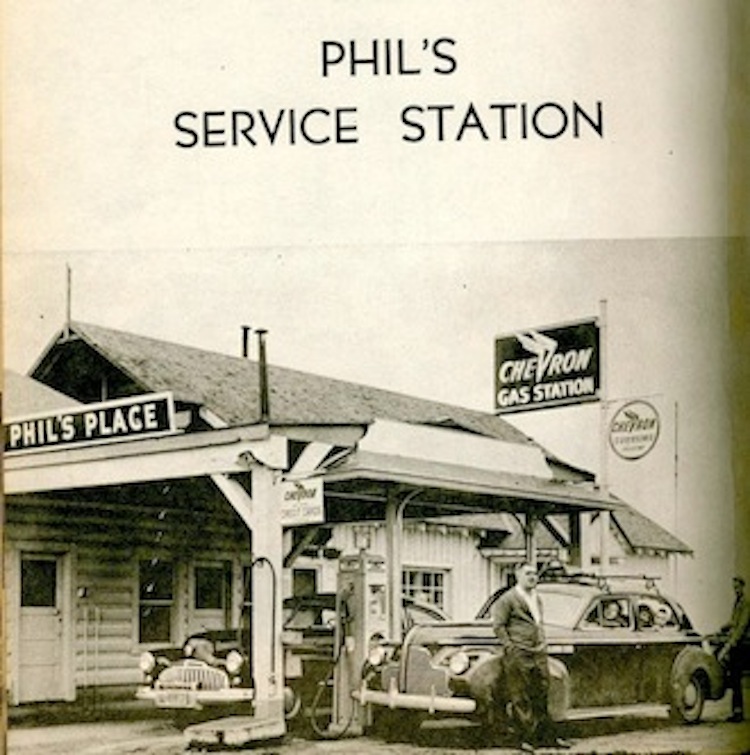
In the mid-1930s, Bill and Jeanette Tunison established very popular bar, restaurant and gas station five miles east of Westwood near Goodrich Creek. Tunison, it should be noted had been a Westwood resident since 1916. The establishment became very popular in a short order, known for its good food and hospitality. As Marian Hull Herrick recalled, “People would call ahead to see if they serving were Jeanette’s Rum pie that night. People raved about the fried chicken and biscuits. Jeanette confided in me that they were made with Bisquick.” Continue reading Tunison’s aka Phil’s Place
Tag Archives: Westwood
Fernley & Lassen Railroad
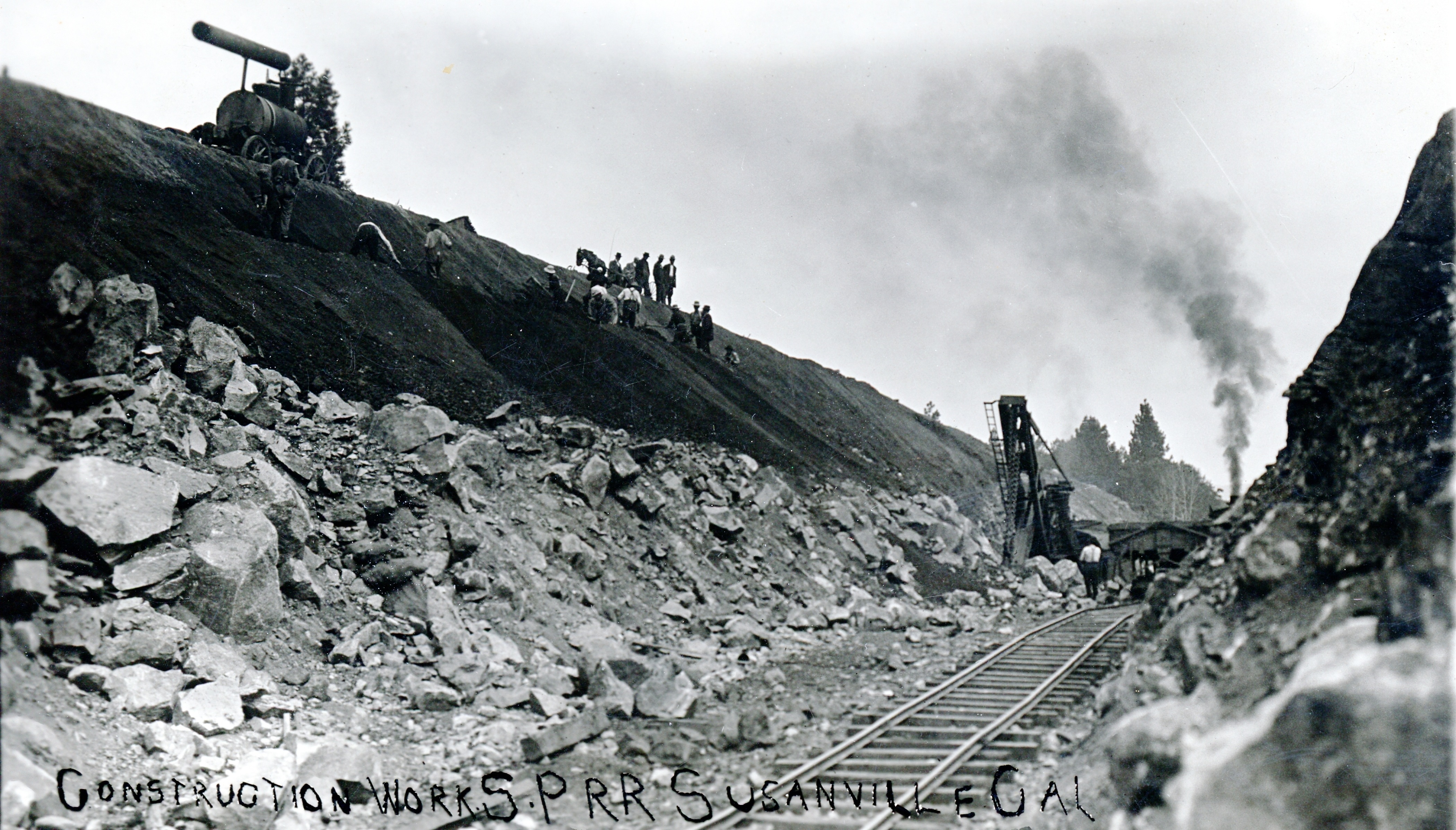
Since today is Lassen Land & Trails Trust annual Rails to Trails festival, it is only fitting to share a few scenes of the construction. In September 1913 work began on the construction of the line from Susanville to Devil’s Corral. This segment provided railroad officials with numerous challenges, since there were hardly any physical barriers to contend with the segment from Fernley, Nevada to Susanville. Time was also of the essence, since the railroad had a contractual obligation to complete the line to Westwood by February. With that in mind, over 1,000 men were hired for this construction phase. On December 12, 1913, the construction train crossed the Devil’s Corral, and all appeared well, until Mother Nature unleashed a fury of storms, which is a topic for another time.
It is never too late, subscribe today and enjoy tomorrow with daily notifications. You can also surprise someone with a gift subscription.
Bert Rodman

Rodman was part of the large influx in Westwood’s population during World War I. He came there from Akeley where he worked in bank, but there being no financial institution he went to work in the mill. That would change when Red River decided to go into the banking business in 1920 when it formed the Westwood National Bank. The bank was a very contentious issue among the Walker family, but it was one of many of the heated exchanges the family engaged in. Anyhow, the bank was conveniently located in the office building across the street from the Big Store and the mill entrance. In 1921, Rodman accepted the position of head cashier at the bank, a position he held until 1936, when Red River got out of the banking business when it sold it to the Bank of America. He died in 1943 and is buried in the Westwood Cemetery. On a final note, a remnant of the bank still remains, the concrete vault across the visitor’s center.
Subscribe and support this site for as little as $5.00 a month, or a mere 16 cents day.
1-0-1 Ranch Sold

While I continue on my road to recovery. I will provide some news updates, even though the “locals” may be aware of it. However, this web site has a wide following, even internationally. Consider this someone from Tokyo researched Spoonville, another from Brazil searched the Bank of Lassen County. In October, an article will appear about readership topics.
Now to the topic at hand. The historic 1-0-1 Ranch at Mountain Meadows has been sold. According to news sources on July 31, 2015 Dye Creek Land & Cattle Company sold the 2,318 acre ranch to Sierra Pacific Industries, the latter, of course, always seeking to enlarge its timber holdings.
Included in the sale is the Coppervale Ski Area which Lassen Community College operates under a long term lease. Hopefully, Coppervale will be busy with skiers this winter.
Help me with my recovery, and subscribe for as a little as $5.00 a month.
Westwood’s Airport

Westwood’s aviation history is an obscure topic. A crude landing field was established in the late 1910s on Mountain Meadows, about a mile south of the Goodrich Ranch. Initially, its use was nominal, due to its poor condition. In one instance, Joe Hunter received a call from a pilot in Red Bluff about the current condition who replied that it is a mud bog and unfit for landing.
In the 1920s, Fletcher Walker’s two sons—Fletcher Jr., better known as “Cub” and Kenneth—developed a strong interest in airplanes and became pilots. This interest in flying gained momentum in the area, so that in June 1928 the Westwood Auto Club spent $100 to clear the landing field of brush and fill in holes to make two 2,200 foot runways, thus the formal Westwood Airport was created—a first in Lassen County.
This caught the attention of Ted Campbell of San Francisco manager of Beacon Airway to examine the aviation field. He made an inspection to examine the possibility of establishing regular air service to Reno and other points on the Transcontinental Airway route. Yet, the prospect that Westwood residents would have nearby access to regular air service never materialized.
Yet, the Walker boys, as they were commonly referred to, were an adventurous lot. In 1928, They accompanied Dr. Thomas A Arbuthnot of the Pittsburg Medical College on a 10,000 mile African expedition from Cairo to Tanganyika, which they filmed their experiences. It was made into a film, The Wild Heart of Africa which made its debut in May 1929 in New York City. After that expedition they returned to their other passion, flying. In December 1928 they purchased a Travelair Bi-Plane, equipped with a 225 horsepower Wright Whirlwind motor. Cub spent a lot of time and energy in helping many Northern California communities in establishing airports.

On August 23, 1929, the worst aviation disaster occurred at the Westwood Airport’s brief history. Cub and Kenneth routinely flew over Red River lands to photograph them. In this particular instance they were returning from such an expedition. At approximately 6:00 p.m. they were approaching the landing field when suddenly the plane malfunction and plunged crashing on impact. Frank Stevenson and Mike Pappas witnessed the crash from afar as they were placing duck blinds on the far shore of Walker Lake. The two men rushed to Westwood to inform the family and gather a party to go out to crash site. Cub was instantly killed from a broken neck and the rescue party on their arrival found Kenneth regaining conscious and attempting to get out of the cockpit and later fully recovered.
The airport continued to see use in the early 1930s, but by the end of that decade, it had become a footnote in Westwood’s history.
subscribe for as a little as $5.00 a month.
T.B. Walker

Some may remember when I posed a question earlier, who was the most influential person in Lassen County. Well, it is T.B. Walker, founder of the Red River Lumber Company. His impacts are far and wide, and still lingers today. The historic Lassen County Courthouse came to be with Walker’s influence at the ballot box to pass the bond measure. Off tangent for a bit, there are some who think Isaac Roop is the most revered figure Lassen County has ever experienced. If you look at the record, Roop made a killing so to speak as a realtor, selling land that he did not own. Benevolent and generous, I do not think so, he sold—not donated—the courthouse block, and put in a covenant that if no longer used by the county it reverts back to his heirs. Enough said. Continue reading T.B. Walker
Westwood’s Old Town

In reality, Westwood had two distinct communities—the town proper and the neighborhood on the other side of the millpond. Mill B and the initial housing quarters were constructed on the east bank of Robbers Creek. All of the permanent facilities, including Mill A and the town proper were built on the west bank. The older community had been referred with several designations. In the early years, some called it Oakland, others Baytown. Whatever the case may be, residents of Westwood stated it was where the “foreigners” lived—mainly Italians and Mexicans. References in a pre-politically correct era dubbed the place Dago Town. Eventually, using a less derogatory tone it evolved into Old Town—being the original location of Westwood.
In the summer of 1943, a contest was held to rename Old Town. Thirty-nine people suggested ninety-two names. The new name selected was Pine Town submitted by Roger Mentick who received a $15 prize in War Savings Stamps.
Subscribe and support this site for as little as $4.17 a month.
Westwood’s People’s Church
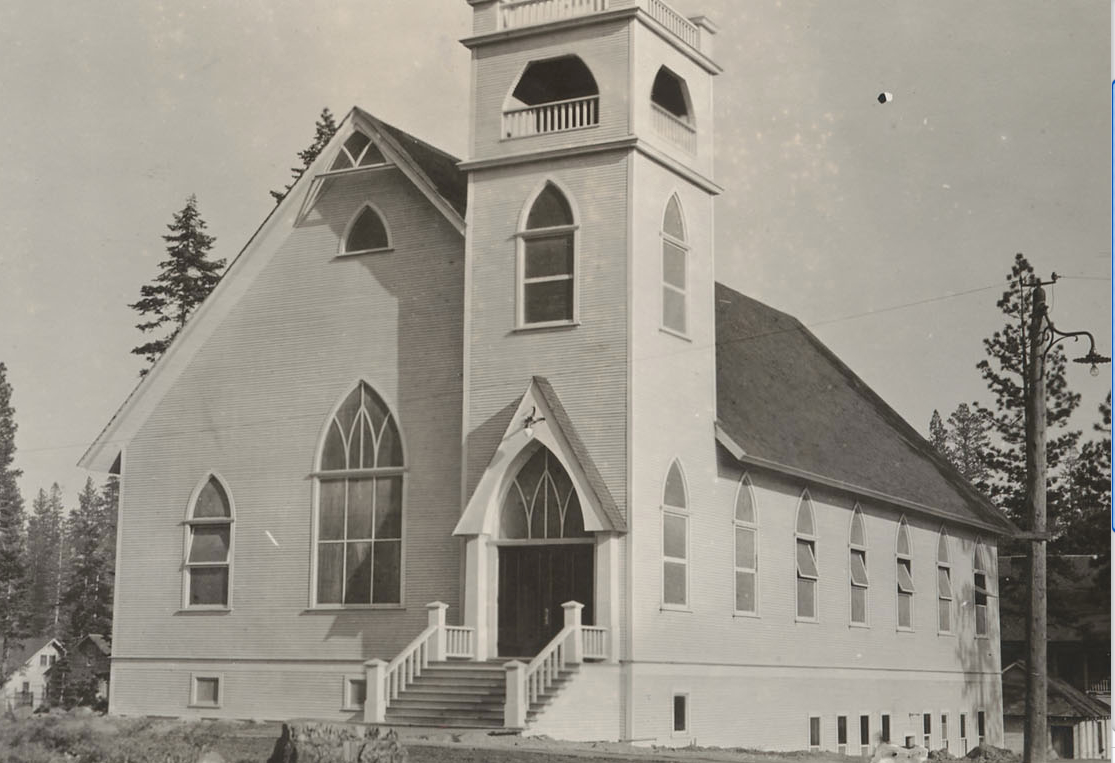
In the spring of 1917, Fletcher Walker brought up the topic that Westwood was in need of a house of worship with his father, T.B. and wrote: “We have come to a time when it seems inadvisable to put off further the building of a working church. The Sunday school had 255 last Sunday and the condition of the school in one of the old cook houses is such that the congestion prevents efficient work.” Continue reading Westwood’s People’s Church
Westwood Millpond

Millponds at lumber mills are a relic of the past. Those who have recollections, especially if living nearby can attest during the summer months of the odiferous stench from them. Continue reading Westwood Millpond
Garfield Oates

Garfield Oates began his career as a mechanical engineer with Diamond Iron Works in Minneapolis. In the fall of 1912 he was sent to Westwood to supervise the construction of Red River’s sawmill, as it was designed by Diamond Iron Works, who supplied most of the machinery. After the completion of the mill, Red River offered him a position of resident engineer which he accepted. Oates designed many of the landmark buildings of Westwood including the Auditorium, Masonic Hall and Theater. He was very active in community and served many years as the president of the Westwood Auto which was a defacto Chamber of Commerce for Red River. After all, Red River did not need a chamber, since it was company town, so there was no need to attract businesses to locate there. Yet the Auto Club promoted Red River products. He died in 1934 after a four day bout with a gall bladder attack.