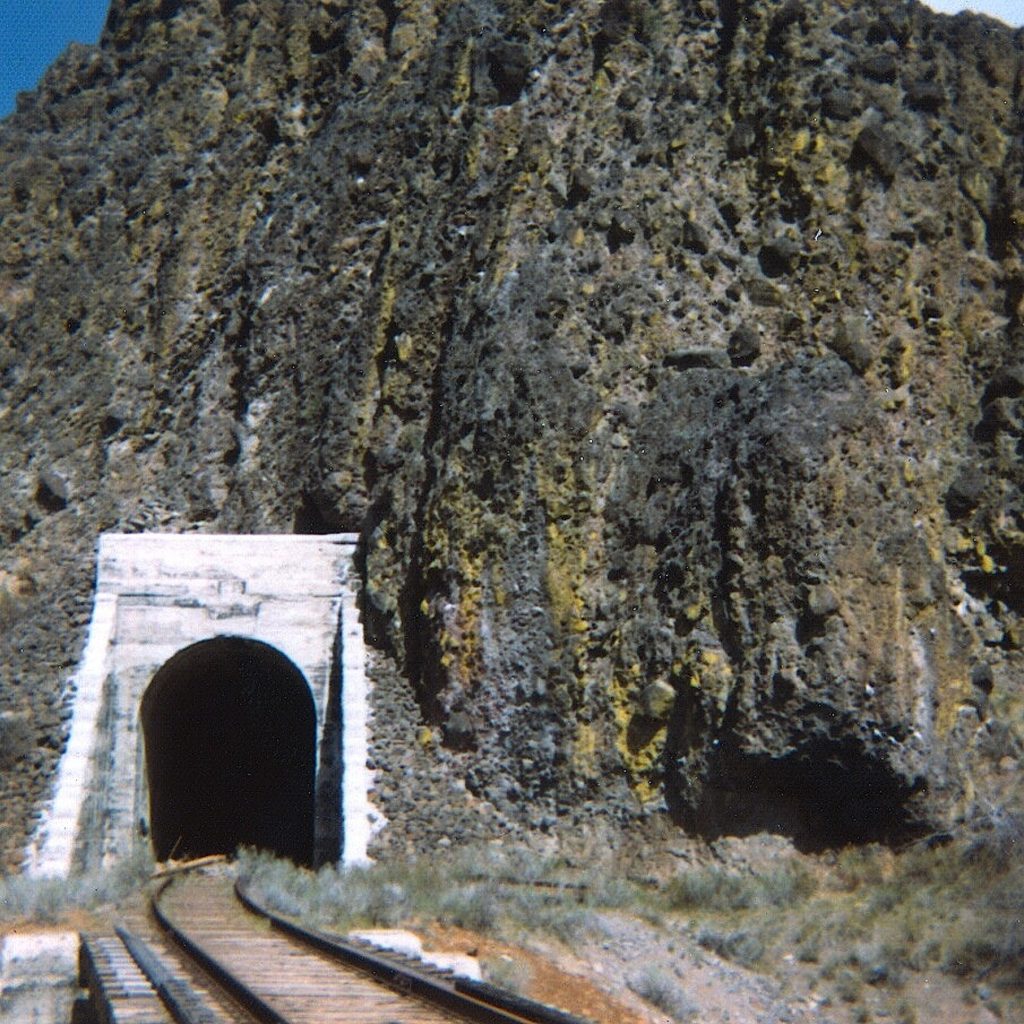
In 1976, after twenty years of non-use the Southern Pacific Railroad filed for the abandonment of its rail line between Susanville and Westwood. The City of Susanville and the Lassen County Board of Supervisors opposed the measure. They feared the loss of a potential transportation corridor. The Lassen County Chamber of Commerce wanted to see it converted into a tourist line, similar to that of Mendocino County’s Skunk Train.
Fast forward two years later and both the city and county embraced the Bureau of Land Management’s proposal to acquire the abandon line for recreational purposes. Thus, the rails to trails program, became part of the local lexicon.
The Minnesota Historical Society is a wonderful institution that is also the home to the T.B. Walker papers and archives of the Red River Lumber Company. On my last visit I ordered over 700 pages of documents. There are a lot of tidbits that unfortunately, I could not include in the Red River series. To do so, would have made for some awkward reading.
The T.B. Walker papers contains tremendous amount of correspondence between the family members. In T.B.’s correspondence there is a sense of frustration as he found himself in a Catch-22 situation. After all, the California operation was for his sons to operate on their own. While he provided his thoughts and opinions, most went largely ignored. In 1916, he lamented that mammoth mill at Westwood was a colossal mistake. It was his intention that Red River build several small mills throughout their vast timber holdings of Northern California.
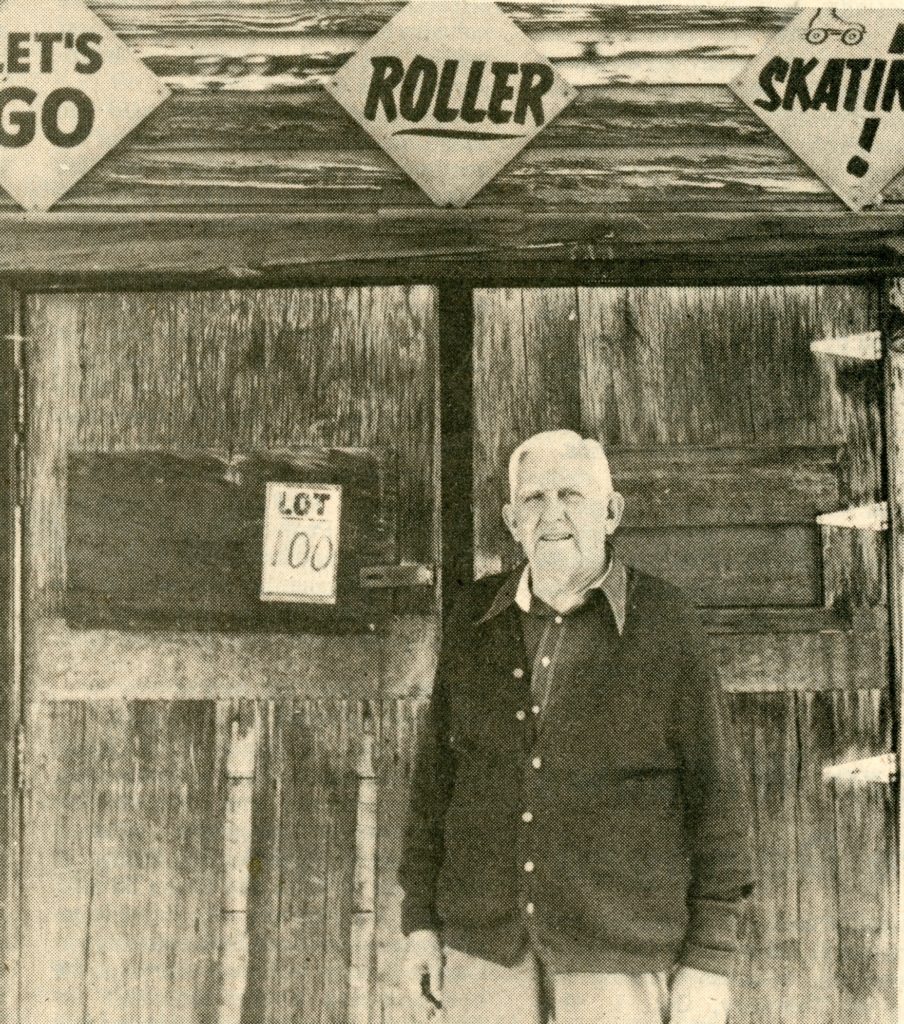
A long time fixture of Westwood was Charlie Monroe and his roller skating rink. Timing plays an important role in many events, being at the right time and right place makes a big difference. In the 1930s, Westwood’s Red River Lumber Company began divesting of assets to lease out operations they had done in the past. It was an effort to economize.
The Westwood Auditorium was built in 1920 at a cost of $20,000, the most expensive Red River public facility to date. It was used for multiple purposes. In 1937, Monroe leased the building from Red River. It was an oral agreement on day to day basis. Through successive ownership of Westwood, that agreement was honored. In the fall of 1976, Greater Westwood, Inc. owners of the property held a public auction, and the roller skating rink was one of them. It sold. After nearly forty years of operation the rink closed.
The December 1955 floods caused considerable damage to the railroad line between Susanville and Westwood. With the imminent closure of the lumber mill at Westwood, the Southern Pacific Railroad decided to close that segment, rather than spending significant amount of money when freight would decrease. Since they did not abandon the line at that time, if a person wanted to ship something by rail from Susanville to Westwood, or vice versa, Southern Pacific could only charge the freight costs between the two points. It was their problem to figure out how to deliver the freight and bear the additional cost. In 1976, Southern Pacific began the formal process to abandon that segment of the line, which we will explore in the near future.
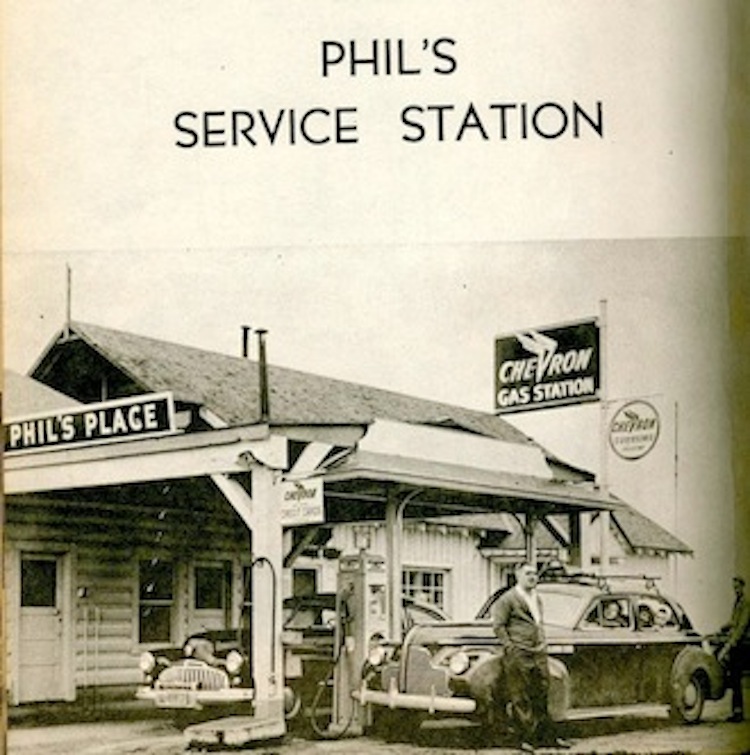
In 1976, Betty Pannell was the Westwood correspondent to the Lassen Advocate. She had a special feature entitled Yesteryear. The following is an excerpt of her interview with Lydia Schuldies, who with her husband operated a restaurant, bar, dancing floor and service station on Highway 36, near Goodrich Creek. Lydia recalls their place was not the only activity there, and now all that remains is the lone chimney.
“With the war and the advent of food stamps Lydia really had her hands full to run the restaurant at Phil’s. To arrange the menus as best as she could and for as long as possible. Then, when the food ran out, to close until she had more stamps. Lydia said she always tried to hire back the employees that had to be let off during these forced closures.
“There were many more buildings along the highway—next to Phil’s was a rooming house for the men working out there. Next to it an ice house with walls yay thick filled with sawdust for insulation to keep the ice. And back between the highway and Moonlight road was the airport. (This is where Cub Walker, one of Fletcher Walker’s son was killed in a plane accident.) On back in a beautiful spot on the meadow was the Home Ranch and during World War II when Victory—or vegetable gardens—were encouraged the Walkers set aside a good sized area for anyone to put in their own vegetables and the Walkers had a man to water it. Directly across the highway from Phil’s were the small house is, well that was the mess hall for the men. And there were was a dairy farm with big barns and the milk brought into Westwood by horse and wagon and sleigh.”
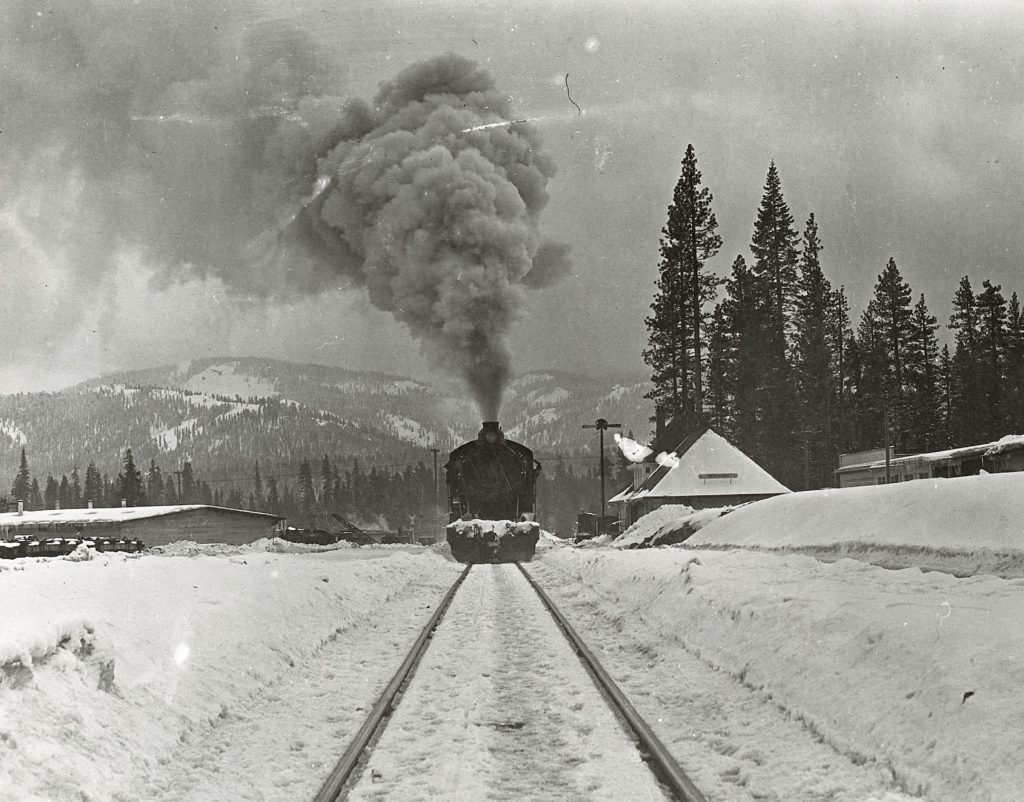
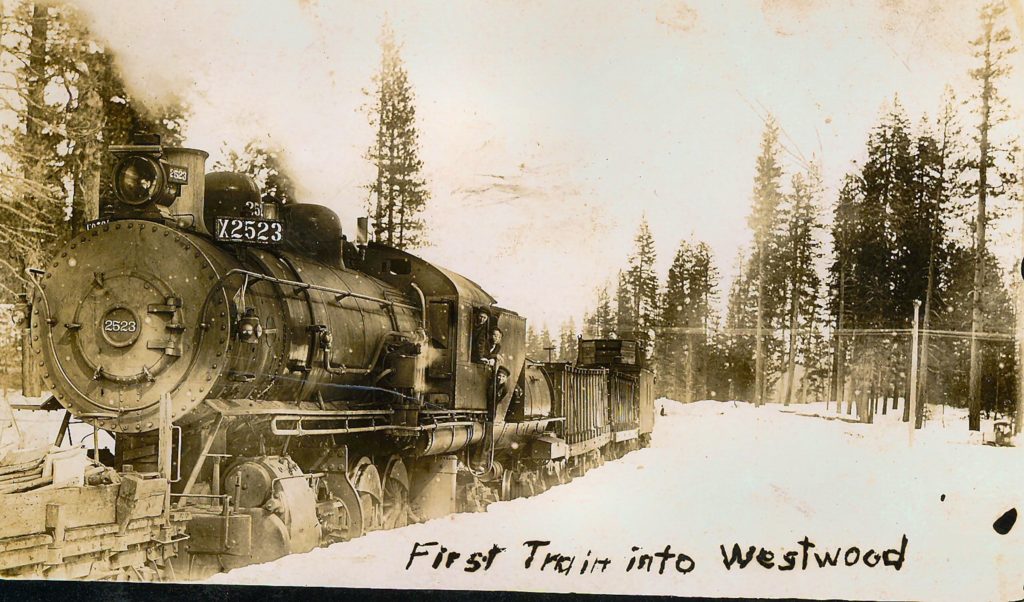
February 21, 1914In January 1912, the Red River Lumber Company entered into an agreement with the Southern Pacific to construct the 120-mile Fernley & Lassen Railroad. Time was of the essence as Red River had entered into an agreement with the Great Western Power Company to log Big Meadows by 1914 as it was to be transformed into a reservoir known as Lake Almanor. On February 21, 1914 the first train reached Westwood. It would not be until summer that the railroad was officially completed, as ballast work needed to be done. The abandoned railroad line is known today as the Bizz Johnson Trail.
Westwood High School, circa 1925. Courtesy of Hank MartinezOn February 19, 1927 the Westwood High School was destroyed by fire. Such events are news worthy. In this particular instance how the fire was contained was quite unusual.
It was one o’clock in the morning when the fire alarm was turned on. When the firefighters arrived they found the high school fully engulfed in flames. There was little they could do, as it was impossible to save it. They focused their efforts not only to contain it but also to keep it from spreading to the Grammar school located next door. The heat was so intense that it was impossible to enter the building to salvage its contents. Because of the extreme heat the houses across the street began to smolder as if they were going to spontaneously combust. An unusual firefighting technique was developed for this particular instant, and credit was given to Fletcher Walker for this ingenious idea. With the majority of the town gathered to watch the fire, Fletcher recruited citizens to start throwing snowballs at the endangered houses to prevent them from catching fire. It worked!
As Ted Walker recalled, “Fletcher assembled a large number of bystanders into a snow-ball brigade. This force bombarded the nearby houses with snowballs and succeeded in keeping the roofs and sides of the houses sufficiently damp so that the houses were saved. Shingles and sidings were afire many times, but in each case the blaze yielded to the snow-ball treatment.”
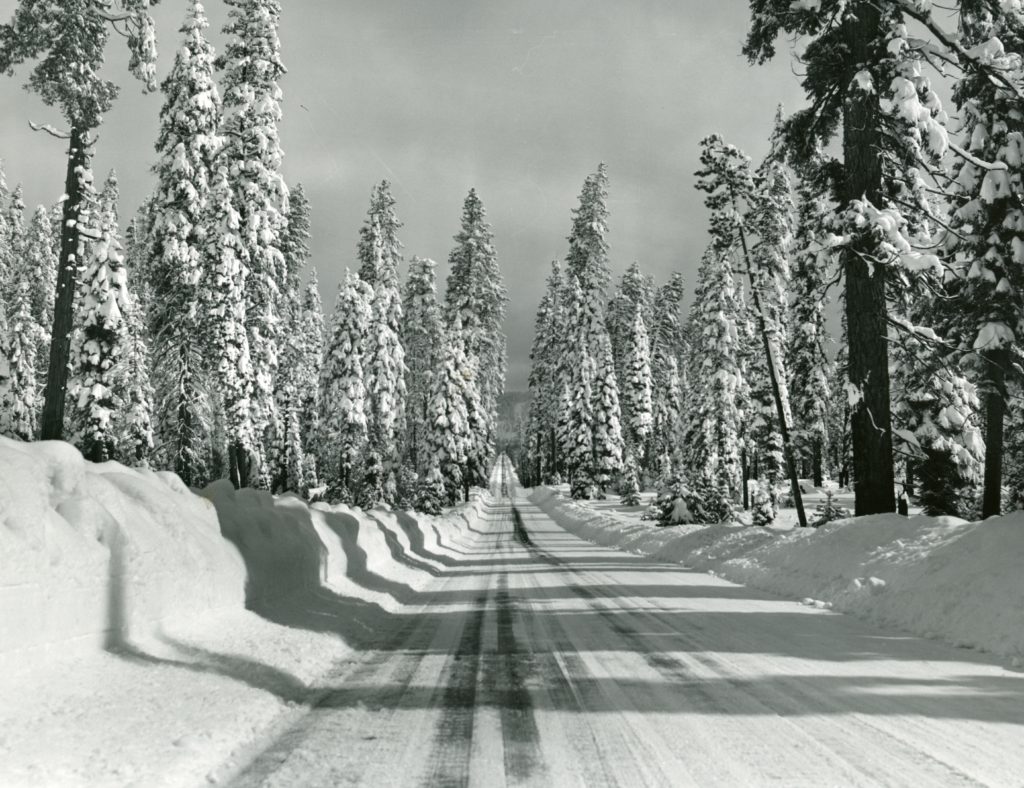
Highway 36 near Chester.
In the 1920s, the Westwood Auto Club was a force to be reckoned with. After all, it served as Red River Lumber Company’s de-facto chamber of commerce. The club had a lot of influence during the construction of Highway 36. They did have one item of contention with the state when the highway was completed. They did not the like the idea of being snowbound in the winter months and yearned for the day when the state would keep the highway open year round. In November 1928, the club wrote State Highway Engineer Comley to plead their case: “We believe that in asking for this we are justified as in previous years we have been snow-bound for at least four months each year, and as you realize that our work is more or less seasonal nature and that vacations are taken when work is slow or the woods closed down, it does not give us a chance to drive our cars to the section we most desire to spend our vacations and leisure time, and where our cars give us the pleasure that we desire. In addition to that phase of life we would use our cars to a very large extent to also pursue business, which would make this road available for that purpose.
“It is our earnest desire Mr. Comley that you study this problem further, and give it your earnest consideration and although there can be many points raised against the feasibility of is points in its favor should and we hope will predominate. The control of this road during storm periods would eliminate any hazard to lives and we agree that that has been our highest argument against opening the road.”
Comley concurred and understood the plight of not only the residents of Westwood, but all those located along the route who were shut out from winter storms. On the other hand, Comley informed the club there was little in his power he could do to rectify the situation. It was a matter for the State Highway Commission to determine and equally important how to finance the snow removal. The Auto Club’s persistence paid off, a year later the Commission informed the group that beginning in the winter of 1929-30 they would keep the highway open year round. After all, the Commission cited that nearly a million dollars had been spent to construct the highway, therefore it made no sense to have it closed during the winter months.
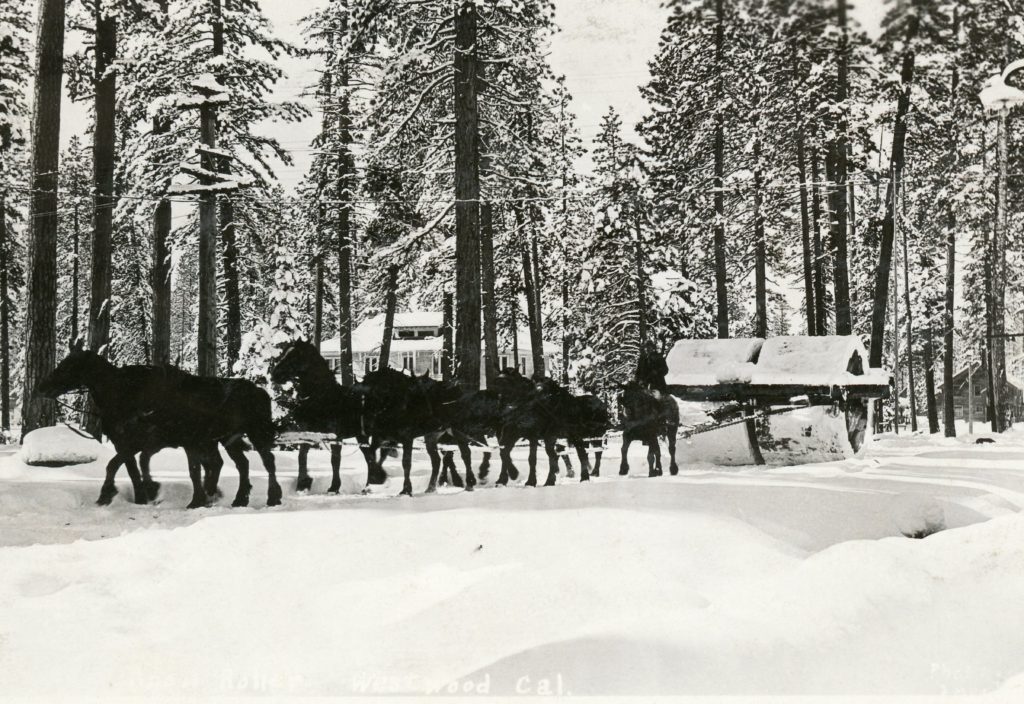
Red River’s snow roller in action. Courtesy of Calvin SharpOn January 2, 1916, it began to snow, and snow and snow for nearly three weeks. At Westwood it was reported that they fourteen feet of snow. Resident Manager, Fletcher Walker called it a “blue snow.” From this particular snowstorm, standard snow removal techniques of Westwood streets were no match to combat the deep snow. Someone came up with ingenuous idea to build a snow roller to compact the snow. The Westwood correspondent to the “Lassen Weekly Mail,” observed, “The immense snow roller is in successful operation on the streets. It leaves a compressed trail wide enough for teams to pass. Eight to twelve horses have been used to haul it through the streets and the affair makes an interesting ensemble.”
The Big Store, Westwood.By far one of the Westwood’s largest attractions was its company store. This was not your typical company store. Westwood would not have a so-called Main Street complete with a business district, but Fletcher was intrigued with the development of department stores in major cities. Adaptations, of course, were made for what worked in San Francisco or Minneapolis would not apply to Westwood.
Of course the building needed to be conveniently located. What better location than near the mill entrance and adjacent to the railroad depot. This store was dubbed the Big Store and during its evolution kept getting, bigger and bigger.
On Christmas Eve 1913, the Big Store opened its doors for business. The Plumas National provided the following description: “A complete butcher shop, a drug store, grocery department, men’s furnishings, women’s goods, hardware and shoe departments are all under special heads, each of whom is a specialist in his line. Nineteen men are employed in the store at the present time.”
In time, certain features in the original store would be relocated elsewhere such as offices, thus providing the Big Store with even more room to expand its merchandise. In February 1916, the Big Store got even bigger with another forty-foot addition. The facility could boast 73,125 square feet of retail space, with an additional 8,800 square feet utilized for offices and other purposes. It was the largest department store north of Sacramento.