Tag Archives: Westwood

The Westwood Riot

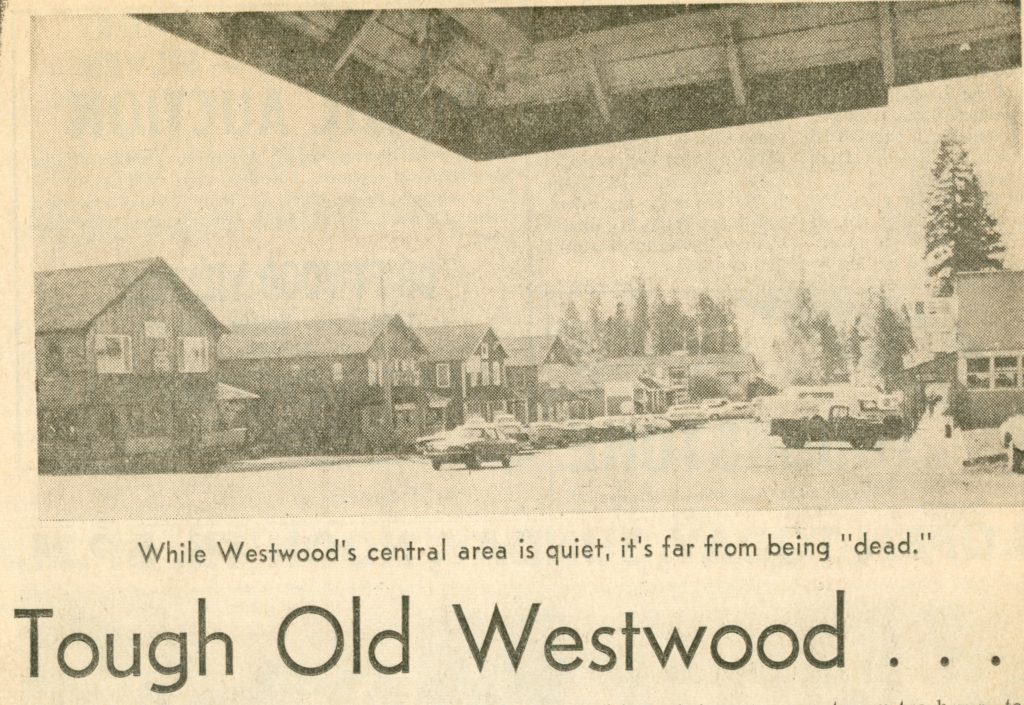
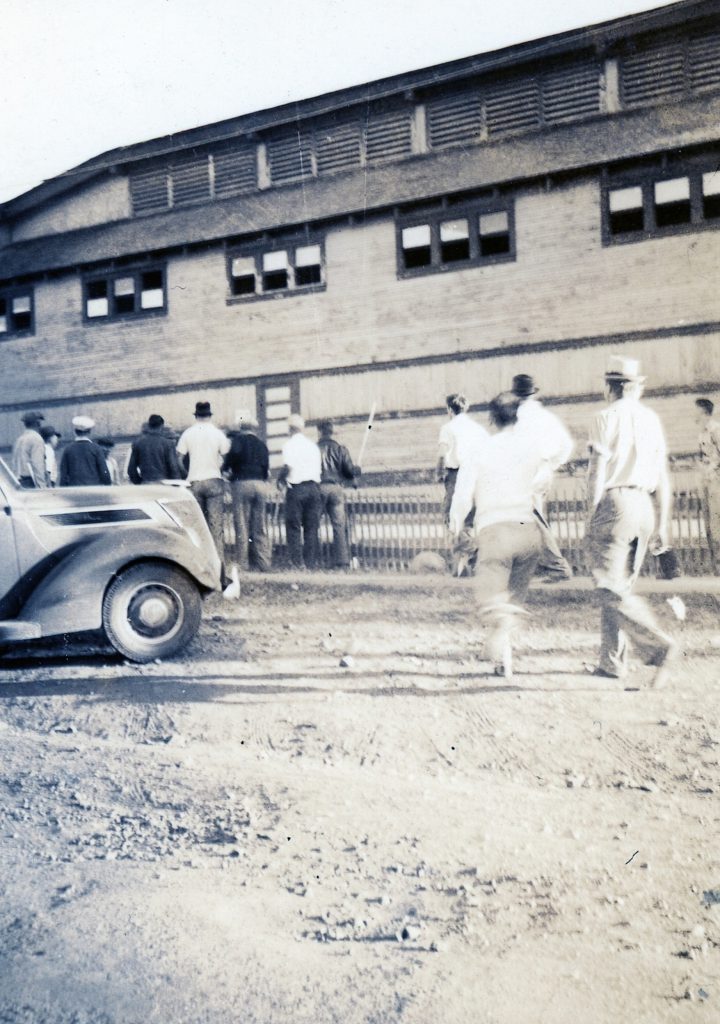
Fourth Street, Westwood, March 2, 1939. Courtesy of Bill Ashenhurst

The Red River Lumber Company faced many issues during the 1930s at its Westwood operation. Two major factors were finances and labor. Two labor unions were involved, first the Congress of Industrial Organizations (CIO) followed by the American Federation of Labor (AFL). Initially, the two groups appeared to be on the same page in demanding wage increases. By 1939, that was no longer the case, as there were friction between the two groups.

The anxiety between the two, especially the AFL, worsened while the men grew impatient from being idle during the weeks passing in February during a strike and blamed the whole situation on the CIO. It was just a matter of time when the situation would once again become volatile. What ignited the spark is not clear, though one account stated it started with an encounter between Marjorie Scott, wife of a CIO and Earlton Shannon, the business agent for the local AFL. Scott, according to one account, made some insult to Shannon in front of the post office and Shannon retaliated with some extreme vile and abusive language. He also advised her to get into the car with her companions for her well-being. So incendiary were his remarks that it warranted his arrest.

On March 2, 1939, a preliminary hearing concerning Shannon’s behavior was held in the Westwood Justice Court to determine whether there was sufficient evidence bind him over to the Superior Court for additional charges. After Judge J. M. Lamson adjourned the hearing is when the chaos began. The courtroom was crowded with spectators. After the adjournment, a fight broke out between Ben Nissen (CIO) and Riley McComas (AFL). From this other fights erupted; some fifty or more were reported and the crowd slowly worked their way down Ash Street, to the CIO headquarters next to the Westwood laundry.

To be continued tomorrow.
Exploring All Angles

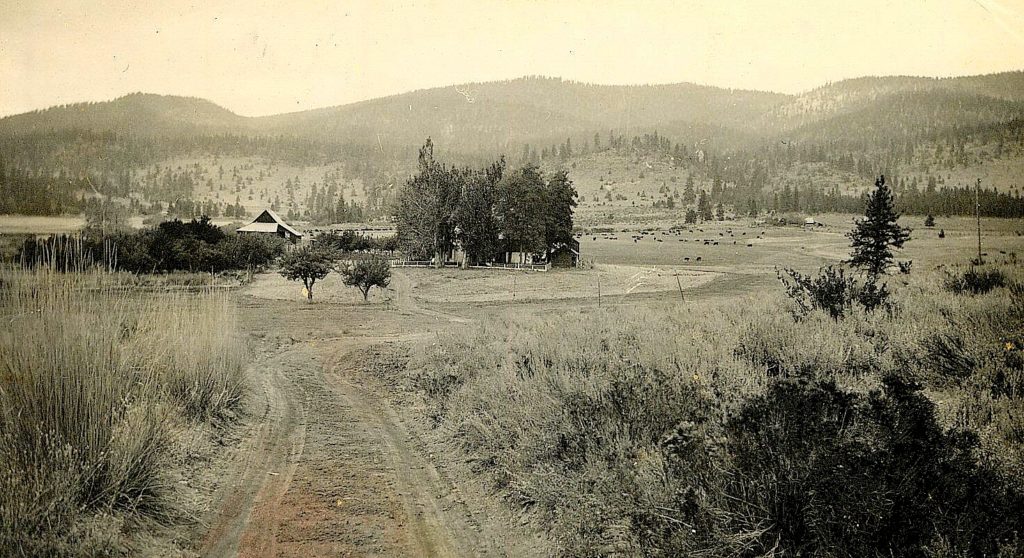
Known today as the Susanville Ranch Park, for many years it was the John T. Long Ranch.

In the spring of 1913 when the Red River Lumber Company was busy constructing the company town of Westwood, there was a lot of resistance to its location. As a matter of fact, Fletcher Walker was the only person that liked that site.

This, of course, greatly disturbed T.B. Walker, the family patriarch. After all, the California operation, was designed with the intent that it would be completely operated by his sons. In attempt to keep harmony in the family, T.B even scouted out several different locations while construction of Westwood was in full swing. One site in particular that caught his attention was the John T. Long Ranch just northwest of Susanville—known today as Susanville Ranch Park. One of the key componets for the site, was that it have an ample water supply.  T.B was not sure if Piute Creek and nearby Bagwell Springs would be sufficient. With that in mind, in a memo dated March 17, 1913 T.B wrote: “Water could be pumped from Gold Run, a distance of probably not more than three or four milles to reach our mill site. This was can be piped underground in wooden pipes banded with steel bands, that costs much less than iron pipes and stand a still greater pressure.”

Subscribe

Lassen Airplanes?

During World War I witnessed an increased demand for airplanes for the war effort—a first. The preferred wood was the Sitka spruce found along the coastal regions of Oregon and Washington. There were numerous problems associated with not a only a limited supply, but problems with labor unions in that region.

In January 1918, a representative from the war department arrived  in Westwood for purpose of selecting sugar and/or yellow pine timber for building a fleet of government airplanes. Early tests indicated that California pine was superior to Oregon fir for the purpose intended. The government official was to select 300,000 board feet of Lassen County timber to be processed by the Red River Lumber Company.  Whether this transpired, the record is not clear, due in part of the censorship of certain types of news during the War.

Donate

Paul Bunyan Statues

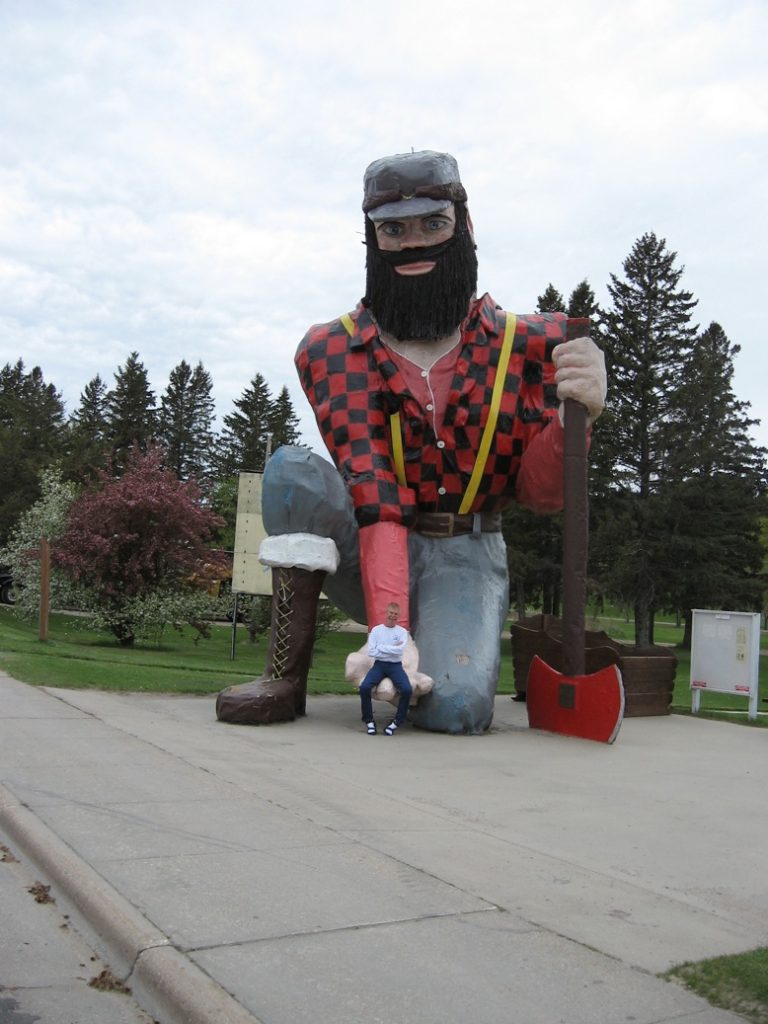
Akeley, Minnesota, 2007

Now, a part of American folklore is that of Paul Bunyan and Babe his Blue Ox. The story behind him, could possibly been lost to time from its origins in the logging camps in the Great Lakes region. It was William B. Laughead who brought Paul to life as part of Red River Lumber Company’s advertising campaign for its California expansion.

A variety of communities over time adopted the mythical lumberjack, and statues were erected in his honor. The first one constructed was at Bemidji, Minnesota in 1937. When I visited there, it was undergoing restoration.  My next stop after that on this research expedition was Akeley, Minnesota, the location of Red River’s last Minnesota mill. This quiet community is dominated by a Paul Bunyan statue. Of course, locally, Westwood would erect one, long after Red River was gone.

Subscribe

Lumberjack Advertising

Camp 33
Camp 33, Red River Lumber Company

Someone in the Red River Lumber Company was a good spin doctor.  When it came time for the seasonal layoffs of the logging crews it was reported as: “Men Leaving Camps Are Good Advertisers. Owing to the closing of several of the camps about 600 men have left Westwood. It is interesting to watch the different directions taken by these men on their departure. Some have gone to the extreme east, many to South America, some to Mexico, some to the north country, Washington state and some to Alaska. Most of the men intend to return and bring more fellow workers. As a rule men in the lumber camps have tried making a living in many parts of the world and these men boost it as good advertising for the company.”

Subscribe

Westwood Goes Wet

101 1941
The 101 as it appeared in 1941. Courtesy of Dina Matteucci

On November 19, 1935 T.S. Walker of the Red River Lumber Company announced the end of an era that Westwood be a “wet” town as a liquor store concession had been given to Aronson and Taylor.

In a prepared statement, “Heretofore we have aways tried to run a dry town. Before prohibition this practicable due to the distance to neighboring towns and deplorable conditions of the roads. During prohibition it was a relative simple matter for obvious reasons. Since repeal, however, it has been a different story. With fine pavement to neighboring towns, with various resorts operating not far from town and with the great number of automobiles, liquor has been and is readily to all who desire it, whether we like the situation or not.

“This being the case, the directors of the company have decided that it is useless to longer refuse to have liquor sold in Westwood. It is also felt that a better quality can be made to such employees as are determined to have it anyway than is now available from bootleg sources.”

The truth be known, Red River was losing money by not providing alcohol for sale, when they needed every cent during their financial crisis.

Subscribe

What Red River Meant to Lassen County

The Big Store, Westwood.

During the 1920s, Susanville’s two newspapers, Lassen Advocate and Lassen Mail published elaborate Christmas editions extolling the virtues of Lassen County.  Concerning what the lumber industry meant to Lassen County, the Lassen Advocate provided this profile of the Red River Lumber Company in 1921: Continue reading What Red River Meant to Lassen County

Winter Donkey Logging

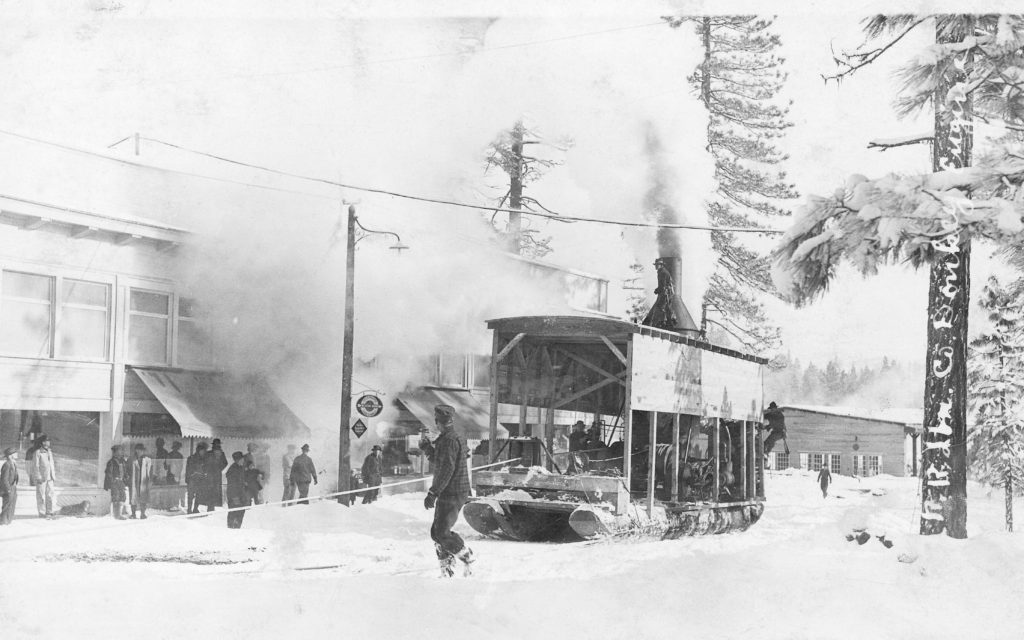
A steam donkey being pulled through Westwood, 1916.

Fletcher Walker, who was the resident manager at Westwood for the Red River Lumber Company, was an interesting individual just like the other Walker siblings.  It should be duly noted, that Westwood was Fletcher’s creation and during the early years operation did not handle criticism very well—especially when it came from family members.

First of all, there would be major learning curve as to what worked in Akeley, Minnesota, and what would not work in Westwood, California. Fletcher initially wanted year-round logging in California, while other companies shut down their operations by November.  It was Fletcher’s contention they would be ahead of their competitors operating winter logging operations—it would take some time for him to yield because his proposition was not only expensive, and not justifiable. However, from the late teens during the early 1920s, he demanded an early start of spring logging beginning by February and that the steam donkey’s necessary for the operations be mobilized. By the end of that decade it was no longer necessary, as motorized tractors replaced the “donkeys” and Fletcher finally succumbed the hard way that his competitors were right.

Subscribe


A bit of Westwood Trivia

Westwood 1915
Westwood 1915

While some are aware that on September 10, 1912, marked the cutting down of the first ceremonial tree by Clinton Walker and W.B. Carlin on what would be site of Westwood. On the surface, it seemed like a jubilant occasion. However, unbeknowst to the outside world was the Walker family feud, and the location of Westwood, was one of many issues at hand. Patriarch T.B. Walker was caught in a dilemma. After all, it was his dream that the California operations were to be run entirely on their own, hoping they would achieve the same success he did when he founded the Red River Lumber Company in Minnesota. While tempers flared an ambitious building program was implemented. On July1, 1913 some 450 buildings had constructed in this new town in the wilderness.

Subscribe