Tag Archives: Weather

Big Snows of Yesteryears

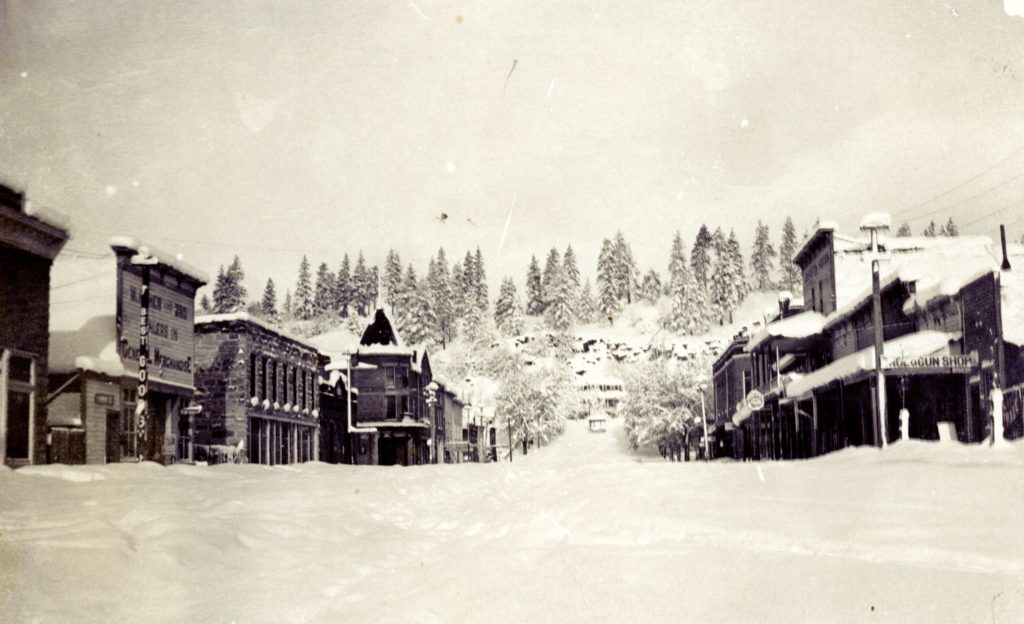
Main Street, Susanville, January, 1907

Personally, this latest storm was over-hyped for the region. Some forecasts called for feet of snow, but in reality it was inches. Anyhow, lets examine some big storms that occurred several years apart.

1911- On January 13 there was three foot of snow in Susanville, but the big snow still had not hit. Then it really began to snow. Six days later the storm finally ceased, five feet of snow had fallen and the depth on the ground now reached eight feet! In January 116 inches of snow had fell in Susanville, with a total precipitation of 11.59 inches.

Construction of the Fernley & Lassen Railroad, west of Susanville, January 1914. Courtesy of B.R. Zimmerman Collection

1914 – In January was another repeat of 1911. Susanville once again had eight feet of snowfall. This, of course, did not stop the railroad construction crew between Susanville and Westwood.

1916 – On New Year’s Day a snowstorm hit Susanville and dropped four feet of snow in two days.  For the month Susanville received nine and a half feet of snow for the month of January. When it was not snowing it was bitter cold. On January 30 the temperature dropped to minus fourteen below zero.
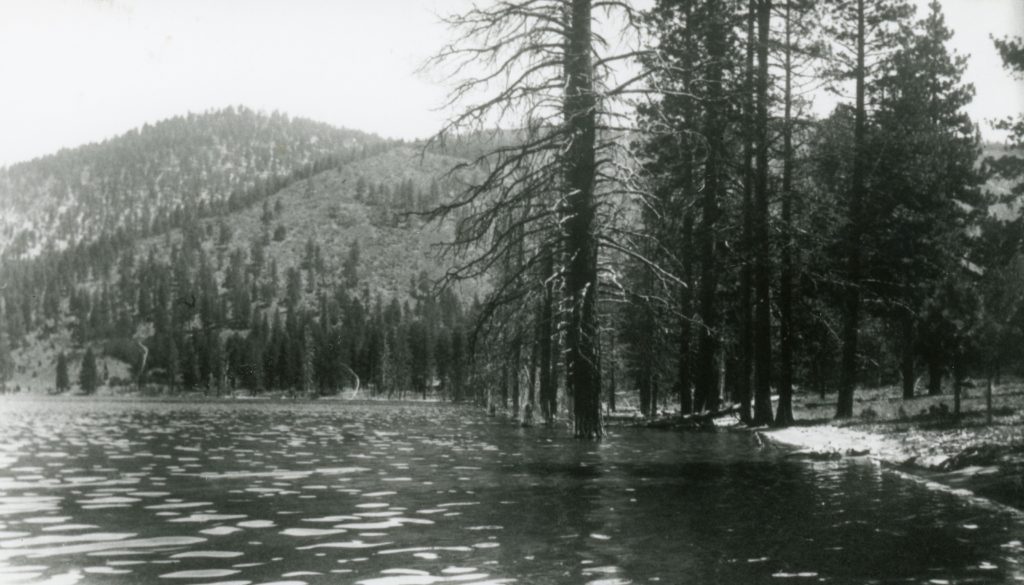
Gallatin Beach and Peak, 1916. Courtesy of Wyn Wachhorst

Eagle Lake was a beneficiary of these wet winters. In 1917, the lake reached its highest recorded water level.

Subscribe
 

Did Old Man Winter Retire?

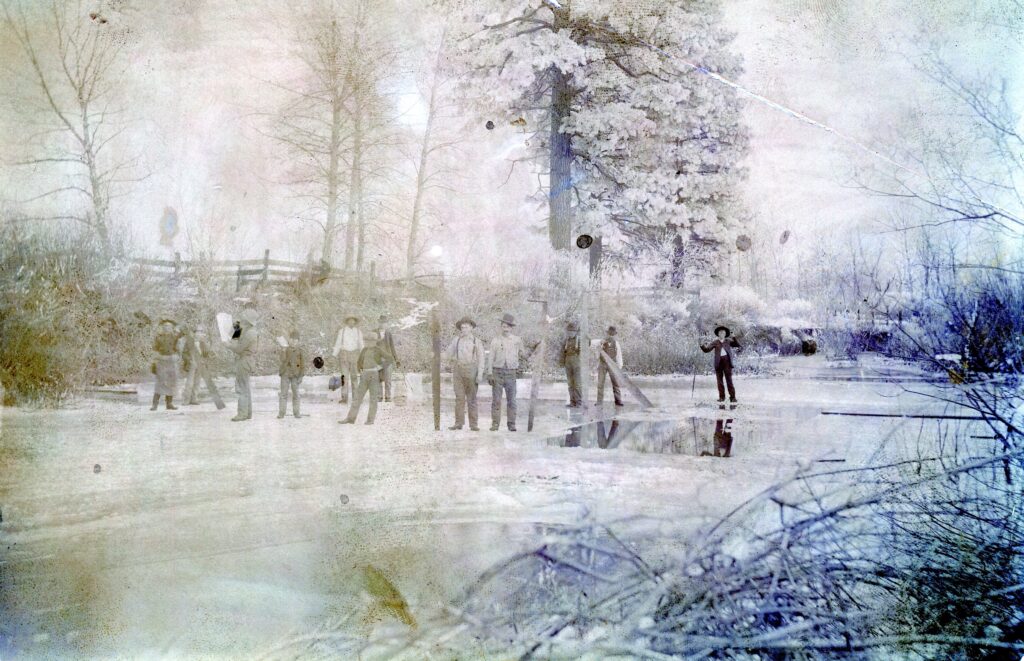
Ice Harvesting on the Susan River, early 1900s—Philip S. Hall

Yesterday’s post was about the Westwood frozen millpond when temperatures dropped to -30. Below zero temperatures used to occur on a regular basis during the winter months in this part of California. Over a century ago, it was an important fact of life, as the frigid temperatures were needed. The following is from an old post that explains why:

Ice Harvesting
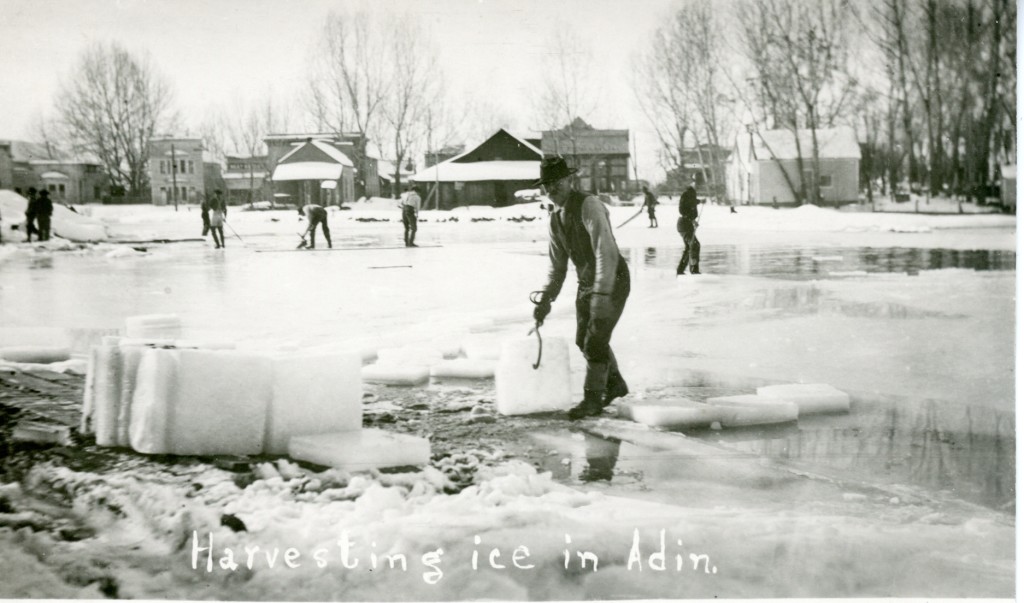
Ice harvesting at Adin, 1911

Way before the day of refrigeration, in colder climates ice was harvested, whether from a stream, pond or lake. Though by the 1920s, the practice slowly began to fade away with the advent of refrigeration.  Locally, ice was harvested from the Susan River, and two focal points were the Bremner dam in the Susan River canyon and the other at Dawson dam near Johnstonville that provided power for the Lassen Flour Mill. Roy Sifford, born in 1893 and raised in Susanville, recounts in his memoirs that in 1910: “I hauled ice from the ponds at Johnstonville to the stores and bars in Susanville–$2.00 a load delivered. In twelve hours I could haul four loads receiving $8.00 a day, paid in cash!”

Tim

It Was Cold in 1949

Dynamiting the Westwood millpond, January 27, 1949. Courtesy of Fruit Growers Supply Company

In January 1949, the temperatures plummeted to nearly thirty degrees below zero at Westwood. The millpond there froze. When Red River designed the facility, they placed piping from the powerhouse that forced steam air directly into the millpond near the sawmill. This system was no match for Mother Nature. To keep the mill operating it was necessary to use dynamite to blast loose the logs in the millpond. Continue reading It Was Cold in 1949

Is It Going to be a Pogonip Winter?

fog
A pogonip as seen from Antelope Grade

Since we have had a taste of fog lately, is there more to come? Late December can be notorious, partially.  due to short. daylight hours and valley inversions.

In 1859 residents of the Honey Lake Valley experienced one of the most dreaded winter weather conditions, a pogonip—the Indians term for an ice fog. The term loosely translates into “white death,” for many Indians caught pneumonia and died. This fog settles in the mountain valleys. One can ascend a few hundred feet above the valley floor, bask in sunny temperatures and overlook a sea of clouds. Pogonips vary in severity. A mild one will consist of persistent endless fog with sub-freezing temperatures. The worst variety is when it turns into a literal ice fog, coating everything. The first day can be spectacular with ice crystal formations on everything. After several successive days of those bone chilling temperatures, it quickly loses its appeal. The pogonip of 1859 was one of severest on record. The heavy cold fog lasted six weeks. So much frost accumulated on the grasses that cattle could not eat it. In addition, since the first settlers had been accustomed to mild winters, very little hay was put up, and a great many cattle starved to death that winter.

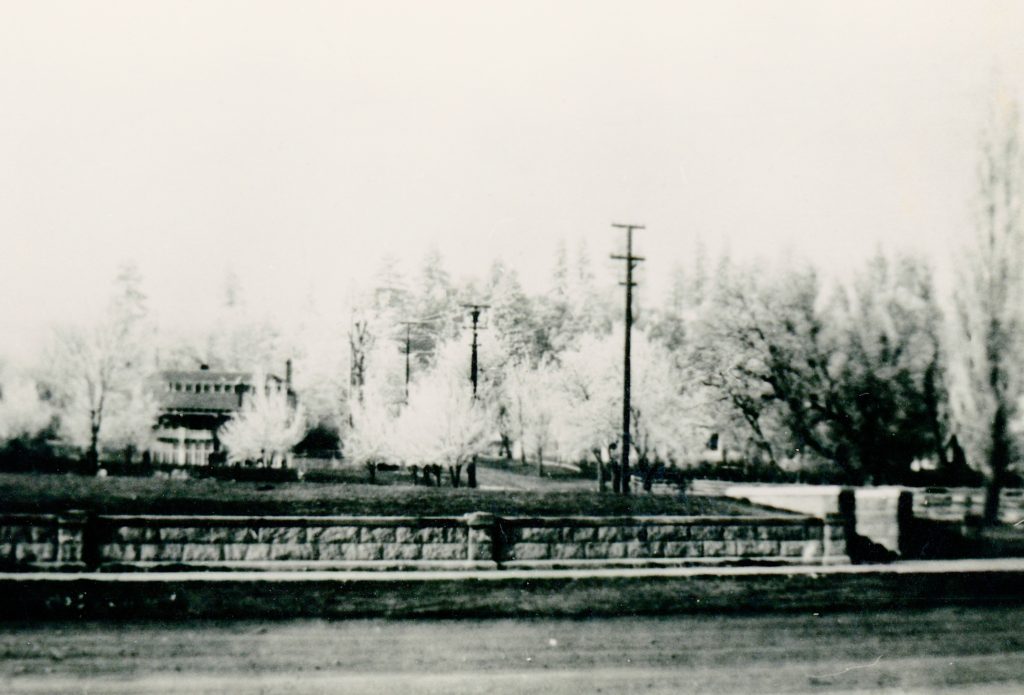
A 1920 pogonip scene on the north side of the Lassen County Courthouse.

Never miss a story, click here.

It Is a New Water Year

The McDow residence at the intersection of Lassen and Cottage Streets, January 1911.

Today marks a new water year. Historically, it was done on a calendar year. Some organizations still do a fiscal year July 1 to June 30. According to California Water Watch Susanville received 23.12 inches of precipitation from October 1 to September 30.*That is the official measurement taken at the Susanville Airport. However, precipitation totals are greater the further south along the base of Diamond Mountain, This holds true, as well, at the west end of Susanville. On the other hand, further to east such as the Standish district the amount of precipitation is substantially less.

According to California Water Watch 16.33”’ is the average. A historic high of 31.32” and a low of 6.82”.

Tim

*Due to yesterday’s storm, the figure may be higher.

Those Summer Cloudbursts

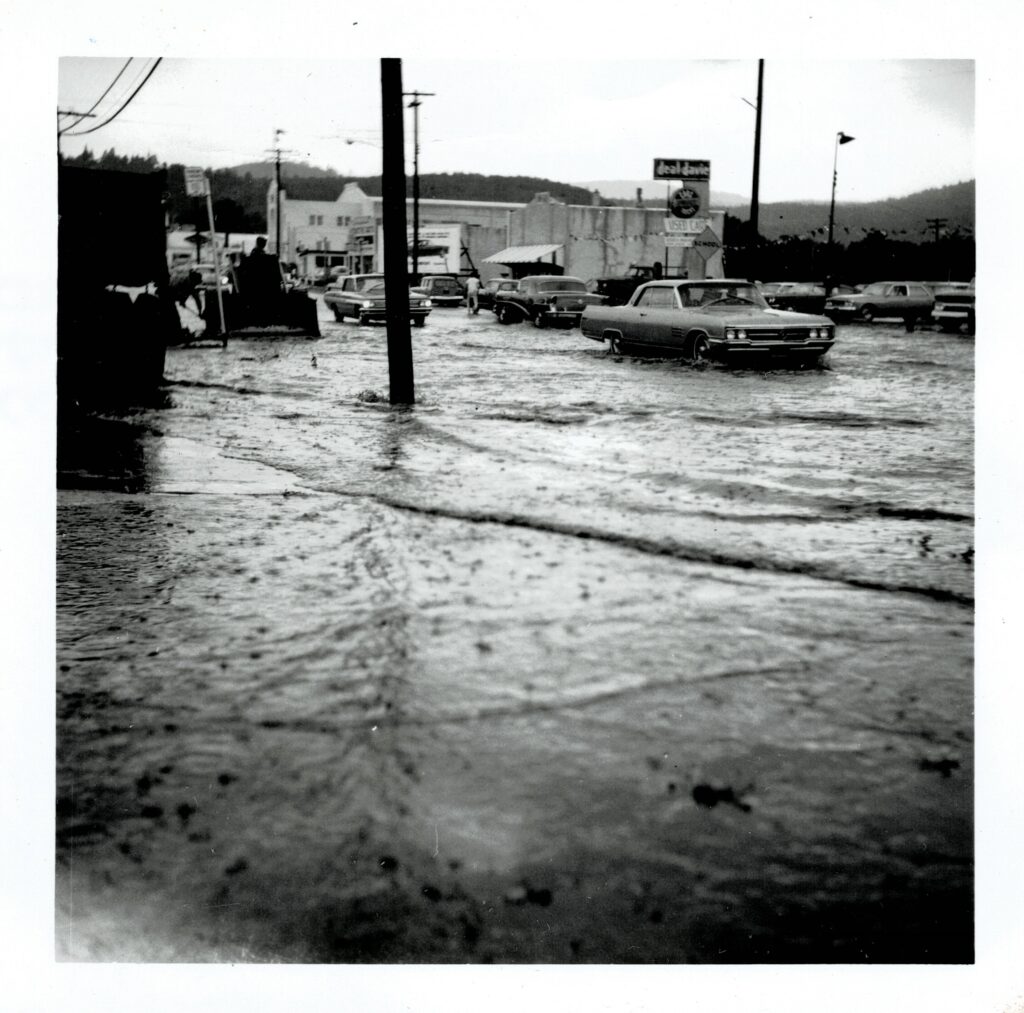
Main Street near Grand Avenue, Susanville, July 16, 1963—Calvin Farris

Some years these cloudbursts are more frequent than others, just like every winter is different. A particular cloudburst of July 16, 1963 was recorded by Susanville resident George Farris. On that afternoon, as Farris duly noted three inches of rain fell upon Susanville in a one hour period. Thankfully, George was a good record keeper. Up until 1969, weather records were duly noted, high, low and precipitation at the Lassen County Courthouse. When George’s son, Calvin, sent me the scanned photograph, I went to those weather county weather logs, only to find that whoever was on duty to record the same, there was a two week gap. However, on July 28, 1963, the Lassen Advocate newspaper reported George’s findings and published the above photogaph.

Tim

March Weather Madness, 1907

The Susan River near Johnstonville, just before the bridge floated away—G.L.Morrrill

Note: This originally appeared on March 17, 2021. I thought with the latest weather predictions, will we see some kind of repeat of March 1907.

March 1907 was no doubt one of the wettest on record.The storms were widespread across Northern California, practically turning the Sacramento Valley into one vast lake. After all there no reservoirs such as Oroville and Shasta to retain some of the flood waters.

On March 16, 1907 it began to rain in the Honey Lake Valley. It was one continuous downpour and after 96 hours eight inches of rain drenched the region. Tremendous flooding was to be found everywhere. The majority of the bridges were either washed out or so severely damaged they were unsafe to cross. However, a lot of property damage was minimal. F. Peissker of Susanville suffered one of the biggest casualties. He was located on Richmond Road near the Susan River and the flood waters swept away some 100 cords of firewood, which was how he made his living.

The respite from the wet weather was brief. Two days later it began to snow. By March 22, forty inches of heavy wet snow blanketed Susanville. Travel was brought to a complete standstill. It took a two-horse team seven hours to haul mail one-way from Janesville to Susanville.

In all, some 13 inches of precipitation was recorded that month.

Support

A Frozen Eagle Lake, 1921

Eagle Lake, 1921—Lola L. Tanner

It has been an interesting winter so far, with the first snowfall on November 7. December provided lots of snow, followed with rain, and then very cold temperatures to freeze the whole lot in a frozen zone.

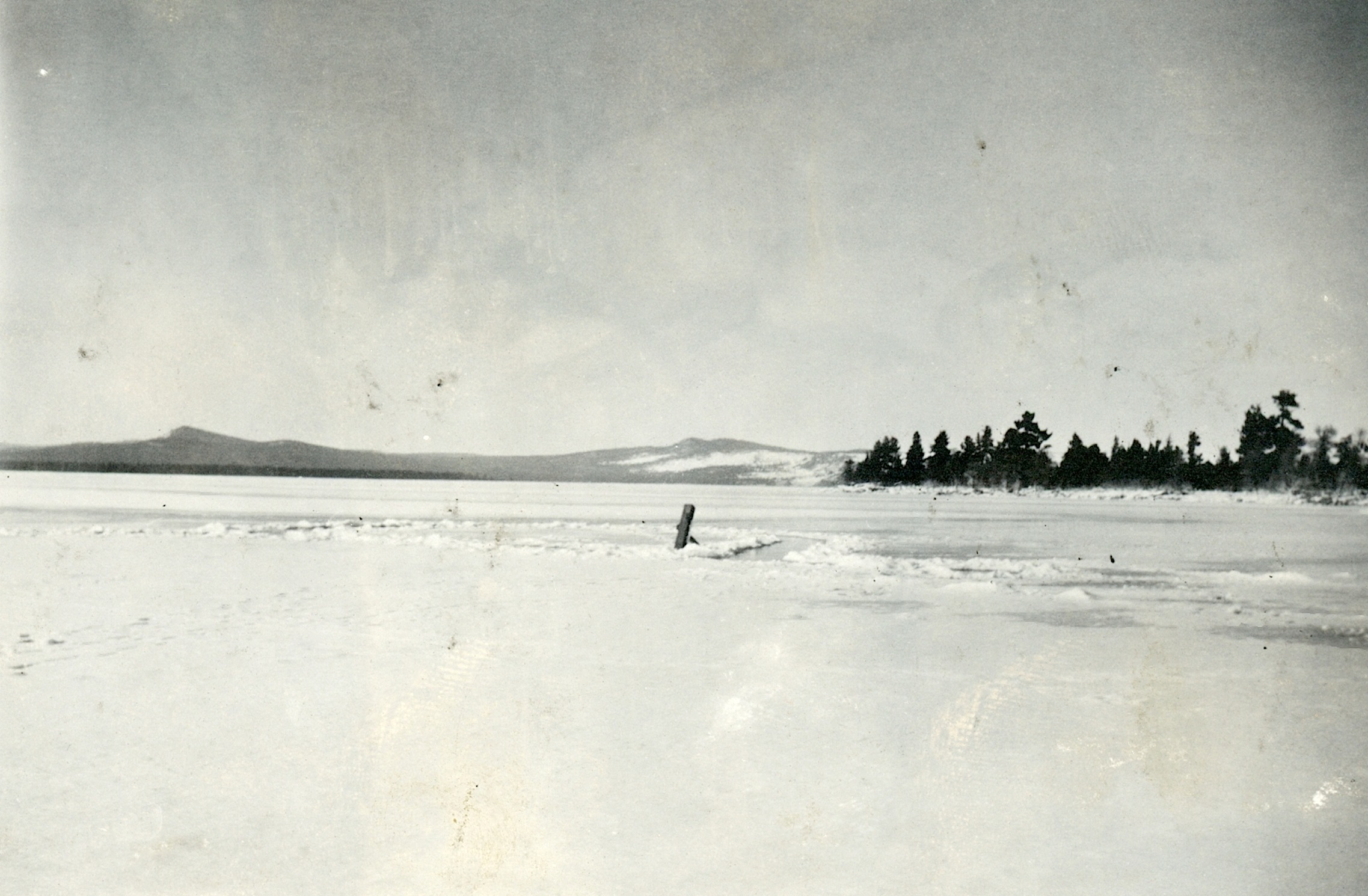
While, I am slowly getting around to scan old photographs for Tuesdays, the above was one of the first. Since Eagle Lake was still at its historic high level, it had to be darn cold for the lake to freeze over when the above was taken in December 1921.

Tim

How Wet Will It Get?

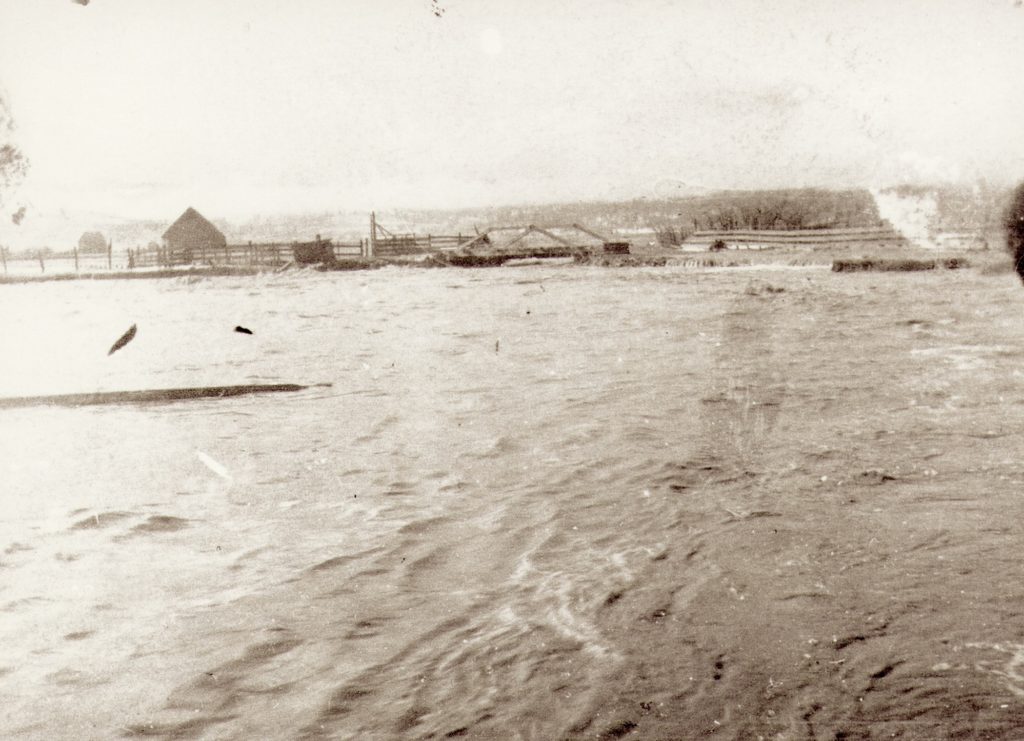
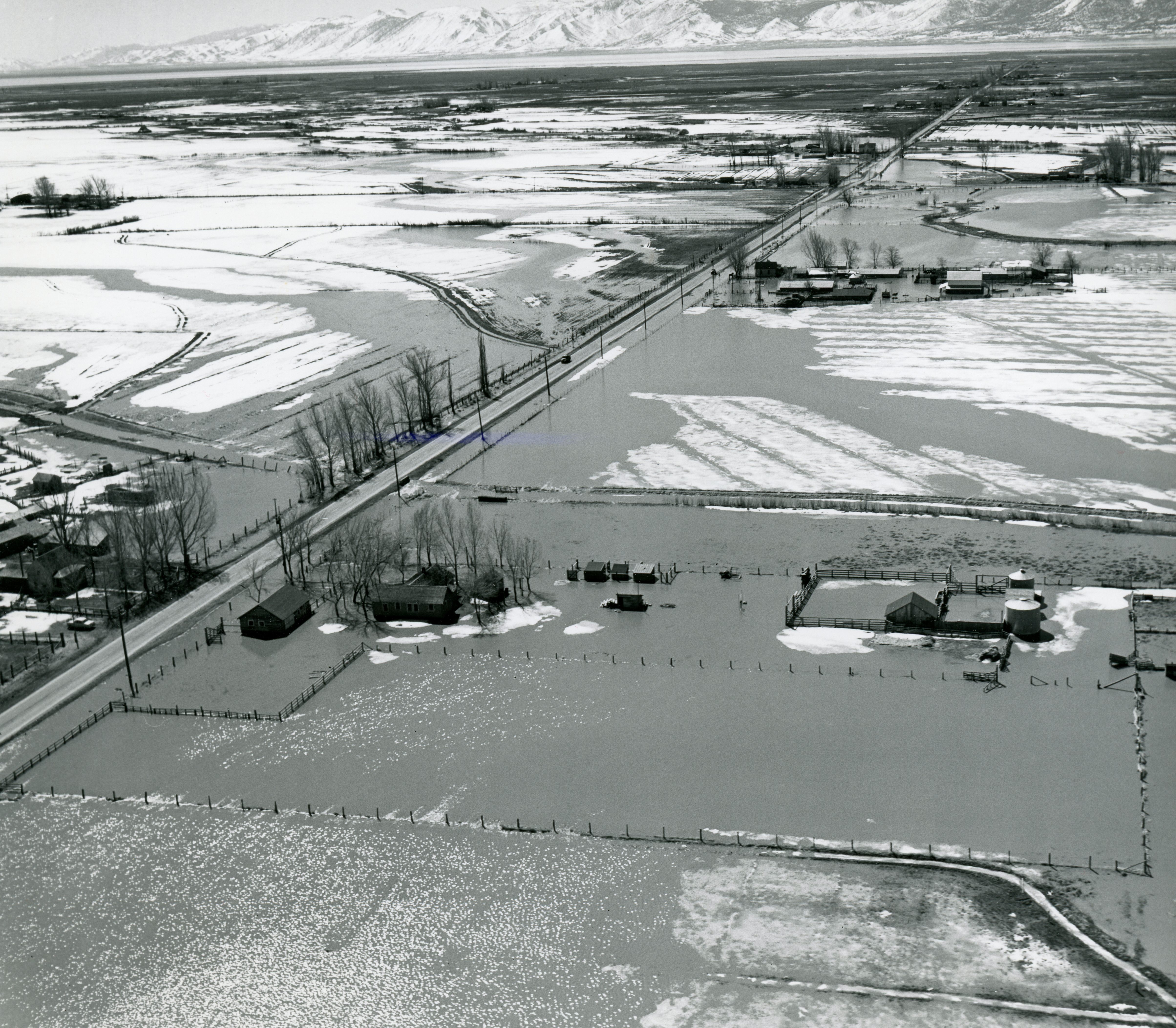
Flooding near Standish, 1952. Courtesy of Betty Barry Deal

If anyone has resided in California for any length of time, it is known for its extreme weather patterns. The winter of 1861-62, is one for the record books, which some in meteorological circles refer it to “The  Ark”.  There is a reason why, as California has not experienced anything like it since. It was reported that the Sacramento/San Joaquin Valleys were transferred into a vast lake. It should be noted that the floods of March 1907 did the same thing to the the Sacramento Valley.

As to the winter of 1861-62, locally we are thankful, for the A.L. Tunison diaries to provide a glimpse of what happened and also regionally.

By the end of November 1861 there was a foot of snow in the Honey Lake Valley. Then on December 8 and 9, heavy rains occurred. On December 18, 1861 Tunison receives news of flood damage elsewhere and writes, “Good flood in Sacramento Valley. Water 15 feet deep in Sacramento City. Boats run on Main Street in Marysville. Great many cattle lost. Slide on Sierra Nevada Mountain at Washoe covered up a quartz mill, injured two men, killed another. Two bridges gone on the Truckee River.” Continue reading How Wet Will It Get?

Some Interesting Historic Weather Data

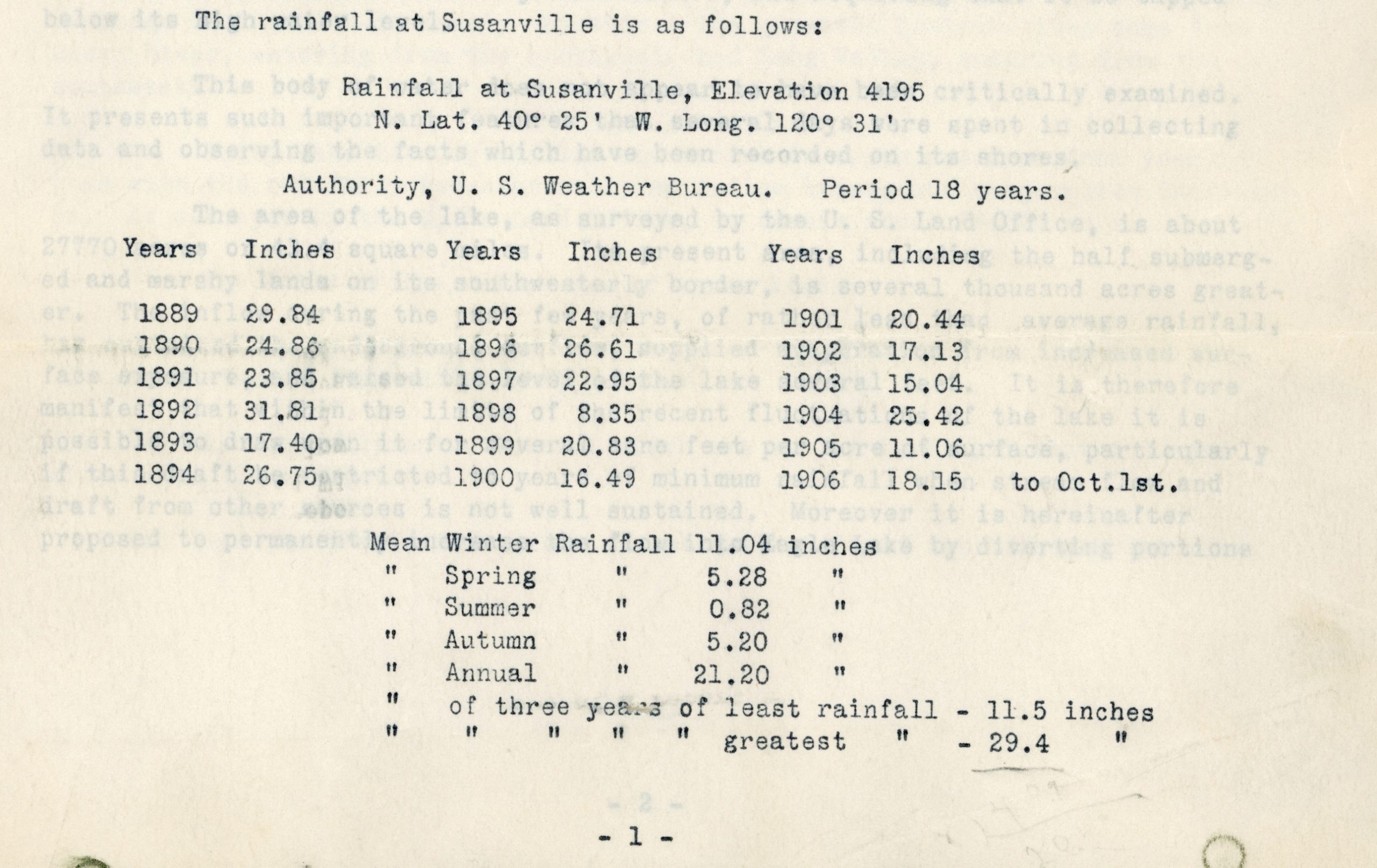
Since we are approaching winter, I thought the above illustration may be of interest to some. What I found of interest, was half of the precipitation occurred in the spring and fall. The additional rainfall in the spring is beneficial for crops, while in the fall is equally important to add needed moisture to the ground before the soil freezes when winter sets in.

Tim