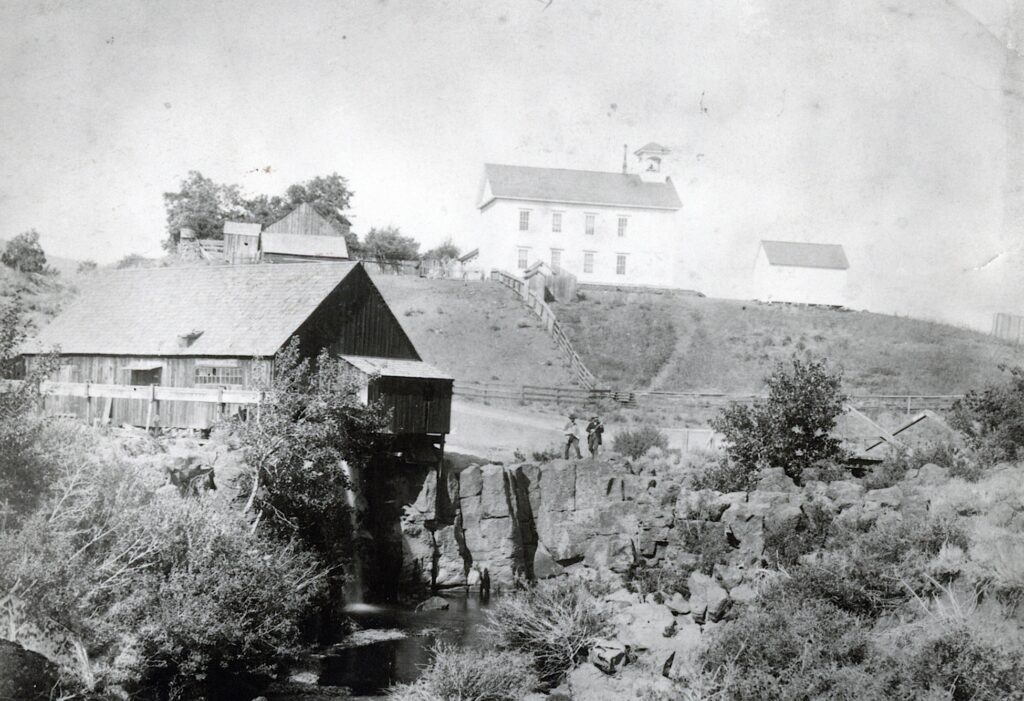
Arnold Planing Mill, 1878-Courtesy of Marge Hansen
Some man made landmarks stand the test of time, others do not. The other category usually consist of one three factors: 1) Demolish in order to modernize 2) Abandoned and deteriorate and 3) Fire, whether accidental or arson.
Arnold Planing Mill, circa 1905. Courtesy of Philip S. Hall
Built in 1873, the Arnold Planing Mil was the first of its kind in Susanville. Located adjacent to the Richmond Road, and perched upon a small cliff on the Susan River, it ws a favorite scene for photographers. On August 6, 1914, at approximately two in the morning, the residents of Susanville were awakened from their slumber by alarm of fire. The Arnold mill had caught fire. Due to the mill’s location on the edge of the fire district, little could be done to save it or the adjoining lumber yard. It was a severe blow to Leroy Arnold, the owner. His loss estimated at $10,000, and was not covered by insurance. The cause was never determined, but it was believed a hobo had slept there. He built a fire for a meal, and never extinguished it.
1405 Main Street, Susanville—Courtesy of George Sargent
In July 1925, Harry Riddell began construction of a home on the northeast corner of Main and Grand. The estimated cost was $8,000, a very expensive residence at that time. Instead of hiring a contractor, Riddell used day laborers to construct the house in various phases. The first item of business before actually construction of the house, was the building of a curved cement retaining wall.
In August 1938 Steve and Helen Sargent, proprietors of the Grand Cafe purchased the Riddell home. After some minor remodeling the family moved in on September 1, 1938. The home still remains in the Sargent family.
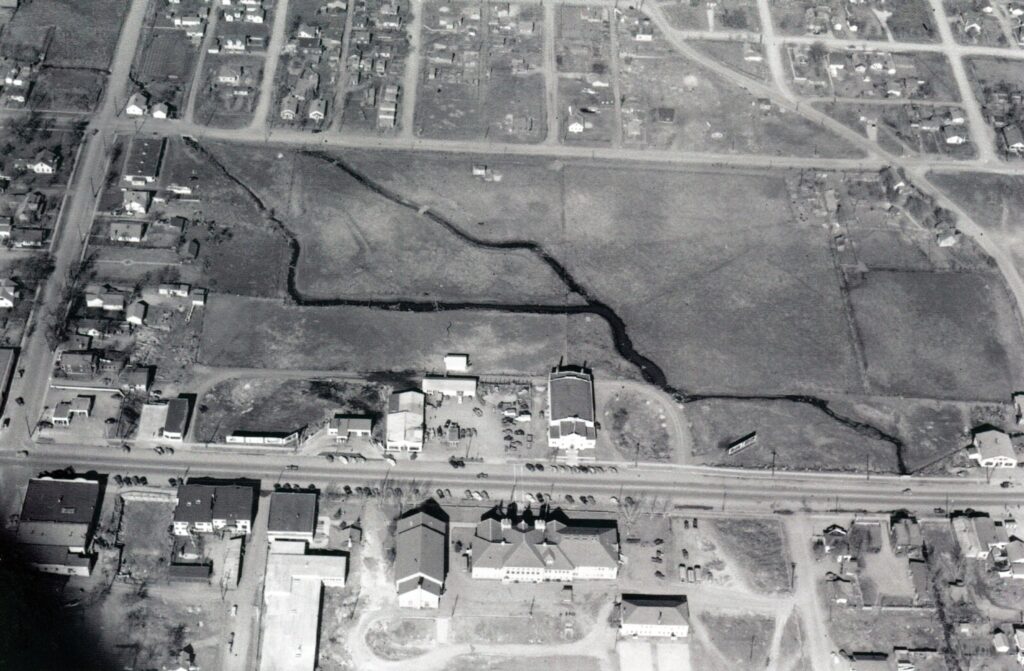
Folsom/Houghton property, 1946–Special Collections, U.C. Davis
As there has been so much local chatter going around about the recent destruction of Susanville Memorial Park Grandstand, here is some history about the property before it became a park.
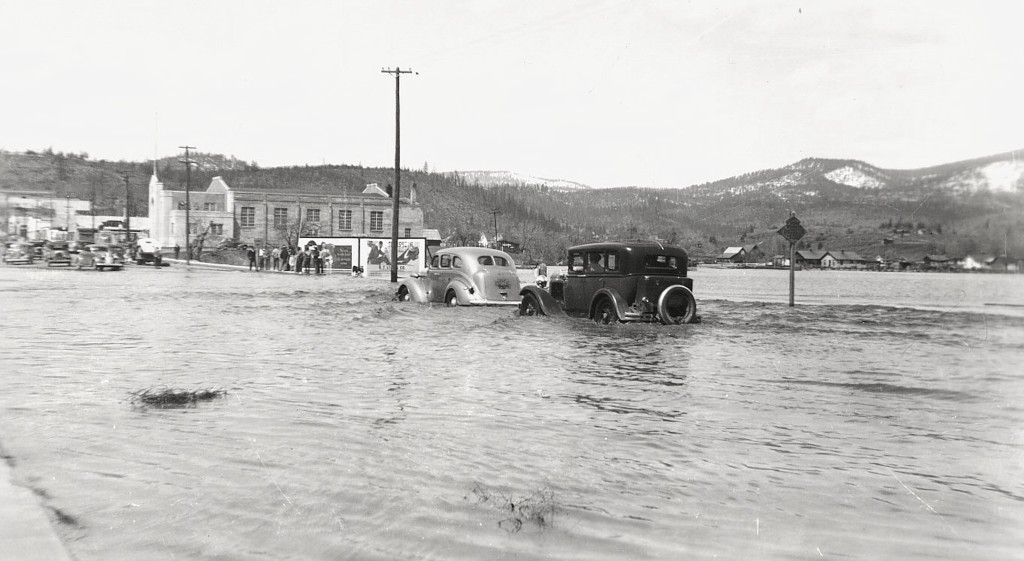
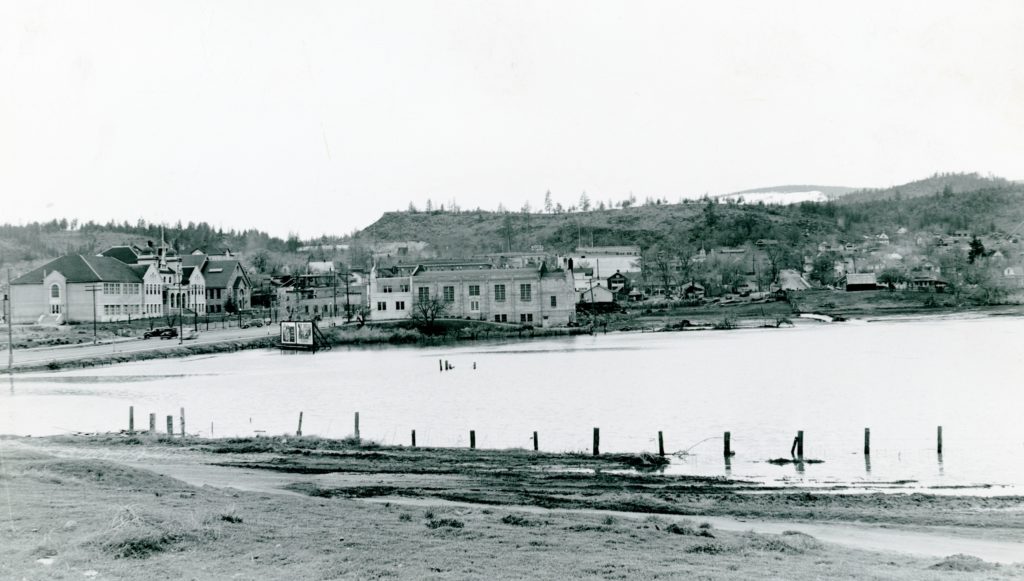
In 1909, Cyril “Cy” Houghton arrived in Lassen County. After the establishment of Westwood, Cy went work for the Red River Lumber Company. In 1934, Cy, along his wife Eleanor and their family opened a dairy which, is now Susanville’s Memorial Park. In 1938, the dairy received extensive damage from the Piute Creek flood. At one point, he considered abandoning the dairy, but changed his mind. In 1942, Cy’s dairy closed for business. He put the property up for sale, asking price $7,000.
Piute Creek flood of April 9, 1938. Courtesy of Margaret A. Purdy
Not one to be idle, Cy later when went to work for Sierra Army Depot at Herlong and retired from that place in 1957.
Another view. Most people know this site today as Susanville Supermarket. Courtesy of Betty Barry Deal
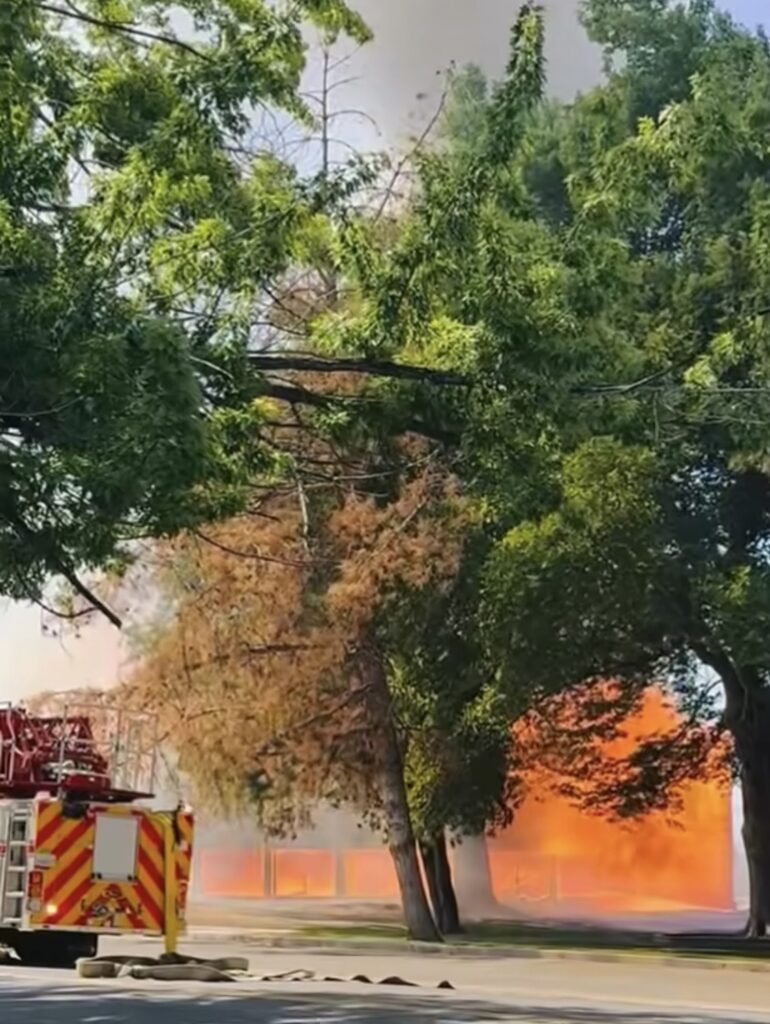
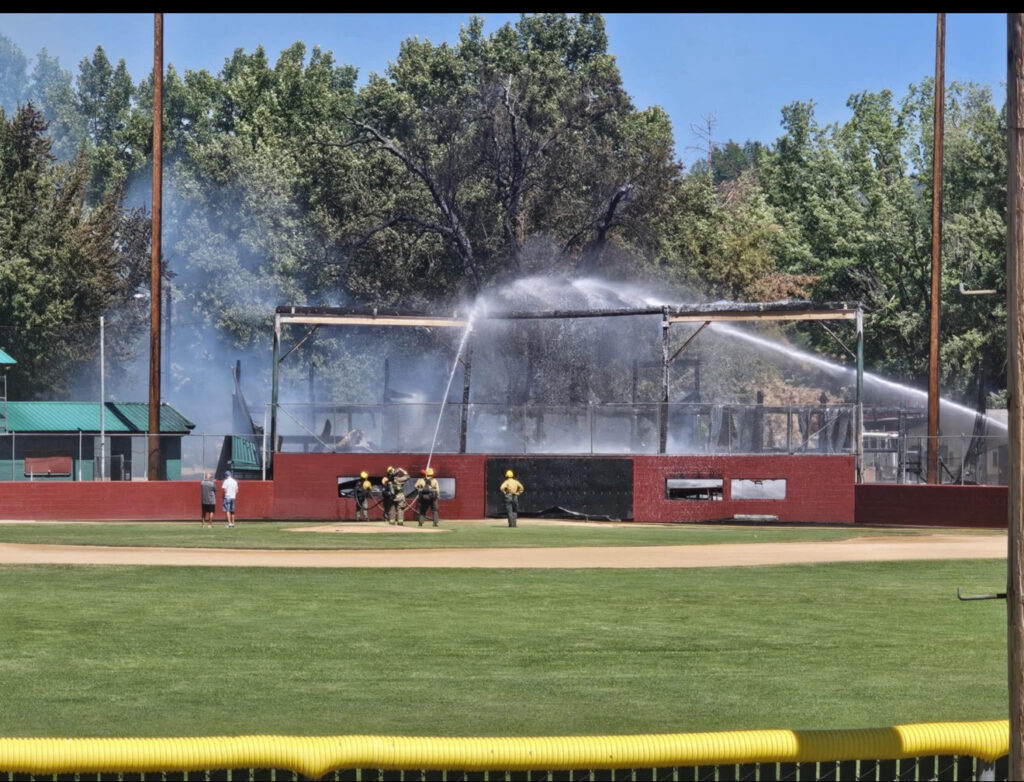
The Grandstand on fire, July 5, 2025[photograph submittedOn Saturday morning, July 5, 2025, the wooden grandstand at Susanville’s Memorial Park went up in flames. So here is a little history about the structure and the park.
Since the 1880s the residents wanted to have a park with a children’s playground among other things. Fast forward to the 1920s, Susanville became a baseball town. The Fruit Growers and Lassen Lumber both sponsored semi-professional baseball teams. A bit trivia. Those who remember Henry Matteucci, long time owner of The Pioneer, he first came to Susanville as a baseball player for Fruit Growers.
July 5, 2025-photograph submitted
In the 1920s, many thought that the current location of the Memorial Park was ideal. It is a complicated story, but negotiations stalled. After World War II, the park movement was revived. It was M.E. “Mul” Mulroney who a guiding force behind it. The property was owned by Cy and Eleanor Houghton, and the asking price was $7,000. The community raised the funds, presented it to the city and the purchase was complete. However, the city had no funds, so again the community came forward they raised funds and donated labor to do the landscaping, equip the children’s playground and a wading pool. Fruit Growers donated the lumber for the grandstand and it was built by volunteer labor.
Memorial Park, 1948
In 1949 after the improvement were completed, the park was officially dedicated. All was well, until the early 1970s, when the grandstand was a frequent target of vandals. The situation was out of control and in May 1974, the City Council debated whether it should be torn down. City building inspector George Dotson stated that with proper maintenance and care the grandstand could last as much as 25 years. It should be noted that replacement cost was estimated at $50,000. Fire Chief, Ray Berettini stated that the grandstand was a fire hazard, but it was least far enough away from other structures to limit damage. It was the public response that was in favor of keeping the grandstand, and thus the grandstand was spared demolition.
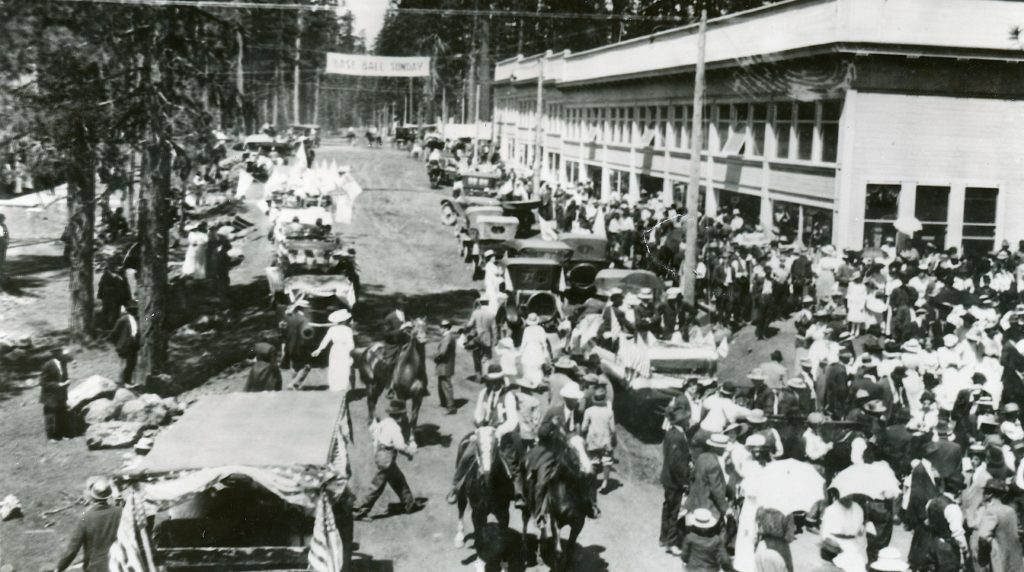
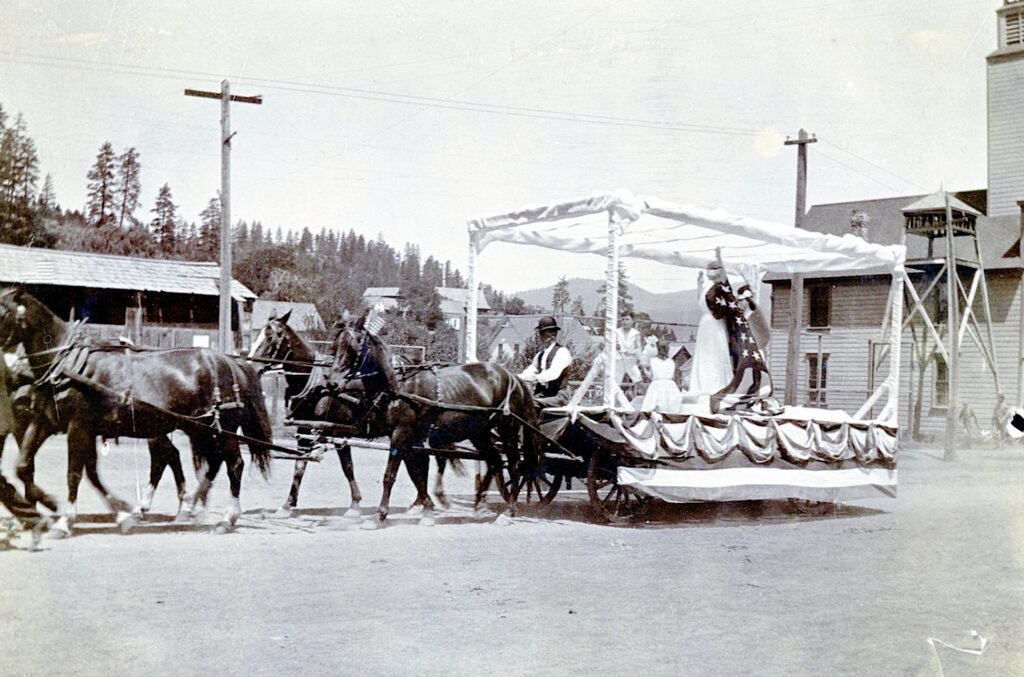
4th of July 1915 celebration at Westwood. Courtesy of the Nevada Historical Society.
In the spring of 1914 Red River Lumber Company announced that it would hold a grand 4th of July celebration to welcome visitors to its new town. Red River officials stated its main purpose was to establish and maintain the “friendliest” relations with Susanville. On the other hand it evolved in a two-day event featuring a baseball tournament.
The Fernley & Lassen offered a special excursion train that consisted of eight passenger cars. It was sold out and the fare was $1.50 round trip. As soon as the train arrived around 10:00 a.m. a procession was formed and marched through the principal streets of Westwood. It ended at open air pavilion where entertainment and necessary orators speaking. It was followed by barbecue. The next event were scheduled baseball games. The evening consisted of a firework display and a dance. It was successful event and repeated in 1915. In 1916, Susanville reciprocated and was the host of the grand 4th July celebration.
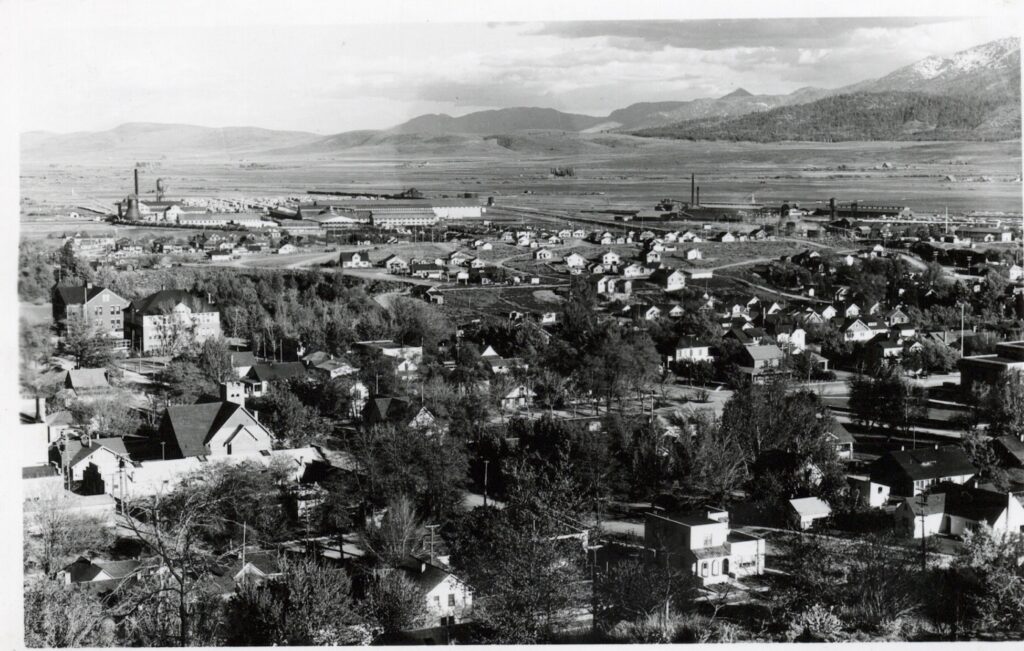
This view taken from Inspiration Point by Eastman Studios was not reproduced for a postcard. In the late 1970s, I gained access to Eastmans vault, and for some unknown reason this picture caught my attention.
Note: This is a perennial post, because it has merit and in my opinion they should be banned permanently. The following appeared in the New York Times, July 3, 2024 “Fireworks sparked 916 wildfires in the state in 2021, the most recent year for which full data is available, and those fires caused more than $3.2 million in property damage, according to CalFire. The year before that, in the state’s worst fire season on record, fireworks caused more than 2,000 fires and $8 million in property damage, along with injuries to 11 people and one death. Lest, we do not forget the firestorms this January in Los Angeles.
It is not just a California phenomenon. A study published last year in the journal PLoS One found that more than 11,000 wildfires nationwide were caused by fireworks between 1980 and 2016 — and that two-thirds of those blazes occurred in the two-week period around July 4. “In fact, more fires began on July 4 than on any other day of the year, it found.”
In Susanville’s early years as an incorporated city, it was remarkable what the council did. One of their actions, I still support today, and that is the prohibition of fireworks. The first time they banned fireworks was in 1906, following the aftermath of the San Francisco earthquake and fire. It was also a nod to the insurance companies who suffered tremendous loss from that event. It was their belief, as well as many other communities, that this preventive measure would reduce the risk of fires.
In 1912, the City once again banned fireworks. The Lassen Advocate applauded the city and wrote: 21 June 1912 – “No Fireworks on the Fourth. We desire to congratulate our Board of Town Trustees on their action in placing the ban on all kinds of fireworks on July 2, 3, and 4. This action has been taken by large and progressive cities for years past, and we are greatly pleased to note that the smaller places are falling into line. Fireworks do no good and may do a world of harm. Fires may be started that will blot out blocks of cities or towns; little boys and girls all over the United States have lost fingers, hands, eyes and in many instances, their lives from the dangerous pinwheel and firecrackers. Let them yell all they will, let them spend their money for ice cream, candy—anything on earth but the fireworks.”
In 1916, the Monticola Club appeared before the Susanville City Council asking for a ban of fireworks for the 4th of July. The City said no. The council assured that the utmost care would be done, but they were not going to deprive children of the festivities.
In 1926, due to the tinder dry conditions, the City banned fireworks for fire, health and safety reasons.
The old Fruit Growers barn, June 2, 2015- Photograph by Annie Henriques
Well, can you believe it, it has been ten years to the date that the old barn at the east entrance to Susanville was destroyed by fire. It was built in 1920/21 for the Fruit Growers Supply Company, who were in the midst of constructing their new sawmill/box factory nearby. Continue reading The Old Fruit Growers Barn→
American Legion Parade, Susanville 1926—Margaret Purdy
In early June 1924, the Thomas Tucker Post No. 204, of the American Legion decided to place American flags along Main Street in observance of the 4th of July. It should be noted that American Legion posts nationwide were doing the same. They ordered 100 flags to be placed on either side of Main Street from the Elk’s Lodge to Weatherlow Street. The flags 4×6 would be attached to 12 foot metal poles and spaced at 30 foot intervals. When installed on July 3 the general consensus deemed it a wonderful improvement from the past, that consisted of haphazard placements of bunting and flags here and there.
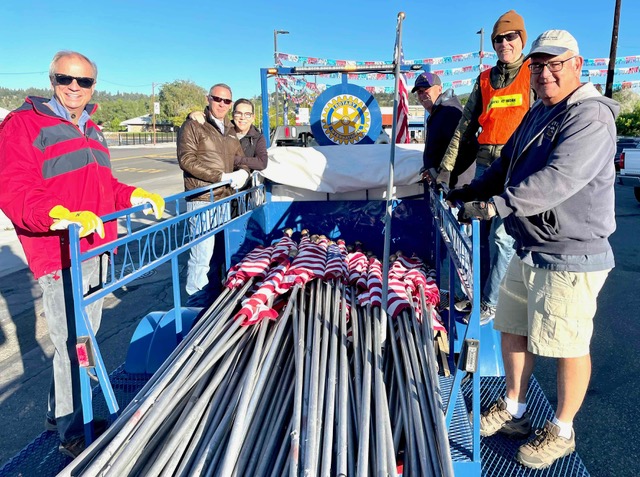
Rotary Club members preparing for Flag Day, 2012-Left Right: Rod Chambers, Richard Egan Holly Egan (driver), Morgan Nugent, Martin Balding, and Jim Chapman-Courtesy of Jim Chapman
The tradition continues. For over thirty years Susanville’s Rotary Club has taken over the role of placement of the flags. The flags are flown on major holidays and special events. Thank you Rotary Club!
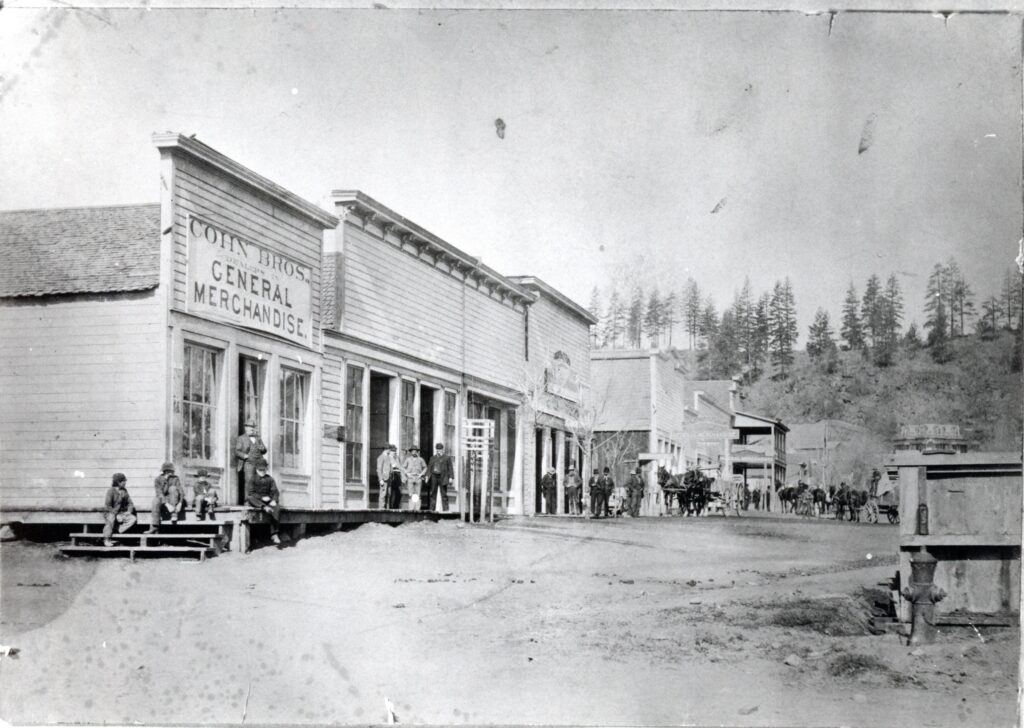
South Side of Main Street, Susanville, 1895-Harmon Anderson Family
In July of 1893, a fire wiped out Susanville’s entire business district. An 1898 fire would destroy records pertaining to 1893-1896 era. This makes this photograph rare, but intriguing. As the saying a picture is worth a 1,000 words. In this case, the picture asks a multitude of questions. After all, these buildings would be destroyed by a 1900 fire. It was that fire, the residents of the Susanville Township rallied for incorporation as a municipality for fire protection. A special election was held in August and City of Susanville became a reality.