The Fruit Growers Supply Company operated a lumber mill in Susanville from 1921 to 1963. When it was sold it became the foundation for Sierra Pacific Industries.
In 1910, Fruit Growers found itself as a mill operated at Hilt. It should be noted Fruit Growers is a purchasing agent co-operative for citrus growers known today as Sunkist. This was an era when produce was shipped in wooden boxes, hence the need for lumber. Continue reading Fruit Growers – Story Club→
Recently, while researching early water right filings, I had the above document copied to share with everyone.
It should be noted, that in the spring of 1856, news reached the outside world of rich gold discoveries in the Honey Lake Valley and that brought an influx of miners to the region. It ultimately led to the development of a village at Roop’s trading post. At first, the settlement was known as either Roops or Rooptown. In September 1857, twenty of the residents gathered to select a name for the village. Two names were proposed, Nataqua and Fredonyer City, the latter was approved. That proclamation was more or less ignored and the place was simply referred to as Rooptown.
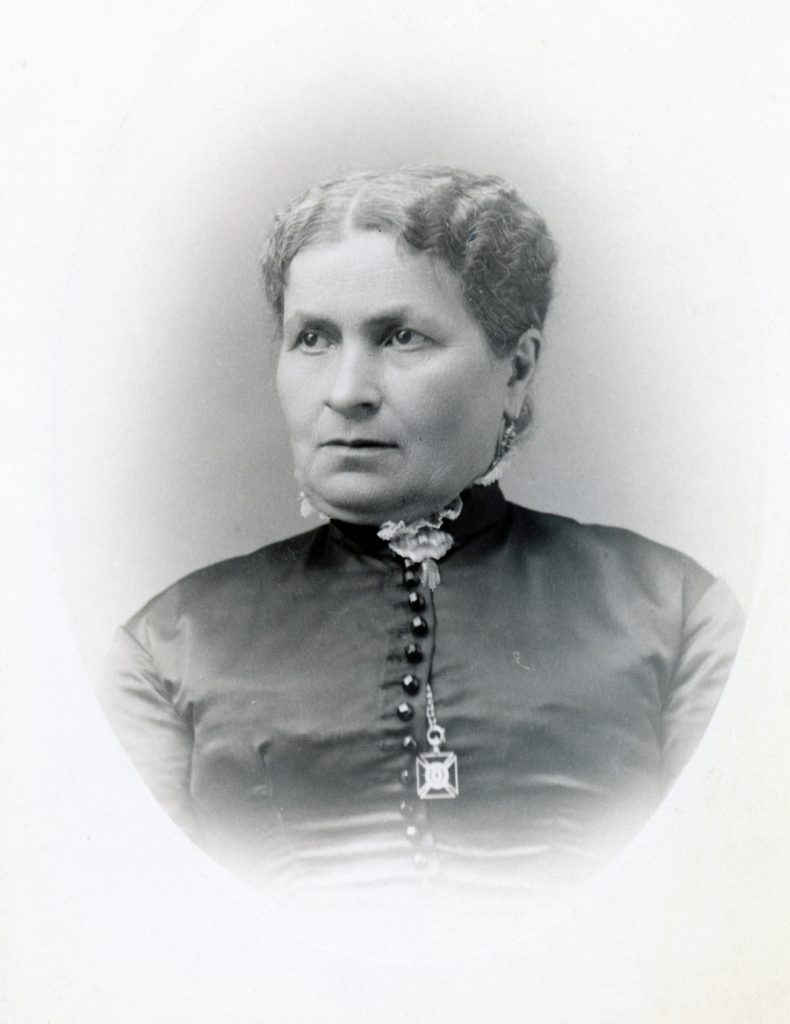
Before that event, however, on April 11, 1857 Atlas Fredonyer had not only filed a claim to the land that Roop had, but also became the first claimant to water rights of the Susan River. It was his intent to build a dam, to power a sawmill, but a flour mill as well. Fredonyer ultimately never proved title to the claim. On the other hand, Isaac Roop never proved title, either. Roop eventually plotted out the town of Susanville and did quite well selling lots to property he did not own. In 1872, it literally took an act of Congress to correct the situation. All the town’s property was deed to over to the Lassen County District Judge, who in turn re-deeded the property to current owner.
Gay Street, looking north, 1864. In 2016 , South Gay Street is the location of the farmer’s market, stop by and check it out. Photograph courtesy of Gilbert Morrill
It was one of the original streets when the town was surveyed in 1863. Its name was derived from the slang of gaiety, which then meant happy. Times have changed.
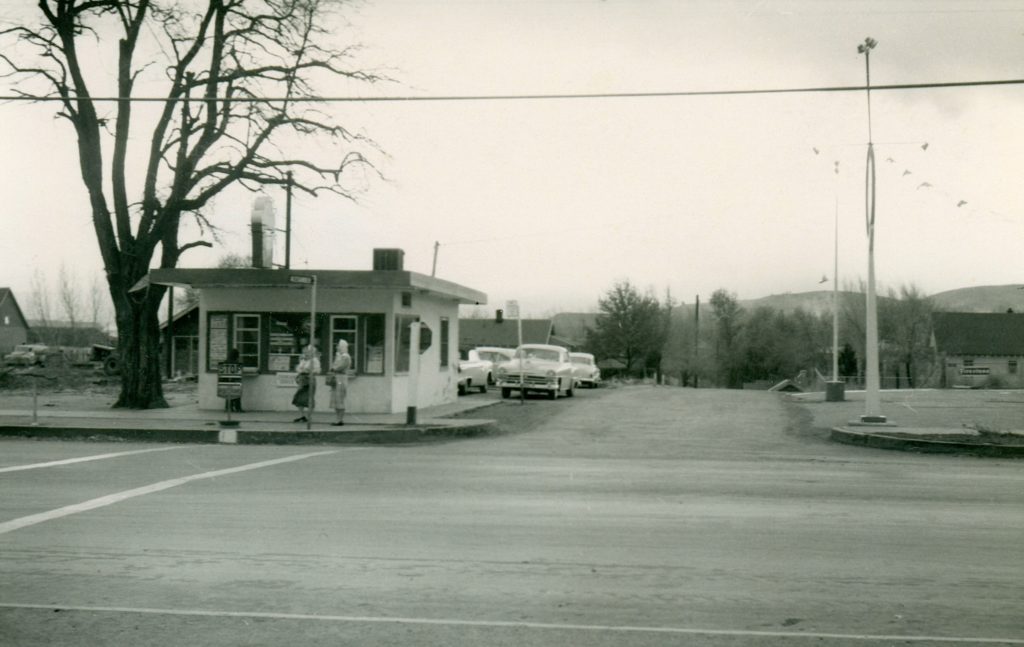
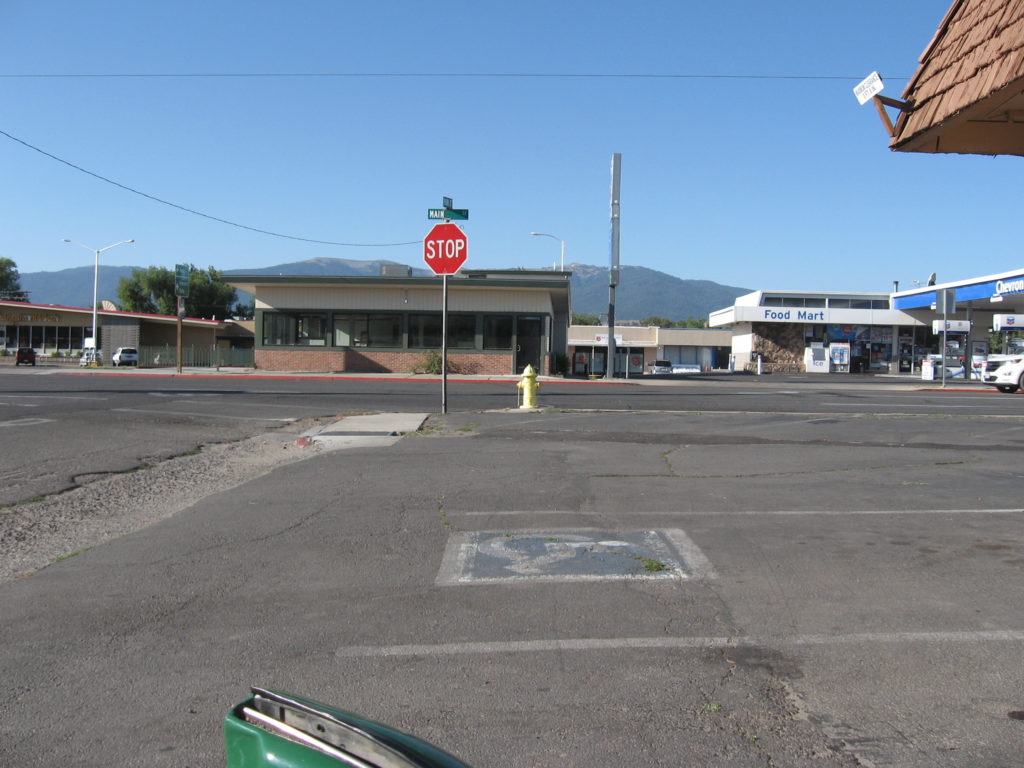
Back then, though, most everyone did not even know the streets had names. Residents received their mail at the post office. It was not until 1925, when street signs were placed. This had to due with the fact that residential mail delivery had been in place for two years prior. As the city grew, so did its problems, even mundane ones. On March 19, 1953 the city adopted a new house numbering system. As with any change, there were always a few who grumbled. Cross streets, whether it be Gay in uptown or Spring at the east end, would receive new designations of North or South. Previous to this there had been no distinction.
Never miss a story, click here to subscribe and support.
The parade, August 10, 1917. D.M. Durst Collection
For a certain segment of the population when they hear Lassen Grizzlies, the first thought that comes to mind is Lassen High School’s football team and mascot. It should be noted it was not until 1929 that Lassen High adopted the Grizzly as the school’s mascot. Continue reading The original Lassen Grizzlies→
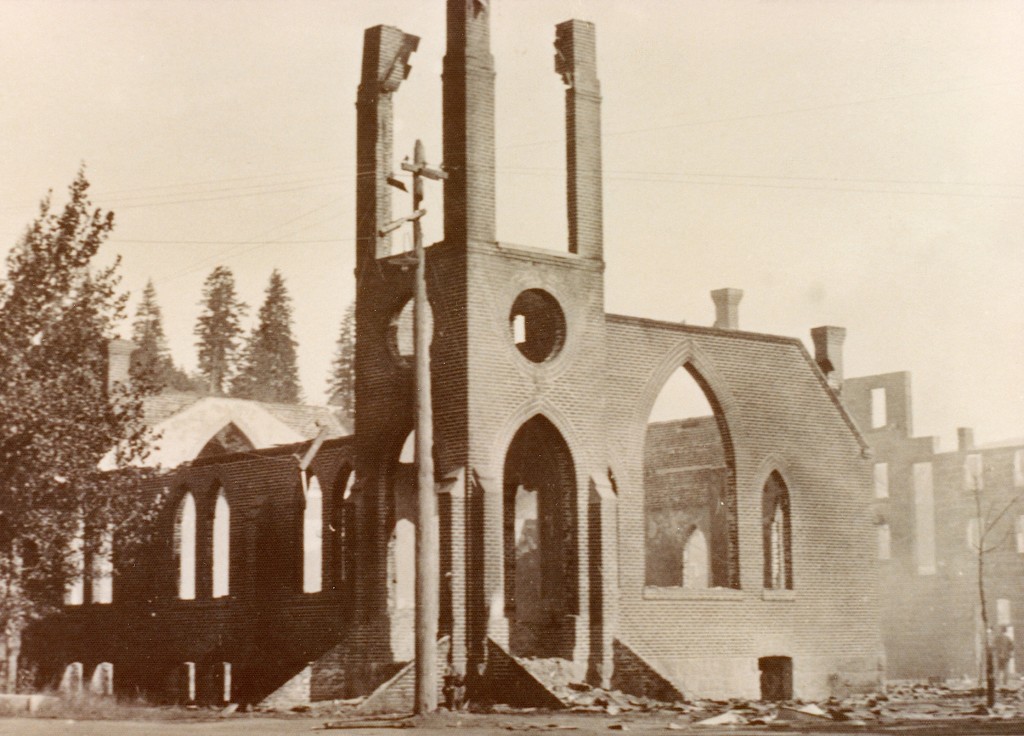
Shortly after midnight on August 5, 1915, a fire was discovered in Emerson’s warehouse on Cottage Street, adjacent to the Methodist Church. The warehouse, it should be noted, was originally the Congregational Church built in 1875. By the time the fire was spotted the building was totally engulfed in flames. The fire spread rapidly due to west winds, sending embers across the alley and igniting the Emerson Hotel, located on the corner of Main and South Lassen Streets. Two adjacent buildings facing on Lassen Street–The Hyer Hotel and the Methodist Church–also caught on fire. When it was realized that it was futile to try and save the buildings, all efforts were focused on keeping it contained. The losses were staggering, estimated at over $250,000.
Years later, Charlie Emerson’s daughter Mae, recalled the tragic event: “I was home for summer vacation from college when the hotel burned on my father’s birthday and stood with his arm around me in the middle of the street and watched it go with all our worldly possessions and Dad’s business records of years destroyed.”
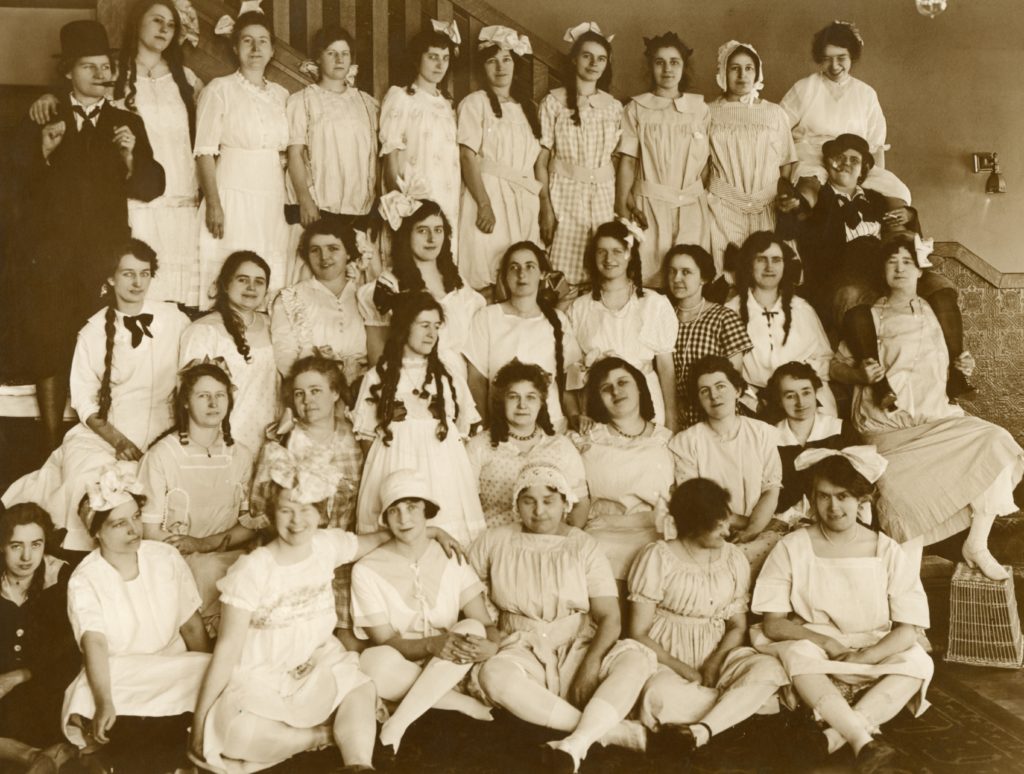
On August 4, 1984 some 500 members of the fraternal organization known as E Clampus Vitus descended upon Susanville. The occasion was the chartering of the Neversweat Chapter #1863 of the E Clampus Vitus and the dedication of the Pioneer, the oldest establishment in Northeastern California. The organization has been around since days of the California gold rush, and was a spoof on the more refined fraternal organizations of the day. In the 1930s it went through a revival and focused on marking historical sites and having a good time while doing so. The Neversweat Chapter was not the first for Susanville, as a lodge existed in 1868. In the early 1880s there were several lodges in Modoc County.
Back to that day at hand, the Lassen Advocate summed it by reporting, “By 7:30 a.m. most area residents were awakening for breakfast and routine Saturday tasks, the revelry at the Pioneer was already in full swing. Clampers were 3 to 4 deep at the bar, the beer was flowing and festive mood in the air. The celebrants began arriving at 6:00 a.m. and spilled from the sidewalk into the eastbound lanes of Main Street. Traffic was undoubtedly light during the early morning celebration.”
Never miss a story, click here to support and subscribe.
The flooded dairy, April 1938. Courtesy of Betty Barry Deal
In 1909, Cy Houghton arrived in Lassen County. After the establishment of Westwood, Cy went to work for the Red River Lumber Company. In 1934, he located to Susanville and opened a dairy, which is now Memorial Park. In 1938, the dairy received extensive damage from the Piute Creek flood. At one point he considered abandoning the dairy, but changed his mind. In 1942, Cy’s Dairy closed for business. Not one to be idle, Cy later went to work for Sierra Army Depot and retired from the place in 1957.
Another view. Most people know this site today as Susanville Supermarket. Courtesy of Betty Barry Deal
Standish Branch of the Bank of Lassen County inside the Wrede Hotel
For a time, Standish was a very prosperous community in the Honey Lake Valley. Not only did it have numerous businesses, but a hotel, and a creamery, too. Everything was so good, in fact, that it even had its own financial institution.
In 1892, the Bank of Lassen County was established in Susanville, the first of its kind in Lassen County. In the spring of 1915, the bank announced it was going to open its first branch in Standish. However, it encountered some delays, especially with the installation of big safe, inside the Wrede Hotel, where the branch office would be located. On August 30, 1915, the branch opened with W.H. “Wally” Fulton, as the manager. Fulton had a long association with the financial institution, and equally important was well-known in the Standish region, having been married to Kathryn Mapes. The Standish Branch operated for ten years, closing its doors on December 31, 1925.
Wally Fulton later moved to Susanville and in 1933 became the City’s Treasurer. He remained in that position until his untimely death in 1941 by suicide. He used a gun in the city vault, and waited until the noon whistle from the Fruit Growers mill to mute the sound of the gun shot.
Never miss a story, click here to support and subscribe.
On January 16, 1911 M.O. Folsom unveiled his East Addition to Susanville subdivision containing 300 lots. Many of its north/south streets were named for trees, i.e., Ash, Cedar, Fir, Spruce. The east/west were numbered, i.e, First, Second, Third, Fourth and Fifth.
Ash Street, initially ended at Fifth Street. Travelers headed north either used Hall Street or Weatherlow Street to Chestnut. In 1947, Ash Street was incorporated into the Lassen-Modoc Joint Highway #14, the pre-cursor to State Highway 139. Ash Street was extended to connect the highway making for a straight route into Susanville.
Never miss story, click here to support and subscribe.
So it is a different from the French version. On this day in 1993 groundbreaking ceremonies were held for High Desert State Prison. Long before construction of its neighboring prison the California Conservation Center as it was originally called, was highly debated. So much in fact, the issue whether to build a second prison was put before the voters of Lassen County in June 1992, that won by a 58 percent voter approval. High Desert State Prison was designed to house 4,500 inmates and opened in September 1995.