Tag Archives: Susanville

Father Moran’s Quest

The original Sacred Heart Church.

On April 9, 1939, Father Patrick J. Moran during his Easter Sunday service announced his intention that Sacred Heart Parish needed a new church. It was rather dramatic, since Moran had only been appointed to take care of the spiritual needs of Sacred Heart four months prior.

The old wooden church was built in 1892, and it was originally located on Richmond Road, adjacent to the bridge over Susan River. In 1909, the church was moved to the corner of Union and Nevada Streets.  However, the years had taken a toll on the wooden frame structure, and many parishioners complained that it was cold and drafty in the winter months, since the only heating was an ornate wood stove.

Moran, in his address, concluded that a new church would be built on the site of the current one. The following year, Moran received Bishop Robert Armstrong’s blessing. Shortly afterwards Sacramento architect Clarence C. Huff was awarded the contract to design the new church.

Sacred Heart Church
Sacred Heart Church,on Richmond Road 1905. Courtesy of Sacred Heart Church

However, Moran’s quest would take nearly ten years for it to come to fruition. More about that in a future post.
Never miss a story, click here to subscribe.

Susanville – Pine Street

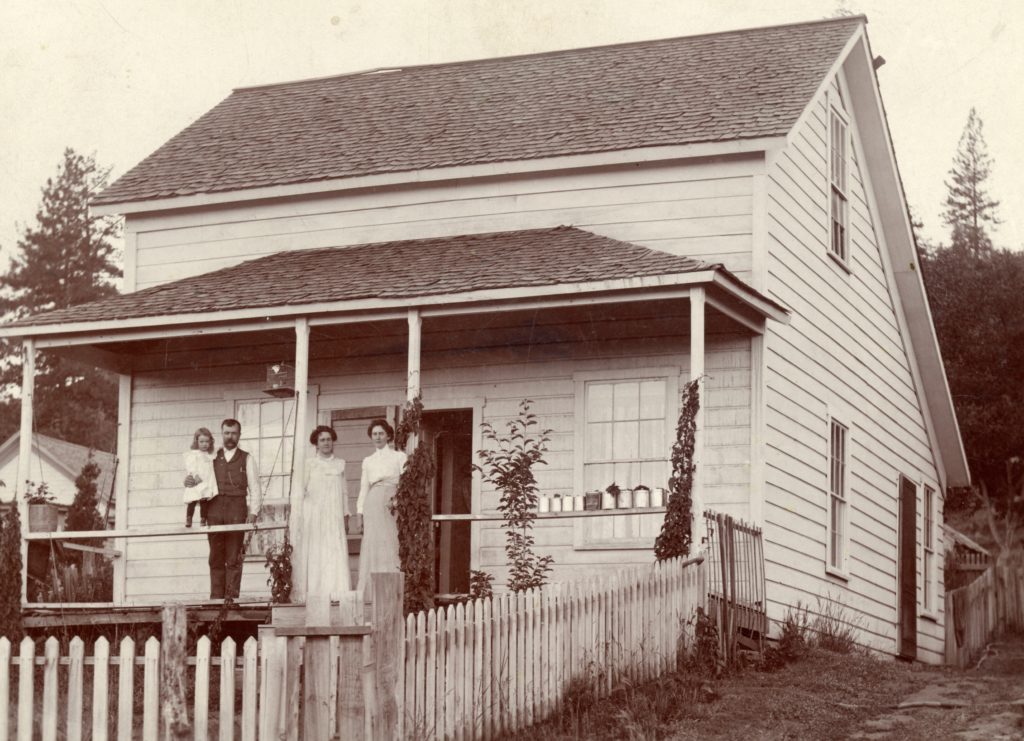
B.R. Zimmerman residence, 45 South Pine Street, circa 1890. Courtesy of B.R. Zimmerman Collection

One of Susanville’s original streets, when the town was surveyed in 1863 it was the most western street. So named for the pine trees that are on the western edge of town.  An odd thing about Pine Street, it initially went from Main south to the Susanville Cemetery. What is known as North Pine Street did not come into existence for a number years, and even then it only extended to North Street. For years it was known as Prattville Road, and this was route out of town, and the next town then in existence was Prattville, which the original town no longer exists as it demolished to make way for Lake Almanor in 1914.

North Pine Street, January 1916. Courtesy of Dolores Gasperoni

Spread the word, encourage a friend to subscribe.

Susanville’s Banking Crisis

Bank of America, Main & Gay Streets, Susanville

While T.B. Walker and his Red River Lumber Company had a profound impact on Lassen County, Leon Bly and his Eagle Lake irrigation plan ranks right up there with Walker.

The Lassen Industrial Bank was established in the spring of 1912. It met with such success that in 1914 they opened a branch at Bieber and in 1917 another branch at Fall River Mills.

With tremendous growth caused by the lumber industry, the bank built a $100,000 two-story building at the corner of Main and Gay Streets. But the good times did not last long. The bank had nearly over extended itself with loans to the farmers of Bly’s irrigation project, that had failed shortly after the tunnel was completed in 1923. This caused, the bank to start foreclosures on those farmers, and many of those properties were worthless without water. By the summer of 1928, the rumor on the streets of Susanville was in full blast, that either the bank was going to be sold, and worse yet go into bankruptcy. In early August 1928, A.P. Giannini of the Bank of America came to the aid with a $100,000 cash bail out, in which on December 1, 1928, officially took over the Lassen Industrial Bank.

Spread the word, and encourage a friend to subscribe.

Susanville – Union Street

Deforest028
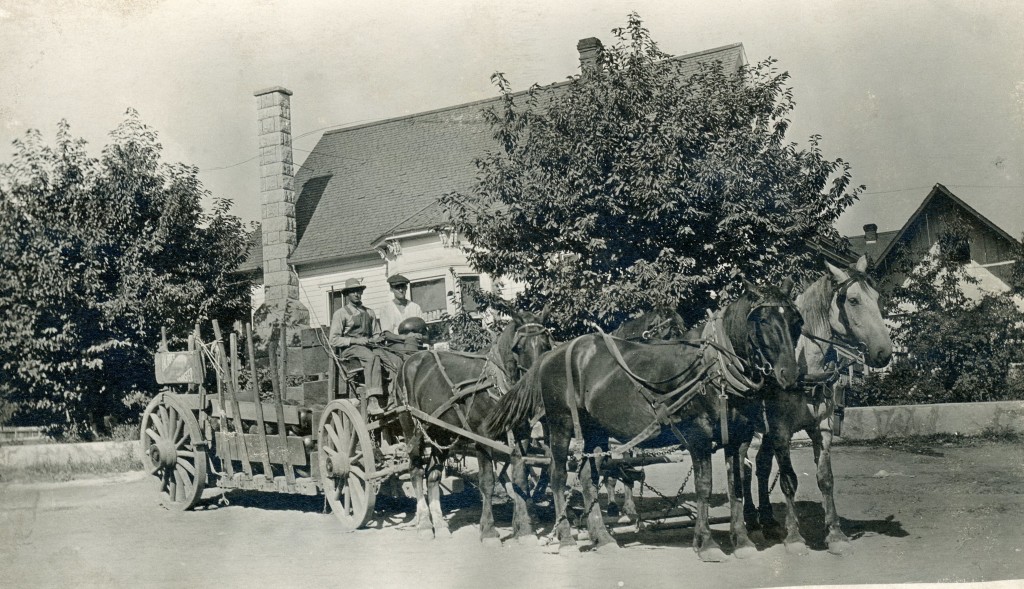
Talbott’s freight team, Union Street, near Cottage, 1914. Courtesy of Leona F. Byars

During the Civil War of the 1860s, communities in support of the North, applied Union to street names, squares, etc. Susanville was a perfect textbook example.

Typical of the era, map makers were one dimensional. Susanville’s original plat, shows Union Street extending beyond Cottage and connecting Weatherlow Street at the Richmond Road bridge.  There were two problems. First the proposed street would dissect the block that was home to the Susanville School District. The other was the physical restraint of the hillside for Union to connect with Weatherlow. During the messy title problems of the 1870s, caused by  the town’s founder, to rectify this particular situation, that segment of Union to Weatherlow was abandoned.

Never miss a story, click here to subscribe.

Early Postal Problems

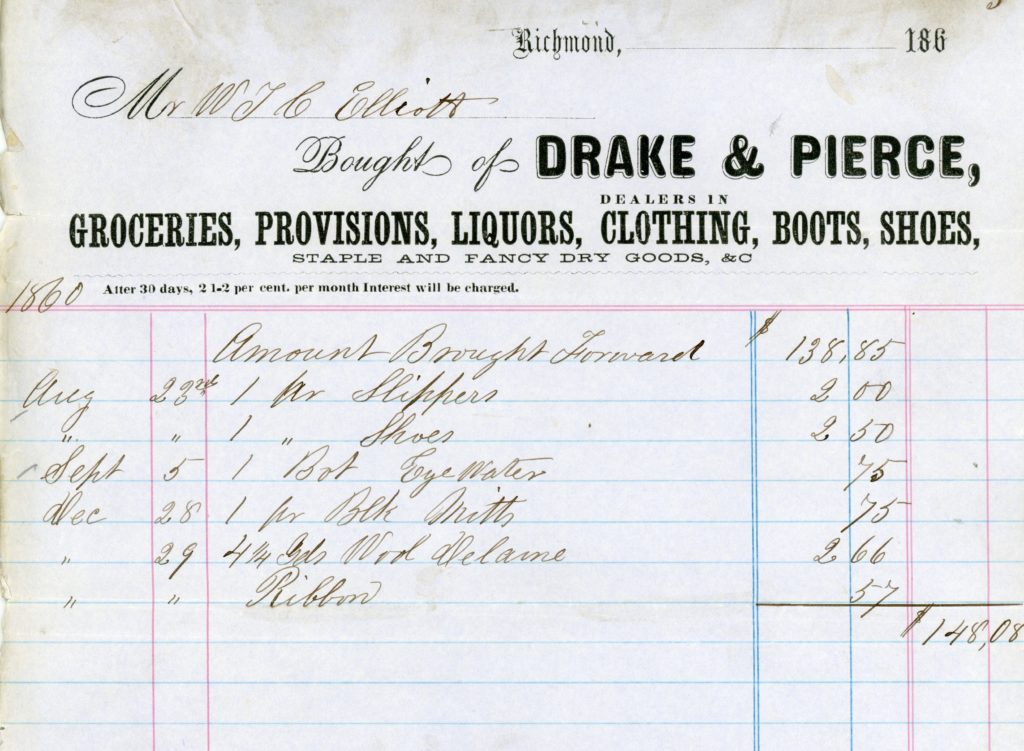
Drake & Pierce's Richmond mercantile store, was for a time, the largest in the Honey Lake Valley.
Drake & Pierce’s Richmond mercantile store, was for a time, the largest in the Honey Lake Valley.

The Susanville Post Office was established in 1859. A little known fact, it carried the postal cancellation of Susanville, U.T., as in Utah Territory. Nevada had not yet been created and Utah’s western boundary was that of California.

The biggest problem for the new post office was receiving mail for distribution.  On March 3, 1860, Susanville resident wrote to Col. F.W. Lander in Washington, D.C. about the state of the postal affairs:  “There is an effort being made to have a daily mail established from Oroville from the first of June to the 30th of November, and semi-weekly for the balance of the year. Now Sir, if you could get the same service continued on through Indian Valley which needs a P.O. having about three hundred inhabitants through Richmond to Susanville with a P.O. at each place you would confer a great favor on the people here about five hundred in number and constantly increasing (There having been rich mines discovered here since your departure.

“There was three routes established last year, one from Shasta, one from Oroville (the route you went down) and another from LaPorte all arriving at Susanville. There was however been no service on either of them and if we could get the above route from Quincy it would answer us better than all three of those which were recommended by Judge Crane without knowing the actual wishes of the people.”

During the 1860s witnessed improvements with the Idaho-California Stage Company that had the mail contract from Chico to Idaho via Susanville. In 1869, conditions for receiving mail was stabilized with the completion of the transcontinental railroad.

Never miss a story, click here to subscribe.

The Harvest Festival

Courtesy of Dolores Gasperoni
Make sure to click to enlarge. Courtesy of Dolores Gasperoni

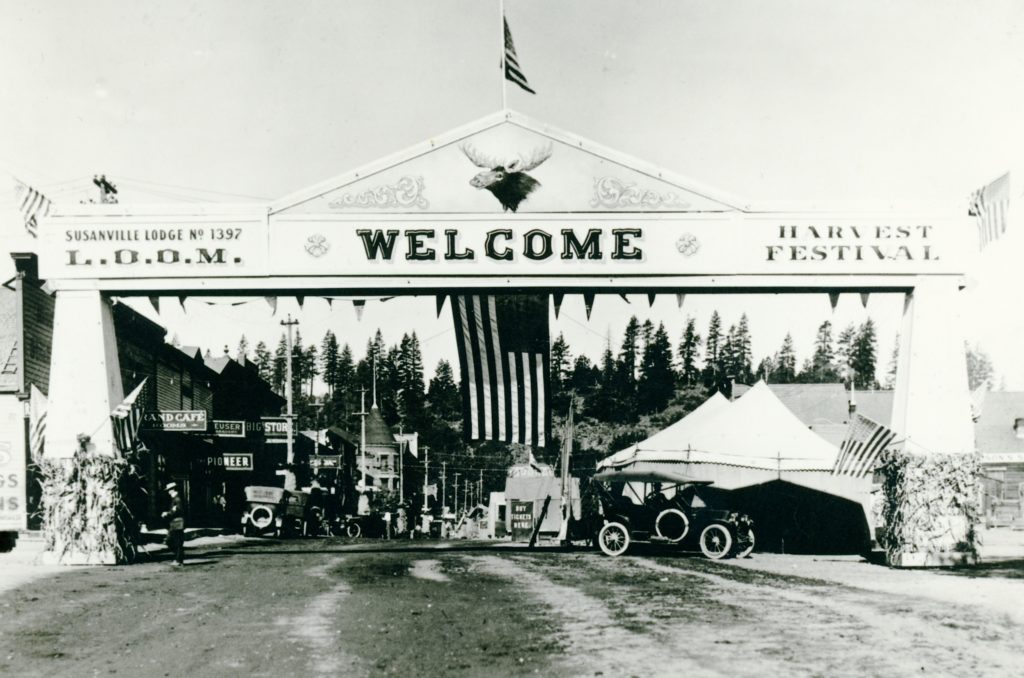
In 1913 a new fraternal organization was organized–Susanville Lodge 1397, Loyal Order of Moose, commonly referred to as the Moose Lodge.

The following year, the lodge decided the town needed a celebration. The Fourth of July was the only regularly celebrated event. The annual county fair had not been established. So the Moose Lodge decided on a harvest festival. In July 1914, they announced their intention to hold a four-day festival to commence on California’s Admission Day, September 9.

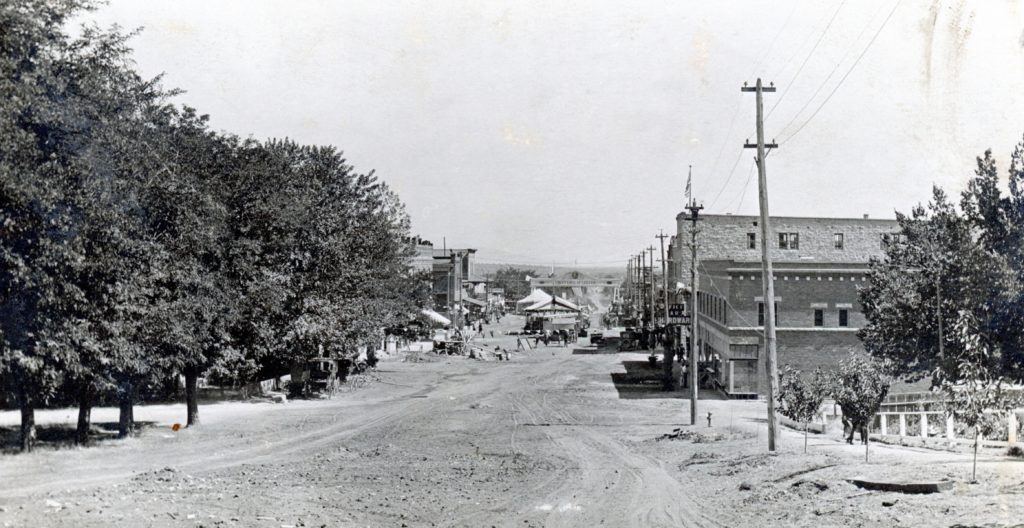
On the northwest corner of Main and Gay Streets (now the Bank of America parking lot) an open air pavilion was constructed. Also at Main and Gay , the lodge constructed an arch over Main Street.

The arch was a temporary affair, and a windstorm two weeks later, blew it over.

A one block segment of Main Street, between Lassen and Gay was transformed into a street carnival. There were popular concessions such as a mirror maze, glass blowers, a musical show with six chorus girls, three comedians and a wheel of fortune. The farmers of Honey Lake Valley displayed specimens of their crops. Fehr & Worley of the Big Store (now Margie’s Book Nook) took the opportunity to show off their line of farm machinery.

Saturday evening was the climax of the festival. It was complete with a confetti battle and the merriment of locals dressed up for the “Parade of Horribles.” Some of the costumes were outlandish, but more important, it was an opportunity to have fun. A case in point Charlie Emerson playing the role of a blind organ grinder, and Dr. J.S. Wren as his monkey.

The Moose Lodge later reported while it was not a financial success, but that it was a successful venture as everyone had a good time.

Never miss a story, click here to subscribe.

Desmond Meadows – Lassen County

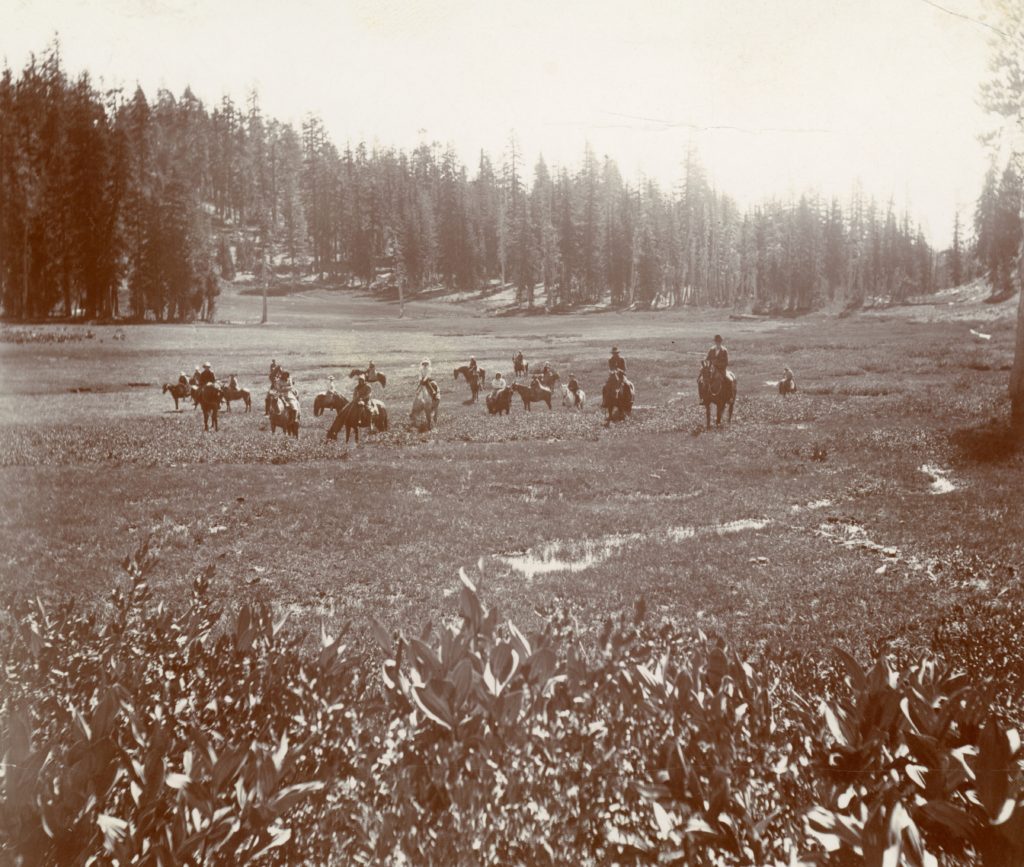
Desmond Meadows, 1906. Courtesy of Betty Barry Deal

On January 22, 1859, Malcolm S. Scott claimed the meadows along Piute Creek, west of Susanville, that he named Spring Valley. Scott later abandoned his claim and the claim was taken over by Emanuel Brannon during the following year. Interest in the meadows fell by the wayside until 1873, when Robert M. Bean took possession of the meadows. Somewhere along the banks of Piute Creek, between Desmond Meadows and Susanville, Bean established the first brick kiln yard in Lassen County. In the year 1878, Bean manufactured 130,000 bricks. Hard times quickly fell upon him. Because of his creditors and the death of his wife, Alice, Bean sold the meadows to Jonathon Lovell, a Susanville blacksmith. Ownership of the meadows changed hands numerous times during the early 1880s. In 1886, it was purchased by John and Hannah Desmond from M. C. Bishop for $1,500. Married life for the Desmonds was not pleasant. In 1890, the couple separated and Hannah remained at the meadows. For the next ten years, to support herself and her family, Hannah operated a firewood business. The County of Lassen was one of her major customers, purchasing eighty cords annually at a $1.50 per cord. On November 19, 1900, Desmond sold the meadows to Anton Bantly for $2,000.

Never miss a story, click here to subscribe.

Susanville, 1916

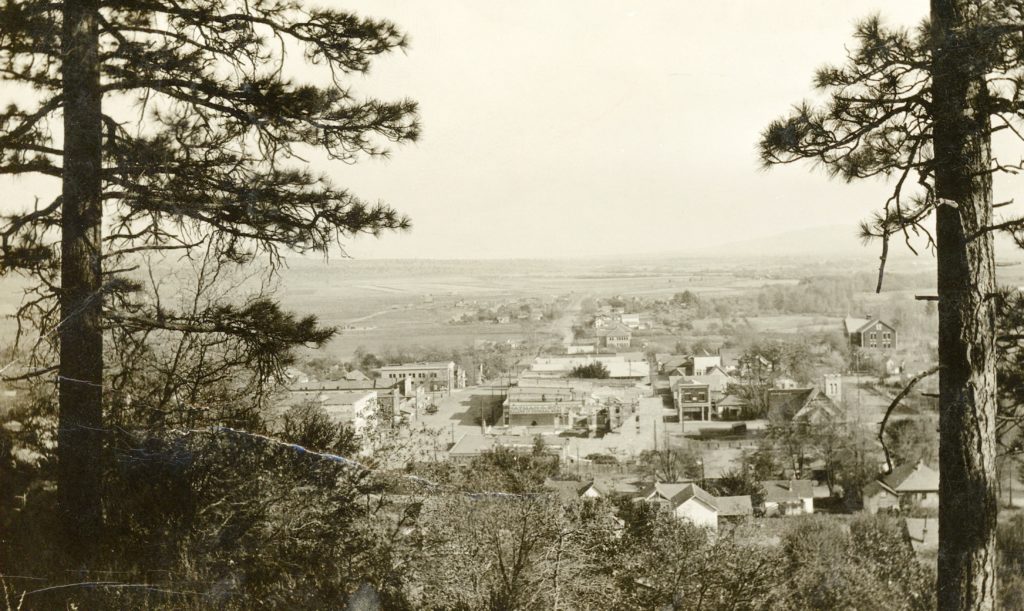
Susanville view, 1916. Courtesy of Hazel Moller

In January the region was hit a big snowstorm and cold temperatures.  Over four feet of snow fell in Susanville, and to get an idea how cold a storm system it was, Sacramento had three inches of snow. The Susanville residents took the storm in stride, as they had been used to such storms every year since 1907. What they would not be prepared for, was this was the last major snowstorm for the next twenty-one years.

When spring arrived, the big news was Leon Bly announced to the world his Eagle Lake project. He assured everyone this time it would be different than the previous twenty attempts. In addition, to Bly the other big news was the first work on a state highway that would connect Red Bluff and Susanville, though it take until 1929 before it was completed.

The Fourth of July was a big celebration that the town had not had for a couple of years. In 1914 and 1915, Westwood was the host to celebrate the nation’s birthday. This time it was Susanville to be the host, and a good time was had by all. By this time a good nature rivalry between the two communities had developed and in the wild, wacky baseball game, Westwood beat Susanville 10-4.

In the fall, Jules Alexander launched a campaign for the preservation of Peter Lassen’s grave, which a campaign fund soon began to erect a new monument. It would take nearly year, but in the fall of 1917, a new monument was installed and dedicated in conjunction with the dedication of the new Lassen County Courthouse.

Just as the year had begun, it ended in much the same way. On Christmas Day Susanville was coated with four inches of snow.

Never miss a story, click here to subscribe.


Fruit Growers – Story Club

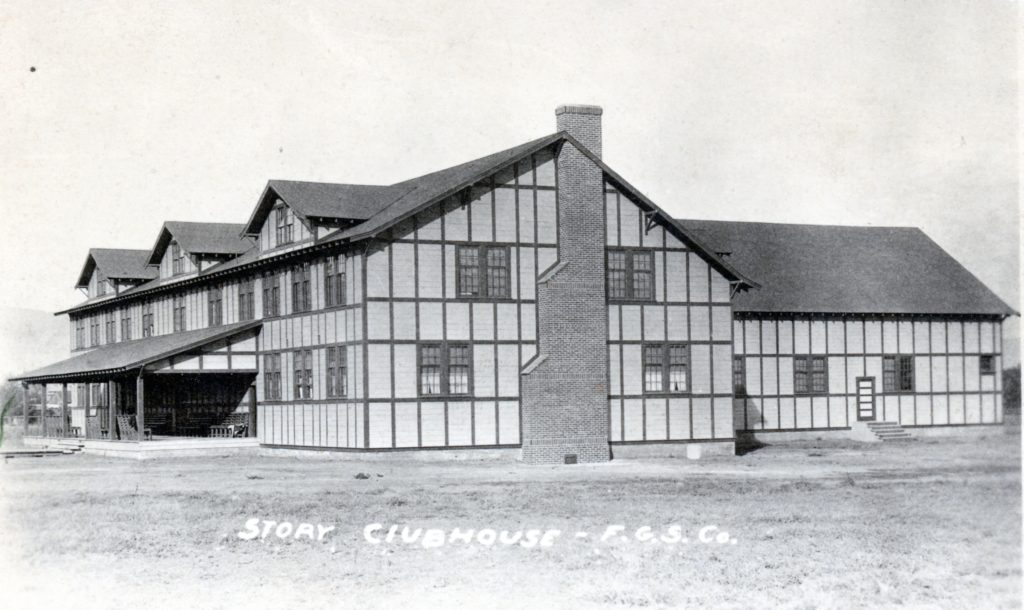
Story Club, 1924. Courtesy of Lola L. Tanner

The Fruit Growers Supply Company operated a lumber mill in Susanville from 1921 to 1963. When it was sold it became the foundation for Sierra Pacific Industries.

In 1910, Fruit Growers found itself as a mill operated at Hilt. It should be noted Fruit Growers is a purchasing agent co-operative for citrus growers known today as Sunkist. This was an era when produce was shipped in wooden boxes, hence the need for lumber. Continue reading Fruit Growers – Story Club