Cornell family plot, Susanville Cemetery, May 2, 2017
In 1864 Heiro K. Cornell and his brother-in-law William S. Hamilton constructed Susanville’s first warehouse. Cornell located on property that now occupies Lassen High School and extended past to McDow Street. In 1873, he sold out and moved to western Modoc County. In 1902, his son, John Cornell returned to Susanville and purchased a piece of his father’s original holdings. During the boom era ten years later Cornell sold to R.F. Pray, General Manager of the Red River Lumber Company. In 1920, Pray subdivided the property and created three streets–Cornell, Foss and Small.
In less than a decade the Susanville Branch of the Bank of America went through three buildings. In 1928, BofA acquired the Lassen Industrial Bank that was located on the corner of Main and Gay Street, which is now the bank’s parking lot. In 1971, the bank announced construction of a new building adjacent to the current one, which was demolished, to the dismay of many, to create a parking lot. Then in April 1978, the bank announced it was going to build the current structure on Gay and Nevada Streets, and the other bank building, like the one it replaced, was demolished, too, to become a parking lot.
Shinn family plot, Susanville Cemetery, November 19, 2015
Over the years in the area surrounding and including the Susanville Cemetery various Native American artifacts have surfaced. In one particular instance the Lassen Advocate of 10 June 1881 reported the following: Indian Relics. In digging the ditch to lay pipe for conducting water to the cemetery, eighteen inches below the surface, Mr. Frost came upon four stone implements that were once used by Indians or some other race of people. One of the stones is evidently a mill for making flour from seeds or acorns, the other three were probably used for dressing skins. They have fallen into good hands, Mr. Frost is collecting these interesting relics of the past to be preserved.
Of particular note the grave of Mr. Frost will be included in September’s cemetery tour, as part of the centennial celebration of the Lassen County Courthouse.
It will not be too much longer when the new community pool, that replaced the Roosevelt, will open. Yet, it was on this date, April 17, 1938 that the Roosevelt Pool opened.
The Works Projects Administration (WPA) was part of President Roosevelt’s New Deal program to help stimulate economic recovery brought upon the Great Depression of the 1930s. For years Susanville residents desired a swimming pool. Frank O’Kelly spearheaded the movement and wanted to convert the Fruit Growers ranch (now Susanville Ranch Park) into a recreational facility complete with a golf course, swimming pool, picnic area and playground. Everyone liked the concept except for Fruit Growers who owned the property and were not interested in leasing or donating the property. O’Kelly undaunted by the setback persevered and it was decided to move forward with a community pool. The plans were submitted and the WPA approved it for a cost of $28,433.
Many, many years ago I received a box of Louise West’s papers. The box was delivered to my mother’s house, and since resurfaced among other things. Louise West taught first grade at Susanville’s Washington School on Cottage Street for three decades spanning the 1940s, 1950s and 1960s. If anyone is interested in a particular year let me know, and I will do my best to scan and send along. Please be patience, since I am assorting so many items at the moment.
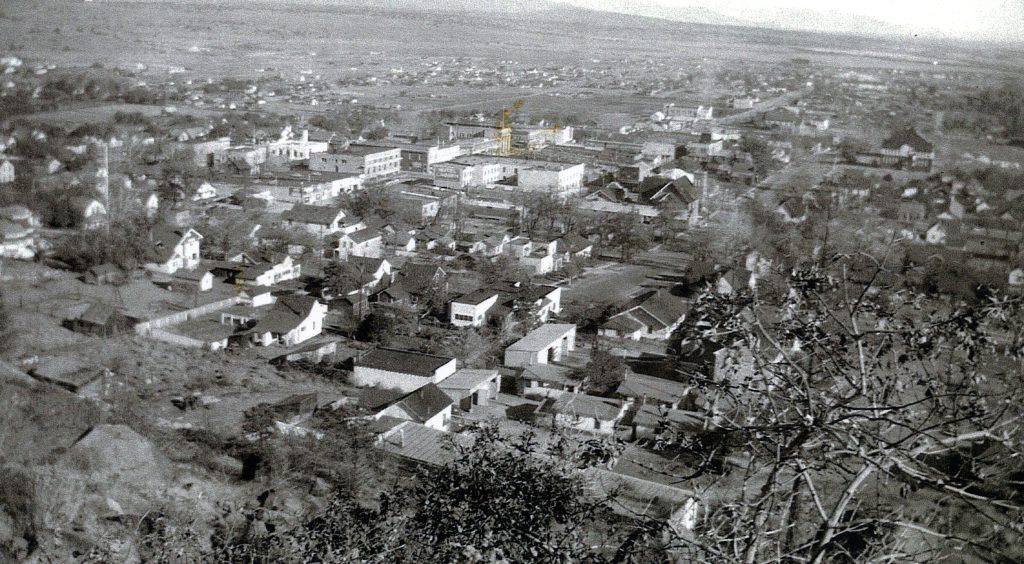
Seasoned residents of the Susanville region will recall the spring of 1971, when the Bank of America building at Main and North Gay Street was demolished. Many in the community had not recovered from the demolition of another iconic building the original Lassen High School, which was torn down in June 1968 for the current campus buildings.
While the City of Susanville and the County of Lassen debate marijuana issues, lets take a look of some historic accounts from the 1920s. It was not until the late 1920s that marijuana appeared on the scene locally. In November 1928, Sheriff Jim Leavitt conducted a raid on the Brunswick Pool Hall near the Susanville Depot. Leavitt confiscated ten kegs of whiskey and ten pounds of marijuana and arrested Emma and Pete Ovalle on a narcotics charge for the possession of marijuana.
Marijuana was something new to the local residents. The local press described it as a Mexican tobacco that is smoked like a cigarette, and said it has an exhilarating and soothing effect for the smoker and can also make one feel “goofy.” Continue reading A Marijuana Tale→
On March 18, 1948, the Trustees of the Susanville School District condemned the Washington School as it would no longer pass certain safety codes. Built in 1900, the two-story brick building was showing its age prematurely. At that time the McKinley School was located on the same campus, and officials considered it just a matter of time that it too, would have the same fate. The state considered it a “distressed district” and provided some funding to rebuild the schools. However, the school district had to pass a $174,000 bond measure, to qualify, and the voters approved it. Washington School remained at its Cottage Street location, while McKinley was relocated to Fourth Street. In 1980, Washington School closed. It later re-opened as Credence High School.
1917 Advertisement for the first St. Patrick’s Dinner sponsored by the Sacred Heart Church
Who knew back in 1917, when Father P.J. O’Reilly announced the Sacred Heart Church would celebrate St. Patrick’s Day, that it would be an enduring tradition now in its 100th year. It is the oldest continuous event in Lassen County, surpassing even the Lassen County Fair. This year’s event will be held on Saturday, March 18 from 4 p.m. to 7 p.m., at Monsignor Moran Hall on Weatherlow Street Believe me, as I can attest they serve the best corned beef around. There is always the cake wheel that can be very entertaining.
Father O’Reilly’s first event was nearly an all nighter. As was the custom of the day, entertainment and dancing occupied the first half of the evening. Then at 11 p.m. a supper was served and then the dancing resumed into the “wee hours of the morning.” At the conclusion, Father O’Reilly commented that it was a a very successful affair socially and financially.
The installation of the Hammerhead Crane at Westwood, was one of many improvements to entice buyers.
Estate Sale: I need to make room for items from my mother’s estate. This a great bargain 50% off, a big deal your cost $12.50 plus shipping. What a deal!
It is only appropriate to feature this volume, number four in the Red River series, as last week featured volume number three. It was originally thought that Red River’s Westwood mill would operate into perpetuity. However, in less than thirty years in operation proved that theory wrong. There was the family drama, not all wanted to dispose of Westwood, but those that did out numbered those wanting to exit. On the bright side, with World War II, the demand for lumber soared, and so for once did Red River’s profits. Thus, it seemed conditions were ideal to unload it, but Westwood was an albatross. No one wanted a mammoth mill, let alone a company town. Red River’s bargaining chip, it still owned vast swaths of timber and that is what the buyers wanted.
In addition to the saga of Red River’s departure from Westwood, this volume also wraps up a lot of loose ends. Included are such issues of what became of many of its landmarks, and that of the roadhouses that was once a dominant feature between Westwood and Susanville. In addition, are Westwood institutions such as the Westwood Auto Club, the Westwood National Bank among other topics. To order your copy, is just a click away, here.