Tag Archives: Susanville

Susanville – 30 South Roop Street

Lassen County Times, April 7, 1979.
In the early 1920s, chain stores began to make their appearance in Susanville. Reactions, or course, were mixed. Many a consumer enjoyed the new shopping experience with not only a wider selection of goods, but they found the price right, too. There were the loyalist crowd, that remained with their old independent pioneer merchant, who took care of the, through good and bad times, the latter that merchant would provide a line credit. However, changes were inevitable, one either adapted or perished.

These new stores also changed the appearance of the town. In the spring of 1940, Cliff Gledhill, moved a historic 1870s residence from 30 South Roop, to the farthest end of that street. Shortly thereafter, construction began on a small concrete building on the vacant lot he created. On May 22, 1940, Gledhill opened the doors there to his new enterprise, a Western Auto Store. Over the years, the building has had many occupants. Seasoned residents will know it as the office of Dr. C.I. Burnett, and for the past few decades it has been the CPA office of Carol J. Curry.

Support!
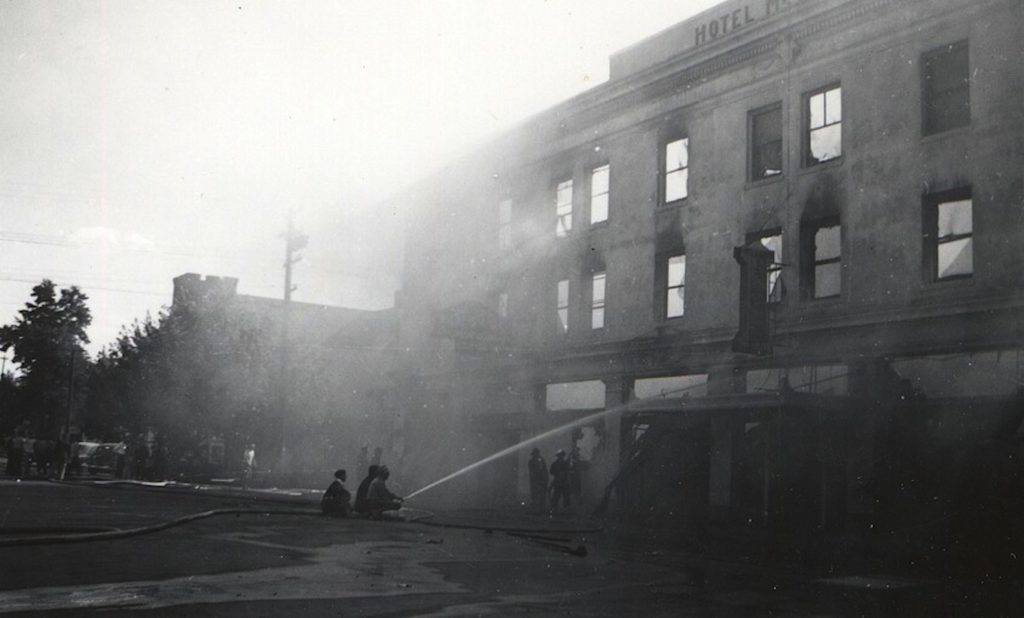
Hotel Mt. Lassen Fire

The aftermath. Courtesy of Margaret A. Purdy
It was seventy years today when the Hotel Mt. Lassen in Susanville was destroyed by fire. In 1902, Susanville passed an ordinance that all future buildings constructed in the business district be built of fire-proof material, whether brick, masonry or native stone. In time, this greatly reduced major fires. For nearly twenty years, the district did not experience any major fires, until one broke out in the basement of the Hotel Mt. Lassen on July 24, 1947. The building was completely gutted, two employees perished in the blaze and with damages at $700,000. It was the costliest fire to date in Susanville.

Support!

Highway 36

Highway 36 Fredonyer
The road over Fredonyer as it appeared in 1914.

In 1903, the first automobile traveled through Lassen County. Ten years later the car craze struck the region, as it did the rest of the state. These new car owners were anxious to travel, but the old wagons roads of yore, was not acceptable. In 1916, the voters of California passed an $18 million bond measure that led to the beginning of the state highway movement. Construction slowly began on Highway 36 and one of the momentous occasions occurred in 1923. It was the completion of the $45,000 concrete arch bridge over the Susan River at Devil’s Corral. In the summer of 1929, the last link of the highway between Red Bluff and Susanville was completed with a realignment of the roadway near Coppervale. The process to build the highway took nearly twelve years at a cost of a million dollars. The state initially designated as Highway No. 29 and in 1935 it was changed to Highway No. 36. Another important aspect when the highway was completed that state did snow removal to keep the highway open year around.

Devil's Corral Bridge
Devil’s Corral Bridge

Lassen Lawnmowers

Fruit Growers Sheep

The old English proverb necessity is the mother invention was widely adopted locally. For years Fruit Growers searched for an effective way to reduce grass around its millsite for fire protection. In 1937, someone came up with the brilliant idea to bring in a band sheep to graze the mill property. Problem solved and they called the new addition to their workforce “Lassen Lawnmowers.”

Support this site and Subscribe today!

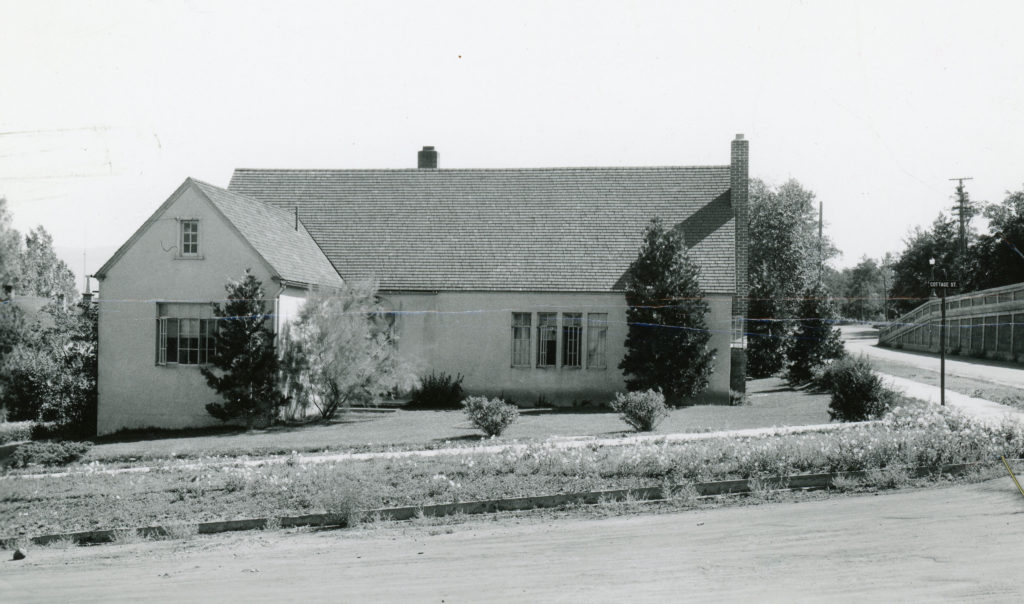
500 Cottage Street – Susanville

500 Cottage Street, Susanville, California
Okay, I am posting a shameless plug, but I do want to get the word out that the old Purdy home at 500 Cottage Street, is on the market. For details contact Linda White at 530-310-2930 or realtychicks@gmail.com

On the other hand, I will still provide some historical material related to the property, since there have only been two structures located there. Susanville first’s church, the Congregational Church was built there in the mid-1870s. In 1906, Susanville merchant, Charlie Emerson purchased the abandoned church, and moved it to 607 Cottage Street where he converted into a warehouse. In August 1915, that building caught fire and destroyed most of that block. In 1929, Wes Emerson built the house on the old church lot.

Support!

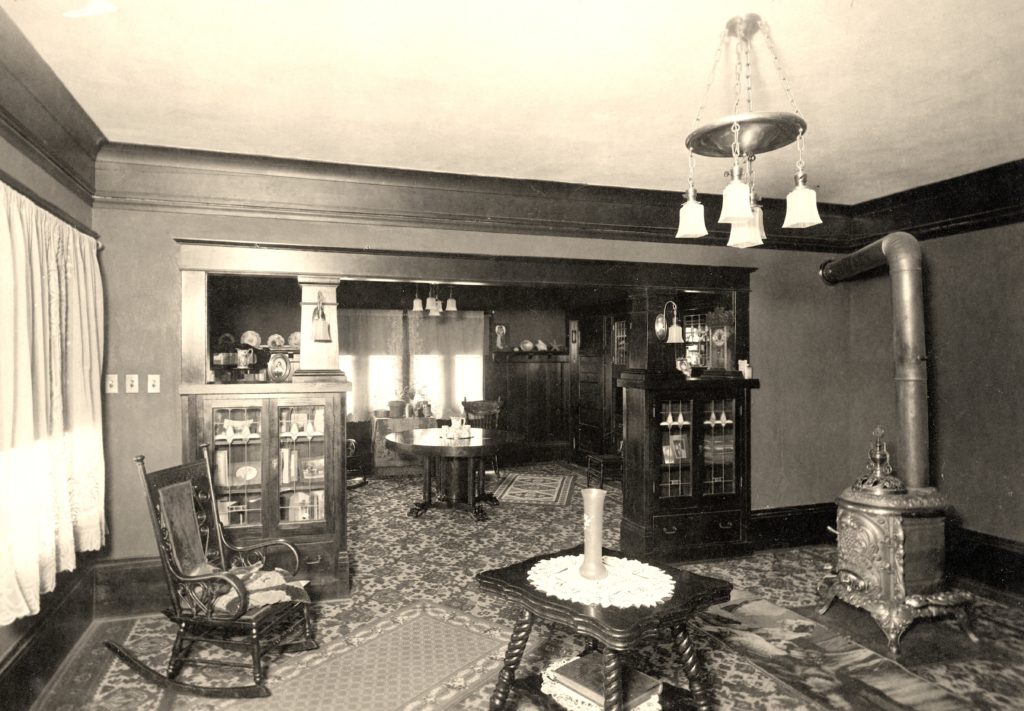
The 1912 Construction Boom

The B.R. Zimmerman residence, 310 N. Roop St., Susanville.

1912 was an exciting time in Susanville with the anticipation of the arrival of the railroad. There was housing building boom. There were more houses constructed in Susanville in 1912, than the previous eleven years combined! It also ushered in a new architectural style, the bungalow, and the days of the Queen Anne style were over.

Interior of the Zimmerman residence. Both photographs courtesy of the B.R. Zimmerman Collection

Support!

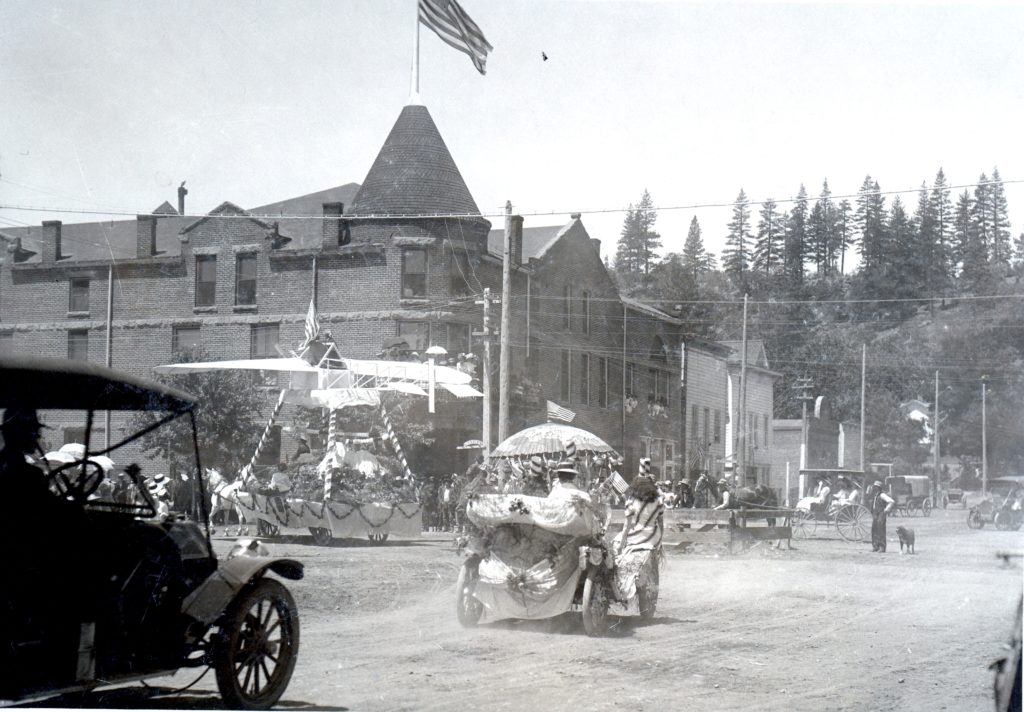
Susanville Bans Fireworks

4th of July 1907.

In Susanville’s early years as an incorporated city,  it was remarkable what the council did. One of their actions, I still support today, and that is the prohibition of fireworks. The first time they banned fireworks was in 1906, following the aftermath of the San Francisco earthquake and fire. It was also a nod to the insurance companies who suffered tremendous loss from that event. It was their belief, as well as many other communities, that this preventive measure would reduce the risk of fires. Continue reading Susanville Bans Fireworks

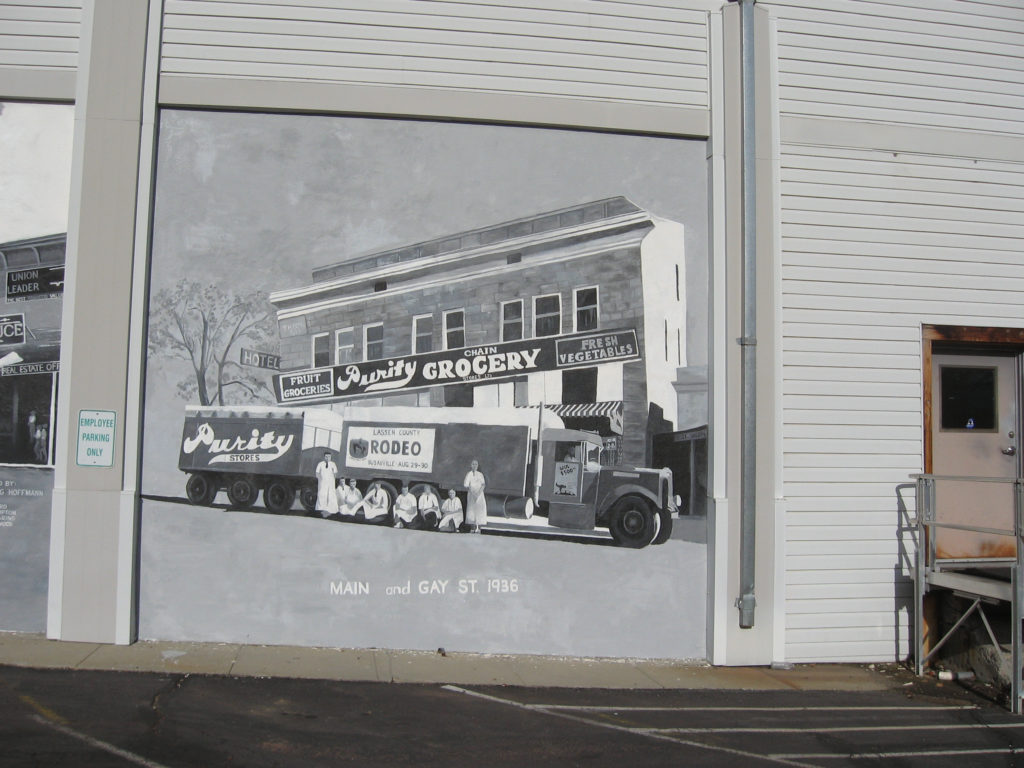
The Mural Tour

One of the panels on the LMUD building. December 26, 2016

It was my intention to conduct a Susanville Mural Tour today. However, due to other time constraints I have not had ample time to assemble the program. As I have previously mentioned that the tour not only gives background on each mural, but the building in which they adorn. For example, there is a bit of irony with the Purity Grocery mural on the LMUD building, since that building was constructed in 1940 for Safeway, Purity’s competitor. My goal now is sometime in July.

Support!

A City is Born

Susanville, 1938. Courtesy of Hank Martinez

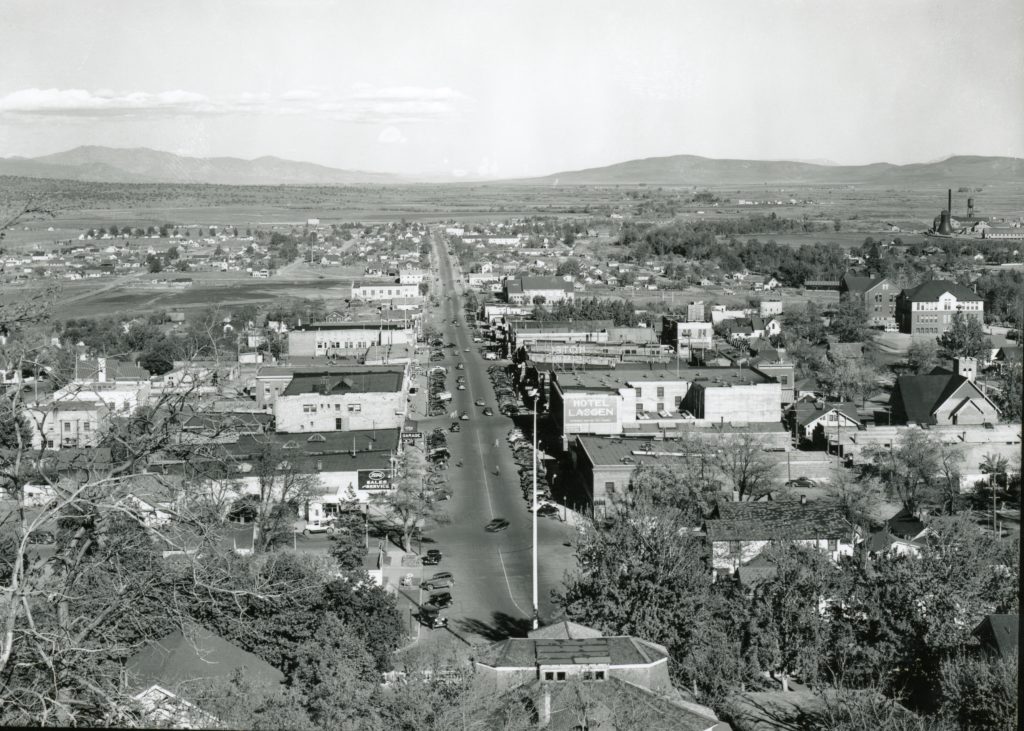
On August 15, 1900 the voters inside proposed boundaries of Susanville voted to incorporate as a municipality.  Its status was regarded as a “Town.” In the spring of 1940, the citizens submitted a petition to change from “Town” to “City.” which the council obliged.

Support!

Paul Bunyan Road

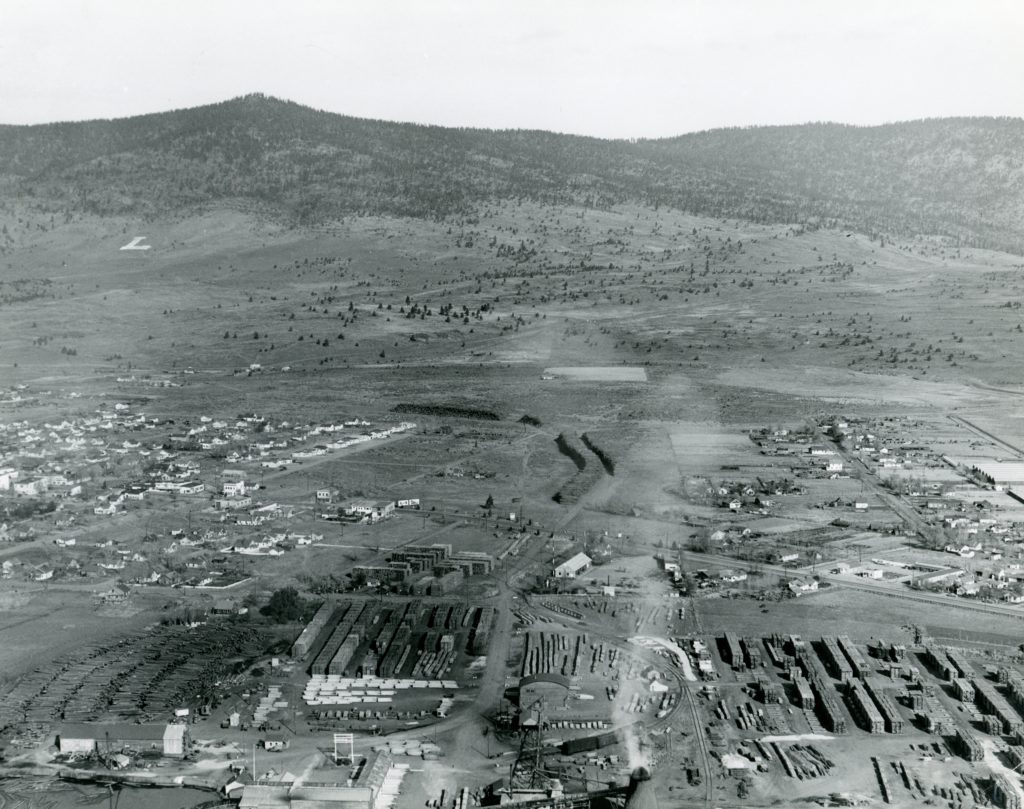
View of the north side of Susanville, 1947. Courtesy of Fred Lendman

The Paul Bunyan Road as a city street was a long undertaking. The road of course first started out as a railroad to deliver logs to the Springfield Cedar Mill, that evolved into the Paul Bunyan Lumber Company. When the mill closed in 1967, traffic on the road greatly diminished, though with agreement Sierra Pacific Industries utilized it on occasions. However it was a private road. When the Cherry Terrace subdivisions came into existence in the early 1960s, both the city of Susanville and county of Lassen set their sights on the Paul Bunyan Road as a means for better traffic. At the November 6, 1978 meeting of the Susanville City Council it was revealed that some of the first easements for right-of-way for this road was approved. However, it would be still decades away before it became a reality.

Subscribe!