Tag Archives: Susanville

The Non-Existant Pioneer Cemetery

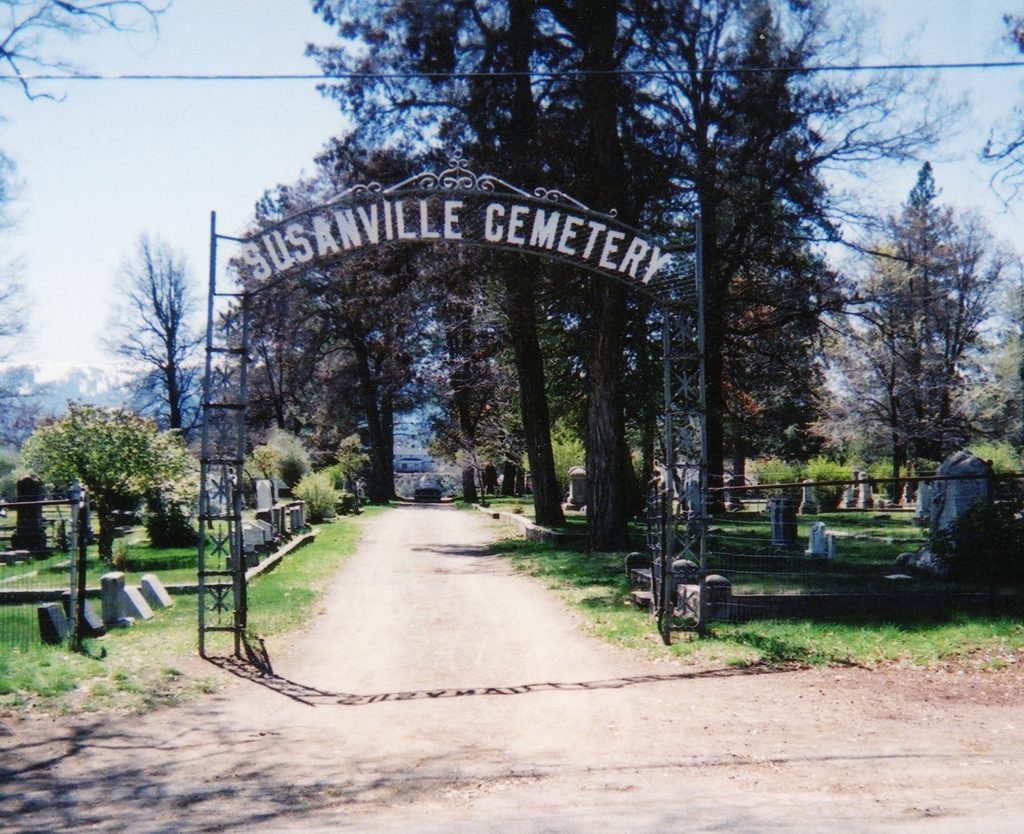
Susanville Cemetery entrance prior to the February 5, 2015 windstorm
This is just a pet-peeve of mine. What really galls me is it origins are the Lassen County Historical Society, of all institutions. It seems as there is an individual(s) who refer to the Susanville Cemetery as the Pioneer Cemetery and from time to time it gets picked up by the local media using that reference It is not, nor will it ever be the Pioneer Cemetery, nor is there a cemetery in all of Lassen County that has that distinction. Furthermore, if you use Asa Fairfield’s definition of pioneer, he refers that the pioneer era for the region ended in 1870. Thus, more than ninety percent of those interred there are not from the pioneer era.

Donate!

Washington School – Then & Now

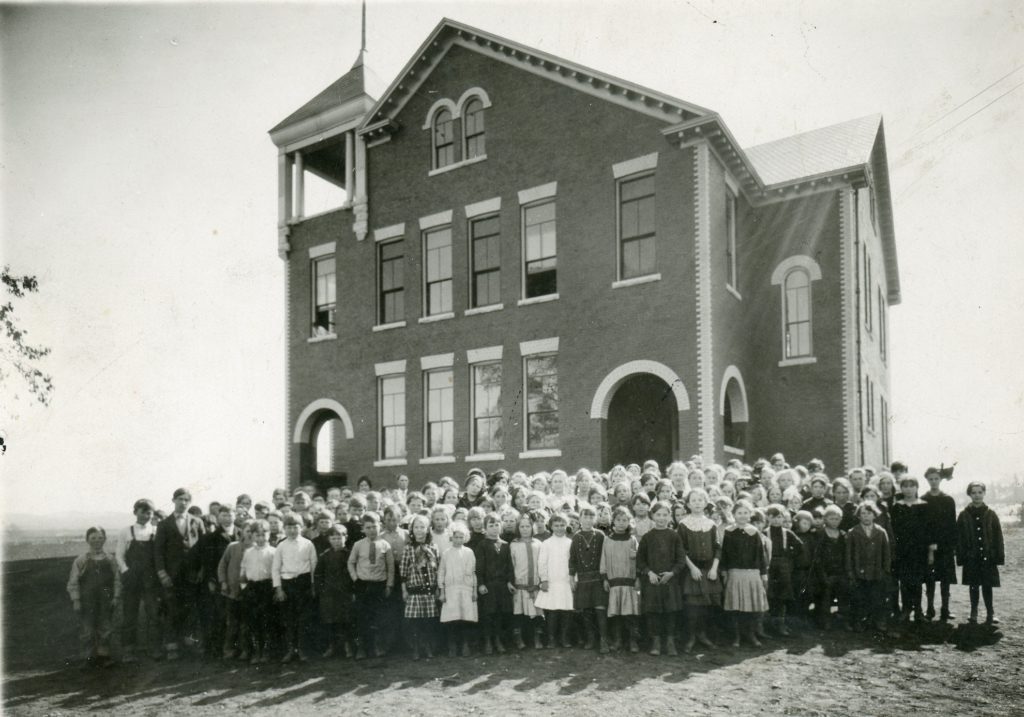
The grammar school, 1915.
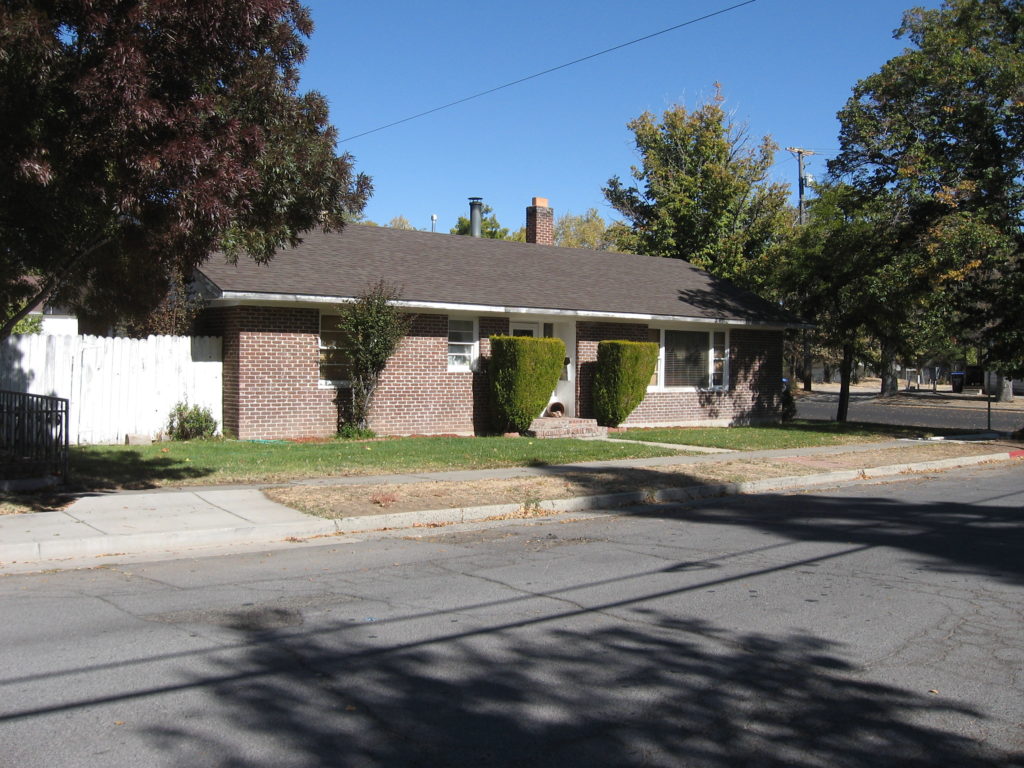
Built in 1900-01 it was originally known as the Susanville Grammar School. During the boom era of the early 1920s when three more elementary schools were built in Susanville, brought about the need of school names, all named after presidents—Washington, McKinley, Lincoln and Roosevelt—and the grammar school became Washington. When the Washington School was condemned and torn down in 1948, it did find a bit of reincarnation nearby. The bricks were recycled and used to construct the residence at 709 Mill Street.
709 Mill Street, October 12, 2017

A tale of the Methodist Church

Susanville’s Methodist Church, circa 1896. Courtesy of Philip S. Hall
For nearly the first fifteen years of Susanville’s existence it could said it was somewhat a scene of the old wild west, plenty of saloons, but no houses of worship. It was in the mid-1870s when two churches—the Congregation and Methodist—that the community started to become more civilized.

The construction of the Methodist Church at the corner of Lassen and Cottage Streets began in 1875. In 1877, with church nearing completion a bell was installed. The Lassen Advocate of June 23, 1877 reported: “The bell is already hung in the tower of the new M.E. Church. It is really a tony bell, its reverberations are heard for miles around. Our town is gradually taking on city airs.”

The bell it should be noted served a dual function for not only calling the faithful to worship, but it was the town’s fire alarm system for nearly three decades. However, it was no match for June 1900 fire that destroyed the church and three city blocks from Roop to Union. The bell survived that fire and when a new brick church replaced the old wooden one it was re-installed. The church was destroyed in the August 1915 fire and this time the bell did not survive.

Donate!
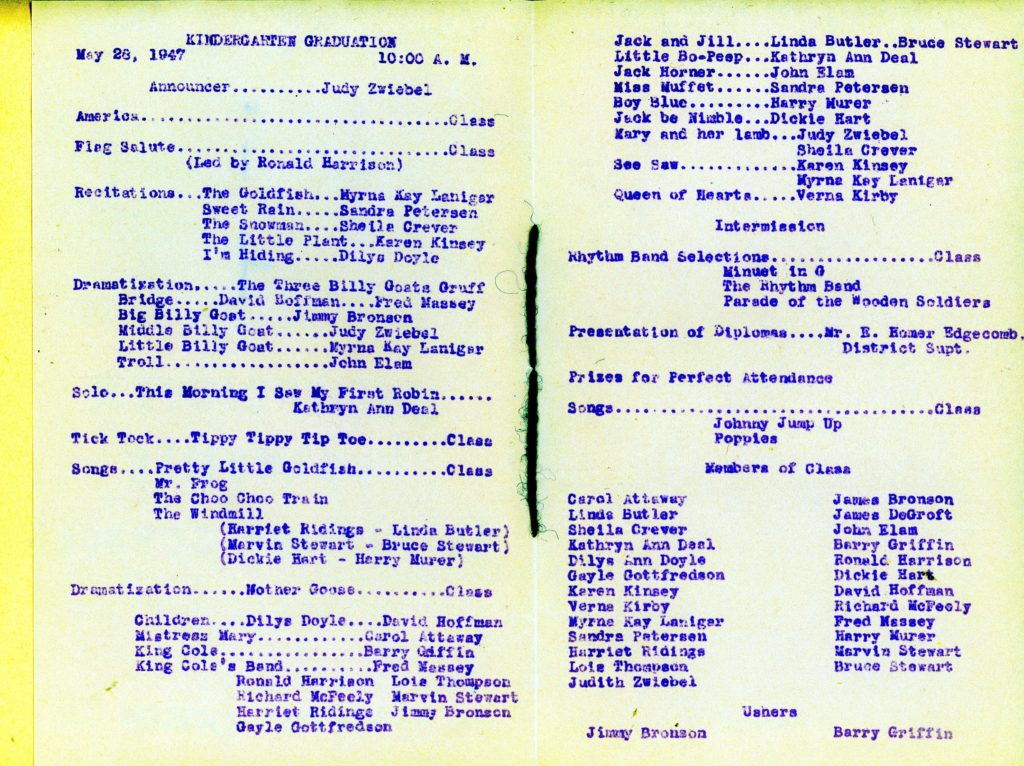
1947 Kindergarten Program

Courtesy of Louise West Collection
I scanned this and a few others last spring from the Louise West papers who taught Kindergarten and First Grade in Susanville from the 1940s to the early 1970s. At that time, I had mentally prepared a post about this topic, it has since been lost to one of those deep recesses of my mind. Many will find the names quite familiar and these youngsters became a part of Lassen High’s Class of 1959.

Subscribe!

The T.N. Long Residence

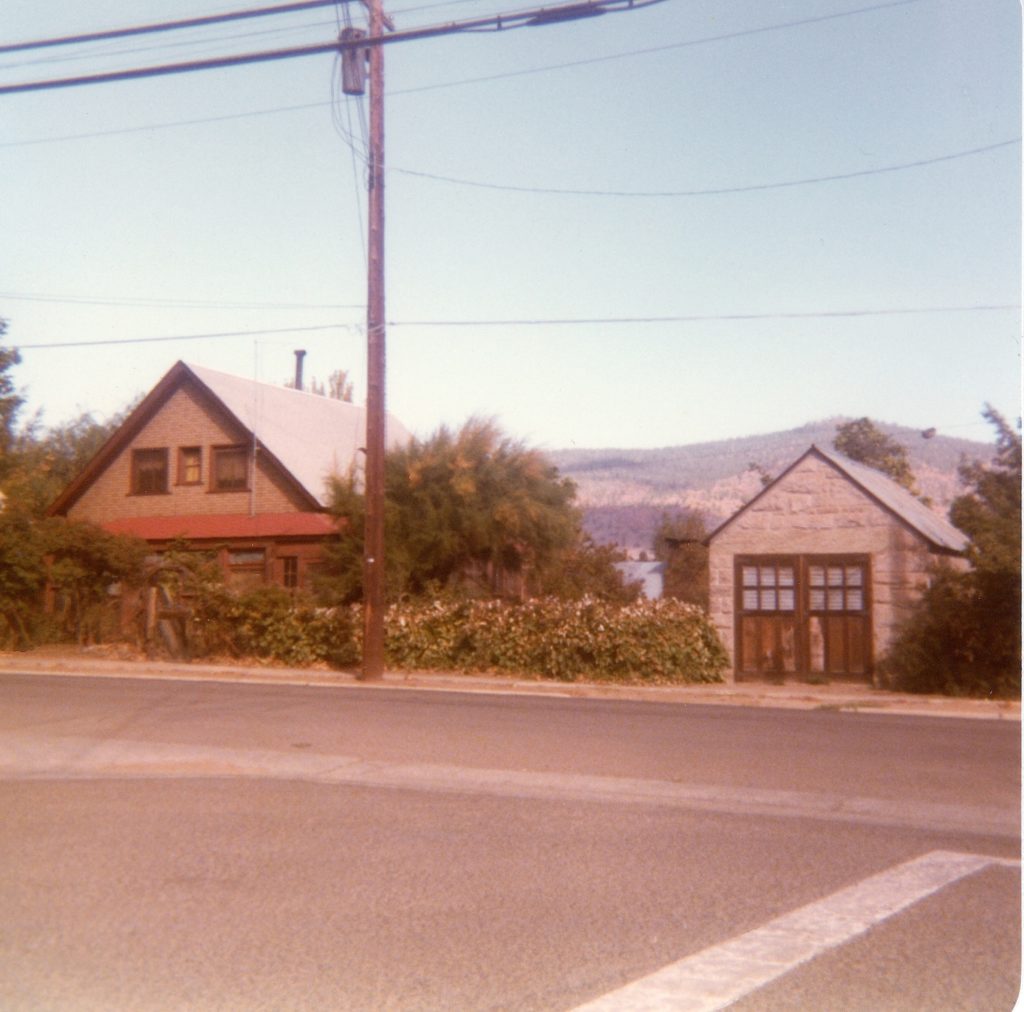
October 9, 1977
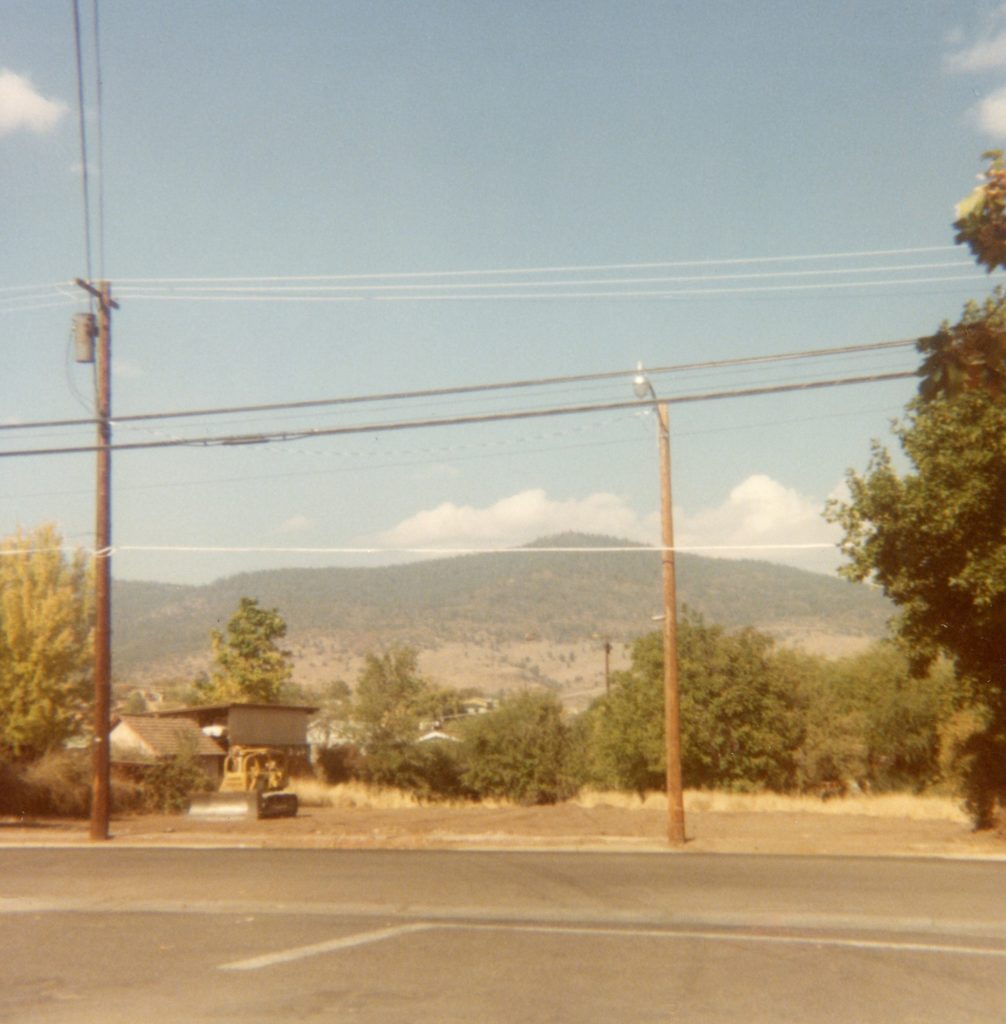
Located on the 900 block of North Street once stood the residence of Thomas N. Long. It was built in the mid-1870s and demolished a century later. The residence had two owners, Long and Bundy & Winifred French. It was torn down in October 1977 and plans were for an apartment complex on the site that that never materialized.
October 20, 1977

Brick Building Bonanza

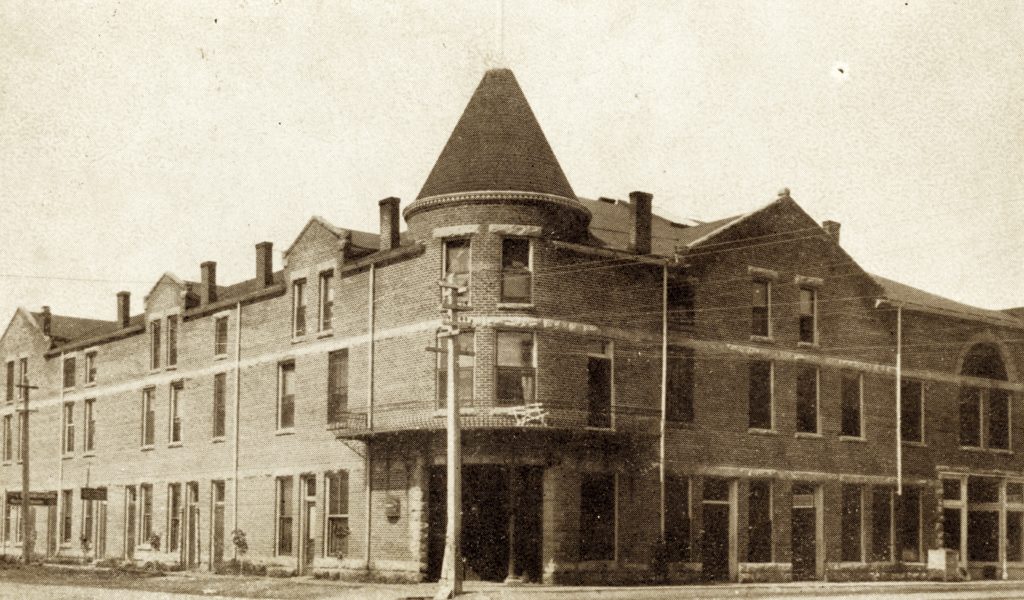
The Emerson Hotel located at Main & Lassen Streets, the current site of the Hotel Mt. Lassen.
In 1900-01, Reno building contractor, C.E. Clough kept busy in Susanville with the construction of four major brick buildings—Emerson Hotel, Methodist Church, Oakes & Philbrook and the Susanville Grammar School. Only two remain, the Methodist Church and Oakes & Philbrook, though the Susanville Grammar School was reincarnated, more about that later.

The brick was produced locally, though I am not sure where. In 1878, Robert M. Bean had a brick kiln along Piute Creek, a quarter mile north of town. That would place it around Marmo meadows.

Subscribe!

Bank of Lassen County

Bank of Lassen County
Bank of Lassen County at Main and Gay Streets

Established in 1892, it was Lassen County’s first financial institution. Wells Fargo operated infrequently, mainly during the 1870s and 1880s, in Bieber and Susanville, but their services were limited.  During the late 1800s, Susanville’s Jewish merchants, such as Marcus Nathan, David Knoch and William Greehn, lent money to those in need and the loan was secured usually by a property mortgage.  It was a wide array of citizens who saw the need for a bank, including the aforementioned merchants. Its first office location, was unique, located in the Pioneer, a local saloon established in 1863, and still in existence today. It was simple logic, as Susanville’s business district was prone to devastating fires, and the saloon owned the largest fire proof safe in town.
Continue reading Bank of Lassen County

A Susanville First

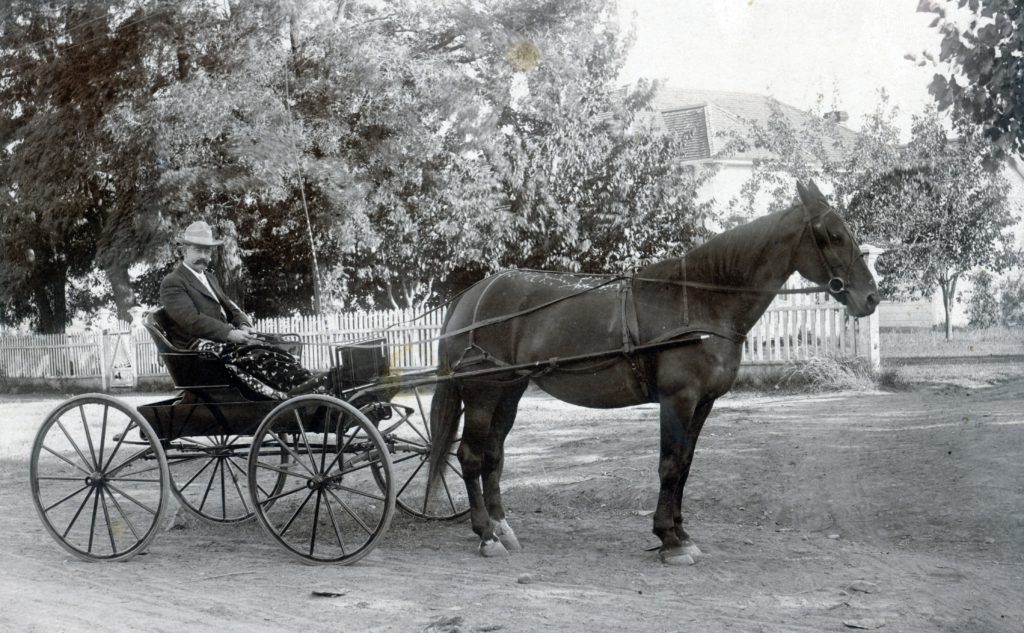
A.K. Philbrook and his new buggy in front of the Sol Nathan residence on Roop Street. Courtesy of Philip S. Hall
This falls in one of more unusual transportation categories. In 1892, Susanville’s furniture maker/undertaker, Alonzo K. Philbrook purchased a new buggy. I realize that does sound so dramatic. It was the first rubber tire buggy in Susanville.

Subscribe!

Fruit Growers comes to Susanville

Fruit Growers Supply Company, 1922.
In the fall of 1919, Susanville was filled with excitement when the Fruit Growers Supply Company accepted the residents offer of $40,000 to locate their lumber mill in that community. It was not all that long ago, when they had lost the opportunity of the Red River Lumber Company to locate there. To understand how big a windfall to have Fruit Growers is that the company would initially employ 1,500 people, more than the population of Susanville.

Subscribe!

Susanville – 100 North Roop Street

100 North Roop Street, January 1916.
In 1908, David Knoch, a pioneer merchant of Susanville, had this modest home constructed on the corner of Roop and Nevada Streets. With the exception of the Bunnell house on the corner of Roop and North Streets, the western frontage of that block had always been vacant. When Knoch opened up the property, three Queen Anne style homes were built shortly thereafter. After Knoch’s death in 1911, the house was sold to John T. Long. It would remain in that family for three generations, later the home of Long’s daughter, Maude Tombs, and Maude’s daughter, Nadene Wemple.

Subscribe!