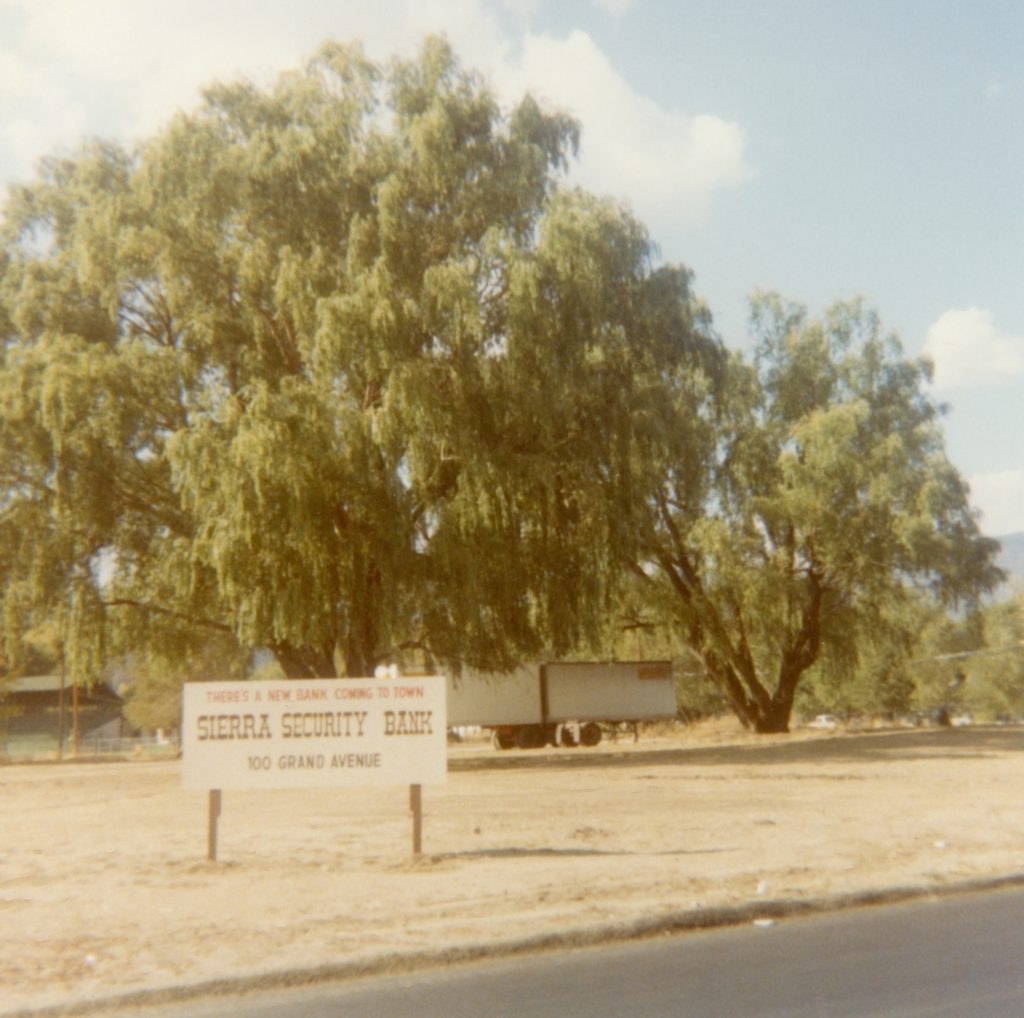
During 1977-78 some progressive Susanville residents banded together to establish an independent community bank. The last time this occurred was in 1912, with the formation of the Lassen Industrial Bank. Anyhow, in 1978, the Sierra Security Bank was formed. The location of the new bank was at 100 Grand Avenue, Susanville, now the home of the Lassen County Times. Sierra Security’s bank building was a portable structure. In November, 1978 the new 4,200 square foot bank arrived in six sections, from Sunnyvale, California where it had been used by De Anza Bank.
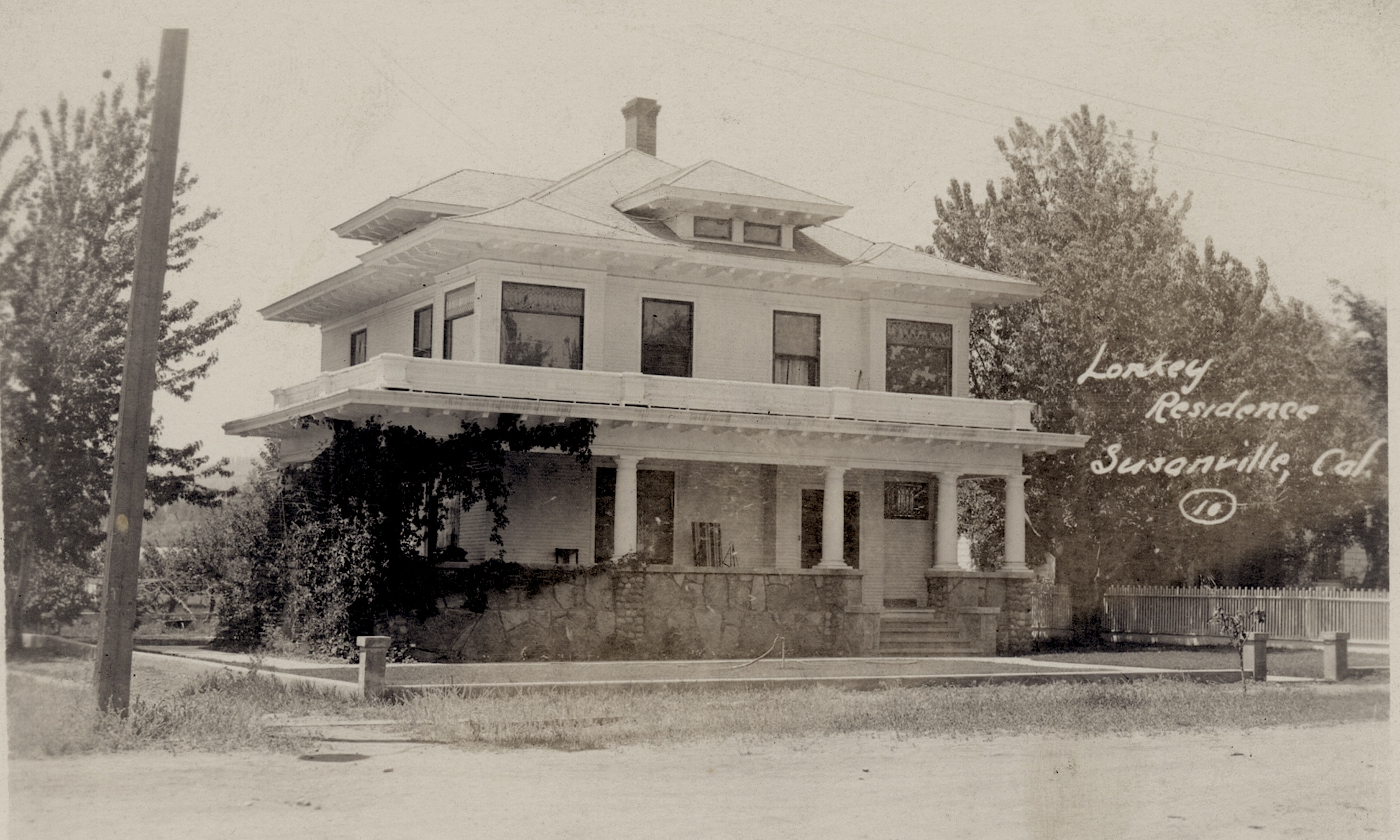
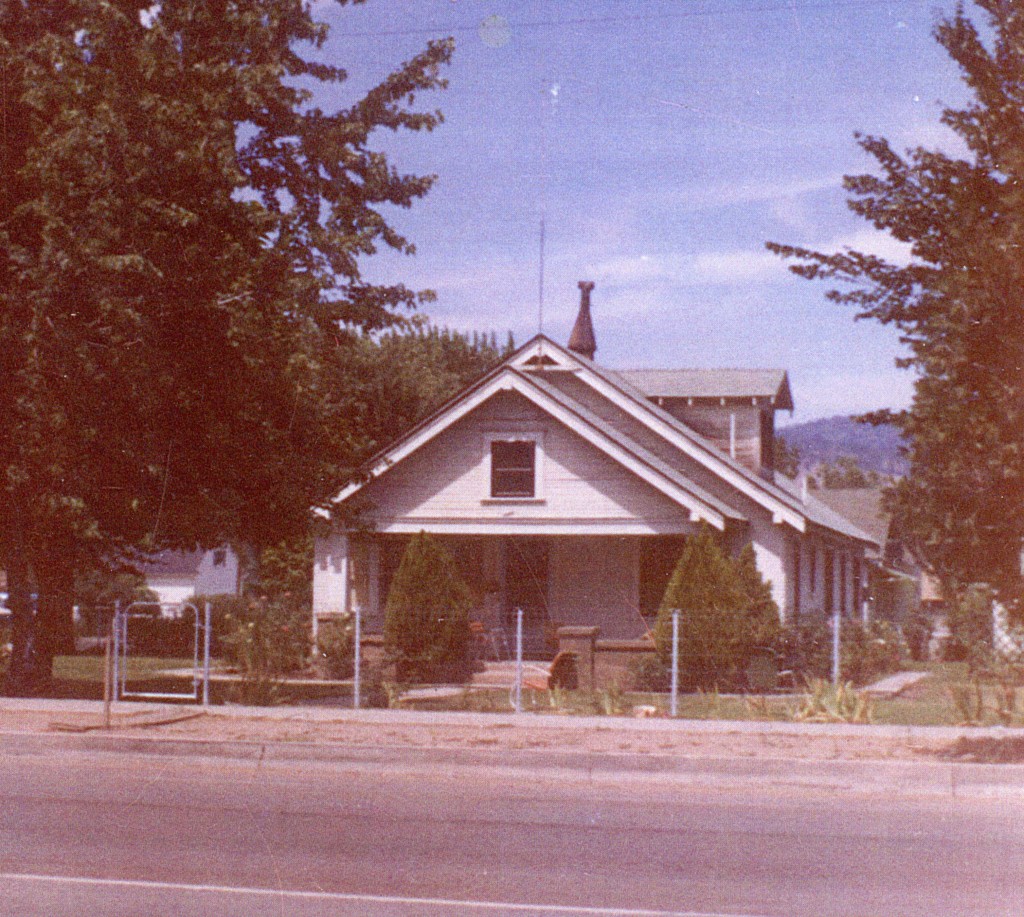
The Lonkey residence, circa 1915. B.R. Zimmerman collection
In 1908, residents of Lassen County were surprised with the formation of the Hill Lonkey Land & Livestock. Two of the key figures were Nevada residents Thomas Hill and Camille Lonkey. They purchased the San Francisco Ranch (now Five Dot) and the Folsom Ranch (now Fish & Game) in the Willow Creek Valley. The partnership was brief and they dissolved the company two years later. Hill took possession of the Folsom place, and Lonkey the San Francisco Ranch. Continue reading Susanville – 710 Mill Street→
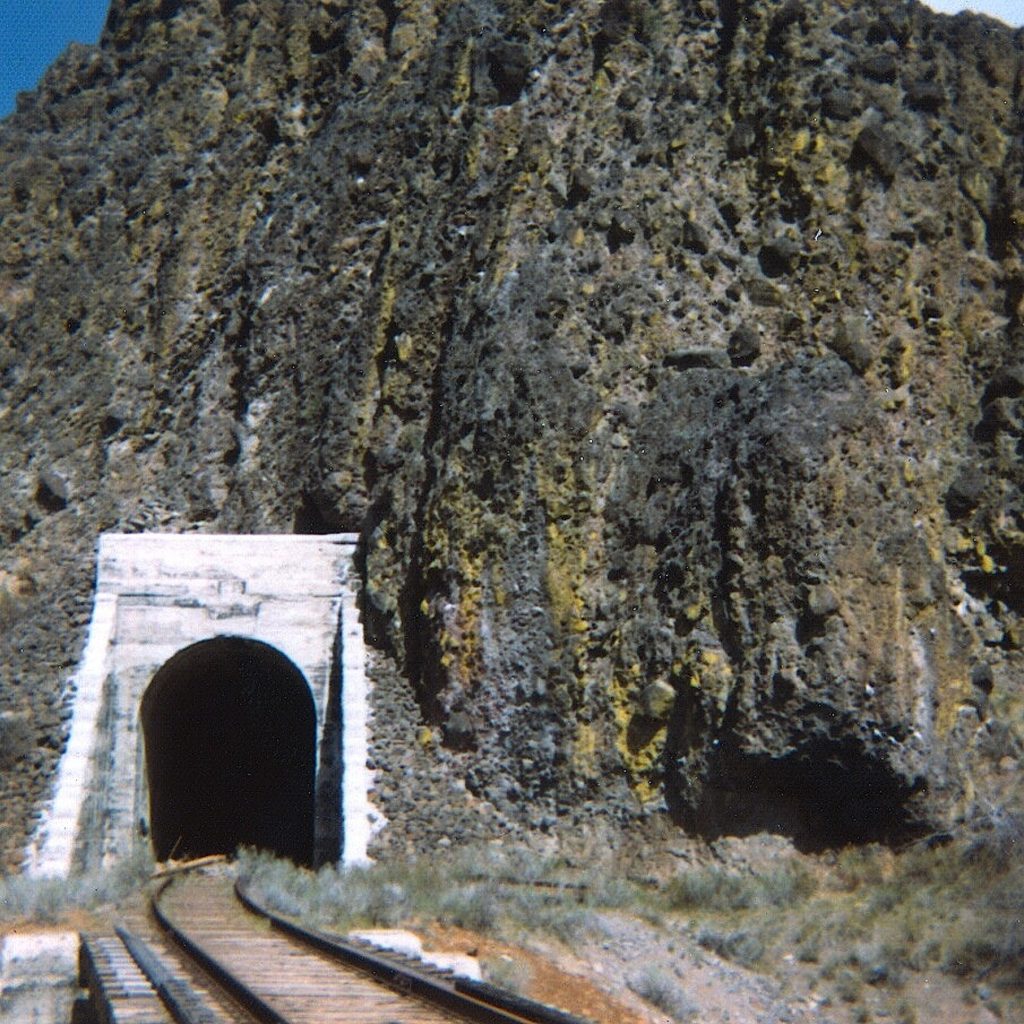
In 1976, after twenty years of non-use the Southern Pacific Railroad filed for the abandonment of its rail line between Susanville and Westwood. The City of Susanville and the Lassen County Board of Supervisors opposed the measure. They feared the loss of a potential transportation corridor. The Lassen County Chamber of Commerce wanted to see it converted into a tourist line, similar to that of Mendocino County’s Skunk Train.
Fast forward two years later and both the city and county embraced the Bureau of Land Management’s proposal to acquire the abandon line for recreational purposes. Thus, the rails to trails program, became part of the local lexicon.
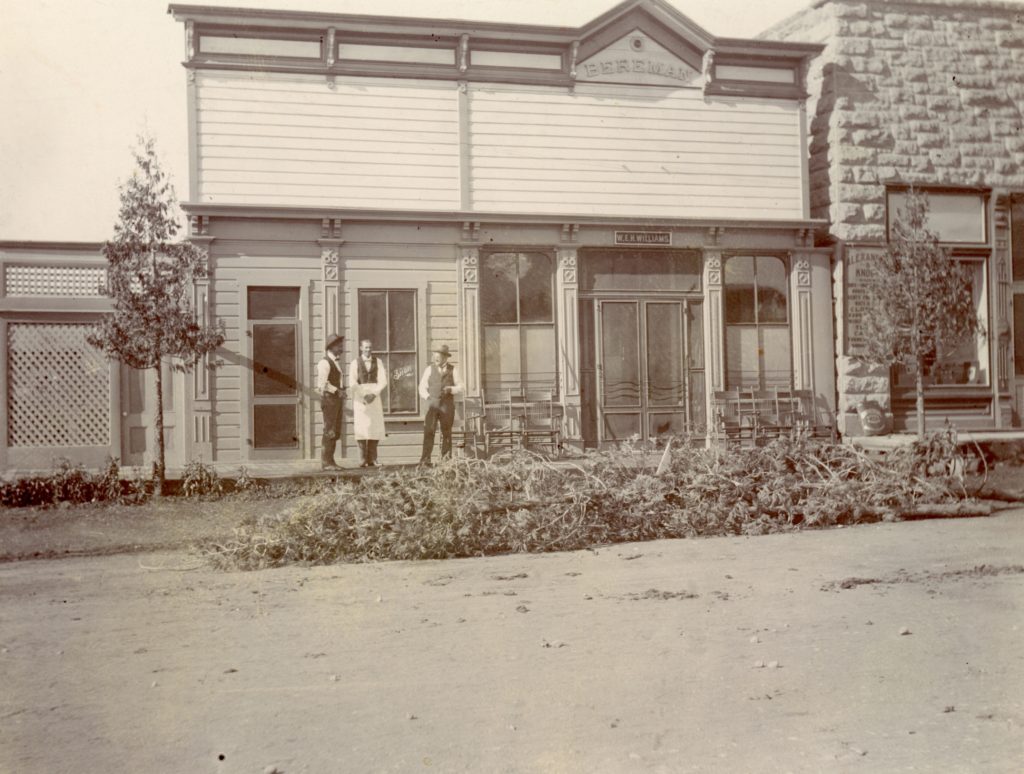
For several years prior to 1912, the Pioneer had a biergarten next door. Courtesy of Philip S. Hall
In 1862, John Burkett opened a saloon at what would later become the address of 724 Main Street. He named his new enterprise the Humboldt Exchange. After all, at this time, a number of Honey Lakers were prospecting in Humboldt County, Nevada where there were a flurry of mining discoveries. The following year, he sold to George Heap and Joe Hale and they renamed it the Pioneer. The Pioneer, now the home of Lassen Ale Works, has operated in the same location all these years, though it has been through several buildings. The back bar, it should be noted is from its 1901 building. Of note, that building still exists and is located on the 900 block of Main Street.
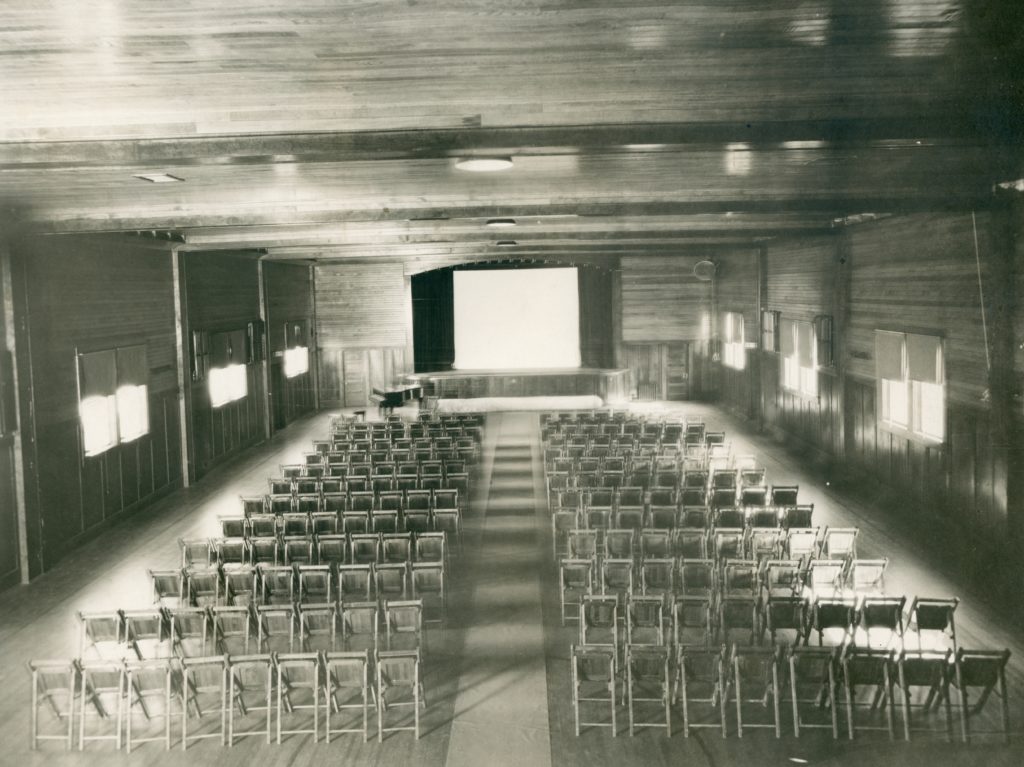
The movie theater in the Story Club, 1923. It was used by many religious denominations for services. Courtesy of Fruit Growers Supply Company.
Like so many religious denominations the Seventh-Day Adventist experienced a rocky road to establish itself in Susanville. It was not so much their faith, but when they first held meetings there in the early 1900s, the population of the community was a meager 1,000 inhabitants, including dogs and cats. For reasons, not known to me they flourished for a brief time and built a church on Main Street, between Hall and McDow Streets. The good times did not last long, and in 1919, the remaining members of the church petitioned the Lassen County Superior Court to sell the property. In their petition, they stated it had not been used for five years. It was granted. Otto Hisaw bought the church and converted it into a pool hall.
A decade later the Seventh-Day Adventist saw a resurgence in Susanville and on September 7, 1928, Elder J.H. McEchern of Reno organized the Susanville. For nearly a decade the congregation would meet in members homes. In 1939, they built a church on the corner of Cedar and Fifth Streets. In 1976, an opportunity arose and they purchased the Chapel of Memories on Johnstonville Road from Jim and Betty Stone which they still occupy. In 1983, the Adventists sold their old church to the Church of the Foursquare Gospel.
600 Nevada Street, Susanville, circa 1911. Courtesy of Dick & Helen Harrison
A subscriber wanted to know what happened to the house located at 600 Nevada Street. It is somewhat an amusing tale. The house was built in 1895, and for many years it was the home of Elizabeth Bagin. In 1941, the residence was converted into apartments. In 2005, the last tenants to occupy the building were refugees from Hurricane Katrina. The City of Susanville had already acquired the building by then. In 2008, the building was placed on the City/County historic landmark register. The city would spend the next several years as to what to do with the structure. In the spring of 2014, the city had the building demolished.
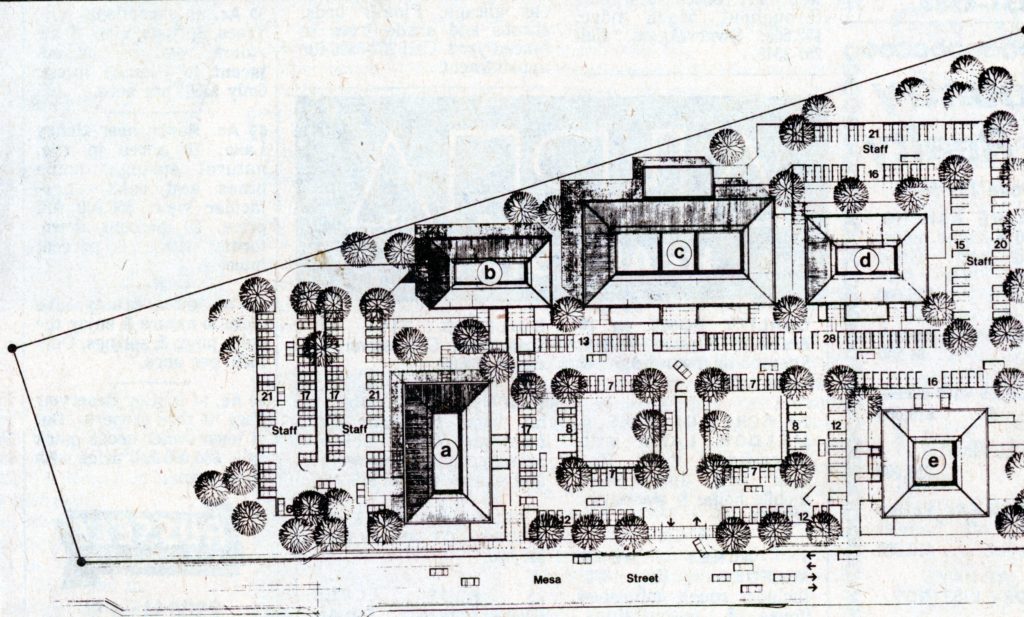
In 1975, when the Lassen County Public Works Department proposed a new building on the north side of the courthouse that was shot down, the department did not give up. In the spring of 1976, a proposed Lassen County Master Plan was unveiled. A site of 10 acres had already been selected adjoining North Mesa Street. Construction would be done in phases with the ultimate goal of a county courthouse complex.
On September 7, 1976, the county board of supervisors approved the purchase of the Mesa Street property from the Paul Bunyan Lumber Company for $45,000. There was opposition with over 100 people in attendance against the measure. Susanville attorney, Joseph B. Harvey representing the Lassen County Tax Payers Association presented a petition signed by 889 registered voters opposing the purchase and that the matter be put to vote.
While the county went ahead with the purchase, no county complex would be constructed there.
Cady Springs Overflow, Susan River Canyon, October 1972.
In 1880, San Joaquin County native, Frank Cady, purchased a ranch in Big Valley, Lassen County. Nine years later he relocated to Susanville. In 1896, an opportunity arose for Cady to purchase the Susanville Water Works from Harry Cain who was going through a messy divorce with the former Stella Stiles.
At that time, the water supply came from Big Springs three miles west of Susanville in the Susan River Canyon. In 1900, Cady had three-quarters of mile of pipe laid from the water tanks going westward, with the goal of replacing the open ditch with pipe. In 1930, when Cady sold the water works to the Republic Electric Power Company, only three-eights of mile of the ditch was still open near the springs, that eventually became known as Cady Springs.
In the early 1960s, Lassen County was busy in building a new hospital adjacent to the one constructed in 1916. Once, opened the new facility would have a major impact on two healthcare facility—Potter’s Maternity Home and Riverside Hospital. “Ma” Potter took the opportunity to retire. The fate of Riverside Hospital was another matter. Irene Bengoa Purdy, a registered nurse, proposed to Dr. Fred Davis, Jr., they and others should purchase it and convert it into a convalescent hospital. Irene could not muster support to accomplish her proposal. In 1969, Riverside Hospital was torn down and replaced with the current convalescent hospital.
Ruth “Ma” Potter (1886-1965) was a Susanville institution of sorts. In the early 1930s, the Utah native, opened a maternity home at 1603 Main Street, the current location of Rite Aid. She continued on until 1963, when she finally retired. It should be noted that her home was moved to South Street in 1966 to make way for United California Bank. There is a plaque in the sidewalk at Rite Aid marking the site.
During the time when Potter’s was in operation, one was either born there or at Riverside Hospital, the latter no longer exists. While my three siblings were born at Potter’s, I decided to be different or difficult, whatever the case may be, and was born at Riverside Hospital.
Yet, on the other hand, it would be fun to have a reunion of sorts of all those who were born at Potter’s. Let me know what you think?