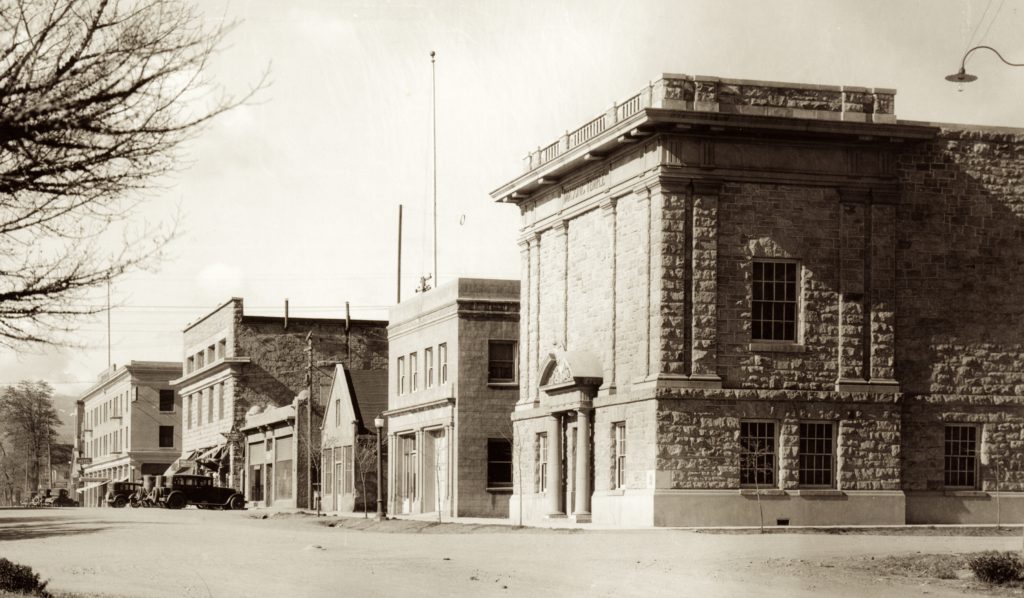
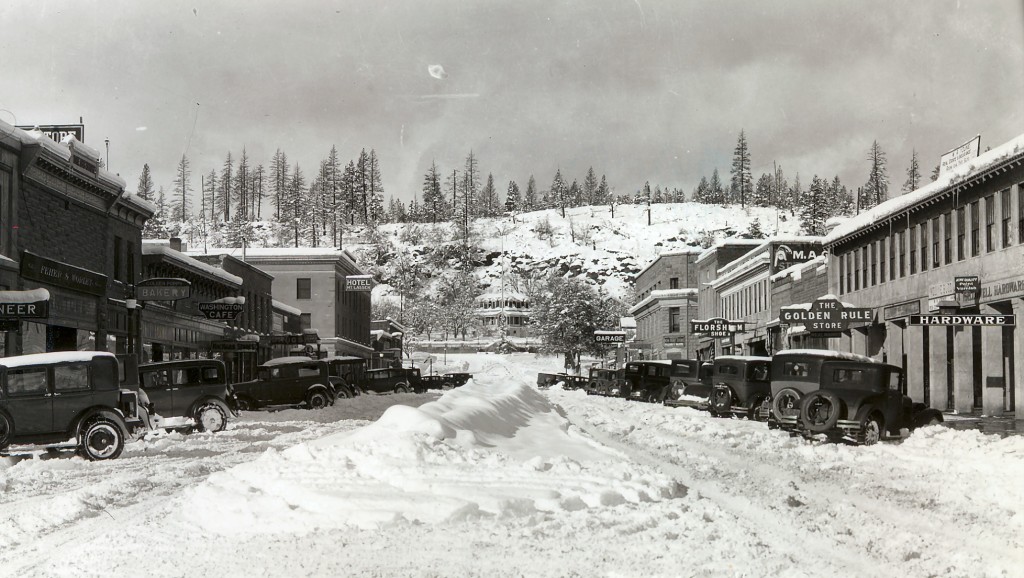
At the July 18, 1927 Susanville City Council meeting, plans were finalized to transform Main Street into a boulevard. The major impact was that all cars entering Main Street from Roop, Lassen, Gay, Union and Weatherlow Streets would be required to make a full stop before proceeding. The matter was thoroughly discussed, it being the only item on the agenda. The ordinance went into effect on August 19.
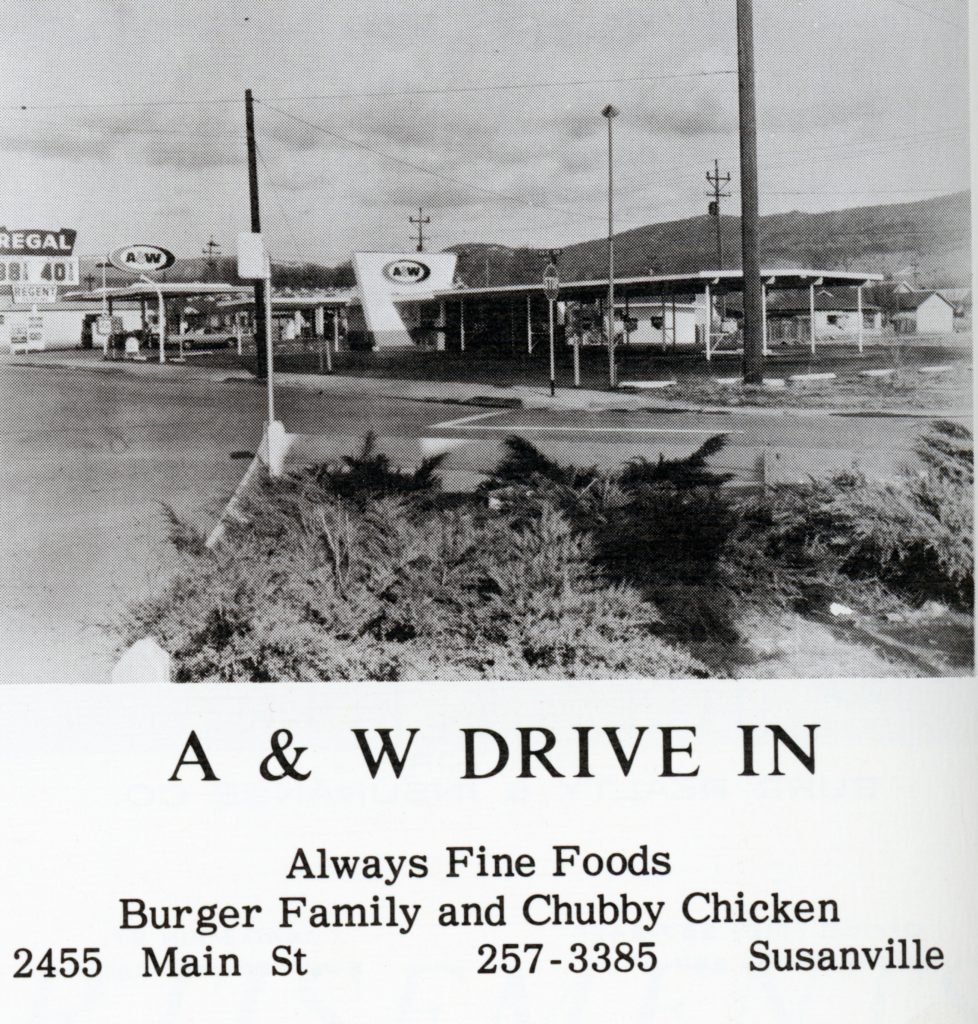
1971 Advertisement in the Lassen Cougar Yearbook. Courtesy of Jim Chapman
Seasoned residents will remember this establishment located at the bend in Main Street. It opened for business on May 22, 1961. It was established by John Gilliam and Leonard Porritt who invested $40,000 in this new enterprise. Decades later it shut down. It was first reincarnated as Chinese Kitchen and today it is the home of the Courthouse Cafe.
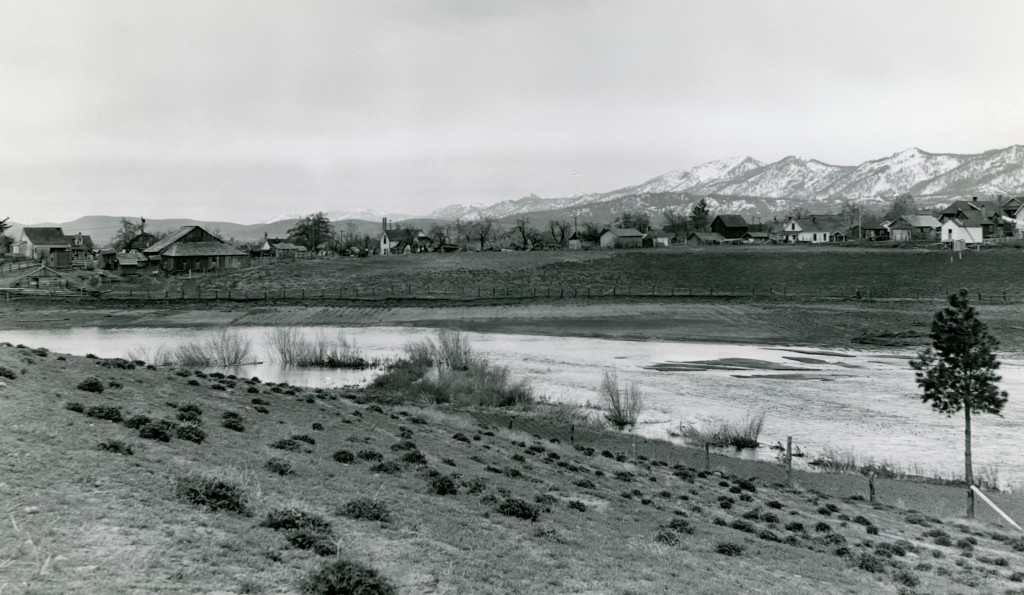
Piute Creek, April 9, 1938. Courtesy of Betty Barry Deal
In 1870 the California Legislature passed a law that prohibited hogs from running at large in the village of Susanville. This was serious business, since the problem was so bad, the residents had to petition Sacramento for assistance! Take for example that on May 22, 1864, Isaac Roop, the owner of the town’s water system sued Hiram Teft for allowing his hogs to roam freely. It should be noted the town’s water supply was from Piute Creek, and was distributed through open ditches. In Roop’s court complaint he cited, “ Teft’s hogs has entered and wallowed in my water ditch and has urinated and deposited excrements therein whereby the water running in said ditch has been muddied and rendered filthy and make unfit for use.” Roop sought $50 in damages and loss of water sales. As no judgment was entered into the court, Teft and Roop must have reached an agreement.
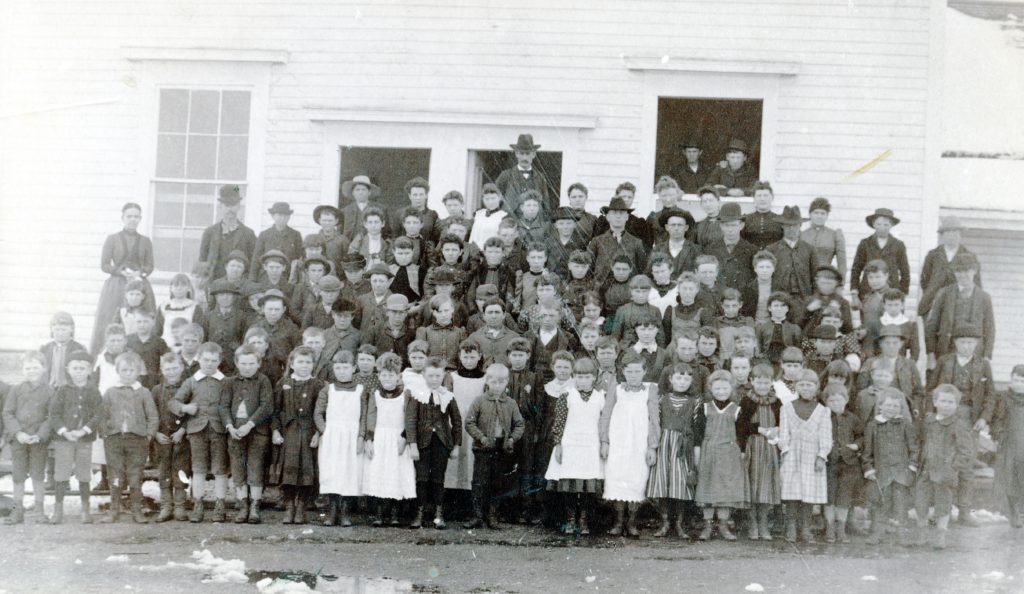
The Susanville Grammar School, early 1890s. Courtesy of Juen Chappuis.
In 1863, the Plumas County Board of Supevisors approved the formation of the Susanville School District—Lassen County was not in existence. A site for the school was selected at Cottage Street, near Weatherlow. All these years later this property has always been used for public educational purposes. The original school structure was a very modest one, and as the community grew, so did the need to expand the school. In 1873, L.J. Abel and George Barley constructed a two-story schoolhouse for $3,025, one the site of the first school. It would meet the community’s need until the arrival of the next century. It was.
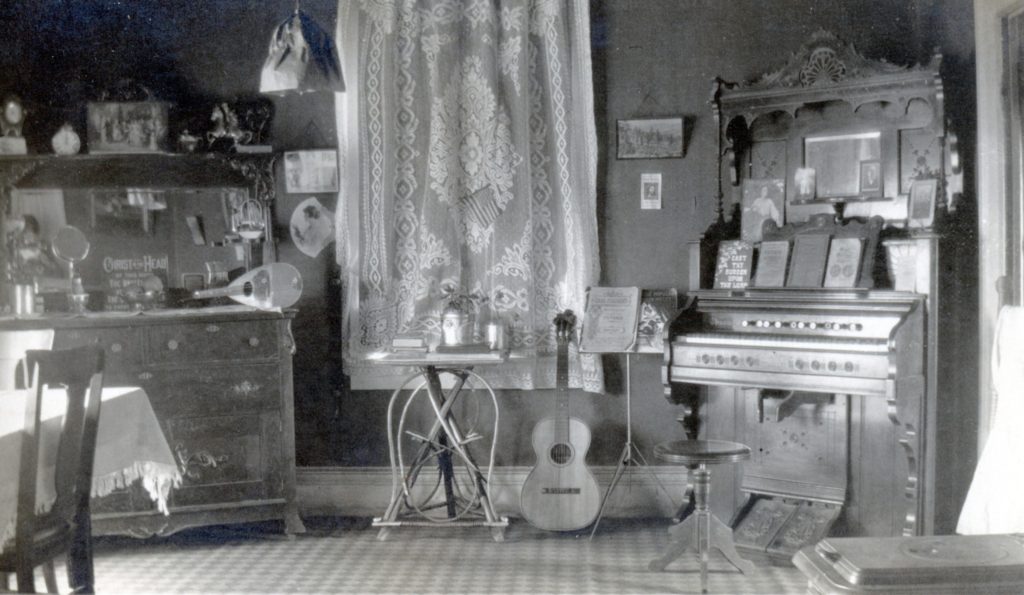
The interior of Edith Young’s home, 1919. Courtesy of Belle Dorsey
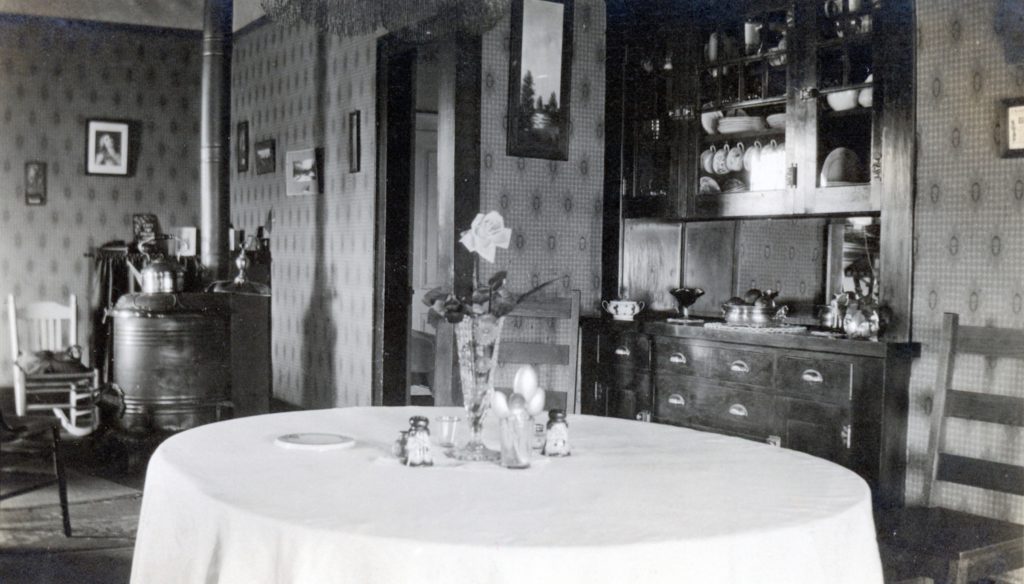
In 1918, Hayden Hill residents Belle and Jud Dorsey moved to Susanville. Jud went to work on the construction of the mill of Lassen Lumber & Box Company and would remain with the company for several years. The Dorsey’s made their home with Miss Edith Young. Young at the time, was the local government agent for the Native American community. Interior photographs for this era, tend to be on the rare side, but I know some might enjoy them. What is perplexing for me, is I do not know where this was located. Belle did take a exterior photograph of house, which is hidden by mature trees and there is not enough peripheal to provide any clues.
The interior of Edith Young’s residence, 1920. Courtesy of Belle Dorsey.
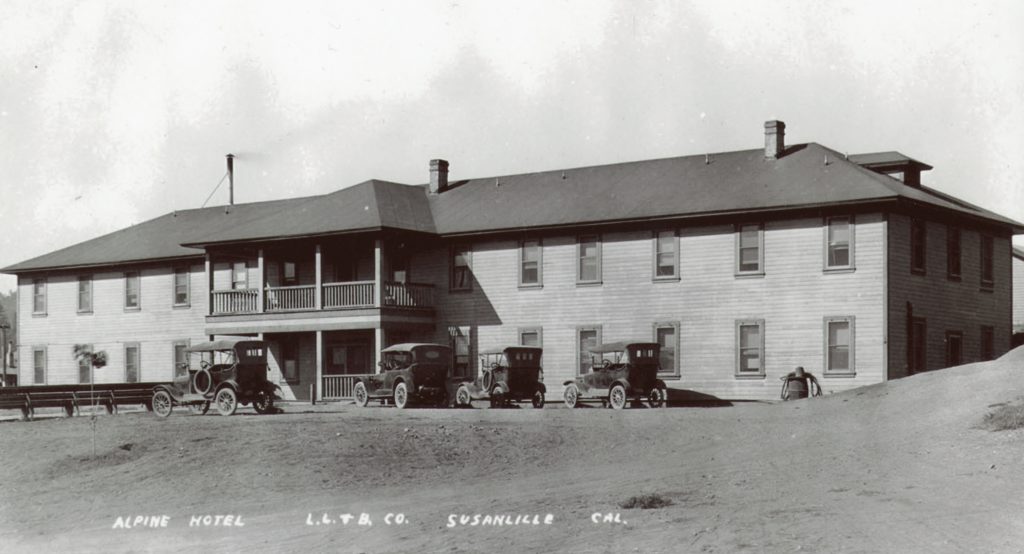
Alpine Hotel, located on Alexander Avenue, was a dormitory for the employees of the Lassen Lumber & Box Company
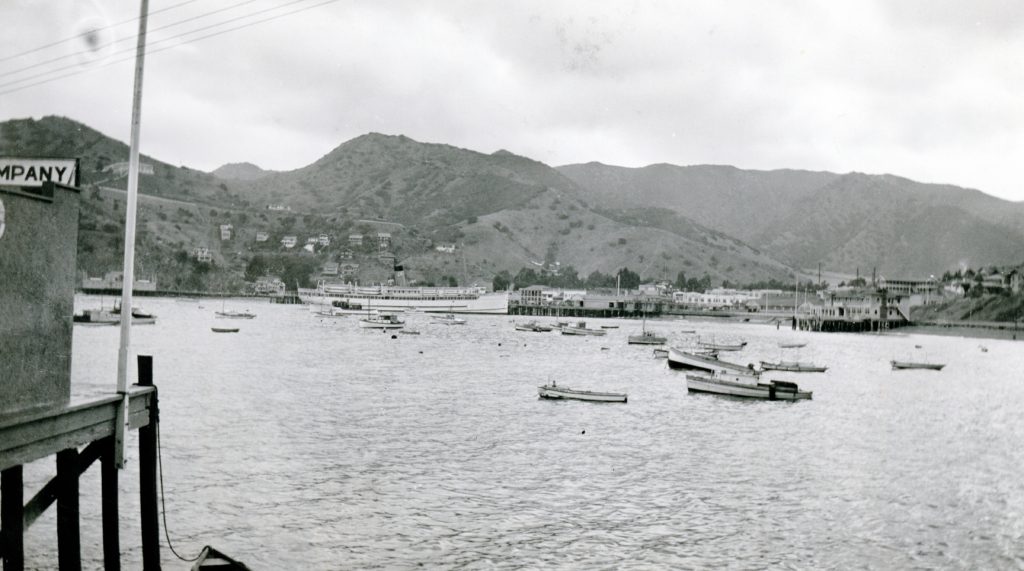
In September 1925, fourteen members of the local American Legion post received a rousing send off from the community on its departure to the State Legion Convention at Avalon on Catalina Island. The group’s spirits were high since earlier in the year San Francisco had withdrawn its bid and supported Susanville for next convention. Among the many items the group left with was a special edition of the Lassen Advocate extolling the many virtues of the commumnity. One feature noted the community had 2,305 rooms available. This was a contentious issue as to whether to hold the convention in Susanville in 1926. The Susanville delegation used all its charm and political savvy to beat out Santa Rosa and Stockton by a huge margin. About all those rooms. All might have went well if there was zero occupancy, but with a critical housing shortage that was not the case. The only way to accommodate all the visitors was for residents to open their homes and many did. The Red River Lumber Company provided 325 cots and Fruit Growers 150.
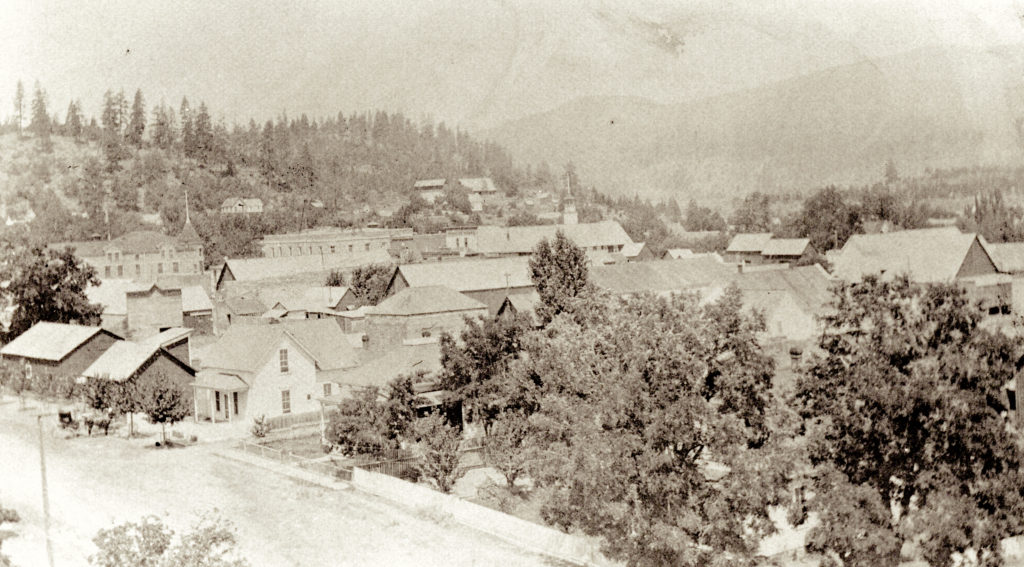
A unique view of Susanville, 1905. Courtesy of Mary Dale Folsom
This was a very short-lived organization that existed during the month of January 1899. The lead instigator, was well known Susanville attorney, E.V. Spencer. At this time, The Nevada-California-Oregon Railroad (NCO) began work to extend its line north from Amedee to the Madeline Plains, again bypassing Susanville. Spencer and L.C. Stiles were appointed representatives of the Club to meet with NCO officials, in this case E. Gest, the manager. The duo reported the meeting was cordial, the NCO had no intent to construct a feeder line. Gest, is the people wanted to construct it, he estimated the cost at $100,000. The initiative floundered. It is interesting to note that Gest testified that summer to California Board of Equalization that the people of Susanville did not deserve a railroad.
There were some local critics that thought the Susanville Improvement Club could do a lot of other work than trying to be a railroad builder. Whatever the case may be, the improvement club morphed into the Susanville Town Hall Association a month later.
The more things change, the more they remain the same, as the old saying goes. The following is a 1927 editorial of the Lassen Advocate, as it was concerned about how mail order business hurt the community. Fast forward today, replace mail order with online shopping.
The Town Grave Digger. In nearly every community may be found quite a number of persons who consider themselves leading citizens, but in truth are helping to dig a grave for their town.
They do it through their failure to support institutions which make the town what it is. They do it by sending away for merchandise which might be brought with equal advantage at home. They do it frequently through thoughtlessness, but often througfh sheer disregard for the welfare of the community of which they are aprt.
The doctrine of buying at home in not advanced solely in the interest of the individual markets. It is advocated because every citizen of a town is to a certain extent dependent upon every other citizen for his own prosperity. Business men are sometimes as greatly at fault as anyone else inthe matters of out-of-town trading.
If the shoe dealer sends away for his automobile tires and the automobile man sends away for his furniture and the furniture man sends away for this clothing and so on, how can they expect to build local prosperity?
All the fine talke about civic pride that one may indulge in will never make a town, so long as the life blood of the community—the cold cash—is spent elsewhere.
A man may make boosting speeches until he is black in the face, but unless he spends his money where he makes it, he is the home town grave-digger.
Main Street, Susanville, 1885. Courtesy of Betty Barry Deal
Today’s feature photograph was taken by John Hanson, who operated a photography studio in Lassen County during the early 1880s. An interesting footnote one could purchase this print for $2.00.
Hanson, a native of Denmark, first came to Lassen County in 1881, where he set up shop at Bieber. Previous to that he was in San Francisco. His brother, whose first name remains unknown came to Bieber and set up a photography studio there, while John moved to Susanville. Like so many photographers in the rural west, they rode the circuit to surrounding communities in search of business. Hanson, like his colleagues, never remained in one place long enough, that we know very little personal information about them. Hanson did find romance in Susanville and married Miss Fannie F. Streshly there on October 31, 1883. Thankfully due to newspaper excerpts we know that Hanson took photographs of the Juniper Mine at Hayden Hill, as well as an assorted views of the many other places in the region. Most of that type of work has never surfaced. In 1885, he departed to Inyo County and never returned back to Lassen.
One of the lingering questions is whatever became Hanson’s negatives? This also applies to others in his profession, such as Herman Brince who did exceptional work here in the late 1870s. Brince died in 1882 in New Zealand, and it would have been rather doubtful that he would have hauled his work there, considering it would have been glass plate negatives.
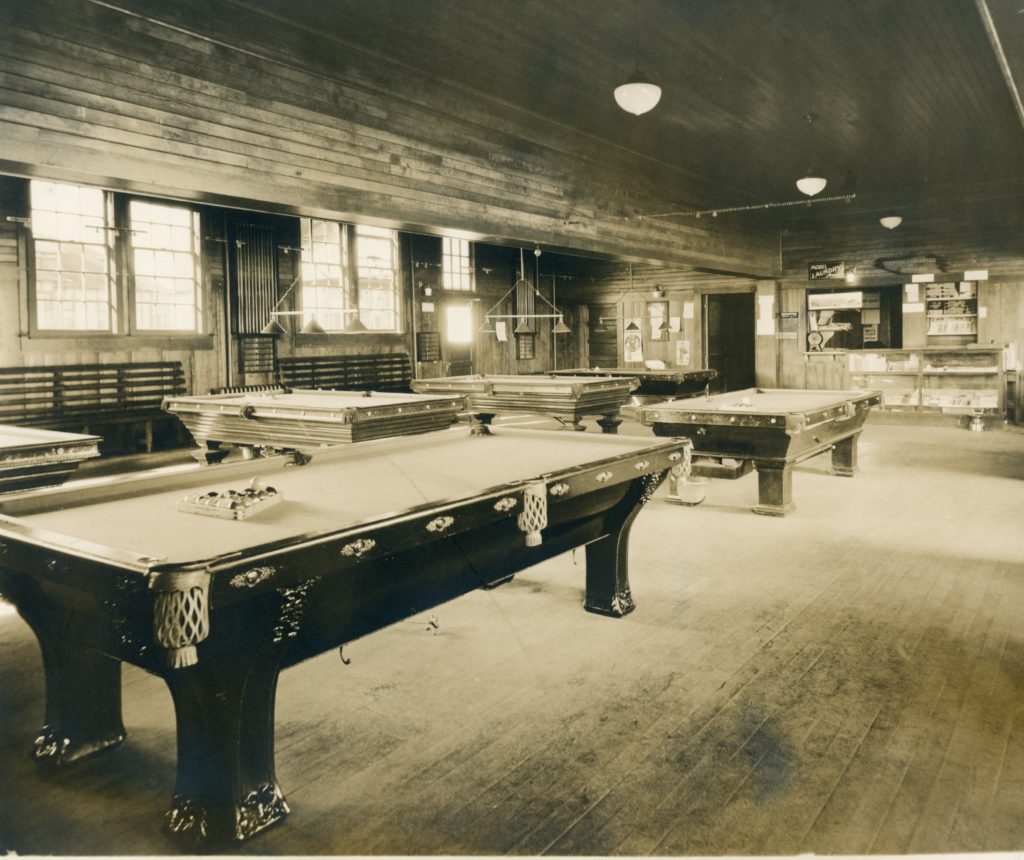
The billiard room, Story Club, Susanville, 1923. Courtesy of the Fruit Growers Supply Company
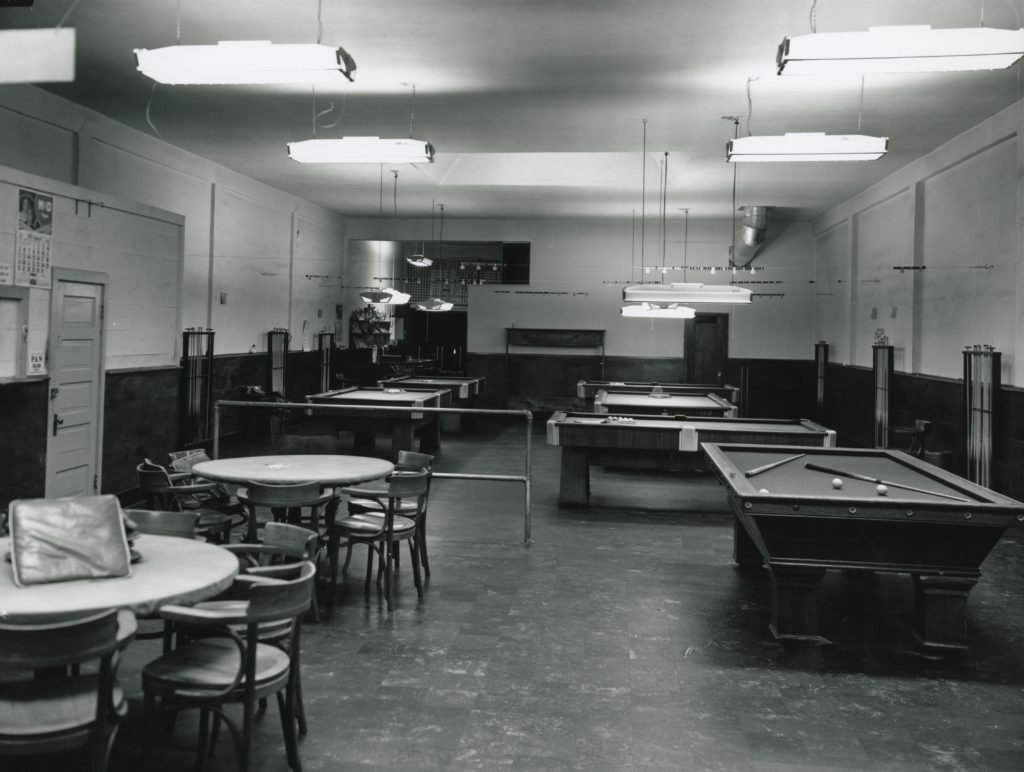
This seems to be a quaint blast from the past, at least locally. Billiards, whether it be a game of snooker or pool, was a popular past time since the late 1800s. Its popularity grew by leaps and bounds in the 1920s from the population explosion created by the lumber mills. By the mid-1980s, locally, it began a slow decline. Today, only a handful of establishments throughout the county even have a pool table. The mighty snooker table a relic of the past.
The back room of Susanville’s Bank Club, 1949. Courtesy of Hank Martinez