Tag Archives: Susanville

Locally Sourced

Bronson & Doyle Ad, Lassen Mail, 5 April 1935

Bronson & Doyle was a local feed and agricultural equipment operation. Some seasoned residents may remember their landmark building on Richmond Road across from the railroad depot.

In this day and age of farm to table movement, makes this 1935 advertisement of Bronson & Doyle seem way ahead of their time.

Lassen Grain & Milling
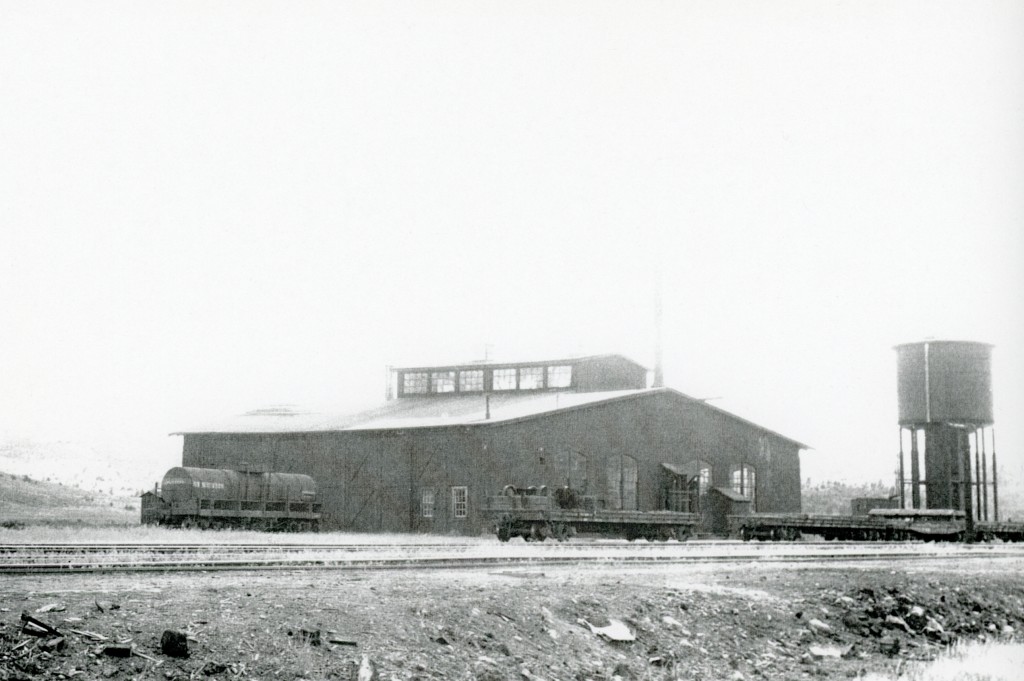
Lassen Grain & Milling Company, circa 1918. Courtesy of Dick & Helen Harrison

Bronson & Doyle acquired the Lassen Grain & Milling Company located on Richmond Road back in the 1930s.

Subscribe

Sanborn Fire Insurance Maps

Sanborn Map indicating the original layout of Carroll Street.

Yesterday, I mentioned the Bocci Ball Court, and the only way I learned of their existence is because I possess a 1929 Sanborn Map of Susanville, with a 1935 update. The maps are quite rare because Sanborn never gave up ownership of their maps. As was customary, an insurance underwriter rented the map, and was later returned back to the company. My copy is only one of four in existence. How, I received a copy is an interesting story in itself, but it was in a junk pile of other records destined to the dump.

The maps are a treasure trove of information. The maps are quite detailed indicating whether a building was made of wood, brick, stone etc. Take for instance, the steeple of Sacred Heart Church was thirty feet in height. Another example, as the above illustration indicates, Carroll Street crossed Susan River to connect with Richmond Road. The street has since been realigned and no longer crosses over the river, but one can see the cement bridge abutments. Another example with streets, Alexander Avenue was not a through street and its length was from North Railroad Avenue to Cornell Street.

Spread the word, and encourage a friend to subscribe.

Bocci Ball Anyone?

Revised 1935 Sanborn Fire Insurance Map of Susanville, indicating the Bocci Ball Courts.

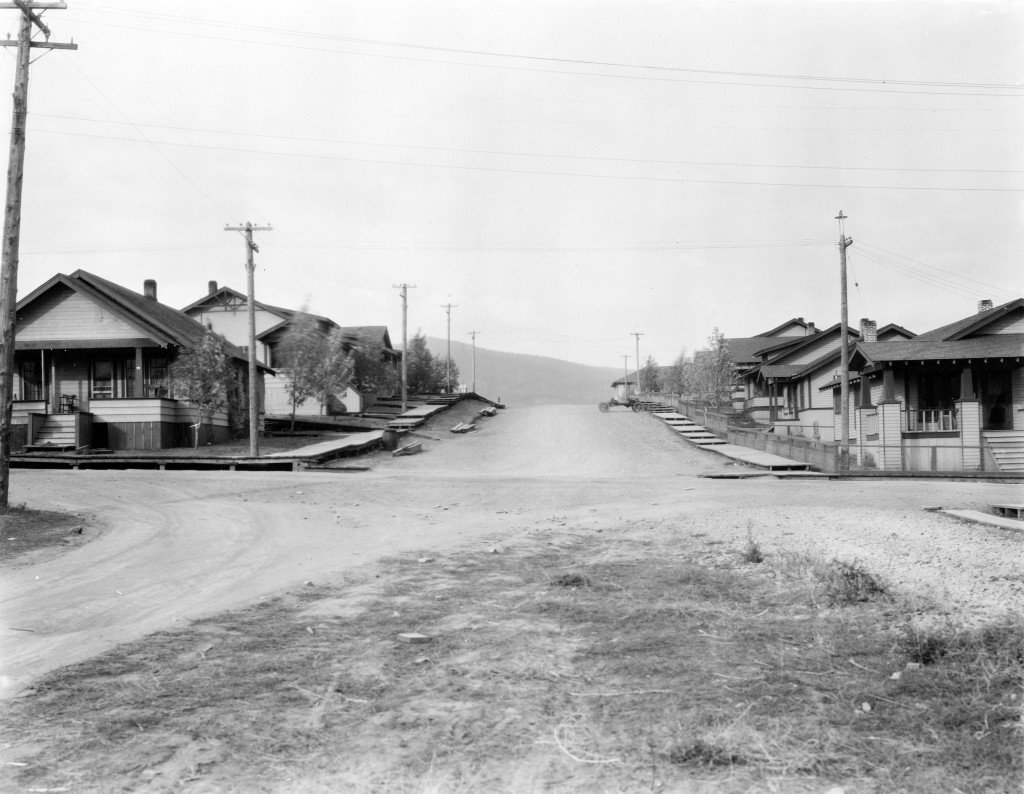
This is one of those interesting little discoveries, that I do not know anything. In the 1930s, there was a Bocci Ball Court located at 1019 Orchard Street, Susanville. Also spelled as Bocce is in the simplest term as Italian lawn bowling. Where the court was located was part of the housing section for the employees of the Lassen Lumber & Box Company. In the company’s, 1923 photograph album portfolio has a photograph with the caption “Housing for the Italians.” Initially, Lassen Lumber hired a number of Italian immigrants, followed by Spaniards and Filipinos. How long the court existed, I have not a clue and in all my years of research I have never come across a single reference of Bocci being played in Susanville.

Spread the word, and encourage a friend to subscribe.

120 South Gay Street, Susanville

This is the second installment of the “mobile home” tour. This was home of Marcus Nathan, well known merchant way back when and it was originally located on the southeast corner of Cottage and South Gay Streets. In 1920, the Susanville School District purchased the property for a new school that would eventually be known as McKinley. This was a relatively short move, almost across the street and it is now Elise’s Barber Shop.

McKinley School, 1924

Support

Why They Came Here —Roop

The grave of Isaac N. Roop, Susanville Cemetery, circa 1966.

Susanville’s founder, Isaac Roop on why he came to the Honey Lake Valley, was different than Peter Lassen. On the other hand, Roop came to California in 1850. Roop was not a member of the gold rush. He came here from Ohio at the urging of his brother Josiah, who had a general store in the mining community of Shasta. Josiah asked his brother Isaac to operate the store while he returned east to bring his family out to California. Josiah never made back it, as he died en route. Isaac had no choice but to remain to settle his brother’s estate.

On June 14, 1853 was a turning point for Roop when a devastating fire in Shasta left him nearly destitute. A bit background on Roop. He was widowed and the father of three small children whom he left in the care of his in-laws. Roop decided not to rebuild in Shasta nor was he going to return to his family in Ohio. Instead he set out out on the Noble’s Emigrant Trail in the fall of 1853 in search of a location for a trading post. He found a spot at the very western end of the Honey Lake Valley. In June 1854, Roop with his brother, Ephraim returned and built a log cabin trading post/home that became the foundation of what would become Susanville.

Spread the word, and encourage a friend to subscribe.

Lassen Union High School, 1936

Lassen Union High School, 1942

Schools are a perfect example of changes taking place all the time. On February 3, 1936, Lassen Union High School implemented a new schedule. Before the school trustees adopted the new program considerable input came from the faculty and the students.

School began at 8:45 a.m. The new schedule provide a thirty minute period prior to the noon hour. This enabled students on Monday, Tuesday and Wednesday an opportunity to work on their hobbies, learn new skills, take advantage of the typing room, study hall or to confer with teachers. Thursday and Fridays were devoted for students to participate in meetings of various school organizations. It was the general consensus this allowed the valley students to engage in more school activities than in past because because they were denied such, due to them departing on the bus schedule. 

It should be noted the lunch period was from noon to 12:45 p.m. The school day concluded at 3:38 p.m.

Support

Seen Better Days

The old Lassen County Jail, May 25, 2020

On my way back from the Susanville Cemetery after taking flowers there for Memorial Day, one can see the a portion of the roof of the old Lassen County Jail has caved in.

The building was shuttered in 1971 and has since become a “political football” of sorts. Numerous groups over the years have presented proposals to preserve the jail built in 1911. County officials on the other hand would listen, but no action taken. There is a bit of irony in this saga, as currently the county courthouse, next to the jail is going through a $8.4 million rehabilitation process.

The front of the jail, May 27, 2020.

At least the front of the jail appears to be holding its own. Many may not realize that it has been used as a backdrop of weddings performed at the Courthouse.

Spread the word, and encourage a friend to subscribe

The Millpond Excavation

Theold millpond site, May 25, 2020

Locally, the $64,000 question has been what is going on with the excavation of the old Fruit Growers/Sierra Pacific millpond site adjacent to Riverside Drive. Some readers may recall that in the Spring of 2018 I wrote about the property being placed on the market by Smith Properties. The property falls under county jurisdiction. As it has been relayed the property is being prepared as a parcel split—a joint venture of Hat Creek Construction and Nobles Construction. However, certain procedures have not been followed. I will bring this matter up at Tuesday’s June 2, Lassen County Planning Commission meeting, since certain officials have not responded to my request.

Fruit Growers Supply Company, 1936

Spread the word, and encourage a friend to subscribe

250 South Roop Street, Susanville

250 South Roop Street, Susanville—May 9, 2020

This is the first featured “mobile home” located at 250 South Roop Street, Susanville. It was originally located at 30 South Roop Street and was built in the mid-1870s. In July 1921, Dr. C.F. Compton acquired the residence and divided it into two sections—one side being living quarters, the other half his chiropractic office. In 1936, Compton sold the building.

In 1940, Cliff Gledhill purchased the property and he sold the house to E.W. Smith. Smith hired Baker McQueen to move the house to its current location. Gledhill had a cement building constructed on the old site and on May 22, 1940 it opened as a Western Auto Supply Store.

Spread the word, and encourage a friend to subscribe.

1405 Main Street, Susanville

1405 Main Street, Susanville—Courtesy of George Sargent

In July 1925, Harry Riddell began construction of a home on the northeast corner of Main and Grand. The first item of business was a curved retaining wall. Instead of hiring a contractor, Riddell used day laborers to construct the house in various phases.

In August 1938 Steve and Helen Sargent, proprietors of the Grand Cafe purchased the Riddell home. After some minor remodeling the family moved in on September 1, 1938. The home still remains in the Sargent family.

Support