Tag Archives: Susanville

The Loafer’s Society

Susanville’s Pioneer Saloon, 1901—B.R. Zimmerman Collection

Several years ago, I did like a “Cliff Note” version on this topic. So to do it justice, the following is the complete article that appeared in the Lassen Advocate of July 5, 1873.

“On account of the great injury to the human family resulting from the use of adulterated liquors and being moved by principles of benevolence and an earnest desire to benefit suffering humanity, I have determined to organize a Loafer’s Society in Susanville.

“The object of this society shall be the promotion of the cause of temperance; and as all other means and expedients have failed to reduce the liquor traffic, the founder has come to the conclusion that the only effectual way to destroy the baneful influences of liquor on society, is for a few devoted men to sacrifice themselves for the good of the community, and consume all the intoxicating beverages of what kind soever that may be found in the community. By the word consume as used in this connection, is meant to throw one’s self on the outside of, guzzle, to get away with. Consequently, the difference between this and other temperance societies is, that whereas, Orthodox temperance organizations, forbid their members the use of various or intoxicating liquor; this society shall require its members to drink all the virous or intoxicating liquors they can find, or by any means get hold of.
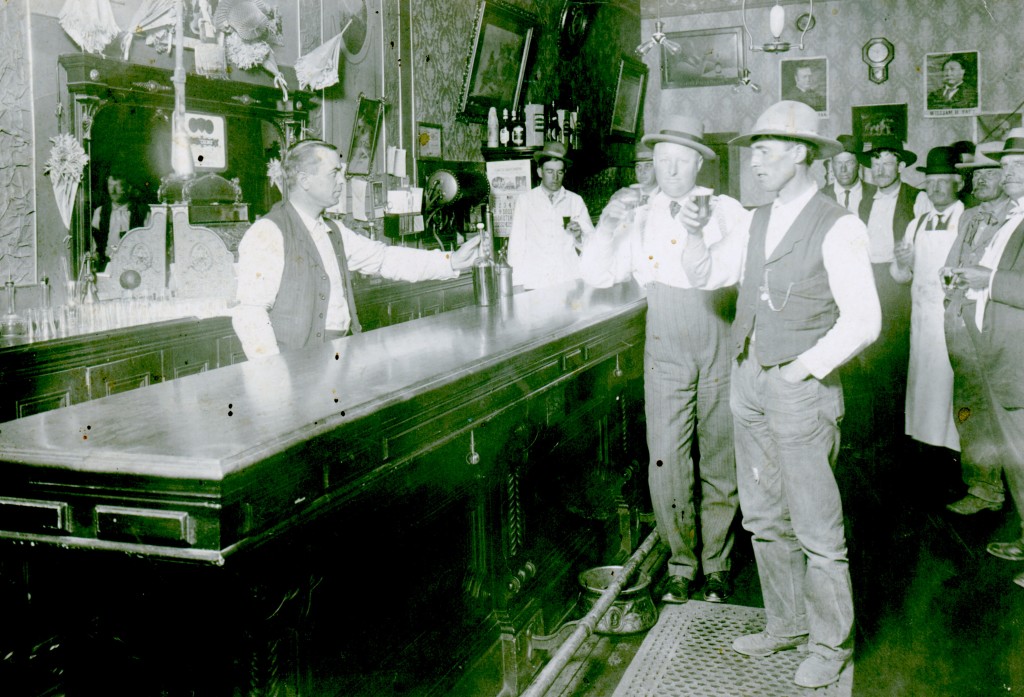
Susanville’s Gem Saloon, circa 1905. B.R. Zimmerman Collection

It should also the duty of members of this society, to distribute themselves about the entrances of churches and places of public gatherings, and stare at and make remarks about ladies. This, we think will an impressive lesson upon the minds of a rising generation.

“The only recommendations required to become a member of the Loafer’s Society will be, immoral character, an easy flow of profane and vulgar language and a large capacity for whiskey.”
Spread the word, and encourage a friend to subscribe

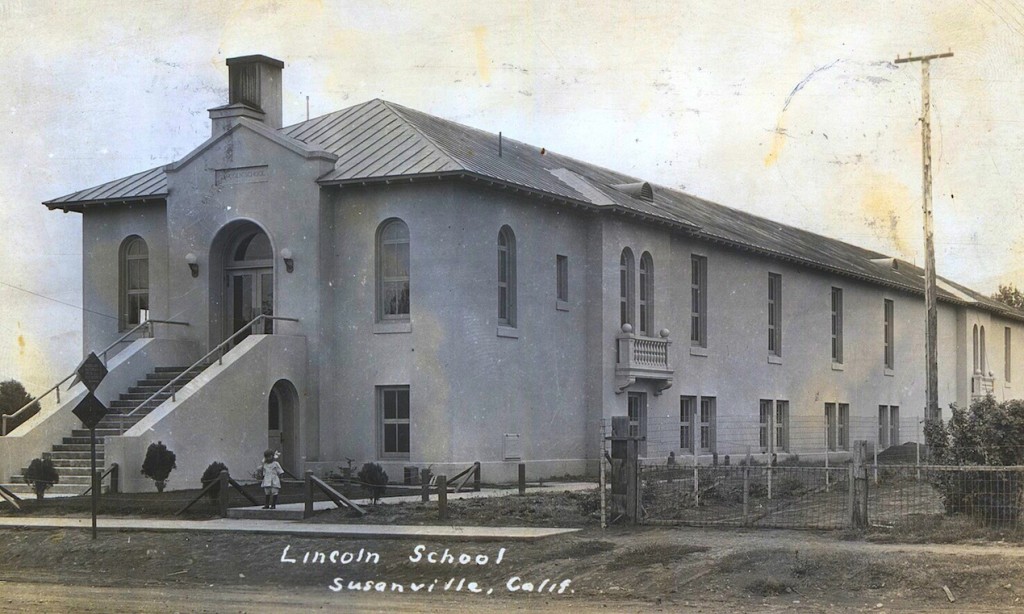
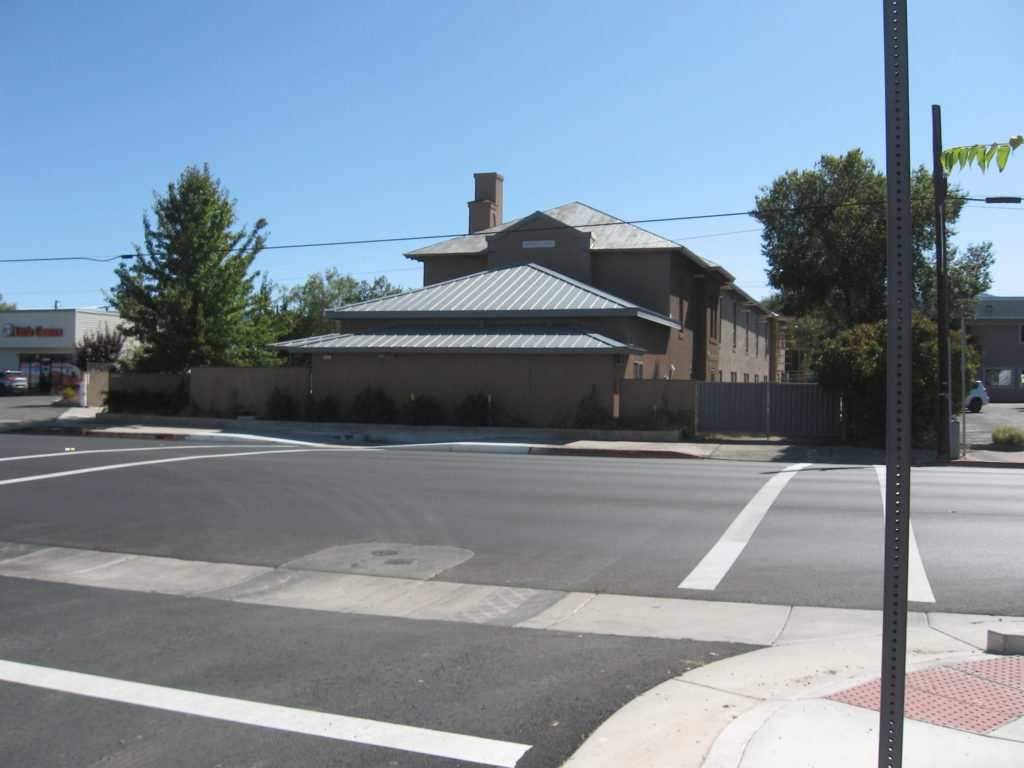
Lincoln School – Then & Now

Lincoln School
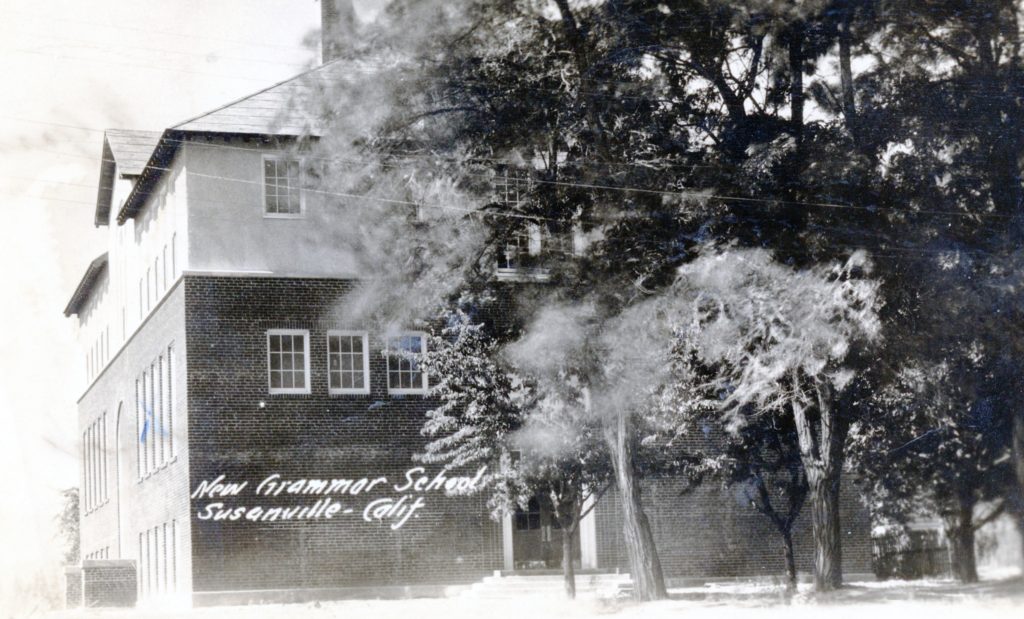
Lincoln School, 1924

In 1922, Lincoln School was built for $35,000 on the south side of Main Street at the intersection of Hall Street. The school was completed and put into use in February 1923. It closed at the end of the 1966-67 school year being replaced by Diamond View on Richmond Road. In the early 1970s Lassen College used the facility until its new campus was built on Highway 139. It then found new life as the headquarters of the Lassen National Forest. For a number of years, it sat vacate and was heavily vandalized. It is slowly coming back to life again being converted into apartments

September 21, 2019

Subscribe

Susanville Becomes a City

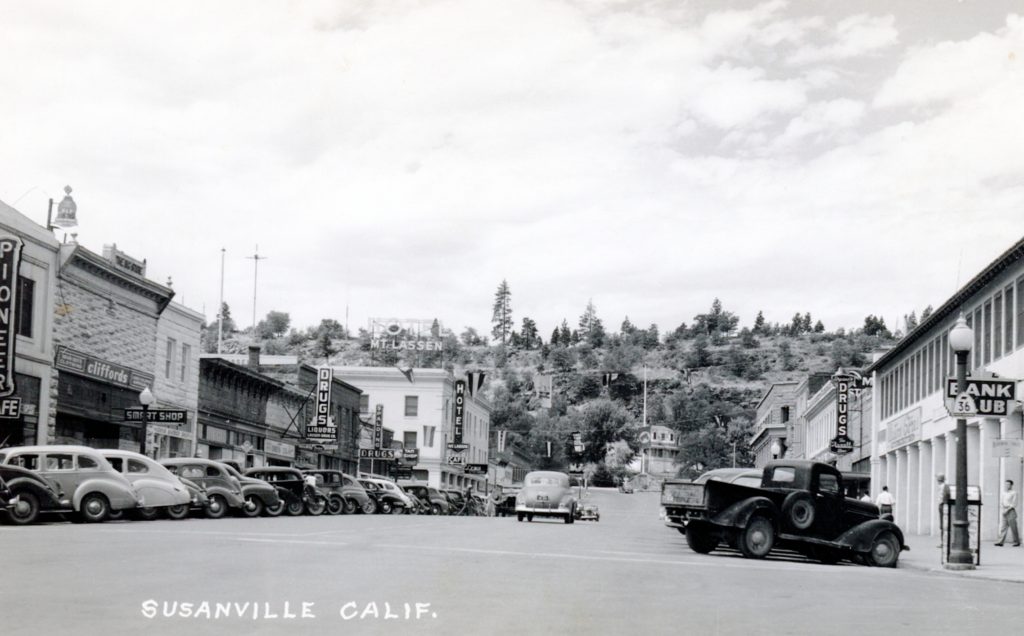
Main Street, Susanville, 1945.

When the municipality was created in 1900, it’s status was that of a incorporated town. In 1911, the California Legislature added a provision whereby the word “Town” in any municipal corporation could be changed to “City.” The process was a simple one. A petition signed by twenty-five percent of the registered voters was required. Once presented to the Town Council, that body could introduce an ordinance and after thirty days it would take effect. A petition was provided to the council and at their May 6, 1940 meeting they passed the ordinance to rename the municipal corporation to the “City of Susanville.” In June, it was official—Susanville was a bona fide “City.”

Subscribe

Susanville Bans Fireworks

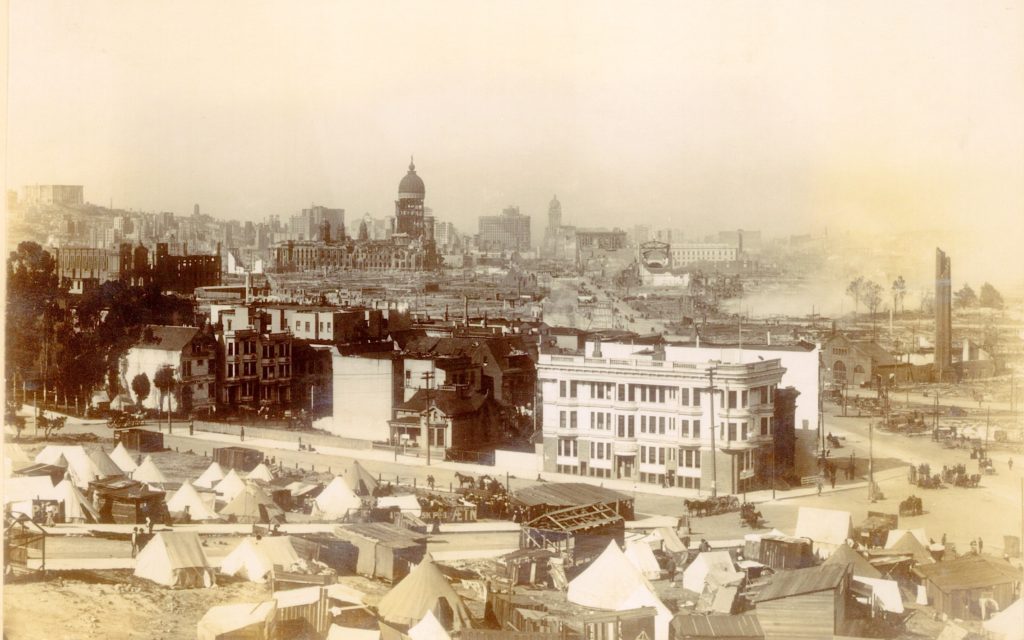
San Francisco, 1906—Margaret A. Purdy

In Susanville’s early years as an incorporated city, it was remarkable what the council did. One of their actions, I still support today, and that is the prohibition of fireworks. The first time they banned fireworks was in 1906, following the aftermath of the San Francisco earthquake and fire. It was also a nod to the insurance companies who suffered tremendous loss from that event. It was their belief, as well as many other communities, that this preventive measure would reduce the risk of fires.

In 1912, the City once again banned fireworks. The Lassen Advocate applauded the city and wrote: 21 June 1912 – “No Fireworks on the Fourth. We desire to congratulate our Board of Town Trustees on their action in placing the ban on all kinds of fireworks on July 2, 3, and 4. This action has been taken by large and progressive cities for years past, and we are greatly pleased to note that the smaller places are falling into line. Fireworks do no good and may do a world of harm. Fires may be started that will blot out blocks of cities or towns; little boys and girls all over the United States have lost fingers, hands eyes and in many instances, their lives from the dangerous pinwheel and firecrackers. Let them yell all they will, let them spend their money for ice cream, candy—anything on earth but the fireworks.”

In 1916, the Monticola Club appeared before the Susanville City Council asking for a ban of fireworks for the 4th of July. Their answer was no. The council assured that the utmost care would be done, but they were not going to deprive children of the festivities.

Spread the word, and encourage a friend to subscribe

Locally Sourced

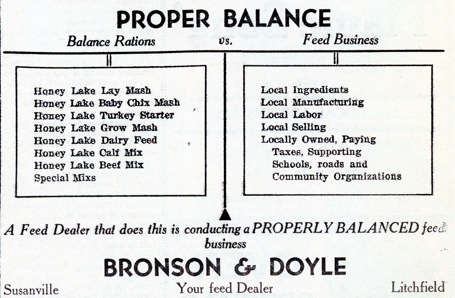
Bronson & Doyle Ad, Lassen Mail, 5 April 1935

Bronson & Doyle was a local feed and agricultural equipment operation. Some seasoned residents may remember their landmark building on Richmond Road across from the railroad depot.

In this day and age of farm to table movement, makes this 1935 advertisement of Bronson & Doyle seem way ahead of their time.

Lassen Grain & Milling
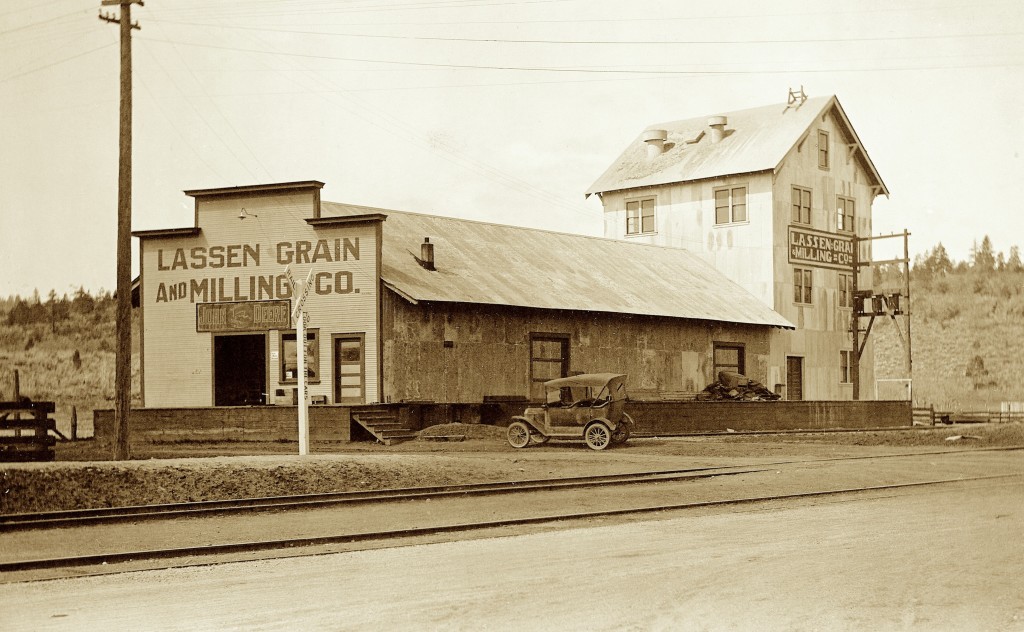
Lassen Grain & Milling Company, circa 1918. Courtesy of Dick & Helen Harrison

Bronson & Doyle acquired the Lassen Grain & Milling Company located on Richmond Road back in the 1930s.

Subscribe

Sanborn Fire Insurance Maps

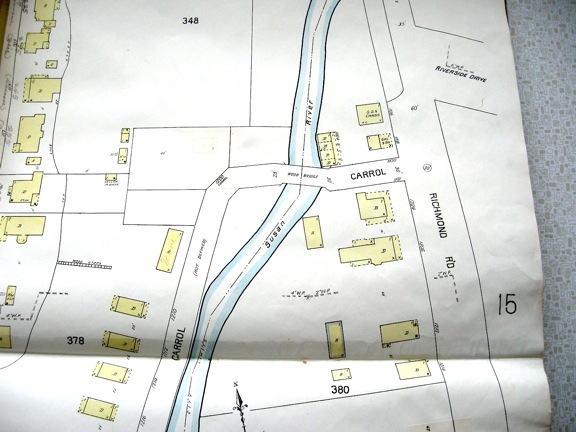
Sanborn Map indicating the original layout of Carroll Street.

Yesterday, I mentioned the Bocci Ball Court, and the only way I learned of their existence is because I possess a 1929 Sanborn Map of Susanville, with a 1935 update. The maps are quite rare because Sanborn never gave up ownership of their maps. As was customary, an insurance underwriter rented the map, and was later returned back to the company. My copy is only one of four in existence. How, I received a copy is an interesting story in itself, but it was in a junk pile of other records destined to the dump.

The maps are a treasure trove of information. The maps are quite detailed indicating whether a building was made of wood, brick, stone etc. Take for instance, the steeple of Sacred Heart Church was thirty feet in height. Another example, as the above illustration indicates, Carroll Street crossed Susan River to connect with Richmond Road. The street has since been realigned and no longer crosses over the river, but one can see the cement bridge abutments. Another example with streets, Alexander Avenue was not a through street and its length was from North Railroad Avenue to Cornell Street.

Spread the word, and encourage a friend to subscribe.

Bocci Ball Anyone?

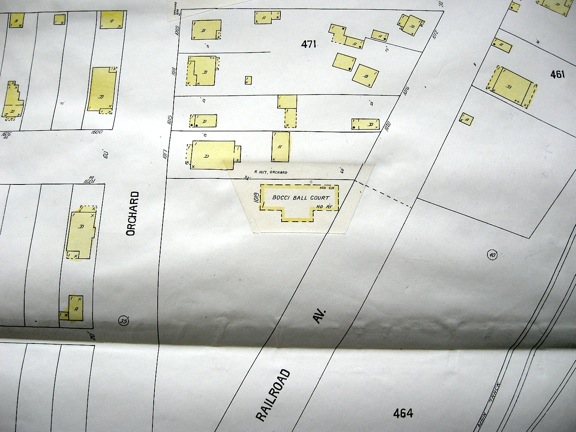
Revised 1935 Sanborn Fire Insurance Map of Susanville, indicating the Bocci Ball Courts.

This is one of those interesting little discoveries, that I do not know anything. In the 1930s, there was a Bocci Ball Court located at 1019 Orchard Street, Susanville. Also spelled as Bocce is in the simplest term as Italian lawn bowling. Where the court was located was part of the housing section for the employees of the Lassen Lumber & Box Company. In the company’s, 1923 photograph album portfolio has a photograph with the caption “Housing for the Italians.” Initially, Lassen Lumber hired a number of Italian immigrants, followed by Spaniards and Filipinos. How long the court existed, I have not a clue and in all my years of research I have never come across a single reference of Bocci being played in Susanville.

Spread the word, and encourage a friend to subscribe.

120 South Gay Street, Susanville

This is the second installment of the “mobile home” tour. This was home of Marcus Nathan, well known merchant way back when and it was originally located on the southeast corner of Cottage and South Gay Streets. In 1920, the Susanville School District purchased the property for a new school that would eventually be known as McKinley. This was a relatively short move, almost across the street and it is now Elise’s Barber Shop.

McKinley School, 1924

Support

Why They Came Here —Roop

The grave of Isaac N. Roop, Susanville Cemetery, circa 1966.

Susanville’s founder, Isaac Roop on why he came to the Honey Lake Valley, was different than Peter Lassen. On the other hand, Roop came to California in 1850. Roop was not a member of the gold rush. He came here from Ohio at the urging of his brother Josiah, who had a general store in the mining community of Shasta. Josiah asked his brother Isaac to operate the store while he returned east to bring his family out to California. Josiah never made back it, as he died en route. Isaac had no choice but to remain to settle his brother’s estate.

On June 14, 1853 was a turning point for Roop when a devastating fire in Shasta left him nearly destitute. A bit background on Roop. He was widowed and the father of three small children whom he left in the care of his in-laws. Roop decided not to rebuild in Shasta nor was he going to return to his family in Ohio. Instead he set out out on the Noble’s Emigrant Trail in the fall of 1853 in search of a location for a trading post. He found a spot at the very western end of the Honey Lake Valley. In June 1854, Roop with his brother, Ephraim returned and built a log cabin trading post/home that became the foundation of what would become Susanville.

Spread the word, and encourage a friend to subscribe.