Tag Archives: Susanville

Susanville Tennis Courts

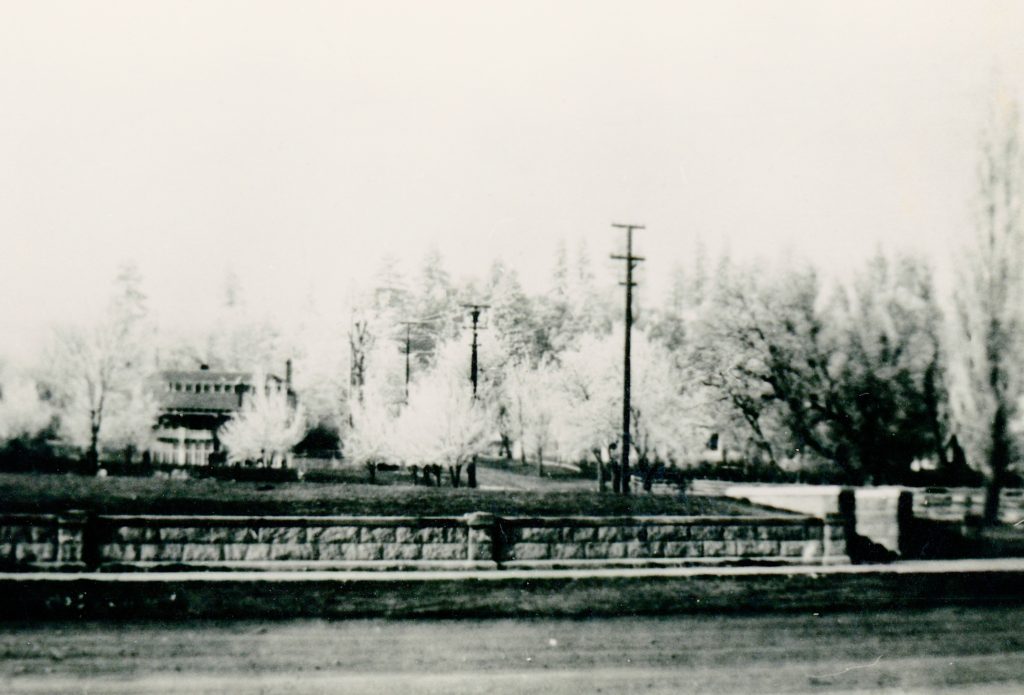
North side of the Lassen County Courthouse., 1920 during a pogonip.

In the 1920s, golfing became all the rage nationally and locally. In the 1930s, two other sporting activities came to the forefront—skiing and tennis. In the past, we have explored how the ski areas of Coppervale and Willard came to be.

In 1935, the local 20-30 club, a civic organization whose focus was on youth development and leadership saw the need for public tennis courts. They approached the County of Lassen with a request to use property on the courthouse square near the intersection of Roop and Mill Streets. It would not cost the county, and the county obliged. The club held fundraisers and by the fall of 1935, the tennis courts became a reality.

This topic, also falls under the elusive photograph category, as I have never come across any. How, long the tennis courts remained, is not clear, but in 1962, the courthouse annex was built on the site.
Subscribe

Convict Labor and HIghway 36

Highway 36 Fredonyer
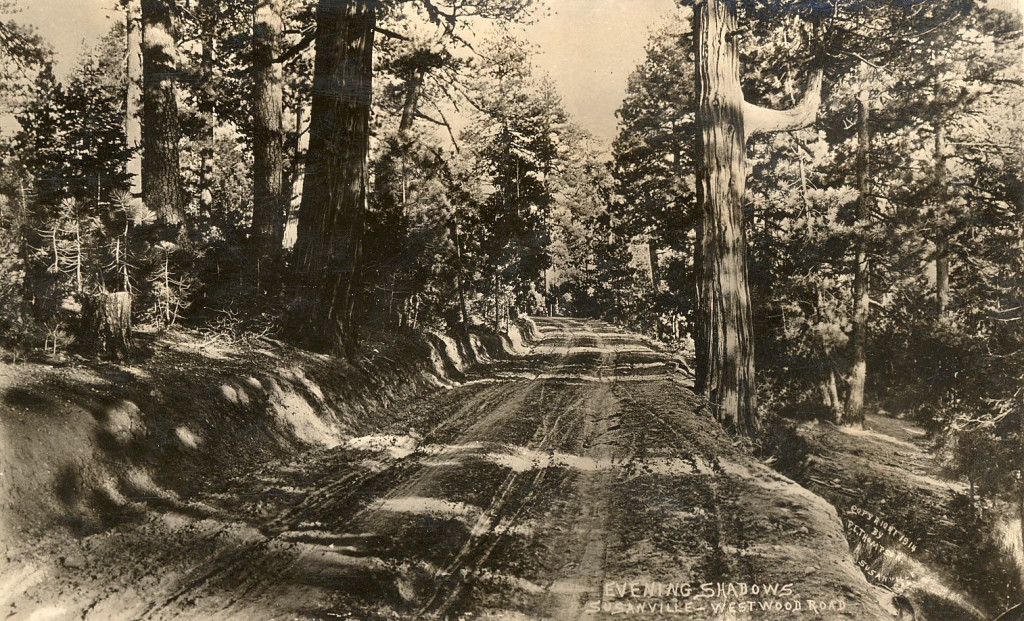
The road over Fredonyer as it appeared in 1914.

In the spring of 1916, California State Highway Commissioner, H.S. Cromley, announced that convict labor from Folsom State Prison would be used for the initial construction of a state highway between Susanville and Red Bluff. Cromley made it clear the inmate labor was not forced and those who wanted to do such work was voluntarily. In the meantime, Lassen County officials lobbied hard that initial construction be done to connect the communities of Susanville and Westwood. They were successful.

On August 25, 1916, 54 convicts (the term used then) from Folsom State Prison set up a camp just west of Susanville, it being. the site of today’s California Division of Forestry headquarters for the region. When not working the inmates were allowed to roam freely, such as hiking down the canyon to the Susan River to swim. They were, however, prohibited, to go into Susanville.

The inmates worked two eight hour shifts. The main focus was work on the entrance into Susanville, a new survey route would enter the town connecting with South Pine Street, versus the old route of Prattville Road and North Pine Street. One other accomplishment was the survey of a new route over Fredonyer Summit. The camp remained opened longer than usual, due to weather conditions, and shut down on December 15, 1916.

Spread the word, and encourage a friend to subscribe

Whitely’s Furniture Store

Whitely’s Furniture Store, circa 1956—W.V. Laughead

This is one of those instances, that I am relying on seasoned residents to provide the information. Whitely’s Furniture Store was located on the 1400 block of Main Street. While the building is still there, it has been through many tenants over the years. If anyone knows when it was built or anything else, I hope you share it with the rest of us.

Spread the word, and encourage a friend to subscribe

An Impressive Logging Camp!

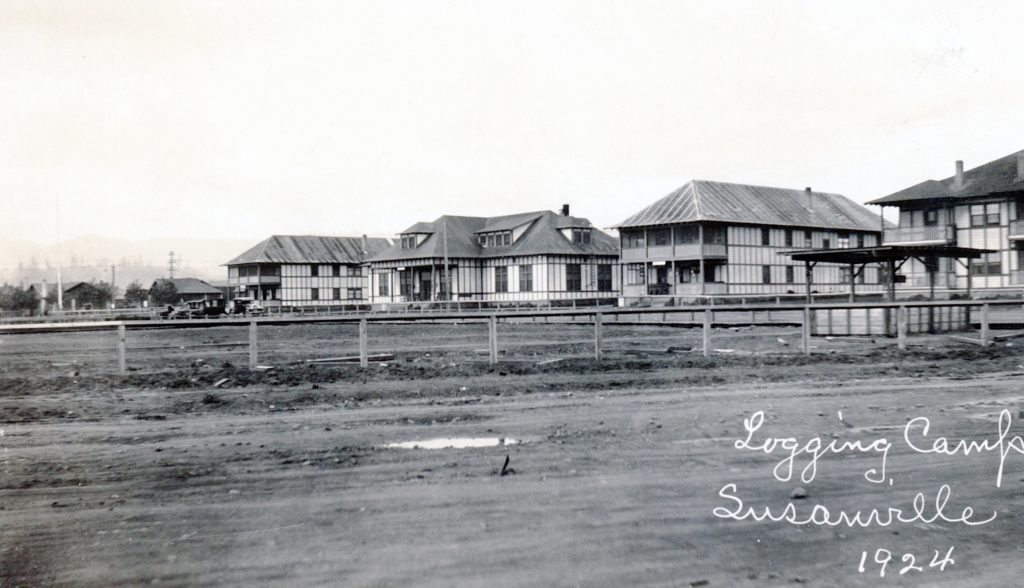
Fruit Growers Supply Company housing, Susanville, 1924—Boyd Benham/Connie Boomer

This was a major labeling blunder by the photographer. The scene depicted is Fruit Growers housing for mill employees in Susanville, located along Alexander Avenue. When Fruit Growers proposed to locate in Susanville, they had wanted to avoid to provide housing, whereas their operation at Hilt was a complete company town. They had hoped some enterprising individuals would step up to the plate to provide housing. That was asking a lot, since Fruit Growers would need housing for over 1,000 employees and their families. Fruit Growers would eventually build 80 houses, in addition to dormitories at a cost of $245,000.

Camp A
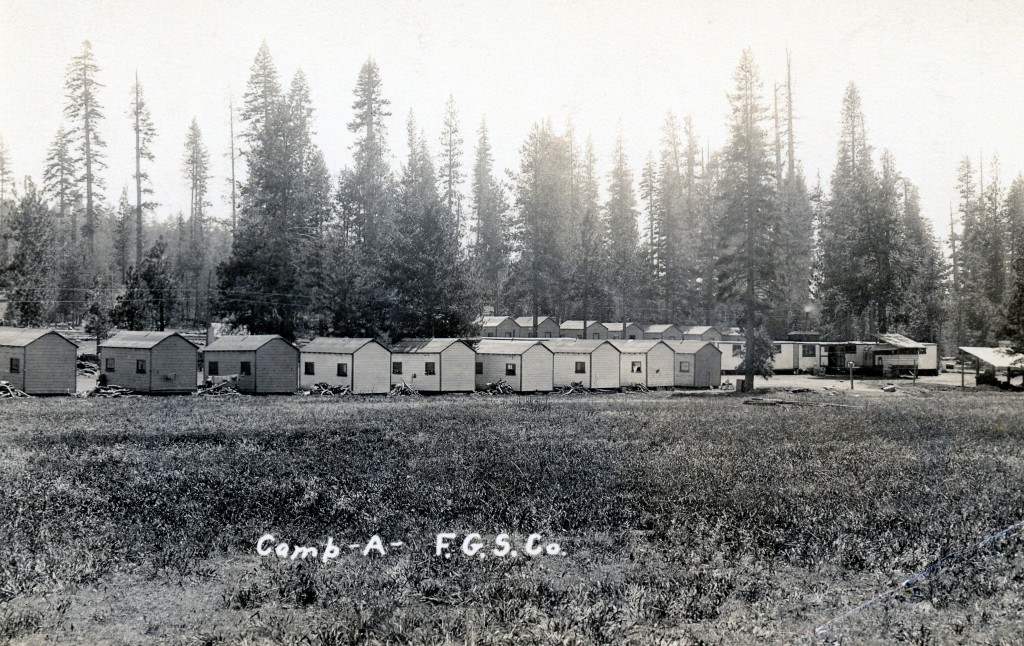
Camp A, Fruit Growers Supply Company, located just north of McCoy Flat Reservoir, 1921

The above was a typical Fruit Growers logging camp, that consisted of portable cabins that could be easily moved by rail from one location to another.

Support

William D. Minckler, Lassen County Surveyor

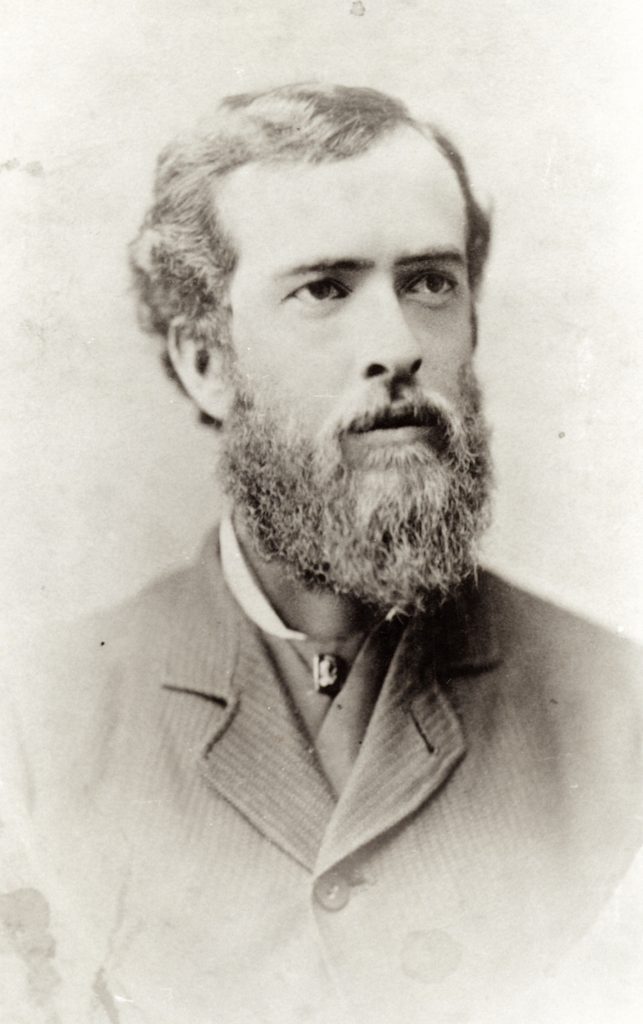
William D. Minckler, 1853-1928.

Minckler came to the Honey Lake Valley from his native Wisconsin and settled near present day Standish in 1872, with his grandmother, Hannah Lax, and his mother, Mary Kelley. It should be noted that he never met his half-brother Elbern Kelley who drowned in Honey Lake in 1863 at the age of 9. Minckler was a civil engineer for nearly thirty-five years. The position of county surveyor in Minckler’s lifetime was an elected one. He was elected twice, first in 1882, and again in 1890. Among the projects Minckler did in the private sector was that of Ward Lake, Hall’s Addition and Lassen Townsite, which is a huge subdivision from Richmond Road extending all the way past present day Plumas Bank to San Francisco Street—that location better known for a farmer’s market during the summer months.

In the Lassen Townsite subdivision a street was named after him, as were many of the investors, such as Alexander, Knoch, and Pardee. Its probably a good thing for Minckler, since there is no marker for his grave in the Susanville Cemetery. Those very seasoned residents of Susanville might remember when the Susanville Branch of the Lassen County Free Library was in a small building next to Susanville’s City Hall on North Lassen Street. That structure was originally Minckler’s office building.

Buggytown Ditch
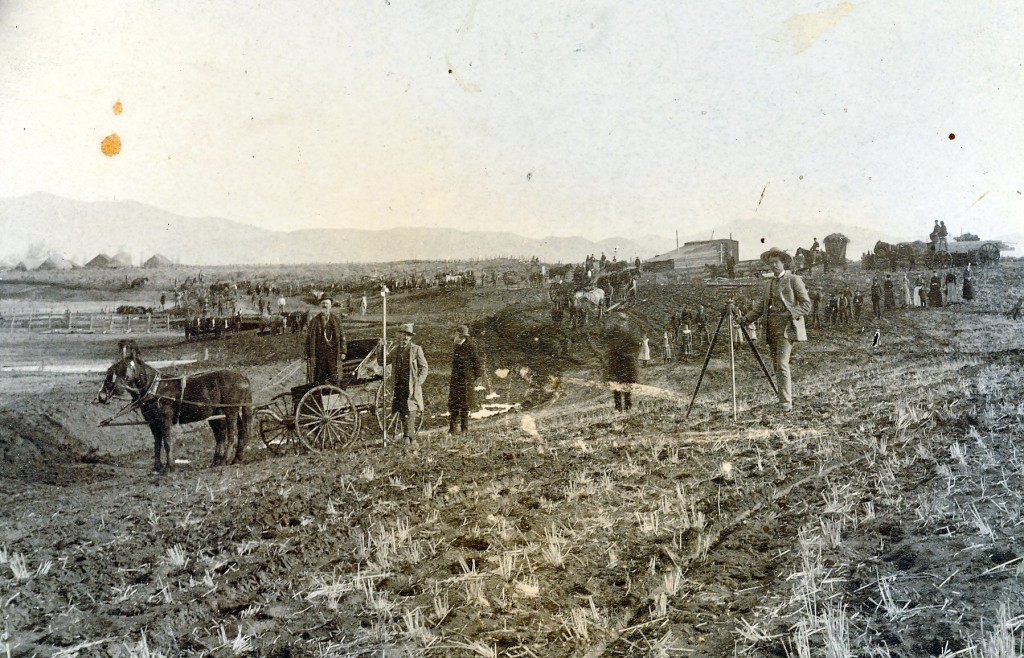
Minckler’s survey crew to enlarge the Buggytown ditch near Johnstonville, 1889. It is better known today as in intake channel for Leavitt Lake. Courtesy of Betty Barry Deal

Support

Dog Days of Summer

1927 holiday greeting card from the Lassen County Sheriff’s Office. Left to Right, Sheriff Jim Leavitt, Deputy Tom Massey and Deputy A.C. “Cass” Hunsinger.

The summer of 1916 were lively times in the region. However, the region’s newspapers also reported on some mundane items. As the Lassen Weekly Mail reported in August 1916 that were no inmates in the Lassen County Jail and that Deputy Sheriff J.S. Church main duties were reduced to swatting flies in the building.

Spread the word, and encourage a friend to subscribe

Susanville Roundhouse Revisited

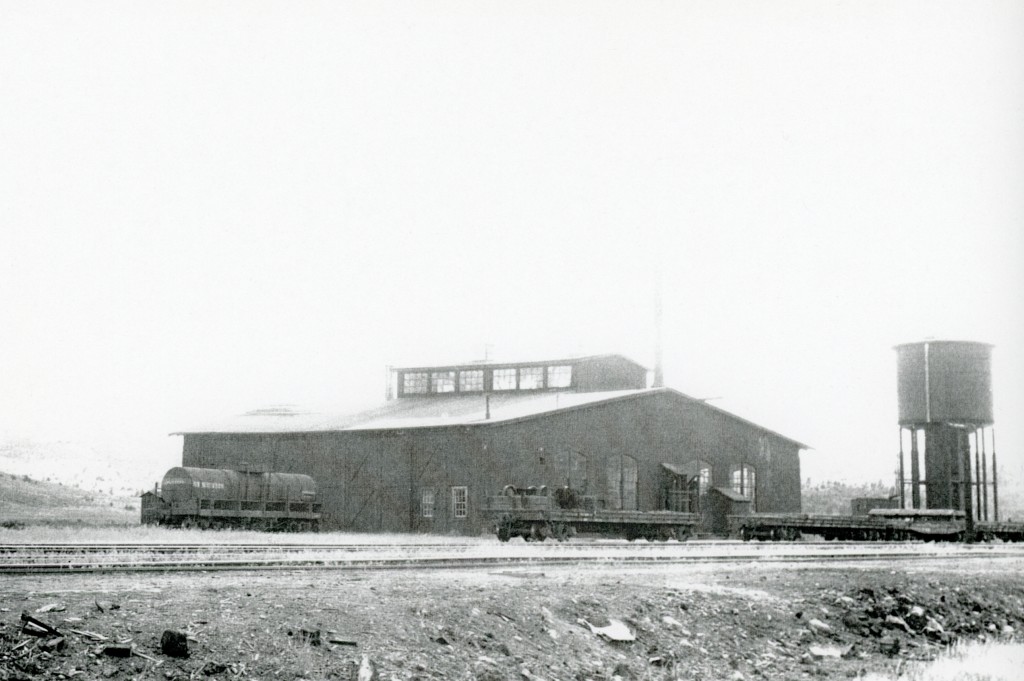
The Southern Pacific Roundhouse, Susanville, 1947. G. Dunscomb Collection

When I first wrote about this in 2015, I knew nothing about it. Since then I have gained more knowledge. The roundhouse was built in1914, and what was rather unusual it was a mile east of the Susanville Depot. Normally, it would have been much closer to the depot. However, things were complicated since all the surrounding property, though undeveloped was part of the Lassen Townsite subdivision. It must have looked extremely out of place when constructed as there was nothing in that area, since it was before Lassen Lumber and Fruit Growers.

From 1925 to 1929, Fred Abbey was foreman of the roundhouse with a crew of four It was equipped with four stalls to service and to conduct minor repairs to locomotives. Any major work was taken to Sparks, Nevada. The whole operation was short-lived as it closed down in 1930, and the railroad did not dismantle it until the 1950s. In a sense it was a fluke, as it was built on the pretense that the railroad line would be built to Klamath Falls, Oregon, but the furthest it was built to was Westwood Junction.

Spread the word, and encourage a friend to subscribe

Shasta Street—Then And Now

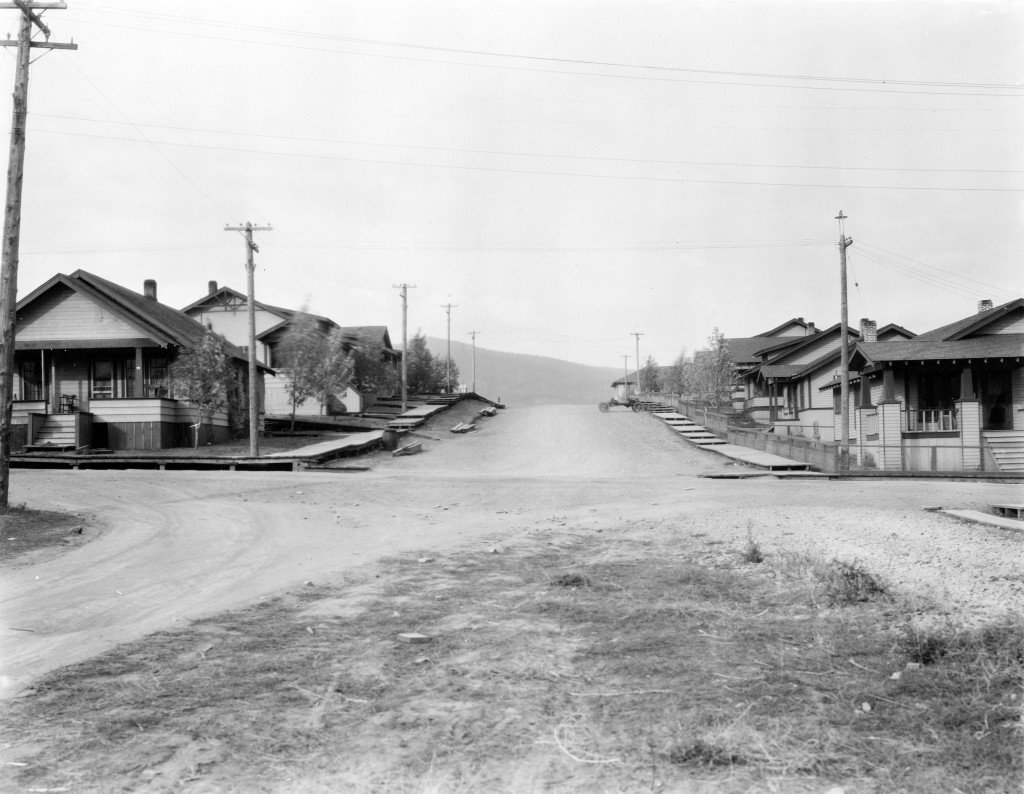
Shasta Street, 1923

The Lassen Townsite was a massive subdivision created in 1912 encompassing everything from Richmond Road to present day Johnstonville Road.

The first housing development occurred in 1918 on property south of the railroad encompassing the streets of Modoc, Orchard, Plumas, Shasta and Sierra. These homes were built by the Lassen Lumber & Box Company for their employees.

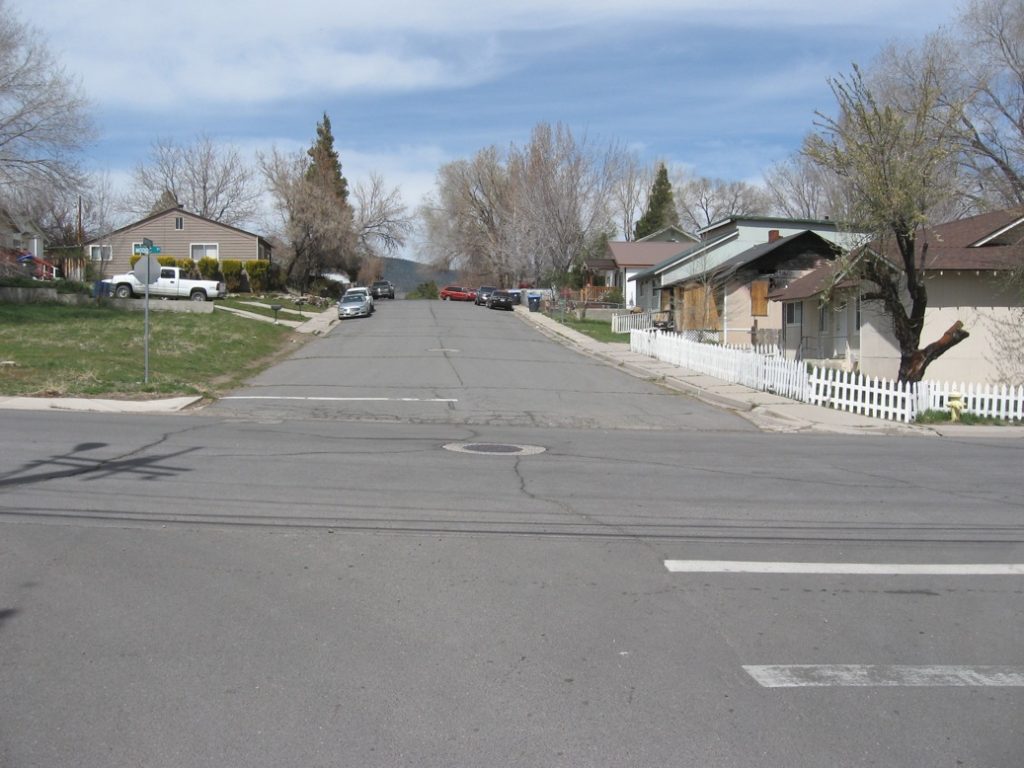
Shasta Street, April 15, 2020

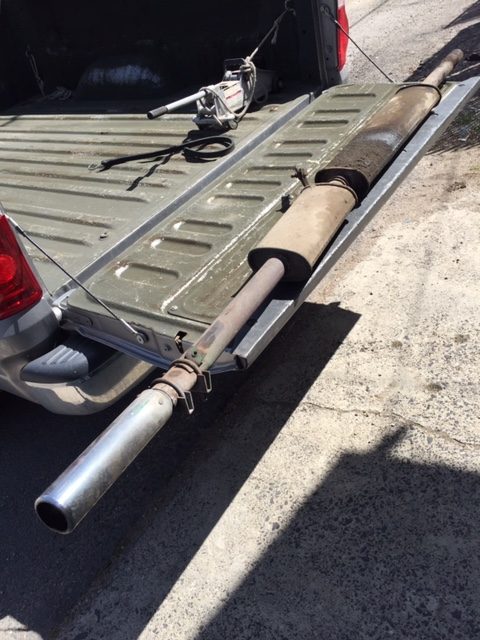
A word of caution, the crossing over the above intersection can be hazardous to your car’s health and your mental health. As I proceeded across, a major dip in my Triumph it removed the exhaust system from it.

A Bank of America Problem

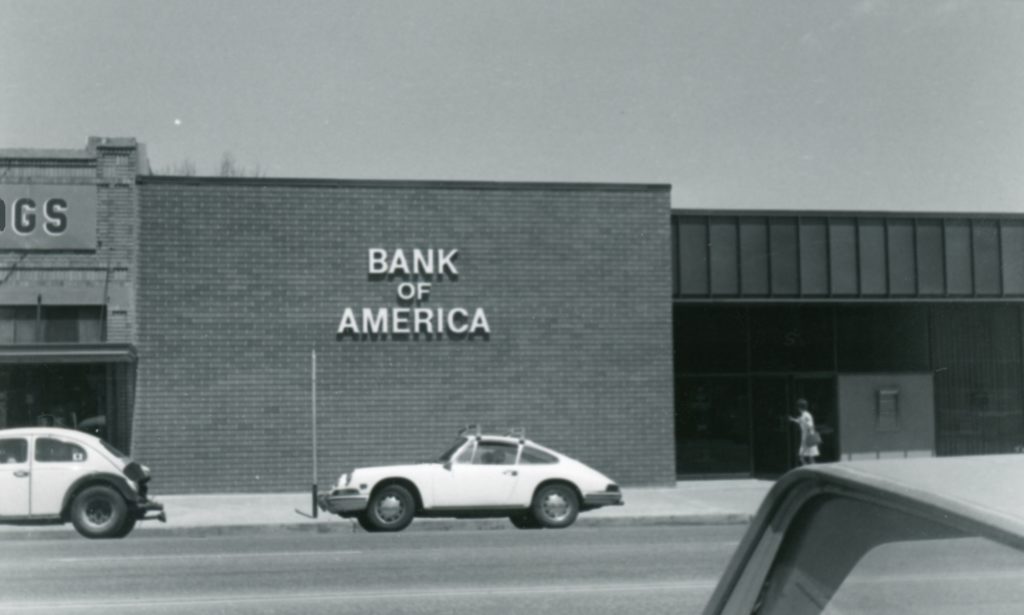
The second short-lived bank building.

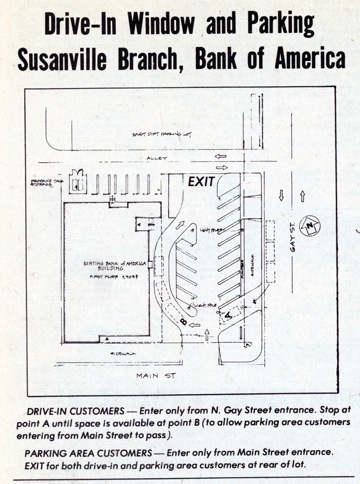
Susanville’s second Bank of America building was a short-lived affair of the 1970s. When it opened in 1972, it introduced area residents with a new venue—a drive-up teller. It did not turn out so well. The problem was the Main Street entrance. Cars would be backed up into the right hand lane. Finally, it was not until the summer of 1978 when the bank corrected problem where customers would use an entrance from North Gay Street.

The experiment was short-lived. In 1979 Bank of America made preparations to replace that building with a new bank on the corner of North Gay and Nevada Streets. In 2017, Bank of America closed its Susanville branch.

Support

The Parking Dilemma

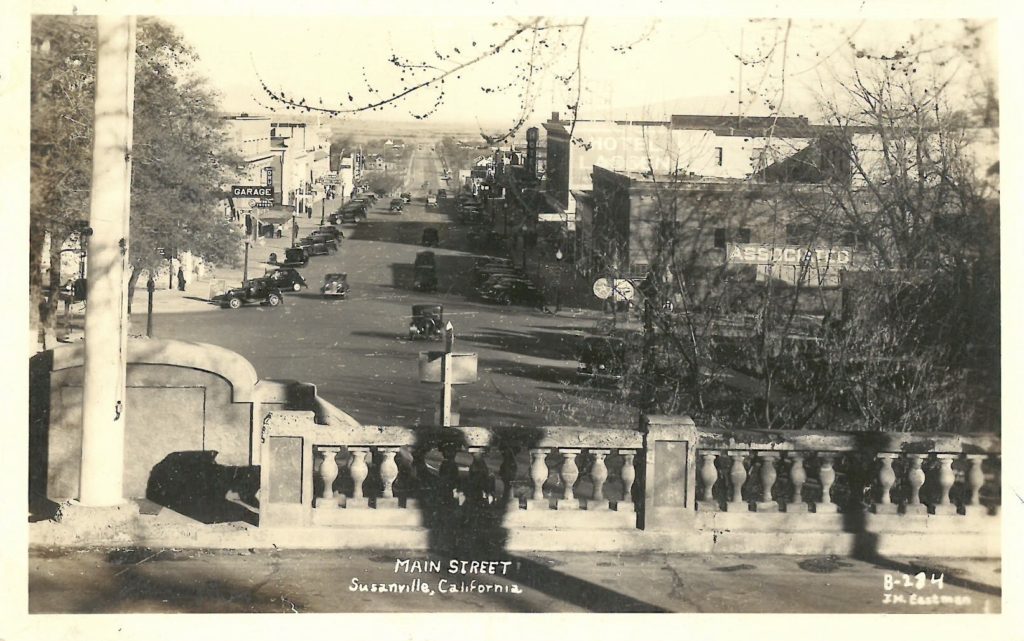
A view looking east from the head of Susanville’s Main Street, 1938.

When the State of California took over Susanville’s Main Street, in 1933, which is a part of Highway 36, everyone was at the mercy of the State who dictated how the thoroughfare would operate. For a long time it was not an issue.

In the 1940s, there were changes on the horizon. There was a great deal of traffic congestion in the uptown area. In 1947, the City proposed two stop lights—one at Lassen and the other at Weatherlow. When the State Division of Highways learned of this, they objected, citing it did not meet the requirement of 100 cars per hour at those intersections. The State wanted to discontinue angle parking for parallel. The merchants howled. The change would eliminate parking by fifty percent.

The issue turned ugly when the state approved the change. The city adopted a parallel parking ordinance at their July1950 meeting. The city was concerned if they did not enforce it, the State would with hold the city’s apportionment of gasoline tax money. Lowell Hardy of the Golden Rule store, suggested the city did not need such wide sidewalks—they could be narrowed on each side and there would be ample room for four lanes and angle parking. It remained a contentious through 1952, which by that time parallel parking was here to stay.

Subscribe