In June 1927, the Lassen Advocate reported how “Fort Weatherlow” was threatened by fire. The reporter new to the area, was not aware that while the historic structure located on Weatherlow Street, was known as Roop’s Fort.
Fast forward nearly a century later, though Susanville has no newspapers, there are some online news outlets. Some of these outlets are staffed by people new to the area. No problem with that. However, when they occasionally come up with new names for established landmarks, that make me cringe.
Since I am repository of a variety items, lately I have been rummaging through the local Clampers file, i.e. the Neversweats Chapter #1863, E Clampus Vitus. In 1990, they proposed to place a plaque at the Susanville Oddfellows Building located at 701 Main Street. For whatever reasons it did not happen. However, they submitted price quote for the cost of a bronze plaque with the following wording:
”Organized in 1879, the Silver Star Lodge No. 135 of the Independent Order of Oddfellows, is one of Susanville’s oldest fraternal organizations. In that same year, the lodge purchased this property for $4,000. This structure built in 1896 was the first two-story red brick building constructed in Susanville. C.E. Clough, Architect & Contractor, Reno, Nevada.”
The proposed plaque had a dedication date of August 4, 1990. Fast forward to 2023, the local Oddfellows organization disbanded years ago. If any one happens to know what year it folded, let me know, so I can do an update. It should be duly the local Clampers chapter went by the wayside a long time ago.
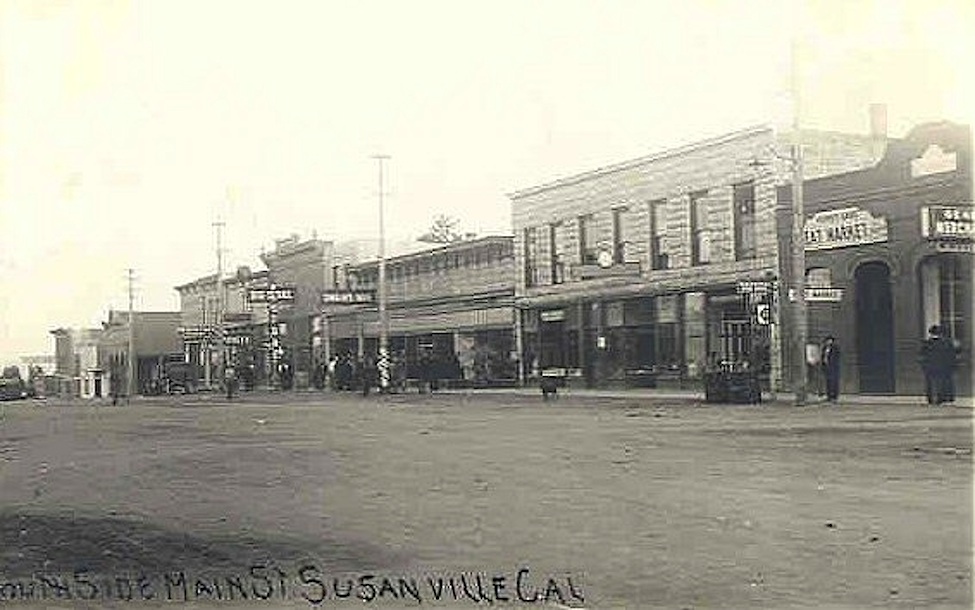
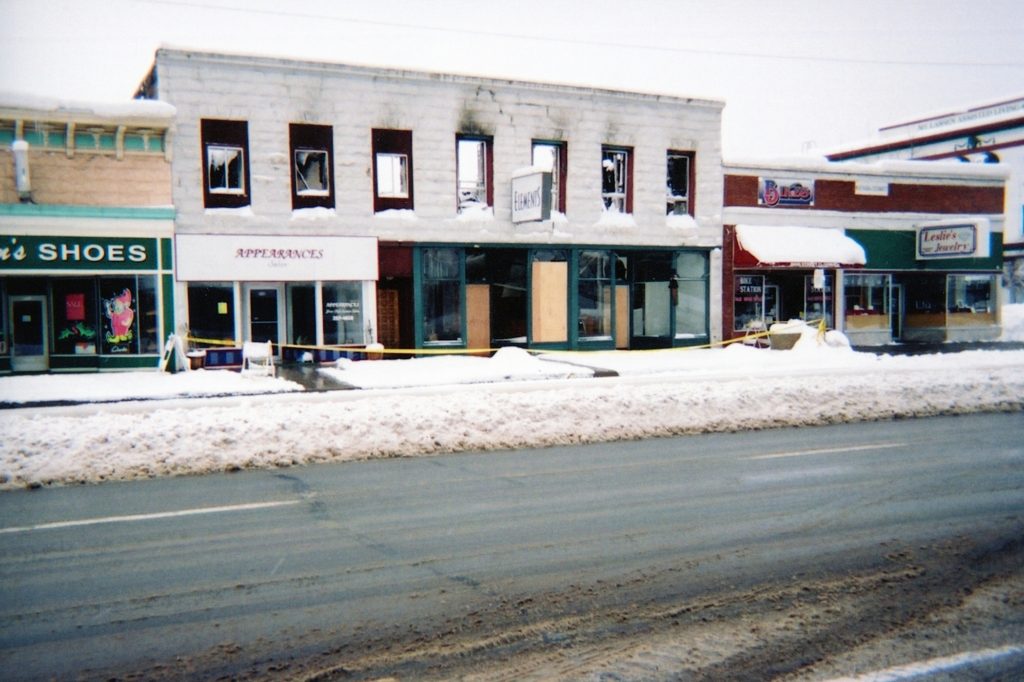
Last week, I went through the process to upload newly scanned photographs. I came across this particular one, of the south side of the 700 block Main Street, Susanville, which was not scheduled for any story. A lot of changes have occurred. The former Spalding Drug building was destroyed by fire in 2005. At the far end of the block, the Pioneer, Grand Cafe and what was formerly known as the State do not appear in this photograph since those changes occurred in 1920 and 1934.
The former Spalding Drug building, i.e, 710, 712 Main Street, Susanville, January 7, 2005.
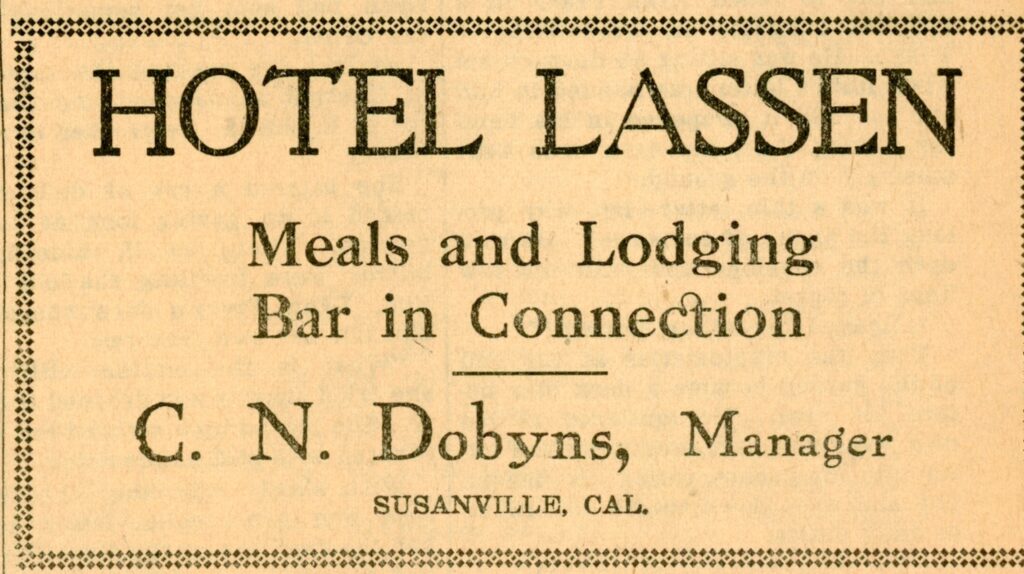
Hotel Lassen Advertisement Westwood Independent, 1918
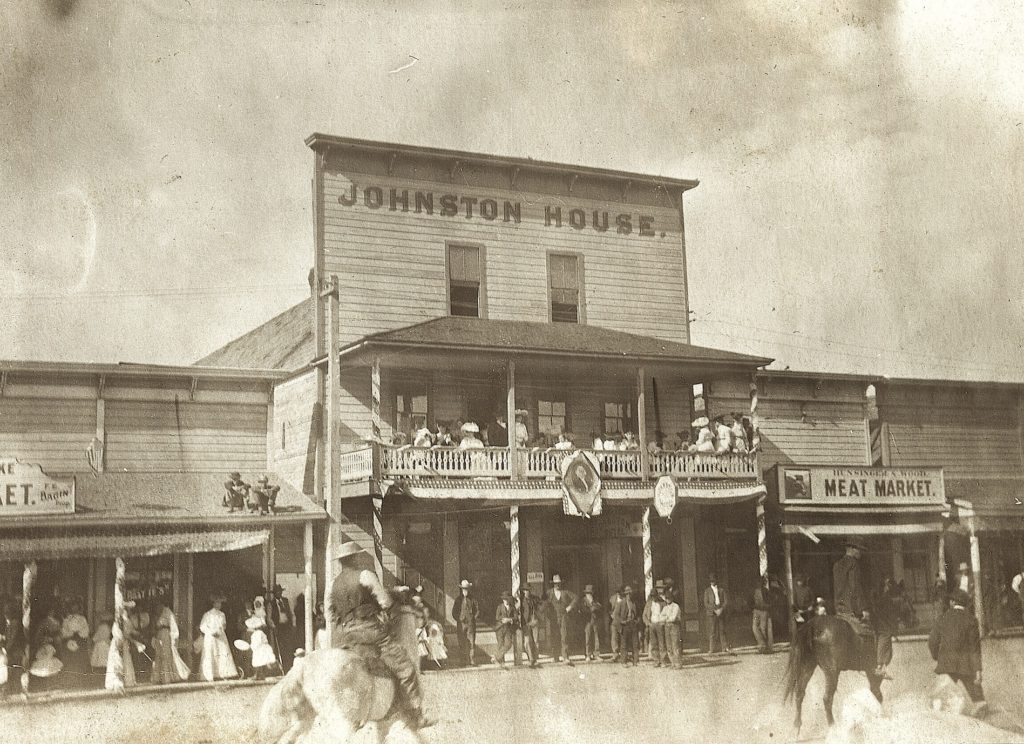
Before there was a Hotel Mt. Lassen there was the Hotel Lassen. It was originally known as the Johnston House. For a time, it was the town’s foremost hotel. On November 1, 1912, a change of ownership and name change occurred when long time Susanville resident Henry C. Dobyns acquired the property. At that time, he changed the name to Hotel Lassen. After he passed away in 1916, his son Charles took over the operation. The hotel was destroyed by fire in 1919.
Dobyns purchased the hotel from Thomas H. Long. In 1914, Long had a two-story stone building constructed as the Star Hotel at the corner of Main and North Gay Streets—only a half block away from his former establishment. For many years that structure was known as the “Telephone building” since the local telephone company was located there for many years.
The Johnston House, circa 1909. Courtesy of Betty Barry Deal
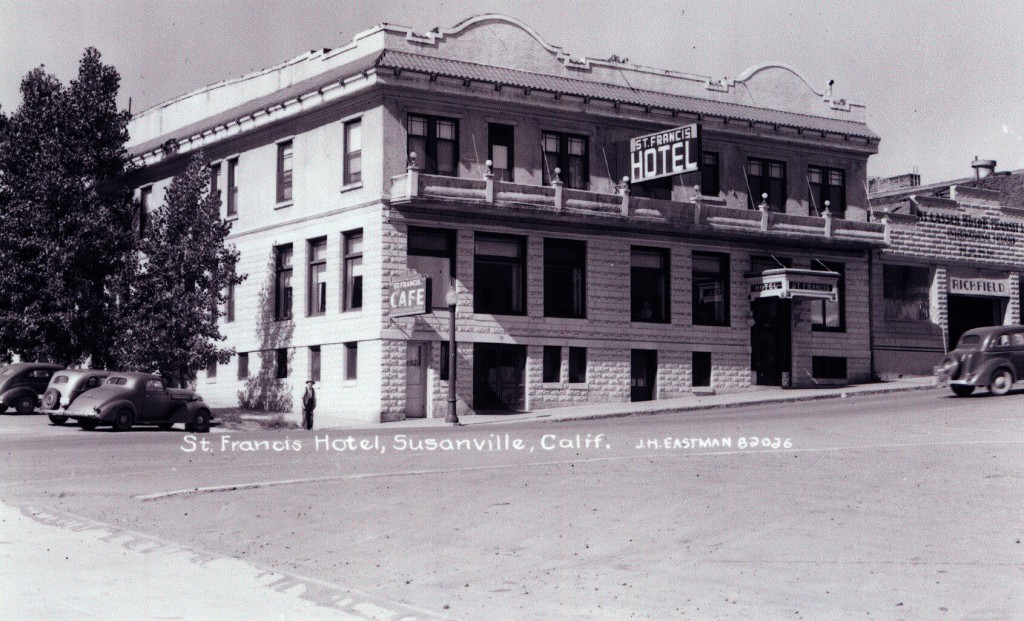
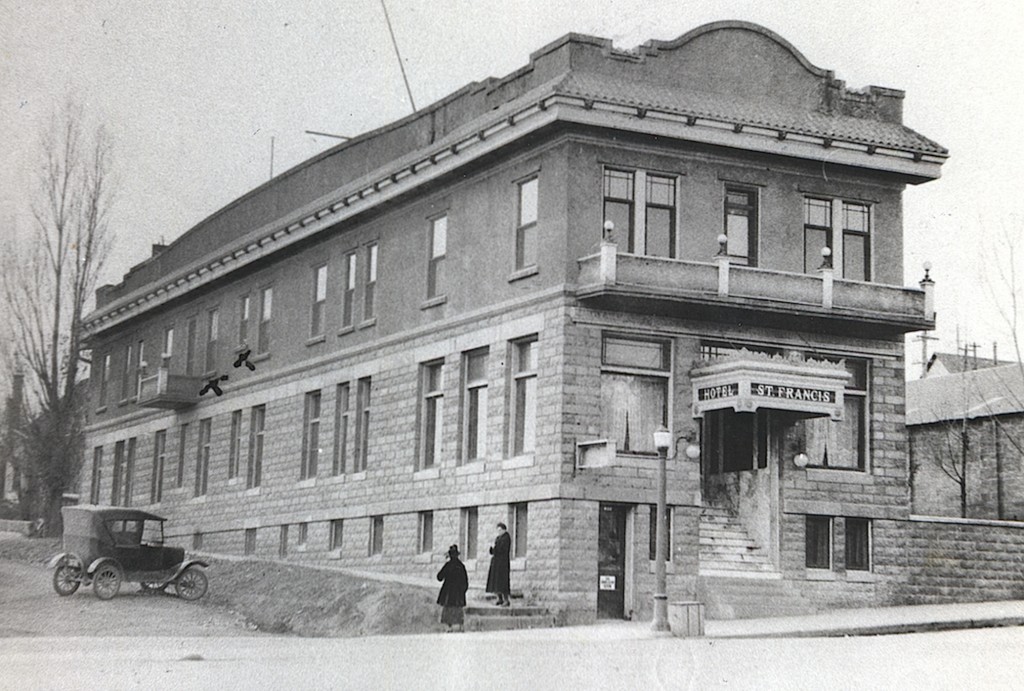
Yesterday’s post was about the early origins of the St. Francis Hotel. Some one wanted to know about the west addition. Here is that information below, as well as what the building originally looked like for comparison.
St. Francis Hotel, circa 1919. Courtesy of Art Almeda
During the 1920s, Susanville’s population nearly tripled. Hotel accommodations were scarce, especially after the Emerson Hotel was destroyed in a 1915. In August 1925, the St. Francis Hotel announced its intention to construct a three-story addition. While it added only an additional nine rooms, it allowed for the lobby to be enlarged, as well as the restaurant facilities. The $25,000 project was constructed by the firm Woodward & Grebe, It should be noted that noted Nevada architect, Frederick deLonghamps designed the original hotel, as well as the addition.
St. Francis Hotel, circa 1919. Courtesy of Art Almeda
Unfortunately, this historic hotel has been shuttered for a number of years. Who knows what its future fate may be. This about the origins of the hotel.
In 1907, Franceska Murrer Neuhaus, with her husband, Ben, retired from their Willow Creek Valley ranch and moved to Susanville. Not to be idle, she kept busy investing in several commercial enterprises. In 1913, flush with money from the sale of the ranch, to her son, Edward Murrer, she had one more venture to undertake. At this time, she hired Nevada architect Frederick deLongchamps to design a hotel at corner of Main and Union Streets.* She named her new enterprise the St. Francis Hotel. Franceska was well versed in the innkeeping business. For years, the Neuhaus home in Willow Creek was well known for its hospitality to accommodate travelers. Her daughter, Rose Bagin, operated hotels at Hayden Hill and Susanville. Rose’s home in Susanville happened to be conveniently located behind the St. Francis, and her elaborate flower garden complimented the hotel. When the St. Francis opened its doors in 1914, Franceska’s son and daughter-in-law, Bill and Flora Neuhaus managed it.
*deLongchamps first Susanville building was the Lassen County Jail completed in 1911.
The July 4, 1906 parade with the city/fire hall in the background—Lola L. Tanner
In 1884, the Lassen County Board of Supervisors created the Susanville Fire District—it had authority to levy tax assessment for fire protection. In the course of time, the district needed a home to not only store its various equipment—hose cart and hoses—but a place to meet and for the volunteers to train. In the fall of 1891 the district advertised for proposals for a fire hall and received three bids. On November 19, 1891, the district accepted James P. Keener’s offer of a lot and to build a hall on North Lassen Street. To adorn the fire hall, Keener constructed a 50-foot-bell tower. It was now the town’s tallest landmark. Keener specifically constructed it that way, so when the bell was rung it could be heard throughout the town.
In 1900, when the City of Susanville incorporated, it became the town’s combination city/fire hall. It is rather ironic the building was destroyed by fire in 1921. On a final note, I have never been able to locate a good photograph of the building.
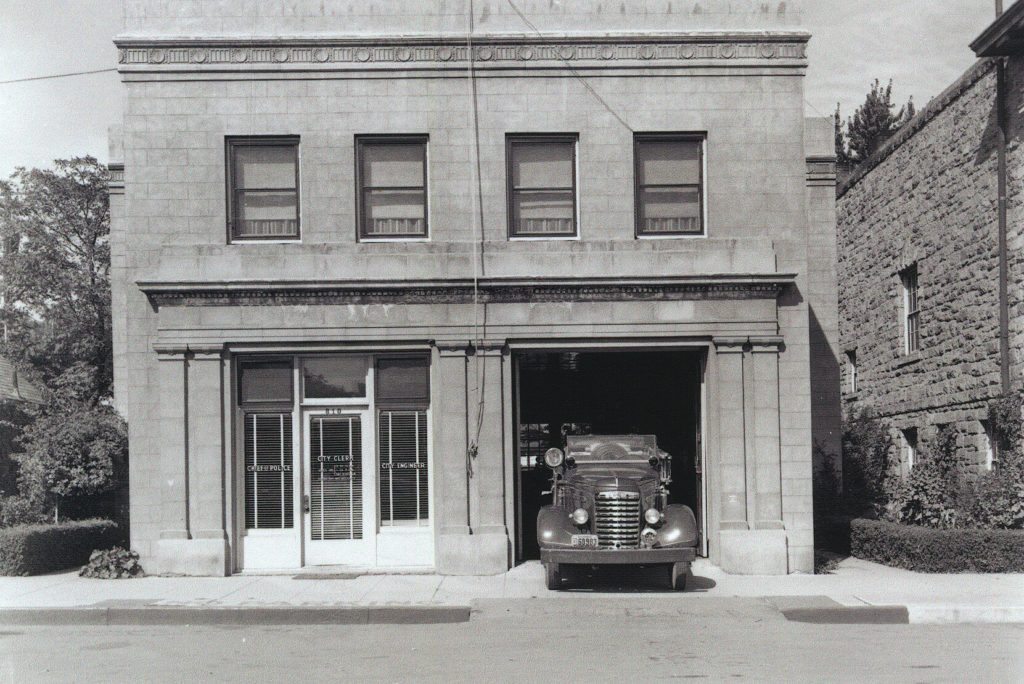
On January 6, 1924, Susanville’s new city hall was dedicated. It was estimated that nearly a quarter of the town’s population turned out for the occasion.
The original city/fire hall was destroyed by fire on November 7, 1921. More about the history of that structure later. The City Trustees (today referred to as Council) had many pressing issues to contend with and decided to take their time with the construction of a new city hall. In the spring of 1923, they hired noted Nevada architect Frederick DeLongchamps to design a new building. (Some local buildings designed by DeLongchamps include the Del Mar, St. Francis Hotel and the Lassen County Jail).
In October 1922, voter’s approved a $20,000 bond measure to pay for a new combination city/fire hall. Alas, DeLongchamps’ plan carried a $30,000 price tag, along with an additional $5,000 to furnish it. The Trustees’ were reluctant to go back to the voters to approve an additional $15,000 bond measure, but had no other choice. On June 26, 1923 voters approved the additional funding 146 to 14. On August 18, 1923 Woodward & Grebe were awarded the contract to construct the two-story concrete building.
City hall has undergone numerous changes in the past 100 years. The most notable occurred in 2000., during the City’s Centennial. Not only did the building go through a complete retrofitting, but 3,250 square feet was added to the structure. The integrity of the historic facade was kept intact. It was an expensive proposition that cost $1,323,752.
On a final footnote, in late January 1924, the City thanked the Lassen County Board of Supervisors for useage of the County Courthouse that allowed them to hold meetings for the last two years.
The first bona fide newspaper the Sage Brush made its debut on the streets of Susanville on July 15, 1865. This was a substantial undertaking since Lassen County may have had barely a thousand residents. It should be noted that the County of Lassen subsidized the publication at $100 a month until it was able to sustain it on its own.
It was a typical rural press newspaper. It was four pages in size, published weekly. A Washington hand press was used, and the type set by hand.
The newspaper’s founder, A.C. Longmore remained at the helm until August 10, 1867 when he sold it to A.T. Bruce. Bruce’s ownership was short-lived and sold the paper in the fall to John C. Partridge. Partridge changed the name to the Lassen Sage Brush. Yet, besides operating the newspaper, he had many other interests. He spent five years as a U.S. Deputy Surveyor and did many of initial Government Land Office surveys of northern Lassen County, as well as Modoc County. Because his work as a surveyor required him to be away for long periods of time, he sold a half interest in the newspaper to George Pierce. It did not work out well, by June 3, 1871, Partridge was once again sole proprietor. In March 1872, he brought in another partner, D.C. Slater, who also happened to be his brother-in-law. More changes were on the horizon when on January 4, 1873, displayed an entirely new format. Not only that, but a new name as well—The Lassen Advocate. The Advocate would chronicle the news of the region until 1987 when it closed due to bankruptcy.
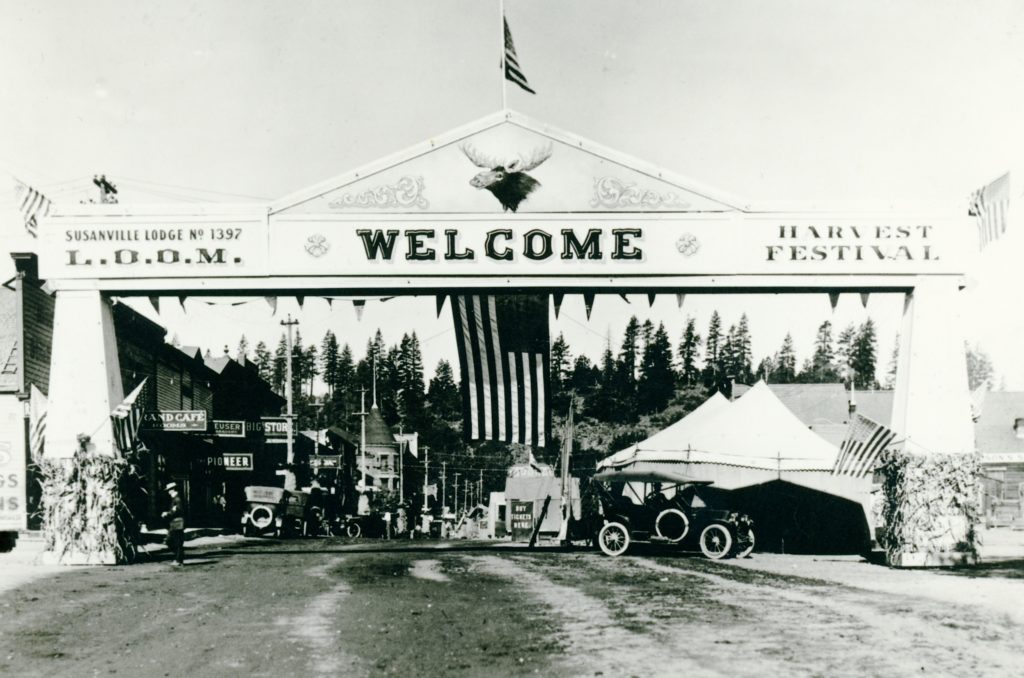
The arch was a temporary affair, and a windstorm two weeks later, blew it over.
Community archways have been around for a long time. Of course, in this region the best known one is the Reno Arch, which the first one dates back to 1928. Susanville had its own Arch, even though it was short-lived.
1913 a new fraternal organization was organized–Susanville Lodge 1397, Loyal Order of Moose, commonly referred to as the Moose Lodge. They decided to hold a Harvest Festival in conjunction with California’s Admission Day, September 9.
It was a four day festival. On the northwest corner of Main and Gay Streets (the former Bank of America parking lot, now owned by LMUD) an open air pavilion was constructed, where many activities were held. To give the event a special festive air, the lodge constructed an arch over Main Street at the Gay Street intersection.