Tag Archives: Schools

Lassen College’s First Football Team

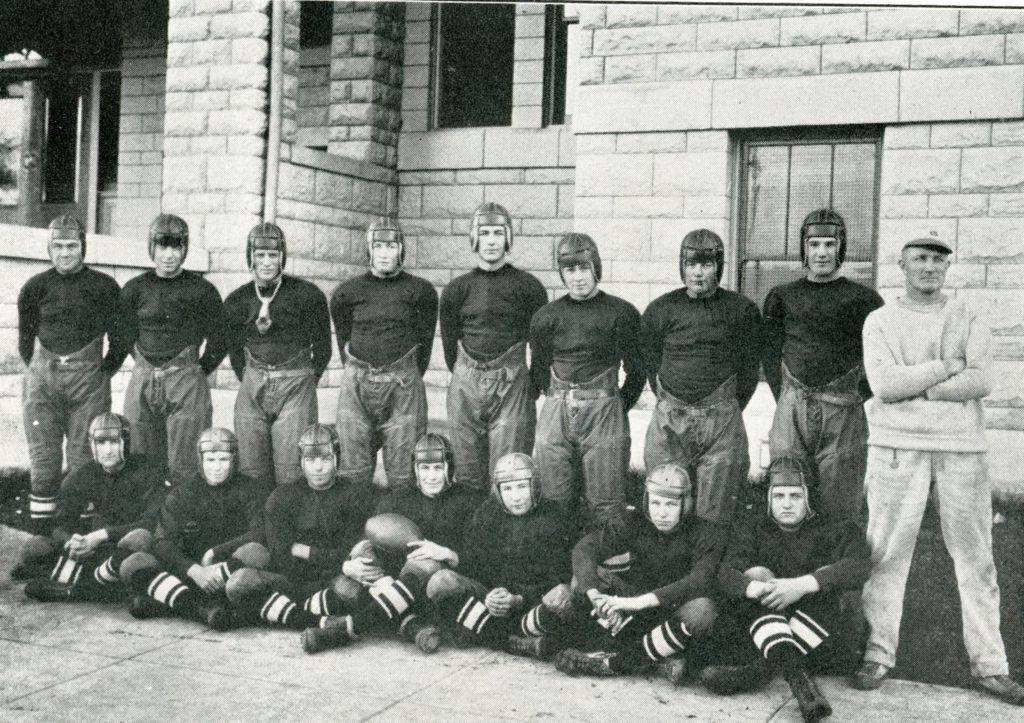
Lassen Union High School Football Team, 1926

In 1925, Lassen Union High School established a football team. Their first season was certainly rough around the edges. The playing of the game was so new to everyone, it would take time to slowly learn it.

On Armistice (Veteran’s) Day 1926, Lassen was scheduled to play Chico in Susanville, but the latter was not able to attend. Rather than cancel and disappoint the fans an impromptu team of Lassen Junior College was created. There was a wee bit of problem, the college’s student population was so small they did not have enough players to form a team. It was mutually agreed that some of the high school students could play on the college team. It was an entertaining game for the fans, and college won 12 to 8.

It should be noted during the late 1940s, Lassen College had a bona fide football team.

Tim

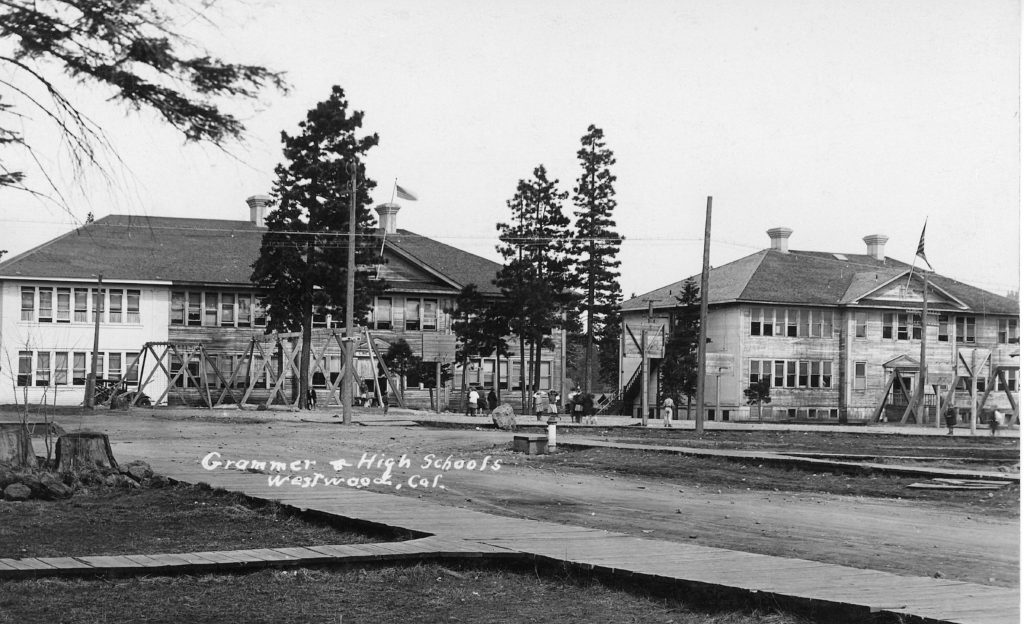
Westwood High School Dedication

Courtesy of Hank Martinez

In 1914, Red River Lumber Company opened a private high school, that even included night courses for the benefit of the employees. In the fall of 1916, the high school was converted into a public one with an enrollment of forty students. Initially, the grammar and high school shared the same building, but with increasing enrollments it was determined the high school have a building of its own. In the fall of 1918, a new two-story high school was built adjacent to the grammar school. Dedication of the new high school did not occur until March 8, 1919. Red River paid for the construction of the high school, which normally residents of the school district would have passed a bond measure to do so. However, the State of California paid the teacher’s salaries.

Support

California County High School Act

W.H. Weeks architectural rendering for the Lassen County High School. .

In 1892, California passed a progressive piece of education legislation enabling counties to establish public high schools.  Many California counties, while embraced the concept, were slow to implement due to the financial crisis of 1893, which certain regions took decades to recover.

In the spring of 1902, Lassen County Superintendent of Schools, O.M. Doyle embarked on an ambitious campaign to form a Lassen County High School. He succeeded. On November 4, 1902 the voters approved the measure—637 Yes and 295 Opposed. The opposition came mainly from Big Valley, Madeline Plains and Long Valley, since there was no doubt the high school would be located in   Susanville, and they resided such a great distance from there, it would not be beneficial in their opinion.

On September 14, 1903, the first session of the Lassen County High School was held. In attendance were approximately forty students, with two instructors, George Barton and F.C. Schofield, the latter also served as principal. In the summer of 1905, construction began on a high school, at a cost of sum $30,000. That iconic building on Main Street was torn down in 1968 and replaced with the current structures.

Subscribe

Lassen County Budget Crisis—Trim the Fat!

Lassen Union High School—Lola Tanner

In November 1931 a Lassen County Farm Bureau committee was formed to see how to make cuts to the expenses of Lassen County government. One of their first recommendations was to make the Lassen County Assessor personally inspect every tax payers property to make sure nothing escaped assessment.

It was education they really set their sights on. J.H. Hunter of Westwood stated that 32 cents out of every state dollar went to education. It was Hunter’s opinion that colleges were turning out so many yearly graduates who could not find employment.

J.A. Pardee chimed in with his two-cents worth. He thought community colleges were a waste of time and money. Its was Pardee’s thought that a grammar and high school education was more than sufficient and that higher education was not necessary. Their consensus, “We are spending hundreds on ten-cent kids.”

Subscribe


A Homestead Era Relic—State School Lands

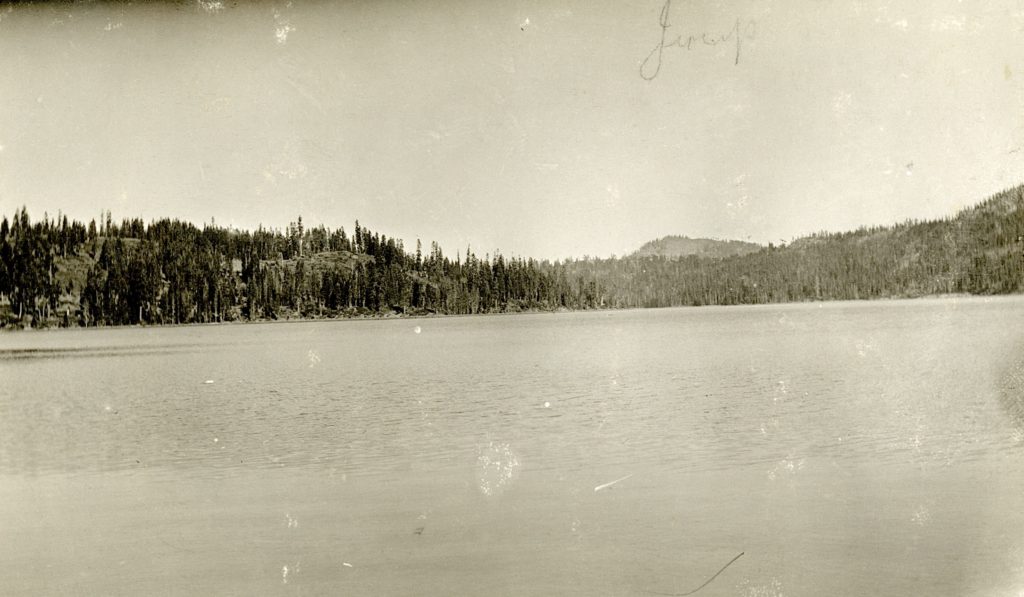
Juniper Lake, 1914

In 1853, Congress passed an Act granting the State of California school lands, in effort to support public education. Every Section 16 and 36 in every Township was granted to the State of California as school sections. These properties did not require a federal land patent to be acquired, just simple fee to the State. It is interesting that 19 California counties were exempt. During the early years, the State sold these lands to prospective buyers at $1.25 per acre. When school lands are sold today, those funds are deposited into the State Teacher’s Retirement Fund. In Lassen County, there remains a high concentration of school lands in the eastern portion of the Honey Lake Valley.

Juniper Lake, located in Lassen Volcanic National Park fell under the jurisdiction of the State as a school land section. In 1892, San Francisco resident, J.P. Frenna purchased 475 acres that included Juniper Lake from the State for $1.25 per acre.

Support this site and Subscribe today!

Tule/Pyramid School

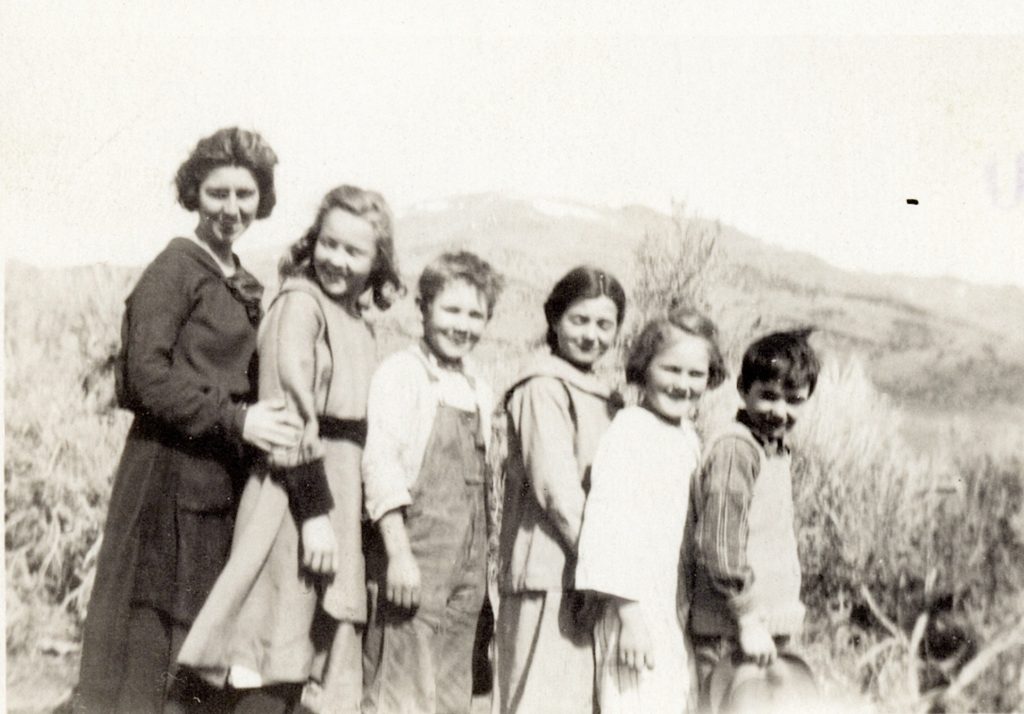
Tule Mountain School-Left to Right: Teacher from Winnemucca Ranch, Leslis Olds, Albert Olds, Jennie Guichu, Martha Olds and Steve Guichi—Caudle Collection

This is an introduction to tomorrow’s post. The Pyramid School District in Washoe County was for a simple way to describe its location was between Constantia and Pyramid Lake. Tule Mountain a natural dividing barrier separating the two families that had children—Benoist and Olds.

When A.J. & Sarah Olds took up a homestead there with a brood of five young children, a school was going to be a necessity. However, the nearest the school was on the other side of Tule Mountain at the Benoist Ranch and Mrs. Benoist was not going to budge about relocating the school.

I can not do the story justice as to how Benoist and Olds came to terms. Sarah Olds in her book Twenty Miles From A Match provides such an entertaining account. Tomorrow, I will provide an introduction to this delightful book.

Support

Lassen College Camels

1940 Camel
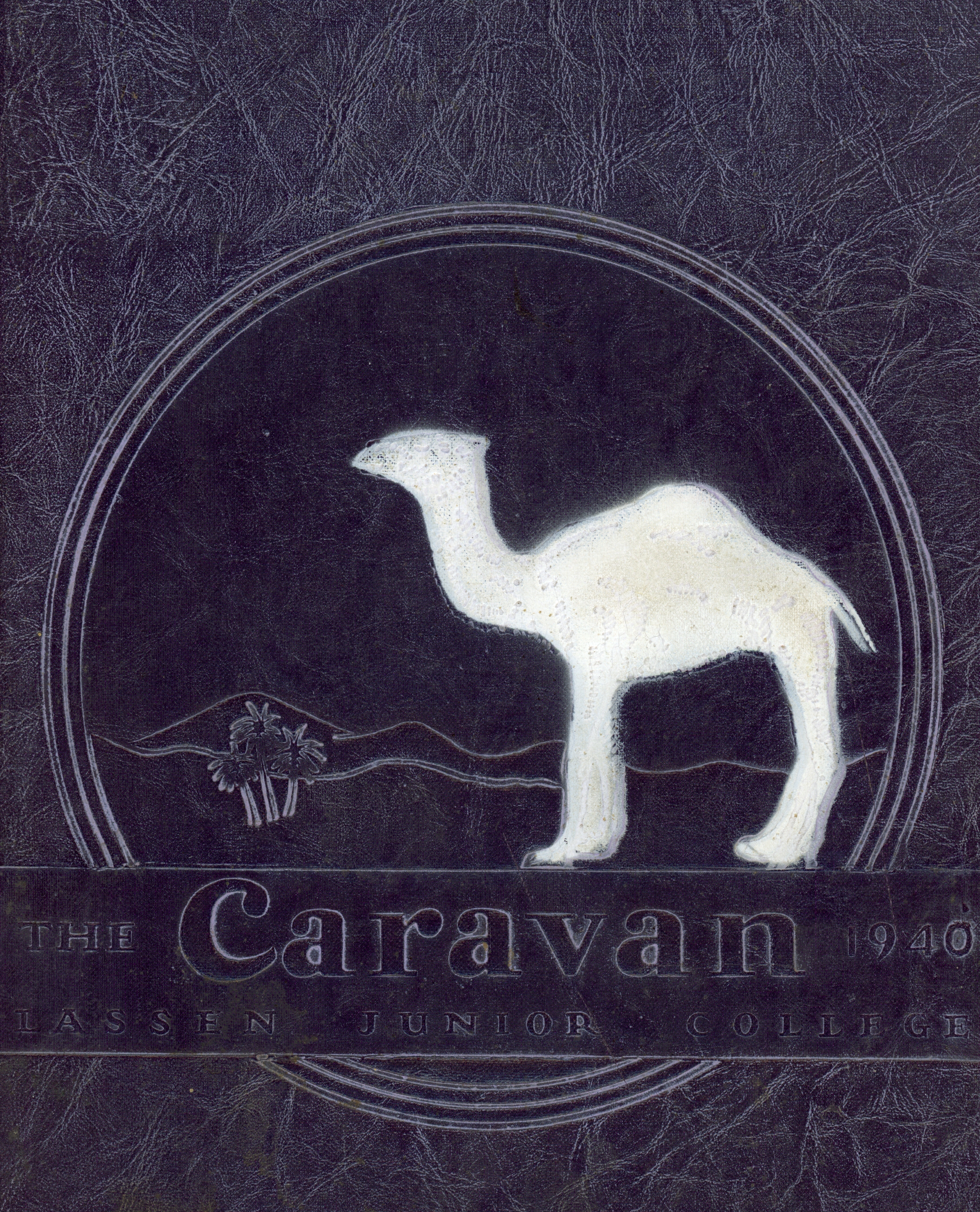
1940 Lassen College yearbook cover

In about a month, fall semester will start at Lassen Community College. So a little bit of Lassen College history. By 1930s, schools were adopting mascots. In 1937, the college adopted the “Camel.” Its selection was attributed to the forestry students. An interesting choice, that puzzled future alumni.

Shortly, after World War II a discussion was held whether the camel was an appropriate mascot, since it was so far removed from its natural habitat. It was decided to select a mascot of a local nature and the “Cougar,” was selected to replace the camel.

 Subscribe.


An Early Lassen College Booster

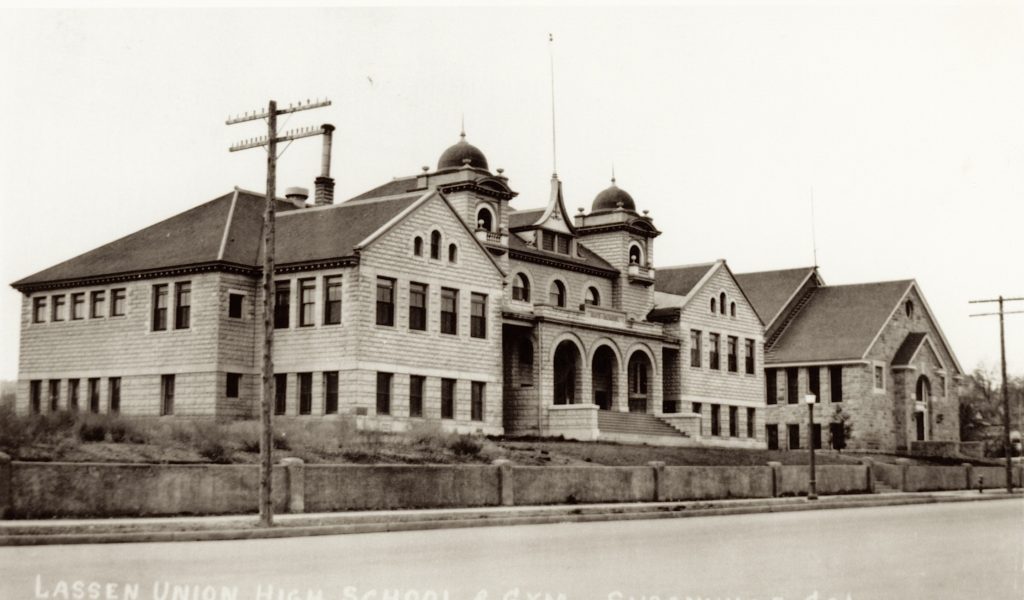
Lassen Union High School & Lassen Junior College

In 1910, A.J. Matthews arrived in Susanville as part of a small group of men to form a local telephone company. They would be successful. In 1915, Mathews married native daughter Lena Cahlan. Mathews was a firm believer in civic engagement. He was involved in so many different activities on the local and state level.

Mathews also served on the Lassen Union High School/Lassen Junior College Board—the two were intertwined until the college separated in 1965.

In January 1935, Mathews addressed theSusanville Rotary Club concerning the schools reorganization plans, specifically that of the college. Mathews stated, “We should capitalize on the fact we have the only junior college in northern California north of Chico.

Later in 1935, the college board of trustees,  met with Mr. J.C. Beswick from the State Department of Education, in charge of Trade and Industrial Education. It was met with enthusiasm by all parties, including the lumber mills and related fields. On  September 19, 1935, a Technical Institute course in forestry at Lassen College was offered, with Gale M. Whitchurch in charge. Initially, enrollments fluctuated between 12 and 23. It was a major turning point in the college’s history that attracted students from around the state to attend Lassen.

Support


Paul Bunyan Days

Log Rolling contest at Willard, 1970. Couresy of D.B. Martin

In the late 1940s, Paul Bunyan Days  was a logging competition held not only at Lassen College, but other community colleges that had forestry programs.  Tom Gilfoy who graduated from Lassen in 1951, said it was Ralph Throop who was instrumental in starting Paul Bunyan Days at Lassen. At that time it was held behind the high school, since the college was located on the same property. Tom stated they made an impromptu dam on the Susan River for log pond events that included log rolling. Other contests involved burling, pole climbing and two-man bucking saw.,  In 1950, Rex Coalson was the overall winner, followed by Ted Pankey in 1951.

Some time in the late 1960s, no doubt due in part with Lassen College separated from Lassen High School, Paul Bunyan Days was moved to Willard Creek. It was rather fitting since in 1938, it was the forestry students who developed the Willard Hill ski area, later converted into a sled hill.  Mike Moyers who later taught at Lassen stated that around 1981 or 1982 was when the last Paul Bunyan Days was held. In 1984, the forestry program at the college was terminated due to lack of students.

Subscribe

Stanford University & Lassen County

Map courtesy of Stanford University

One would not think that Stanford University and Lassen County would be associated in any way, but that was not case. Leland Stanford had many interests. In 1881 he purchased Rancho Bosquejo at Vina, Tehama County. It should be duly noted, that this was Peter Lassen’s original Spanish Land Grant.

On May 26, 1899, Stanford’s widow, Jane, purchased 2,114 acres west of Eagle Lake from Champlin and Boggs for $8,000. This allowed for additional summer pasture for the Vina property. Ten days after the purchase, Jane transferred the title to Stanford University. In February 1924, the University sold its Lassen County Summer Range to J.J. Flemining at $10 an acre.

Spread the word, and encourage a friend to subscribe