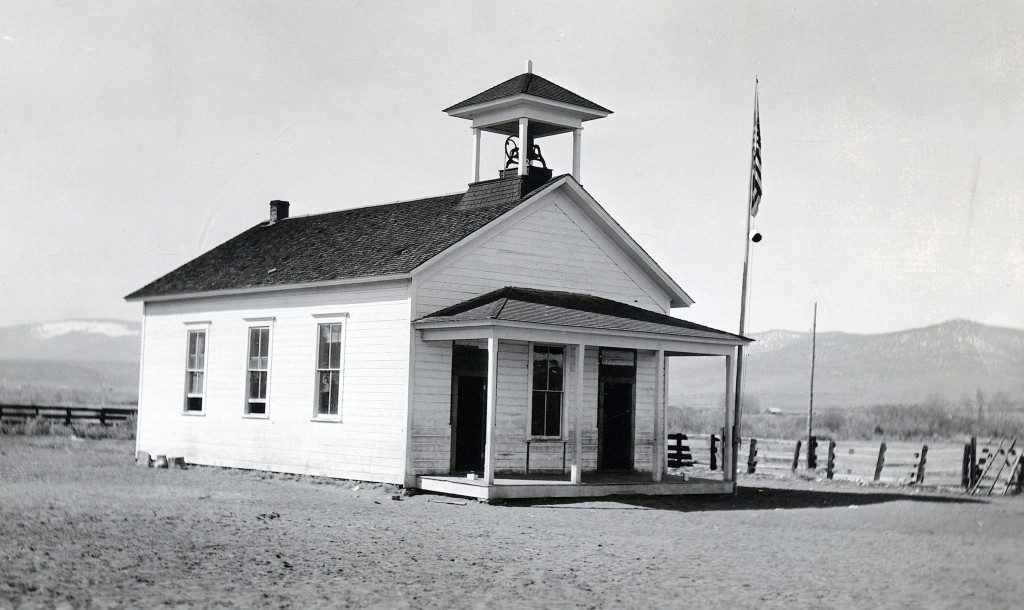
In 1952, the Johnstonville School went through a remodel “modernitzation” process with an addition to the school, transforming from a one room school to two rooms. For reasons unknown, the school bell was removed. Five years later, in March 1957 that situation would be corrected. The bell all that time had been stored in a barn in the nearby Jenkins Ranch. Through the efforts of Johnstonville School Principal John White and School Board member Harry Reuck, they spent several days in putting the bell back in its original perch. In 1961, a new school was built to replace the original one that was constructed nearly a century ago.
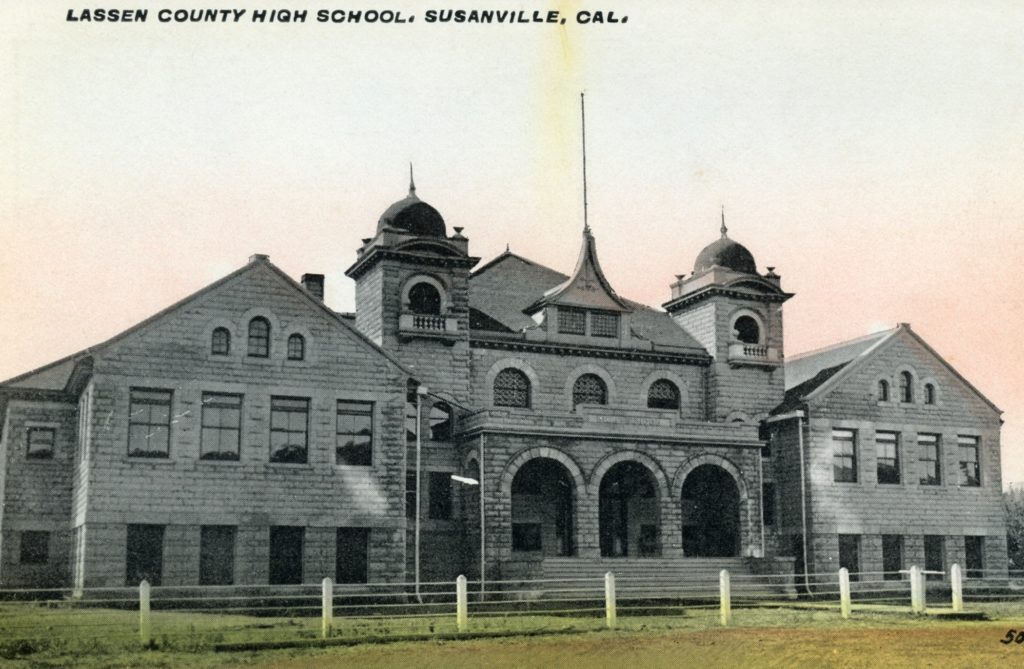
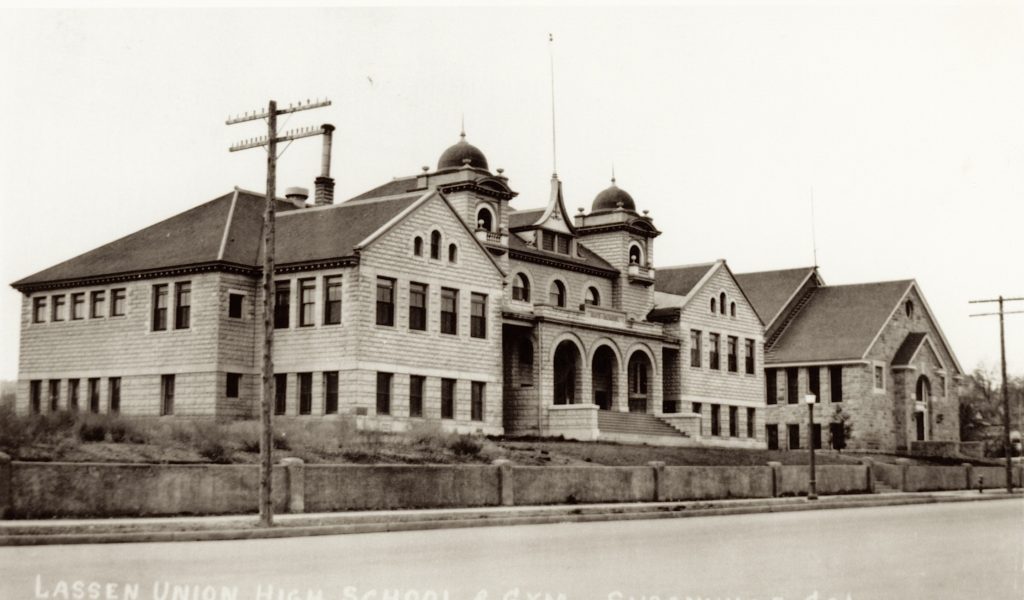
This was a query received about the past and present Lassen High School buildings. For a certain amount of seasoned residents they still have a bit angst when the old school was torn down in 1968
Lassen High School, May 5, 2018–Jim Chapman
As Glenn Wemple, Class of 1948 relayed to me, as he served on the High School/College Board of trustees they were advised when it came time for demolition, to do it as quickly as possible because emotions in the community would become a very sensitive issue. The trustees took that advice and the old school was quickly demolished.
In 1908, the trustees of Lassen County High School ordered to have a fence built in front of the school. Its primary function was to keep stray livestock off the school grounds.
It should be noted that in Susanville during its early years had a problem with stray livestock roaming the community. It was so bad, that in 1870 the California Legislature passed “Barnes Hog Law”which prohibited free roaming pigs in Susanville. This was a major concern after all, since the town’s water supply came from Piute Creek and was distributed by open ditches.
Lake was one of the original six school districts established in 1864–the others being Susanville, Richmond, Susan River, Janesville and Long Valley. It was so named, due to its close proximity to Honey Lake and the school house was located some four miles south of Janesville.
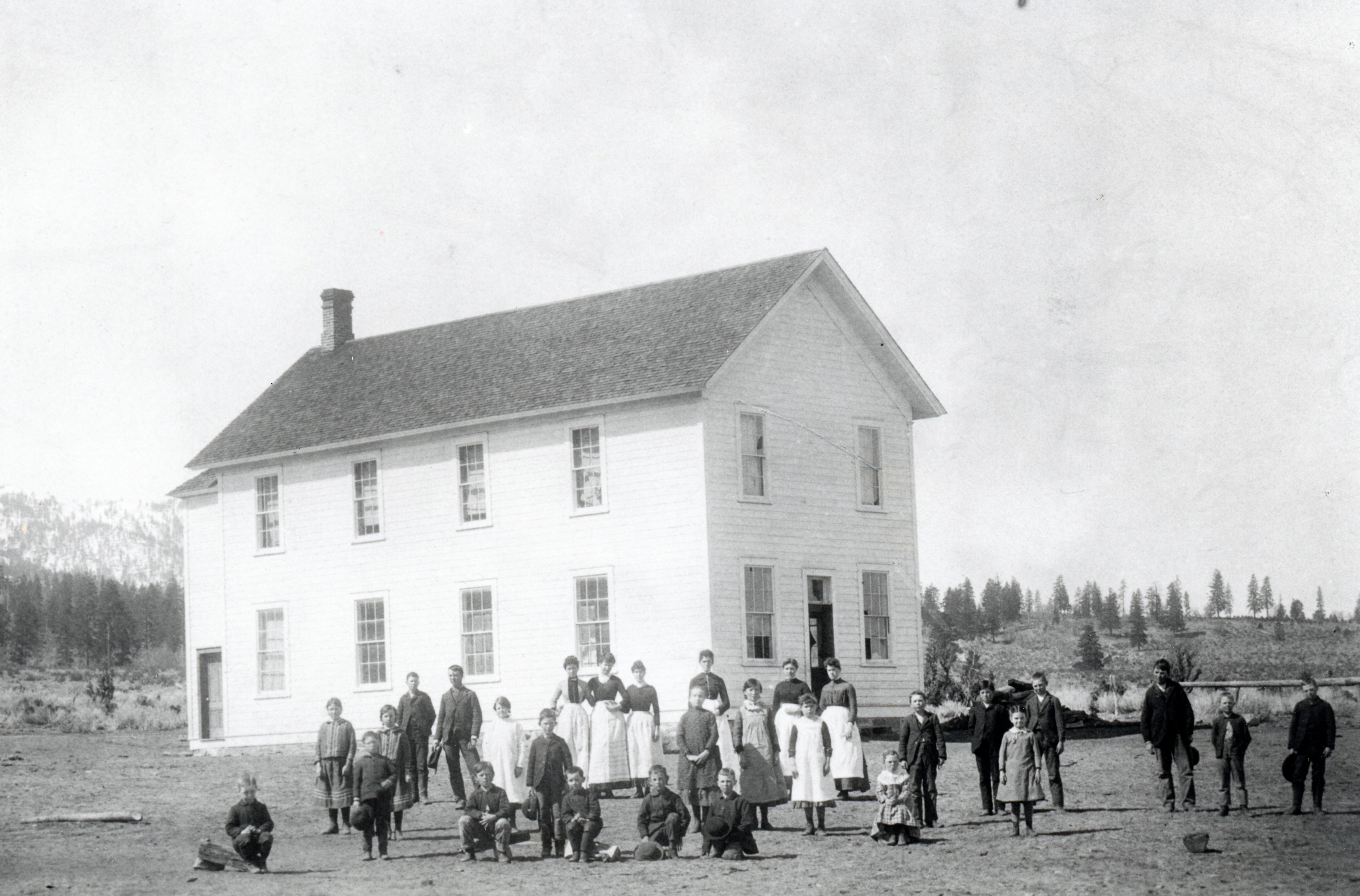
In 1877, the District constructed a two-story schoolhouse with the assistance of the Independent Order of Good Templars. The second story was used as a hall for that organization, as well as others.In 1898, the student population was 31.
Numerous changes were on the horizon, especially with automobiles and highways. The second story no longer used by fraternal organizations. In 1934 the second story was removed as part of a WPA project. Francis Wilbur, a local carpenter was hired to do the work at a cost of $1,740. According to former student, Erma Reuck McNett, she stated during the renovation process school was held at the nearby Bailey Ranch.
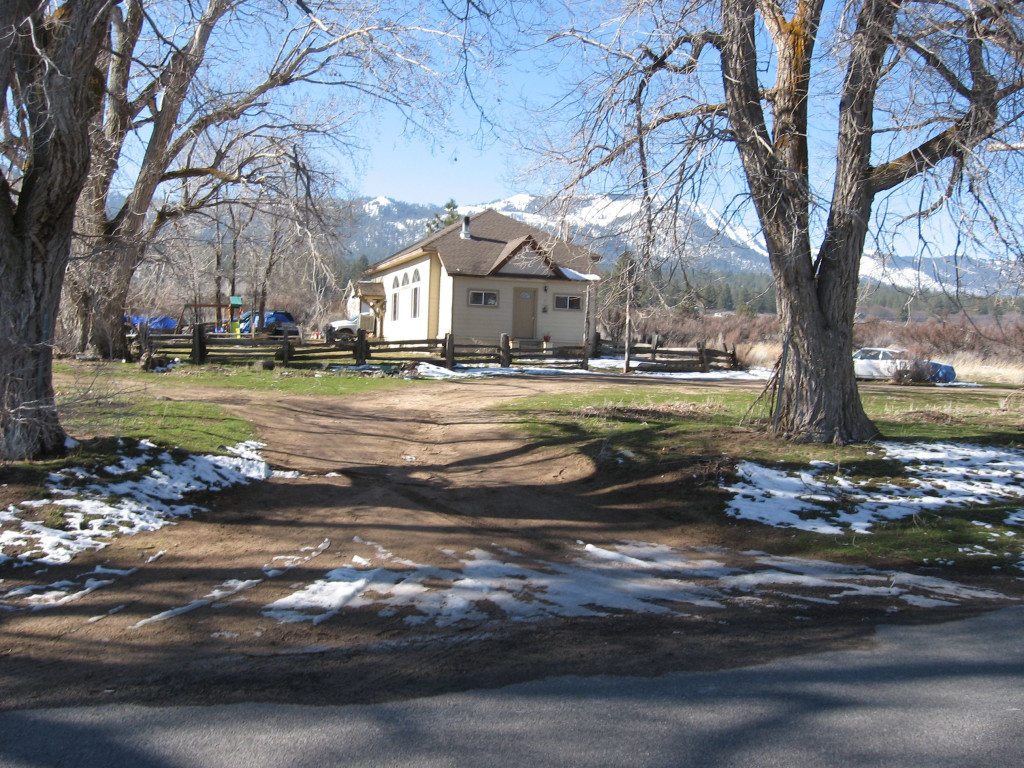
Lake School as a private residence, February 7, 2016.
In 1953, a ballot referendum was held to consolidate the Janesville, Lake, and Missouri Bend schools. The Lake District voters opposed it. In 1971, the Lake School closed and annexed to Janesville. At the October 9, 1975, meeting of the Janesville School District Board declared the Lake School as surplus property, since the old school house would not meet current state building code standards for a school. The title to the property was a bit “cloudy”concerning a reversion clause. It was deemed that the property should revert back to the Bailey family. On October 17, 1975 it was deeded to George and Jane Bailey and the schoolhouse converted into a private residence.
Willow Creek School 1886–Alice Fritter Pendergrass
In the spring of 1871, the residents of Willow Creek Valley constructed and operated a private school at the west end of the valley near the Murrer Ranch. Miss Fanny Lovell was employed to teach the first classes. In June 1871, residents petitioned the Lassen County Board of Supervisors for the formation of a school district and that was granted. At that time it was one of the largest school districts, land wise. It included Grasshopper Valley, the Madeline Plains and Horse Lake.
It was not until 1877, when John Dobler donated the land that the school was built on, with a stipulation that the property would revert back to him or his heirs when it was no longer used for a school. That would never happen. Continue reading Willow Creek Valley School District→
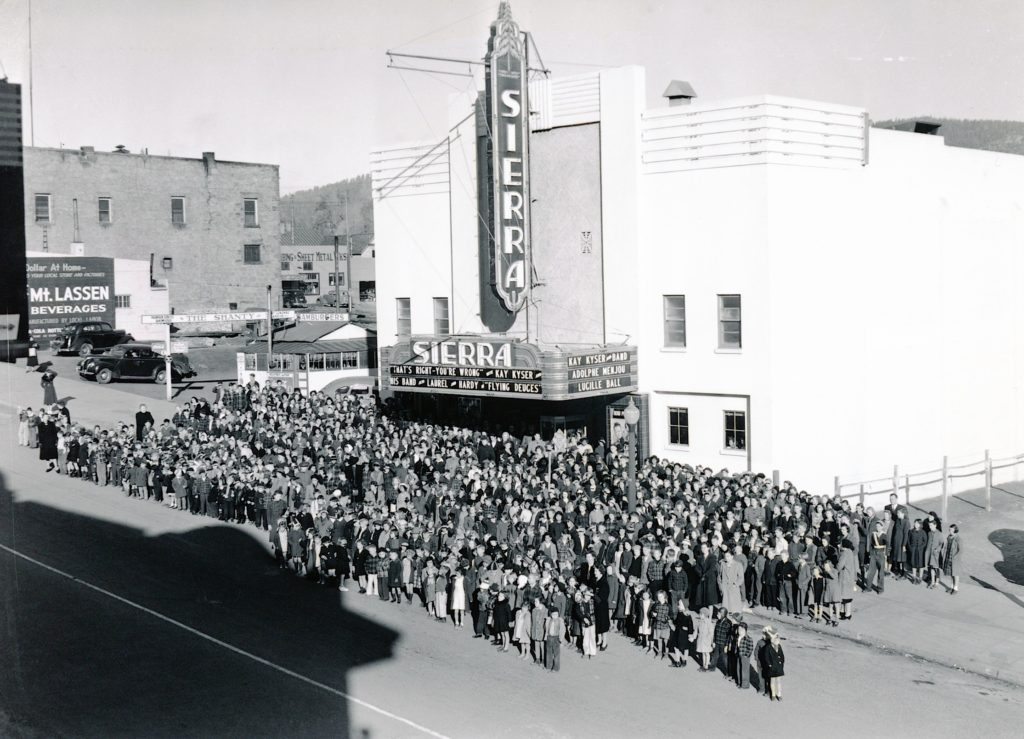
A year or two after the newly constructed Sierra Theater opened its doors in 1935, an annual Christmas event transpired. It was a special “Kiddies Day at the Matinee.” It was opportunity for all the school children of Susanville to have a special morning showing of movies, and given Christmas treats, as well. Various groups and businesses supported the event. This custom carried on for several decades.
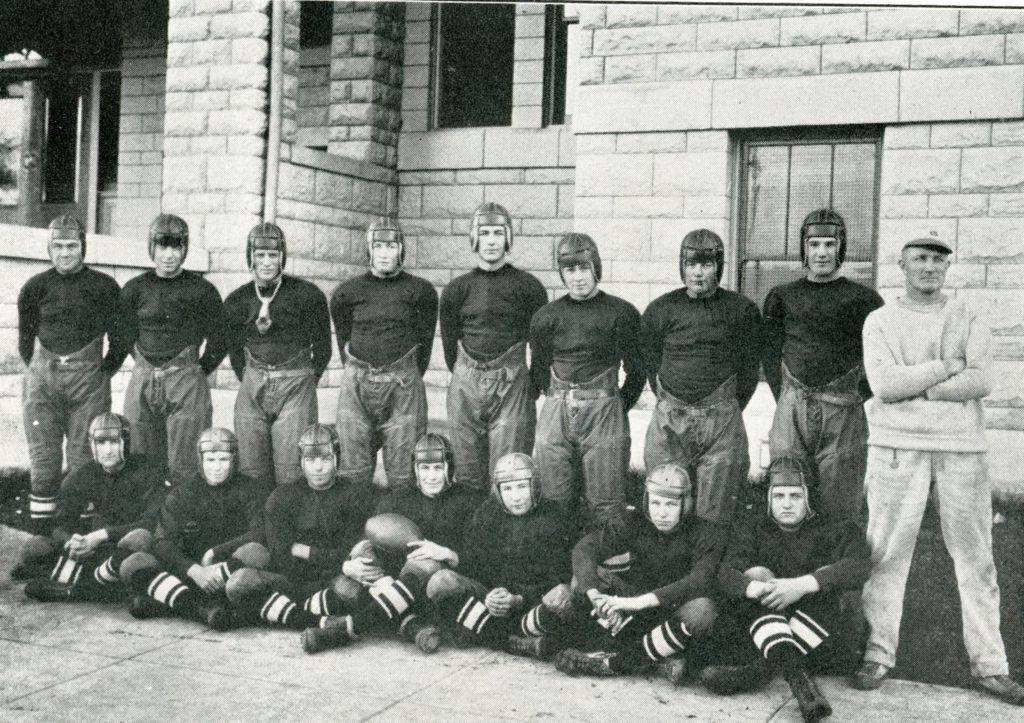
In 1925, Lassen Union High School established a football team. Their first season was certainly rough around the edges. The playing of the game was so new to everyone, it would take time to slowly learn it.
On Armistice (Veteran’s) Day 1926, Lassen was scheduled to play Chico in Susanville, but the latter was not able to attend. Rather than cancel and disappoint the fans an impromptu team of Lassen Junior College was created. There was a wee bit of problem, the college’s student population was so small they did not have enough players to form a team. It was mutually agreed that some of the high school students could play on the college team. It was an entertaining game for the fans, and college won 12 to 8.
It should be noted during the late 1940s, Lassen College had a bona fide football team.
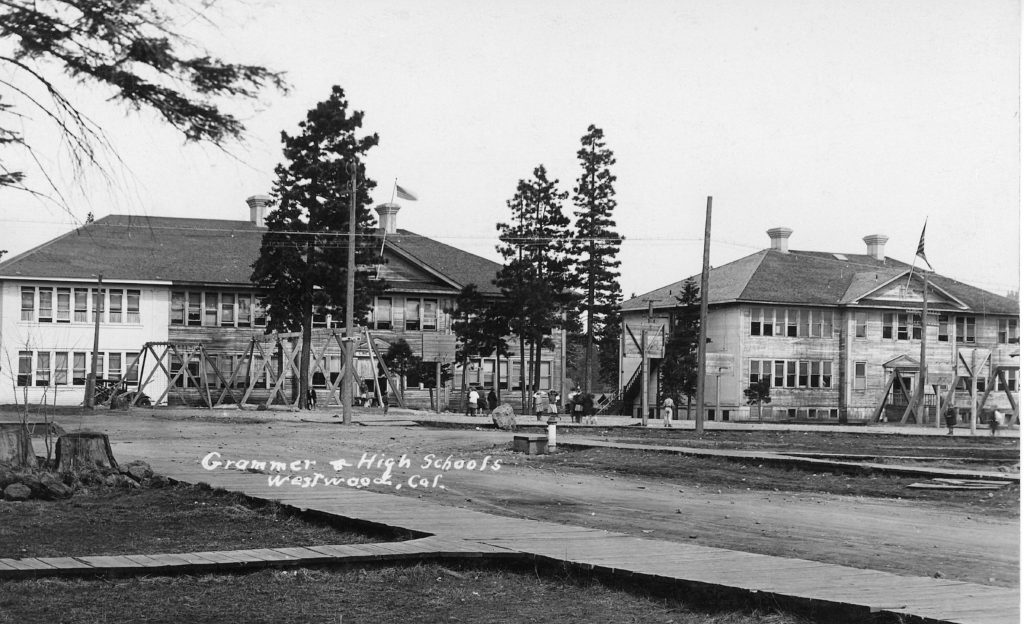
In 1914, Red River Lumber Company opened a private high school, that even included night courses for the benefit of the employees. In the fall of 1916, the high school was converted into a public one with an enrollment of forty students. Initially, the grammar and high school shared the same building, but with increasing enrollments it was determined the high school have a building of its own. In the fall of 1918, a new two-story high school was built adjacent to the grammar school. Dedication of the new high school did not occur until March 8, 1919. Red River paid for the construction of the high school, which normally residents of the school district would have passed a bond measure to do so. However, the State of California paid the teacher’s salaries.
W.H. Weeks architectural rendering for the Lassen County High School. .
In 1892, California passed a progressive piece of education legislation enabling counties to establish public high schools. Many California counties, while embraced the concept, were slow to implement due to the financial crisis of 1893, which certain regions took decades to recover.
In the spring of 1902, Lassen County Superintendent of Schools, O.M. Doyle embarked on an ambitious campaign to form a Lassen County High School. He succeeded. On November 4, 1902 the voters approved the measure—637 Yes and 295 Opposed. The opposition came mainly from Big Valley, Madeline Plains and Long Valley, since there was no doubt the high school would be located in Susanville, and they resided such a great distance from there, it would not be beneficial in their opinion.
On September 14, 1903, the first session of the Lassen County High School was held. In attendance were approximately forty students, with two instructors, George Barton and F.C. Schofield, the latter also served as principal. In the summer of 1905, construction began on a high school, at a cost of sum $30,000. That iconic building on Main Street was torn down in 1968 and replaced with the current structures.
In November 1931 a Lassen County Farm Bureau committee was formed to see how to make cuts to the expenses of Lassen County government. One of their first recommendations was to make the Lassen County Assessor personally inspect every tax payers property to make sure nothing escaped assessment.
It was education they really set their sights on. J.H. Hunter of Westwood stated that 32 cents out of every state dollar went to education. It was Hunter’s opinion that colleges were turning out so many yearly graduates who could not find employment.
J.A. Pardee chimed in with his two-cents worth. He thought community colleges were a waste of time and money. Its was Pardee’s thought that a grammar and high school education was more than sufficient and that higher education was not necessary. Their consensus, “We are spending hundreds on ten-cent kids.”