In the beginning of time, the school’s colors were not purple and gold. I know that sounds almost sacrilegious. Back in the earliest years of the school’s history, it was the seniors who chose the colors for the year. The first graduating class of 1907 selected the colors of green and gold and this proved popular for the next few years. The Class of 1911 were a bit more rebellious and opted for blue and white. By the end of the decade purple and gold were adopted, and its been that way ever since.
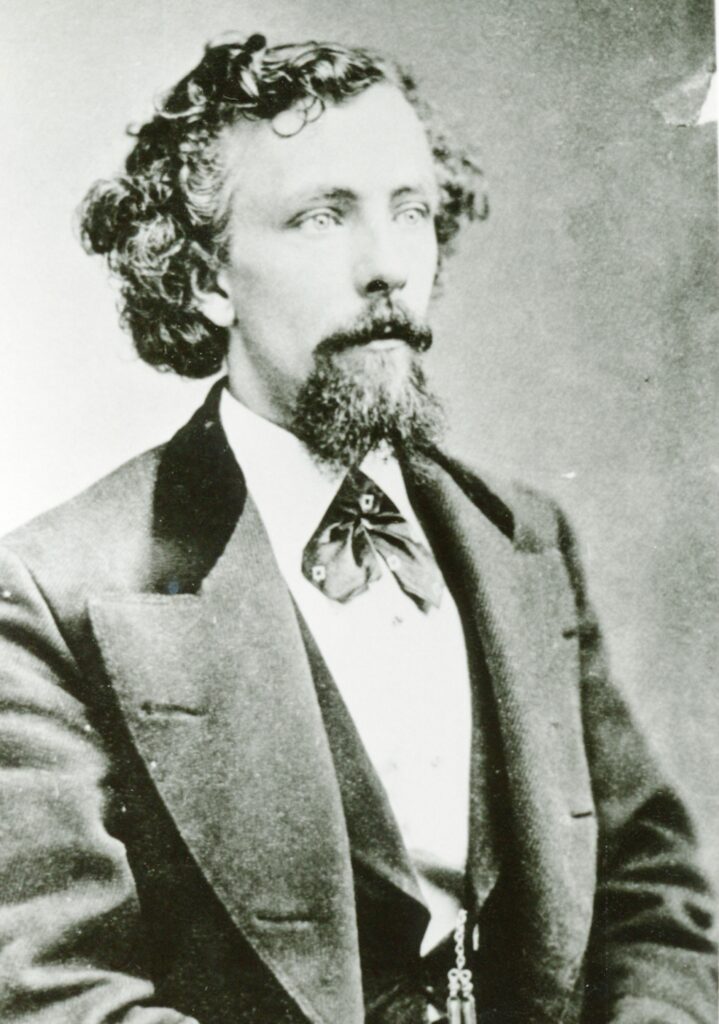
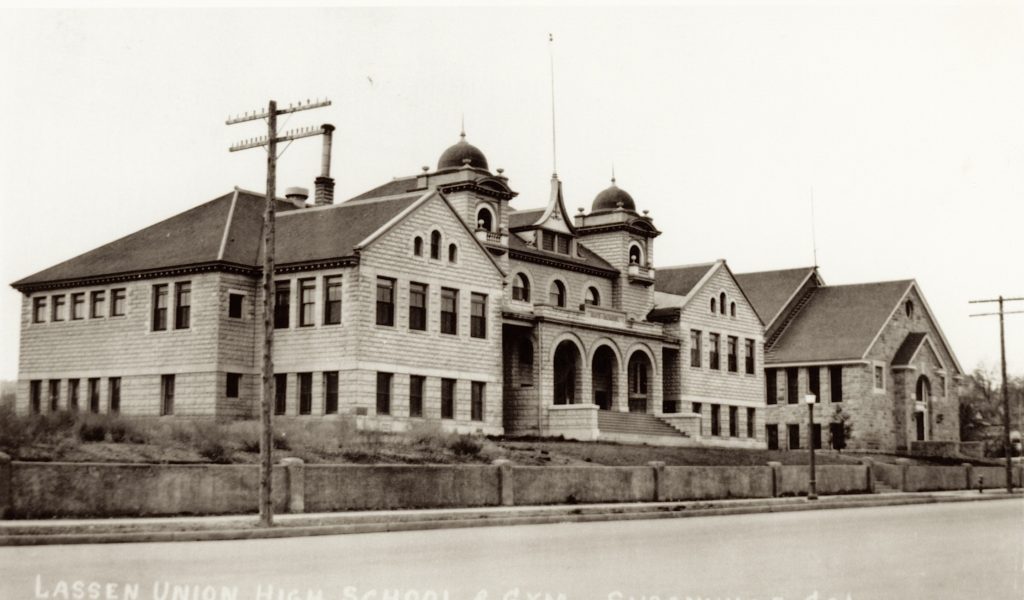
In the spring of 1902, E.W. Hayden, editor/publisher of the Lassen Advocate raised the issue for the need of a high school. Hayden proposed a district high school, rather than a county one. Hayden felt that all the school districts in the county would not support a high school.
In the fall of 1902, Hayden again revived the issue for a high school. This time he succeeded in generating more interest. In September, John Spalding and Franklin Ward circulated petitions to have the matter placed on the ballot for the November election. On October 2, 1902, those petitions were presented to the Lassen County Board of Supervisors and they approved the ballot measure.
Proponents were worried that the voter’s might confuse the issue as a bond measure. Yet, funding for a high school still had to be addressed. It was proposed that the property tax be increased by one cent per $100 assessed value. This tax would generate $3,700 a year-more than sufficient to operate a high school.
As the ballot proposition called for the creation of a county high school, there was Hayden’s concern that it might not pass, especially with the voters far removed from Susanville. Surprisingly many of the outlying school districts were supportive of the measure. After all, the nearest high school available was Reno, Nevada.
On November 4, 1902, the voters of Lassen County went to the polls. Th voters approved the creation of the Lassen County High School by a large majority with 637 votes in favor and 295 opposed.
It is interesting to note in the early days of education there were private schools. In 1858, Malcom Scott opened a private school in Susanville then a mere hamlet. It was an on again and off operation. In 1863, the Susanville School District was formed and a public school became a reality.
In 1872, the first discussion was held to form a high school. It would take thirty years before it became reality. For awhile hope was on the horizon, when in 1875 Massillon Marstellar established the Susanville High School-a private institution. This school would continue to operate for six years when it finally closed its doors.
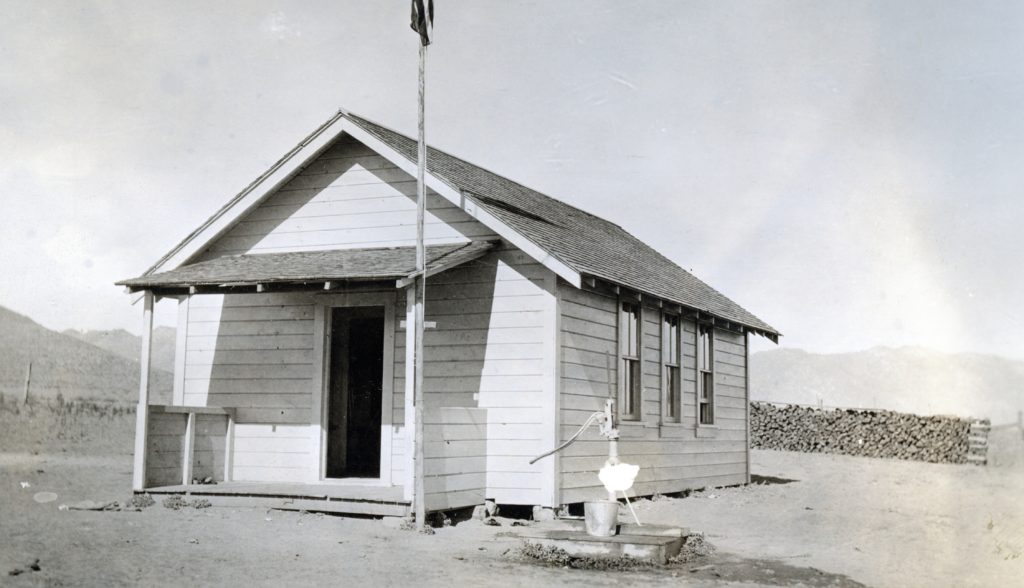
Constantia School, 1916. Notice the wood pile in the background.
It is the middle of August and for seasoned folks it seems strange that is back to school time. For years, schools did start until fall, or least in September after Labor Day.
Like many Lassen County rural schools, the Constantia School District in southern Lassen County had its own story. In 1897 and 1898 the Warm Springs and Junction Schools were formally declared closed by the Superintendent of Schools. Due to that circumstance, no school existed in the extreme southern portion of Lassen County. In 1904, F.C. McDiarmid petitioned the County Superintendent of Schools, J.F. Dixon, to form a new school district in the southernmost portion of Lassen County. McDiarmid cited there were 21 school age children in the proposed district and that the majority of these children resided more than ten miles from the nearest schoolhouse. McDiarmid’s petition was submitted on March 14th and required urgent attention. State law required all new districts be formed before the 5th of April of any year. Dixon urged the Board of Supervisors to approve the District and noted that the Board would need to hold a special meeting to meet the State deadline. The Board of Supervisors held a special meeting on April 4th, with three members in attendance, and approved the formation of the Constantia School District. The District boundaries included the Constantia Ranch and all the territory south to the Sierra County line.
In the fall of 1904, school commenced in the old Warm Springs schoolhouse near Red Rock Station. In the summer of 1914, that schoolhouse was destroyed by fire. The next year, the District held a special election to move the site of the school to the A. Wills homestead near Chat. In 1944, the school closed and annexed to the Long Valley School District.
The “L” as it appeared on the mountainside in 1947. In the foreground is the Paul Bunyan Lumber Mill, now the area of WalMart, etc. Courtesy of Fred Lendman
On February 18, 1928 the Lassen High Block L Society formed, that was the boy’s athletic organization. One of their first activities was the painting of the “L” on Susanville Peak. In 2008, Betty Jo Buckles Coplen provided me with this behind the scene account: “In 1924, my father, Maynard Robert “Billy” Buckles accepted a position teaching at Lassen Union High School, and we moved to Susanville. Four years later, members of the new Block L Society came to my Dad. They asked him to help them plan a Block L for them to lay out on the hillside. He helped them to design a letter L with the proper classic proportions (200 yards long). He also warned them that a letter of that size would be difficult to keep whitewashed. The Block L boys persevered and constructed the letter on the hill, moving rocks into the outline to be painted white. For decades as planned the freshman boys painted the letter each year, but eventually that practice died out.”
While the Block L Society no longer exists, the Lassen High Alumni Association has from time to time maintained it, the last time was done in 2008.
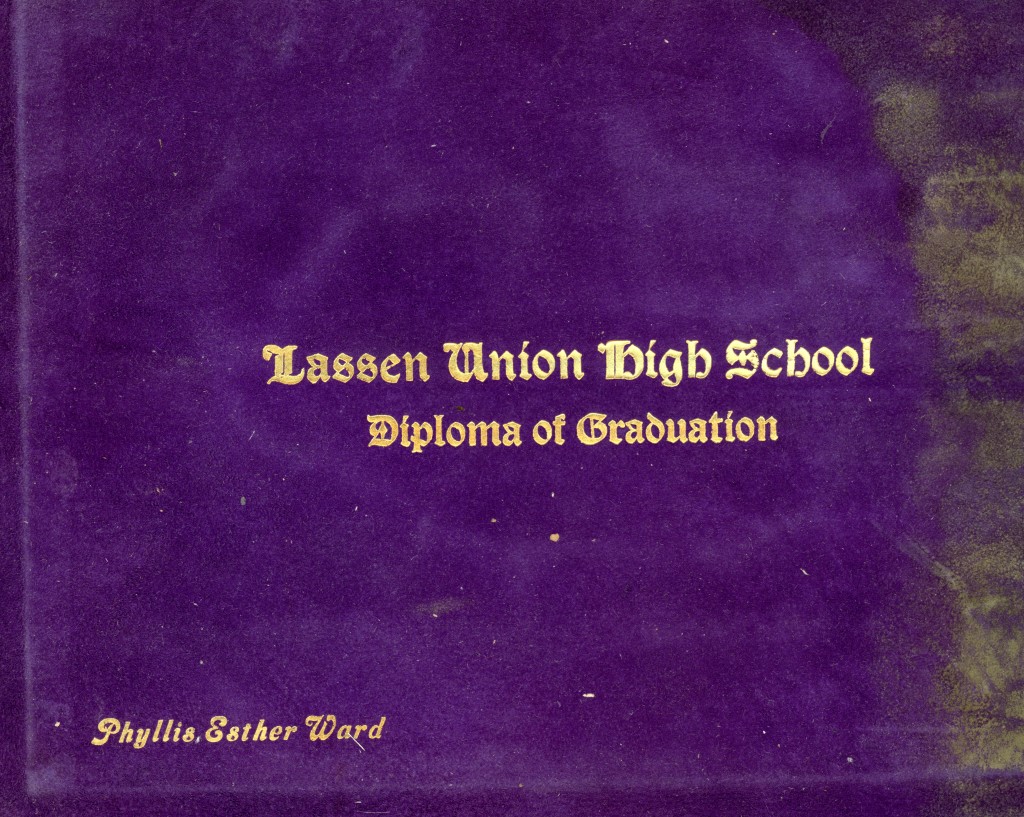
It is graduation season, so a look back 100 years ago of Lassen Union High School Class of 1924. On June 13, 1924, twenty-five graduates received their diplomas. They were: Astrid Berglund, Gertrude Buffum, John Berglund, Mona Hartson, Edith Bowen, Edith Sisk, Dorothy Ferris, Trow Long, Erma French, Lucille Alexander, Frances Pearce, Dorothy Spring, Harold Holmes, Bernice Young, Margaret Jenkins, Edna Lawson, Helen Hibbert, John Hibbert, Marie Doyle, Eunice Woodward, Fae Bonner, Gladys Goodfellow, Alex Fry, Gladys Luke, and John Cramer.
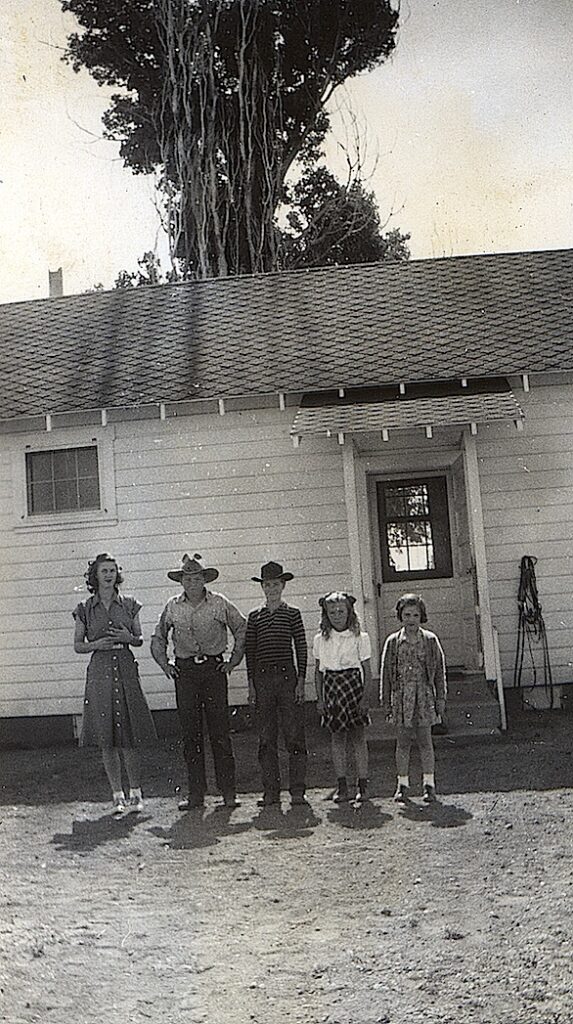
Willow Creek School, June 1946. (Left to Right) Phyllis Wemple, teacher, Elwin Murrer, Bill Daniels, Sally Murrer and Beatrice Walsh—Olive Murrer
Its that time of year, graduation season at local schools. In the 1940s, a number of rural one-room schools would cease to exist due to decline in enrollments and consolidation. Willow Creek Valley some twelve miles north of Susanville was one such school.
Established in 1871, it was one of the older school districts in Lassen County. As an example of declining enrollments came from Glenn Streshley. When Glenn started school there in 1915, there were twenty-three students. Seven years later, when he finished his studies there were only ten.
Willow Creek School, 1921
On April 17, 1942, the school house was destroyed by fire, caused a by a defective flue. It was a like a omen of things to come. However, a small building was moved to the school grounds, with little interruption of the school’s activities. In 1943, the school was suspended for a year for a lack of thr minimum five-students necessary.
In the fall of 1944, the school was resurrected. The student body consisted of Roy Gene DeForest, Elwin Murrer, Sally Murrer and Beatrice Walsh. Though one student short of the state mandate, the school may have been granted an emergency status due to the prevailing conditions of World War II.
In June 1946, Elwin Murrer graduated from the eighth grade. The school did not open again that fall for lack of students.. By 1950, it was apparent there was not going to be a surge of youngsters in the Willow Creek Valley and the school was annexed to the Susanville School District.
The Madeline Plains historically is not the easiest place to make a living. Raising a family with children and to provide for their educational presents another challenge, whether yesteryear or today.
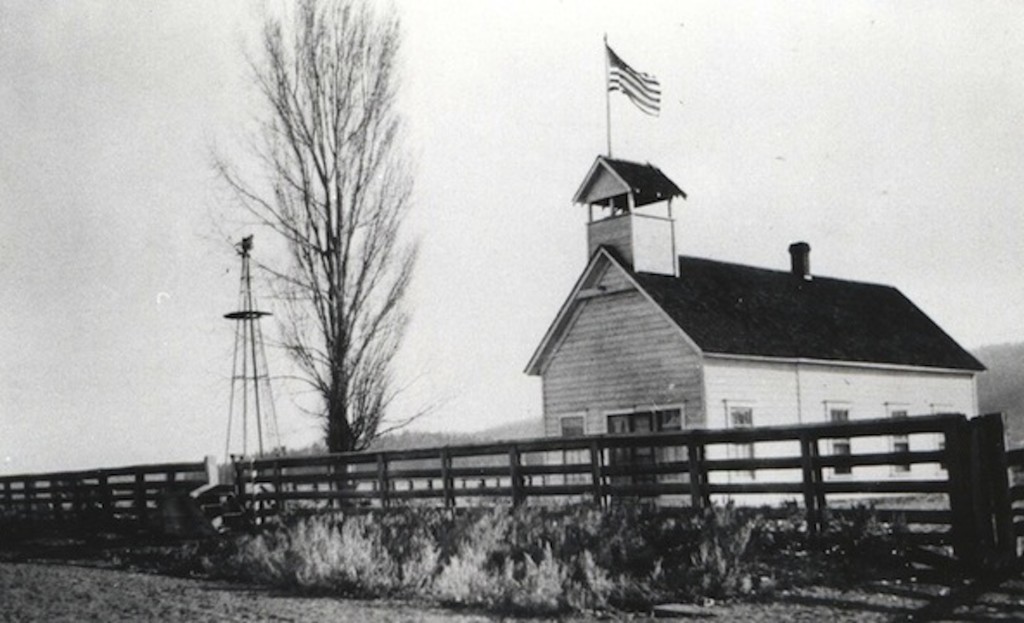
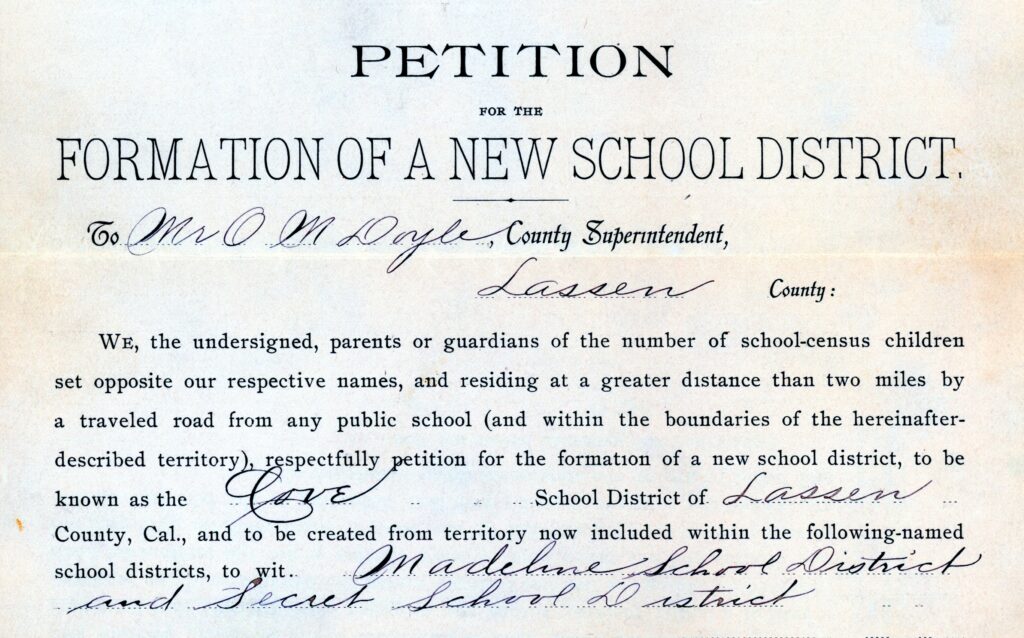
On the eastern Madeline Plains when the Moulton School District was abolished in 1898, it was succeeded by Cove School District. It took several attempts to get the district established due to problems associated with the proposed boundaries. It was finally approved on April 4, 1901. The petition was signed by nine families who, on the average, resided 25 miles away from the nearest school—though M.L. Millsaps’ three children resided 45 miles from the nearest school, at the old Tuledad station next to the Nevada border. According to Madeline Plains historian, Don Garate, the residents built the first school on the west side of Cold Springs Creek. The region experienced a record population growth with the influx of homesteaders and the school building needed to be enlarged and placed in a more central location. On October 16, 1908, the voters approved a $100 bond measure to build a new schoolhouse—the smallest bond measure ever to appear on a ballot in Lassen County. Just as quickly as the population increased, it dwindled. The school closed in 1916, as there were only four students, one shy of minimum requirement of five. The school never again opened its doors to students. In 1918, it was annexed to Ravendale. On November 24, 1924, Elinor Coldren offered $25 for the Cove schoolhouse, but it was rejected. In 1927, the Board of
Supervisors offered the schoolhouse for sale, but no bids were
received.
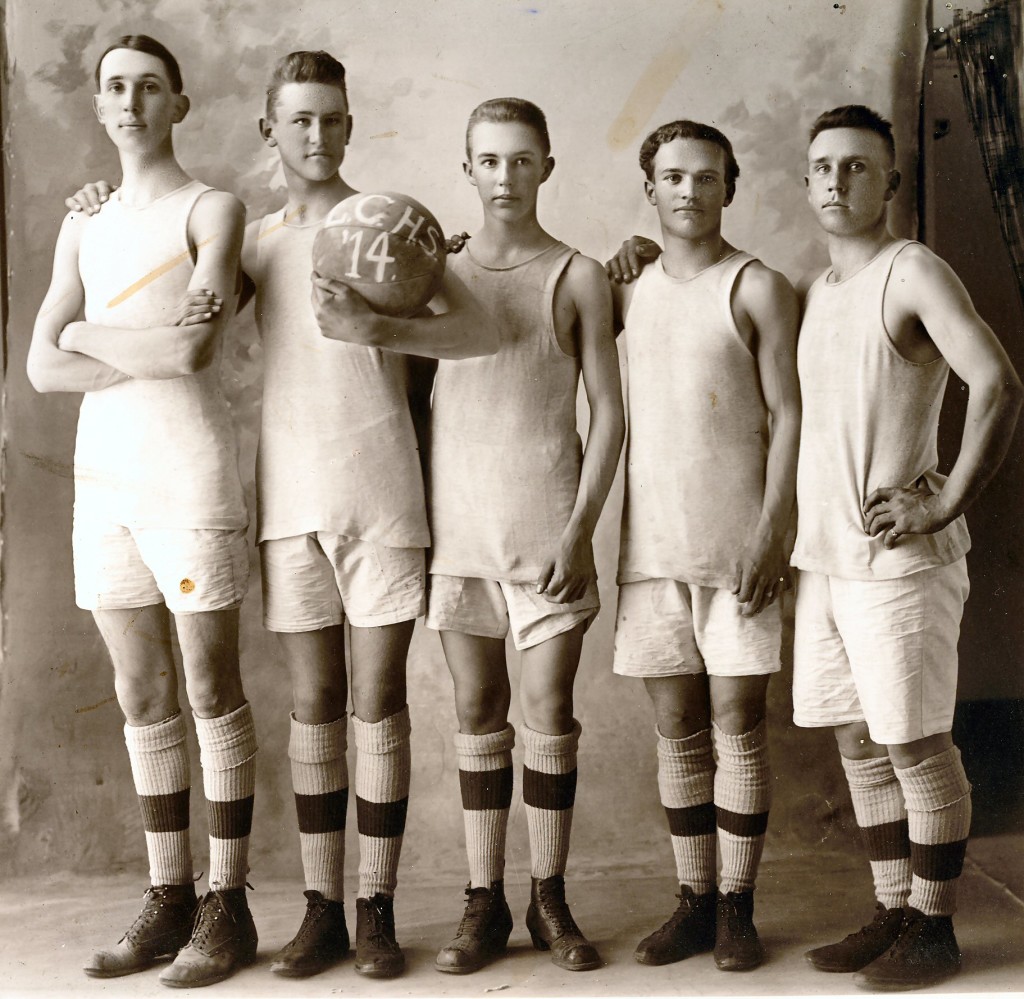
Lassen County High School Basketball Team, 1914. Notice L.C.H.S on the basketball ball. Left to Right:Will Raker, Donald Shanks, Claude Wemple, Burton Spalding, Ira Baldwin.
Name changes can be a tricky issue. After all people are a creature of habit, so name changes can be disruptive. This is different from were names slowly fade away. Take for example Seven Bridges in the Honey Lake. Valley, if you know the locale, you are dating yourself. Anyhow, back to the name topic at hand—Lassen High School.
When high school was created in 1902 it was known as Lassen County High School. When it was established it was the only high school in the county. That changed in 1916, when two new county high schools opened—Big Valley and Westwood. California state law required Lassen to drop “County” and adopt “Union” to embrace all the districts in the county—thus is became known as Lassen Union High School.
A lot of people grumbled about the name change, since it was all they ever knew. Years later there is a generational change. The older insist its Lassen Union High School and the younger simply refer to their alma mater as Lassen High School.
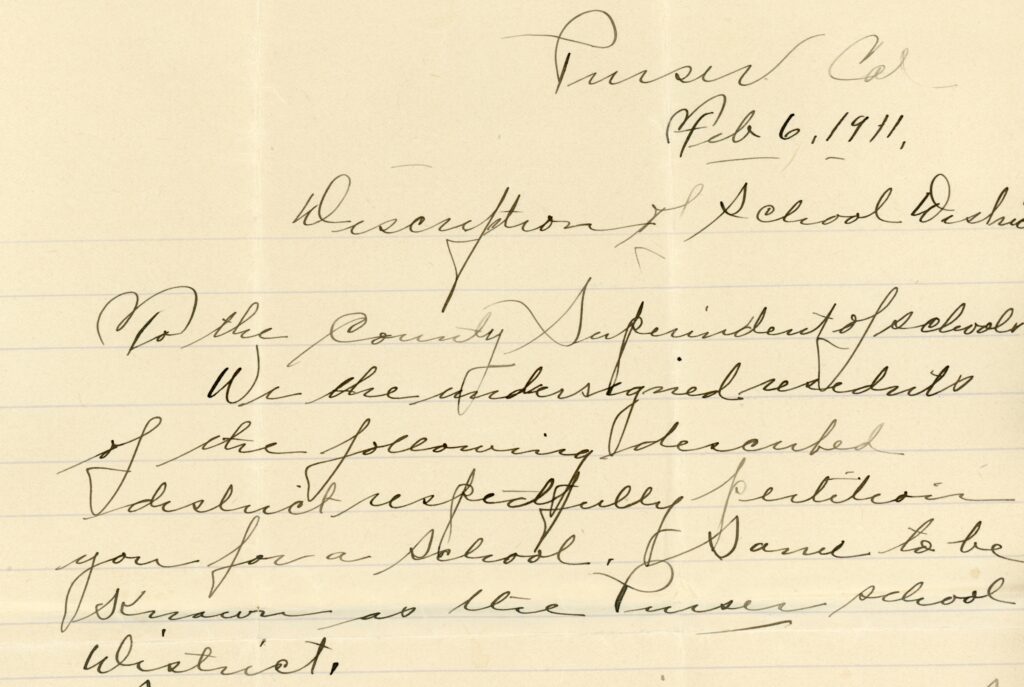
This is what some referred to as a “ghost” school. The circumstances are rather odd. In January/February 1911 W. Mylar, who had three school aged children circulated a petition to establish the Purser School District. It met all the criteria. In the proposed district boundary there were 22 children. They were also more than five miles from the nearest school. For reasons unknown Lassen County Board of Supervisors did not approve it. Three years later, a new petition, known as Caloreta School District, which was identical to Purser, was approved.
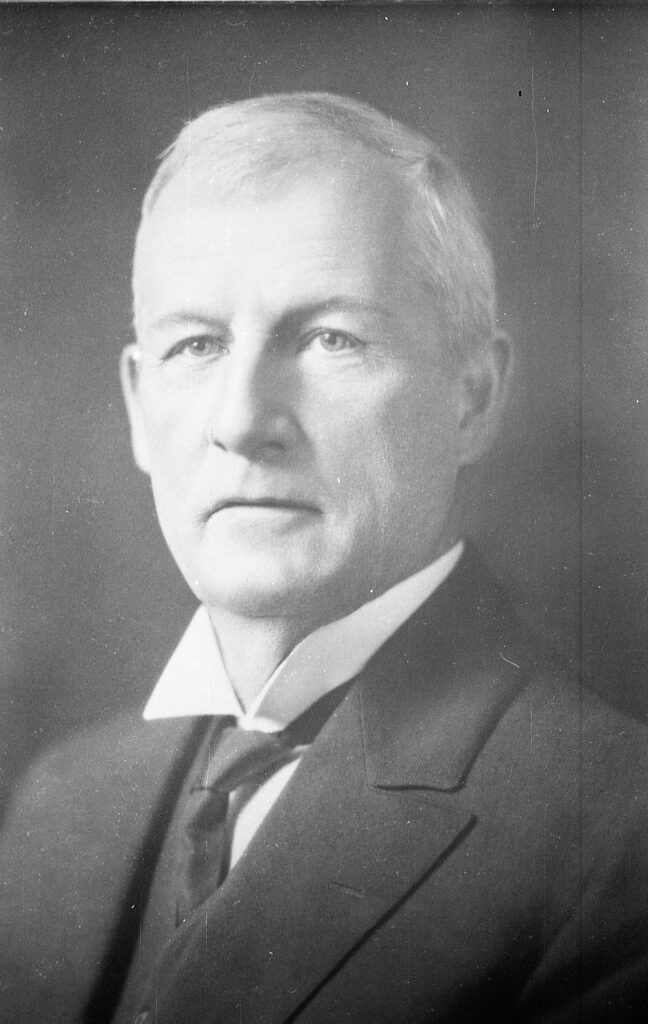
Purser would later become known as the railroad community of Wendel. That locale had many names in its early years. It was named after Edward T. Purser, a major player in irrigation projects of the Honey Lake Valley in the 1890s. I have large size professional photograph negative of him but not a print, but once with a positive scan I will write about him. A person has offered to scan negatives like this, but I have experienced issues on my part that have have stalled the hand off of such. Hopefully soon, another project to be completed during the forthcoming Thanksgiving holiday weekend.