According to one person, Belfast, was going to be a city paved in gold. That prediction was made in 1881.
While it is nearly a month away, mark your calendar for a brief, but exhilarating early afternoon tour to get you into the spirit of things.
You will be introduced to some of Lassen’s eccentric permanent residents. Of course, one has to pay a pilgrimage to the one and only “Count” who died in 1662. That is not a typo and the marker was placed by unknown parties back in the 1930s.
Stay tuned for the details.
For five dollars a month by subscribing, you can receive a daily email on that day’s topic, and in doing so, help preserve a bit of history.
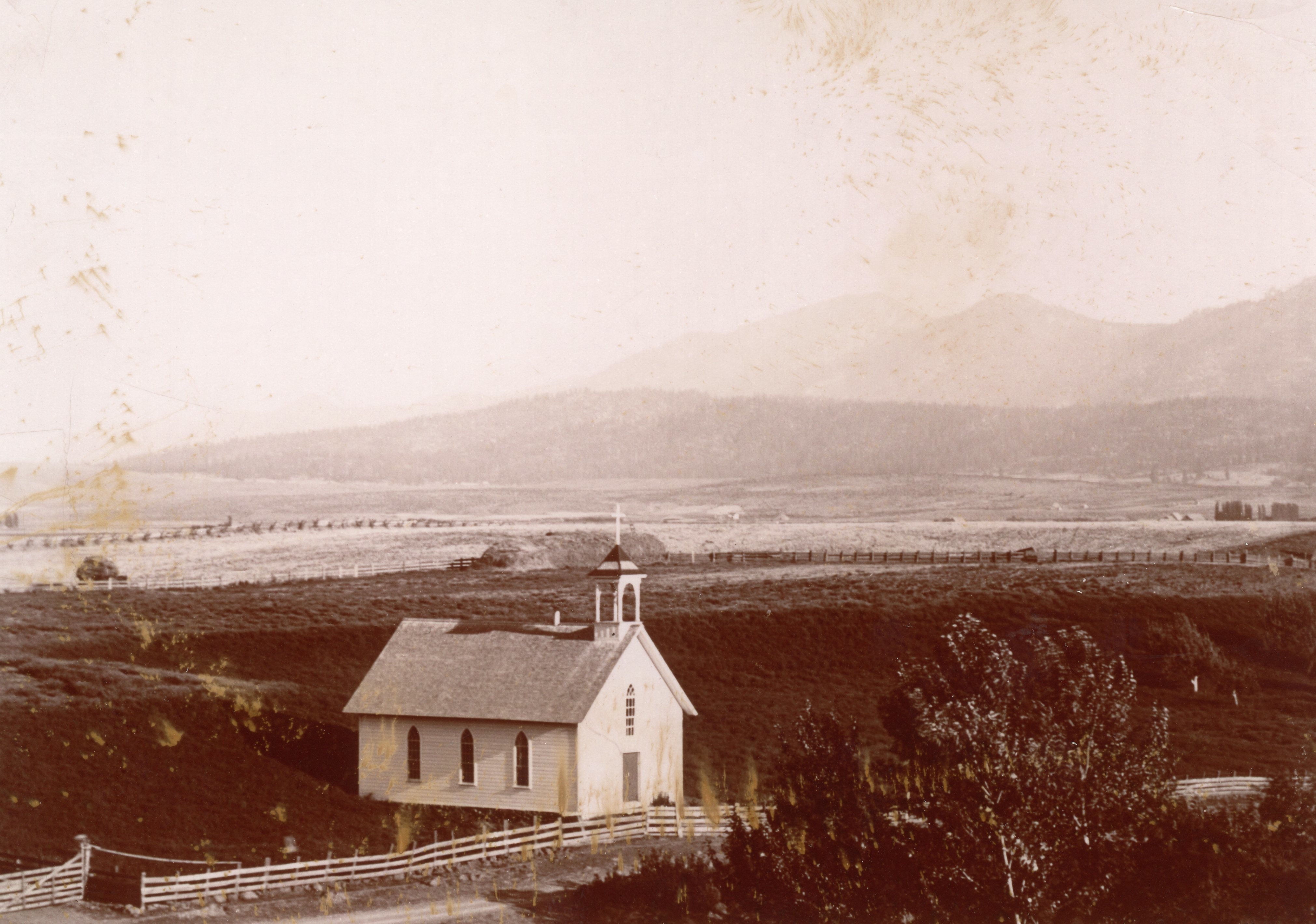
Sacred Heart Church, 1905. Courtesy of Sacred Heart Church
On August 1, 1869 the first Mass to be held in Lassen County was at the home of Ned Mulroney near Susanville, with the 27-year-old Father Charles Lynch officiating. Since a circuit priest had to cover a large territory in Northeastern California and Nevada, Mass in many instances was only held once a year when the priest made his rounds.
In the 1880s with a larger Catholic population, and the Diocese territory smaller, Mass was be held in the Lassen County area twice year. There was also a movement to have their own house of worship instead of the courtroom in the Lassen County Courthouse or the hall in the Steward House Hotel.
This changed in the spring of 1892, when William Cain, a non-Catholic, donated a parcel land across the Susan River on Richmond Road, the current site of Poulsen’s Welding. In May construction began, the labor from church volunteers. As Father Thomas Horgan later recalled the driving force for the church came from three families—Bantley, Neuhaus, and Mulroney.
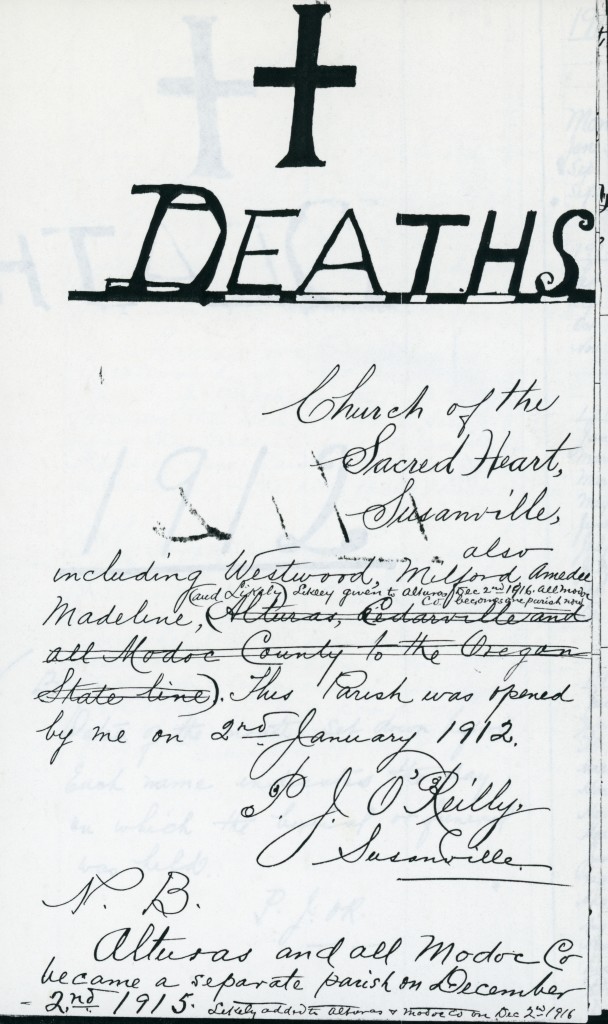
The new church had a seating capacity of 120, quite ample for their being about 100 parishioners. On June 26, 1898 Bishop Thomas Grace dedicated the Susanville church as the Church of the Sacred Heart.
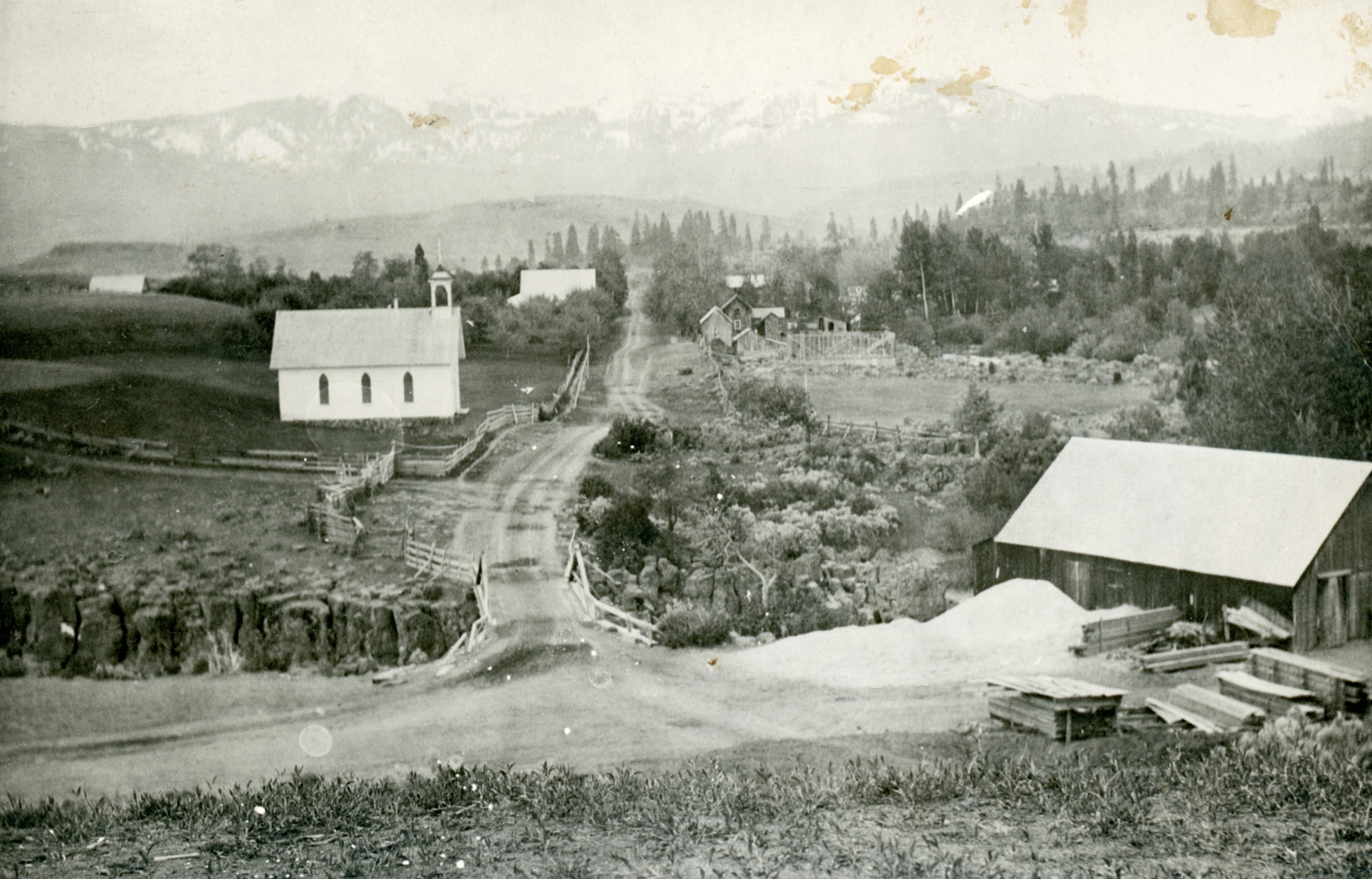
Prior to the Fernley & Lassen Railroad’s arrival in 1912, Richmond Road, just across the Susan River was a bucolic dirt road. It consisted primarily the homes of the Cains and Winchesters, with their apple orchards. Though during the 1890s, along the Susan River was the town’s first Catholic Church, its Chinatown and of course the iconic landmark Arnold Planing Mill. Continue reading Susanville – Richmond Road→
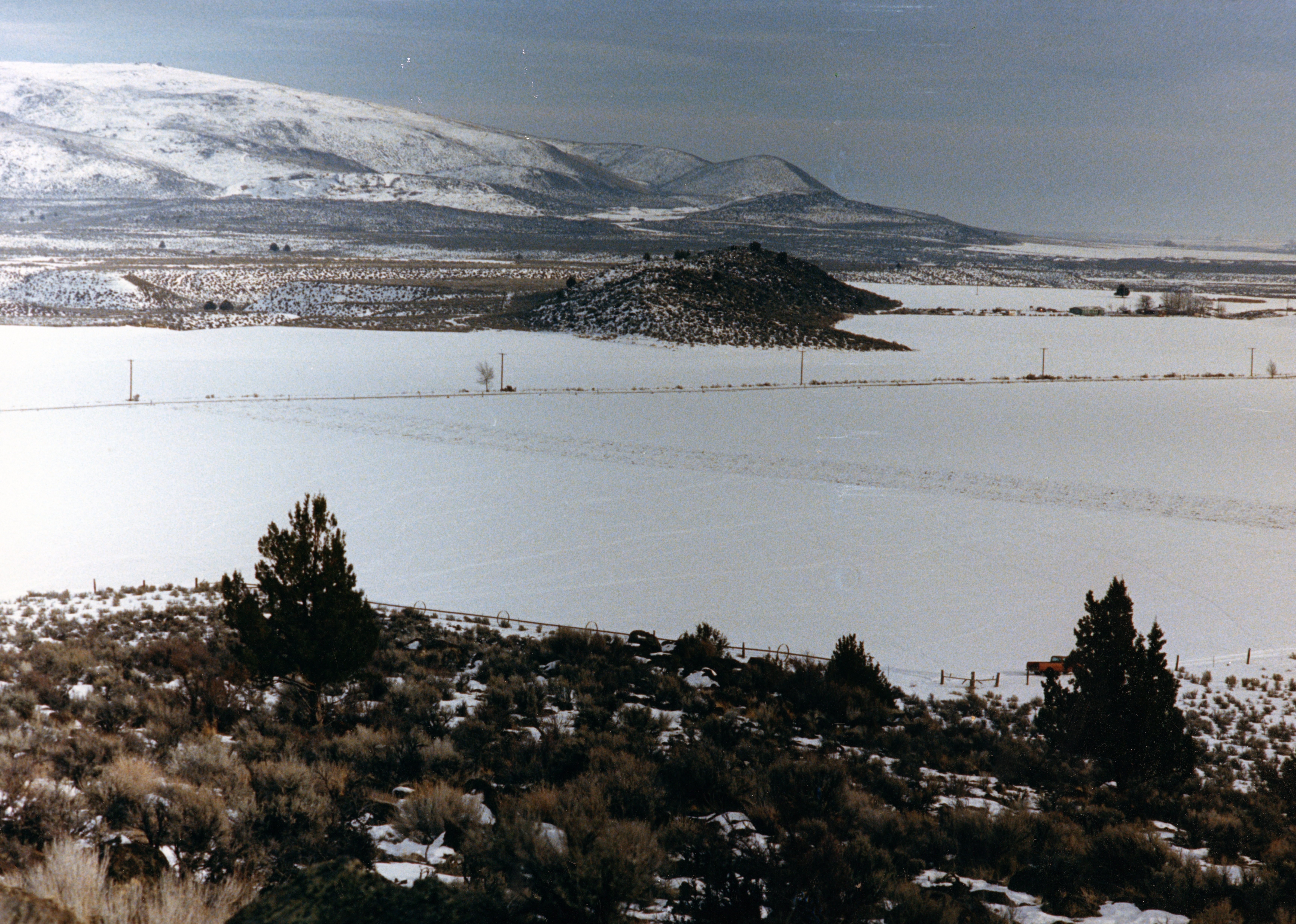
Honey Lake, February 1984. To the right is the Hartson Sand Ridge. Photograph courtesy of Bob Sorvaag
Its been a long time since Honey Lake was full. If the weather gurus are correct we are to have a strong El Nino this winter. Just maybe the playa will convert back into a lake. Continue reading Honey Lake Baptisms→
In the spring of 1917, Fletcher Walker brought up the topic that Westwood was in need of a house of worship with his father, T.B. and wrote: “We have come to a time when it seems inadvisable to put off further the building of a working church. The Sunday school had 255 last Sunday and the condition of the school in one of the old cook houses is such that the congestion prevents efficient work.”Continue reading Westwood’s People’s Church→
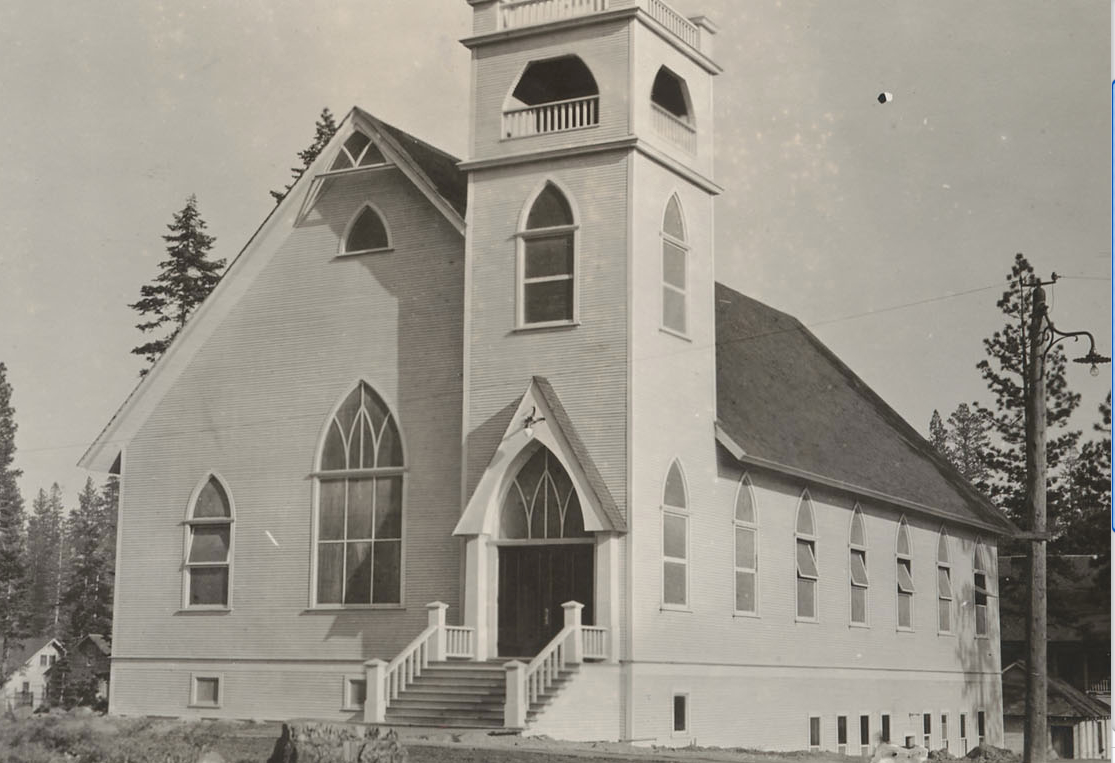
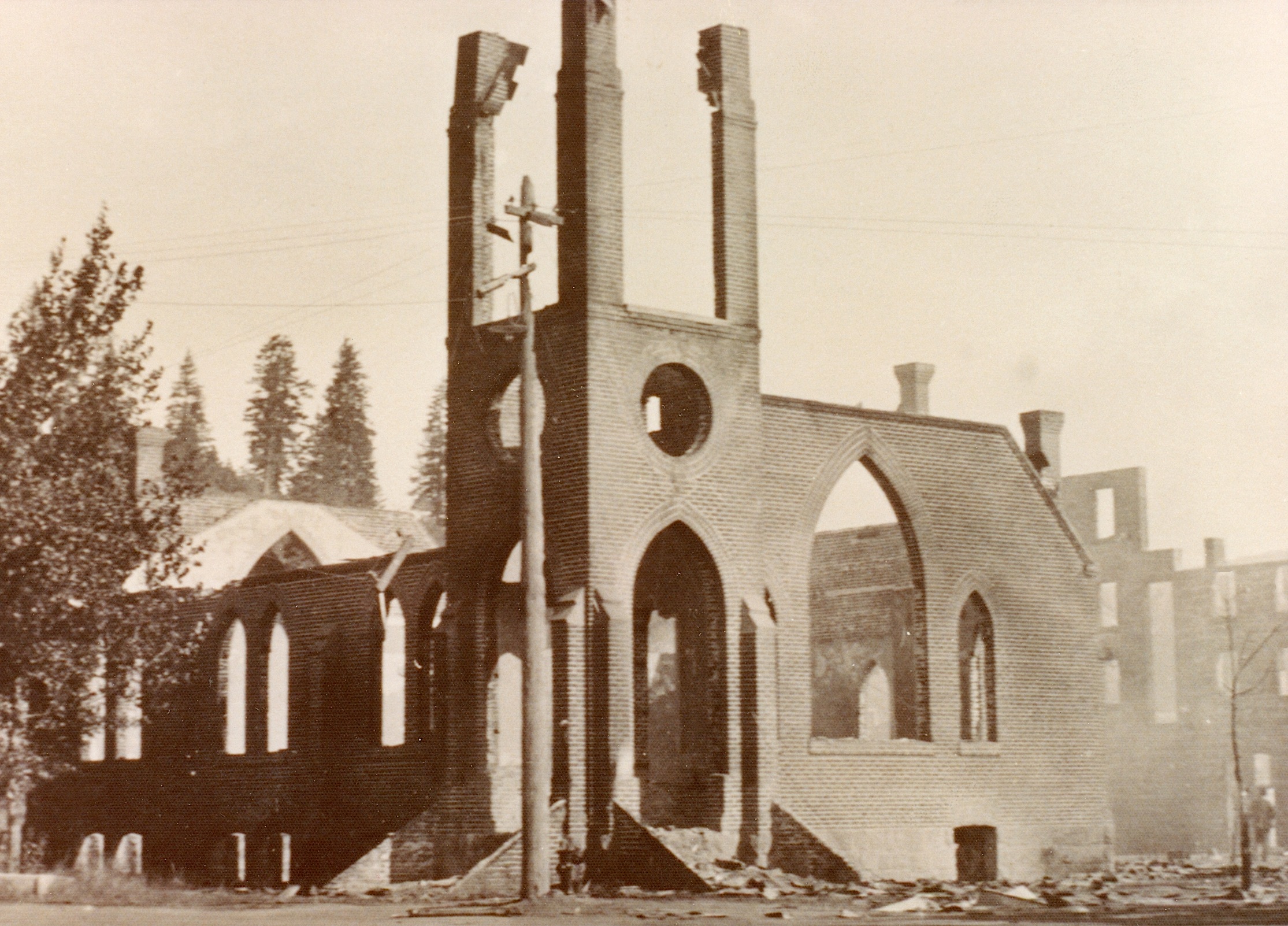
On August 5, 1915 a devastating fire wiped out the majority of the block between Cottage and Main Street. That fire is a topic for another day. One of buildings destroyed was that of the Methodist Church. Continue reading Susanville-Methodist Church→
The Church was located on the corner of Main and North McDow.
In 1911, two missionaries, Elders Harry Janson and L.R. Halverson arrived in Susanville, though it appears their stay was brief. It was not until 1922, that the members of this church organized in Susanville. The initial families included those of Frederick Johnson, W.K. Davis, William Mortimer, Afton White, James C. White, John Heath and Peter F. Olsen.
Initial services were held in member’s homes. By 1924, their numbers had grown and they the hall in the Knoch Building for $2.50 a week. From there they moved to the Orpheum Theater and later to the OddFellows Hall.
On November 13, 1927, discussions were held to build a chapel. The site chosen was the northeast corner of Main and McDow Streets. On November 10, 1929, the church was dedicated by Heber J. Grant, President of the Church of Jesus Christ of Latter Day Saints
Thirty years later the members had outgrown the church. They selected a new site on Richmond Road. On November 5, 1961, groundbreaking ceremonies were held for the $300,000 chapel.
Subscribe and support this site for as little as $4.17 a month.
St. Mary’s Chapel as it appeared in 1971. Courtesy of Robert Williams
Five miles south of Doyle is a place known as Constantia, though not much remains today. In 1896, Henry Butters purchased the ranch and gave the place its name of Constantia. Butters transformed the place into a small village and next to his home had a small Catholic church built—St. Mary’s Chapel.
As a child, Roberta Turritin Weaver lived at Constantia from 1913 to 1923 and recalled: “The church was beautiful with stained glass windows and the pews were made from the oak trees in back of the ranch. As long as were in the big house Father Horgan came out several times a year. We were all very fond of him. My twin sister, Catherine, and I considered him a good sport since he put up with all our didedos.”
By the mid-1920s services were discontinued and the church abandoned. In 1994, the Doyle Historical Society moved the church to Doyle and restored the building.
It being Easter Sunday, I thought it would only be appropriate to provide some of the history of religion in our region. The Methodist Church had a profound influence on the Honey Lake Valley. In 1860, this church held their first service in Susanville. By 1905, there were Methodist Churches in Janesville, Johnstonville, Standish and, of course, Susanville, more than any other denomination. Continue reading Easter Sunday→