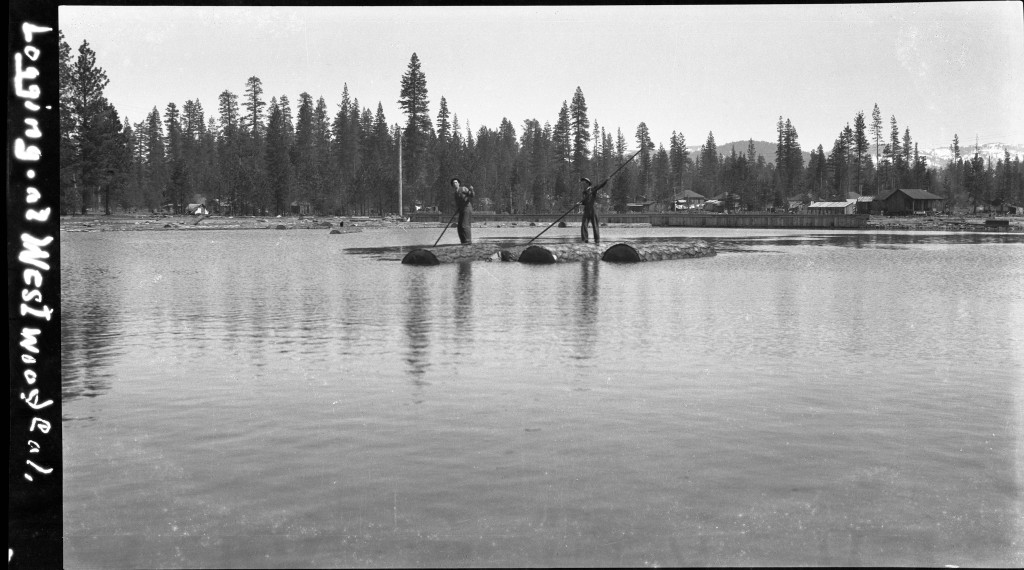
Millponds at lumber mills are a relic of the past. Those who have recollections, especially if living nearby can attest during the summer months of the odiferous stench from them. Continue reading Red River’s Massive Millpond
Millponds at lumber mills are a relic of the past. Those who have recollections, especially if living nearby can attest during the summer months of the odiferous stench from them. Continue reading Red River’s Massive Millpond
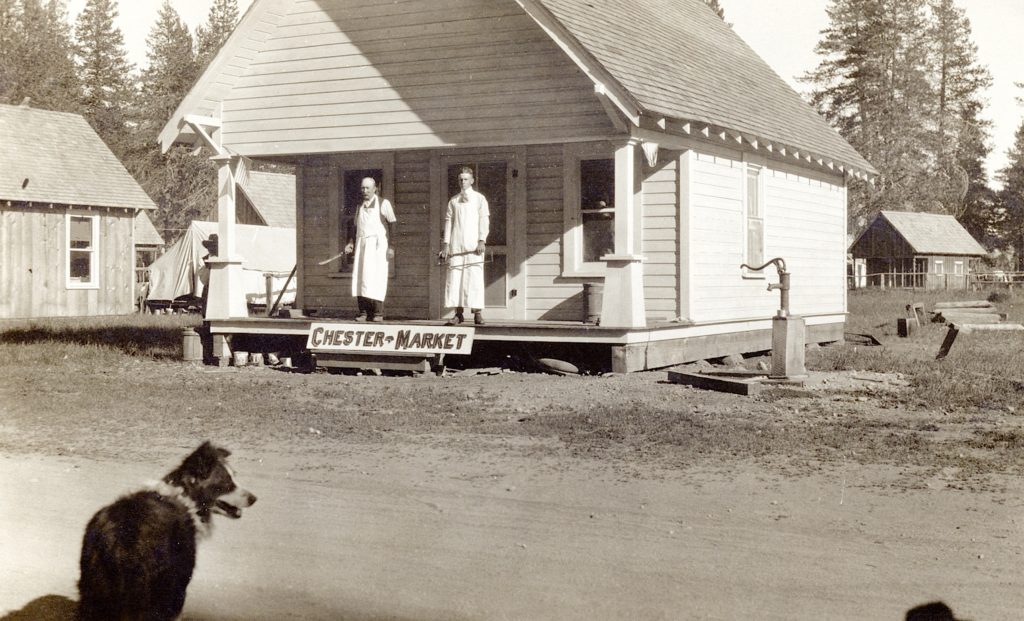
Chester located near the northwest shore of Lake Almanor slowly evolved over the years. The townsite was not surveyed until 1911. In the early years, it was typical mountain summer resort town, and its population shrank during the winter season.
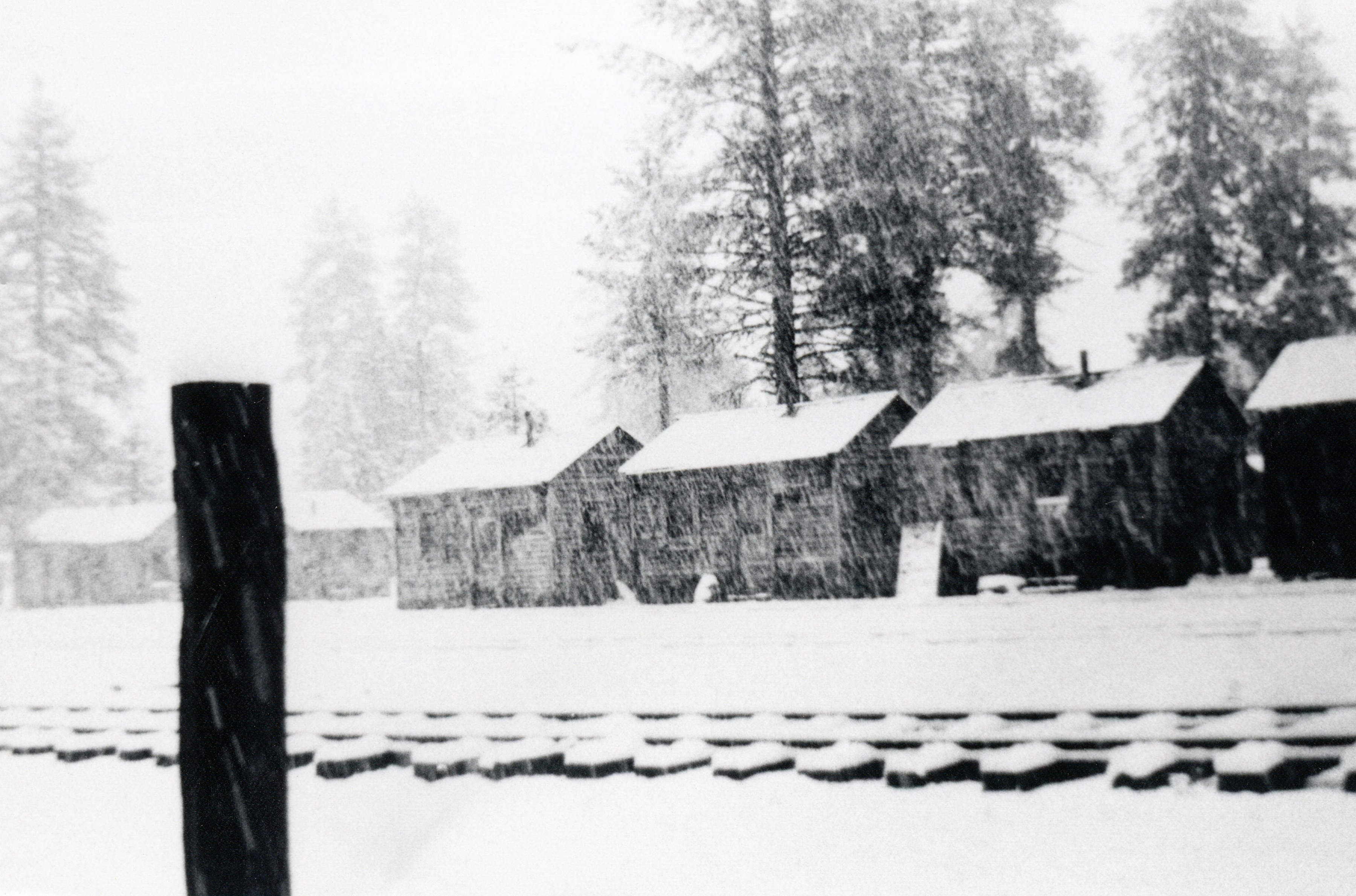
In the spring of 1922, changes were on the horizon and Chester witnessed its first unofficial subdivision. The Red River Lumber Company was extending its main logging line westerly and not far from Chester proper the company established a logging camp there known as Camp 57. It was definite boost to the town’s population as the camp was home to over 200 men. The two communities did share one thing in common. Both Chester and Camp 57’s population dramatically declined in the winter.
Tim

By the fall of 1940, the day of reckoning was at hand as to the future of Red River Lumber Company’s Westwood Operation. . A decision had to be made. The responsibility fell on Ted Walker, the General Manager, to provide options for everyone in the family to consider. Some of his suggestions would no doubt seem radical to his grandfather, T.B.Walker, Red River’s founder. Ted wanted to get away from the company town image, and heaven forbid actually spruce up the town by painting the houses. Ted suggested they even allow the opening of the cocktail lounges, so Westwood would look like any other American community.
Clinton Walker agreed to the house-painting program on one condition that there was an appropriate increase in the rents to
offset the cost. In summation, Ted wrote: “In general, I believe we
will be far better off to get away from the idea of a closed, one man
company town as much and as quickly as is practicable. There was, no doubt, merit to the closed town idea at the time operations were
started. It was then practicable, legally, geographically and politically to control mercantile, labor and moral conditions to a substantial degree. None of these things can safely be controlled today. Practically all the benefits of a closed town set-up have been
eliminated by changing times, and all that remains is the unfavorable
reaction and publicity connected with an archaic and obsolete policy
and philosophy. “
Actually, it should be noted, the transformation of the company began in the the mid-1930s in which operations such as the Big Store were leased to concessionaires.
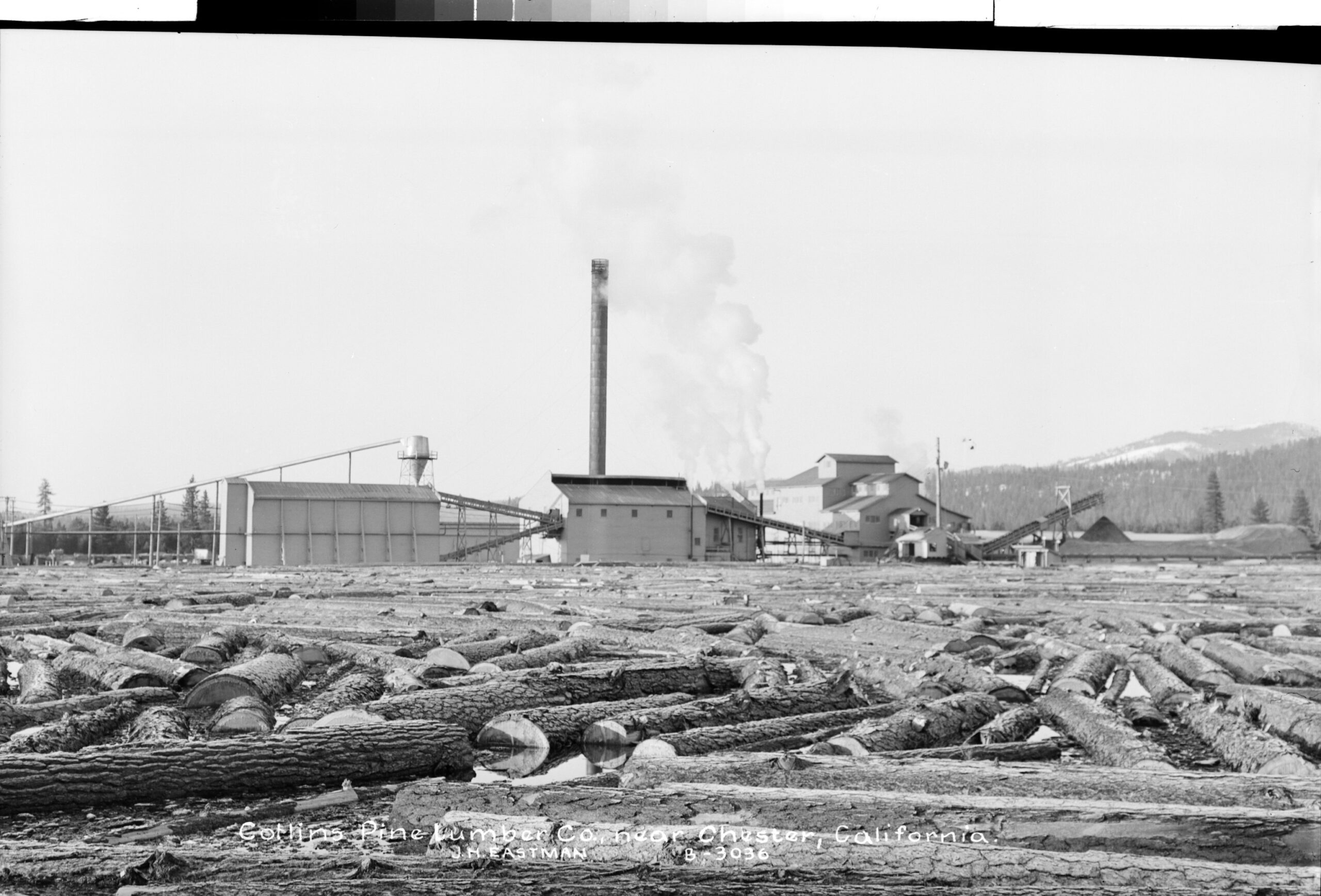
One of the most dramatic transformation for Chester came in 1941 with the announcement by the Collins Pine Company that it intend to construct a mill at Chester. This was going to be a radical departure for Chester from its peaceful existence as a summer getaway, and in the fall hunters briefly replaced the summer visitors. Once winter approached, many of Chester’s citizens boarded up their homes and moved to warmer climates, then to return in the spring.
Collins Pine changed all that, providing an industry to stabilize a year-round community. It should be noted Collins Pine was not a stranger to the region. As a matter of fact, in 1902 the company had purchased 18,000 acres of timberland in the region. In 1940, the nearby Red River Lumber Company at Westwood offered to rent their mill. Collins was not interested. However, Collins in 1941 purchased the millsite near Chester and thirteen miles of railroad from Chester to Clear Creek Junction from Red River. It was a slow process for the construction of Collins mill due to World War II and the scarcity of machinery. Even with those adversities, on March 31, 1943 the first board was sawed at the new mill.
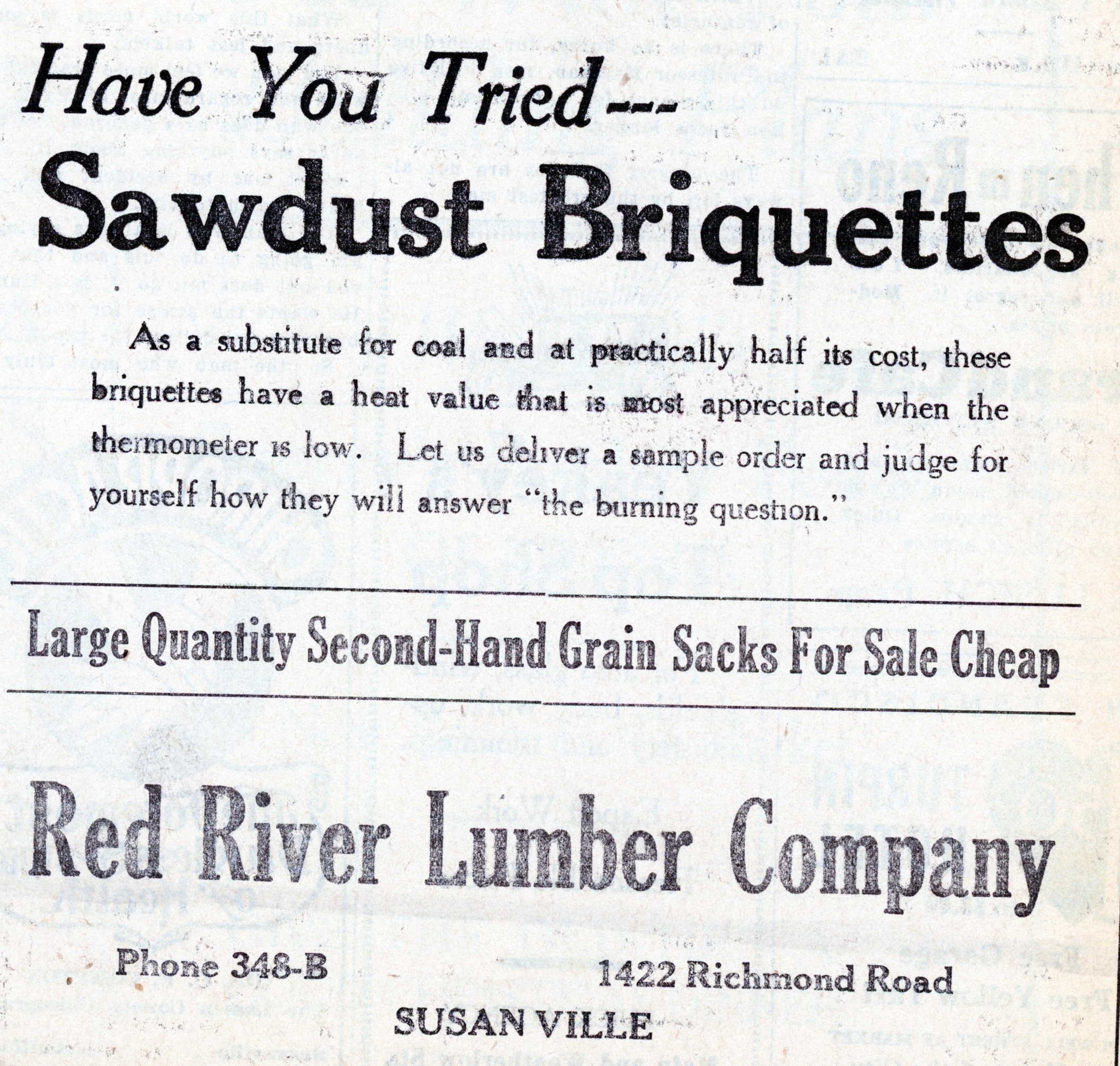
Red River Lumber Company’s Westwood Operation were very innovative and looked at various ways to utilize lumber byproducts. After all, this was just not a sawmill/box factory plant. It produced a wide variety of goods, even venetian blinds.
In 1922, Red River was about to have an abundant supply of electric power. First, with their own hydro-plant at Hamilton Branch at Lake Almanor and another with a deal with Pacific Gas & Electric for power from Hat Creek.
This, of course, created a new problem, since they did not have to rely soley on its sawdust/wood waste pile that fueled the mill’s powerhouse. When the mill operated at full capacity it produced 400 tons of sawdust and wood chips in a twenty-four period, over half of which was used to fuel the boilers in the powerhouse. In February 1927 Red River installed an interesting piece of machinery, one that manufactured the modern day version of briquettes. This impressive device was capable of compressing a ton of wood waste into briquettes every hour. About a third of the wood waste which it compressed into briquettes could be used for home use (instead of coal), camping or even at the plant itself.
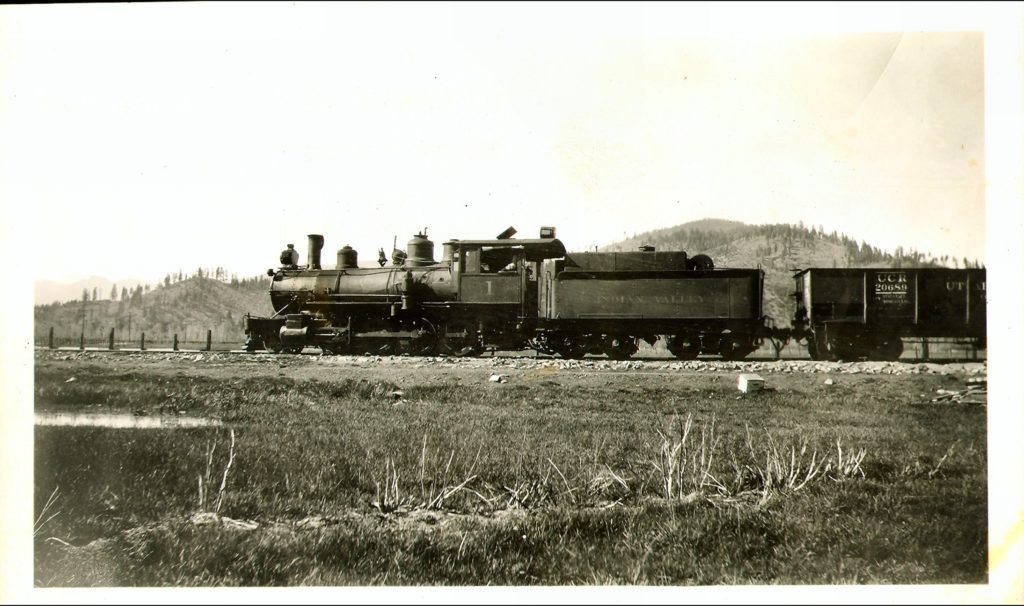
One of the biggest issues T.B. Walker had against the Red River Lumber Company’s location at Westwood, was it lacked a railroad link directly to California. For a time there was a glimmer hope with the Indian Valley Railroad.
On June 30, 1916, the Indian Valley Railroad (IVR) was incorporated to build a line from Paxton on the Western Pacific Railroad to the Engel Copper Mine near Taylorsville–a distance of 21 miles. Sixteen months later the rail line was completed. It should be noted, that it was originally proposed as a narrow gauge line, but Willis Walker of the Red River Lumber Company objected. After all, Walker was keen enough to see the possibilities for a link to Westwood, and with that would force the Southern Pacific Railroad to be more competitive in their rates.
Early on the IVR had its sights on Westwood. In 1918 a survey to extend the line to Westwood was conducted, There was speculation that the IVR would extend its line to Westwood, and in 1918 the IVR did survey a line to that place. With Red River’s main branch railroad logging extending along the east shore of Lake Almanor to Canyon Dam, there was not much territory separating the two lines. In 1927 a request was sent to the Interstate Commerce Commission to put in this proposed line to be known as the Northern California Railroad. It was rejected. However, in the works was the Western Pacific and Great Northern Railroads to connect their respective lines with a new railroad from Keddie, Plumas County to Klamath Falls, Oregon. This was approved in 1930, and Red River Lumber Company would finally have a second railroad connection it had always sought.
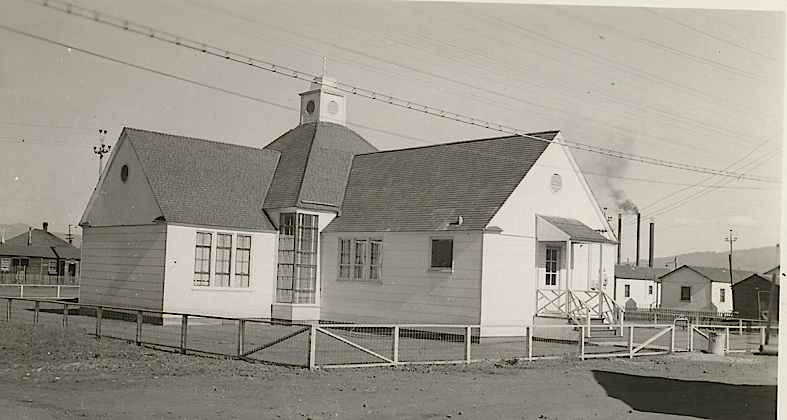
On March 9, 1940 the Church of the Latter Day Saints held groundbreaking ceremonies on corner of Ash and Fifth Streets, in Westwood. This was the last house of worship to be constructed under Red River Lumber Company’s tenure at Westwood.
The church was designed Caldwell and Richards, Los Angeles architects. After World War I, the LDS Church began to implement standardized plans. This particular church was the first to use this particular layout. The $9,000 church was built by volunteer labor and completed in four months.
In 1986, its congregation had grown, wherein they bought property in nearby Clear Creek and built a new church. In 1991, their old our church was acquired by Our Lady of Snows Catholic Church which they converted into a parish hall. However, with their new Lake Almanor church, it will be just a matter of time when this is placed on the market, and only time will dictate its fate.
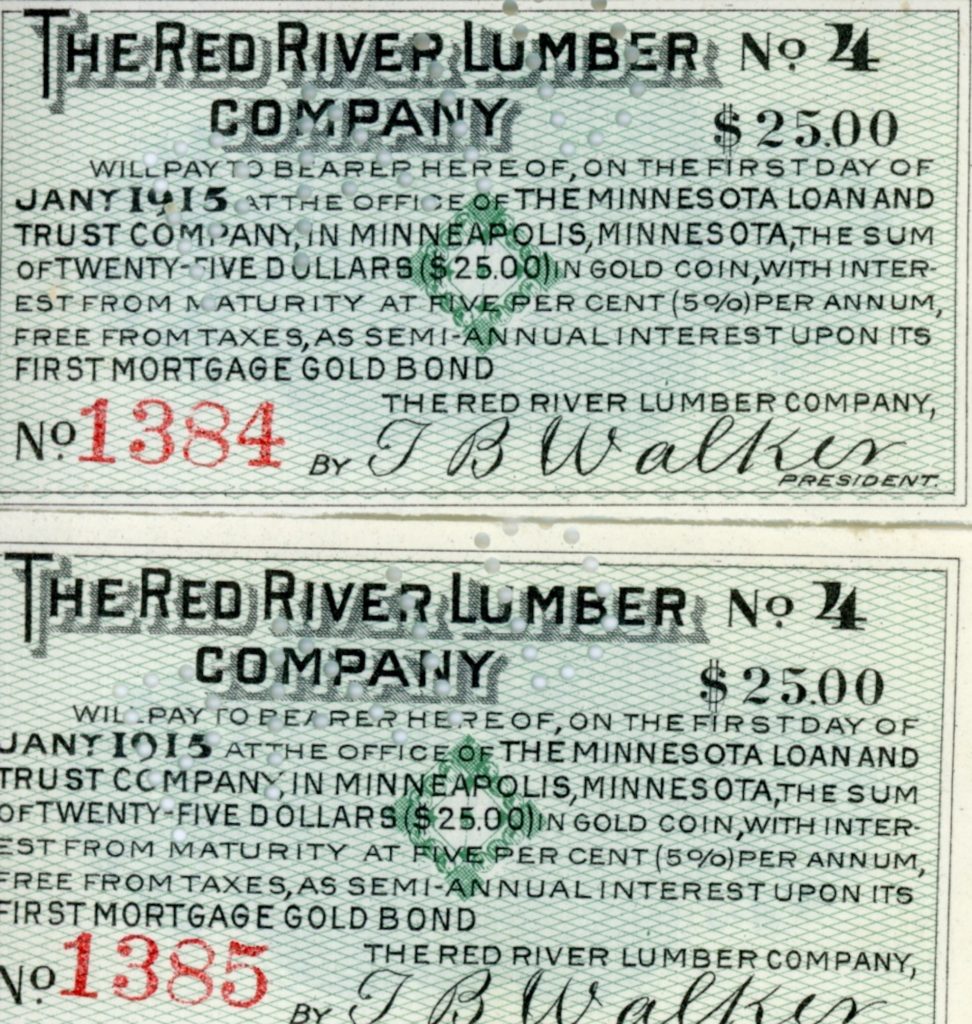
Red River Lumber Company’s California expansion was a very costly endeavor. While its founderT.B. Walker had amassed a great fortune, like many successful businessmen, he was constantly investing his profits in new enterprises, some good and others not. To purchase the California timberland conservative estimates place the cost at $3.7 million. However, not all of this came out of Walker’s pocket. To finance his cause, he enlisted the aid of a New York investor, Doctor John E. Andrus. Together, the two men formed the Waland Lumber Company—its name a derivative combining the names of Walker and Andrus. When Red River made the final decision to build its first California mill at Mountain Meadows, the Waland property was used as a collateral for bond issuance.
The initial cost to build Westwood was $3,528,300, nearly equal
as to what was spent on timberland acquisition. This only covered the costs incurred in 1913 and 1914, and the town and mill plant were far from being complete.
In 1913, Red River sold two million dollars in bonds to help pay for Westwood. The bonds were secured with a mortgage on 90,000 acres of Waland timber in Tehama and Shasta counties and experts placed a value on that timber at $6,100,000. The first payment of $50,000 was due on January 1,1916. The bonds had a life span of fifteen-years, but in 1928 a balloon payment of $950,000 was due! That obligation that would not be met, that was one of the dominoes of the downfall of Red River.
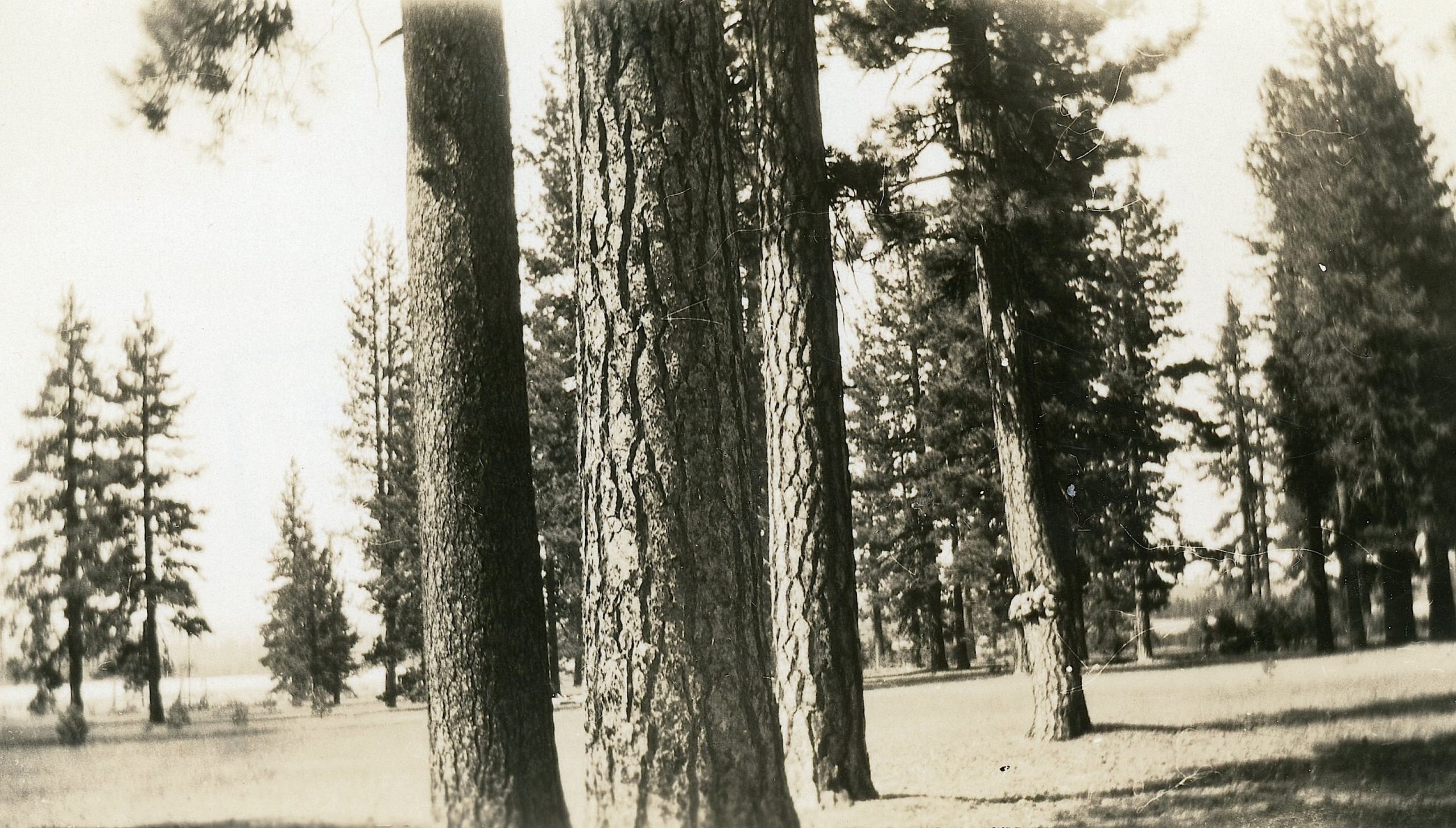
In 1944, when the Red River Lumber Company sold Westwood and its Burney Tract, the company still owned a large quantity of timberland in Northern California, besides other properties across the nation. The dissolution process would take years, and like many family affairs some members of the Walker family went their separate ways.
In January 1948, the Walker heirs announced they formed a co-operative company, Shasta Forests to manage their timber holdings. Seasoned residents referred to it as Shafco. In 1969, it went through a reorganization process and a new entity evolved as Red River Forest, which continues to this day. It should be noted that the property is managed by W.M. Beatty & Associates, who have had a long affiliation with the Red River heirs.
Tim
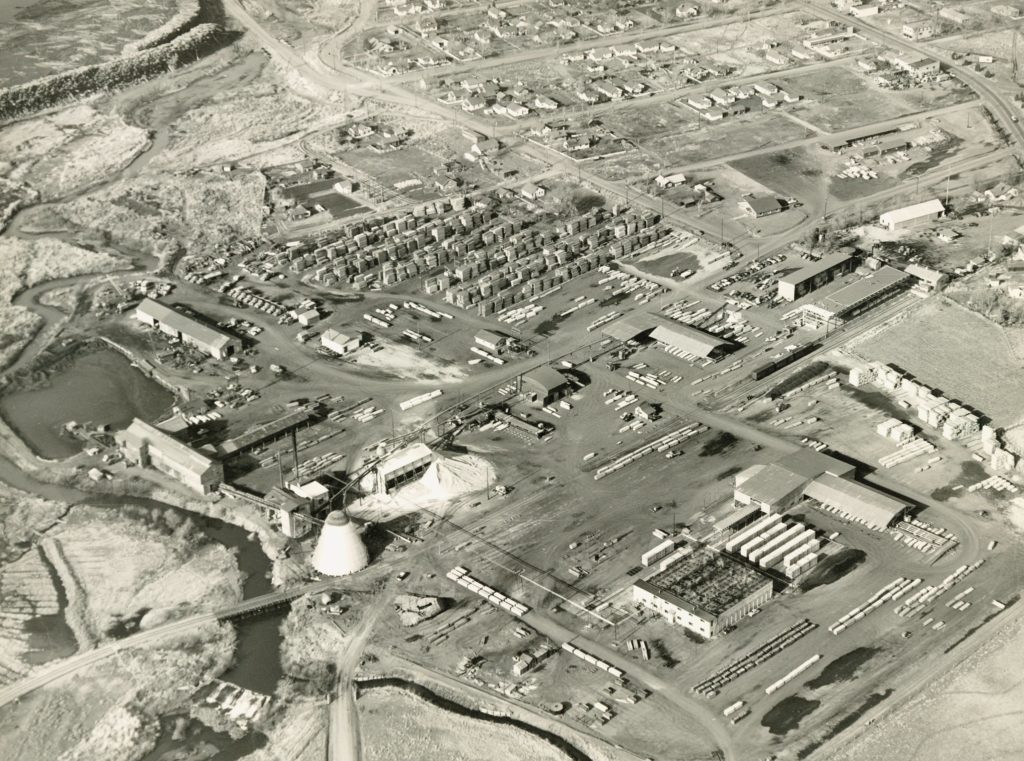
On May 15, 1967, Kenneth R. Walker, president of the Paul Bunyan Lumber Company announced the pending closure of its Susanville mill. Walker cited the lack of available of timber for the closure. The mill closed in August and the liquidation process began.
In 1945, when Red River Lumber Company was in its initial dissolution process, Kenneth wanted to remain in the business. At that time, Red River owned what was referred to as the “Cedar Mill” in Susanville. Kenneth took over that mill and named his new venture the Paul Bunyan Lumber Company.
In conclusion, Walker provided two interesting facts about the mill. He stated that when the last board is shipped, the mill would have processed 650 million board feet of lumber during its operations. In addition, the company’s total payroll during that time amounted to $20 million.