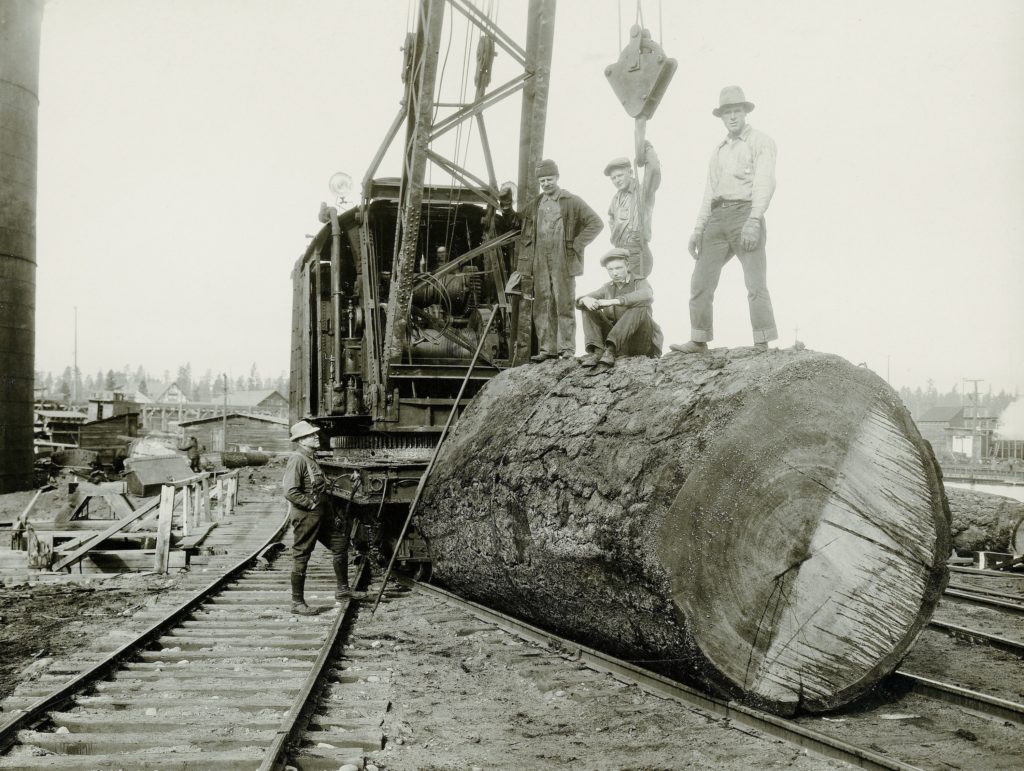
A sinker long dredged up from the Westwood millpond, circa 1930. Courtesy of Walter “Doug” Luff
Mill ponds are a relic of the past lumber industry. If your are from that era, you recall one particular thing that is forever etched in your memory bank. During the summer months, the stench from these mill ponds were horrendous.
One of the annual maintainence chores was the removal of sinker logs. These were logs that sunk to the bottom of the millpond before they were put through the sawmill.
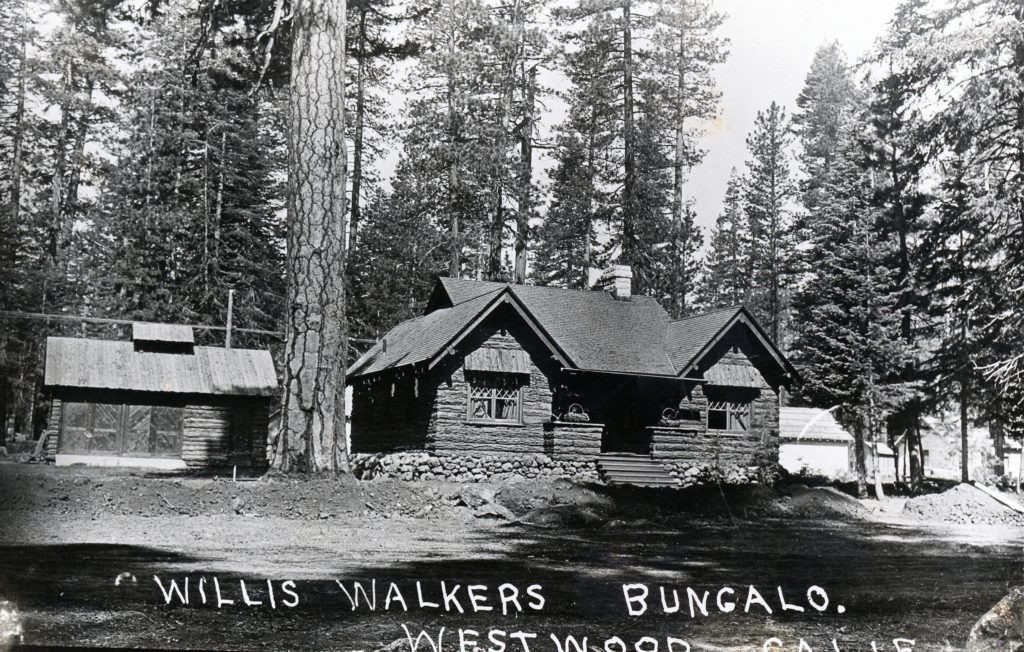
The Willis Walker residence, circa 1915. It should be duly noted that Willis also resided in San Francisco.
When Red River Lumber Company established its company town in Lassen County many were thankful for the prosperity it brought with it, especially the Fernley & Lassen Railroad. However, the honeymoon would not last long. Red River would exert its influence over so many aspects of life. Certain member’s of Susanville’s business community had a code name for the company: the Red Octopus. After all, in 1920, Red River purchased the town’s local power company, Lassen Electric. They advertised their Big Store specials in the Susanville newspapers, hoping to lure away customers. In 1922, when Red River purchased the Milwood Tract east of the city limits, they were able to block any annexation effort by the city until 1947, which by then Red River was going through a dissolution process.
Clear Creek is one of the area’s idyllic settings. In the early 1900s, when Clinton Walker was cruising the timber in the region for the Red River Lumber Company, he spent many a summer camped at Clear Creek, as a “home base.” Clinton’s daughter, Harriet, recalled many pleasant memories as a child camping there. Harriet stated at times they all got tired of eating fish caught from the springs. Then one day, her father surprised everyone when he returned to camp with a “mountain calf.” I had never heard of such a creature and asked what was a mountain calf. Harriet whispered “Bambi.”
The Minnesota Historical Society is a wonderful institution that is also the home to the T.B. Walker papers and archives of the Red River Lumber Company. On my last visit I ordered over 700 pages of documents. There are a lot of tidbits that unfortunately, I could not include in the Red River series. To do so, would have made for some awkward reading.
The T.B. Walker papers contains tremendous amount of correspondence between the family members. In T.B.’s correspondence there is a sense of frustration as he found himself in a Catch-22 situation. After all, the California operation was for his sons to operate on their own. While he provided his thoughts and opinions, most went largely ignored. In 1916, he lamented that mammoth mill at Westwood was a colossal mistake. It was his intention that Red River build several small mills throughout their vast timber holdings of Northern California.
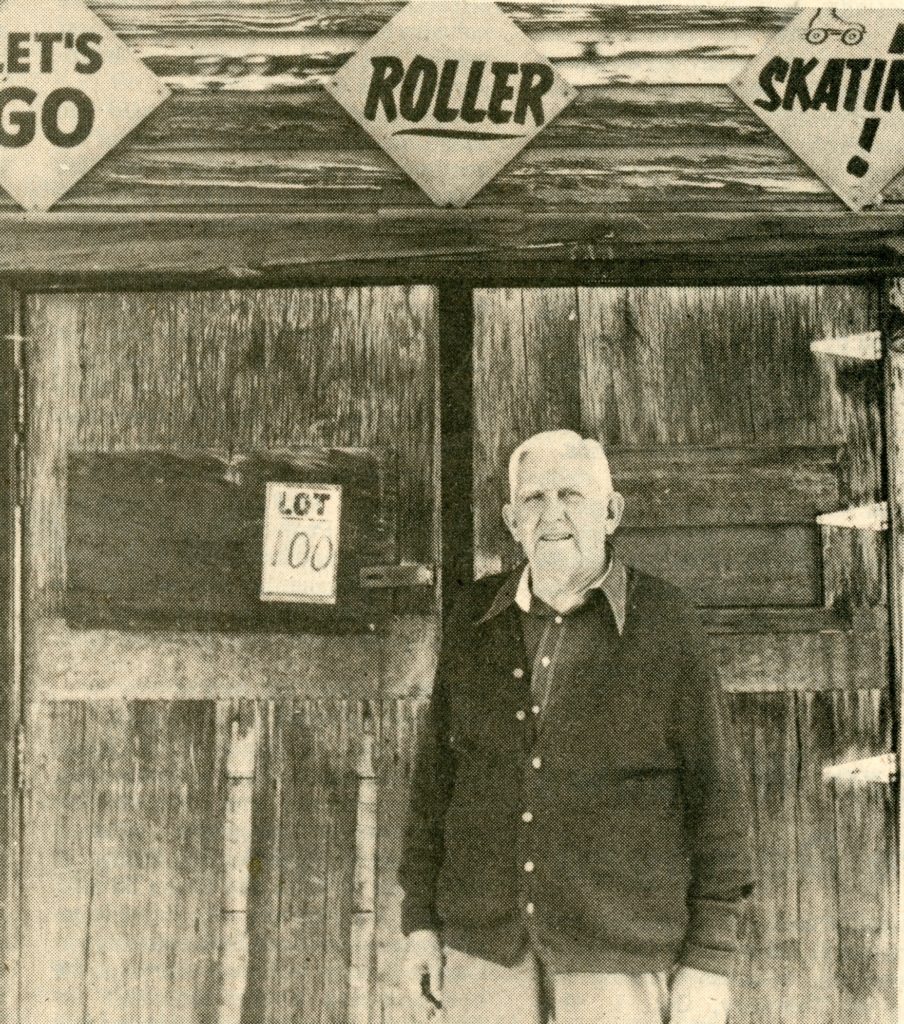
A long time fixture of Westwood was Charlie Monroe and his roller skating rink. Timing plays an important role in many events, being at the right time and right place makes a big difference. In the 1930s, Westwood’s Red River Lumber Company began divesting of assets to lease out operations they had done in the past. It was an effort to economize.
The Westwood Auditorium was built in 1920 at a cost of $20,000, the most expensive Red River public facility to date. It was used for multiple purposes. In 1937, Monroe leased the building from Red River. It was an oral agreement on day to day basis. Through successive ownership of Westwood, that agreement was honored. In the fall of 1976, Greater Westwood, Inc. owners of the property held a public auction, and the roller skating rink was one of them. It sold. After nearly forty years of operation the rink closed.
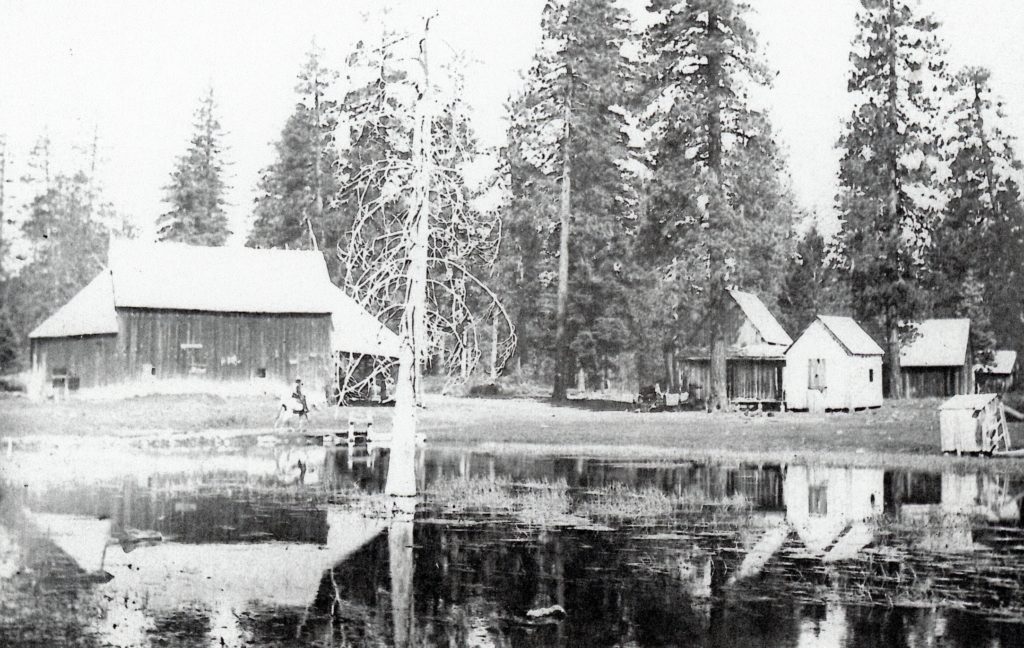
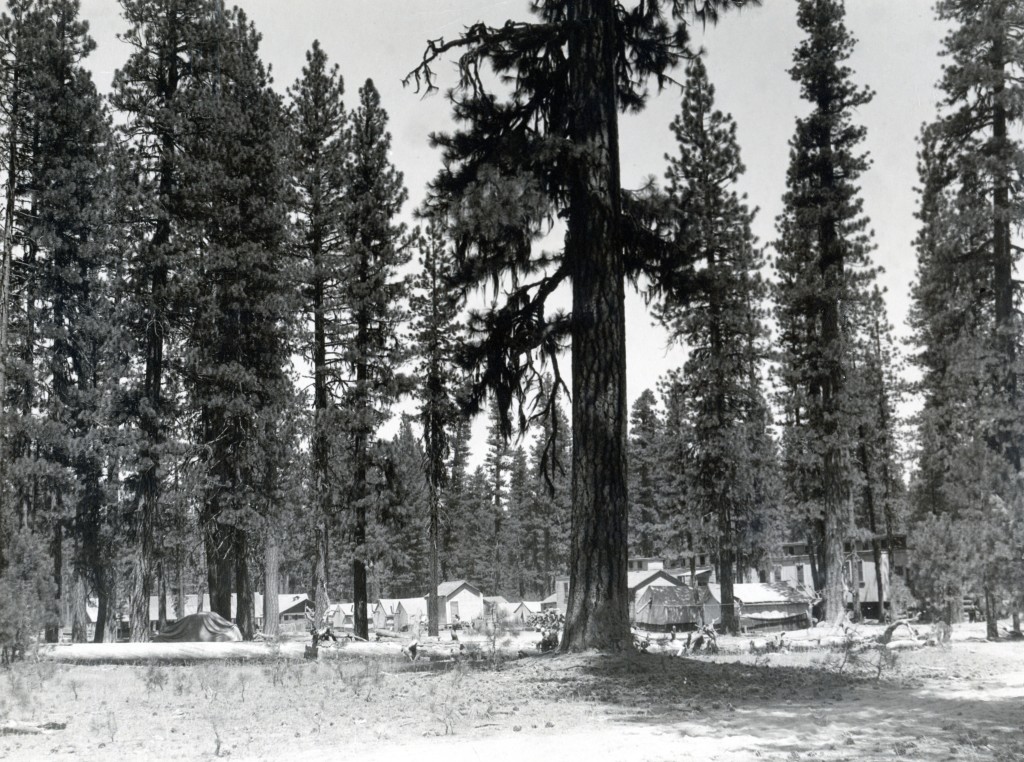
Camp 38, Red River Lumber Company, 1922. Courtesy of R.S. Pershing
While the Red River Lumber Company was well known for its mammoth sawmill at Westwood, the company generated its own rumor mill. With its extensive timber holdings in a five-county region speculation as to its next move was rampant.
This readily apparent with its logging operation on the east shore of Lake Almanor. By the time its railroad logging line reached Camp 38, halfway down the shoreline, tongues began wagging whether the line would extend into Indian Valley and connect with the railroad line serving Engel Mine. This would then give Red River access to the Western Pacific Railroad. It was a thought that company officials gave considerable thought. While it did not quite transpire it was part of the impetuous for the Western Pacific’s High line that became a reality in 1931.
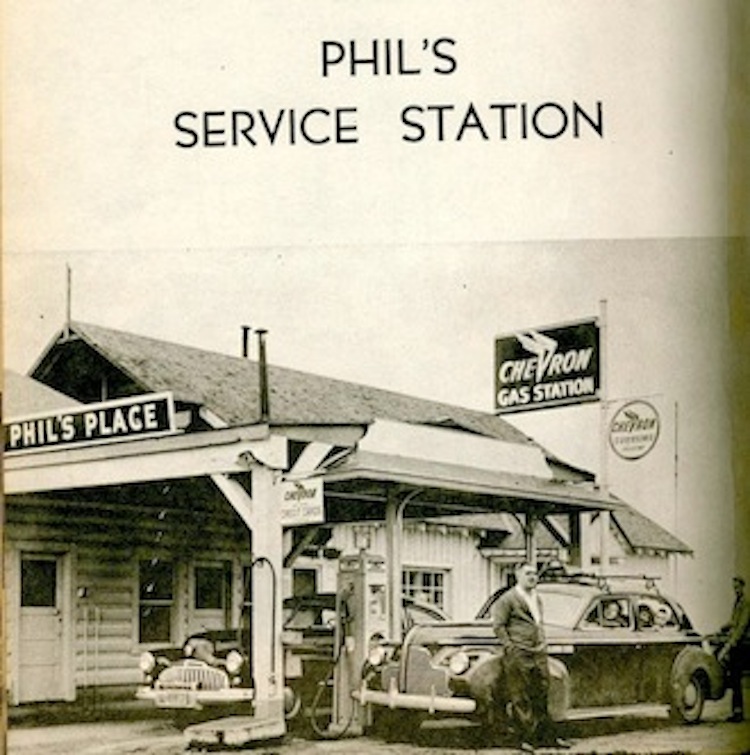
In 1976, Betty Pannell was the Westwood correspondent to the Lassen Advocate. She had a special feature entitled Yesteryear. The following is an excerpt of her interview with Lydia Schuldies, who with her husband operated a restaurant, bar, dancing floor and service station on Highway 36, near Goodrich Creek. Lydia recalls their place was not the only activity there, and now all that remains is the lone chimney.
“With the war and the advent of food stamps Lydia really had her hands full to run the restaurant at Phil’s. To arrange the menus as best as she could and for as long as possible. Then, when the food ran out, to close until she had more stamps. Lydia said she always tried to hire back the employees that had to be let off during these forced closures.
“There were many more buildings along the highway—next to Phil’s was a rooming house for the men working out there. Next to it an ice house with walls yay thick filled with sawdust for insulation to keep the ice. And back between the highway and Moonlight road was the airport. (This is where Cub Walker, one of Fletcher Walker’s son was killed in a plane accident.) On back in a beautiful spot on the meadow was the Home Ranch and during World War II when Victory—or vegetable gardens—were encouraged the Walkers set aside a good sized area for anyone to put in their own vegetables and the Walkers had a man to water it. Directly across the highway from Phil’s were the small house is, well that was the mess hall for the men. And there were was a dairy farm with big barns and the milk brought into Westwood by horse and wagon and sleigh.”
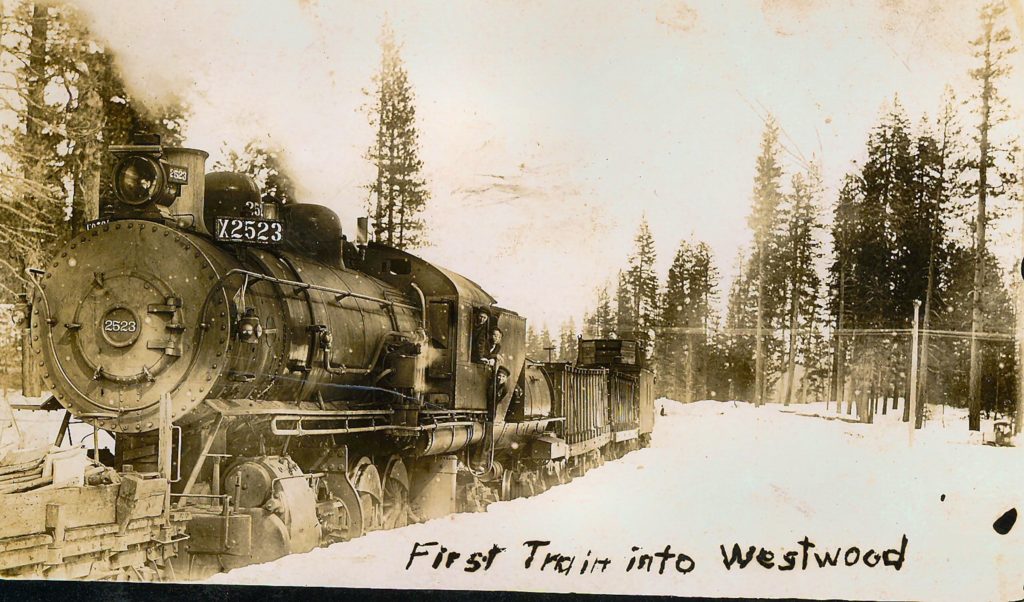
February 21, 1914In January 1912, the Red River Lumber Company entered into an agreement with the Southern Pacific to construct the 120-mile Fernley & Lassen Railroad. Time was of the essence as Red River had entered into an agreement with the Great Western Power Company to log Big Meadows by 1914 as it was to be transformed into a reservoir known as Lake Almanor. On February 21, 1914 the first train reached Westwood. It would not be until summer that the railroad was officially completed, as ballast work needed to be done. The abandoned railroad line is known today as the Bizz Johnson Trail.
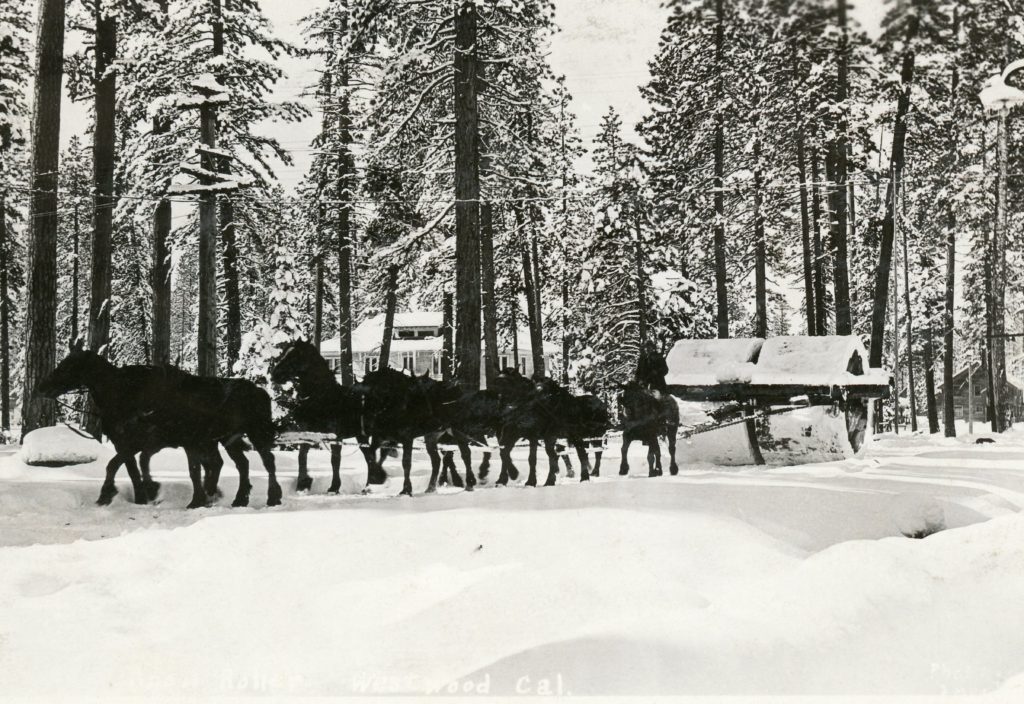
Red River’s snow roller in action. Courtesy of Calvin SharpOn January 2, 1916, it began to snow, and snow and snow for nearly three weeks. At Westwood it was reported that they fourteen feet of snow. Resident Manager, Fletcher Walker called it a “blue snow.” From this particular snowstorm, standard snow removal techniques of Westwood streets were no match to combat the deep snow. Someone came up with ingenuous idea to build a snow roller to compact the snow. The Westwood correspondent to the “Lassen Weekly Mail,” observed, “The immense snow roller is in successful operation on the streets. It leaves a compressed trail wide enough for teams to pass. Eight to twelve horses have been used to haul it through the streets and the affair makes an interesting ensemble.”
The Big Store, Westwood.By far one of the Westwood’s largest attractions was its company store. This was not your typical company store. Westwood would not have a so-called Main Street complete with a business district, but Fletcher was intrigued with the development of department stores in major cities. Adaptations, of course, were made for what worked in San Francisco or Minneapolis would not apply to Westwood.
Of course the building needed to be conveniently located. What better location than near the mill entrance and adjacent to the railroad depot. This store was dubbed the Big Store and during its evolution kept getting, bigger and bigger.
On Christmas Eve 1913, the Big Store opened its doors for business. The Plumas National provided the following description: “A complete butcher shop, a drug store, grocery department, men’s furnishings, women’s goods, hardware and shoe departments are all under special heads, each of whom is a specialist in his line. Nineteen men are employed in the store at the present time.”
In time, certain features in the original store would be relocated elsewhere such as offices, thus providing the Big Store with even more room to expand its merchandise. In February 1916, the Big Store got even bigger with another forty-foot addition. The facility could boast 73,125 square feet of retail space, with an additional 8,800 square feet utilized for offices and other purposes. It was the largest department store north of Sacramento.