Tag Archives: Red River Lumber Company

Red River Rails

Westwood Junction

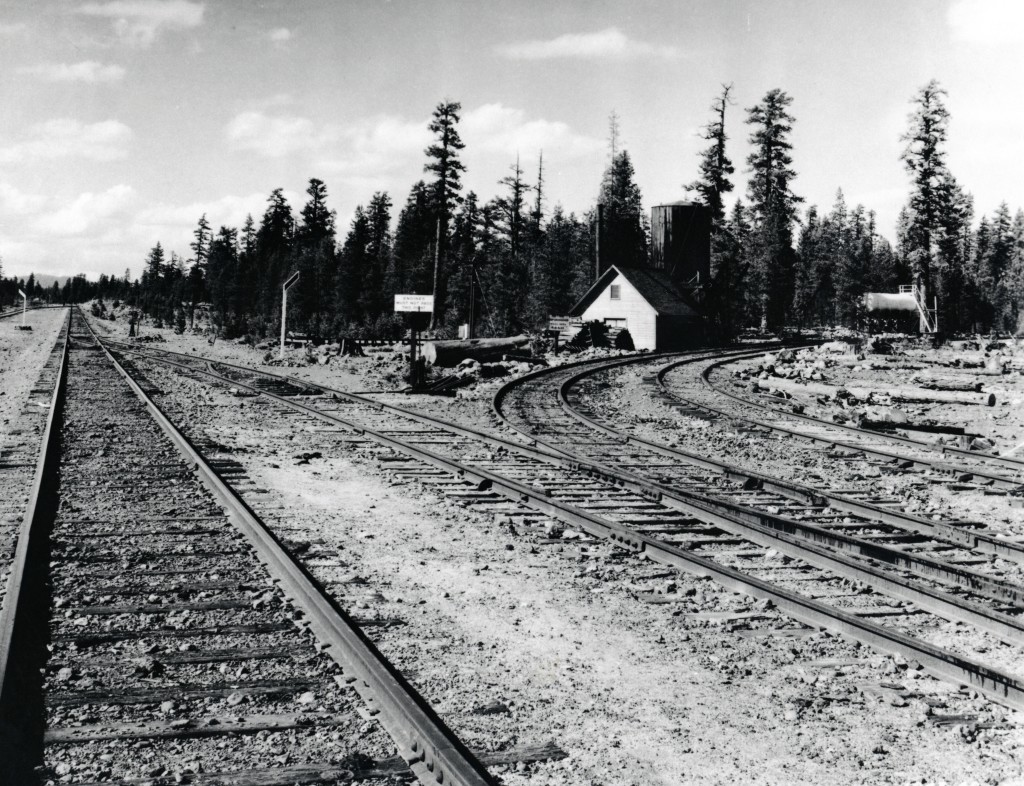
In the early 1930s, Red River Lumber Company was going through a refinancial organization process requiring an inventory of all assets and liabilities. Not an easy undertaking, with so much territory to cover. An item of interest to me was the inventory of rails used in its logging operations. It was duly noted that Red River owned 93.7 miles of rail.

However, when it came to the Piute Line, that went from Hog Flat to Susanville, those rails were leased from the Western Pacific Railroad. This, no doubt, added more fuel to the speculation that this particular railroad was destined to be a feeder line for Western Pacific’s nearby Highline. The report noted that the initial 1917 survey of the Piute was to begin north of Westwood Junction near McCoy Flat. However, those plans had to be scrapped when Fruit Growers logging railroad traversed there.
Subscribe

Indian Allottment Lands

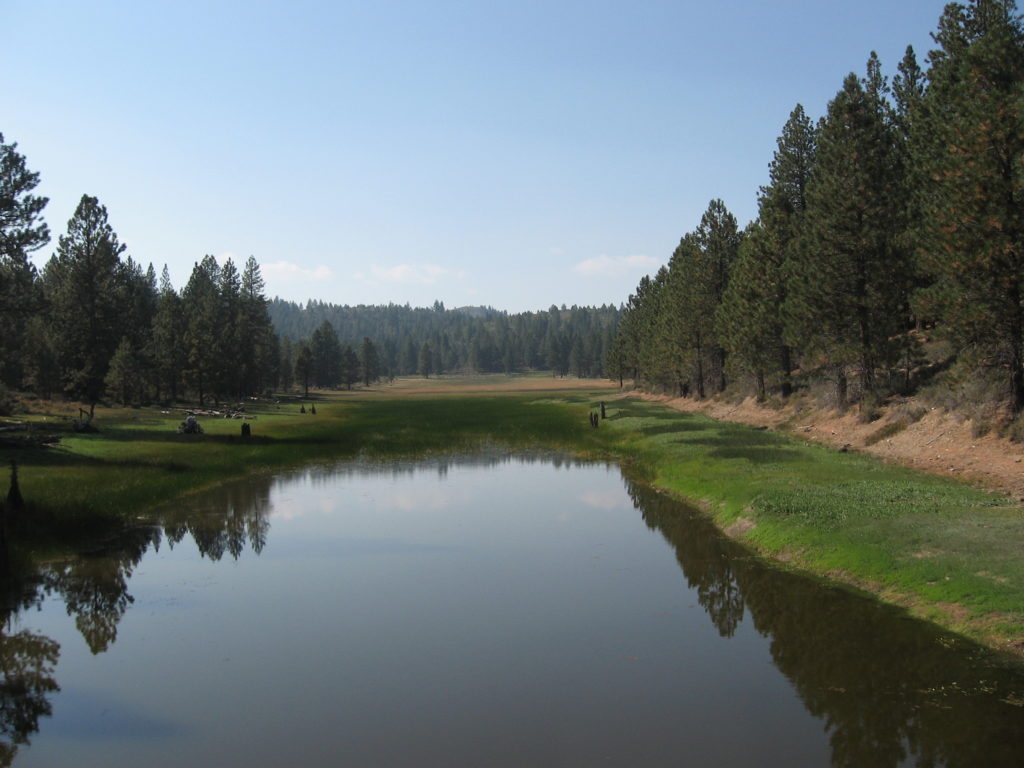
A portion of the lands sold were east and south of Eagle Lake, such as surrounding Deans Meadow, Photograph taken September 15, 2017

Early on the federal government made arrangements to provide lands to Native Americans . Originally, these were through treaties, but evolved over time that particularly locally individual allottments, usually 160 acres were granted. Exactly, how these lands were selected, I do not know. It should be noted that locally, a high percentage of these allottments were timberland. It was the Bureau of Indian Affairs who managed the lands for the Indians. Routinely, these lands would be sold at public auctions, the proceeds purportedly to be placed into trust accounts. In December 1912, A.A. Bear became the resident agent to oversee the lands owned by the Indians. On February 18, 1913, an auction of 17 parcels was held, the names was like a who’s who of the local Indian populace—Jackson, DeHaven, Joaquin and Peconum to name a few. These properties were are all timberland, and was it just a coincidence that they were all purchased by the Red River Lumber Company?

Subscribe

Lumberjack Advertising

Camp 33
Camp 33, Red River Lumber Company

Someone in the Red River Lumber Company was a good spin doctor.  When it came time for the seasonal layoffs of the logging crews it was reported as: “Men Leaving Camps Are Good Advertisers. Owing to the closing of several of the camps about 600 men have left Westwood. It is interesting to watch the different directions taken by these men on their departure. Some have gone to the extreme east, many to South America, some to Mexico, some to the north country, Washington state and some to Alaska. Most of the men intend to return and bring more fellow workers. As a rule men in the lumber camps have tried making a living in many parts of the world and these men boost it as good advertising for the company.”

Subscribe

Westwood Goes Wet

101 1941
The 101 as it appeared in 1941. Courtesy of Dina Matteucci

On November 19, 1935 T.S. Walker of the Red River Lumber Company announced the end of an era that Westwood be a “wet” town as a liquor store concession had been given to Aronson and Taylor.

In a prepared statement, “Heretofore we have aways tried to run a dry town. Before prohibition this practicable due to the distance to neighboring towns and deplorable conditions of the roads. During prohibition it was a relative simple matter for obvious reasons. Since repeal, however, it has been a different story. With fine pavement to neighboring towns, with various resorts operating not far from town and with the great number of automobiles, liquor has been and is readily to all who desire it, whether we like the situation or not.

“This being the case, the directors of the company have decided that it is useless to longer refuse to have liquor sold in Westwood. It is also felt that a better quality can be made to such employees as are determined to have it anyway than is now available from bootleg sources.”

The truth be known, Red River was losing money by not providing alcohol for sale, when they needed every cent during their financial crisis.

Subscribe

What Red River Meant to Lassen County

The Big Store, Westwood.

During the 1920s, Susanville’s two newspapers, Lassen Advocate and Lassen Mail published elaborate Christmas editions extolling the virtues of Lassen County.  Concerning what the lumber industry meant to Lassen County, the Lassen Advocate provided this profile of the Red River Lumber Company in 1921: Continue reading What Red River Meant to Lassen County

Winter Donkey Logging

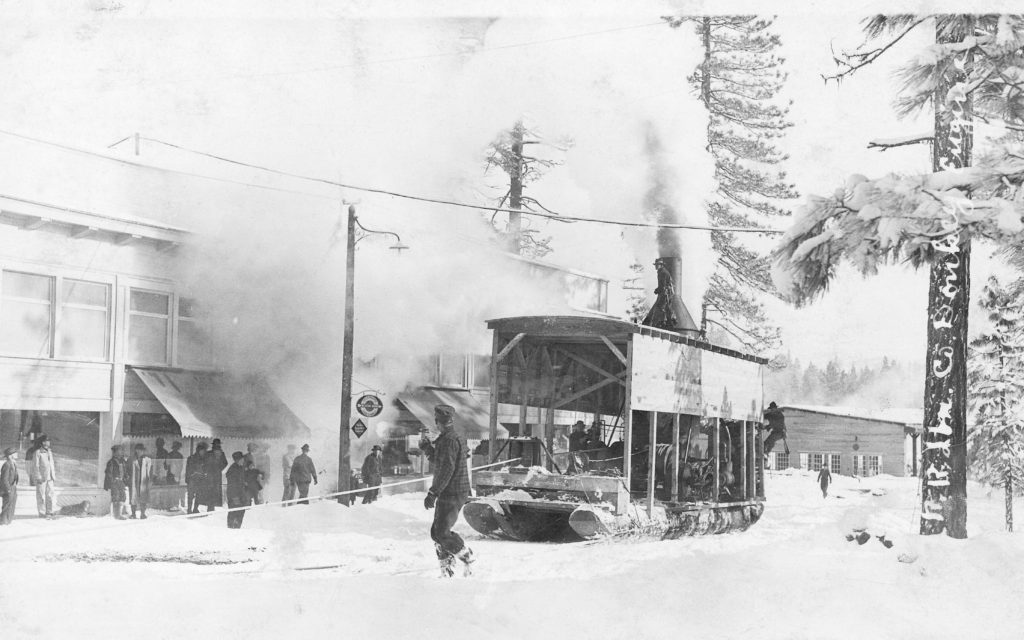
A steam donkey being pulled through Westwood, 1916.

Fletcher Walker, who was the resident manager at Westwood for the Red River Lumber Company, was an interesting individual just like the other Walker siblings.  It should be duly noted, that Westwood was Fletcher’s creation and during the early years operation did not handle criticism very well—especially when it came from family members.

First of all, there would be major learning curve as to what worked in Akeley, Minnesota, and what would not work in Westwood, California. Fletcher initially wanted year-round logging in California, while other companies shut down their operations by November.  It was Fletcher’s contention they would be ahead of their competitors operating winter logging operations—it would take some time for him to yield because his proposition was not only expensive, and not justifiable. However, from the late teens during the early 1920s, he demanded an early start of spring logging beginning by February and that the steam donkey’s necessary for the operations be mobilized. By the end of that decade it was no longer necessary, as motorized tractors replaced the “donkeys” and Fletcher finally succumbed the hard way that his competitors were right.

Subscribe


A bit of Westwood Trivia

Westwood 1915
Westwood 1915

While some are aware that on September 10, 1912, marked the cutting down of the first ceremonial tree by Clinton Walker and W.B. Carlin on what would be site of Westwood. On the surface, it seemed like a jubilant occasion. However, unbeknowst to the outside world was the Walker family feud, and the location of Westwood, was one of many issues at hand. Patriarch T.B. Walker was caught in a dilemma. After all, it was his dream that the California operations were to be run entirely on their own, hoping they would achieve the same success he did when he founded the Red River Lumber Company in Minnesota. While tempers flared an ambitious building program was implemented. On July1, 1913 some 450 buildings had constructed in this new town in the wilderness.

Subscribe

A Red River Tragedy

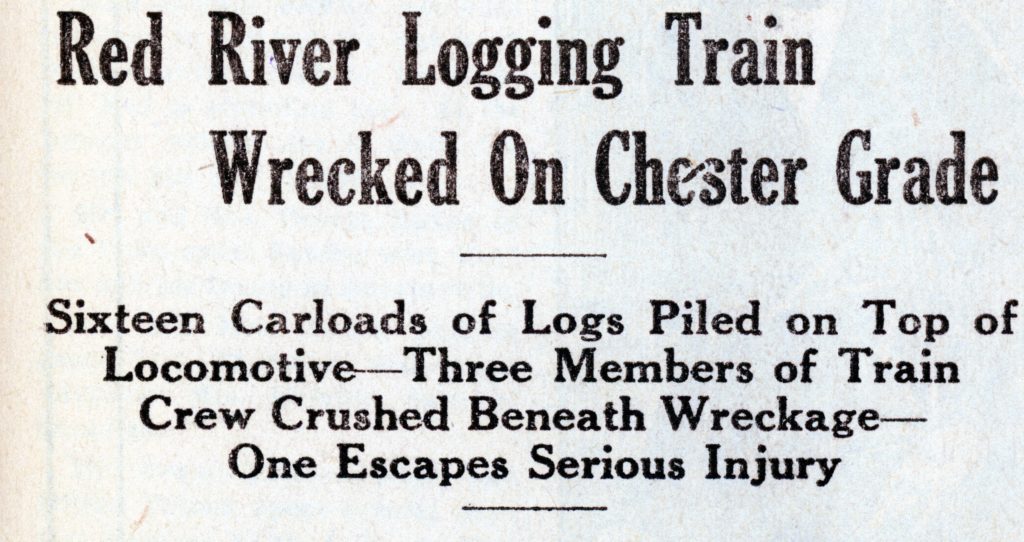
Lassen Mail headlines of October 18, 1929

Logging has always been a hazardous profession, and the Red River Lumber Company was not immune.   On the evening of October 11, 1929, a logging train coming down the grade from Warner Valley derailed two miles from Chester. The train consisted of sixteen cars that left the track cascading fifty feet down into a ravine. Three of the four train crew—George Brooks, J.A. McConnell and E.D. Burt—perished in the wreck. G.B. Kale, the rear brakeman was thrown from the caboose, sparing his life. He literally did have the wind knocked out of him, but recovered in time to prevent a second wreck. A second train was following and the lantern from the caboose was lying along the track. Kale was able to flag the other train to stop or otherwise it would have jumped the rails and met the horrible fate of its predecessor.

Subscribe


Westwood’s Millpond First Victim

Back flip
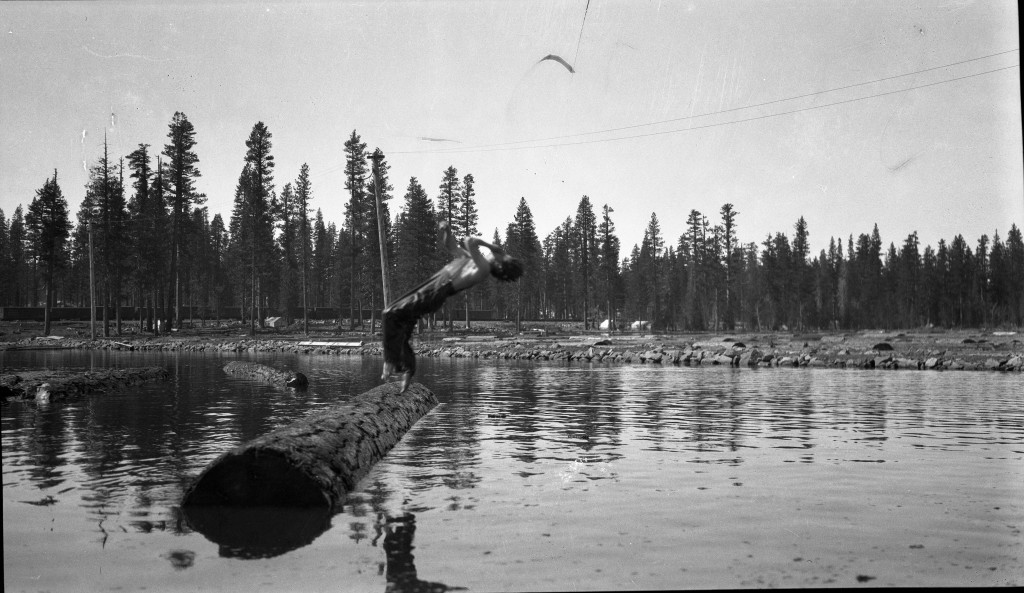
Westwood millpond, 1915, courtesy of Otto Katzner collection

Red River was not only the nation’s largest electrical sawmill, it also built one of the largest millponds, in which several people met an untimely end in it. During the afternoon of July 29, 1914,  19-year-old, Willard Pierce was fishing where Robbers Creek entered the millpond. Others the vicinity were swimming and later left.  Later in the day, John Jeffreys discovered Pierce’s body face down in about three inches of water. Jeffreys and Charles Phelan pulled him out of the water, and attempted to resuscitate to no avail. During the Coroner’s Inquest it was revealed that last year Pierce was swimming in the millpond with friends. After swimming, Pierce had a fainting spell and collapsed for no apparent reason. It was presumed that he must have had a spell causing him to fall into the water resulting in an accidental drowning.

Subscribe


Westwood’s Housing Crisis

308 Delwood, Westwood.

From time to time, the Red River Lumber Company struggled to keep up with the demand for housing. There was a lot of debate, especially the cost. Initially, the life-span of Westwood was to be twenty years. Fletcher Walker, the resident manager had different ideas.

On September 12, 1922, Fletcher wrote his brother, Gilbert, who resided in Minneapolis, to convince him for his support. Fletcher wrote: “Additional houses would very well materially build up the morals of the crew as it is a conceded fact men with families to support will take more interest in their work and in making good than single men who have gotten into the habit of wandering from job to job and no particular responsibility or care to work steadily.  A campaign along the line to build 200 houses and as soon as they are completed build 200 more, if the demand still held out as we could fill 200 houses at this time, if we had them with men of family. Two  hundred houses would add more than $200,000 to the annual sales of the mercantile departments as it is impraticable for an average family to get along on less than $1,000 a year. The $1,000 being less than a year’s salary and minimum pay and usually there is more than one employed out of each family.”

Subscribe