Tag Archives: Ranching

How the Local Wild Horses Came to Be

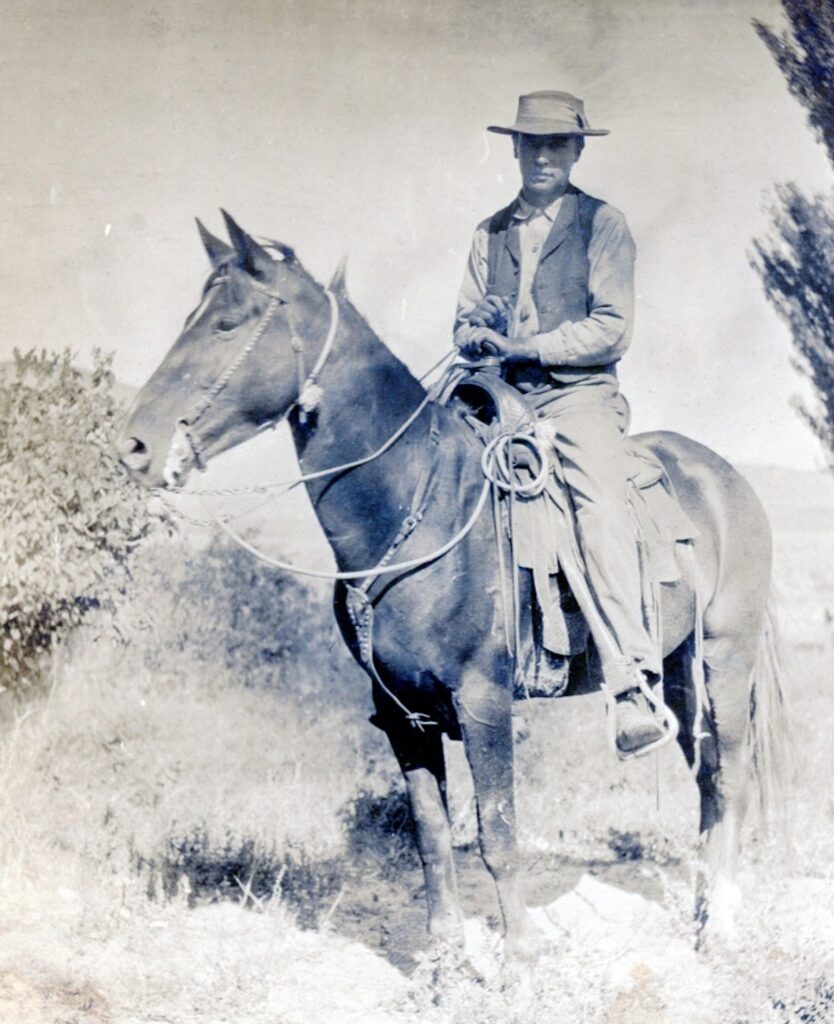
Allen Robinson, Long Valley Cowboy, 1905

Initially, how the local wild horse population came to be was in the mid1800s. At that time, the Honey Lake Valley had few fences and the settlers allowed their livestock, both cattle and horses, to roam freely during the winter months. Annual spring round ups, that became the origin of today’s rodeos were to capture and brand the animals. There were always some stray horses escaped from being caught, thus began the local wild horse population.

George Wrede’s winter homestead remain at Bull Flat, where he would catch and break wild horses., June 1977

Yet, back then  the wild horse population was kept under control by out of work wranglers. During the winter months, it was not unusual for ranches to let go extra help, especially single men. A number of these men, would take up a 160 acre desert homestead to make a home, especially properties with unclaimed springs. To make some extra money, they would catch wild horses and break them. By spring they would sell the horses, and pocket the money.   

The Marr Brothers of the Madeline Plains turned that into a fine art of rounding up wild horses. In the 1930s, they would gather wild horses to be used in rodeos, which made for wild times. By 1940, the demand for horses dramatically decreased, thus allowing for the wild horse population to grow unchecked. More about. that later.

Support by subscribing.


Champs Flat, Lassen County

Champs Flat, 1984

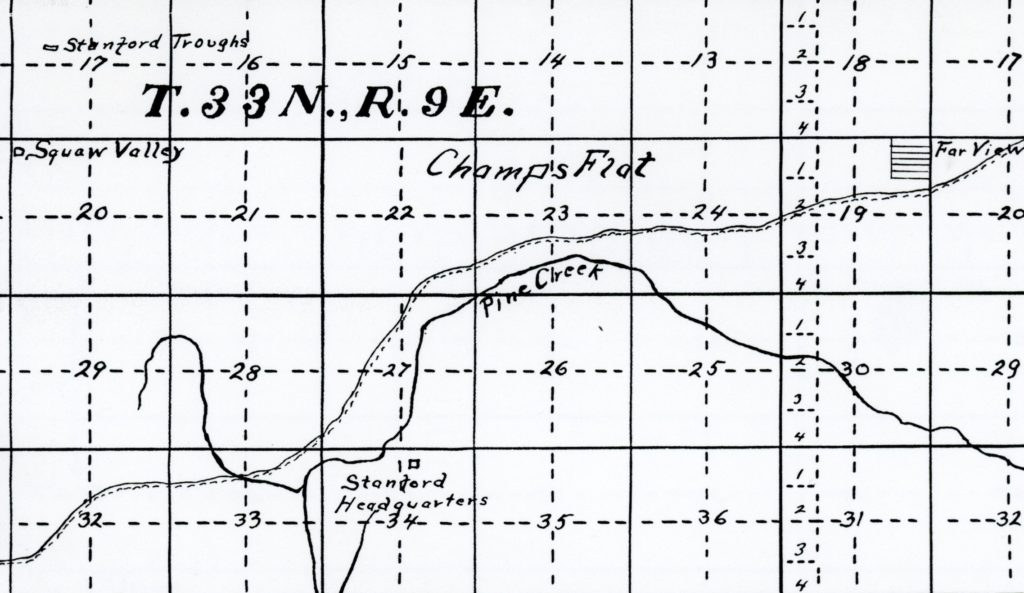
This sagebrush flat located west of Spalding Tract was an active place back in day for summer grazing of livestock, mainly from Tehama County. In 1873, the Champlin Brothers: George (1827-1903) and Lester (1848-1907), Tehama County stockmen, incorporated this area for summer range for sheep. George Champlin, a ‘49er, was associated with Leland Stanford, aka Stanford University etc. Stanford’s attorney, Ariel Lathrop, who happened to be Stanford’s brother-in-law and partner, with a Vina, Tehama County ranch. In May-June 1899, Champlin and his partner, John Boggs, sold their Lassen County property to Jane Lathrop Stanford for $8,000, who immediately transferred the property to the Stanford University.

Map courtesy of Stanford University

In July 1924 the university sold the summer range to J.J. Fleming of the Honey Lake Valley and for whom the state wildlife unit at Honey Lake is named for.

Never miss a story, Subscribe.

Lassen County Sheep Camps

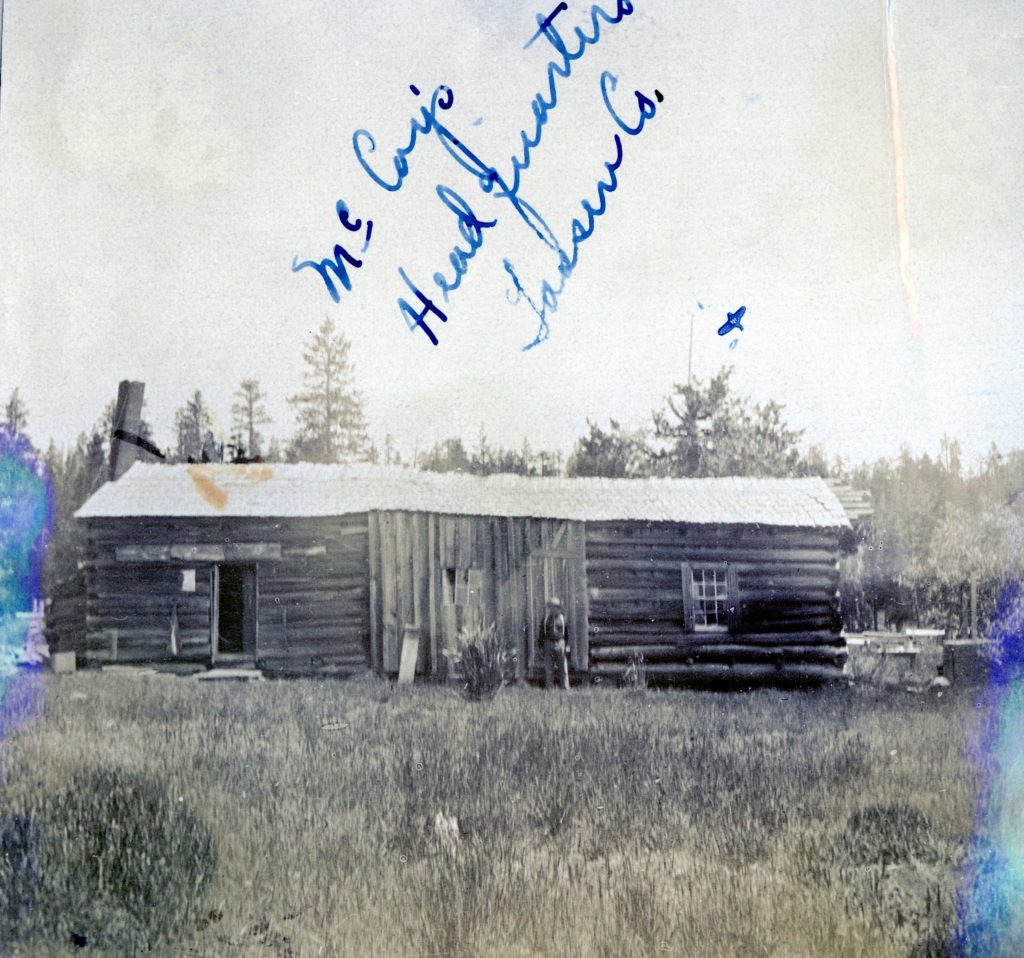
McCoy headquarters at Bridge Creek, circa 1906. Courtesy of the Worley/Crum family.

Beginning in the 1870s, sheep ranchers, mainly from Butte &Tehama counties would  bring their sheep to higher elevations for summer grazing to this region.  Western Lassen County was ideal for such.

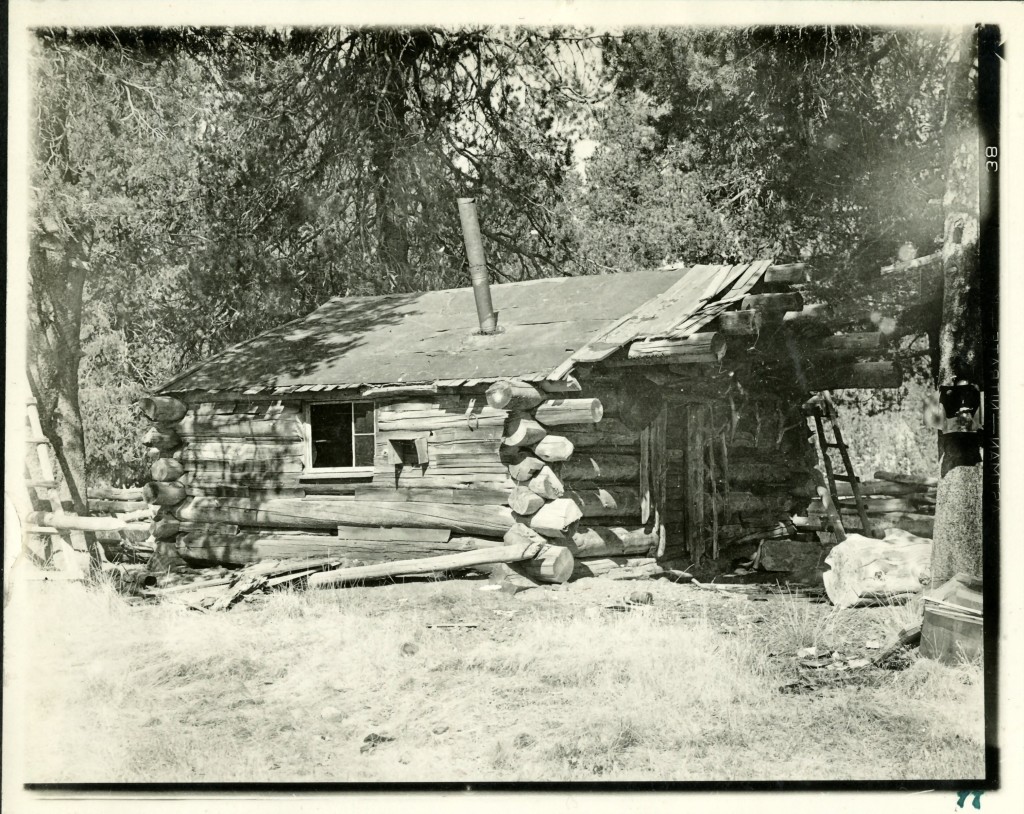
Of course, tenders to these flocks needed some type of housing. Since the accommodations were seasonal, many were log cabins.

Griffin Logan’s cabin was a typical sheep camp cabin. Logan  Mountain was named for him. Courtesy of National Park Service

The 1920s and1930s were turbulent times for the sheep industry. Wool prices plummeted. Many outfits went bankrupt. The annual tradition of moving sheep from winter to summer ranges would be abandoned. Those summer headquarters suffered the same fate.

Tim

McKissick Cattle Company

The site of the McKissick Ranch, Madeline Plains, June 2004

Long Valley pioneer, Jacob McKissick created a large ranching empire in Lassen and Washoe counties. It would all come crashing down with his death in 1900. McKissick was a life-long bachelor, so there was a lot of speculation as to who would receive what. The bulk of his estate he left to his nephew, Benjamin Howard McKissick, who had a spent the greater portion of his life working for his uncle. Of course, this did not set well with other family members, and lawsuits were filed to contest the will. In 1903, Benjamin Howard McKissick could no longer handle the stress of these conflicts and committed suicide in a most painful way, by swallowing carbolic acid. This event, of course, created even more estate litigation.

On February 4, 1914, H.G. Humphrey, W.H. Moffat and J.L. Humphrey. incorporated as the McKissick Cattle Company. They slowly began purchasing many of the McKissick Estate properties. In 1926, J. L. Humphrey went solo, and part of the dissolution process he took possession of the McKissick Ranch in Secret Valley, and holdings at Amedee. Humphrey had two children—Jack and Lucille. Jack would inherit Amedee, Lucille  married Hugh French and received the Secret Valley property.

Support

A Barbwire Story

Heath Ranch, Grasshopper Valley—California Outdoor Properties

In the 1860s, stockmen on the Great Plains first introduced barbwire to keep their livestock in one region and to fence springs, preventing unwanted livestock access to the water. It was also an economical measure, wood was not a common commodity on the plains.

The introduction of barbwire in Lassen County was a slow process, and no doubt a 1880s lawsuit hampered its local use. In 1883, Charles F. Gardner and A.J. Rhoads claimed substantial acreage through the Swamp and Overflowed Land Act in northern Grasshopper Valley.  The men proposed a large-scale livestock operation.  In the spring of 1886, they hired William Tanner to construct a barbwire fence to enclose their lands to protect their
pasture from roaming livestock. Tanner constructed a three-strand
fence—the top strand 52 inches high, with posts thirty-six feet apart.
Charles F. Loveland, the adjoining property owner claimed the fence
was a hazard and poorly maintained.  He claimed that five of his
horses had been killed by the fence and an additional twenty horses
had been crippled by it. On July 4, 1886, Loveland filed a lawsuit
against Gardner, Rhoads and Tanner for the loss and injuries sustained by his horses from that fence.  On April 11, 1887, the jury awarded Loveland $575 plus costs.  Gardner appealed verdict.  On May 27, 1889, the appellate court remanded the case back to the local court with two options.  Loveland could accept damages in the amount of $300 or the parties could have a new trial.  Loveland accepted the $300 award.

Support by subscribing.

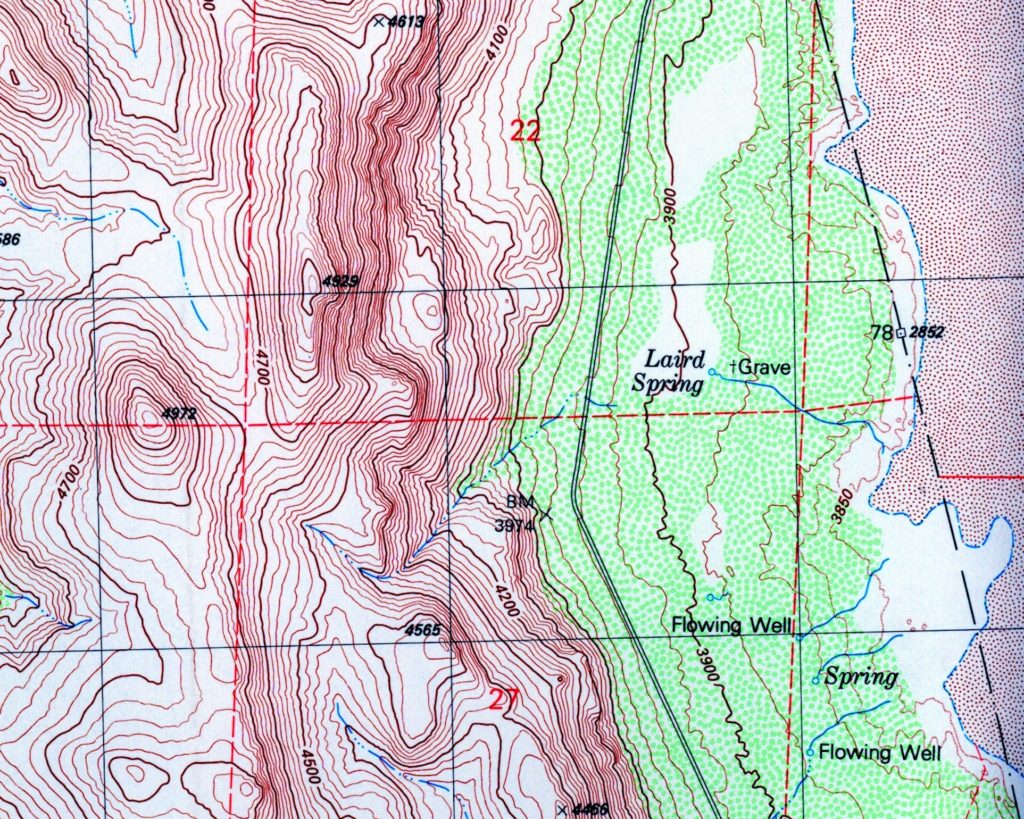
Laird Spring, Smoke Creek Desert

Numerous springs in the Intermountain West are named for wranglers and itinerant sheepman. Laird Springs is one, that has an interesting story, and one of which is still an unsolved murder.

Edward Laird was born in 1862, the eldest of three children, his two siblings Margaret born 1863, and brother Warren in 1864. They were  orphaned at an early age and raised in an orphanage in Carson City, Nevada. As young men, Ed and Warren went to work on various ranches in Northeastern California. By the late 1890s, they had settled in the North Warner Valley, Lake County, Oregon. Warren would remain in Lake County for the rest of his life.

In the early 1900s, Edward Laird worked as a ranch hand at Round Hole, Smoke Creek Desert, also known as Bonham Ranch. The owners William and Martha Bonham Ross, were in-laws to Laird’s sister, Margaret Sutcliffe.

Very little is known of Laird’s activities on the Smoke Creek Desert. Sometime after 1910, Laird filed a “squatter’s claim” to eighty acres, three miles north of Round Hole. There was a spring on the claim where he built a cabin. Edward Laird was murdered on or about August 20, 1917. Details of his murder are sketchy. According to newspaper reports, his body was marked with two shot gun wounds and he was found dead in his cabin. On August 29, 1917 the Nevada State Journal had a caption, “Revenge Believed to Have Been the Cause of Killing With Shotgun near Round Hole.”  However, the newspaper did not provide any details. A week later area ranchers offered a $500 reward for information leading to the arrest and conviction of the party who murdered Laird. That was basically the end of the case. Cook Laird, Warren’s grandson, told me that Edward was a red head who was known to be hot headed with a mean temper.

Edward Laird was buried 100 yards east of where the spring bears his name.

Support

Note: In 2004, Laird Spring was included in a BLM tour.

The Sagebrush Aristocrats

David Knoch. Courtesy of Lassen Lodge #149 F&AM

A long time ago I had a research request from the Huntington Library. It had to do with wealth, and they wanted to know everyone in Lassen County who had assessed value of assets of over $20,000 in 1880.  So off to the Assessor’s Office I go to examine the Assessment Roll for Lassen County for 1880.

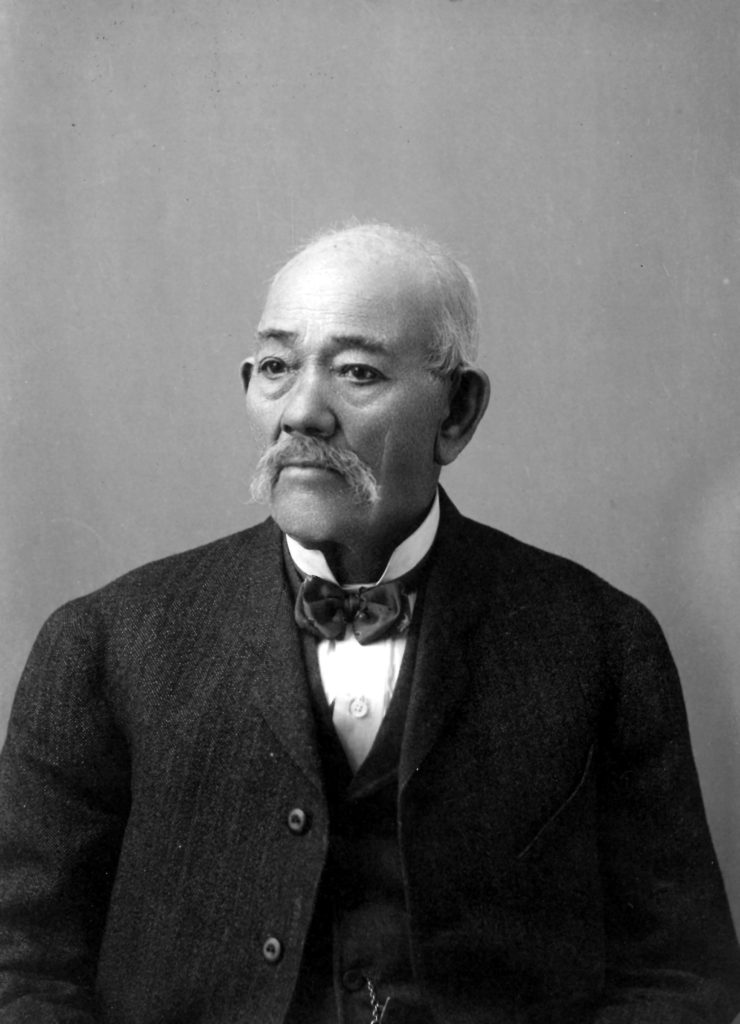
There were six individuals. At the top of the list was Susanville merchant David Knoch at $30, 167. Knoch who came there in 1864, was not only a successful at his store, he found another lucrative venture—loaning money. It should be noted, there were no banks in the area, so it did not take long for people to learn who had money to lend. Knoch made sure there was collateral involved, usually in the form of a mortgage to real property.  Another Susanville merchant on the list was William Greehn, who operated in the same manner as Knoch.

The other big players were the ranching community. These consisted of James Byers of the Honey Lake Valley, Andrew Reavis of Big/Dixie Valleys and Jacob McKissick of Long Valley.

McKissick Ranch, Long Valley,1903. Courtesy of PhilipS. Hall

McKissick’s wealth was much larger than reported for Lassen County. McKissick had extensive land holdings not only throughout Lassen County, but Washoe County. McKissick’s owned such places in the latter as an obscure place in far northern Washoe such as Hole in the Ground, to well known Reno landmark known today as Rancho San Rafael Park.

Support

Pine Creek Valley, Lassen County

Pine Creek Valley
Pine Creek Valley, June 18, 2015

Traveling across Highway 44, the Pine Creek Valley appears to be a desolate wind swept sagebrush flat, surrounded by pine trees. After all, the majority of human activity is concentrated at the Bogard Rest Station. By the way the area is named for John Jasper Bogard, a Tehama County stockman, who in the mid-1870s started using the area for summer grazing of sheep. Actually, the region was home to many sheep outfits, such as Champs, Cone, McCoy and Stanford, the latter as in Stanford University. These sheep outfits had a huge impact on western Lassen County, and so many of the natural features were named for them.  Continue reading Pine Creek Valley, Lassen County

McClelland Ranch, Eagle Lake

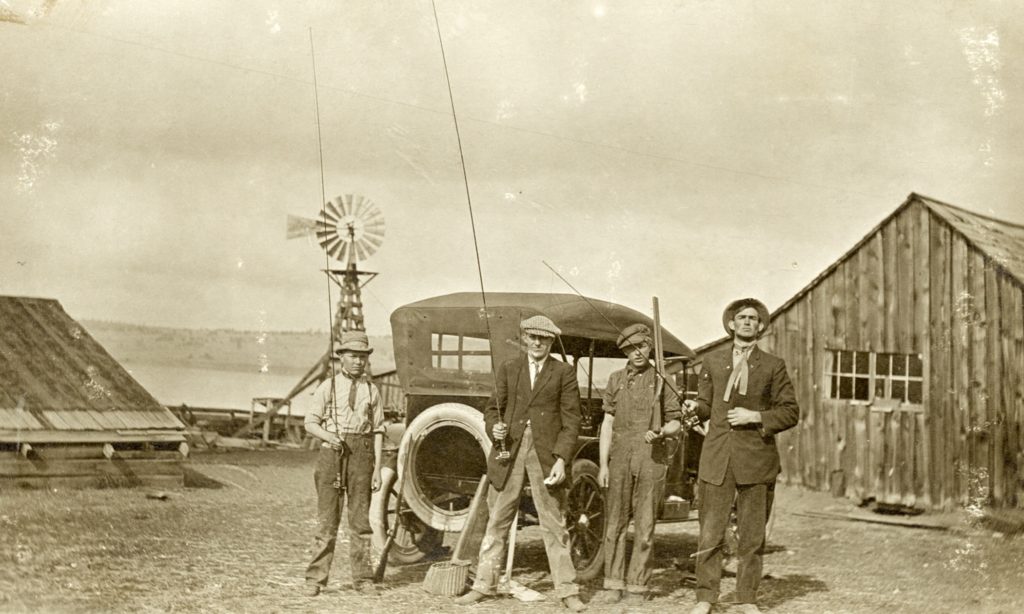
A group of bass fishermen at the McClelland Ranch, 1914.

This well known place on the north shore of Eagle Lake, happens to be first place settled there. On January4, 1870, Levi Button, a thirty-three old New Yorker, filed a land claim there for 160 acres.  Button’s main activity was prospecting and trapping. Button only remained there for a couple of years. Various individuals would lay claim to Button’s abandoned homestead, but it was not until the early 1880s when Adolph Schuler made a real go of it. After making numerous improvements he secured a federal land patent for the property. At first, it seemed he would quickly fade away when on  July 11, 1884, he sold out to James D. Byers for $1,000. Byers had an extensive livestock operation in the Honey Lake Valley and could utilize the Eagle Lake property for summer range. Schuler remained on the premises working for Byers. In 1902, Byers passed away and left a major portion of his estate to his nephew’s family, the McClellands, including the Eagle Lake property. It is still owned by the McClelland family.

Support

Stanford University & Lassen County

Map courtesy of Stanford University

One would not think that Stanford University and Lassen County would be associated in any way, but that was not case. Leland Stanford had many interests. In 1881 he purchased Rancho Bosquejo at Vina, Tehama County. It should be duly noted, that this was Peter Lassen’s original Spanish Land Grant.

On May 26, 1899, Stanford’s widow, Jane, purchased 2,114 acres west of Eagle Lake from Champlin and Boggs for $8,000. This allowed for additional summer pasture for the Vina property. Ten days after the purchase, Jane transferred the title to Stanford University. In February 1924, the University sold its Lassen County Summer Range to J.J. Flemining at $10 an acre.

Spread the word, and encourage a friend to subscribe