Great Northern’s Tracklayer entering Big Valley, 1931. Courtesy of Orville Watkins
Yesterday, we explored the Paul Bunyan Prosperity Special. As mentioned everything revolved around the Golden Spike Ceremony at Bieber connecting the Western Pacific & Great Northern Railroads. In all, it was a successful event, though it was dampened by some extremely bitter cold weather.
After the crowds dispersed, tragedy struck. It should be noted, for a portion of the population it was just another work day and this was especially true for those employed by A.B. Guthrie, the construction contractor for the Great Northern Railroad. At approximately 5:30p.m. a railroad work crew were returning to NuBieber. Six men were riding on a flat bed trailer. Out of nowhere came a speeding touring car, which sideswiped the trailer, knocking two men off it—Dan Rogish and Charles McMahon. Rogish was dragged by the car and died from his injuries. The driver who hit the two men, sped away, it was estimated the driver was going 70 miles per hour and was not apprehended.
On November 10, 1931 was a historic day in many ways. A golden spike ceremony was held at Bieber to mark the completion of the Highline/Northern California Extension of the Western Pacific and the Great Northern Railroads.
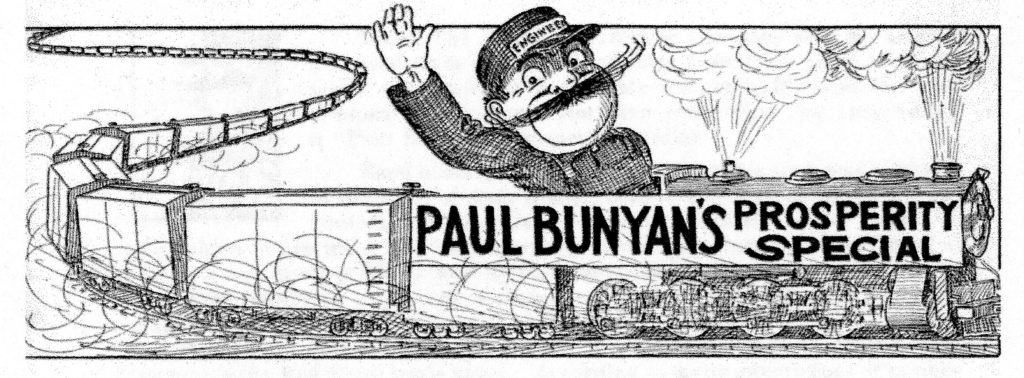
The next morning at Westwood the festive mood from the day before continued. Red River unveiled its impressive Paul Bunyan Prosperity Special train. This was no ordinary train for it consisted of 171 carloads of manufactured lumber, along with six locomotives and a caboose. The Prosperity Special measured 8,325 feet long—one and six-tenths miles. It was, one of the longest, if not the longest string, of loaded cars ever handled in one train movement at the time. Equally impressive, it was the single largest shipment of lumber products ever made and that came from one plant—Red River. The train contained 4,350,000 board feet of lumber, box shook, plywood, sash & doors, etc.
There was a tremendous amount of logistics involved to make the event happen. Red River had to coordinate with its customers to place their orders at the same time and they had to agree on a specific date. This was a challenge since winter was fast approaching and the demand for lumber would decrease. Yet, their customers supported the effort, and orders came from twenty-one states—ranging from Arizona to Tennessee to New Hampshire. As Arthur Curtis James, Chairman of the Board of the Western Pacific proclaimed, “There never was a train like this before in all the world.” Willis Walker stated: “The movement of this unusual volume of lumber products at this time demonstrates confidence on the part of consumers and indicates that conditions have stabilized and that a considerable volume of building hitherto postponed, will now proceed.”
Three weeks later the train pulled into Castle Rock, Colorado, its final destination. However, when the train arrived in Denver, most of the railroad cars were split up and went to a multitude of destinations.
Spread the word, and encourage a friend to subscribe
This is a 1985 book by Eric N. Moody (6×9, softcover, 121 pages) I have four used copies at $25. each on a first come, first served basis.
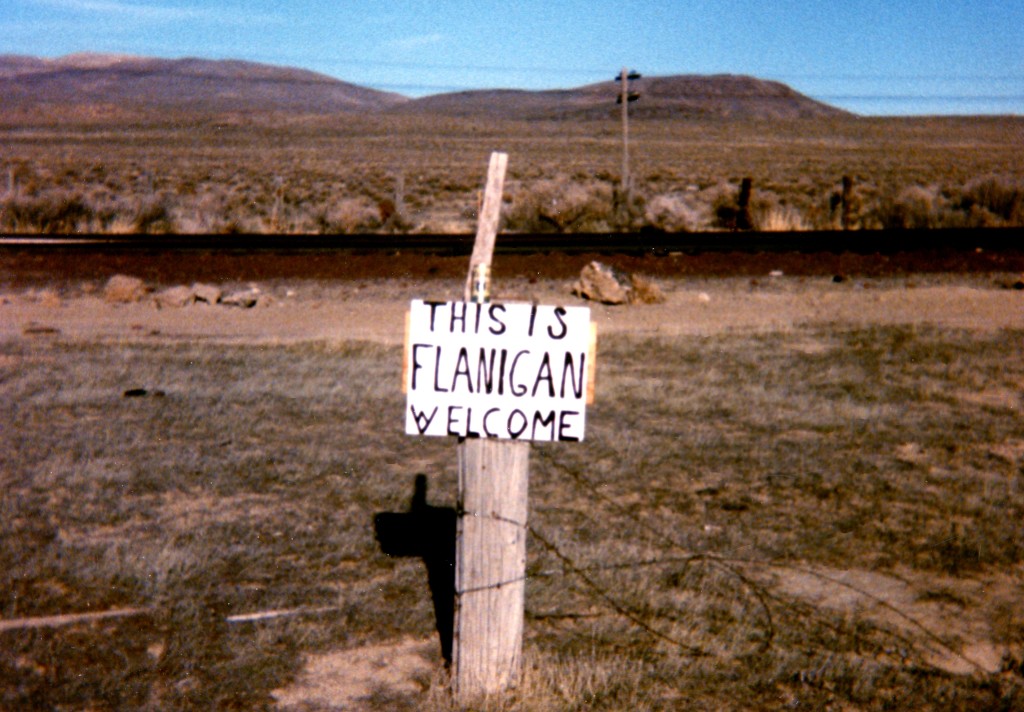
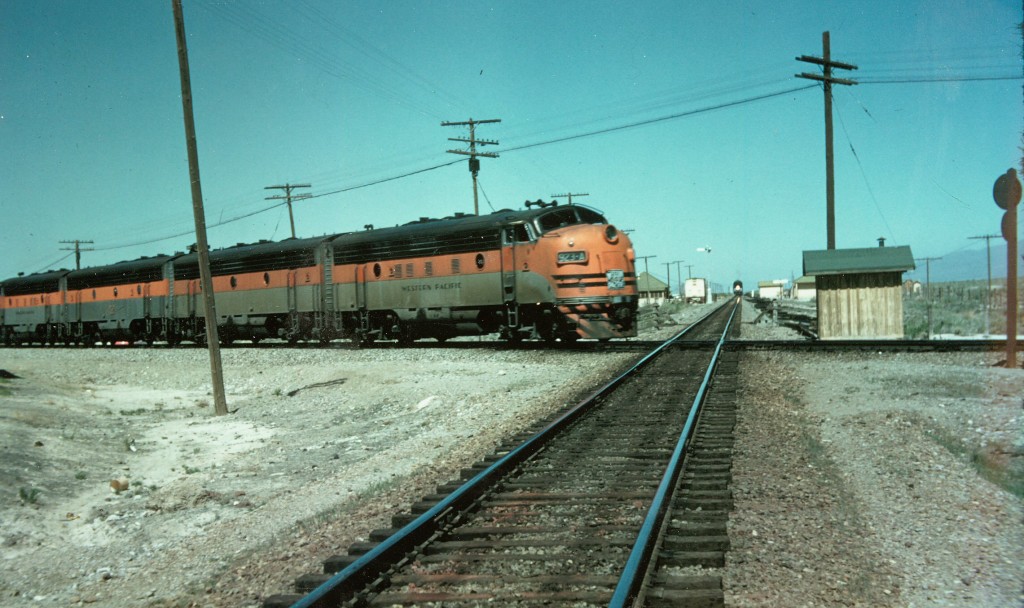
For those not familiar Flanigan was a small railroad community in eastern Honey Lake Valley, on the Nevada side. One of the items that made it unique was the crossing of the Southern Pacific and Western Pacific Railroads.
Flanigan
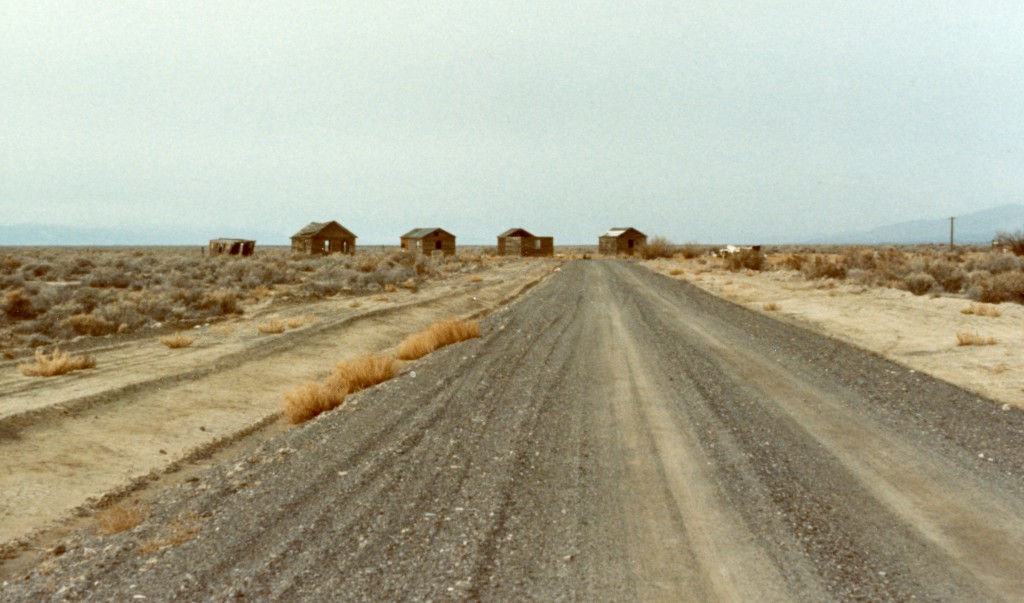
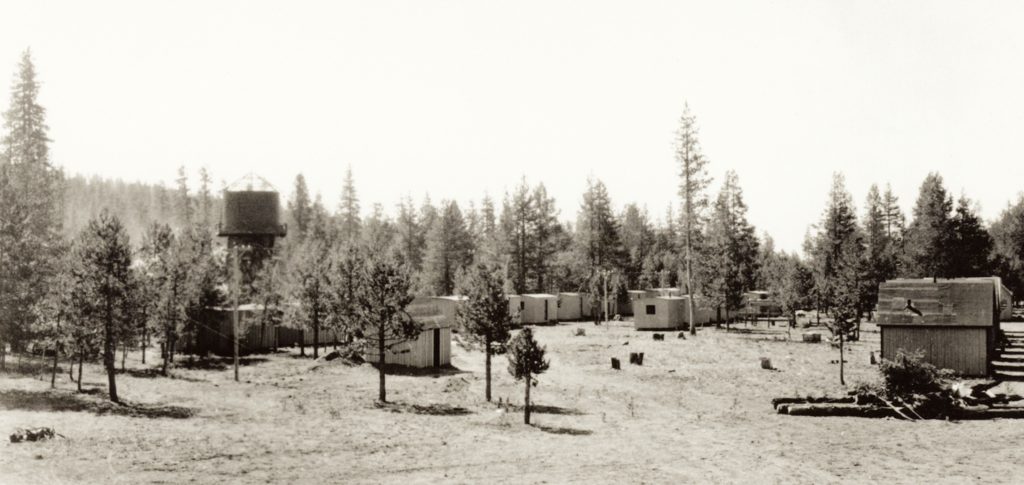
The townsite was plotted in 1913 by real estate promoters from Oakland, California. The Honey Lake Valley was a realtors dream come true in this era with so many promising developments taking place with the construction of two railroads, irrigation reclamation projects and the Red River Lumber Company’s construction of a lumber town to provide a local market for some many items. It would be one of many boom and boost cycles for Flanigan and today not much remains there.
Flanigan, 1976, courtesy of Christopher Moody
Spread the word, and encourage a friend to subscribe
Tunnel No. 2, Susan River Canyon, 1915—-D.M. Durst Collection.
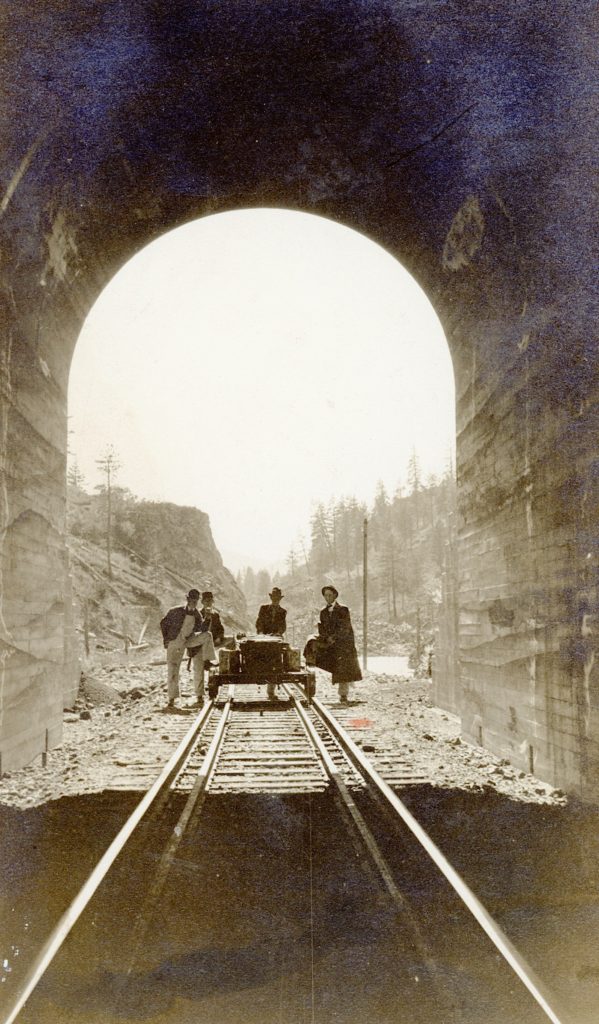
A few days ago, I wrote about a freak accident during the construction of Tunnel No. 1 of the Fernley & Lassen Railroad in the Susan River Canyon. In September 1913, tragedy struck with the construction of nearby Tunnel No. 2.
On the morning on September 11, 1913 the roof caved in sending a mass of rock debris wherein it claimed the life of J.J. Painter an engineer for the railroad. Two other men, M. Arbuckly and W.H. Robinson sustained major injuries. There were other men in the tunnel at the time of the collapse, but they were able to escape without injury. This was the first of two fatalities to occur during construction of the railroad through the Susan River Canyon.
The most challenging portion of the construction of the Fernley & Lassen Railroad came in the summer and fall of 1913. From Fernley, Nevada to Susanville there were no major obstacles. Everything changed with the terrain of the Susan River Canyon which would require the construction of numerous trestles to cross the Susan River as well as two tunnels.
In June 1913 work began on Tunnel No. 1 which required heavy blasting. It even required locating the construction camp out of harms way. The workmen, of course, were warned to seek a safe place before a blast was discharged. William Denham took the advice and positioned himself across the river some two hundred yards distance. Above him was a rocky ledge, and the force of the blast was so great that a rock was thrown passing Denham, but striking the ledge above him, causing it to loosen. A mass of rock rolled onto Denham, Initial reports had Denham’s leg horribly mangled and broken, but actually he was only severely bruised with no broken bones.
During 1930-31 when the Western Pacific Railroad was engaged in the construction of the Northern California Extension, aka the Hi-line from Keddie to Bieber, most everything went smoothly. In early August, 1931 Western Pacific officials gleefully reported that rails had reached Bogard and that they were placed at a rate of 8,000 feet per day! Things suddenly changed on August 20, 1931 60 laborers walked off the job, including the head gang of steel layers. The railroad officials summoned Lassen County Sheriff Leavitt to Camp Lasco to make sure the men did not start any violent confrontations. At dispute was the foreman had been fired on the spot. He was replaced by what the workers deemed a “foreigner” and they would not have an illegal alien as their boss. That evening the men left Camp Lasco and spent the night in Susanville. They returned back to the camp next morning to collect their pay and went their separate ways. It was a temporary setback for the Western Pacific, yet it being the depression there was a large pool of unemployed to recruit from.
Spread the word, and encourage a friend to subscribe
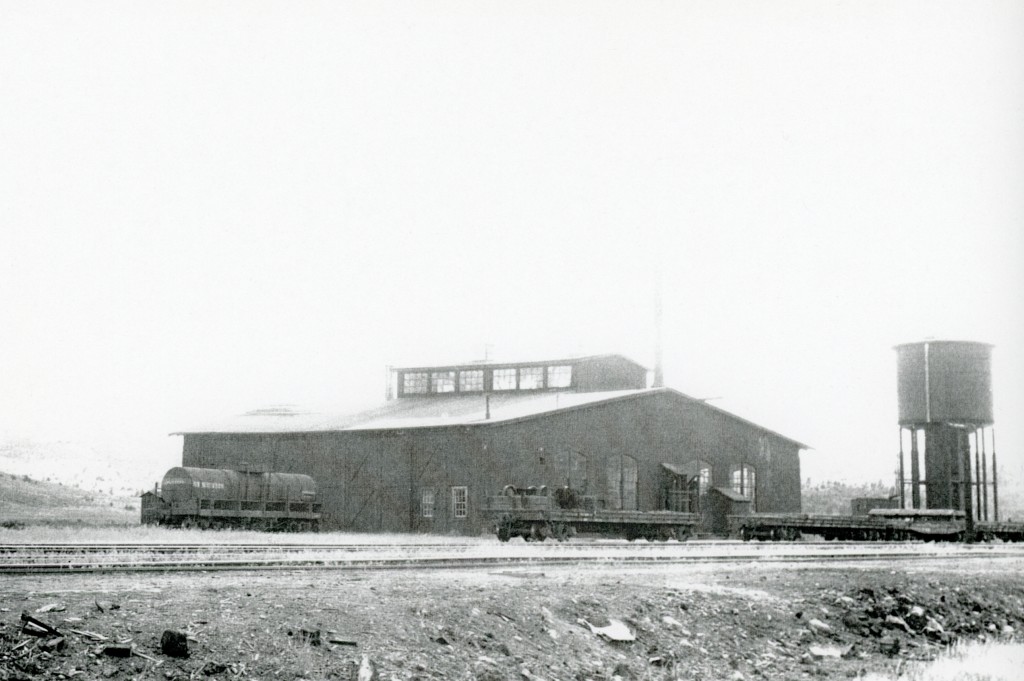
The Southern Pacific Roundhouse, Susanville, 1947. G. Dunscomb Collection
When I first wrote about this in 2015, I knew nothing about it. Since then I have gained more knowledge. The roundhouse was built in1914, and what was rather unusual it was a mile east of the Susanville Depot. Normally, it would have been much closer to the depot. However, things were complicated since all the surrounding property, though undeveloped was part of the Lassen Townsite subdivision. It must have looked extremely out of place when constructed as there was nothing in that area, since it was before Lassen Lumber and Fruit Growers.
From 1925 to 1929, Fred Abbey was foreman of the roundhouse with a crew of four It was equipped with four stalls to service and to conduct minor repairs to locomotives. Any major work was taken to Sparks, Nevada. The whole operation was short-lived as it closed down in 1930, and the railroad did not dismantle it until the 1950s. In a sense it was a fluke, as it was built on the pretense that the railroad line would be built to Klamath Falls, Oregon, but the furthest it was built to was Westwood Junction.
Spread the word, and encourage a friend to subscribe
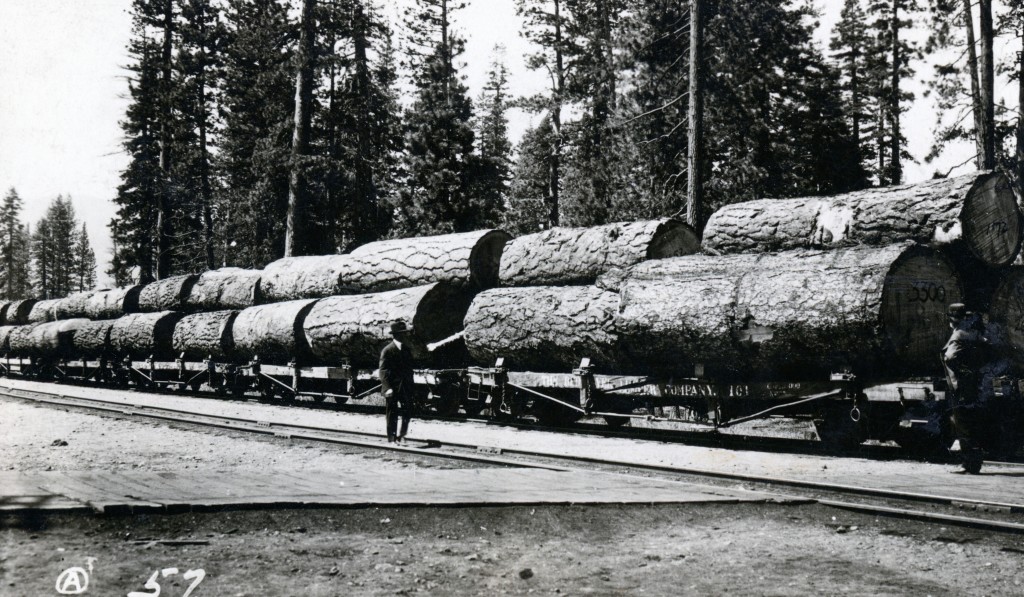
Train load of logs leaving Camp B, Fruit Growers Supply Company, 1922
A reader noticed recently the logs depicted above where on railroad flat cars belonging to the Red River Lumber Company. Fruit Growers found it to be more economical to lease flat cars from the Southern Pacific Railroad, who transported the same from Westwood Junction to the Fruit Grower’s mill in Susanville. Fruit Growers initial operations in the early 1920s, experienced a flat car shortage with Southern Pacific. Red River being a good neighbor obliged to provide Fruit Growers with flat cars until the matter could be resolved with Southern Pacific.
Another point I might add, the above was not a typical load of logs. These type of images, are common among lumber companies. They were used to show investors, bankers and the lot the most premium logs, to show them where the money was being spent. In Fruit Growers case, this photograph would be published in a portfolio to show the citrus growers where their money was used to provide them wooden boxes to ship citrus.
Rayl was one of the many railroad communities wherein the the founder had grandiose plans. Rayl was located at the crossing of two railroads—the NCO and Western Pacific. It is now known today as Herlong. Initially, Stanley Rayl who took over the 40-acre parcel of the former town of Cromwell, had no plans, other than the initial construction of a combination store and hotel.
World War I changed Rayl’s perspective and he prepared an extensive study and lobbied that this location for a proposed military training camp. While not successful, his work was not forgotten and it laid the foundation of the Sierra Ordnance Depot. While the title of property indicated it was sold in 1942, to the Standard Electrical Signal Company for $1,000 the deal fell apart and reverted back to Rayl who died in 1945. In the meantime, the federal government condemned the property for use by the army for the Sierra Ordnance Depot. Rayl’s widow opposed the government’s offer of 10 cents an acre. What was interesting former Lassen County Assessor, Frank Wemple and Lassen County Surveyor T.W. Ogilvie testified on behalf of Mrs. Rayl. Wemple stated the county had it assessed for $2.50 an acre. Both Wemple and Ogilvie went one step further and stated it was actually worth $4.50 an acre almost double of the assessed valuation. It is not clear what the final outcome of what the widowed Rayl was finally compensated.
Spread the word, and encourage a friend to subscribe.
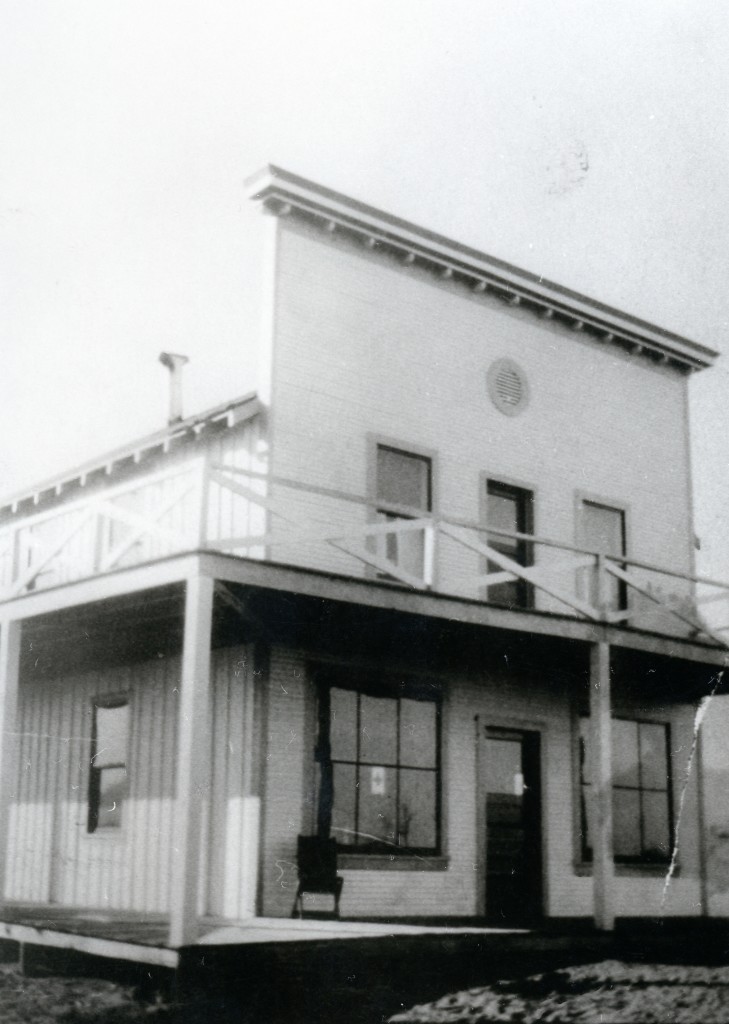
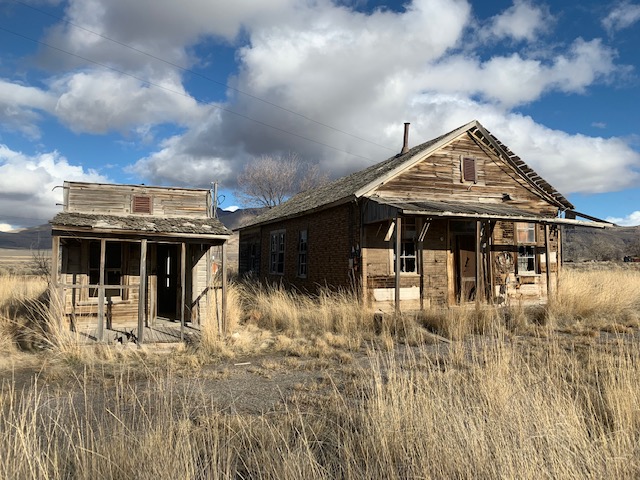
Wendel, like its counterpart, Amedee to the south, owed its primary existence to the railroads. The buildings featured above were moved to this location from Amedee. The building to the left housed the Wendel Post Office when it closed in 1993.
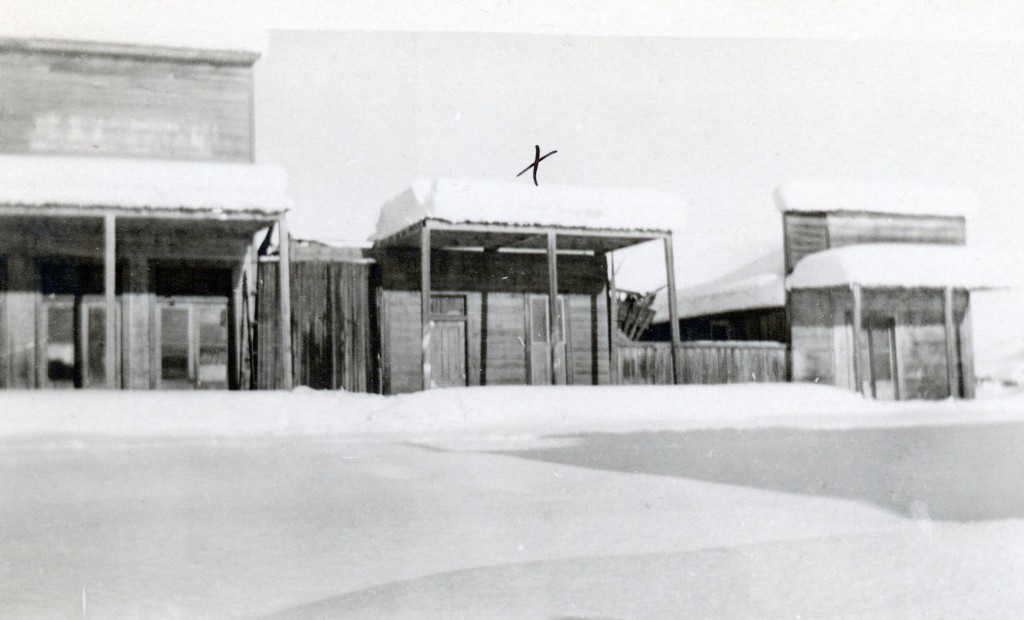
Amedee, January, 1911. The “x” indicates the town’s old dance hall. Courtesy of Madelyn Mapes Dahlstrom
The building to the far right in Amedee, before it was moved to Wendel where it found its last use as a post office.
Spread the word, and encourage a friend to subscribe.