Tag Archives: Railroads

Smithon, Lassen County

Smith’s Hot Springs Hotel, 1907

Most people have never heard of this place, when the NCO Railroad designated it as a station in 1899. Some names stick, and others do not and that is the story of Smithon, known today by many as Wendel.

In the mid-1880s, Isaac W. “Doc” Smith located at what was when then known as Upper Hot Springs. In early 1899 there were rumblings that the NCO Railroad would finally extend its line north, after a decade of being stalled for numerous reasons. On April 25, 1899, Amedee merchant Sam Johnstone wrote to his brother with some inside information: “Well railroad business is somewhat at a stand still. Now think Amedee will be moved to Doc Smith’s place. That is where those warm springs are. They have built a side track there and have leveled it up. Will also build water tank that holds 42,000 gallons of water. Mr. Gest calls the place Smithon. They expect to move the shipping corral up there for fall shipping of stock and think the Depot for Honey Lake merchants will be there. The railroad is not doing much work now as they are out of steel [rails].”

Amedee was not moved to Smithon, but Doc Smith, in 1901, had a building moved from Amedee and then enlarged as a hotel. In 1910, the hotel was destroyed by fire, and the NCO designated the location as Boyd.

Support
 

Skagit Speeders and Camp 10

Crummy
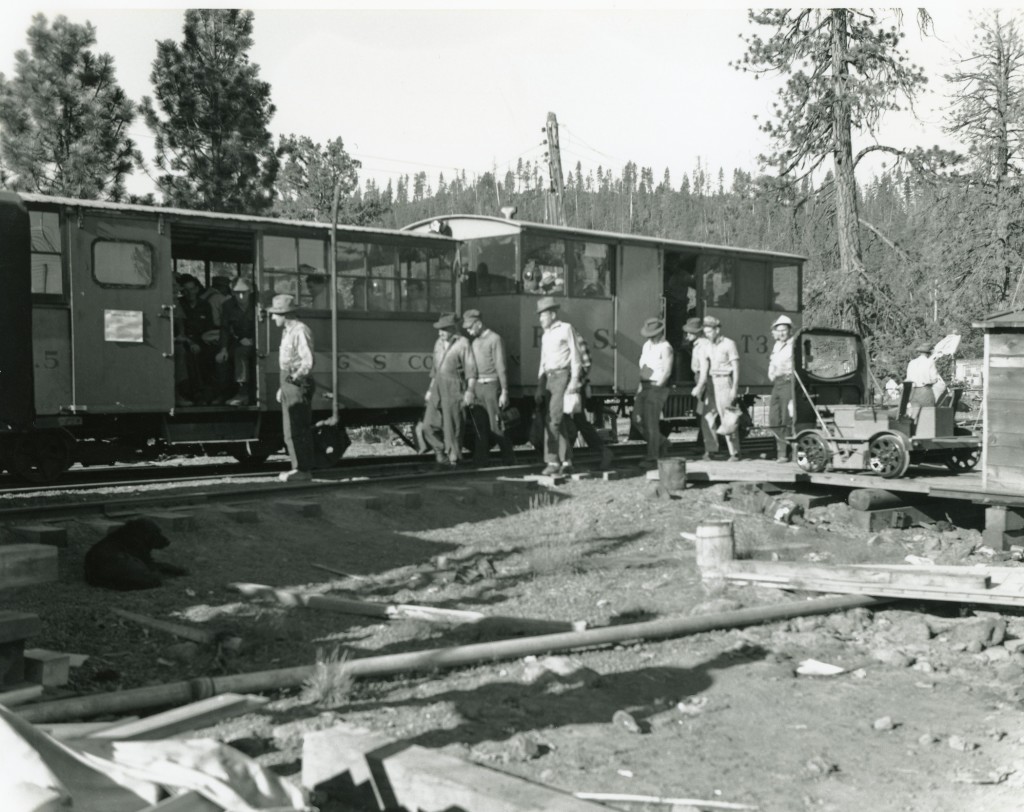
Speeders at Camp Harvey, 1947

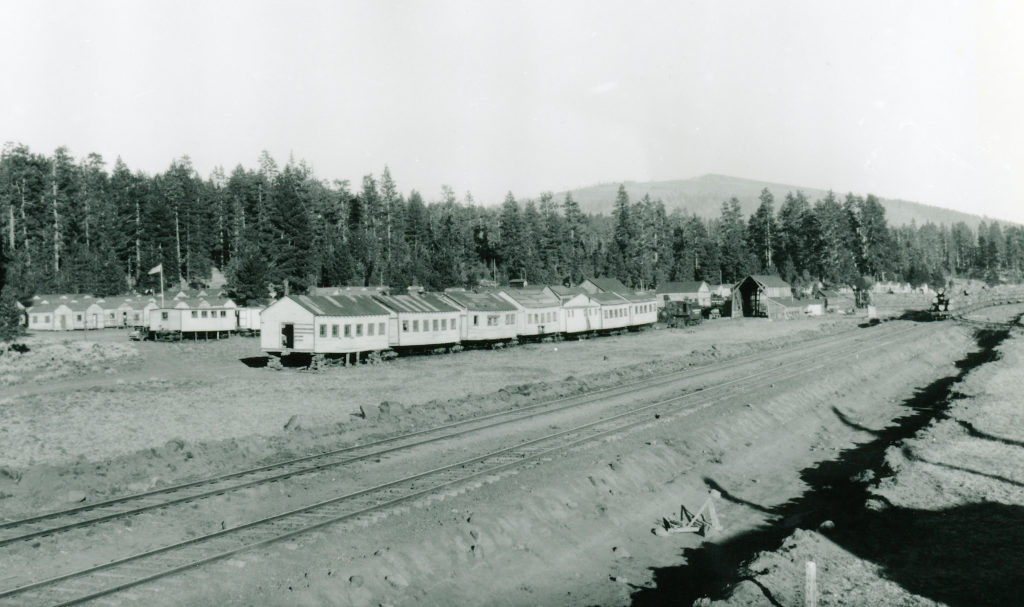
In 1932, the Fruit Growers Supply Company purchased two Skagit speeders to be used in their railroad logging operations at Camp 10.   The speeders were an economical and easy way to transport loggers to the work site from the logging camp.

Herman Baumann, Fruit Growers woods superintendent best summed it as: “Our Skagit speeders permit us to maintain a permanent camp eliminate cost of frequent moving and provides cheap transportation to and from camp without interfering with logging trains.”

Fruit Growers Supply Company, Camp 10, Pine Creek Valley, 1932.

In 1928, Fruit Growers began preparing a new logging camp, designated Camp 10, located in the northeastern corner of Pine Creek Valley. Its layout would be largest of its preceding nine camps—with the unique distinction in a short time would be the company’s only logging camp. With the introduction of Skagit speeders converted Camp 10 one from a temporary status to a permanent one. Camp 10 operated through the logging season of  1952, the last railroad logging camp to operate in Lassen County.

Support

The Naming of the Madeline Plains

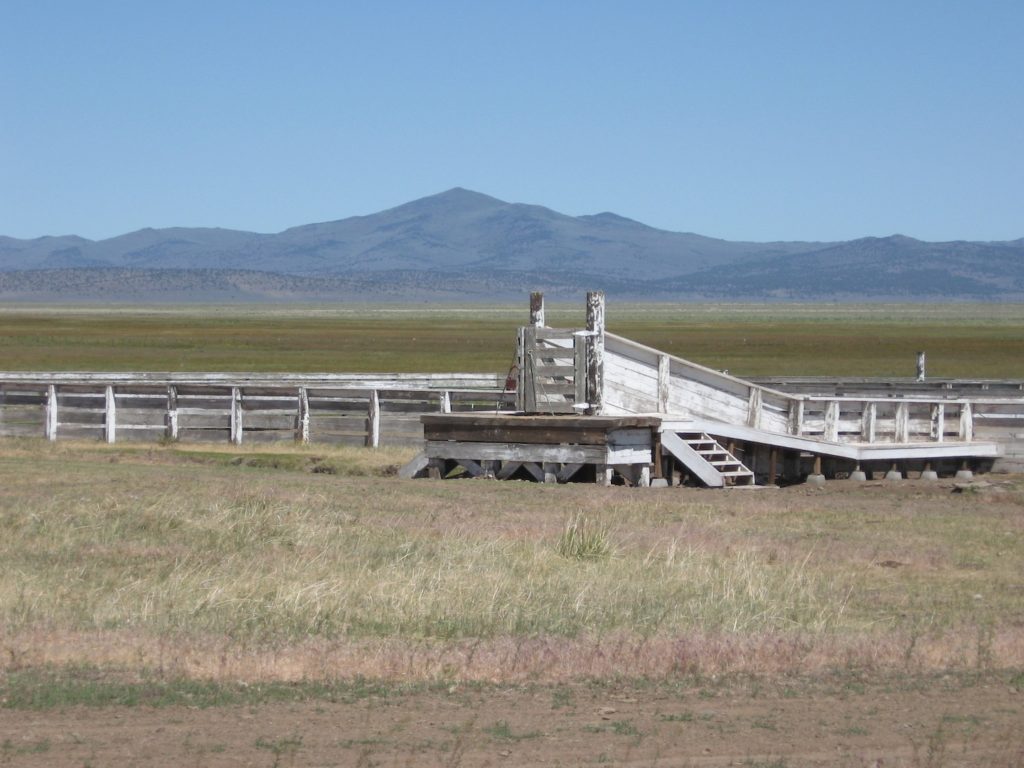
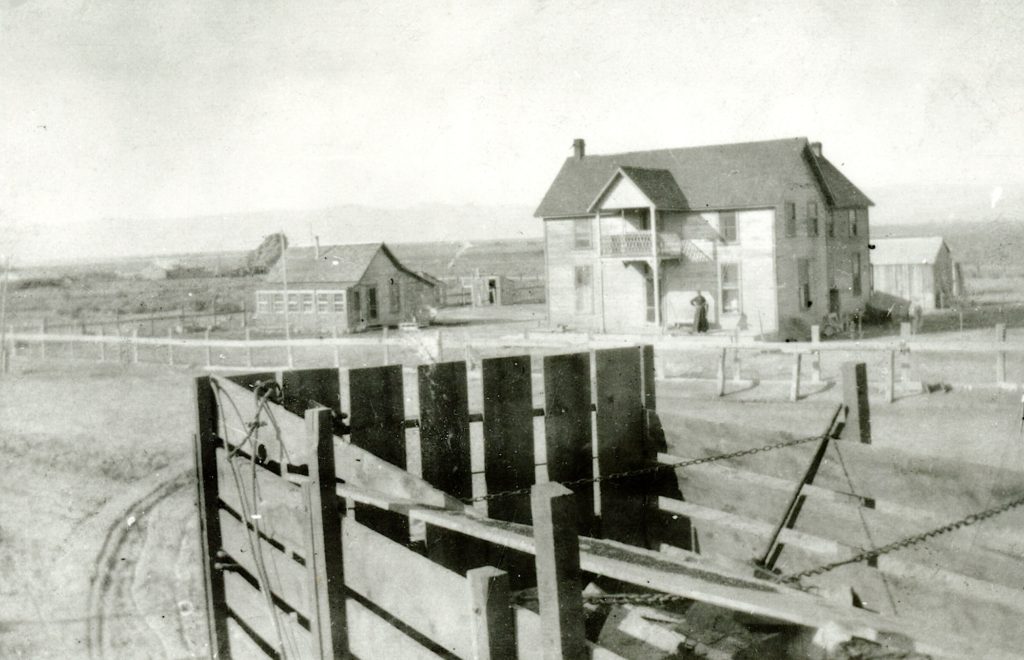
The site of the original McKissick Ranch on the Madeline Plains. It was the first place settled on the plains.

The Madeline Plains in northeastern Lassen County was one of the earliest places named in the county.  In 1853 Congress passed the first Act concerning exploration and surveys for a transcontinental railroad route. Lt. E.G. Beckwith of the Third Artillery was in charge of one of these explorations. Beckwith surveyed Northern California and Western Nevada region in search of a pass over the Sierra Nevada Mountains. In late June 1854, Beckwith entered the Madeline Plains via Smoke Creek Canyon and the east side of Observation Mountain. He named this the Madeline Pass for his daughter Madeline Julia, born January 25, 1853 at New London, Connecticut.  It should also be noted a week later Beckwith named Eagle Lake.

According to folklore attributed the name to an emigrant girl, named Madeline, who was murdered by the Indians in the 1850s. H.T. Risdon who established a sawmill on Bayley Creek in 1912 is credited for that tale.

Finally, it should be noted the Paiute name was Musitzi, though the meaning has been lost through the years. In addition, the Paiute’s territory was for the eastern portion of the Madeline Plains and the western half was the domain of the Pit River.

Become a supporter for just $5 a month to ensure quality history continues. Click here.

Litchfield Depot Plea

Litchfield Depot of the Fernley & Lassen Railroad, 1947. Courtesy of Camilla Moody

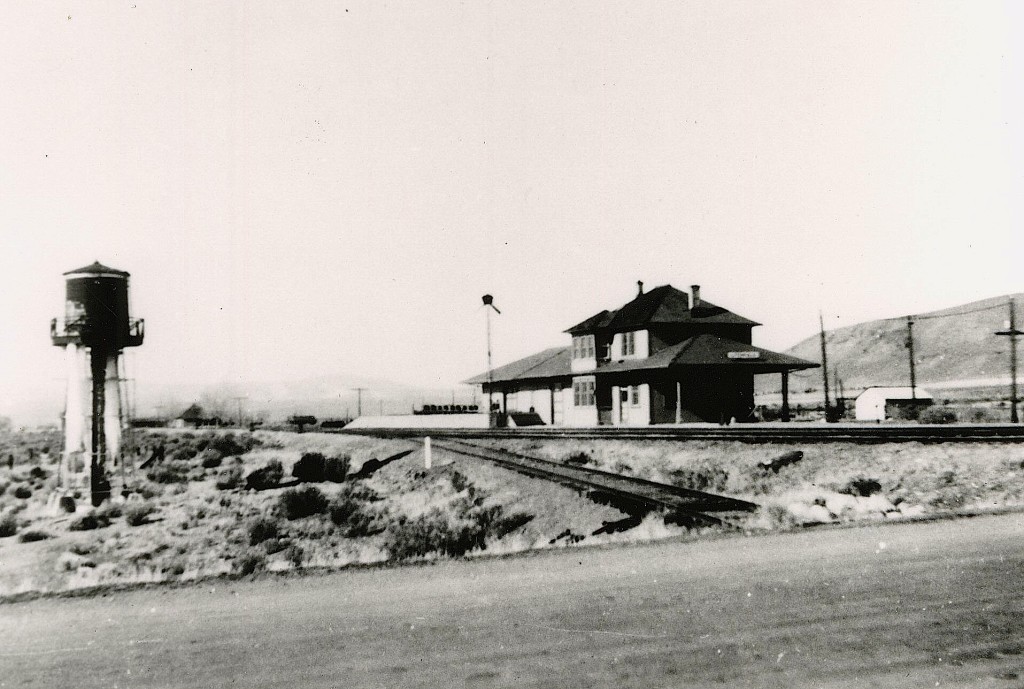
One never knows, until you ask. Thus, that is the case today. The Southern Pacific Depot at Litchfield is something I know hardly anything about. It was built 1913/14 and was the railroad’s Common Standard Plan #22. It is the same plan used for the depot at Fernley, Nevada.

Considering that it was a substantial structure for that region, the above photograph is one of only  two I have that I have come across.  For all the activity that took place there, information is nearly non-existant. I do not even have a clue as to when it was shut down and/or also dismantled. If anyone can enlighten me, that would truly be appreciated.

Support

Before the Bizz

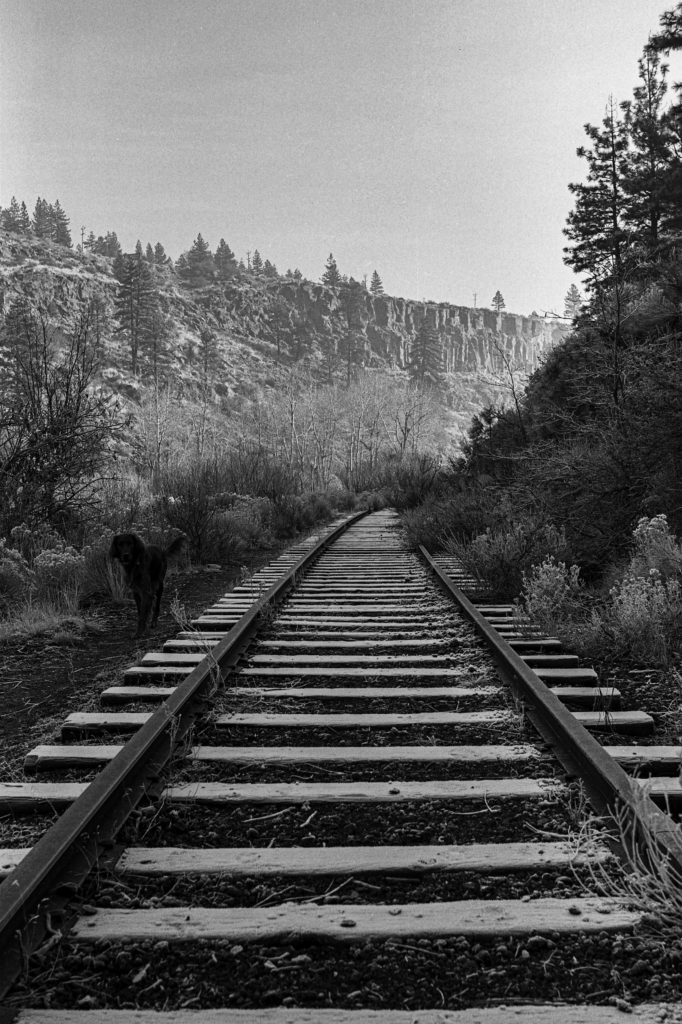
Looking east in the Susan River Canyon with Pigeon Cliffs in the background—David Bricker

In December 1955 major flooding in the Susan River Canyon did considerable damage to the Southern Pacific’s rail line. With the pending closure of Fruit Growers Westwood mill in 1956, railroad officials decided not to make any repairs, since there were be little if any traffic. The line was closed from Mason Station to Susanville, but not abandoned. Theoretically, if someone wanted to ship something by rail from Susanville to Westwood, or vice-versa Southern Pacific was obligated and could only charge the railroad freight rate between the two places. On the other hand it would be costly for the railroad to pay a third party to make the delivery.

In 1976, the Southern Pacific filed for the abandonment of this segment of the line. The foundation was laid for the rails to trails conversion to become what is informally known as the “Bizz.”

Support

Hot Springs Station, Lassen County

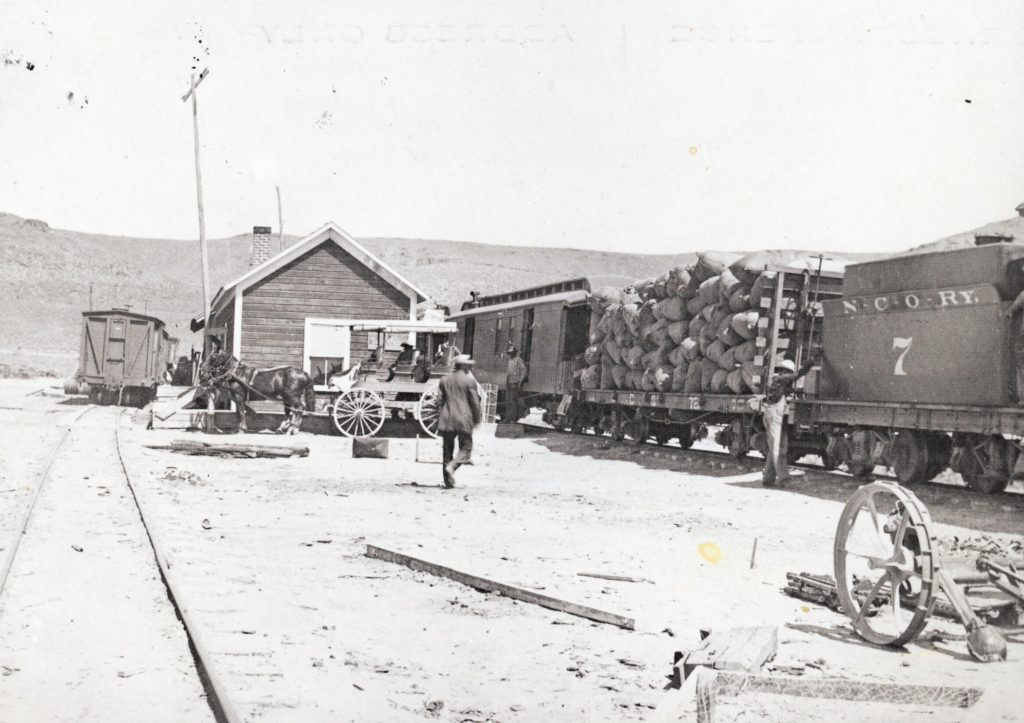
Hot Springs Station would later become Wendel. This scene is dated 1899–Tom Armstrong

No one would have ever thought that Amedee would be the terminus of the Nevada-California-Oregon Railroad (NCO) for nearly a decade.  It certainly was not the railroad’s plan. However, the nation’s financial crisis of 1893 coupled with a national railroad strike brought a lot of activities to a screeching halt.

In January 1899, without any fanfare the NCO finally jump started its northern extension. Five miles to the north the railroad established its Hot Springs Station, known today as Wendel. Some had aspirations that it might become a new “Amedee.” However, that would not be the case. What Hot Springs did receive was a bunch of camp followers. This rag-tag group peddled alcohol, gambling and prostitution. By the time, the Lassen County District Attorney could crack down these activities, not only had the railroad continued to build north and the followers fled to more profitable locations. Hot Springs Station heyday did not arrive until after it became Wendel and the demise of the NCO. In 1927 the Southern Pacific Railroad began the conversion of the NCO from narrow to standard guage.

Support

Liegan, Lassen County

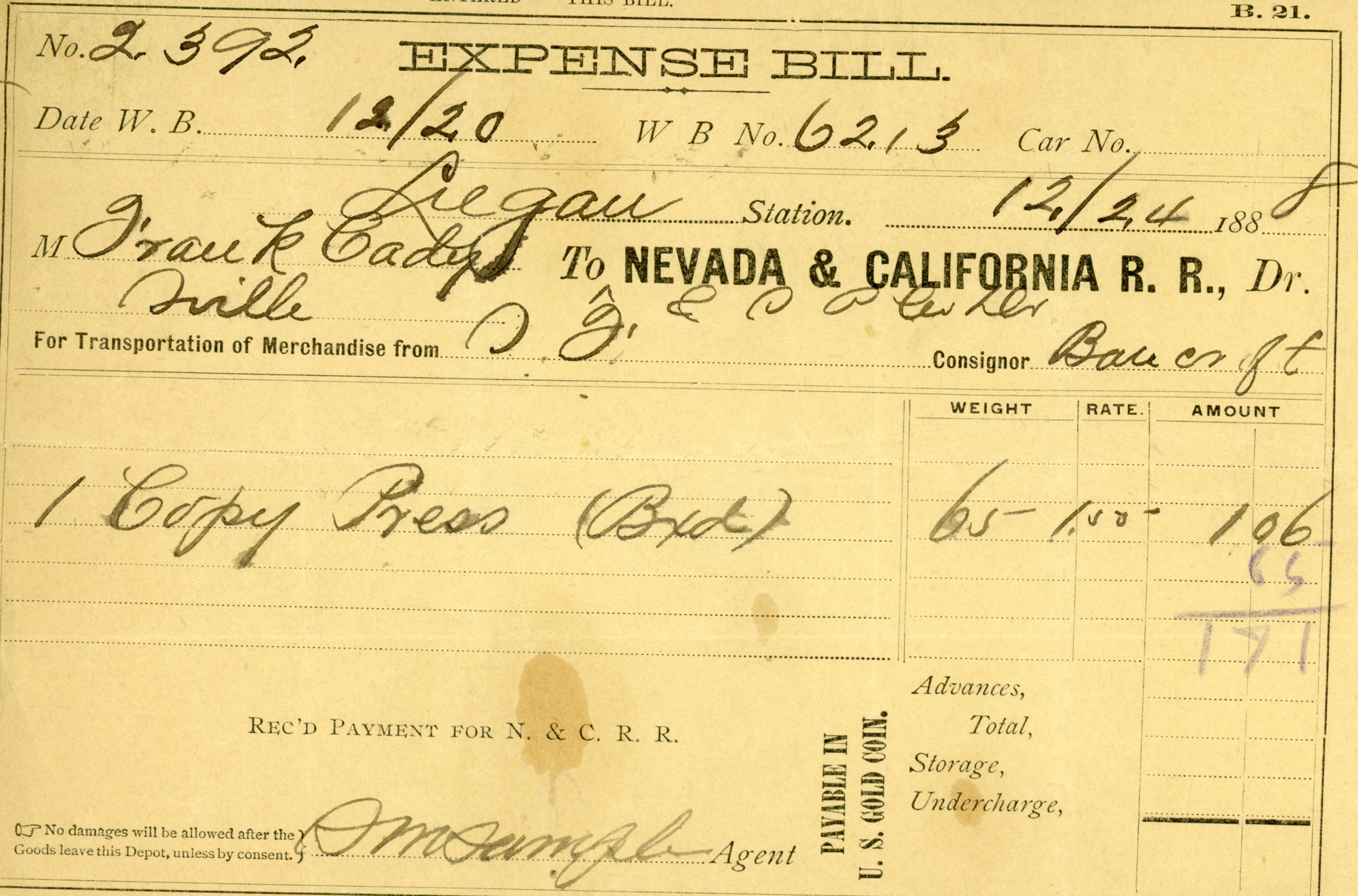
Liegan bill368

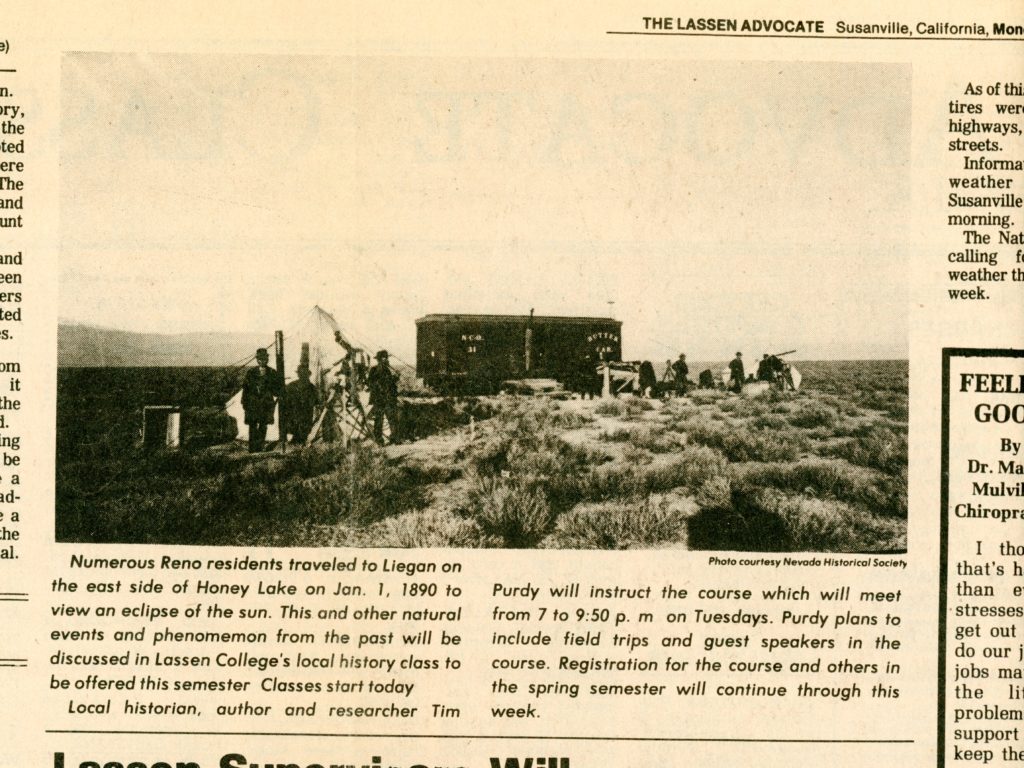
Liegan was a  Nevada-California-Oregon Railway (NCO) station that was located a bit north and east of present day Herlong.  On September 10, 1888 it became the new terminus for the railroad. It was a desolate outpost to say the least, surrounded by miles and miles of sagebrush, but not a single living soul in the immediate region. Of course, the decision of the NCO to bypass the west side of Honey Lake for the east drew lots of criticism, a topic for another time. Its location was too remote for the railroad to generate any freight traffic. One of its biggest claim to fame occurred on January 1, 1890 when numerous sight seers from Reno ventured there to view the eclipse of the sun. By that summer, the railroad extended its line farther north to Amedee, which quickly overshadowed Liegan. In the fall of 1890, Elmer Koken who traveled to Amedee on the NCO remarked that the Liegan station consisted of a box car. On April 9, 1891, the Liegan Post Office closed after an existence of eight months.

A printed copy of my news release when I taught a history class at Lassen College. However, the photograph was not returned.

There was a glimmer of hope and Liegan would be  revived in 1909-10 by the railroad. The Standish Water Company had just built a pumping plant on Honey Lake, near there with the intention to reclaim the sagebrush plain into a major sugar beet production region. That failed, and Liegan’s hopes too. It is interesting that a 1915 soil survey designates the site as Italy.

Subscribe today and tomorrow enjoy with daily notifications.


Wendel By Another Name

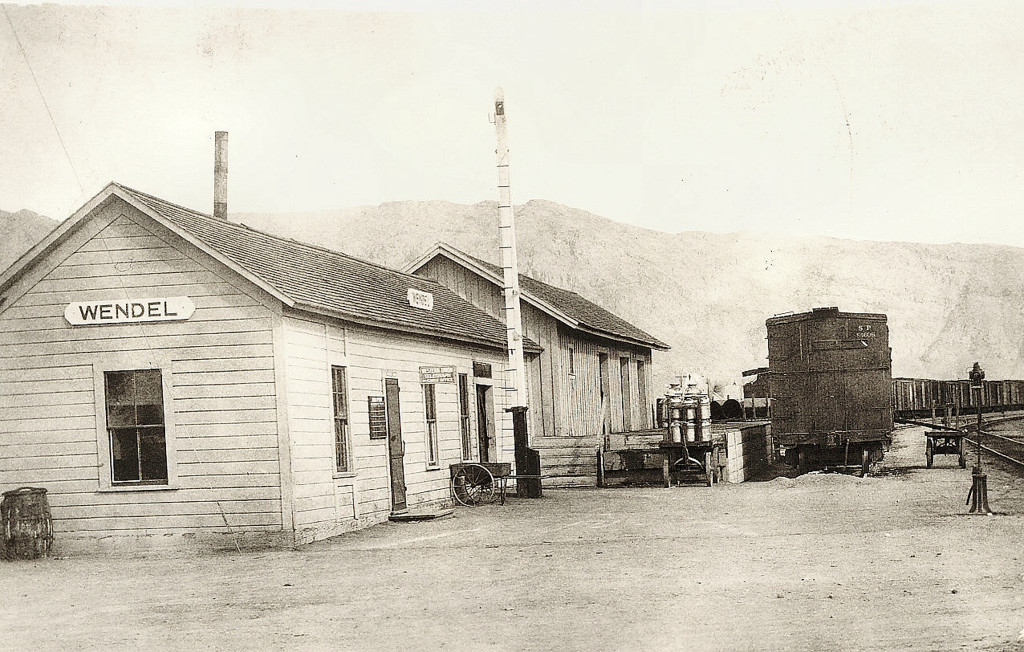
Wendel Depot. Courtesy of Aldah Riesenman

There were actually two stations on the Nevada-California-Oregon Railroad (NCO) named Wendel. The first Wendel station came about in 1911 and was located between New Pine Creek and Lakeview, Oregon. It was a very short-lived operation.

Wendel in Lassen County was not designated until 1915. For years the NCO referred to that place as Hot Springs. Yet, the post office there established in 1902, was named Purser, after Edward T. Purser a nearby rancher who developed Ward Lake to irrigate this property.

In 1912-13 with the construction of the Southern Pacific’s Fernley & Lassen Railroad, they named their station there as Caloreta. This created a great deal of confusion. The NCO designation of Hot Springs, the postal authorities as Purser and the Southern Pacific as Caloreta. In 1915, all three entities agreed to name it Wendel.  It was so named after Charles deWendel, who was not only an investor in the NCO, but friends with the Moran family who owned the NCO.

Donate

No Time to Spare

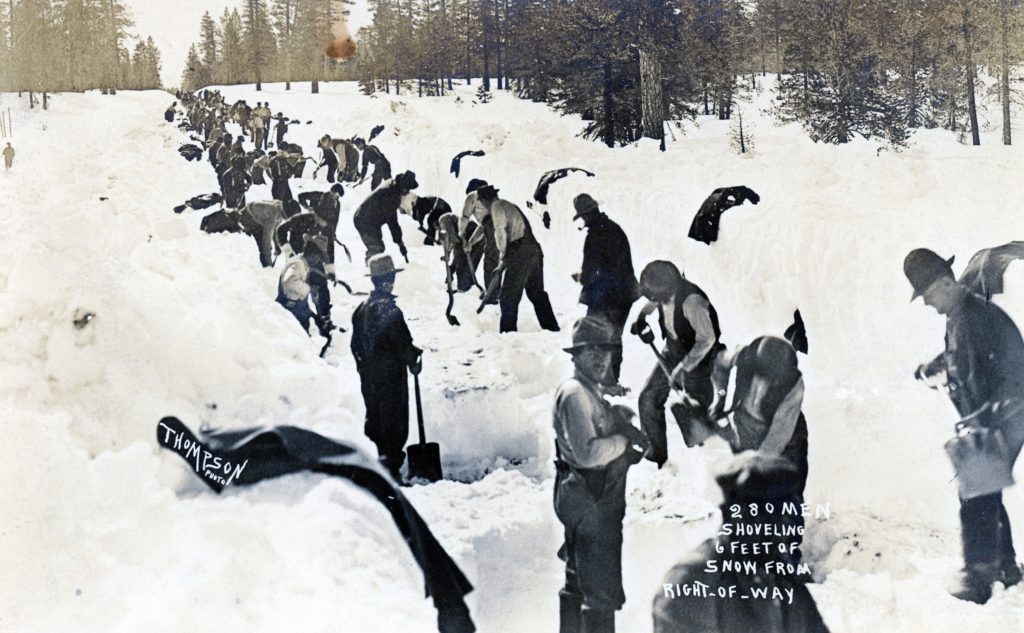
Snow Shovelers clearing the right-of-way in six feet of snow, January, 1914—B.R. Zimmerman Collection

On January 29, 1912, the Red River Lumber Company and the Southern Pacific Railroad entered into an agreement for the construction of the Fernley & Lassen Railroad. Time was essential, with completion date of two years. Red River already had a contractual obligation with Great Western Power Company to remove the timber from Big Meadows, which would be flooded to create Lake Almanor in 1914..

The line would extend from Fernley, Nevada to a point west of Susanville to be named Westwood Junction. At that point a nine-mile spur would be built south to the soon to be company town of Westwood.

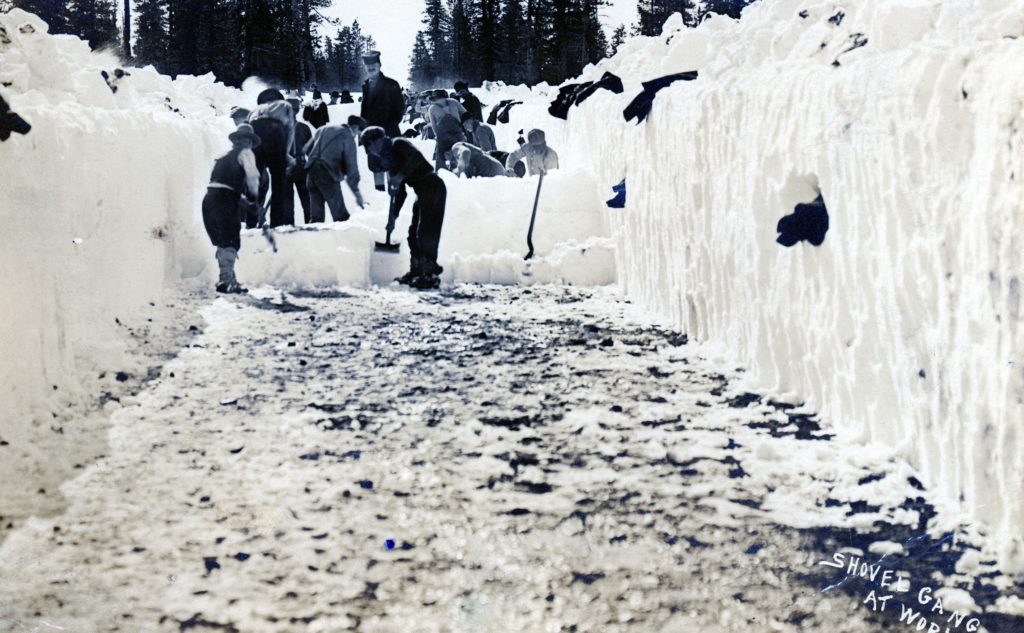
A daunting snow removal task on the Fernley & Lassen Railroad, west of Susanville.—-B.R. Zimmerman Collection

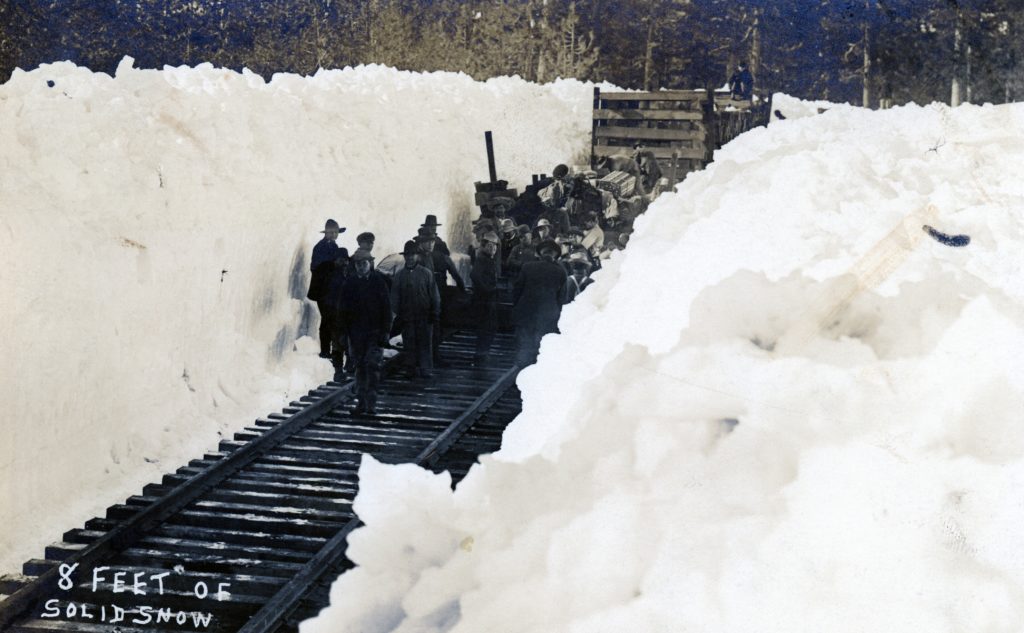
By the fall of 1913, the tracks had reached Susanville. The most formidable task was the Susan River Canyon, wherein the Southern Pacific put 1,000 men to work to meet the January 1914 deadline. However, Mother Nature had a mind of her own, and lashed a series of record breaking storms. Even with eight feet of snow in Susanville during January 1914, was not  a deterrent for the construction. Though due to the unusual circumstances Red River and Southern Pacific agreed upon a two-month extension to the deadline.

Construction of the Fernley & Lassen Railroad, west of Susanville, January 1914. Courtesy of B.R. Zimmerman Collection

On February 21, 1914 the rails reached their destination to Westwood. It would not be until fall when all work was completed such as ballast and sidings.

Support


Wendel’s Milepost Inn

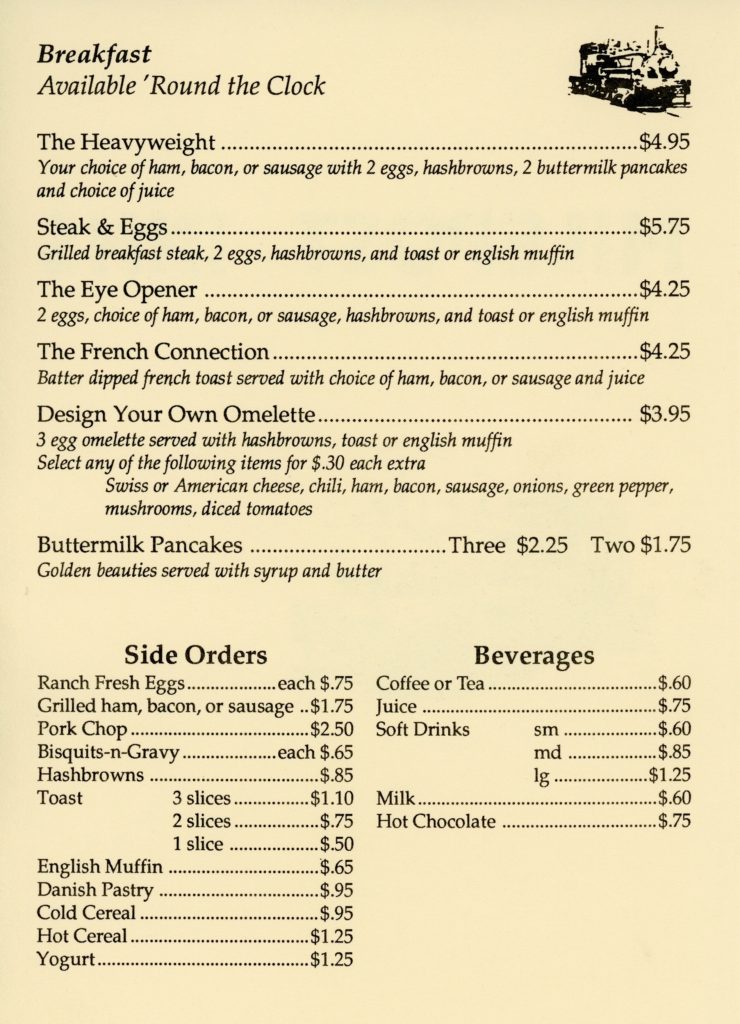
In a certain way, this was the region’s best, yet least known, eateries. Located in the railroad community of Wendel the establishment served two purposes. One side of the building provided sleeping accommodations for railroad employees during their down time. The other was the restaurant to feed the railroad workers, since the trains came through all hours of the day.  The Milepost Inn was a twenty-four operation.

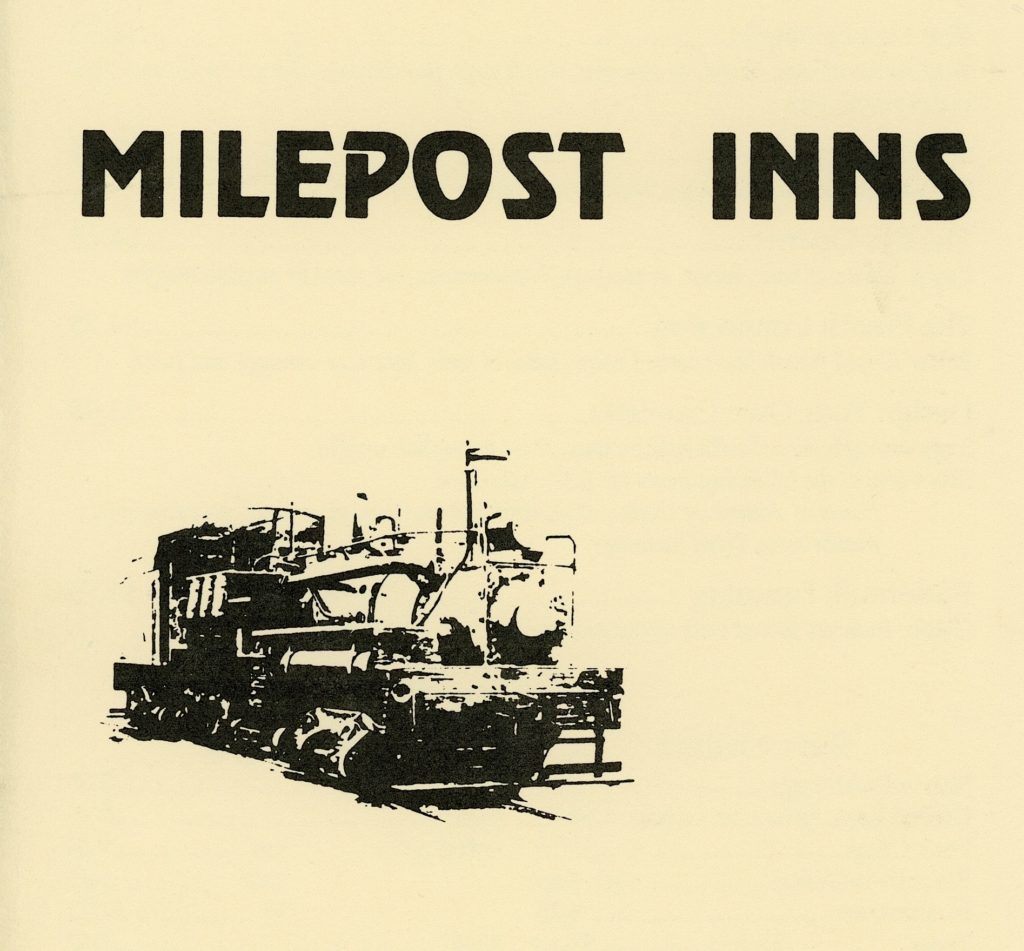
The Milepost Inn did welcome locals to stop by and dine. While it had a no frills ambience, the food was first rate and cheap—subsidized by the railroad. Personally, I liked their buttermilk pancakes. There is more to the story, on a personal note. One day, in late January 1997, Ginger Martinez and I escorted Linda Kennedy to the Milepost Inn for her birthday brunch. Little did we know, it was the Milepost Inn’s last day. This was due to the fact the railroad had abandoned the line from Wendel to Likely in December. I asked if I could have a menu, and they kindly obliged. The next time I visited Wendel the building had been demolished.

Donate