Tag Archives: Politics

Honey Lake Valley’s Jefferson Davis Supporters

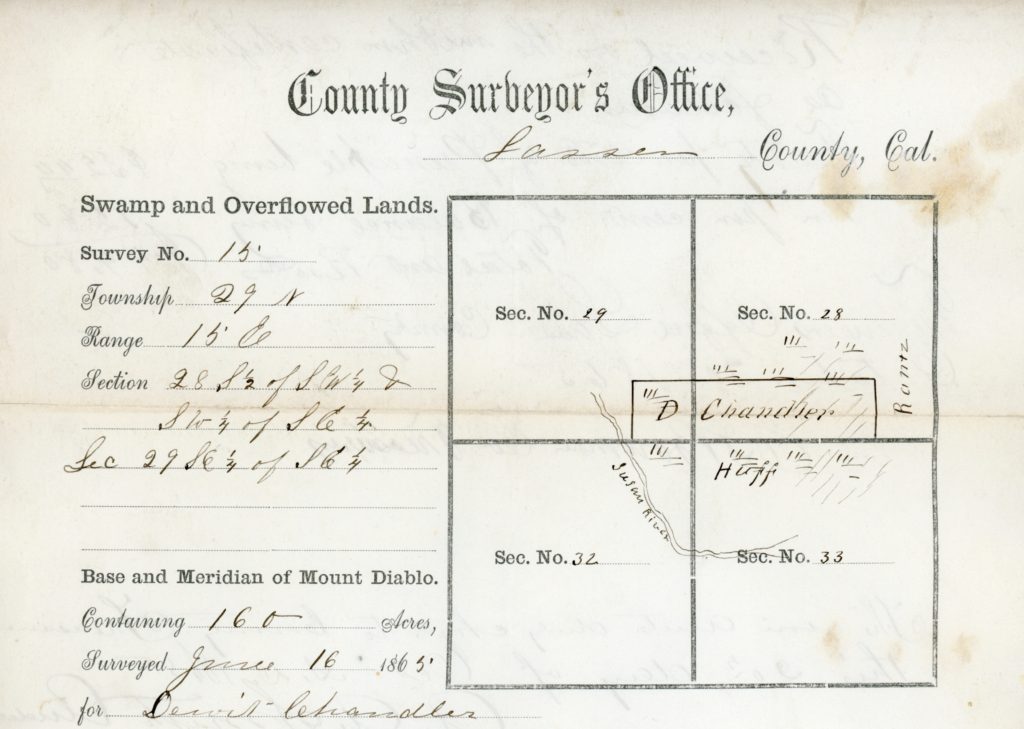
Chandler’s land claim.

While national news headlines occur nearly daily about the removal of statutes commemorating Confederate leaders, I thought I would provide a brief glimpse of some Civil War matters that occurred locally in the 1860s.

The Honey Lake Justice Court case files provides an interesting glimpse. There were three note worthy cases that appeared on the docket. The first involved Charles Mulkey. On November 9, 1863, Mulkey was noted for his open and boisterous cheering on the streets of Susanville for Jefferson Davis, President of the Confederate States. Criminal charges were filed against him. He pled guilty and was fined $25.

Meanwhile down in the Tule Confederacy, now better known as the Standish district, matters became a bit more turbulent. The region was experiencing quite an influx of settlers, causing boundary disputes and claim jumpers. DeWitt Chandler had his problems with these skirmishes with his neighbors George and John Purcell. The first incident occurred on December 22, 1863 when George Purcell was burning tules when the fire spread and destroyed one of Chandler’s haystacks. It was Chandler’s contention that the fire was intentional and related to Purcell’s loyalty to the Confederate States. Purcell was arrested and brought to trial where a jury found him not guilty. The following spring John Purcell set fire to Chandler’s house, claiming it a victory for the Confederate States. However, there is no record of the results of the charges of the incident. Yet, there is an irony in the tale and that is in August 1864 John Purcell lodged a complaint with the District Attorney seeking the arrest of John H. Harbin who publicly denounced the United States and proclaimed allegiance to the Confederate States.

Spread the word, and encourage a friend to subscribe
Seen Better Days

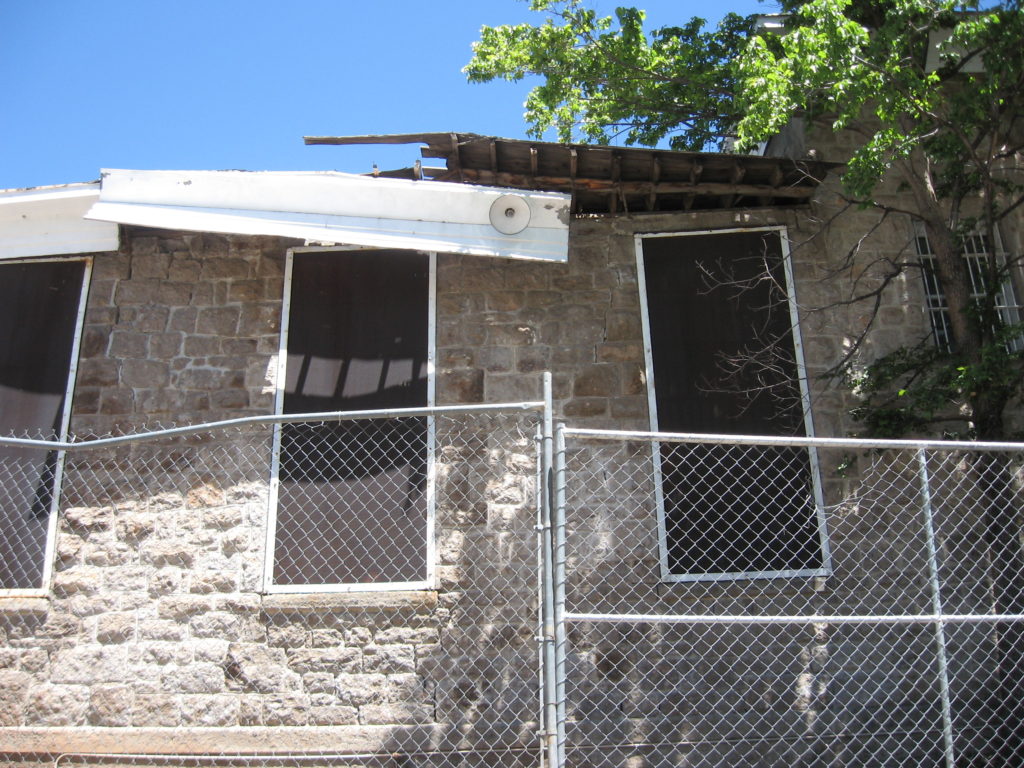
The old Lassen County Jail, May 25, 2020

On my way back from the Susanville Cemetery after taking flowers there for Memorial Day, one can see the a portion of the roof of the old Lassen County Jail has caved in.

The building was shuttered in 1971 and has since become a “political football” of sorts. Numerous groups over the years have presented proposals to preserve the jail built in 1911. County officials on the other hand would listen, but no action taken. There is a bit of irony in this saga, as currently the county courthouse, next to the jail is going through a $8.4 million rehabilitation process.

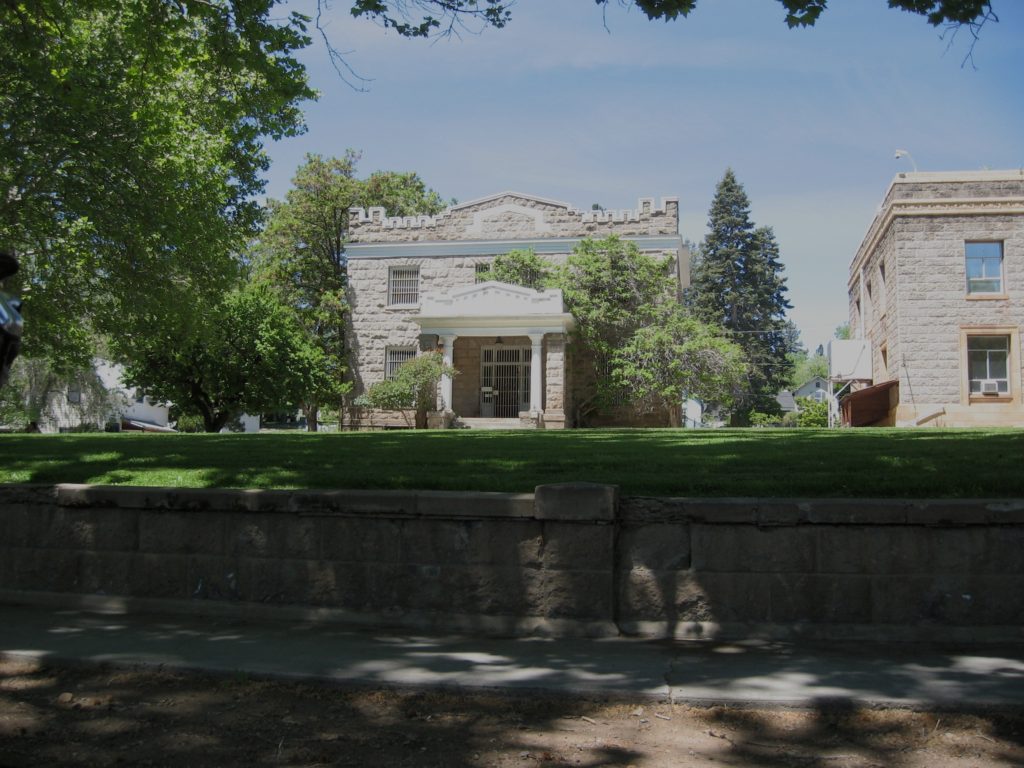
The front of the jail, May 27, 2020.

At least the front of the jail appears to be holding its own. Many may not realize that it has been used as a backdrop of weddings performed at the Courthouse.

Spread the word, and encourage a friend to subscribe
The Millpond Excavation

Theold millpond site, May 25, 2020

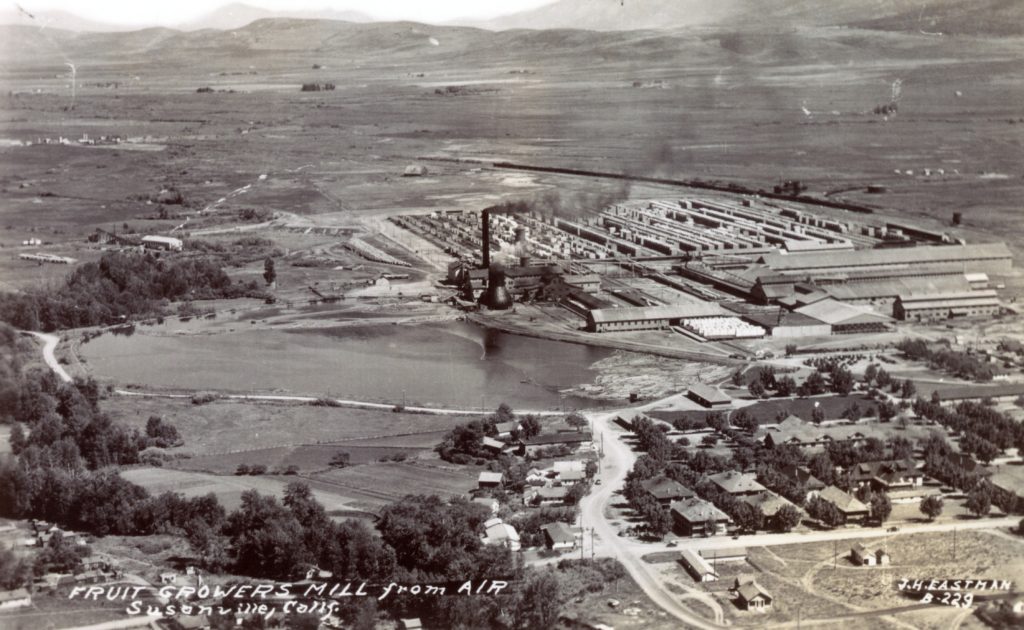
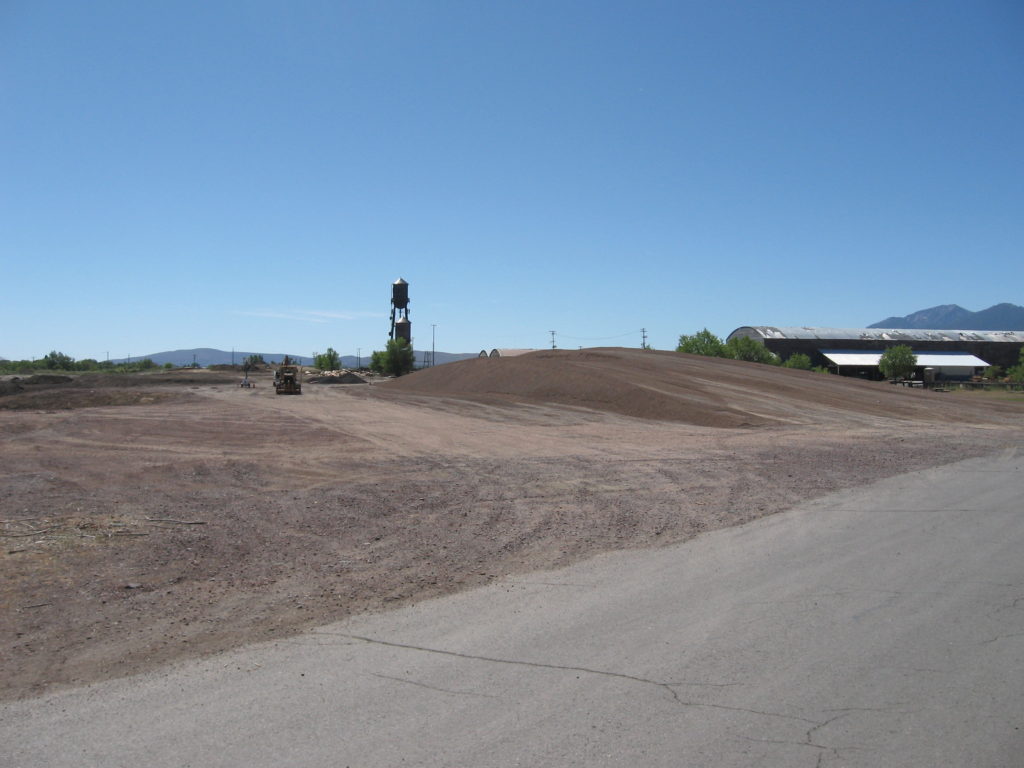
Locally, the $64,000 question has been what is going on with the excavation of the old Fruit Growers/Sierra Pacific millpond site adjacent to Riverside Drive. Some readers may recall that in the Spring of 2018 I wrote about the property being placed on the market by Smith Properties. The property falls under county jurisdiction. As it has been relayed the property is being prepared as a parcel split—a joint venture of Hat Creek Construction and Nobles Construction. However, certain procedures have not been followed. I will bring this matter up at Tuesday’s June 2, Lassen County Planning Commission meeting, since certain officials have not responded to my request.

Fruit Growers Supply Company, 1936

Spread the word, and encourage a friend to subscribe
The Last Vestige of Rayl

Rayl
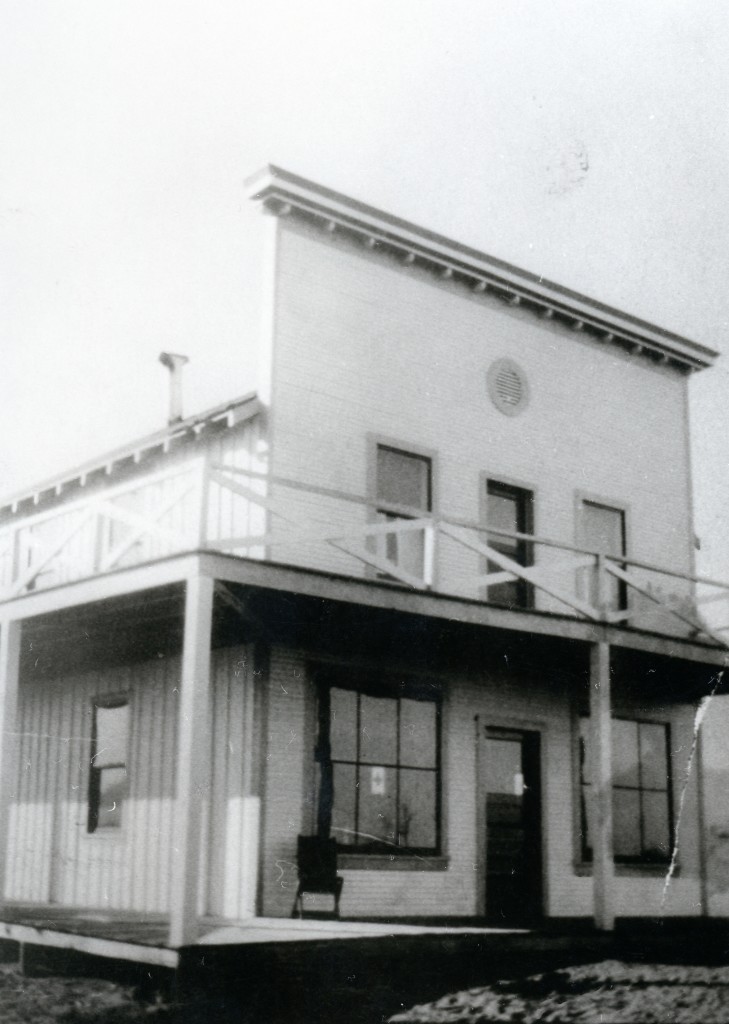
The Rayl Hotel. Courtesy of Tom Armstrong

Rayl was one of the many railroad communities wherein the the founder had grandiose plans. Rayl was located at the crossing of two railroads—the NCO and Western Pacific. It is now known today as Herlong. Initially, Stanley Rayl who took over the 40-acre parcel of the former town of Cromwell, had no plans, other than the initial construction of a combination store and hotel.

World War I changed Rayl’s perspective and he prepared an extensive study and lobbied that this location for a proposed military training camp. While not successful, his work was not forgotten and it laid the foundation of the Sierra Ordnance Depot. While the title of property indicated it was sold in 1942, to the Standard Electrical Signal Company for $1,000 the deal fell apart and reverted back to Rayl who died in 1945. In the meantime, the federal government condemned the property for use by the army for the Sierra Ordnance Depot. Rayl’s widow opposed the government’s offer of 10 cents an acre. What was interesting former Lassen County Assessor, Frank Wemple and Lassen County Surveyor T.W. Ogilvie testified on behalf of Mrs. Rayl. Wemple stated the county had it assessed for $2.50 an acre. Both Wemple and Ogilvie went one step further and stated it was actually worth $4.50 an acre almost double of the assessed valuation. It is not clear what the final outcome of what the widowed Rayl was finally compensated.

Spread the word, and encourage a friend to subscribe.

Byers County

Byers' Store
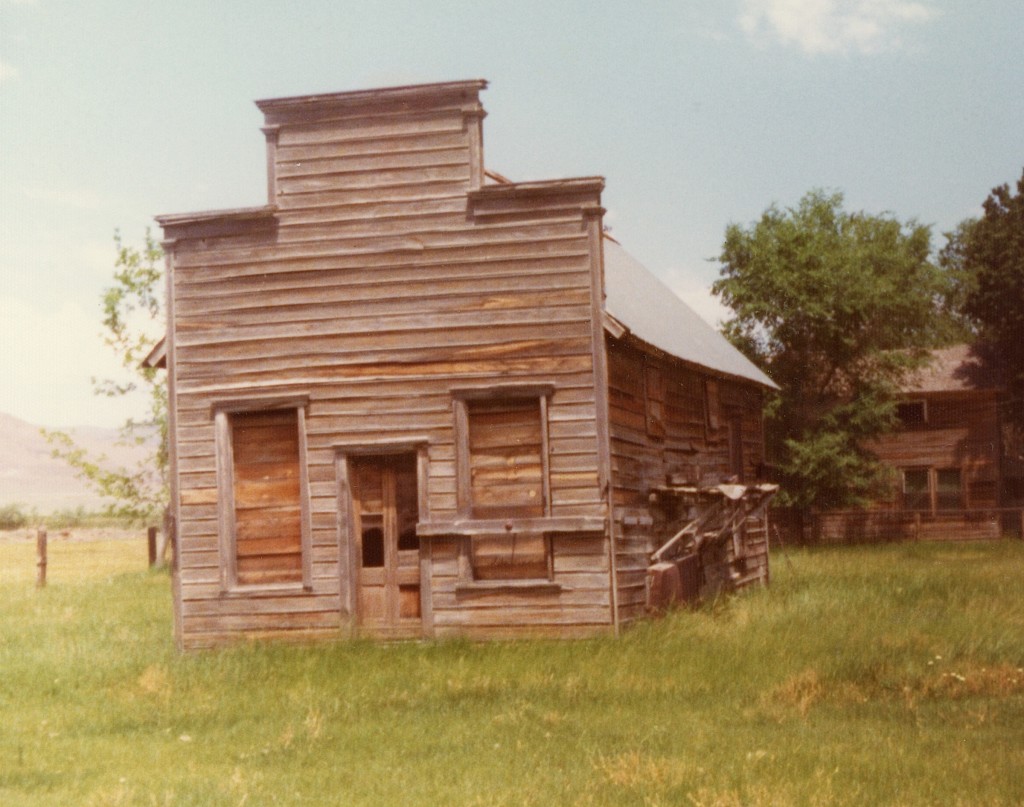
Byers’ old Baxter Creek general store that was later moved his Tule ranch and operated by his nephew, Jim McClelland, May 1975

Today, is Lassen County’s birthday, it being created on April 1, 1864. Many people may not realize but the original proposed name for Lassen County, was Byers County. So who was Byers, and why was he to be honored? In 1858, James Davis Byers (1825-1902) purchased some property along Baxter Creek near Janesville. However, he remained a Quincy resident for sometime. In February 1863, Byers served as a Plumas County Deputy Sheriff, and played a significant role in the Sagebrush War. The final result of that conflict led to the creation of Lassen County the following year. Plumas County Assemblyman Robert A. Clark introduced the legislation to create the new county. Clark proposed to name it Byers County, but Byers declined. Byers suggested that it should be named after Peter Lassen, and thus the Lassen name was applied to the new county.

More about Byers in a later post, though by 1880 he was one of the ten wealthiest people in Lassen County.

A consolidated Park District?

A view of Susanville’s Memorial Park from Main Street, 1947

The creation of a municipal park was fraught with numerous hurdles. Actually, the park movement began long before the creation of the City of Susanville.

By the 1920s, the ideal location for a park was the meadow land east of Weatherlow Street to Grand Avenue with Main and North Streets rounding out the boundaries. This was problematic for the City of Susanville, since it was outside the city limits. A proposed City and Lassen County Park District seemed a like a solution. Besides the city, the district would encompass subdivisions to the east such as Halltown, Milwood Tract and Lassen Townsite. It was met with fierce opposition by county officials. At the December 1929 Lassen County Board of Supervisors, the matter went to a sound defeat of 4 to 1.

The City never gave up, and when the property was annexed to the City in 1947, the park became a reality.

Subscribe

“Haight in ‘38”

Bank of America, Main & Gay Streets, Susanville

California, has moved its entire primary election to March (there are some out-of-state subscribers who may not be aware of this fact) so with a week to go, and being bombarded with political ads, check out this campaign propaganda from 1938. Does it sound familiar?

In 1938, Raymond Haight made his second attempt to run for governor of California. He ran as a Progressive, being a centrist between the Republicans and Democrats. On the evening of August 3, 1938, about 250 people assembled outside the Susanville Bank of America to listen to Haight. Haight informed the prospective voters he “would run graft out of the state house in Sacramento, lower taxes, provide security for bona fide citizens of the state, provide security for the aged and above all balance the budget, not by addition of taxes, but cutting the cost of government.”

Support

Parson’s Prohibition Movement

Methodist Church, 1905
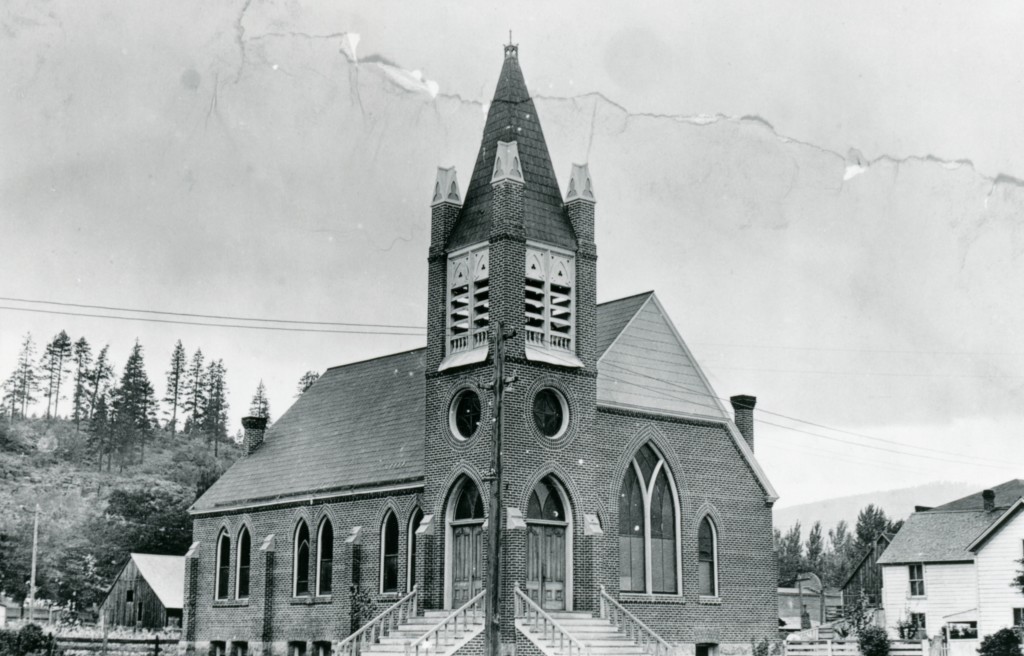
Susanville’s Methodist Church, 1905

In January 1908, the Rev. N.M. Parsons of the Methodist Church spearheaded a prohibition movement in Susanville in an effort to clean up the community. The issue had been informally discussed since the early 1880s, when there was a local chapter of the Women’s Christian Temperance Union. Parsons began his campaign by focusing on the social ills caused by alcohol. He circulated petitions to have the issue placed on the next municipal election ballot, scheduled for April 13. The Town Trustees accepted Parsons’ petitions and would place the matter before the voters. There was one stipulation: it would bean advisory measure as to whether saloons should be banned.

It was a widely debated topic. The city’s 1908 budget was $3,498. There were two main revenue sources. One was property tax assessment and it generated $1,815. The other was the liquor licenses which provided $1,424 to the town’s treasury.

Once those figures were revealed, Parsons; ballot measure was doomed. After all, if the City lost the money generated from liquor licenses, the only alternartive to make up for the loss would be to increase property taxes. That appeared to be the voter’s consensus. The issue generated the highest voter turnout to date with 157 votes cast. The results: 110 votes to remain “wet” and 47 “dry.”

Never miss a story, click here to subscribe.

A Four County Community College?

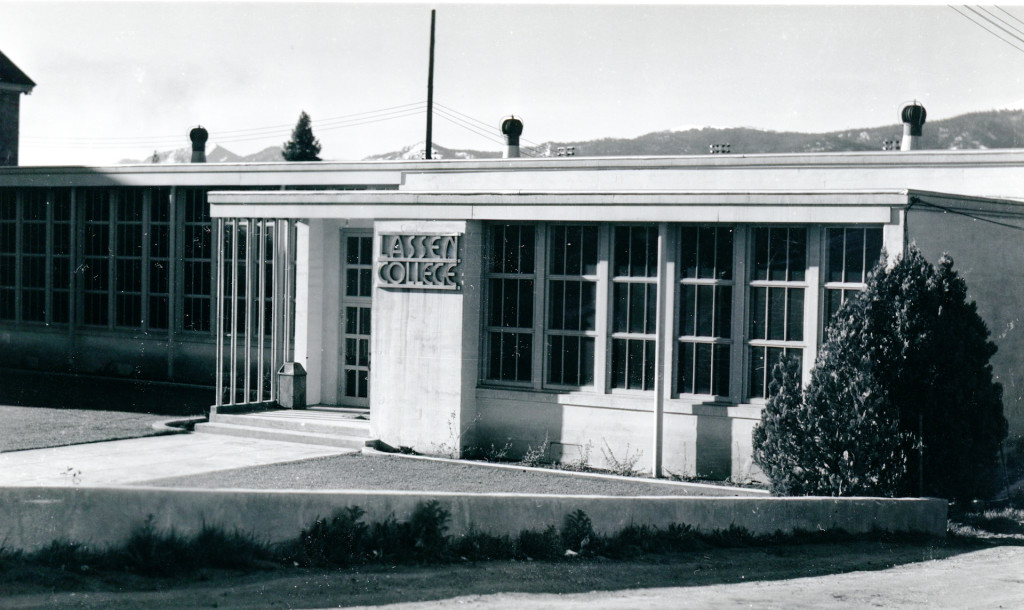
Lassen College
Lassen College on the Lassen Union High School campus.

In 1965, Lassen Community College severed its ties with Lassen Union High School. The college then began the process to locate and build a campus of their own.

During that process college officials decided to expand its territory with neighboring counties of Modoc, Plumas and eastern Sierra. After all, for nearly forty-three years residents of those counties took advantage of the opportunities made available to them at Lassen College.

On June 4, 1968 the voters of those counties, as well as Lassen, would decide if it was to be a four county community college. A college spokesman stated, “We want quality education in this mountain area at a reasonable cost.” The ballot measure ran into trouble with Plumas County, whose residents planned to annex to Peralta College in Alameda County. The major hurdle was the tax issue to fund the costs to build a new campus. While the Lassen voters approved the measure, the neighbors did not.

Never miss a story, click here to subscribe.

Lassen County Desert Land Act

The Belfast District, 1898. It was to be the center piece of Merrill’s reclamation project.

The federal land patent process often referred as homesteads worked fine until the westward expansion. After crossing the Mississippi River there were dramatic changes in geography and climate. It was President Abraham Lincoln who corrected the situation. In 1862 Lincoln was able to pass three important pieces of legislation since his opposition failed to show up in Congress. These were the creation of the Department of Agricultural, the Pacific Railroad Act and the 1862 Homestead Act. While the Homestead Act did improve matters in the west, it was not a one-size cure all fix.             The arid intermountain west presented its own challenges. A unique chain of events occurred when Captain Charles A. Merrill announced in 1873 of his reclamation plan for the Honey Lake Valley by tapping Eagle Lake as its water supply. It should be noted that Merrill was not a novice to land issues. He came to California, in 1864, from his native state of Maine. In 1870, Merrill was involved in a title dispute of a Mexican land grant near Santa Barbara. As a result of that involvement he worked ardently as a land agent for individuals who had capital to invest.             

For Merrill to move forward on his Eagle Lake project he would need federal legislation for an easier method to homestead arid lands. Merrill recruited California Congressman J.K. Lutrell to craft such legislation. On March 3, 1875 Congress approved Lutrell’s bill, the Lassen County Desert Land Act. In essence, an individual could claim up to 640 acres of government land, versus the standard 160-acre limit. A person then had two years time to reclaim the land by irrigation and they could purchase the land from the government at $1.25 per acre. The last provision was unique in that one did not have to reside on the land as a requirement. The Lassen County Desert Land Act gave birth to the much more famous Desert Land Act of 1877. The two Acts were nearly identical; expect of course the latter applied to all arid regions of the American west. There was one other major change in the fee structure. Under the Desert Land Act, “the settlers pay twenty-five cents per acre at the time of application, to have three years (versus two) for the purpose of irrigation and to pay one dollar per acre upon making the final proof, i.e. being issued a land patent to the property. The Desert Land Act was immensely popular and large swaths of land in the West were obtained under this Act.             

 It should be noted there was a dark side to it. This was from the Lassen County Desert Land Act’s non-residence provision that was included in the Desert Land Act. In the first decade there was a significant amount of fraud. It enabled land speculation companies to acquire thousands of acres of land by hiring dummy entry men to file on said land. Locally, this was particularly the case in eastern Honey Lake Valley and the Madeline Plains. Later amendments to the Act reduced the fraudulent activity. 

More tomorrow . . .

Never miss a story, click here to subscribe.