Tag Archives: Politics

Twenty Years Ago—The Last Mill Closure

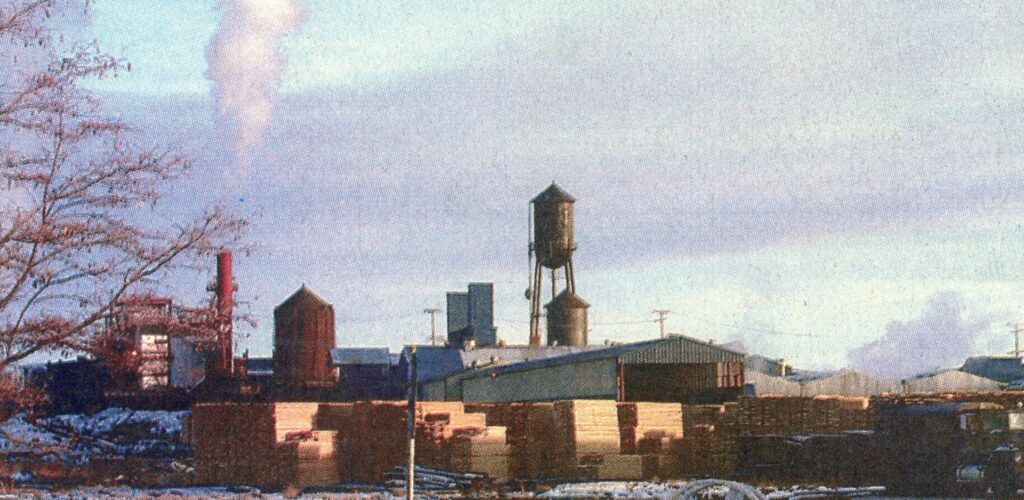
Sierra Pacific Mill—Lassen County Times, December 18, 2003.

On December 11, 2003, Ed Bond, spokesman for the Sierra Pacific Industries announced the Susanville mill would close some time in early 2004. Bond stated a number of issues that led to the closure. One, of course, was a lack of available timber. It was noted that in 1990 the Lassen National Forest sold 108 million board feet of timber and by 2002 that number had dropped to 17.9 million board feet. Those who have an affiliation in this industry, were not surprised by the closure. Actually, many and my self included were amazed that it had not happened years earlier.

The community reaction was all doom and gloom. Fast forward nearly twenty years later, with the closure of the California Correctional Center and the commentary is the same. Guess what, the town has not shriveled up and blown away.

Tim

Note for the record: The mill closed down on May 3, 2004  and portions of the mill dismantled. One of the features that still remain is the water tower, which found a new life as a cell tower.
Rev. Parsons’ Anti-Saloon Crusade

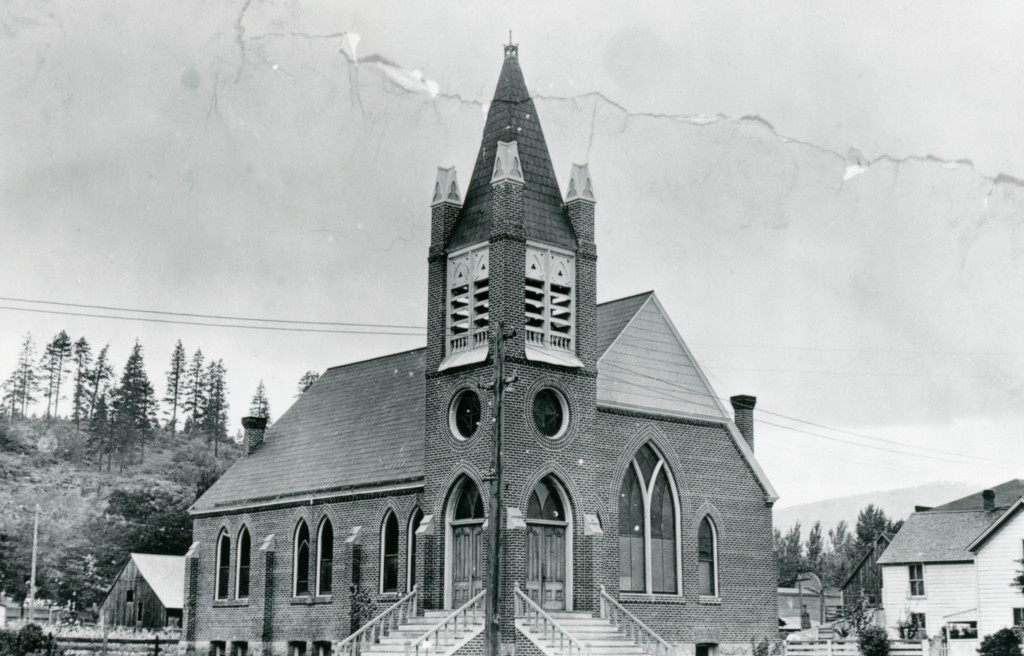
Methodist Church, 1905
Susanville’s Methodist Church, 1905

In January 1908, the Rev. N.M. Parsons of the Susanville Methodist Church began the first official prohibition movement in the town. The issue had informally been discussed since the early 1880s when there was a local chapter of the Women’s ChristianTemperance Union. Parson began his campaign by focusing on the social ills caused by alcohol. He circulated petitions to have the issue placed on the next municipal election ballot, scheduled for April 11, 1908. The  City Trustees accepted Parsons’ petitions and placed the matter before the voters. There was one stipulation: it would be an advisory measure as to whether saloons should be banned.

It was a widely debated topic. The 1908 budget for the town was $3,498. There were two main revenue sources. One was the property tax assessment and it generated $1,815. The other was the liquor licenses which provided $1,424 to the town’s treasury. The town was operating on very lean times, with no spare funds for civic improvements.

Once thse figures were revealed, Parsons’ ballot measure was doomed. After all, if the City lost the money generated from liquor licenses, the only alternative to make up for the loss would be to increase property taxes. That appeared to be the voter’s consensus. The issue generated the highest voter turnout to date with 157 votes cast. The results: 110 votes to remain “wet” and 47 “dry.”

Donate


How Folklore Evovled

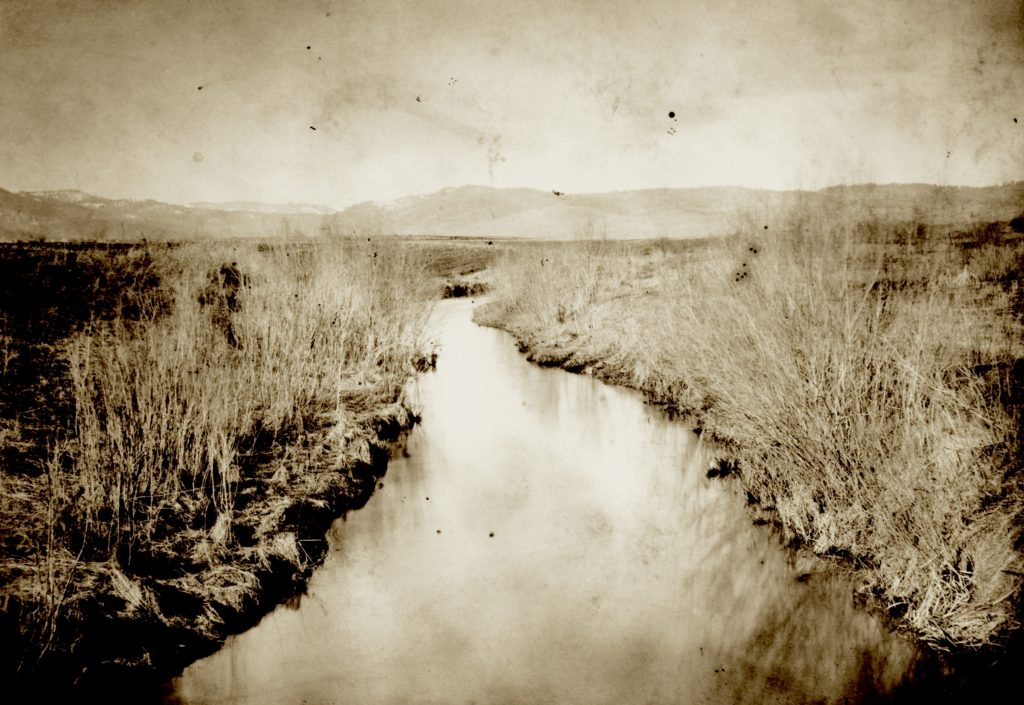
Honey Lake Valley, 1898–Betty B. Deal

On August 4, 1857, the Plumas County Board of Supervisors created the Honey Lake Valley Township. The action did not set well with the Honey Lakers who met to protest the Township action on August 29, 1857. (It was originally presumed that the Honey Lake Valley was not a part of the State of California—a logical theory that the Sierra Nevada Mountain Range  created a natural eastern boundary.)  As a result of this meeting , a resolution was adopted opposing any control of Plumas County over the affairs of Honey Lake Valley.

After this event a piece of popular local folklore began,  as to Honey Lakers evaded paying taxes to any one. The news of the Honey Lakers’ meeting had spread and the Marysville Express newspaper of Marysville, California reported: “The citizens of Honey Lake Valley, are for the most part violently opposed as ever by the exercise of any jurisdiction over them by the authorities of Honey Lake Valley. There is, however, some with some inconsistency in their conduct, for when the tax collector of Plumas County came among them, they told him that they were in not in California, but in Utah. Orson Hyde from Salt Lake visited them, they said they lived in California.”

It should be noted Mormon Apostle Orson Hyde was sent to form a Mormon settlement, known today as Genoa, Nevada. The Honey Lakers reluctantly agreed and paid their Plumas County property taxes. Of course, there are those who do not, and this happens every year.  Honey Lakers were not tax evaders per se, but they. were disgruntled with Plumas County because during the winter months they were cut off from the county.

But the Marysville newspaper makes a great story, that is repeatedly told from one generation to the next without any veracity.

Another interesting piece of trivia was the 1860 US Census. Honey Lake Valley was included in the Plumas County head count. However, to the south, Long Valley was included in Washoe County, Utah Territory.

Donate

California Politics, 1913

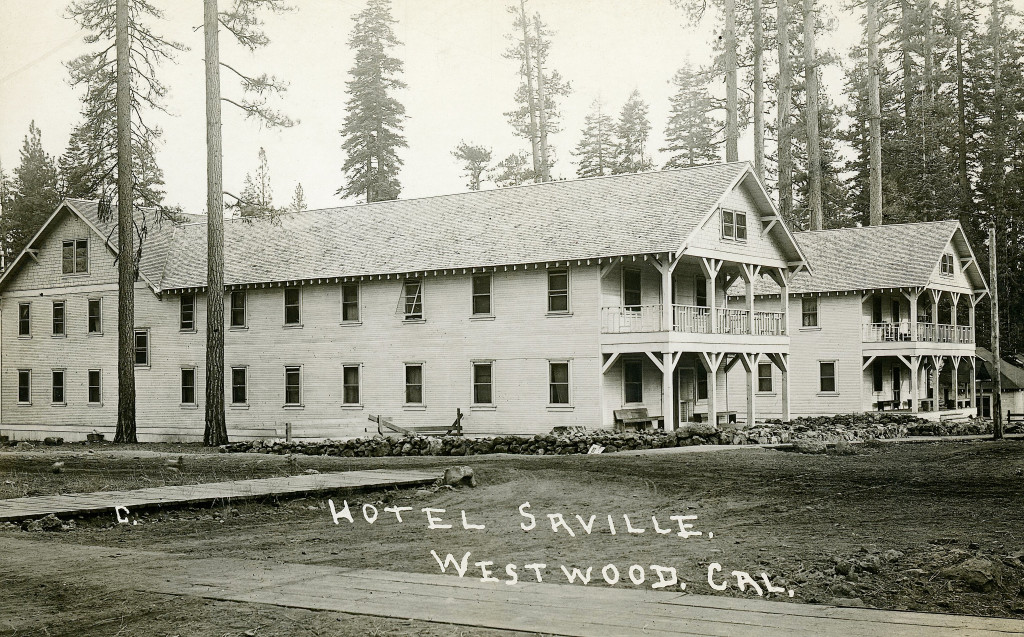
Hotel Saville
Hotel Saville, Westwood, circa 1914

When T.B. Walker was scouting his westward expansion of the Red River Lumber Company he examined all angles. Two important topics were politics and taxes. He was not fond of California politics, but then again he did not like Minnesota taxes.

In Walker’s opinion he though  California had an anti-business stance, and he was concerned about future legislation impacting on Red River’s profit. In a 1913, letter to his son, Willis Walker, T.B. made reference to the passage of legislation concerning
workmen’s compensation and providing medical benefits. T.B. wrote:” There is a very unsatisfactory labor liability law that seems to be more drastic than has been passed in any legislature.  I am aware that the prejudice against business in California has got so far along that it is but little use of make any defense or efforts at protection of our legal rights and proper treatment.”

In summation, T.B. declared: “The California Legislature is a sly,
reckless gang of socialists, and have succeeded in completely
deceiving the people through which they can make successful war
against capital and enterprise”

Tomorrow: The California Workmen’s Compensation Act of 1913

Support by subscribing.

Susanville’s Original Financial Crisis

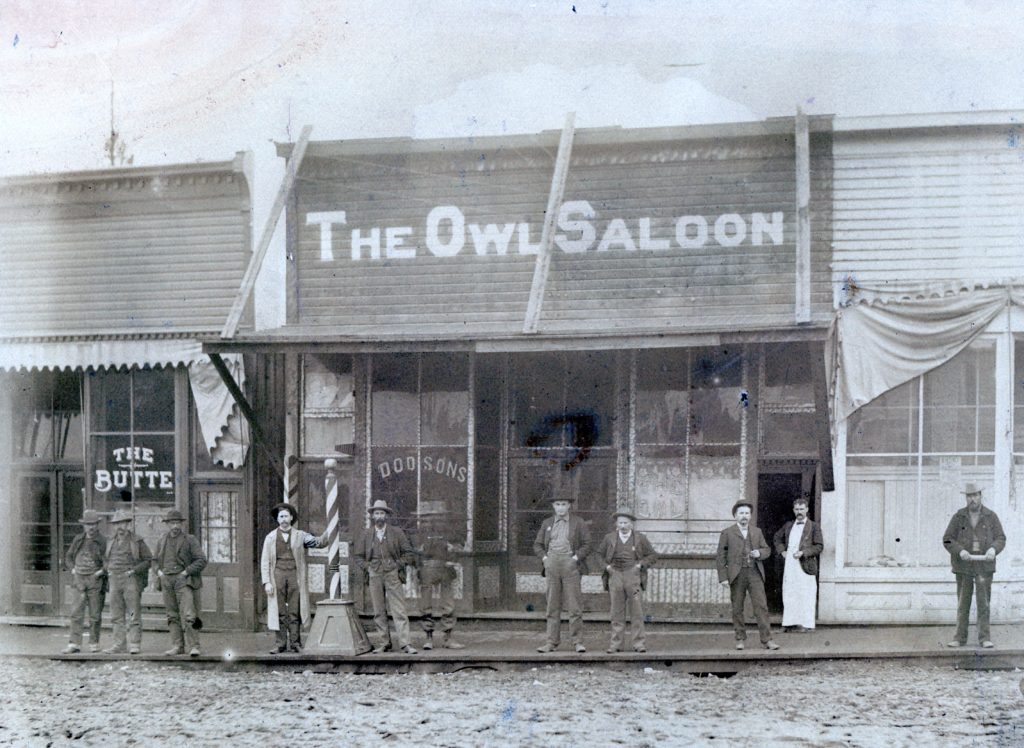
Susanville’s Owl Saloon circa 1907. Ironically, this establishment burned down only six weeks after Prohibition took effect in 1919. Courtesy of Del & Diane Poole

When Susanville was incorporated as a city in 1900, it had one glaring problem—it had no funding mechanism in place. During the debate whether to incorporate, proponents made it clear there would be no property tax. It was their belief that the City could operate on revenues generated from business license fees, especially the lucrative fees set by the state on saloons. Lassen County still collected the liquor license fees on the five saloons in Susanville. The County fathers were not going to give up this money without a fight, and they did.

It was a messy legal battle. It would force the City to impose a property tax assessment until the liquor license issue was resolved. In August 1903, the City imposed a tax levy of 40 cents per $100 assessed value.Of course, there were critics and even talks of disincorporation.

Relief would soon arrive. On August 25, 1904, the California Supreme Court ruled in Susanville v Zimmerman, et al that the town’s saloon owners had to pay the license fees to the City.

Never miss a story, click here.

The Climate Change Issue of the early 1900s

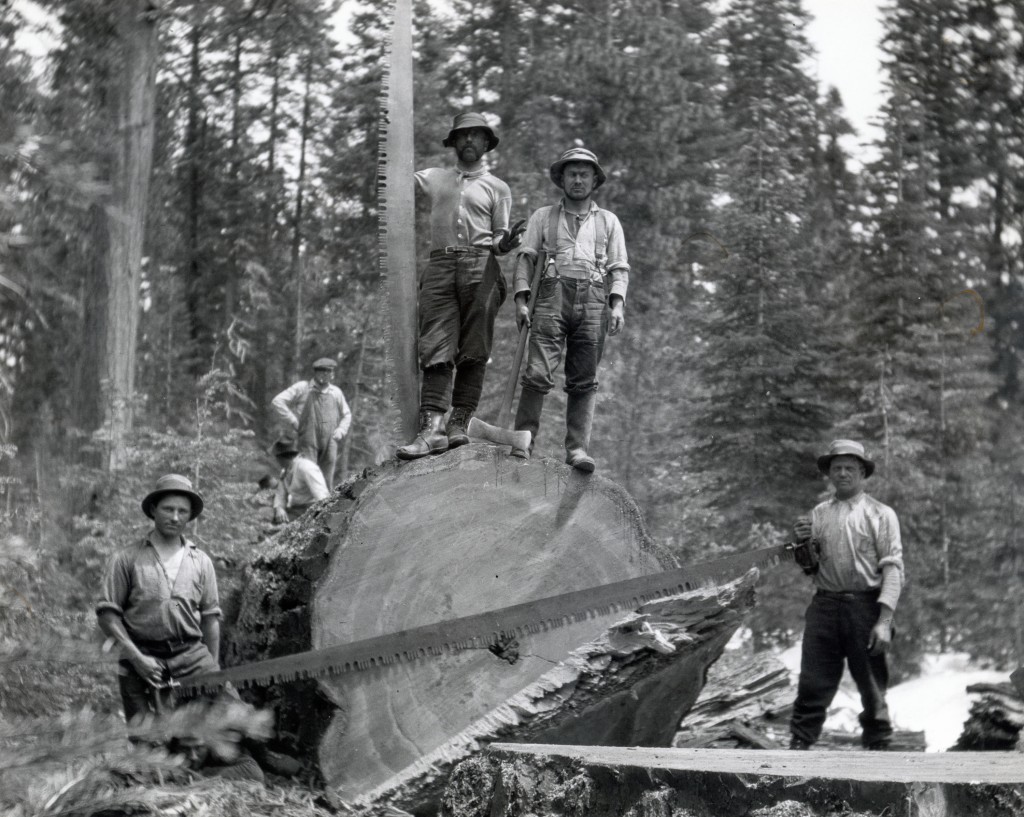
Red River Lumber Company tree fallers
Red River Lumber Company, 1915

California did not know what to think of T.B. Walker and his Red River Lumber Company timber acquisitions in Northern California during the early 1900s. Walker at times was coy with the California newspapers about his intentions. This was due in part that the California operations would be run by his sons, and not by him.

Conservationists and farmers of the Sacramento Valley were concerned should Walker use the same timber practices as employed in Minnesota as it would be detrimental to the environment. They were concerned of the climate change effect when the mountains were denuded of trees, impacting snowmelt and erosion.

To calm the public fears, Walker stated:  “I will make my timber a perpetual resource. When I begin to manufacture lumber, my saws will cut timber only as fast as nature reproduces it.”  When questioned why he did not follow the same practice in Minnesota, Walker stated: “Conditions are far different there. Their excessive taxation forced me to cut the timber as fast as possible. Minnesota land is worth more for agricultural purposes after the timber has been cut off. In Shasta County, the timberland is not worth 50 cents an acre after the timber is cut off.” In conclusion, Walker stated he could do a better job conserving his vast timber holdings than the government.

Support by subscribing.

Another Forest Reserve Opinion

A stand of ponderosa pine.

Susanville, was not alone in their opposition of the forest reserves. In November, 1902 T.B. Walker of the Red River Lumber Company had in a few years acquired some 200,000 acres of timberland in Northern California and addressed some of those concerns. Walker stated:  “These lands could be handled to better advantage for the general interest through the agency of private ownership than to have them tied up in the department at Washington. From a general knowledge of the case I am sure that the people of Lassen, Modoc, Plumas, Shasta and Siskiyou counties will regard this reservation move as extremely detrimental to their interests. Private ownership will better protect the timber against destruction by fire, will handle the timber cutting to better advantage to the commonwealth, will make a more continuous or perpetual timber supply, and protect equally as well the water supply and rainfall. There are a few townships and only a few along the Lassen range and in the mountains on the west side of the Sacramento Valley, running perhaps into the upper Trinity mountain country, that might reasonably be put into a forest reserve. Beyond that I think it would be unfortunate to carry out the forest reserve project.”

Support by subscribing.

Susanville’s First Political Stance

Main Street, 1901
South side of the 700 block of Susanville’s Main Street, 1901

In 1891, Congress passed the Forest Reserve Act, the beginning of today’s national forest. It was a slow process to create individual forest reserves and even to change name to national forests.

At the December 29, 1902, the City Council (known as trustees then) meeting they took their first political stance and passed its first resolution, after all the city had only been existence less than two years. At issue was the federal government’s establishment of the Lassen Butte and Diamond Mountain Forest Reserves. The council, as was in the case of many municipalities and counties where large tracts of public timberlands were located, opposed the reserves for fear they would be detrimental in the case of future economic needs. The resolution stated in part: “Whereas the establishment of said Forest Reserves will be fatal to the prosperity of this Town; in that they are calculated: 1, to defer the investment of capital in this vicinity for the manufacture of lumber and other products; 2, to prevent the building of any railroad to connect this place with markets of the county; 3, to cause the surrender of all title lands within their limits to the Government, thereby greatly reducing the assessable property and public revenue there from.” 

Never miss a story, click here.

Susanville Bans Fireworks

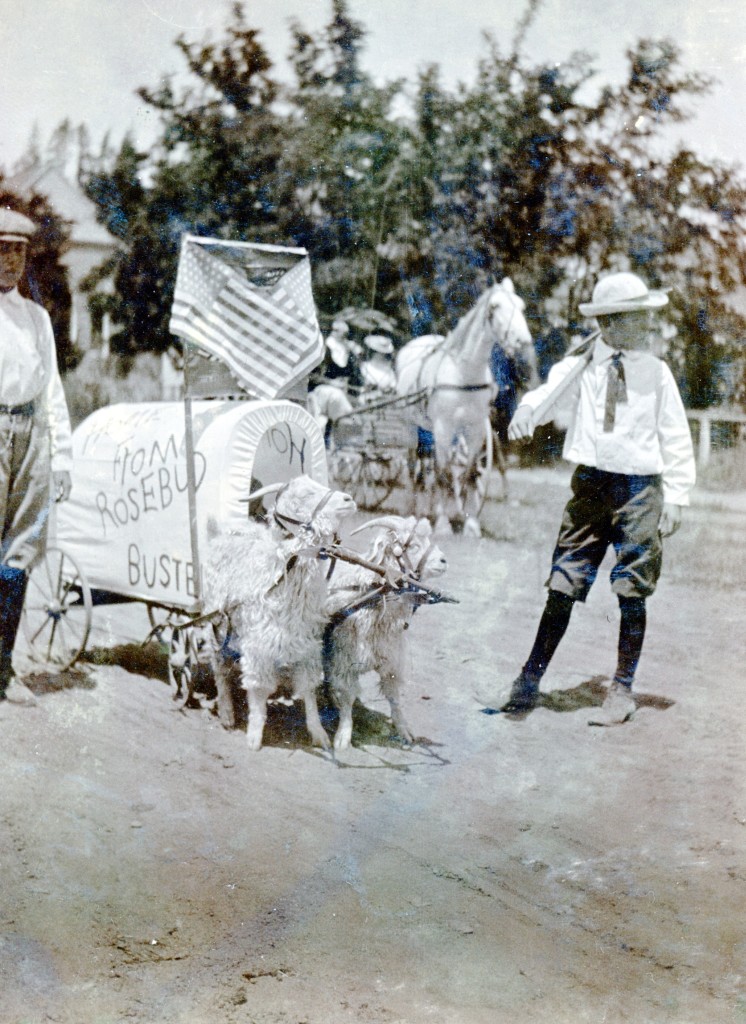
A 4th of July 1907 entry in the parade held in Susanville. Courtesy of Lola L. Tanner

Note:  This is a perennial post, because it has merit and in my opinion they should be banned permanently. In Susanville’s early years as an incorporated city, it was remarkable what the council did. One of their actions, I still support today, and that is the prohibition of fireworks. The first time they banned fireworks was in 1906, following the aftermath of the San Francisco earthquake and fire. It was also a nod to the insurance companies who suffered tremendous loss from that event. It was their belief, as well as many other communities, that this preventive measure would reduce the risk of fires.

In 1912, the City once again banned fireworks. The Lassen Advocate applauded the city and wrote: 21 June 1912 – “No Fireworks on the Fourth. We desire to congratulate our Board of Town Trustees on their action in placing the ban on all kinds of fireworks on July 2, 3, and 4. This action has been taken by large and progressive cities for years past, and we are greatly pleased to note that the smaller places are falling into line. Fireworks do no good and may do a world of harm. Fires may be started that will blot out blocks of cities or towns; little boys and girls all over the United States have lost fingers, hands eyes and in many instances, their lives from the dangerous pinwheel and firecrackers. Let them yell all they will, let them spend their money for ice cream, candy—anything on earth but the fireworks.”

In 1916, the Monticola Club appeared before the Susanville City Council asking for a ban of fireworks for the 4th of July. Their answer was no. The council assured that the utmost care would be done, but they were not going to deprive children of the festivities. In 1926, due to the tinder dry conditions,  the City banned fireworks for fire, health and safety reasons.

Spread the word, and encourage a friend to subscribe

Election Day, 1864

Main Street, Susanville, 1864.

Lassen County was created on April 1, 1864 from the eastern portions of Plumas and Shasta Counties. On April 11, 1864, California Governor F.F. Low appointed three men—L.N. Breed, Frank Drake and H.C. Stockton—to serve as county commissioners to organize the county.*

The main task for these men was to put on a election for a slate of county officers and equally important to select a county seat. The date set for the election was May 2, 1864. Janesville and Susanville were the two sites selected for the county seat. On May 12, 1864 the final canvass of the election was held. It was a messy affair, and two precincts Fort Crook (Fall River Mills) and Surprise Valley were ultimately rejected. The minutes were vague: “The board proceeded to estimate the vote . . .Susanville having received the highest number of votes for the county seat, was declared the county seat of Lassen County.” The Quincy Union newspaper reported that Susanville won by 72 votes.

*In 1879 California adopted a new Constitution whereas the county commissioner became county supervisor and the District Court Judge became the Superior Court Judge.

Support by subscribing.