Tag Archives: Plumas County

The Unexpected Early Flooding of Lake Almanor

The flooded Baccala Ranch—Julie Wiik

The Great Western Power Company  encountered numerous problems with the construction of their dam that would create Lake Almanor. The first dam they started to construct they were forced to abandon. A new dam site was selected and by the summer of 1913 work was fully underway. However, due to financial constraints, the dam’s height was greatly reduced, which meant the new reservoir would only be half the size.

On Christmas Eve, 1913, Mother Nature intervened. An estimated five feet of snow had fallen at Big Meadows, the location of the new reservoir. In January a warm rainstorm struck the region. The snow quickly melted and the reservoir began filling up prematurely. This caught the Baccala family, whose ranch was located along Bailey Creek, off guard. Their place flooded, stranding nearly a hundred head of cattle, and an automobile, among other personal effects. Further down, towards present Prattville, was Great Western Power’s headquarters, Nevis, which was was the former Meadow View  Hotel. The surrounding area flooded, creating an island. Relief came somewhat in the form of snow. Did it ever snow! Some areas of Big Meadows reported nearly twenty-feet by mid-February.
Support

Snow & Ski

 
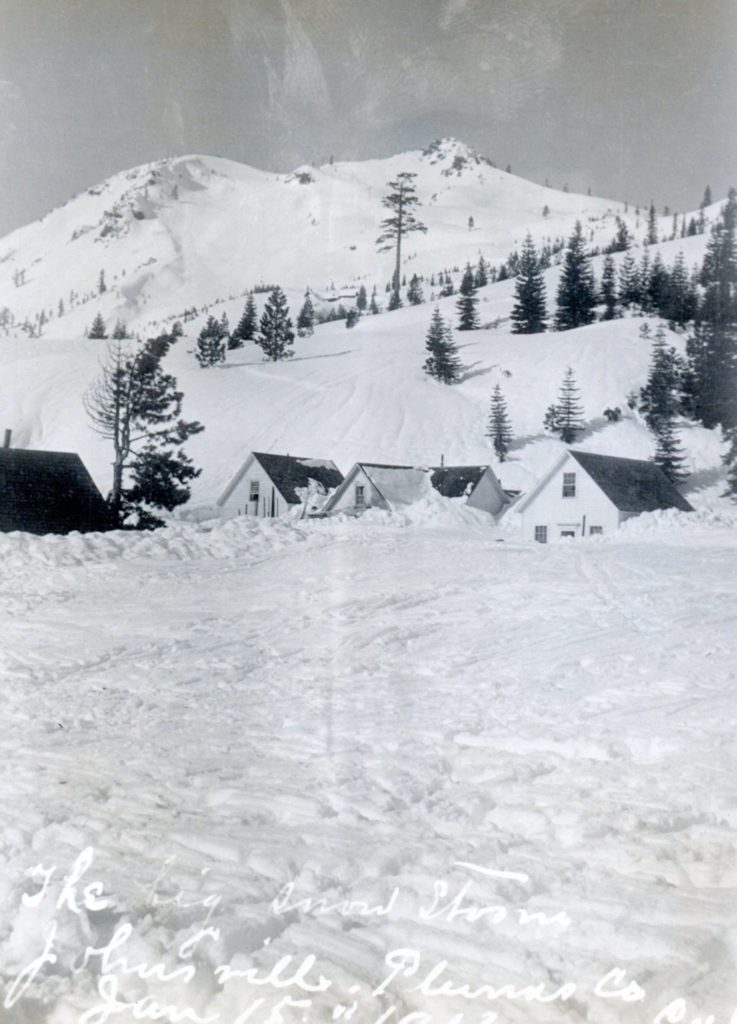
Johnsville, January 15, 1911—R.D. Sifford

There is no doubt, a snowstorm like the region experienced in January 1911, would certainly disrupt life for a bit, but it would be great in the long run. Consider that this storm dumped eight feet of snow in Susanville; five feet at both Milford and Standish, and a whopping eight feet at Amedee.

Of course, over in Johnsville, Plumas County they were accustomed to an abundance of snowfall. As a matter of fact, it is considered the birthplace of skiing in the United States. It was in 1853 when Norwegian Charles Nelson introduced to the mining community long board skis This was intended as a functional purpose to traverse the snowy mountain terrain to access other communities. It was just a matter time, that to relieve the boredom of the winter doldrums, that in 1861 those miners held downhill ski races. Thus a new sport came into being. It should be noted that long board ski races are still held there.

Subscribe


Control Burns Revisited

Bunnell's
Bunnell’s Resort, Big Meadows. Courtesy of Philip S. Hall

While my Red River series covers a tremendous amount of material on the Red River Lumber Company, there were some topics that were not addressed. In 1938, the topic of controlled burns was being discussed, as the company had done it in its earliest years until Clinton Walker’s departure in 1913. Below is an excerpt of a 1938 memo Clinton wrote to the Board and the experience of a control burn at Lake Almanor.

Continue reading Control Burns Revisited

Crystal Lake, Plumas County

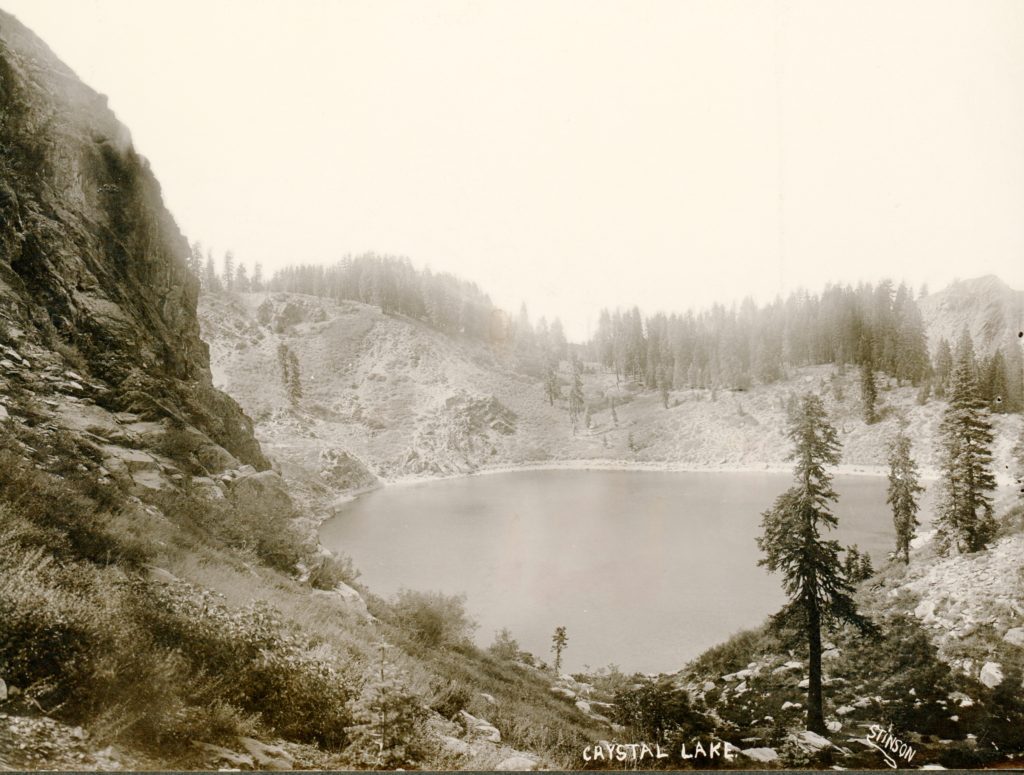
Crystal Lake, Plumas County, 1914—-C.R. Caudle Collection

Crystal Lake is located just southwest of Taylorsville. It is on my list of places to check out in 2021. 

While I do not know much about the lake, I do know about the photographer, R.E. Stinson. Robert Stinson was born in Quincy in 1882, and followed in his father’s footsteps as a commercial photographer. It was a tough trade to operate a business in a rural region. So like many others it became necessary to be itinerate traveling from community to community for business. In 1913, Red River hired Stinson as their company photographer, who at the time was located in Red Bluff. Stinson’s main job was to make a complete photographic inventory of all the buildings being constructed in the town, as well as the sawmill plant. A portion of this collection exists in the T.B. Walker papers housed with the Minnesota Historical Society. Stinson just happened to be at the right place at the right time, when Lassen Peak set off a series of volcanic eruptions beginning in 1914. Unfortunately, for Stinson and other photographers such as P.J. Thompson, are overshadowed by that B.F. Loomis, but that is another story, for another time. Stinson stay at Westwood was brief and left Red River in 1915. He later returned back to the region and when he died in 1932, he was buried in the Westwood Cemetery.

Robert Stinson
Robert Stinson’s grave at the Westwood Cemetery.

Support


Doyle versus Portola Update

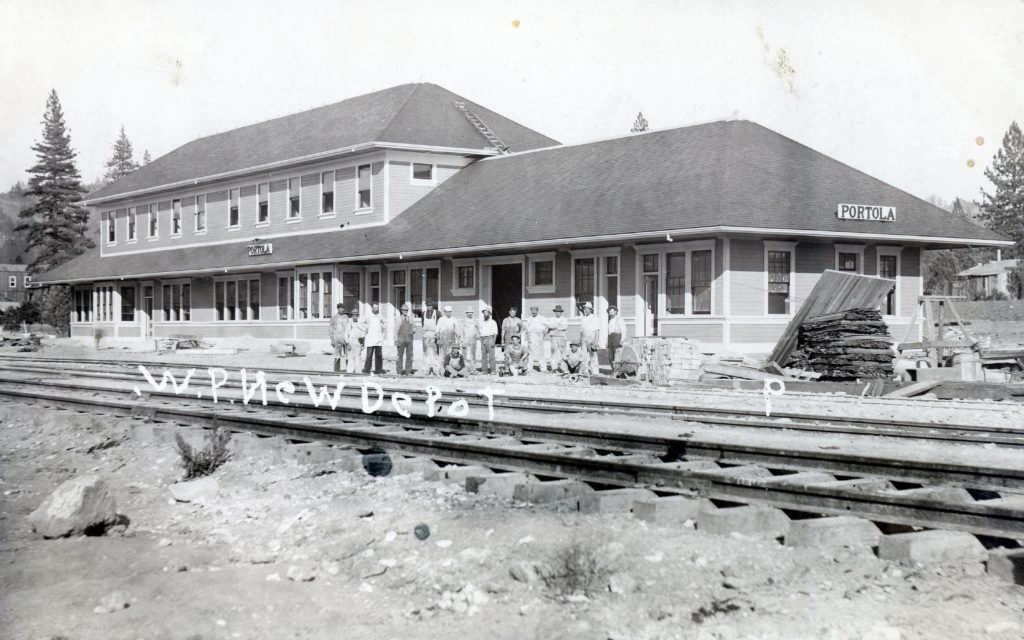
The Portola Depot. Notice the rails had been recently laid, no ballast.

Back in August 2018 I wrote about how Doyle and Portola were in competition to become the division point for the Western Pacific. A reader recently questioned a comment that I stated the Western Pacific Railroad built the line, and wanted clarification that it should be the Western Pacific Railway—in their opinion two different companies.

In 1903 the Western Pacific Railway was incorporated to build a railroad from Salt Lake City, Utah to the San Francisco Bay. This was accomplished. The Western Pacific struggled financially, since it had no capital to build its proposed feeder lines that would increase freight traffic, thus increase revenue. In 1916, on the brink of financial collapse the Western Pacific Railway reorganized to become the Western Pacific Railroad—same company just a change in semantics.  Now back to the  original question, technically  it was the Utah Construction Company that did the physical work to construct the railroad, under a contract with the Western Pacific Railway.

Support

Plinco Mine, Plumas County

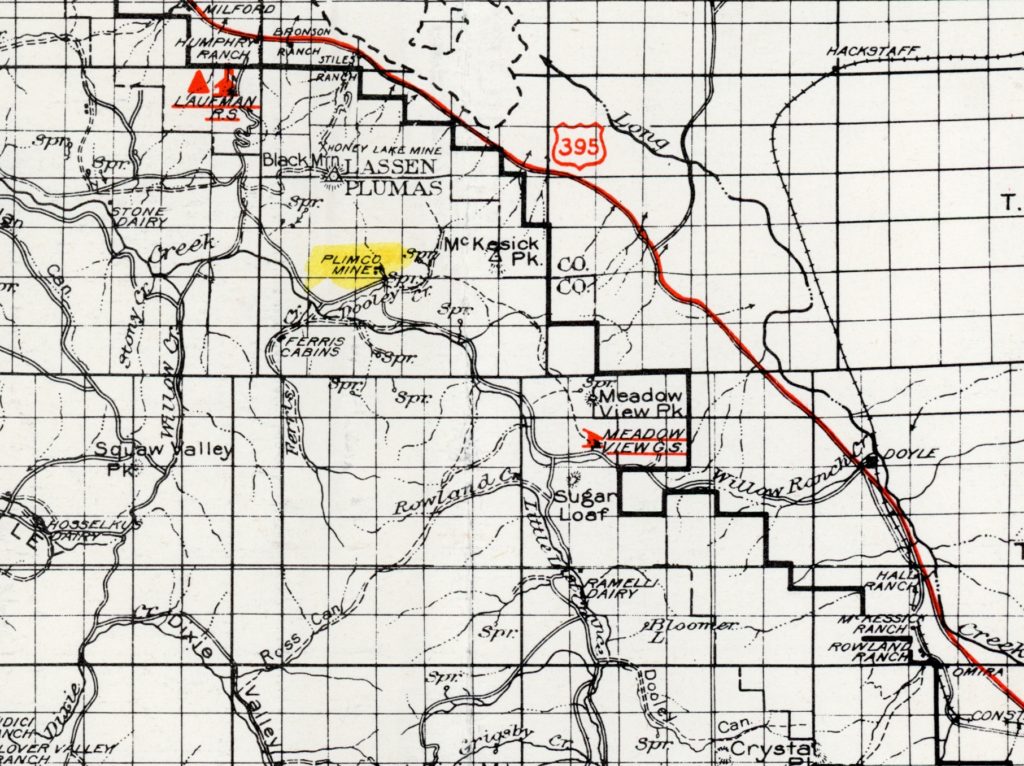
The mine appeared as a late as 1950 on this Plumas National Forest map.

The Plinco Mine was located in the Last Chance area of northeastern Plumas County. Doyle in Lassen County was in part beneficiary of the mining operations due to the access with the Western Pacific Railroad. From the mine to Doyle was approximately thirteen miles.

The initial mine was discovered in 1905 by Joseph Novak of Utah and Orlando McNabb of nearby Milford, an avid prospector. Attempts to develop the mine languished. In the fall of 1915, J.F. Cutler, a Midwest capitalist began an ambitious project to develop the Novak Mine. On November 2, 1915 Articles of Incorporation for Plinco Copper Mine were filed in the State of Nebraska. Cutler stated at that time he had ten men working on shafts and buildings investing some $16,000 in the venture. There does not appear to be much documentation about the Plinco mine. In late August 1919 a massive forest fire, to be named the Ferris Fire ravaged the Last Chance country and destroyed the Plinco Mine buildings. The operation then ceased to exist.

Support

Bear Hunting Resumes

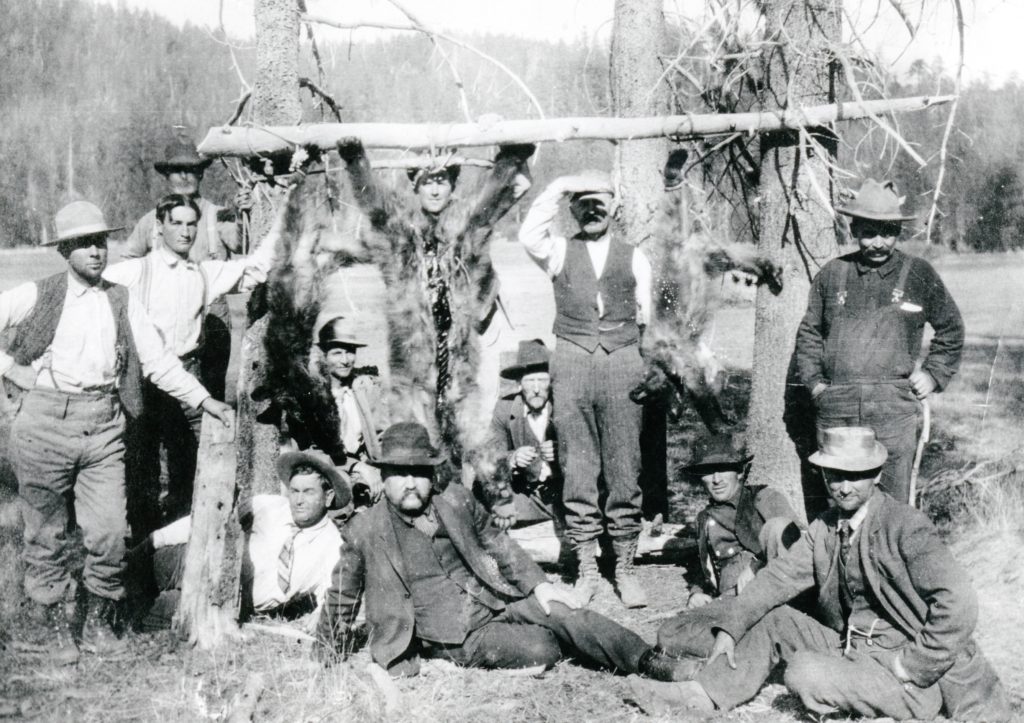
Pacific Coast Bear Club at Grizzly Valley, Plumas County,,1907. Courtesy of Ted Johnson

In 1917, California reclassified the black bear as fur-bearers, from which they were formerly game animals. The designation prohibited the hunting of bears. This, however, did not prevent the killing of bears if they were deemed predatory.

For local sportsmen this was not good news. The two prime hunting areas were the southeastern area of Eagle Lake and the west slope of the Diamond Mountain Range, such as Last Chance, Murdock Crossing etc.

In time, it was Plumas County officials who sought for a reclassification of the black bear to game animals to restore hunting, the bears being plentiful in that area. They succeeded. On November 1, 1935 bear season opened for a two month period.

Support


Fire (Suppression) Trains

Westwood's Fire Train courtesy of Doug Luff
Westwood’s Fire Train courtesy of Doug Luff

It is interesting to note that the Union Pacific Railroad has a fire train, which was deployed during the recent (2020) North Complex fire, or more specifically that of the Claremont Fire near Quincy, Many may not realize, the Red River Lumber Company had their own fire train.

The winter of 1923-24,  was one of the driest on record in California. That summer another record would be broken–forest fires. It was June, 1924, when the Red River Lumber Company having been in operation for over a decade experienced its first major forest fire. The fire broke out at Chester Flats between Camps 34 and 38 and burned a narrow strip of land, eight miles in length. Red River’s loss was minimal as the fire burned recently logged over land and the only significant damage was 500 cords of wood burned along 1,000 feet of railroad track. Red River considered its biggest loss was to the men fighting the fire which cost the company a $1,000 a day in wages, and it took a week to contain the fire.

Continue reading Fire (Suppression) Trains

A Red River Fish Story

The dam at Walker Lake—-David Zoller

In October 1931, the Red River Lumber Company disclosed a whopper of a fish story. First a little background. In the summer of 1922, Red River built the Indian Ole dam on Hamilton Branch just a short distance south of Westwood. The main purpose was to provide water power for a hydro-electric plant located along Hamilton Branch where it enters Lake Almanor. The newly formed reservoir created by the dam was officially named Mountain Meadows Reservoir, but the locals referred to it as Walker Lake. Whatever the case may be, fish flourished there, especially catfish.

Walker Lake aka Mountain Meadows Reservoir—David Zoller

In mid-October 1931, Red River needed to drain the reservoir to make some necessary changes and repairs to the dam. Of course, lots of catfish were sent cascading down Hamilton Branch, or so everyone thought. It turned out the catfish decided to take a short cut and went down to the penstock that feeds the power plant. All of a sudden the turbines at the plant came to an abrupt stop. Upon investigation, it turned out the turbines were clogged with catfish, and a lot. When things were all said and done there was a pile of catfish that measured twelve feet square and five feet deep. A new control gate was installed so that in the future, all fish would be detoured to the natural channel of Hamilton Branch.

Spread the word, and encourage a friend to subscribe

Clover Valley Lumber Company

Clover Valley Lumber Company, Loyalton, 1937

Clover Valley Lumber Company was headquartered in Loyalton in nearby Sierra Valley. In its prior life, it was the Marsh Lumber Company. In 1917, Clover Valley formed and it was typical mill/box factory operation. By 1955, Clover Valley had 54 miles of railroad line. Some of these spur lines still can be seen on the west flank of Thompson Peak. Noted, railroad historian, David Myrick stated it had the largest railroad logging operation in Plumas County. I beg to differ on that, as the Red River Lumber Company had an extensive railroad logging system in northern Plumas County. In 1957, Clover Valley sold, its new buyer began dismantling the railroad logging line in 1958—the last of its kind in this part of California. The Loyalton mill would later be acquired by Sierra Pacific Industries.

Support