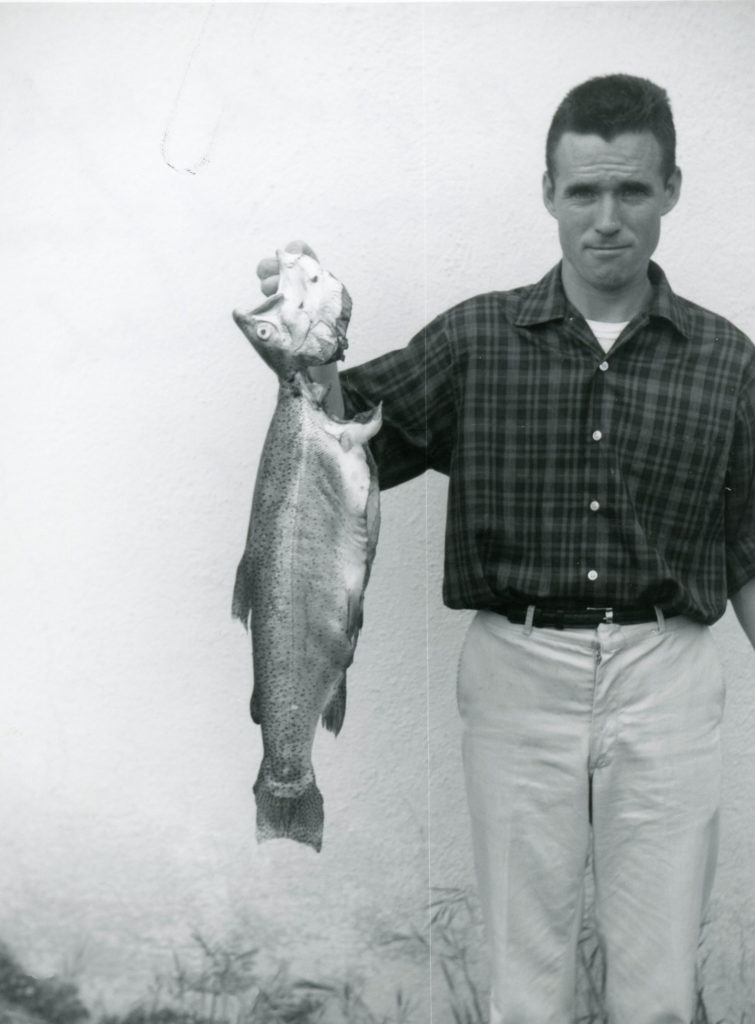
James Stokes holding “Old Lady of the Lake, a 8 pound Eagle Lake Trout caught in 1961.
It was interesting in yesterday’s post that in the. late 1800s and early 1900s Pyramid Lake Paiutes would sale Lahontan Cutthroat trout in Susanville. On the other hand it was common for the Anglo settlers during the spring of catch and haul wagon loads of Eagle Lake trout to sale on the streets of Susanville for twenty-five cents a pound. Yet, the local Native American populace did not harvest the trout like their counterparts of Pyramid Lake. This practice of harvesting Eagle Lake trout came to abrupt halt in 1917 when the State of California adopted. legislation, making it illegal to sell trout (excluding domesticated stock) from lakes and streams.
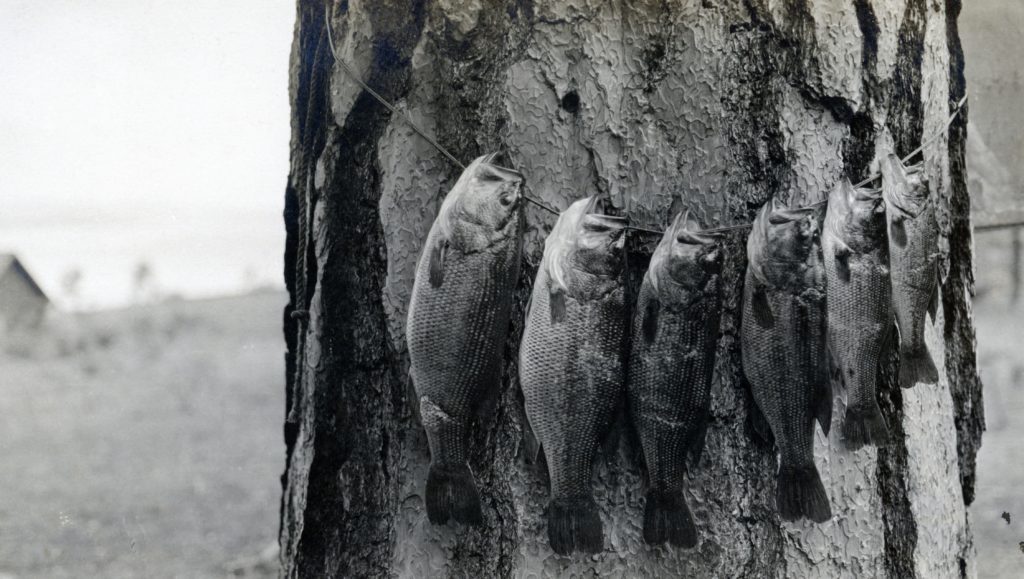
An Eagle Lake “catch,” 1916. Courtesy of Wyn Wachhorst
In the early 1900s bass were planted in Eagle Lake and they thrived. Some ambitious fishermen would from time to time would sale their bounty catches. It should be noted, that the bass population was greatly diminished and finally disappeared the lake in the 1930s. This was due in part of the lake’s water quality, with an increased alkaline content and reduction of marsh areas where the bass thrived caused by the lowering effects of Bly’s tunnel and the drought years.
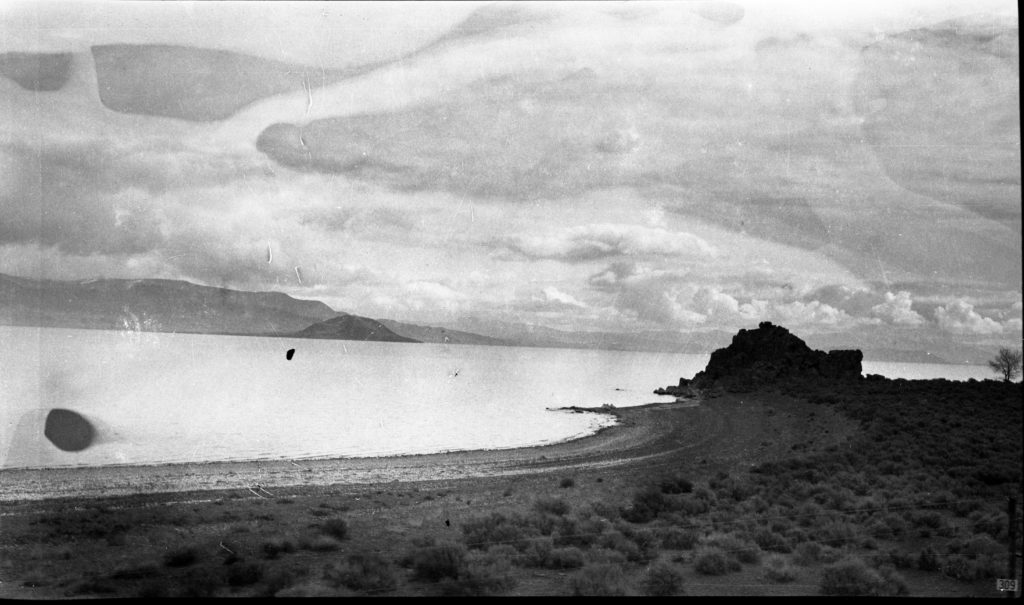
Pyramid Lake, 1915. Courtesy of the Otto Kratzer Collection.
Nevada’s Pyramid Lake is known for many things. The lake is home to the Lahontan Cutthroat Trout. In 1859, Nevada’s Silver Discovery, i.e. the Comstock, changed the landscape forever.
While the U.S. government granted the Paiute tribe Pyramid Lake and the surrounding territory into reservation. It is a stand alone story. Members of the Paiute tribe capitalized on its prized asset the Lahontan Cutthroat Trout. The fish were plentiful and trout not were only abundant, but a single fish weighing over twenty pounds was common. The enterprising Paiutes realized that there was market in Virginia City, Reno and surrounding territory. One of those markets was Susanville, and which the Lassen Advocate duly noted on May 5, 1892 5;3 – A load of Pyramid Lake trout arrived in town by a couple of Indians today and were disposed of on short notice.
The good times would not last forever. First, there was a complex beaucracy between State of Nevada and Pyramid Lake Reservation, that the former wanted protect the lake’s fishery. The. commercial fishing by the Paiutes had greatly diminished the stock. Second, the other blow was in 1902 with Newlands Project that diverted water from the Truckee River (Pyramid’s water source) to form the agricultural district of Fallon. One of the side effects was decreased inflow water to Pyramid resulting in lowering lake levels.
By 1910, Nevada authorities had legislation in place restricting commercial fishing of Pyramid. While it looked on good paper, it was not easily enforced. By the early 1920s, Pyramid Lake trout could no longer be transported out of state.
In the Honey Lake Valley that ban went largely ignored. In 1921, C.O. Fisher, was made Lassen County Fish & Game Deputy and he was to enforce the law. On January 27, 1925, Gee Hong, the proprietor of Susanville’s Republic Grill pled guilty of fish from out of season. Hong stated he purchased the Pyramid Lake trout from Indians, who are allowed to fish commercially. but he did not know they could be sold only in Nevada. Hong was fined $25.00. Fisher issued a warning that even local anglers who fished Pyramid Lake would be fined too, as well the Indians who transported them.
Local anglers were not pleased that they could not bring their catch back home from Pyramid Lake. In 1935 the local sportsmen petitioned the Lassen County Board of Supervisors to lobby the State of California Fish & Game Code Section 623 to exempt Lassen County residents from such. The petitioned stated “Whereas, a great many sportsmen in Lassen County, California, do considerable fishing in Pyramid Lake, and believe that they should have the privilege of bringing their entire catches into Lassen County, California.” The Board approved a resolution, but the State did not budge, and it would decades later before the restrictions were lifted.
I have addressed this issue before, but there was an amusing editorial comment that appeared in the Lassen Advocate of December 23, 1914. One key background of information to make sense, in the fall of 1914, a Russian colony of immigrants of some fifty families had located on the eastern portion of the Madeline Plains.
Herewith: “It would seem that the ‘pesky jack-rabbit” is doing someone good in the world after all. The Russians in the northern part of this county are using the flesh for food, and caps are made of the fur. Recently a number of Reno sportsmen killed 518 rabbits and these were given to poor families in Reno for food.”
The imported buffalo and elk at Wingfield Ranch, south of Susanville, 1920. Courtesy of Lola L. Tanner
There is evidence that the Great Plains Buffalo aka Bison territory was far reaching into the regions west of the RockyMountains, including the Great Basin. Dr. C. Hart Merriam, (1855-1942) was a multi-faceted individual who adorned many hats from zoologist ethnographer. In his studies of a naturalist in the West he intrigued about mammals historic territory. Unlike his colleagues, he contacted Native American tribes for their knowledge. Merriam soon realized this resource was finite. He focused on many Native American tribes elders of Northern California. Because of his work, we have a window of the past.
Merriam recounts that the Indians of the Northeastern
California, which he deemed trustworthy and that indeed buffalo did roam there. In Lassen, particular, the buffalo they inhabitated the eastern side county primarily, Madeline Plains, Horse Lake and Pine Creek Valley. It is belief that the buffalo in these parts had disappeared prior 1800. It should noted that in 1930, when a reservoir went dry in southeastern Oregon they discovered skeleton remains of a bison.
An astute Fish & Game deputy, C.O. Fisher who was stationed in Susanville during 1920s kept records of the wildlife in the region. He noted that was a band of forty big horn sheep (Lava Bed Bighorn) that lived on Observation Peak of the Madeline Plains country. Fisher believed that they all had perished during the severe winter of 1922. In the summer 1923, Fisher found horns and skeletons of the sheep on the mountain.
By happenstance, in 1927 Fisher discovered a small herd consisting of four females and two males in upper Smoke Creek/Painter Flat region. What is became them is not known.
In 1889, the first ring-necked pheasant were introduced to California. The plantings continued throughout of 1890s, but on limited basis. By 1900, the California Fish & Game stated the birds were too costly. In 1905, the Fish & Game established the Hayward Game Farm to raise the pheasants.
In early years, distribution of the pheasants was limited, maybe one-fifth of California counties. In October 1909, Fish & Game released a dozen of the pheasants in the Honey Lake Valley, about three miles of Janesville and an another dozen near Wendel. Subsequent plantings were sporadic. From 1909 to 1918 124 birds released in the Honey Lake Valley. In 1925 Fish & Game established a game farm to raise pheasant, and plantings were done a regular basis. From 1926 to 1946 3,767 pheasants were planted in Big and Honey Lake Valleys.
Some random notes. Occasionally, the Lassen County Board of Supervisors cancelled pheasant season in the 1920s and 1930s. In 1929, the Westwood Rod & Gun Club had 800 pheasants planted on various ranches in the Honey Lake Valley. Finally, in the 1930s, Fish & Game paid my grandfather, John Tanner to plant grain for the pheasants. This practice discontinued with establishment of the Honey Lake Wildlife Refuge in the early 1940s.
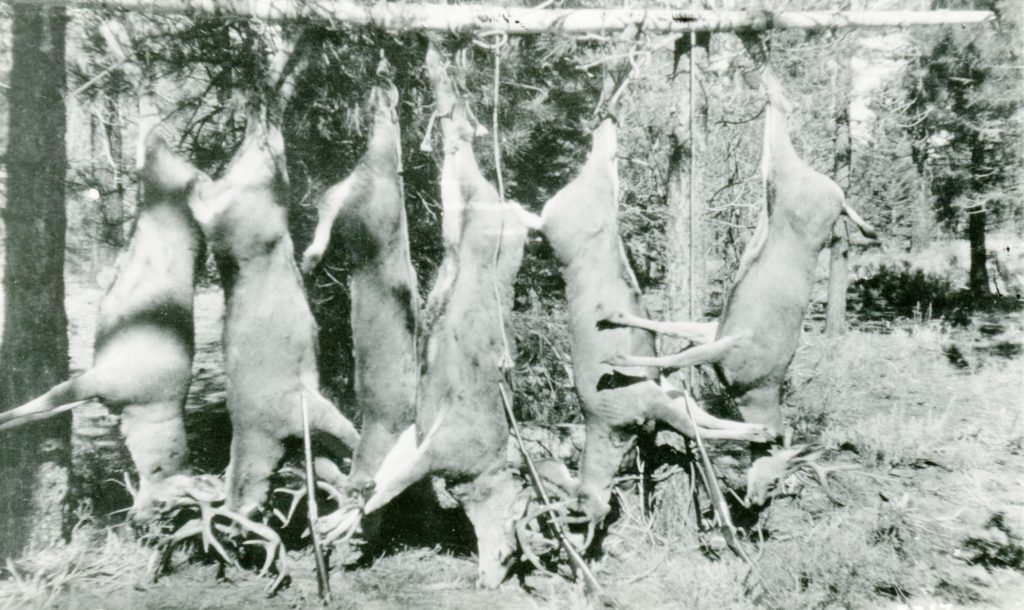
Since this end of deer season in these parts, it is fitting to examine past historic statistics. During the 1930s and 1940s, Lassen National Forest monitored the deer hunters. It was not easy task to register some 19,000 deer hunters on the Lassen. Data compiled relative to age, antlers, weight and condition of the deer, as where as the location where they killed. While there were check stations, they are also sent checkers with scales to weigh animals in the deer hunting camps.
Over 2,000 deer were killed in 1935 season on the Lassen National Forest. They consisted of 35% were forked horns; 32% had three points; 29% carried four points and the remainder 4% had five, six, seven or more points.
Depending upon the water level of Eagle Lake, it can be an island. The pelicans at the lake were a popular early day attraction, though others perceived them and the cormorants (sometimes referred to as shags) detrimental to the lake’s fishery. At sundry times the birds were slaughtered, their nests and eggs destroyed. A prime example is found in the columns of the Lassen Weekly Mail of June 11, 1892: “In Eagle Lake there are two islands (Pelican and Shag) on which large numbers of fowl, known as Pelican and Shag, build their nests and rear their young. The consequences are that vast numbers of fish from the lake are destroyed each year for food for the young birds. Recently a party visited these islands and killed the young birds and a good many of the old ones, hoping by means, if continued persistently for a number of years, to prevent the yearly destruction of the fish of the lake.”
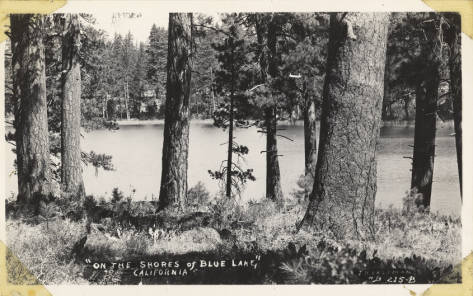
Yes, that is correct the grizzly bears once roamed the region, albeit briefly with the settlement of the region. In August 1873, at Devil’s Corral, Morgan Williams spotted one such bear. Further north, in 1878 the grizzlies were problematic for sheep men. In June 1878, J.J. Board spotted four such bears, that killed fourteen of his sheep. In retaliation, Bogard killed three grizzly bears. Finally, the last documentation of grizzly bears in Lassen County occurred in 1879. This happened in far northeastern Lassen County, in the Warner Mountains. In September, George Powers killed a grizzly weighing over 800 pounds at Blue Lake.
When I pulled my Lassen County Wildlife file, I realized there were a bevy topics that I thought of be interest. There subjects of which have never published. Take for instance the Grizzly bears in the region of the 1870s. The Pyramid Lake trout was a local hot issue during the 1930s. Did you know that in 1909 the ring-necked pheasant was introduced in the Honey Lake Valley? The next several months we will explore. those topics and much more.