Tag Archives: Native American

Honey Lake Pauite Place Names

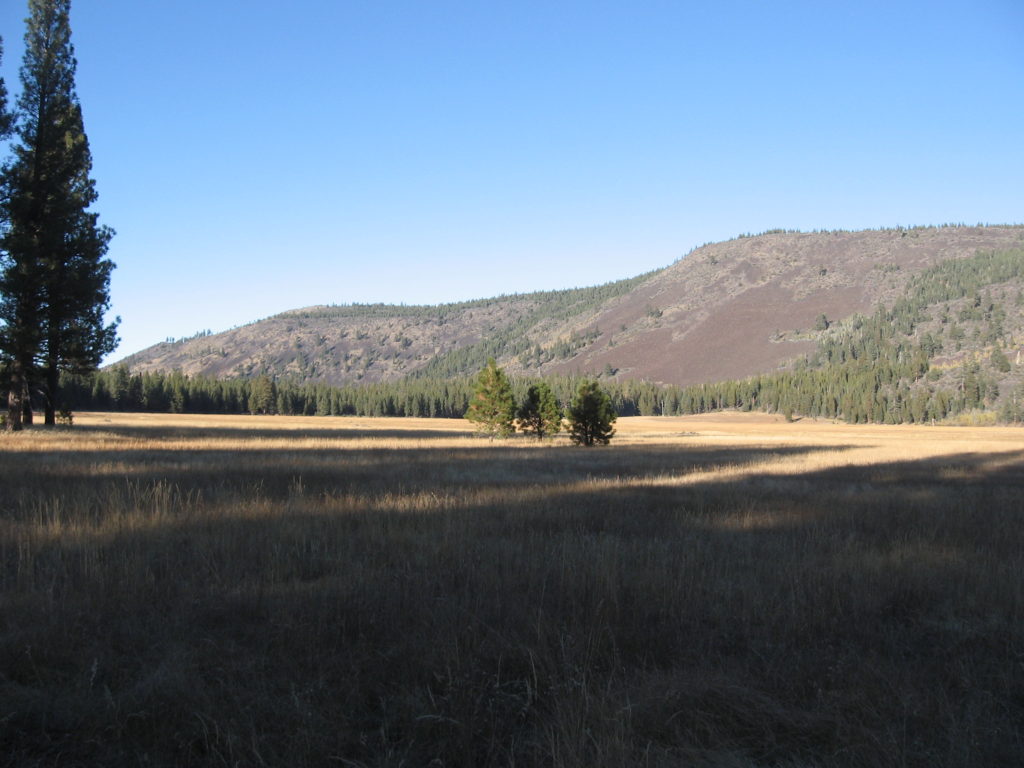
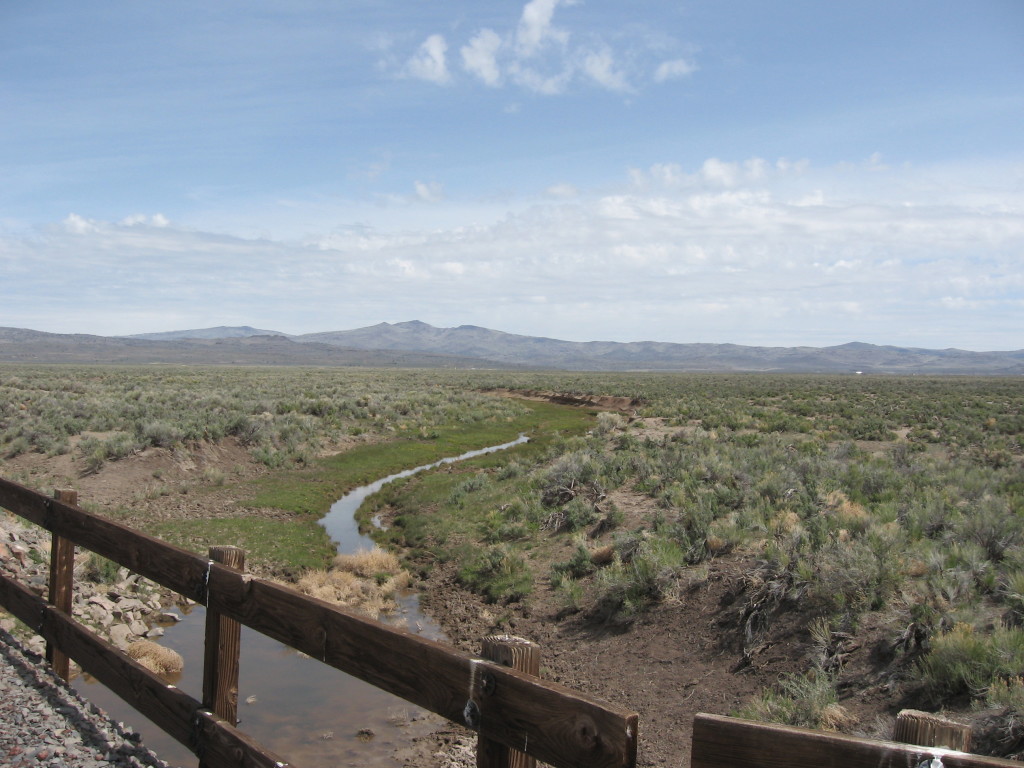
The lower end of Secret Valley, 2015.

Thanks to Francis Riddell’s work on the Honey Lake Paiute Ethnography we know how the Paiutes named their landmarks. Let’s start with Secret Valley which was referred as Sawa nona “Brush Set.” A little to the south is Mud Flat, which was referred to as tubisha nuna. What makes this place unique, in wet years it is covered with water. In the summer, when the water recedes, it then covered with a blanket of wild sunflowers. This made it a favorite place for the Paiutes to gather sunflower seeds.

Bald Mountain was referred to as Guha kaive, for a plant they called guha, which is a small perennial herb known as Mentzelia. Thompson Peak T’kwangud which translate to “tower.” The area of Milford was known as Mata. This was the most important winter village of the Honey Lake Paiute. The southern territory of the Paiute extended to near present day Doyle. They referred to Long Valley Creek as Ak wug—sucker. It was important source for suckers which they caught in large numbers and dried them for winter use. It should be noted that Joaquin was born at Long Valley and was the last headman of the Honey Lake Paiute.
Support

Charles League and his Unfortunate Journey

Roop Street
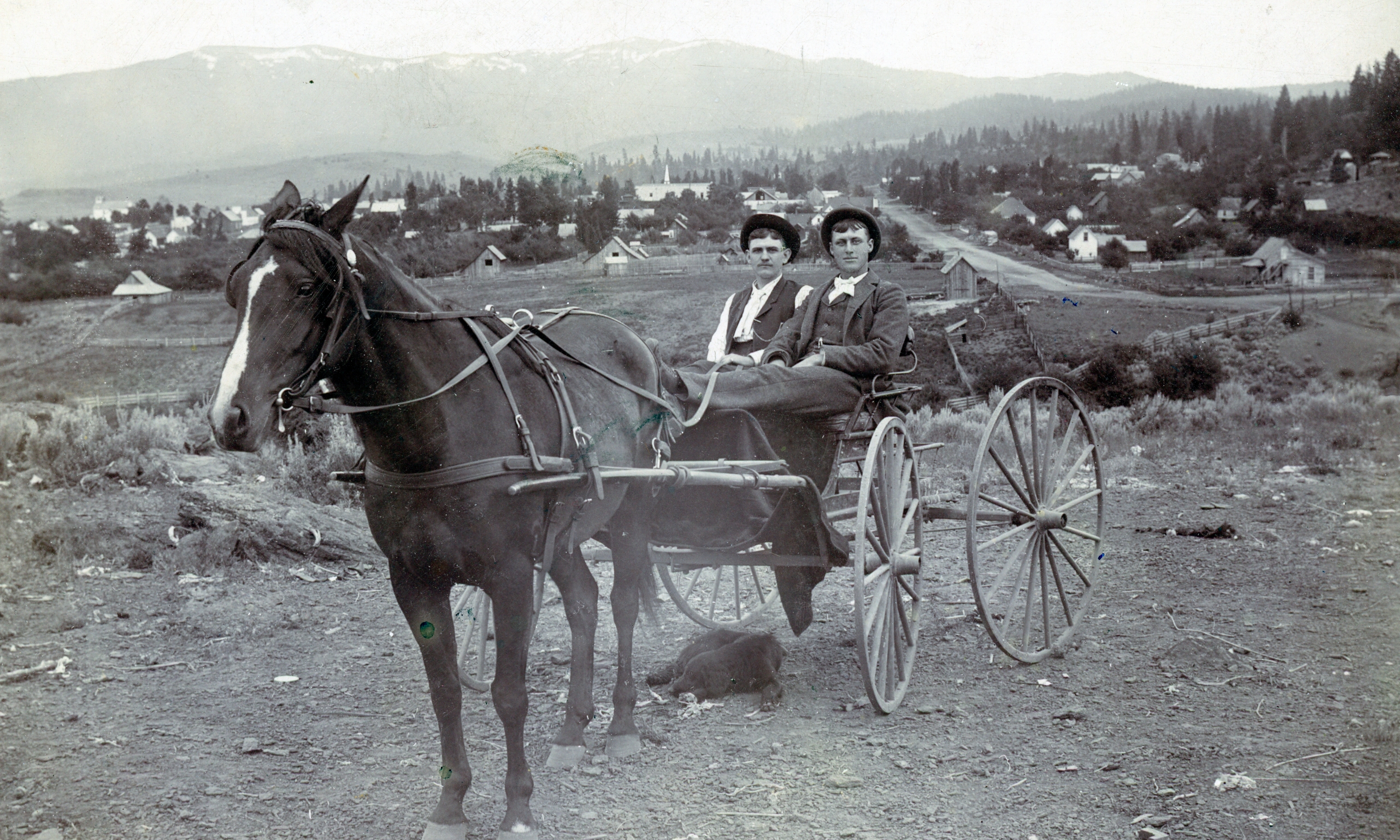
Susanville’’s Roop Street in the background from Rooster Hill. Seated, Frank League, Charle’s only son and Tom Long, circa 1895.

To be a teamster in the region during the 1850s and 1860s one encounter many hazards. While poor road conditions was one item one of worst was the conflicts between the Indians and the Anglo settlers. In Fairfield’s Pioneer History of Lassen County e devotes nearly a quarter of its content about these conflicts.

In October 1867, Susanville merchants Griffin and Williams hired Charles League to take a load of merchandise to Summit Lake is far northwestern Nevada. After League unloaded his wagon, he began to make the journey back to Susanville. He stopped at Flowing Springs Station for the night operated by two Honey Lakers, L.M. Crill and C.P. McClelland. During the night the dogs barked continuously, a good indicator that Indians were around.  With that in mind, Crill and McClelland tried to convince League that he should stay as a matter to safety precaution. It did not work, and League hitched up his team and wagon and started for Honey Lake Valley. It was not too long after, Crill and McClelland spotted smoke on the horizon. Crill and McClelland mounted their horses to follow League. They had only travelled a little over a mile, when they spotted some Indians going up the hillside with League’s horses. Near the wagon they found League’s dead body. The authorities at Camp McGarry were notified and a crude coffin was made, and League’s body brought back to Susanville for burial. This would be one of the last conflicts in the region.

Support

An Indian Allottment Story

Big Meadows Maidu Camp, 1887. Courtesy of the National Park Service

In 1887, Congress passed the General Allotment Act also known as the Dawes Act. It is a complicated story., however, for Indians not on tribal reservations they were entitled land allotments up to 160 acres.

In the early 1900s, when the Great Western Power Company began its aggressive campaign to purchase the lands of Big Meadows, Plumas County into a reservoir site to be known as Lake Almanor. Some of the purchases were not friendly and Great Western Power sued to obtain ownership. The company sued six Maidu Indians—Jennie Meadows, Ellen Jenkins, John Jenkins, Hester Jenkins, Robert Shafer and Jim Lincoln—to seek condemnation of their government allotted lands. On November 22, 1902, a court trial was held and the Maidu were awarded a judgment, giving them the assessed value along with an additional $1,600 in compensation. At the conclusion of the trial, Great Western paid cash to the Maidu, who according to one report the Maidu “went home rejoicing.”  There was a good reason, too. In 1908, it was disclosed that those six Maidu had never owned the lands Great Western sought condemnation!

Subscribe

The Varied Bear Dance Locations

The final part of the Bear Dance ritual at Bass Hill, circa 1900.

The spring ritual of the Mountain Maidu Bear Dance, locally, has been held at a variety of locations. In the earliest times, it would be held near a stream, for water was an important element in the conclusion of the dance.

One of the earliest sites was near Baxter Creek at Bass Hill referred to as the village of Yoskopin, also known as Lone Pine. This would be the late 1890s, early 1900s. There is a citation that the dance was held along Paiute Creek, just north of Susanville, from 1910 into the 1920s. That location was near the present day intersection of Chestnut and Parkdale. What is odd with its close proximity to Susanville, a town. with two newspapers,  that they never chronicled it.

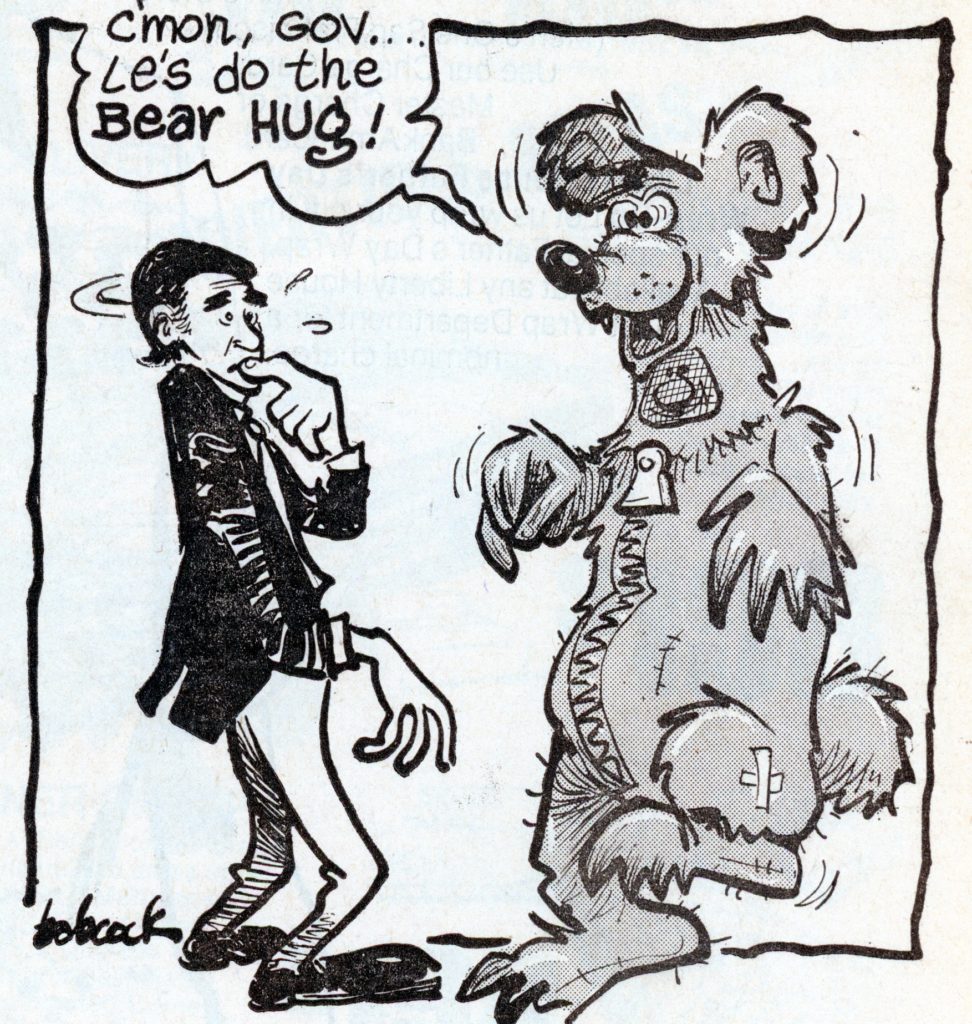
Sacramento Bee, June 9, 1975

In the late 1920s, Kitty Joaquin sponsored the event at her place near Janesville. She continued the same until 1953. There are accounts that in the 1940s and early 1950s that it was occasionally held at the Susanville Rancheria. By the late 1950s, it appeared the ceremony was on the brink of being abandoned. However, in 1962 Gladys Mankins sponsored the ceremony at her place on Janesville Grade. In 1975,  that event made headline news with the appearance of California Governor Jerry Brown. Mankins continued with the tradition up to 1986. In 1989, it was revived and has been held ever since on forest service property at Willard Creek.

Subscribe

Today’s Botany Lesson

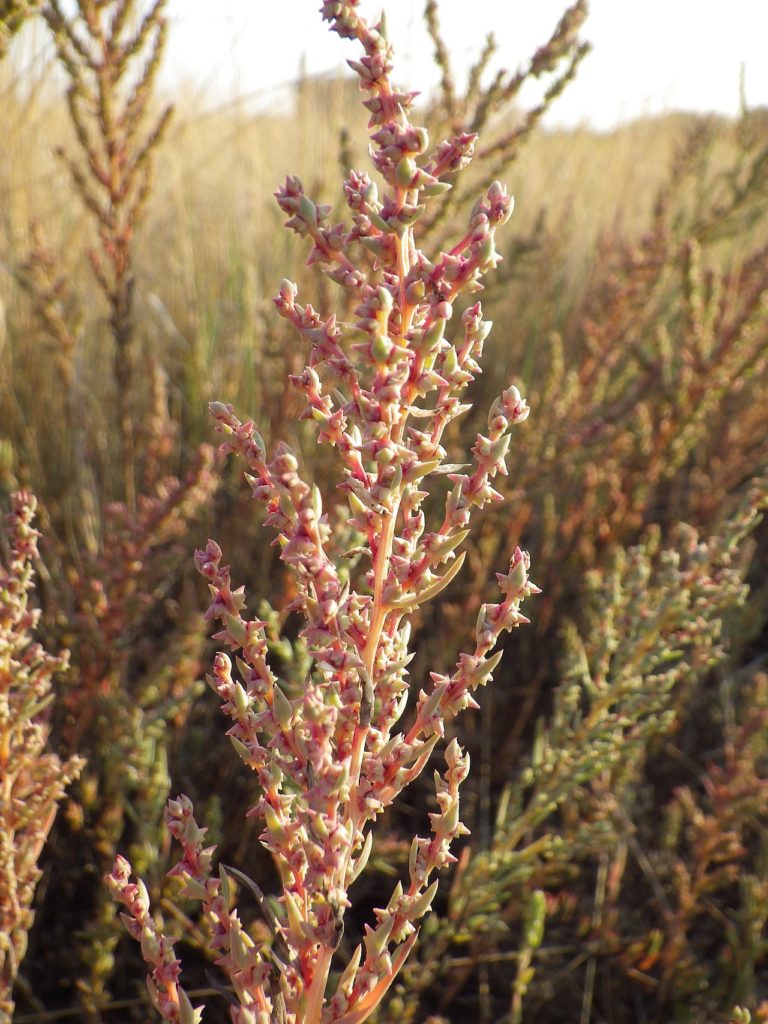
Suaeda calceoliformis or Suaede depressa

The Honey Lake Paiute were known as the Wadatkut, i.e. “wada eaters” for the eating of the seeds of Suaede depressa. Its common name is seepweed. It likes alkaline moist soil, which certain segments near Honey Lake thrives, especially near Amedee. When the seeds begin to ripen in August the plant takes on a pinkish hue. I have seen this plant all the time, but never knew its name or its significance.

Tim

Papoose Meadows Massacre – Version Three

Papoose Meadows, October 13, 2017

The third version appears in Asa Fairfield’s Pioneer History of Lassen County published in 1916. Unlike Version Two they share few similarities. One important fact, Dodge in Version Two has the main instigator as Joseph Hall, when Fairfield duly notes its Joe Hale. This is important, when Hale returned to Susanville concerning the Indian encampment he encountered, he had the forum to relay the news—he was half-owner of the Pioneer Saloon. It should be noted that Fairfield relied entirely that of William Dow, one of the participants.

In June 1866, when Joe Hale went in search of stray horses some ten miles west of Susanville he spotted a number of Indians who did not appear to be local. It had been well known, especially with the Indian Valley Maidu had been providing ammunition to the renegade band of Paiutes of Northern Washoe County. It was Hale’s opinion this ammunition would be used on a attack at Camp McGarry and relayed the same to the residents of Susanville when he returned.

The next day a posse of five men—William Dow, E.V. Spencer, Joe Hale, Byron Gray, Charles Drum—organized to break of up this ammunition exchange with the Indians.They followed the Indians tracks and spent their first night at Martin Springs, near present day McCoy Flat Reservoir. The next day they went up north to Champs Flat and spent the night there. The next day they went south along the west side of Eagle Lake. By the time they reached the south shore Dow and Gray  stopped to let the horses rest. The others carried on the pursuit and came across an Indian encampment at what would be known as Papoose Meadows.  According to Dow, the posse found the camp consisted of women from Indian Valley, and that the men had left camp to hunt. That night when the posse re-grouped it would attack either at night or towards dawn.

The next morning they did. Dow stated four Indian men were killed, one injured and escaped [Joaquin] and another fled with horses. This differs dramatically from Version Two. There is no reference to what happened to the Indian women, or whether ammunition was found or seized.

Subscribe


Papoose Meadows Massacre – Version Two

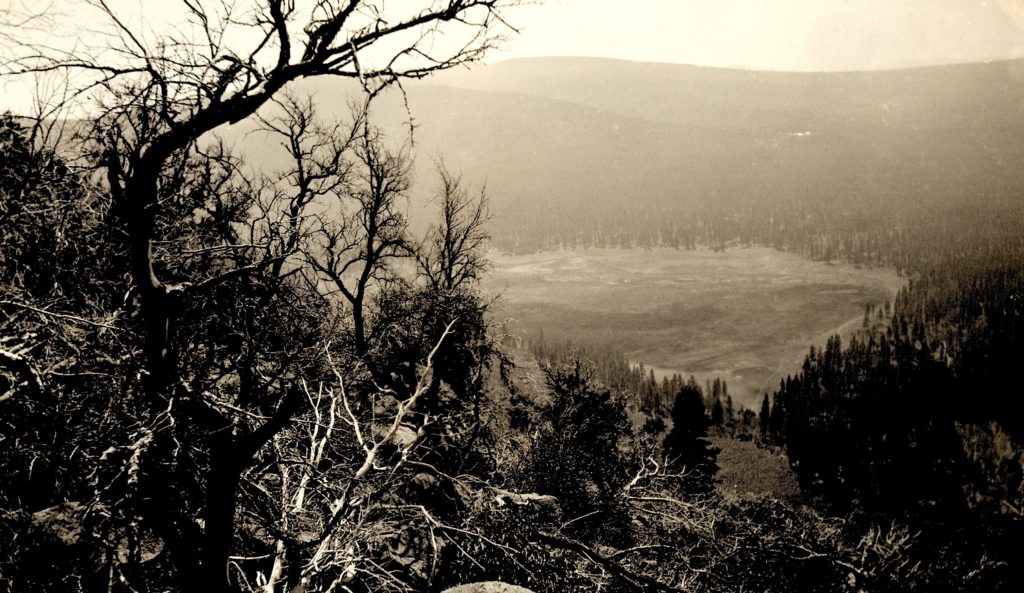
Papoose Meadows, 1914.

Version Two is the earliest published account of Papoose. It was composed by E.R. Dodge in 1881, fifteen years after the event. It appeared in Farris & Smiths Illustrated History of Plumas, Lassen & Sierra Counties—1882.

In June 1866, Joseph Hall of Susanville was looking for horses some ten miles west of town. He unexpectedly came across an encampment of Indians from Pit River, Indian and Honey Lake Valleys. It was his opinion that the Pit River Indians were selling ammunition to the latter to engage in conflicts with the settlers. Hall returned to Susanville to report what he saw. William Dow, who had been fishing at Pine Creek, noted, that he too saw an encampment of Indians. The next day, Dow, E.V. Spencer, B.B. Gray, Charles Drum and Joseph Hall left in pursuit of fleeing the Indians. After tracking the Indians for several days they found them at the south end of Eagle Lake in a little valley known today as Papoose. In being late in the day, the five men camp for the night. At daybreak the next morning they stormed the camp with their revolvers killing ten Indians, with one escaping injured. The men rounded up the Indian’s horses along with ammunition they found there and returned to Susanville.

Support


Papoose Meadows Massacre – Version One

A 1923 view of Papoose Meadows. Courtesy of Lola Murrer Tanner

This is the first of three versions of the Papoose Meadows Massacre that occurred at Eagle Lake in 1866. During the late 1940s and 1950s Francis Riddell spent considerable time compiling the Ethnohistory of the Honey Lake Paiute. There were still older living Paiutes then, whose parents lived in the area prior to Anglo settlement. Francis spent a lot time with Kitty Joaquin Williams (1864-1954), who provided him with a wealth information, that he was able to preserve. The following is what she relayed to Francis concerning the Papoose Meadows Massacre.

According to Kittie, a band of Paiute, including her father Joaquin, went on a hunting trip to Eagle Lake. Though there is some confusion she also stated they went there to escape the soldiers, who were accompanied by members of the Maidu. Hog-die Jim, Joaquin’s uncle was afraid the soldiers and Maidu would attack them. He advised Joaquin and others to move their camp, but Joaquin felt there was no real danger. Hog-die Jim then took some provisions, and all the horses and left.

The soldiers and Maidu attacked Joaquin’s camp and killed everyone one except a baby in a cradle board, two women who jumped into the lake and swam to safety and Joaquin, too, did the same. However, when Joaquin was in the water he was shot by. soldier, John Mulroney. Joaquin was cared by the others and recovered. He was later known as Old Man Joaquin and spent the rest of this life in the Susanville area and died in 1935 at the age of 99.

Note: It is well documented that there was no military involvement. The soldiers at Camp Smoke Creek, the nearest military outpost were kept very busy with conflicts in Northern Washoe County. I also examined their daily reports, the military kept great records. Also puzzling, is the naming of Mulroney (1856-1930). Mulroney would not have been old enough to participate. He lived most his entire life in the Honey Lake Valley working on various ranches.

Support


Local Petroglyphs

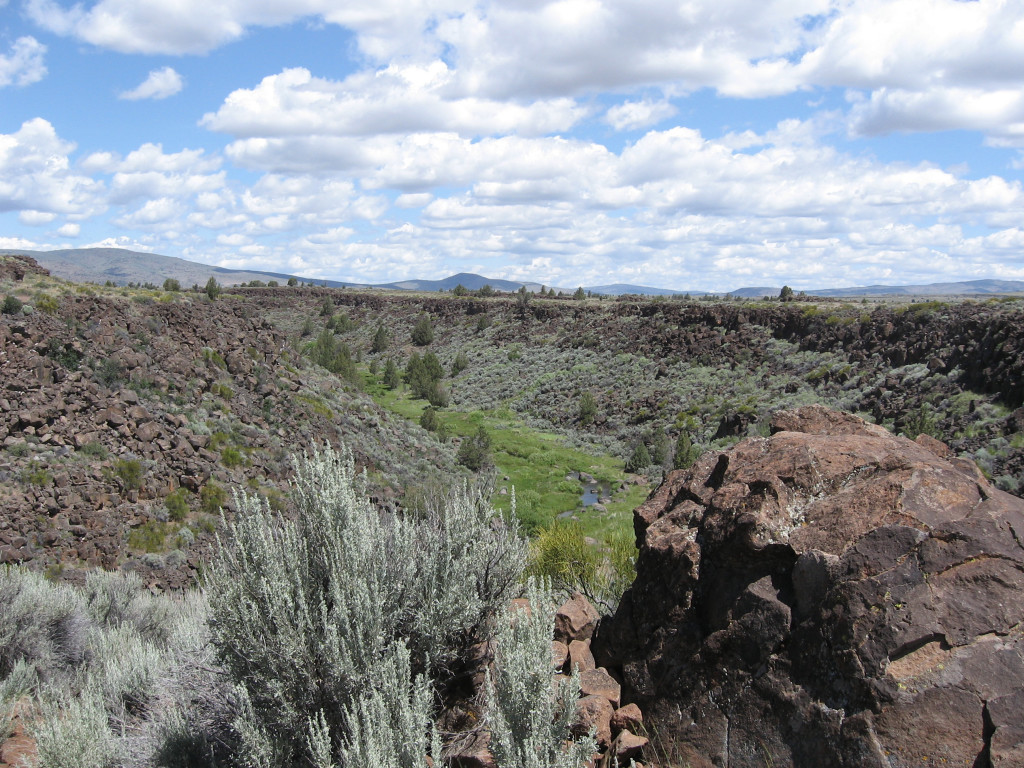
A view of the Willow Creek Rim from Belfast, June 2, 2015.

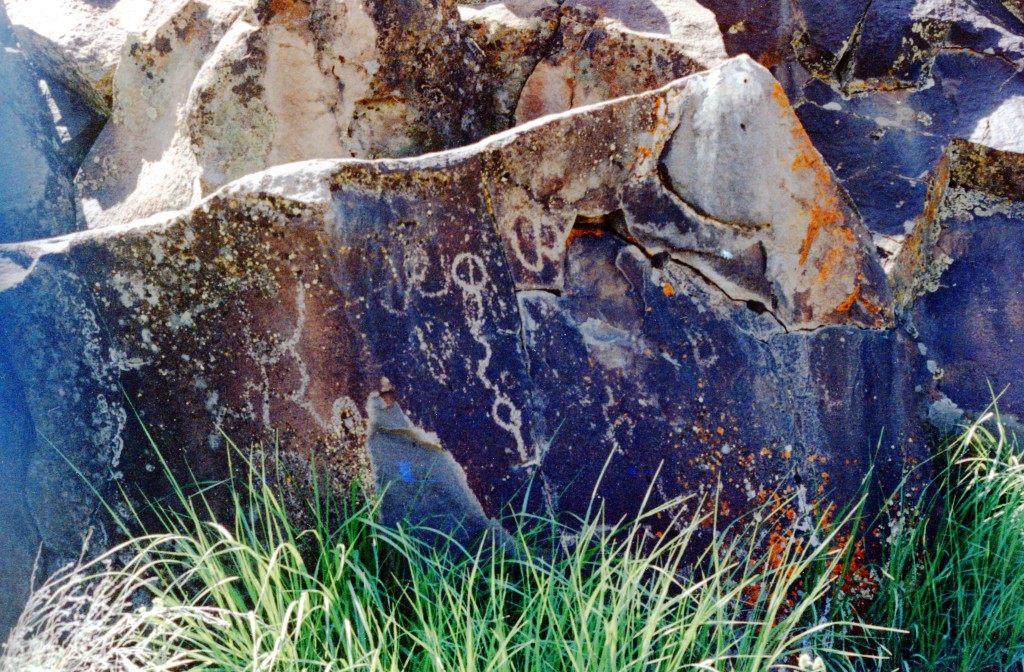
Here are some random notes by the wayside about the local petroglyphs that I thought some might enjoy. Belfast, of course, is the best known site, but many might not be aware that are some surrounding Susanville.

In 1918, Russell Brownell, who dubbed the Belfast petroglyphs Council Crest urged Congressman John Raker to designate it as a park. Nothing happened. However, nearly seventy years later as to what is referred to as the Willow Creek Rim was placed on the National Register of Historic Places.

Sunrise Chamber, Balfast, 2015

In 1949, Francis Riddell while engaged in some major archeological work in the region, spent considerable time collecting information on the Honey Lake Valley Paiute Ethnography. He spent countless hours interviewing members of the Joaquin family. The following is a summation about what he was able to glean about the petroglyphs. “The name for the petroglyphs was tumadai, ‘magic” or ‘trick.’ Only certain people knew what they meant. Kitty Joaquin, however, stated a more common name for the petroglyphs was numutubon ‘Indian writing.’ Susy Buster said that the petroglyphs were only known to those who put them on and the snake elements were put on by those who had an understanding of snakes.”

One of many glyphs to be seen along Upper Smoke Creek.

Finally, back in the late 1960s the Lassen County Historical Society published a bulletin on Petroglyphs by Tom Eilers.

Donate

More Camp McGarry

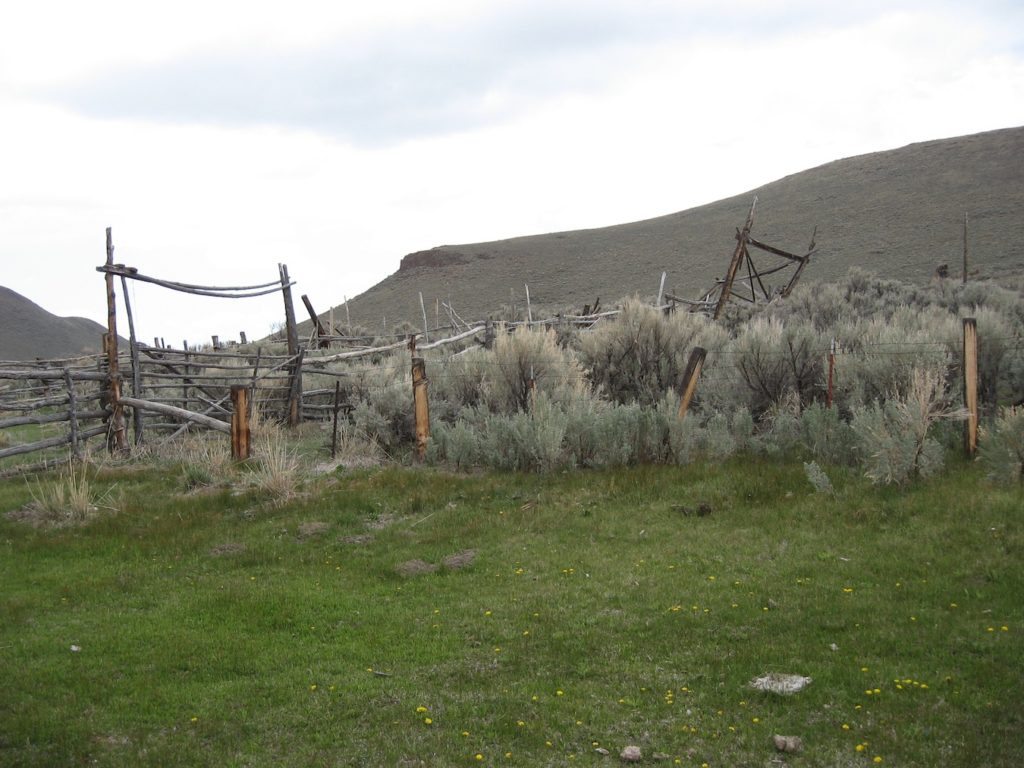
Summit Camp is an old livestock camp, located near the headwaters of Mahogany Creek, that is the stream that feeds Summit Lake—May 10, 2008

In May 2008, my dear friends, Derek and Pat Anderson invited me to partake in an expedition through Smoke Creek/Black Rock Deserts with a goal of High Rock Canyon. One day we spent exploring the Summit Lake area. It should be noted we made a base camp at Soldier Meadows Guest Ranch. Our departure was to be through High Rock Canyon, but due to certain difficulties, that was  abandoned. To make a long story, even longer, I did research on Camp McGarry to give the owners at Soldier Meadows additional information to share with future guests.

Camp McGarry was so remote that it relied on the Susanville business community for all of its supplies. The following are excerpts from the Sage Brush newspaper, forerunner to the Lassen Advocate about the coming and goings out in that district. Its lengthy, so if you have no interest, feel free to skip. Continue reading More Camp McGarry