Tag Archives: Mining

Hardin City, Nevada

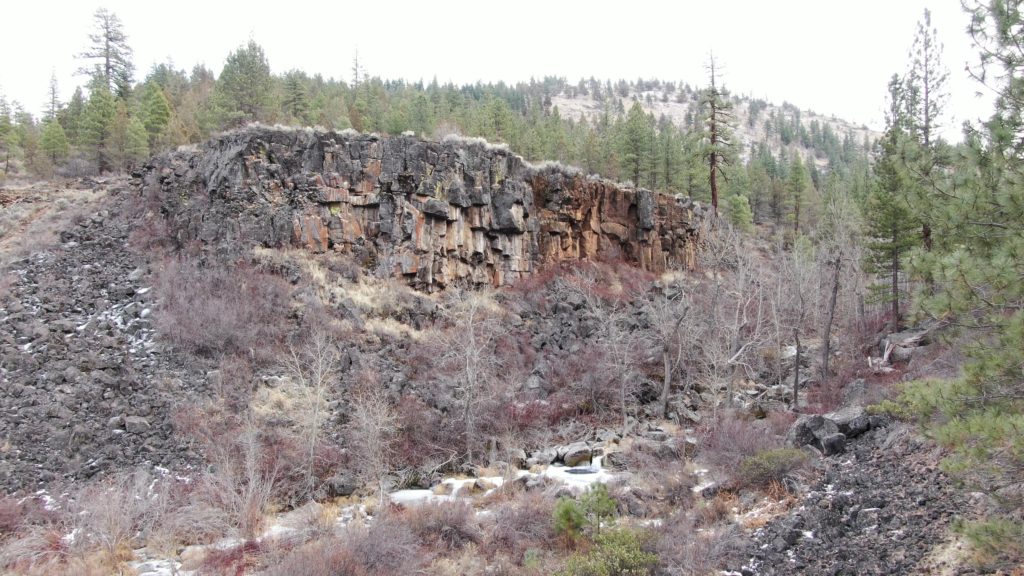
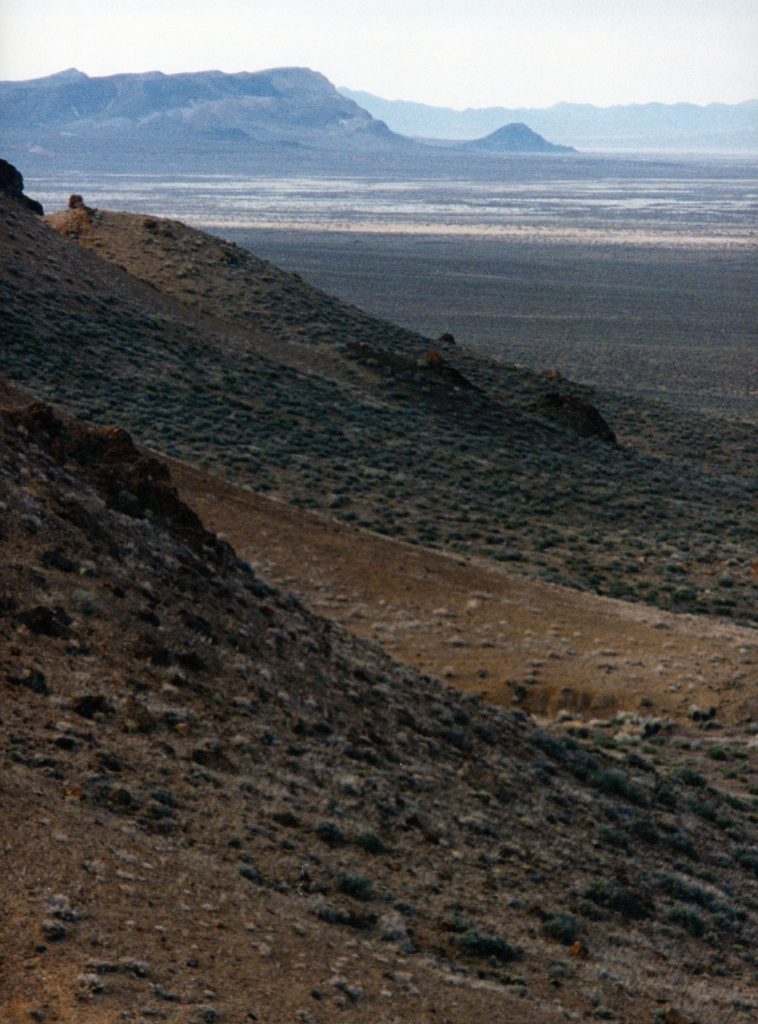
Clapper Canyon/Creek, Black Rock Desert. Courtesy of D. Dickerson

Hardin City was a short lived mining town in the Black Rock Desert during the 1860s. It was named after James Allen Hardin, a member of emigrant party in 1849 who a made an accidental silver discovery in that vicinity by picking up a rock there, but did not realize until later when he resided in Petaluma. Thus, another lost mine story began. In 1859, Peter Lassen and others made an expedition in search of the mineral deposit and it was a fatal mistake for him and his companion, Edward Clapper. Lassen was only several miles from where Hardin City would spring up.

Anyhow, while sorting through my file on Camp McGarry, I came across this article of Modoc Independent of Alturas dated 11 September 1884. Its an account from Alturas resident, H.L. Spargur,  who was one of many prospectors in the Black Rock Desert back in the 1860s. I thought some might enjoy it.

”Black Rock — H.L. Spargur who has been on a prospecting trip through a portion of Nevada, relates some stories which cannot fail to be interesting to them who some eighteen years ago believed that the Black Rock mines were the richest in the world, and braved all sorts of dangers and hardships in efforts to develop that section, but at last were forced to abandon the mines and see all their golden dreams fade away. Mr. Spargur was one of the those who, in 1866, went to the Black Rock mines and, with his family, stayed there as long as there was a ghost of a show, and was among the last to pull up camp and seek new fields.

“Many of our readers will remember that a quartz mill was built, and that no less than three towns were laid out, and for a time the Black Rock country was a lively one. Mr. Spargur says that although it has been sixteen years since he left Harden City, (one of the three towns referred to) he found it looking natural as the day he left it. The houses, which the miners built for themselves and families were of adobe, and although for 16 years they have been deserted by human beings, they are now in as perfect a state of preservation as they were when they were abandoned in 1868. Mr. Spargur speaks of the wonderful preservative qualities of the water of that place and the peculiar state of the atmosphere, and gives it as his opinion that “a man would never die at Black Rock.” He says that in the year 1867, when the quartz mill was built a wooden pipe was laid to convey the water from one of the springs to the mill, and that when a year afterwards the mill was torn down and hauled away, this pipe was left undisturbed and that at the time of his visit to Black Rock, some three weeks ago, the water was still running
through the pipe and the material of which it was made was as sound as it was the day the water was turned in. Mr. S. says that while strolling through the streets of Harden City he noticed pieces of boards and even the smallest splinters of wood which has been there exposed to the elements all these years, are still as firm as when they left there by the miners years ago. “[Note: The quartz mill was moved to Hayden Hill]
Donate

Quincy Union Newspaper

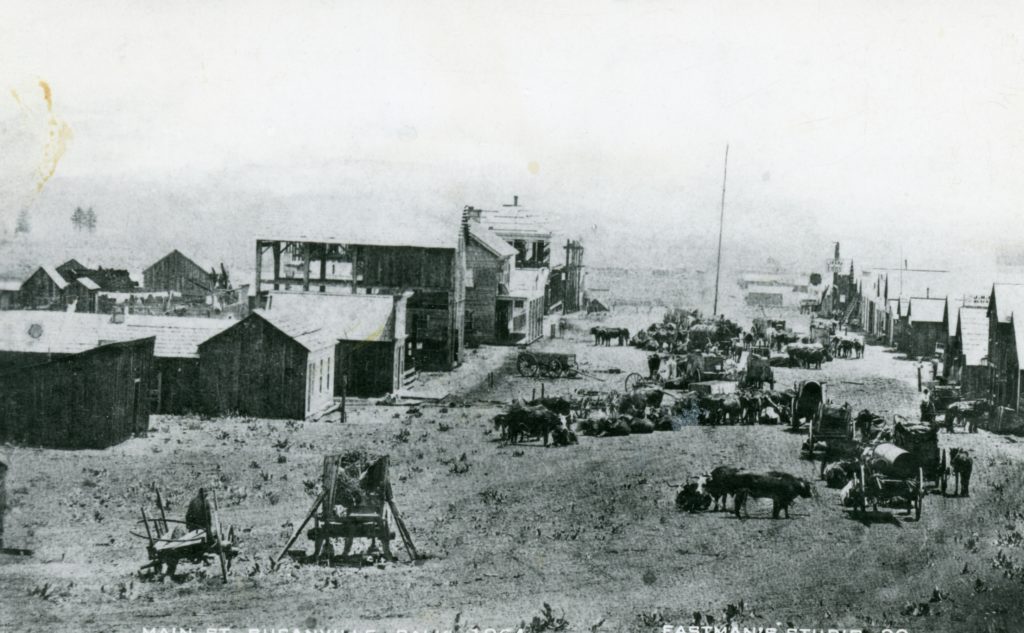
Main Street, Susanville, 1864.

While sifting through some notes, I came across these items from the Quincy Union newspaper of the 1860s. Regional newspapers such as The Territorial Enterprise (Virginia City) to the Marysville Daily Appeal provided coverage of the Honey Lake environs. So here are some tidbits.

January 3, 1864 – They have a rabbit mine at Honey Lake. On one day 400 of those animals were sent to the Virginia City market.

January 30, 1864 – Hay is selling for $80-$100 per ton in Honey Lake. There is no hay in Sierra Valley.

March 5, 1864 – The farmers in Honey Lake are busily at work ploughing, sowing, repairing and improving their ranches.

September 17, 1864 – The new jail in Susanville is in course of erection and when completed will be an ornament to the town and very convenient. It is built of Roop granite found in the quarry near the town.

September 15, 1866 – Post Offices at Black Rock. Post offices have been established at Spring City and Hardin City. W.H. Vanalstine is appointed postmaster at Spring City and Charles Nixon at Hardin City. This will be of a great accommodation for the Black Rockers.

29 September 1866 – On the Way. Alvaro Evans of Long Valley has a quartz mill on the road for Black Rock. They expect to have it put up and running by the first of November. (Note: This mill was moved to Hayden Hill in 1871)

Tim

Engel Mine Revival?

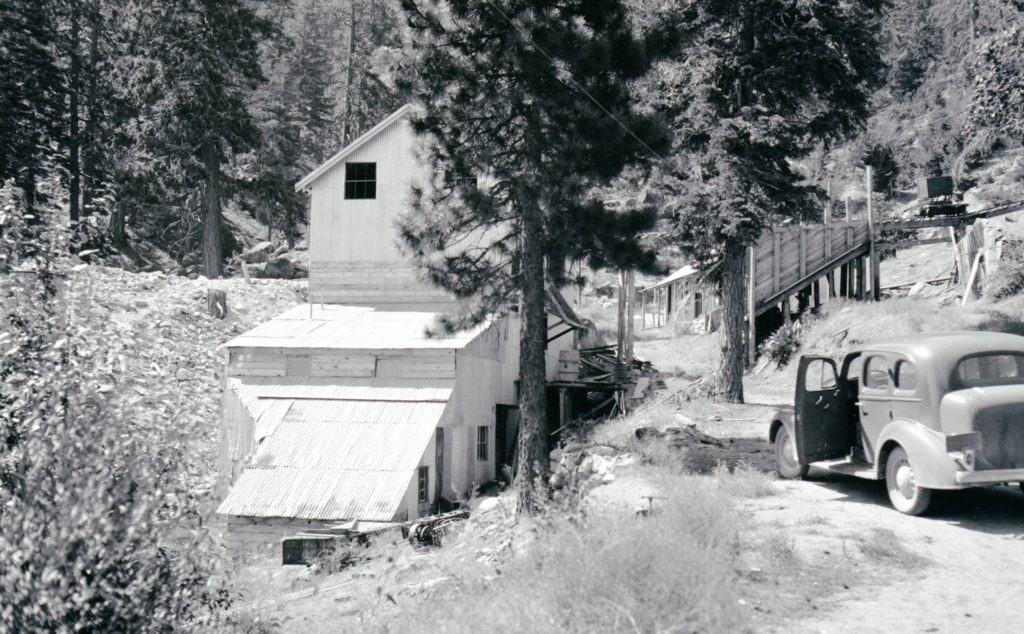
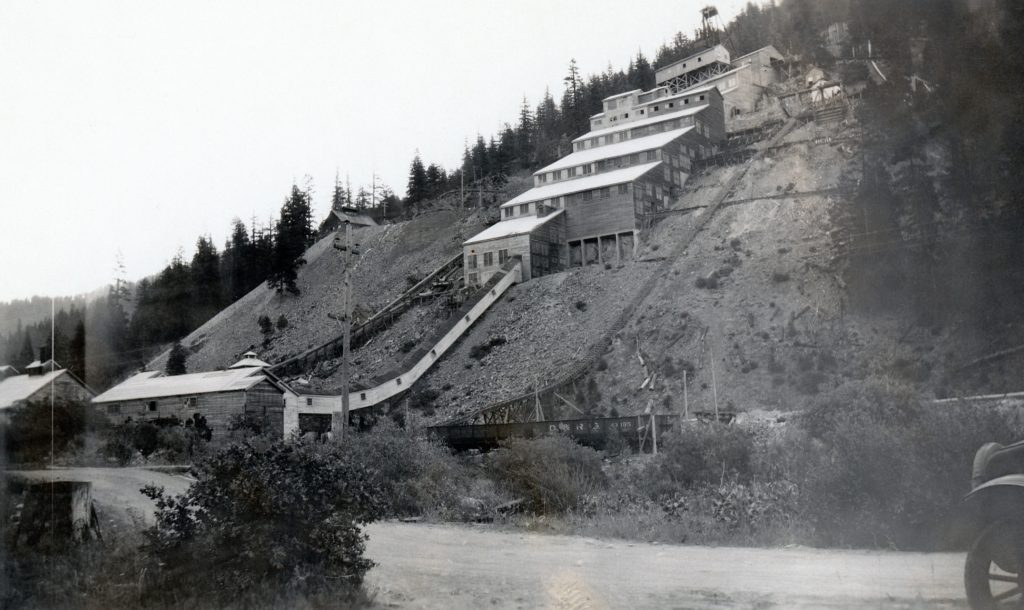
Engels Copper Mine, 1922. Courtesy of Lola L. Tanner

In 2018, US Copper announced preliminary intention to bring the back copper mining in northern Plumas County Copper Belt. They focused on a 13 mile square area that includes Moonlight Valley to the Engel Mine on Lights Creek, just north of Taylorsville. Between 1915-1930 161 million pounds of copper was extracted. It was their intent to begin a drilling program in 2021, but due to last year’s Dixie Fire in the region work was temporarily stalled.

Tim

Cheney versus China Creek versus Williams Creek, Lassen County

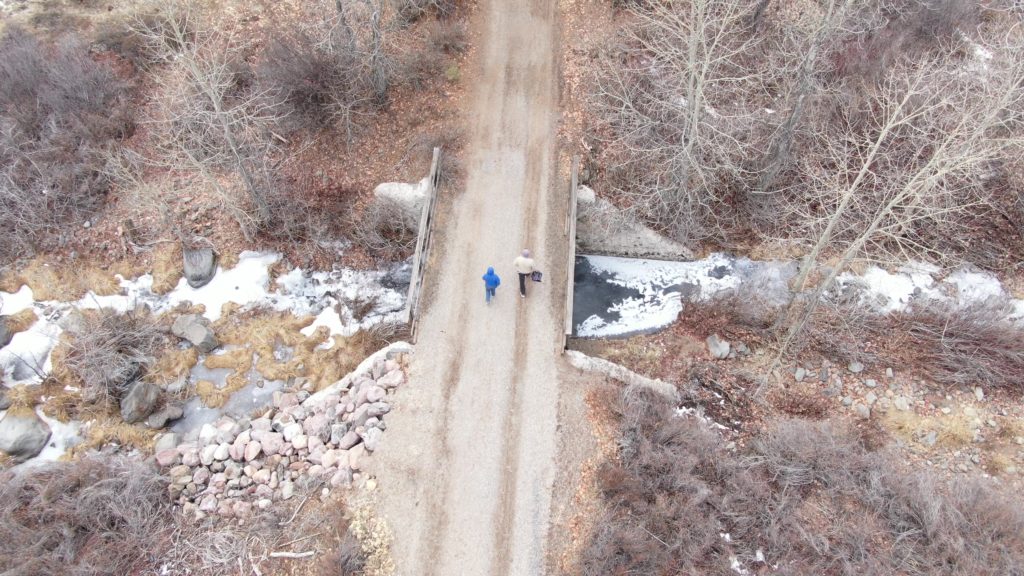
The crossing of Cheney Creek along the Bizz Johnson.Trail—David Bricker

Cheney Creek, which old maps referred to as China Creek, is a small tributary of the Susan River, and flows into that stream just below Devils Corral. About midway along the length of Cheney Creek is a small meadow, though Asa Fairfield referred to it as Cheney Valley. Fairfield stated it was named for E.M. Cheney who in  October 1860, filed a claim of 58 acres on the south side of the Susan River, near present day Hobo Camp, some five miles away. Not much is known about Cheney’s short tenure in the region, though he did serve on Lassen County’s first Grand Jury.

By the mid-1860s, Susanville had its own Chinatown. The population had its ebb and flow. On June 10, 1871, Quong Wong and 39 other Chinese filed mining claims along this creek which they named it the Yankee Company. Their activity was not ignored.

The Lassen Advocate reported on September 9, 1871: “There are some forty Chinese mining the vicinity of Stockton’s mill on the Susan River, about nine miles from here. They are making, they say from $1.50 to $2.50 per day to the hand. There are unquestionably good mines in that locality, provided water could be secured to them without too much trouble. Parties are anticipating the construction of a ditch to these mines next spring.”

Cheney Creek shortly before it enters into the Susan River—David Bricker

According to mining claim it is a dry gulch. As the newspaper reported it was near Stockton’s, known today as Bunnells. Where Cheney Creek flows into the Susan River, is a rocky bluff, while where Williams Creek flows into the Susan River at Devils Corral, would be conducive for a ditch.

Whatever the case may be, as late as 1958 Metzker’s Atlas of Lassen County designates Cheney (China) Creek.

Subscribe

Honey Lake Gold Mine

Honey Lake Gold Mine, 1936. Courtesy of Jere Baker

The following account was provided by Jere Baker and originally appeared in Lassen County at 150.

In 1929 the Honey Lake Valley Gold Mining & Development Co. was incorporated.  Two years prior to that event, Hilding Sundberg, a mining man from Oakland, California took possession of an abandoned gold mine called the Badger Group located some six miles southeast of Milford on the Diamond Mountain range at an elevation 6,000 feet. Sundberg began work on the property with a new cross-cut tunnel, reaching a small vein of gold 300 feet in. The property was incorporated in 1929 with Sundberg as the new president and general manager of the new company. A second tunnel was cut 720 feet into the mountain, 500 of which were driven along a ledge of gold ore. Assayed samples taken from tunnel no. 2 showed an average of $55.00 a ton. A third tunnel was started at the mining company’s base camp at the 5,000 foot level. Sundberg took a calculated risk that a horizontal tunnel driven far enough would reach the same vein of gold, whereby the entire body of ore could be mined by gravity at a much lower cost. Continue reading Honey Lake Gold Mine

Not One, But Two Madelines

Van Loan’s Hotel, Madeline, circa 1904.

In 1874, Merrick Cheney and George Ford opened a stage-stop in Grasshopper Valley to take advantage of the traffic generated by the Hayden Hill mines. On September 16, 1875, the Madeline Post Office was established there with Ford as postmaster. Why Ford selected the name Madeline is not known. The post office closed on October 17, 1882 and in the following year Ford sold his Grasshopper holdings to William T. Summers. This location is where Slate Creek enters Grasshopper. However, an 1893 U.S.G.S. map indicates the location at the lower end of Grasshopper.

The current town of Madeline came into existence in 1902 when the Nevada-California-Oregon Railroad extended its line through the region. On October 9, 1902, the Lassen County Board of Supervisors accepted the Madeline townsite. For the next fifteen years, prosperous times were to be found at Madeline. The advent of World War I and the subsequent depression of the 1930s had a dramatic impact, not only to the town of Madeline, but to the Plains as well, as seventy percent of its population left the area.

Subscribe

News to Me – Hayden Hill

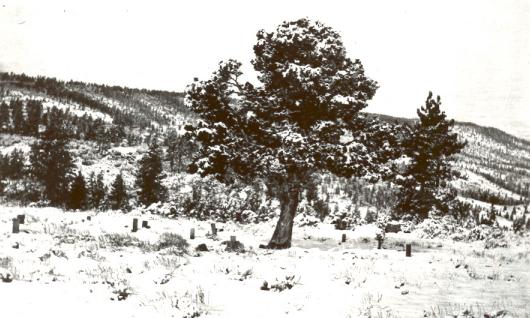
Hayden Hill Cemetery, 1909–Dallas & Joyce Snider

One has to be cautious about items found on the internet. Even sources that are reputable have their flaws. For some odd reason, I checked out Wikipedia’s entry for Hayden Hill. It states that Hayden Hill, Lassen County’s largest mining community was named for geologist Ferdinand V. Hayden (1829-1887). While most of his work was done in the Rocky Mountains, it is doubtful he ever set foot in California.

In 1870, when news of gold discovery south of Adin, some 500 prospectors descended upon the scene, initially known as Providence. On December 5, 1870 the mining district was named after veteran miner Joseph Warren Hayden, who at the age of 56, was the oldest miner there. Hayden died there on Christmas Day 1884 and was buried in the Hayden Hill Cemetery.

Now, I am prone to err, also. However, I do my utmost to correct my mistakes. One in particular, that I need to update is Hill’s Market, wherein I omitted Mildred (Long) Hill. One item, that I am still working on is problematic, was the management/ownership after Mildred’s passing in 1967.

Tim

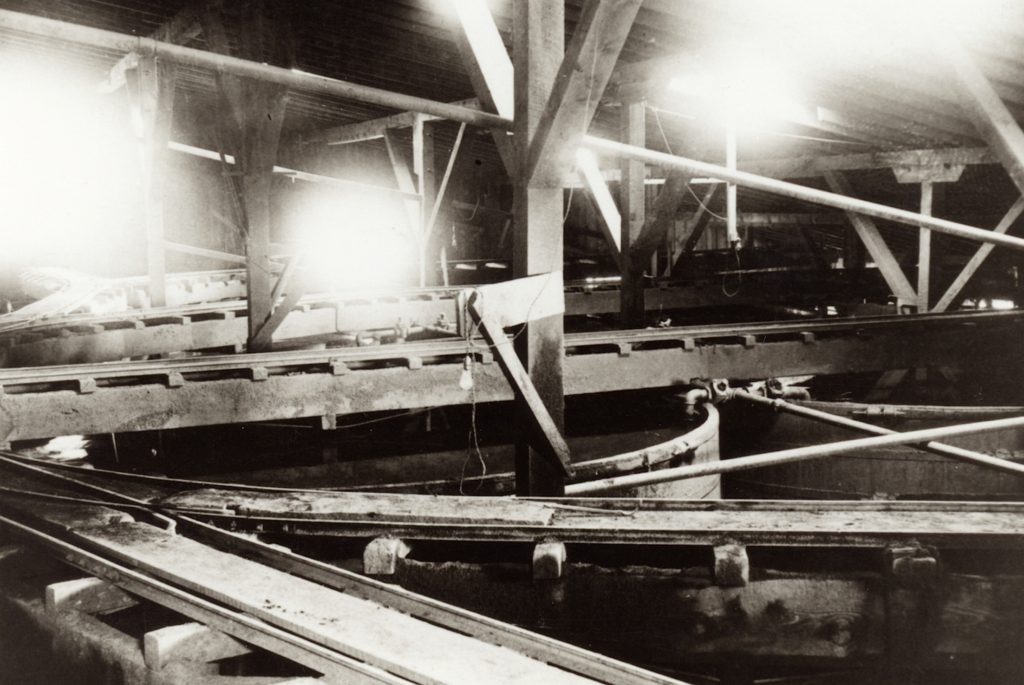
Hayden Hill’s Cyanide Tanks

Cyanide tanks at Hayden Hill, 1903–Lassen County Historical Society

Some of Hayden Hill’s history is fairly well documented, and others aspect hardly nothing. One of the Hill’s most important operations were the cyanide tanks, used to leach the gold from the crushed rock. It was such an integral part of the mines, yet references are almost non-existant, and then quite void of hardly information. It is interesting to note the cyanide tanks from the early mining days were still there in 1962.

During the 1990s, when Lassen Gold revived mining at Hayden Hill, cyanide was also used. Even though Lassen Gold shut down in 1997, the wells there are monitored for any cyanide leakage.

Support this site and Subscribe today!

Booms, Busts & a Postal Record

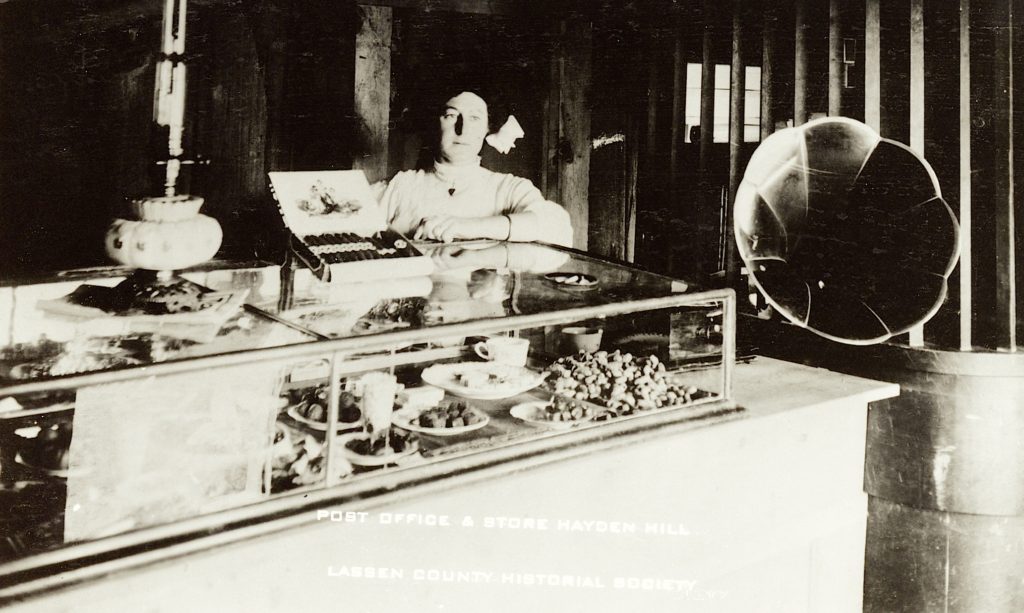
Hayden Hill Post Office & Store, 1903–Lassen County Historical Society

What a better way to gauge Hayden Hill’s mining boom and bust cycles with its frequent opening and closure of its post office. On April 13, 1871 the post office was established with Augustine W. Blair serving as the first postmaster. Blair’s tenure there was brief and would later have a interesting career in Nevada’s legal community. However, before Blair’s departure he left an enduring the legacy to the region. Blair was the first person to come up with the idea to tap Eagle Lake for irrigation.

On October 15, 1875 the post office was discontinued. It then operated from 1878-1887; 1888-1912 and revived in 1915  and on July 31, 1919 it closed for the last time..

On the east side of Hayden Hill was Letterbox Canyon. It was so named when the post office was not in operation, a mailbox was nailed to a tree at the bottom of the canyon along Willow Creek. The mail contractor would then pick and leave mail at this location, during the times when Hayden Hill’s post office was closed.

Support

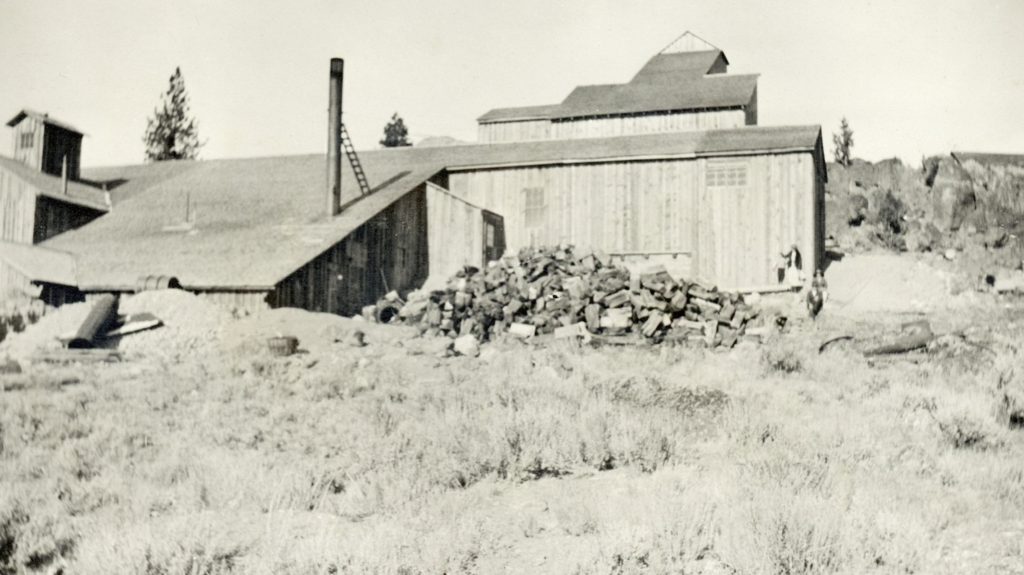
Juniper Mine, Hayden Hill

Juniper Mine, 1920–Lola Tanner

Hayden Hill’s second largest producing mine is an interesting one. In its first four years, it had yielded some $400,000 in gold. Then the mine struggled encountering china clay deposits. The mine persevered over the years and in the early 1920s had a revival of sorts.  In all, it produced some $600,000 in bullion, about half of the Hill’s largest producer, the Golden Eagle Mine.

By 1930 the Juniper Mine had been abandoned. The building remained intact until 1956 when it was struck by lightning and burned down.

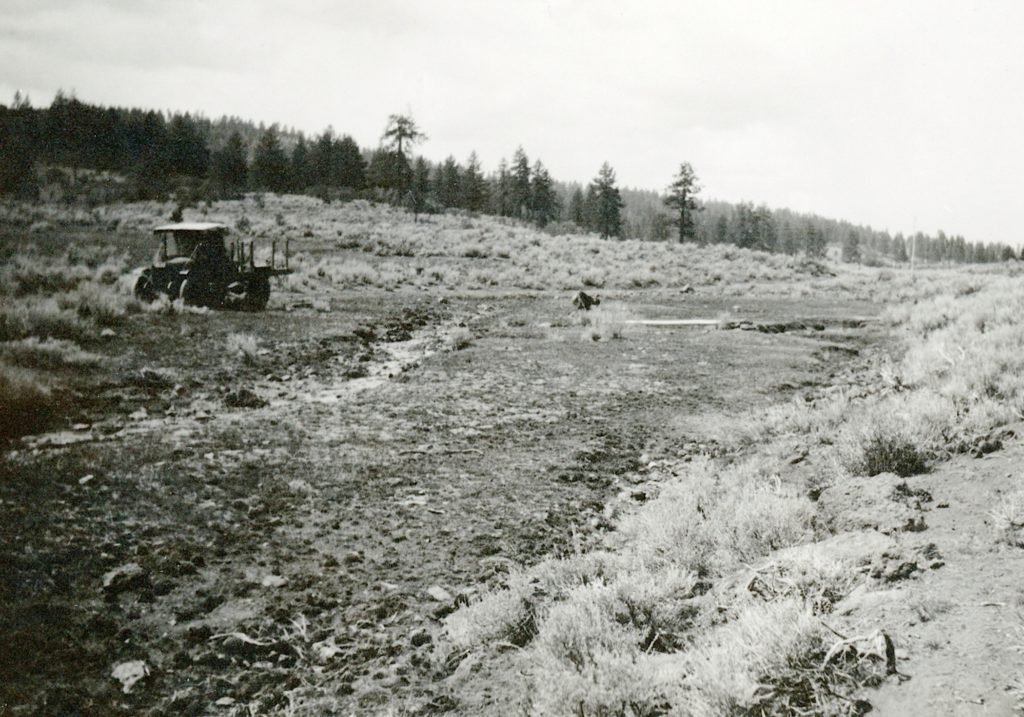
Juniper Mine truck, 1920–Lola Tanner

Tim