Subscribe!
Subscribe!

Support!

Information from Forced Farming in America, Agriculture at the Tule Lake Relocation Center, 1942 – 1946, by Michael David Schmidli. Copies available at Margie’s Book Nook
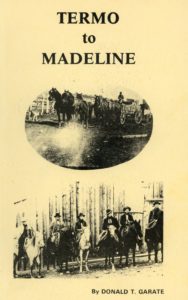
Estate Sale: I need to make room for items from my mother’s estate. This a great bargain at $10.95, you save $8 off the regular price. What a deal!
This is Don Garate’s epic account about the history of the west side of the Madeline Plains, that covers the period from 1868 to 1935. This 436 page book covers a lot of territory from the earliest settlers, the arrival of the NCO Railroad, and the Basques, too. Interspersed are amusing anecdotal stories like the “Characters of the Madeline Plains.” Garate starts that introduction with: “Generally speaking to be a certified and accredited Madeline Plains Character, a person had to meet three qualifications, all of which were easy to pass if one worked at it just a little. First off, a bachelor status was required. This was not too difficult because the fairer sex (or should be said “wiser’) was still not plentiful enough to go around. Secondly, he who aspired to be one of the infamous characters of the Plains had to be a stranger to water. Again, this was easy during the drouth, water was seldom seen on the Madeline Plains. But a true character had never heard the word “bathtub.” At least, if he had he could not know what it meant. And lastly a real character had to get involved in alcohol–whether in the drinking or the manufacturing. Generally, a top notch character did a little–a lot–or both.”
To order, click here.
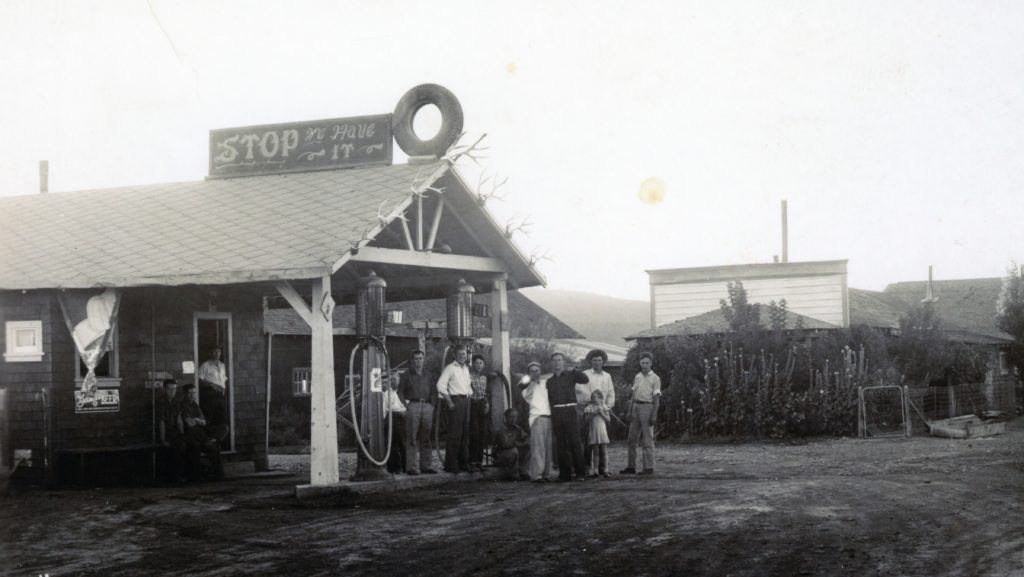
While the City of Susanville and the County of Lassen debate marijuana issues, lets take a look of some historic accounts from the 1920s. It was not until the late 1920s that marijuana appeared on the scene locally. In November 1928, Sheriff Jim Leavitt conducted a raid on the Brunswick Pool Hall near the Susanville Depot. Leavitt confiscated ten kegs of whiskey and ten pounds of marijuana and arrested Emma and Pete Ovalle on a narcotics charge for the possession of marijuana.
Marijuana was something new to the local residents. The local press described it as a Mexican tobacco that is smoked like a cigarette, and said it has an exhilarating and soothing effect for the smoker and can also make one feel “goofy.” Continue reading A Marijuana Tale

If memory serves me correctly according to Gudde’s Place Name History of California, there are some 1,000 places in the golden state that has the appellation of “dry.” Of course, Lassen County is of no exception, especially since the eastern portion is part of the Great Basin. Continue reading Dry Valley – Lassen County

Several weeks ago I wrote about the murder of Sam Shaw on the Madeline Plains. At that time, the sheriff was directed to launch an investigation as to who might have been the culprit. All fingers pointed to Shaw’s neighbor, Jim Looper, who was an employee of George Bayley. After all, Looper was supposed to claim the land where Shaw settled due a valuable spring. During the coroner’s inquest, Looper pleaded ignorance of even knowing Shaw, but when he questioned by authorities, he reversed his testimony. There was one problem with the whole puzzle, where was Shaw’s decapitated head? There were some who thought Looper was hired to murder Shaw, and when Looper died of a drug overdose in Susanville in 1888. Continue reading Who murdered Sam Shaw?
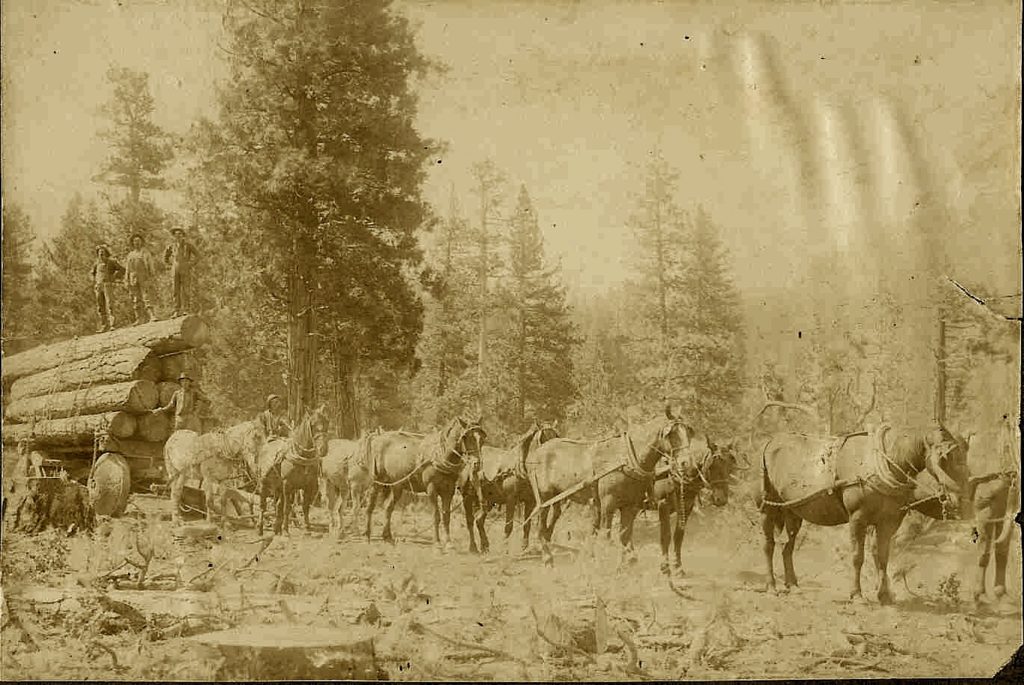
There were two different sawmill operations on Fredonyer Peak, north of Eagle Lake. The first one was on the Horse Lake side operated by the Shumway family. The second one, and much later in time was on the north side near Bayley Creek reservoir, the latter which was constructed in 1899. It should be noted, that many maps misspell it as Bailey, but it was so named after Likely rancher George H. Bayley.
In 1912, H. T. Risdon established the Eagle Lake Lumber Company and constructed a sawmill at Bayley Creek. Risdon encountered problems finding skilled labor. In time he leased it to Thomas Coulter and Frank Spencer, who in 1919 bought it outright from Risdon. The mill remained in operation until 1942, when it closed for good.

On August 4, 1883, 60 year old Butte County resident, Samuel B. Shaw investigated the western side of the Madeline Plains in search of a new home. To his amazement he came across a fine spring that no one had claimed. It appeared to be a golden opportunity and he wasted no time to file a claim with the Government Land Office in Susanville. With paper work in hand, Shaw began building himself a cabin. His neighbor, Jim Looper, and Looper’s employer, George Bayley was not pleased about this development. Looper thought he filed a claim to it, but it turned out he filed for the wrong parcel.
Whatever the case may be, some one did not like Sam Shaw. On October 13, 1883, an Indian mahala (woman) found Shaw’s decapitated body in his cabin. The woman notified authorities, and an investigation began. On October 22, 1883 a five man coroner’s jury was held in attempt to find more information about this grizzly murder. However, they rendered, the following result, “He came to his death by the hands of parties unknown. We would also suggest that the matter be further investigated by the proper authorities.”
To be continued . . .
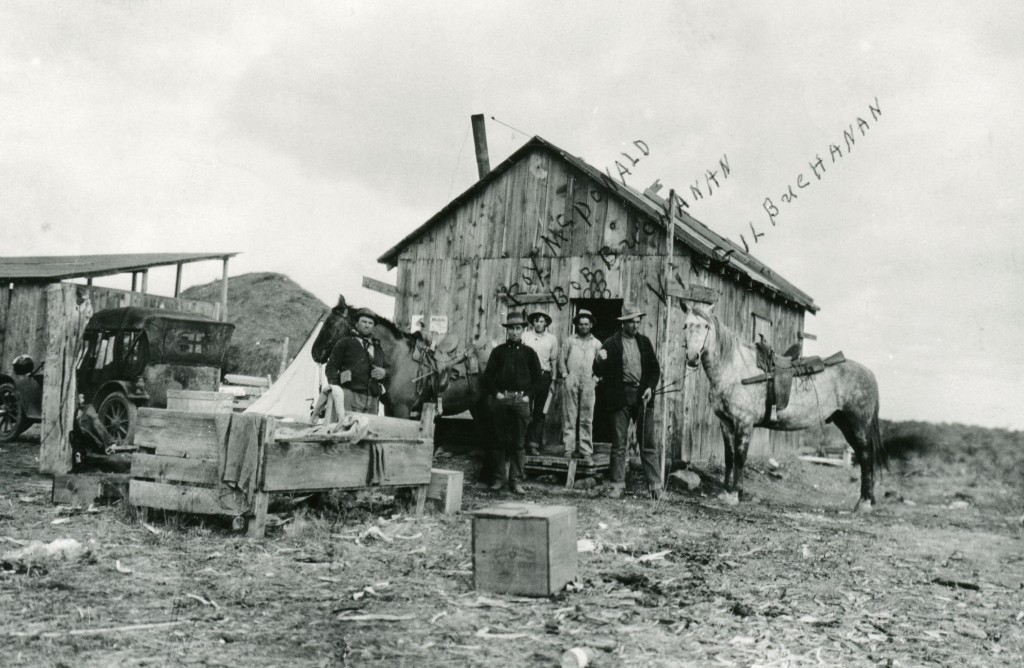
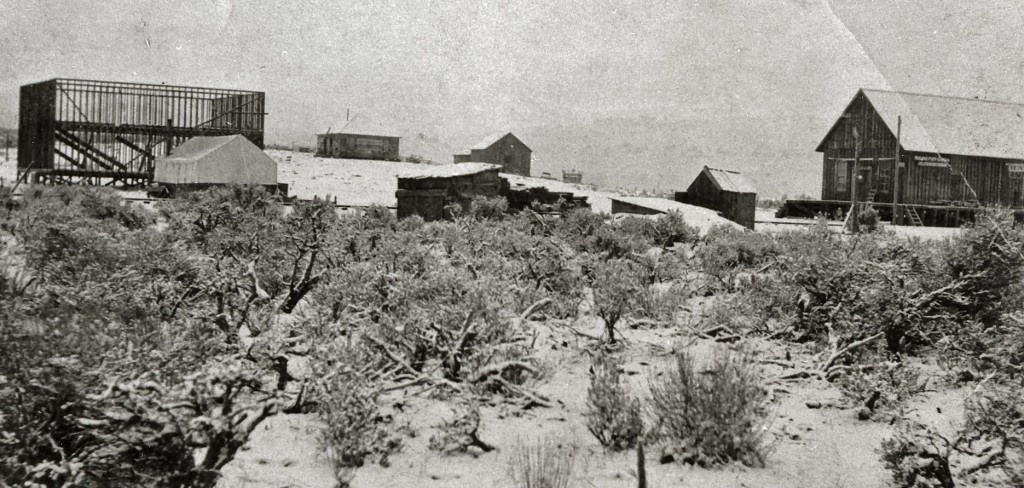
A subscriber wanted to learn about Painters Flat located in the northeast section of Lassen County. A portion of this post originally appeared on May 30, 2015. When I reviewed it, there was more that I decided to add. Continue reading Painters Flat – Update